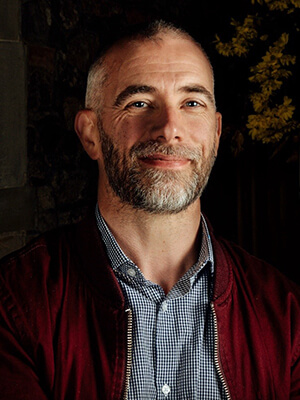
Cecilia Valenti is a Junior Professor for Film Studies at the Institute for Film, Theatre, Media and Cultural Studies, Johannes Gutenberg University Mainz. Her research spans feminist postcolonial theory, archival practices of world cinema, television history, and militant documentary traditions. She actively organizes the IMACS Master's program and participates in academic self-governance via the Georg Forster Forum. Valenti's publications focus on global film heritage, feminist media critique, and political film practices. Her work intersects with 1930s left-wing cinema, archival activism (e.g., Cinemien network), and feminist reworkings of militant film. She teaches seminars on anti-colonial film practice, including Sarah Maldoror's work. She is affiliated with the Zeughauskino Berlin's archival department and co-founded the curatorial collective 'The Canine Condition,' which organized film series in Berlin, Frankfurt, Vienna, and London (2009–2017). Her contact details: cevalent@uni-mainz.de, phone +49 (6131) 39-31750, office hours Wednesday 4-5 PM by appointment.
Lara Deeb is Professor of Anthropology and holds the Laura Vausbinder Hockett Endowed Chair at Scripps College, where she also chairs the Department of Middle East and North Africa Studies (MENA). She is a leading scholar in cultural anthropology with deep expertise in the Middle East, particularly Lebanon, and her work bridges anthropology, gender studies, and religious studies. Her research focuses on the intersections of gender, religion, and politics, with a particular emphasis on Islam, transnational feminism, and sectarianism. She explores how religious and gendered identities are formed and negotiated in everyday life, especially within Shi'i communities in Lebanon. Her scholarship critically examines knowledge production, public piety, and moral geographies. Deeb’s recent publications highlight her evolving focus on interreligious marriage, social difference, and resistance movements in Lebanon. Her articles span topics from Hizbullah’s cultural strategies to feminist anthropological theory, reflecting a broad yet cohesive intellectual trajectory centered on identity, power, and resistance in the Middle East. Scientific Awards and Honors: American Council of Learned Societies (ACLS) Collaborative Research Fellowship (2009–2011) Wenner-Gren International Collaborative Research Grant (2008–2009) Malcolm H. Kerr Dissertation Award (2004) Postdoctoral Fellowship, Harvard Academy for International and Area Studies (2003–2004, 2006–2007) Deeb has advised numerous students and led significant collaborative research projects, often in partnership with scholars in the Middle East. Her work has been supported by major grants that enabled ethnographic fieldwork and interdisciplinary collaboration. She teaches courses such as Introduction to Sociocultural Anthropology, Anthropology of the Middle East, and Senior Seminar in Ethnographic Writing. She is actively involved in academic and public discourse, contributing to journals like Middle East Report and HAU: Journal of Ethnographic Theory . Her recent book Love Across Difference (2024) exemplifies her ongoing commitment to understanding social cohesion and difference in divided societies.
Thea Williamson is an Assistant Professor in the Department of English at Old Dominion University’s College of Arts & Letters. A bilingual literacy educator and former teacher of multilingual learners in Miami, New York City, Austin, and Maryland’s Eastern Shore, she focuses on writing as a tool for thinking, creative expression, and social change. Her teaching emphasizes critical theories like decolonization and critical race theory to explore literacy pedagogy and adolescent learning. Education Ph.D. in Curriculum & Instruction, University of Texas at Austin (2018) M.Ed. in Curriculum & Instruction, University of Texas at Austin (2012) B.A. in Spanish & Comparative Literature, Haverford College (2004) Research Interests Williamson investigates the sociopolitical dimensions of English Language Arts in culturally and linguistically diverse secondary schools, combining critical race theory, translanguaging, and discourse analysis. Her work highlights linguistic justice, anti-oppressive writing pedagogies, and the role of literacy in resolving alienation in educational spaces. Publication Trends Her recent publications explore critical race curriculum analysis, translanguaging in ELA classrooms, and adolescent writing identity. Key themes include racial equity in literature teaching, multimodal literacy engagement, and the role of self-reflection in empowering multilingual students.
Jason Aamodt is an Assistant Professor in the Department of Management at Oklahoma State University, where he teaches courses in Environmental Law, Natural Resources Law, Water Law, International Environmental Law, and Corporate and Sustainable Responsibility. He also previously served as Assistant Dean for Online Legal Education and taught at the University of Tulsa College of Law, contributing significantly to legal education with a focus on sustainability and tribal issues. His educational background includes a Bachelor's degree in Chemistry/Environmental Science from the State University of New York at Plattsburgh and a Juris Doctorate from the University of Tulsa College of Law. Dr. Aamodt’s research centers on sustainable development, environmental justice, and tribal legal rights, with a particular emphasis on natural resource protection, energy access, and legal frameworks for sustainability. His work bridges law, policy, and environmental science, aiming to advance equitable and sustainable legal solutions. His recent publications explore conjunctive resource management, sustainable energy technologies for underserved populations, and lessons from China’s biogas programs. These works reflect a consistent focus on interdisciplinary approaches to environmental challenges, especially in the context of tribal and developing communities. National Law Journal Top-25 Jury Verdict (2013) Settled the fifth largest Indian Trust Accounting case Certified the first class action in Oklahoma based on an air dispersion model Established a new cause of action against the United States for Indian Tribes As both a practicing attorney and academic, Jason Aamodt advises on complex litigation involving Indian tribes, environmental contamination, and trust accounting. His professional work includes securing landmark legal victories and shaping policy through scholarly contributions. He is actively involved in grants and research initiatives related to sustainable development and environmental law, though specific funding sources are not detailed in the text. There is no mention of formal lab affiliations or research teams in the provided text, but his interdisciplinary research and teaching suggest collaboration across law, environmental science, and management disciplines.
Imran Currim is a Distinguished Professor at The Paul Merage School of Business, University of California, Irvine. He previously served as Associate Dean for eight years and is currently the Faculty Director of the Beall Center for Innovation and Entrepreneurship. He has played a pivotal role in developing new academic programs, including the Master of Innovation and Entrepreneurship (MIE), the first of its kind in the UC system. PhD, Stanford University MS (Statistics), Stanford University MBA, University of Wisconsin BE (Electrical Engineering), Victoria Jubilee Technical Institute, University of Bombay Professor Currim is a leading expert in marketing science, with core research interests in customer choice modeling , product and service design , online consumer behavior , and competitive marketing strategy . His work integrates quantitative methods to understand how product features, service attributes, and marketing efforts influence consumer decisions and market share dynamics. He has published extensively in top journals and is known for bridging academic research with real-world business applications. Although specific publications are not listed in the provided text, his research has consistently influenced both marketing theory and practice, as evidenced by his numerous accolades and recognition from premier institutions like the American Marketing Association and the Marketing Science Institute. His scientific awards include some of the most prestigious honors in marketing: American Marketing Association William O'Dell Award AMA/Houghton Mifflin Distinguished Teaching in Marketing Award Marketing Science Institute Robert D. Buzzell Award Emerald Literati Highly Commended Article Award Finalist, Paul E. Green Award (Journal of Marketing Research) Finalist, European Marketing Academy Best Paper Award Wall Street Journal's 2008 Favorite Professor in an Executive MBA Program Bloomberg Businessweek 2006: #3 ranked marketing course in the world Chancellor’s Professor, UCI Distinguished Faculty Lectureship Award, UCI Academic Senate Professor Currim has advised or conducted executive education and consulting projects for over 100 companies, demonstrating strong industry engagement and impact. While specific grants are not detailed, his leadership in creating innovative academic programs like the MIE and certificate tracks for graduate and undergraduate students reflects substantial institutional and curricular development initiatives. He has also taught at prestigious institutions including UCLA, New York University, and Yale. He leads initiatives at the Beall Center for Innovation and Entrepreneurship , where he focuses on advancing innovation, entrepreneurship curriculum, and experiential learning programs. Under his direction, the center has launched groundbreaking programs such as the Master of Innovation and Entrepreneurship and expanded educational offerings through minors and certificates.
Dr Peter Batchelor is a Senior Lecturer in Music and Music Technology at De Montfort University, affiliated with the Leicester Media School and the Music, Technology and Innovation – Institute of Sonic Creativity (MTI²). He serves as Programme Leader for the BA Music Technology programme and is actively involved in research, teaching, and creative practice. Education: BMus, University of Wales, Bangor (1996) MPhil, University of Wales, Bangor (1997) PhD, University of Birmingham (2004) FHEA (2024) His research and creative work focuses on electroacoustic composition, multichannel sound installations, public art, and aural landscape construction. He explores sound spatialisation, immersion, theories of space and place, and audience engagement through large-scale sonic artworks. His practice integrates technical innovation with artistic inquiry, often using custom Max/MSP tools for spatial audio and generative systems. The 15 most recent publications reflect a consistent trajectory in immersive sound art, emphasizing environmental sonification, spatial perception, and public engagement. Key themes include multichannel deployment (up to 288 channels), interactive and solar-powered installations, and blending natural and synthetic soundscapes. Projects like Dendrophone and Contraption highlight his focus on accessibility, sustainability, and audience interaction in sonic environments. Scientific Awards and Recognitions: Finalist, Sounds Electric ’07 Competition Mention, Concours de Musique Electroacoustique de Bourges (2007, 1998, 1997) 2nd Prize, CIMESP'99, São Paulo Honourable Mention, CIMESP'97, São Paulo Prize, 'Residences' category, Bourges 1997 Peter Batchelor supervises several PhD students including Stefano Catena, Cristiana Palandri, and Michael Uwins. He has secured external funding as Co-Investigator on projects such as Interfaces (EU Culture Project, 2016–2019) and Sensing the Forest (AHRC Early Career Research Grant, 2023–2025). He has delivered keynote and invited talks internationally and serves as a reviewer for Organised Sound and for REF panels. His creative installations have been exhibited globally, from Helsinki to São Paulo, and he develops open-source Max/MSP tools like N-CHAN and CLATTER to support multichannel sound design. He leads the Dendrophone project, a solar-powered, DIY sound installation in Alice Holt Forest that sonifies environmental data (humidity, sunlight, CO2), offering both on-site and live-streamed access. This project exemplifies his commitment to public engagement, ecological awareness, and accessible sonic art.
John Mandyck is an Adjunct Professor of Sustainability at the Leonard N. Stern School of Business, New York University, and the University of Connecticut School of Business. He brings over three decades of market and policy experience in sustainability, climate change, and urban resilience. His work bridges academia, corporate leadership, and public policy, with a focus on decarbonizing the built environment and advancing sustainable business practices. Education: M.P.A. in Public Administration, Syracuse University Maxwell School of Citizenship and Public Affairs B.A. in Policy Studies, Syracuse University Maxwell School of Citizenship and Public Affairs Executive Education, University of Virginia Darden School of Business John Mandyck's research and teaching center on sustainability, environmental policy, urban resilience, and climate change mitigation. His work explores the intersection of business strategy and ecological responsibility, emphasizing how corporations and cities can drive systemic change. He investigates food waste, energy efficiency in buildings, sustainable aviation, and the role of innovation in climate solutions. His interdisciplinary approach integrates public health, policy, and business leadership. The 15 most recent articles reflect a consistent focus on sustainability across sectors—urban development, business, aviation, and public health. They highlight trends in climate policy, corporate responsibility, and technological innovation. Keywords span environmental science, public policy, and business strategy, while subfields include building decarbonization, food systems, ESG, and resilient infrastructure, demonstrating a holistic view of sustainability challenges and solutions. Scientific Awards: 2024 Centennial Changemaker Award for Environmental Stewardship, Syracuse University John Mandyck has advised and contributed to major climate initiatives through his leadership roles. As CEO of Urban Green Council, he shaped landmark climate laws for buildings in New York City. He has led sustainability strategy at United Technologies Corporation, engaging stakeholders across global markets. Though no formal students are listed, his influence extends through executive education, public speaking, and policy advocacy. He has contributed to research grants and initiatives in urban sustainability, climate resilience, and food systems, often in collaboration with academic and nonprofit institutions. John Mandyck is affiliated with research and advocacy teams at Urban Green Council and has collaborated with scholars at Harvard University’s T.H. Chan School of Public Health. His work involves interdisciplinary teams focused on climate policy, building science, and public health, contributing to evidence-based solutions for sustainable cities.
Racheal Louis Vincent is a Lecturer in the Department of Marketing at the School of Business, Monash University, Malaysia. She has previously served as a Lecturer in Marketing at Sunway Education Group for over nine years and is currently active in teaching and research. PhD in Business – Universiti Sunway (Sunway University), 2019 Master of International Business – Monash University, 2010 Bachelor of Business (International Trade) – Victoria University (VU), 2009 Her research focuses on shared consumption , particularly collaborative fashion consumption , digital marketing , social media marketing , and consumer behavior . She is deeply engaged in understanding sustainable consumption and the circular economy, aligning her work with UN Sustainable Development Goals. Her recent publications (2020–2024) reflect a strong trend in digital transformation in emerging markets, religious consumer behavior (e.g., Ramadan e-bazaars), and motivations behind luxury fashion sharing. These works span book chapters and peer-reviewed journal articles, primarily in marketing and consumer behavior domains. Scientific Awards: Purple Letter for Teaching Excellence, S1 2023 She actively contributes to academic service through peer review for journals such as Australasian Marketing Journal , Journal of Consumer Behaviour , and Journal of Islamic Marketing . She also participates in public academic events like the eiHUB Challenge 2024 and Education Buzz 2024. She is accepting PhD students and teaches courses including MKM2300 (Introduction to Digital Marketing) and MKM3450 (Social Media Marketing). Racheal is involved in editorial and collaborative research projects, including co-editing a book on marketing case studies in emerging markets. Her work bridges academic research with industry relevance, particularly in digital marketing and sustainable consumption practices.
Dr. Ian Sturrock is a Senior Lecturer in Games, Animation & Visual Effects at Teesside University, within the Department of Computing & Games. He is actively involved in teaching across undergraduate, postgraduate, and foundation levels, and contributes to the university's Arts Research Group. His academic work spans game design, narrative theory, and digital innovation, with a strong focus on motivation and world-building in games. His research interests include: Game narrative and narratology Transmedia storytelling and world-building Player motivation and identity Cybersecurity awareness through games The cultural impact of role-playing games Dr. Sturrock's recent publications explore innovative frameworks for measuring game motivation and examine how transmedia narratives can promote social justice. His work often bridges academic theory with practical game design, emphasizing interdisciplinary approaches. He has led the Innovate UK-funded project 'HackEscape,' which uses game mechanics to teach cybersecurity. His research has been published in journals such as Gamevironments and Analog Game Studies , and he has contributed to educational syllabi collections on game design pedagogy. He is currently accepting PhD students and has supervised research in game studies. Dr. Sturrock was previously affiliated with the University of Hertfordshire, where he served as Partnership Manager for the Creative Enterprise degree and contributed to the Media Research Group, co-organizing the first international Game of Thrones Conference in 2017. His professional engagements include media contributions on video game adaptations and the success of Games Workshop, reflecting his public-facing scholarship. He is an active researcher with a growing body of peer-reviewed work in digital games and narrative.
Lauren Brookman-Frazee, Ph.D., is a Professor in the Department of Psychiatry at the University of California San Diego (UCSD), School of Medicine. She serves as Co-Director of the SDSU/UC San Diego Joint Doctoral Program (JDP) in Clinical Psychology, a dual-institution training program emphasizing research and practice in clinical psychology. Her work is deeply rooted in community-partnered research to enhance mental health services for children with developmental and mental health needs. Her research focuses on implementation science and community effectiveness trials , particularly in the context of autism spectrum disorder (ASD) and children’s mental health services . She develops and evaluates strategies to implement evidence-based practices in public mental health and school systems. Her work emphasizes therapist training, organizational change, and sustainability of interventions such as AIM HI and 4KEEPS. The recent articles highlight a strong trend in pragmatic, community-based implementation research. They focus on therapist fidelity, caregiver outcomes, cluster randomized trials, and sustainability of mental health interventions for youth with ASD. Collectively, these works reflect a commitment to bridging the gap between research and practice in real-world settings. Scientific Awards: SDSU/UC San Diego JDP Advancement of Student Development (Teaching) Award (2020) UC San Diego Faculty Integrity Award (2017) ABCT Transformational Contribution Award, ASD & Developmental Disabilities SIG (2016) NIMH Implementation Research Institute Fellow (2010–2011) Dr. Brookman-Frazee has secured significant grant funding from NIH/NIMH, HRSA, and the California Department of Developmental Services. As Principal Investigator or Project Director on multiple large-scale grants, she leads efforts to improve team effectiveness, scale interventions like PUENTE, and implement digital measurement-based care. She mentors junior researchers and doctoral students, particularly through K-awards and diversity supplements. Her grants consistently emphasize community partnerships and translational research. She is affiliated with several research centers and training programs, including the IN STEP program, the ACTRI, San Diego LEND, CASRC, and the 4KEEPS and TEAMS research initiatives. These teams focus on improving access, engagement, and quality of care for children with ASD and their families through interdisciplinary, systems-level approaches.
Dr. Floris van den Berg is an Assistant Professor at Utrecht University's Copernicus Institute of Sustainable Development within the Department of Environmental Sciences. He specializes in environmental ethics, applied ethics, and philosophy of science, focusing on topics like sustainability, democracy, animal rights, and freedom of speech. His research explores societal challenges through interdisciplinary lenses, including the 'Institutions for Open Societies' initiative and 'Sustainability Education and Engagement.' Van den Berg's media presence reflects his engagement with contentious issues: he critiques woke culture's rigidity, defends academic freedom regarding controversial topics, and debates veganism's ethical foundations. Notable works include his manifesto 'Green Liberalism' advocating market-driven environmental solutions and critiques of corporate sustainability practices. Though currently holds no listed awards, his media contributions emphasize public philosophy's role in societal discourse. His teaching involves courses like 'Environmental Ethics and Sustainable Development' and 'Philosophy of Science and Ethics.' No student advisees or grants are explicitly mentioned, but his research teams engage with themes like bottom-up societal initiatives and future food systems. He advocates for open academic debate while addressing modern ethical dilemmas in education, environment, and culture.
Niko Kolodny is a Professor of Philosophy at the University of California, Berkeley. He holds a Ph.D. (2003) and M.A. from Berkeley, and a B.A. (1994) from Williams College. Kolodny has held positions at Harvard University (Assistant Professor, 2003–2005) and the Australian National University (Research Associate, 2004; Harsanyi Fellow, 2013). Education B.A., Williams College, 1994 M.A., University of Oxford, 1996 Ph.D., University of California, Berkeley, 2003 Kolodny’s research spans moral and political philosophy, with a focus on social hierarchy, democratic legitimacy, and the ethical implications of interpersonal relationships. His work interrogates themes such as the justification of state coercion, the moral weight of consent, and the normative significance of equality. His 2023 book The Pecking Order: Social Hierarchy as a Philosophical Problem argues that social hierarchy—rather than individual freedom—is the core concern of liberal democratic thought. Recent publications analyze voting power dynamics in majoritarian democracies, redefine social power through subordination, and explore the ethics of gerrymandering. His work frequently engages with thinkers like Scanlon, Raz, and Parfit, emphasizing the interplay between practical reasoning, normativity, and institutional design. Scientific Awards Jacob Javits Fellowship (1998–2001) University Fellowship (1997–98, 2001–03) Henry Wilde Prize in Philosophy (1996) Divisional Distinguished Teaching Award (2010–11) Kolodny has advised numerous graduate students and served on dissertation committees at Berkeley, Harvard, and in interdisciplinary programs. He is an affiliate of the Center for Human-Compatible AI and contributes to editorial boards of Philosophy and Public Affairs , Stanford Encyclopedia of Philosophy , and Oxford Studies in Political Philosophy .
Dana L. Alden is a Professor at the University of Hawai`i at Manoa's Shidler College of Business, specializing in sustainable marketing, healthcare consumer decision-making, brand management, and cross-cultural consumer behavior. She serves as the Editor-in-Chief of the Journal of Sustainable Marketing and has been recognized with multiple awards for teaching, research, and service. PhD in Marketing and International Business, University of Texas, Austin (1990) MBA in Marketing with Honors, University of Hawai`i at Manoa (1984) MA in Public Affairs with Honors, University of California at Santa Barbara (1977) BA in Environmental Studies with Honors, University of California at Berkeley (1973) Her research focuses on sustainable marketing practices, health care consumer decision-making, brand management, and cross-cultural consumer behavior. She has pioneered frameworks for participatory marketing communication campaigns, developed culturally targeted patient decision aids, and explored the impact of social norms on environmental choices. A review of her publications reveals a consistent emphasis on cross-cultural dynamics, sustainable practices, and healthcare decision-making. Her work spans journals in marketing, international business, and medical decision-making, reflecting interdisciplinary expertise in bridging marketing theory with real-world health and sustainability challenges. Dennis Ching Teaching Award (2018) Professor of the Semester Award (2017) Best Professor of the Semester - Undergraduate Core Course (2015) Kaizen Service Award (2015) Award for Outstanding Short Course in SEM (2014) Shirley M. Lee Research Award (2013) As an educator, Alden has taught foundational courses like Principles of Marketing and specialized offerings such as Sustainable Marketing and International Cross-Cultural Consumer Behavior. She has also led healthcare executive programs in Honolulu, Tokyo, Nagoya, Kobe, Taipei, Hanoi, and Vietnam, integrating marketing principles into public health contexts.
Scott Boss serves as Associate Professor of Accounting at Bentley University, where he has been a faculty member since completing his Ph.D. in Information Systems from the University of Pittsburgh in 2007. His academic credentials include a B.S. and MAcc from Brigham Young University. Located in LaCava Campus Center - 196B, he maintains active engagement through teaching and research in accounting information systems. His research concentrates on critical intersections between accounting and cybersecurity, particularly examining human factors in security behavior, cybercrime prevention, and information security controls. Dr. Boss investigates how fear appeals motivate protective behaviors and develops pedagogical frameworks for integrating cybersecurity into accounting education. His scholarly work appears in journals including the European Journal of Information Systems and Group and Organization Management , reflecting substantial contributions to both theoretical and practical aspects of secure information systems. Recent publications (2020-2025) reveal three dominant research trajectories: cybersecurity curriculum development for accounting professionals, behavioral security interventions using fear appeals, and innovative teaching methodologies for forensic investigations. His work consistently bridges technical security requirements with professional accounting practice, addressing AACSB technology standards through publications on big data implementation and audit curriculum integration. Dr. Boss actively contributes to academic service through the Strategic and Emerging Technologies Section of the American Accounting Association and the Journal of Emerging Technologies in Accounting . His teaching portfolio includes Accounting Information Systems, Systems Audit, and Information Security courses that directly incorporate his research findings into classroom practice. Current initiatives focus on developing institutional capabilities for cybersecurity education and creating experiential learning tools like the white-collar hacking contest for forensic training.
Dr. Andrzej Ożadowicz is a University Professor at the Department of Power Electronics and Automation of Energy Conversion Systems within the Faculty of Electrical Engineering, Automatics, Computer Science and Biomedical Engineering at AGH University of Science and Technology in Kraków, Poland. His office is located in room 510, building C-1, with contact details including phone +48 12 617 50 11 and email ozadow@agh.edu.pl. He holds PhD, DSc, and Engineering degrees, reflecting his dual expertise in academic research and practical engineering applications. His research spans Power Electronics, Building Automation, Smart Grids, and IoT-driven energy systems. Key interests include energy efficiency optimization through digital twins and BIM, distributed energy resource integration , and AI-enhanced demand management . Notably, he pioneers applications of deep reinforcement learning in home energy systems and develops frameworks for Smart Readiness Indicator implementation. His work bridges theoretical innovation with practical case studies in building thermal modeling and dynamic façade systems. Recent publications (2021-2025) reveal three dominant trends: (1) Convergence of digital twin technology with building automation for real-time energy management; (2) Critical analysis of IoT security and interoperability in smart infrastructure; (3) Pedagogical innovations in engineering education through blended learning methodologies post-COVID-19. His scholarly output demonstrates consistent focus on energy transition challenges and smart grid evolution. Professor Ożadowicz actively contributes to the Discipline Council for Automation, Electronics, Electrical Engineering and Space Technologies at AGH. He is instrumental in the AutBudNet initiative —a network of certified laboratories for energy efficiency assessment that implements "learning by doing" principles in building automation education. His work with this consortium emphasizes practical validation of smart grid technologies and demand response systems.