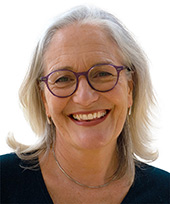
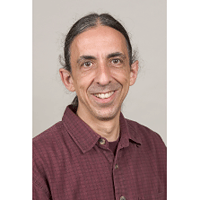
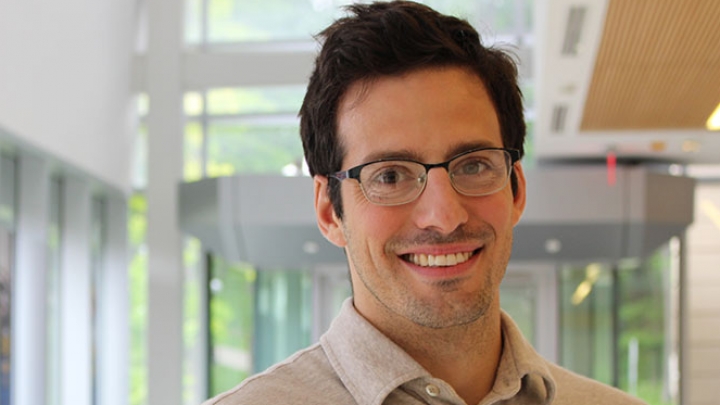
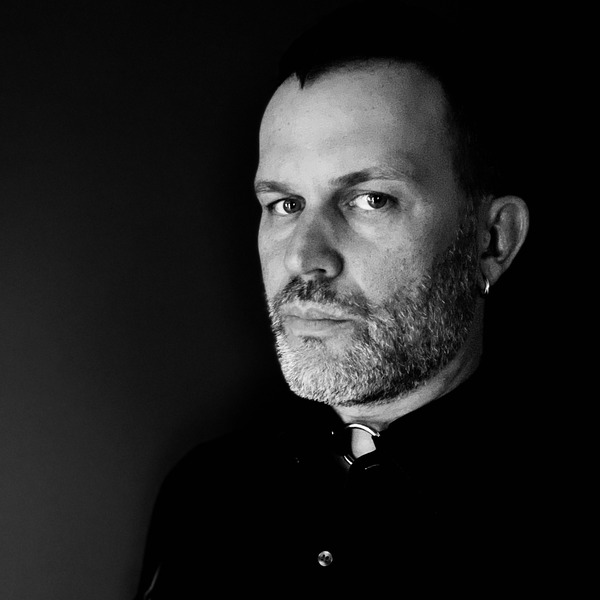
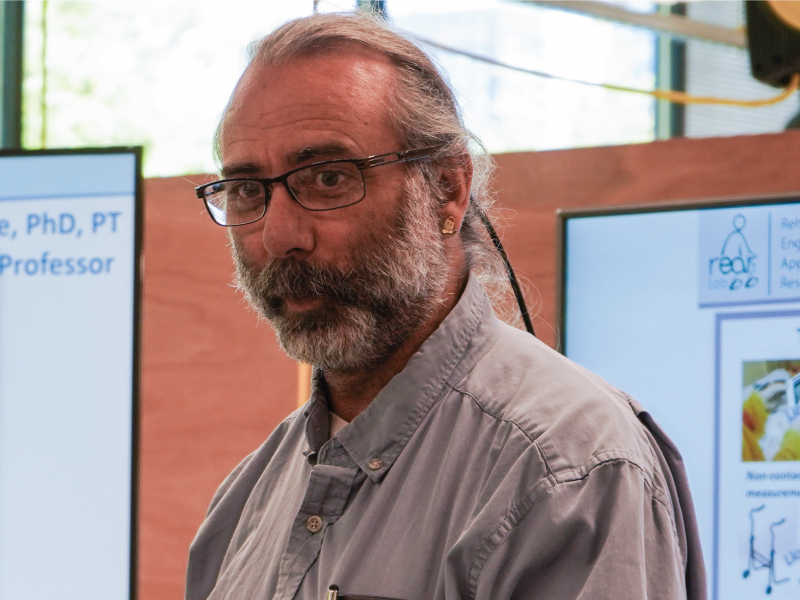
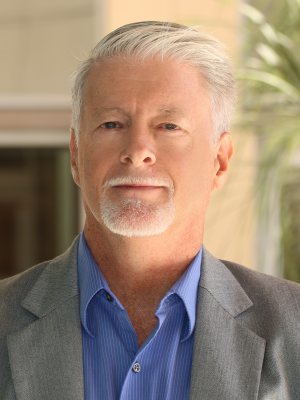
Roger Chamberlain is a Professor in the Department of Computer Science & Engineering at Washington University in St. Louis , affiliated with the McKelvey School of Engineering . He has been on faculty since 1989, specializing in digital systems, parallel processing, computer architecture, embedded systems, and reconfigurable logic. Education: DSc, Washington University in St. Louis, 1989 MS, Washington University in St. Louis, 1985 BS, Washington University in St. Louis, 1983 Research Interests: His work focuses on architecturally diverse computing systems, including specialized architectures for astrophysics and biology. He explores high-performance parallel/distributed applications, energy-efficient computation, and high-capacity I/O systems. He collaborates with industry partners like Exegy, Inc., VelociData, Inc., and BECS Technology, contributing to commercialization of university-developed technologies for data analysis and microprocessor-based controls. Grants & Awards: In 2021, he was a co-investigator on a $5M gamma ray astronomy mission grant. In 2018, he led an NSF-funded project ($1.2M) to enhance streaming application efficiency on diverse architectures. His consulting and industry ties reflect a commitment to bridging academic research with practical applications. Professional Contributions: He co-founded Exegy, VelociData, and BECS Technology. His lab website and Google Scholar profile provide additional insights into his work.
Dr. Hilary Cremin is the Head of the Faculty of Education at the University of Cambridge and holds the rank of Professor. Her work centers on peace education, conflict transformation, and innovative methodologies such as photo-voice, poetry, and autoethnography. She chairs the Cambridge Peace Education Research Group (CPERG), which promotes research and practice in peace education through seminars and online resources. Her research explores the intersection of education and peacebuilding, emphasizing ethical and embodied approaches to conflict resolution in schools and communities. Education : PhD in Education, University of Leicester PGCE, University of Oxford (Wolfson College) BA (Hons) in French and European Literature, University of Warwick Research Interests : Hilary’s work addresses global challenges in education and peacebuilding, including: Developing transrational approaches to peace education Reducing epistemic violence through reflexive methodologies Empowering youth through restorative justice and civic pedagogy Exploring embodiment and arts-based practices in educational research Awards : Fellow of the Royal Society of Arts Leadership and Service : In addition to her academic role, Hilary serves as Chair of the Degree Committee in the Faculty of Education and has extensive experience as a mediator and educational consultant. She has collaborated with schools, communities, and international organizations to advance conflict transformation and peacebuilding initiatives. Labs/Teams : Cambridge Peace Education Research Group (CPERG) — fostering global dialogue and practical resources for peace education researchers and practitioners.
David Christensen is a Professor of Philosophy and Director of Undergraduate Studies at Brown University. He holds a B.A. from Hampshire College and a Ph.D. from UCLA. Prior to Brown, he taught at the University of Vermont for 20 years. His research focuses on epistemology, formal and informal, with emphasis on rational belief constraints, evidential support, and epistemic disagreement. Current work explores how rational self-doubt should shape ideal rationality frameworks. Christensen’s notable contributions include Putting Logic in its Place (2004) and co-editing The Epistemology of Disagreement: New Essays (2013). His scholarship bridges formal methods with practical questions about belief revision and peer disagreement. Research interests include: logical constraints on belief, higher-order evidence, epistemic akrasia, and the implications of peer disagreement. He examines how self-aware agents navigate cognitive biases and conflicting evidence while maintaining rational integrity. Recent work emphasizes self-critique mechanisms and the ineliminable role of epistemic rationality. Publications span over 30 years, addressing topics like evidential symmetry, Bayesian epistemology, and the limits of rational reflection. His articles consistently explore foundational questions in epistemology using both formal and conceptual analysis. Christensen’s work is characterized by rigorous argumentation and interdisciplinary engagement with philosophy of science and decision theory. Teaching responsibilities include directing undergraduate studies and courses on epistemology, logic, and philosophy of science. No formal awards are listed, though his academic contributions are widely cited in epistemology literature. Labs/Teams: No specific research groups are mentioned, though his work contributes broadly to collective epistemology and formal methods in philosophy.
Prof. Alexander Geissler holds the position of Full Professor of Health Care Management at the School of Medicine (Med-HSG) within the University of St. Gallen. His research focuses on health systems research, health economics, and health policy, with particular emphasis on digital transformation in healthcare and patient-reported outcomes. He has contributed extensively to studies on healthcare quality improvement, public reporting systems, and the integration of artificial intelligence in medical diagnostics and screening programs. His work spans topics like optimizing hospital digital maturity (e.g., German DigitalRadar project), analyzing surgical outcomes (robotic vs. open prostatectomies), and evaluating patient empowerment through quality information. He has pioneered methodologies for interpreting patient-reported outcomes (e.g., EQ-5D-3L) and designing clinical dashboards to enhance care delivery. Recent research highlights include investigating AI applications in breast cancer screening and cost-effectiveness of remote patient monitoring post-joint replacement surgery. Geissler’s publications demonstrate a strong focus on healthcare policy implications, such as hospital capacity planning, payment systems for specialized care, and cross-country comparisons of healthcare transparency initiatives. His work frequently bridges academic rigor with practical policy recommendations, particularly in Switzerland and Germany. Notably, he has addressed low-value care reduction, price sensitivity in healthcare demand, and the socio-demographic factors influencing healthcare utilization. While no specific awards are listed, his prolific research output reflects sustained leadership in health systems analysis. His academic contributions are disseminated through the Alexandria Research Platform and international peer-reviewed journals.
Dr. Haiyan Liu is an Associate Professor of Quantitative Methods, Measurement, and Statistics in the Department of Psychological Sciences at the University of California, Merced, within the School of Social Sciences, Humanities, and Arts. She earned her Ph.D. in Quantitative Psychology from the University of Notre Dame (2018). Her research focuses on advanced statistical modeling of psychological and educational data, including high-dimensional, longitudinal, and social network data. She develops Bayesian methodologies and machine learning techniques to enhance understanding of human behavior, with recent emphasis on structural equation modeling, network dynamics, and nonparametric growth curves. Her work addresses challenges in survey methodology and behavioral data analysis. Dr. Liu’s educational background includes a Ph.D. in Quantitative Psychology from the University of Notre Dame (2018), complementing her current academic role. Her lab, accessible at https://sites.google.com/view/ucmhaiyanliu , supports her research activities. Her research interests span Bayesian SEM, social network analysis, and applications of machine learning to behavioral data, aiming to bridge methodological innovation with practical psychological inquiry. Her recent articles highlight advancements in Bayesian model selection, longitudinal sentiment analysis, and social network mediation. She emphasizes prior specification rigor in Bayesian frameworks and explores nonlinear relationships in social dynamics. Though no awards are explicitly listed, her contributions to statistical methodologies in psychological research reflect significant scholarly impact. Dr. Liu advises students in quantitative methods and has developed software tools like logistic4p for misclassification correction in logistic regression. Her work integrates computational methods with theoretical advancements, positioning her as a key contributor to modern quantitative psychology.
Dr. Rajesh Bhargave is an Associate Professor of Marketing at the Department of Analytics, Marketing and Operations within Imperial Business School, Imperial College London. He holds a B.B.A. from the University of Texas at Austin and a Ph.D. from the Wharton School of the University of Pennsylvania. His research focuses on consumer behavior, particularly how social contexts and digital tools influence decision-making and product evaluations. Dr. Bhargave’s academic journey includes prior faculty positions at the University of Texas at San Antonio before joining Imperial College London. He teaches across programs including MBA, Executive Education, and Pre-experience Masters, emphasizing practical application of marketing principles. His research explores two primary areas: (1) the impact of social environments on product preferences, analyzing shared versus solitary consumption experiences, and (2) how online technologies reshape consumer decision-making processes. Key topics include hedonic judgments, numerical processing in choices, and the psychological effects of digital cues like 'cloud' reminders. His publications span journals such as Journal of Consumer Research and Psychological Science , reflecting a strong focus on behavioral economics and consumer psychology. Notable themes include 'collective satiation,' 'cue-of-the-cloud effects,' and the role of round numbers in consumer perceptions of product longevity. Dr. Bhargave has advised students such as JORGE PENA-MARIN and Nicole Votolato Montgomery. While no scientific awards are explicitly listed, his work contributes significantly to marketing theory and practice. His research and teaching underscore the intersection of technology, social dynamics, and consumer behavior.
Jesse Capecelatro is an Associate Professor in the Departments of Mechanical Engineering and Aerospace Engineering at the University of Michigan. He leads the Computational Multi-phase/Multi-physics Flow Lab (CRG), focusing on numerical methods and data-driven models for complex flows in renewable energy, disease transmission, and space exploration. Ph.D., Mechanical & Aerospace Engineering, Cornell University (2014) M.S., Mechanical & Aerospace Engineering, Cornell University (2012) M.S., Mechanical Engineering, University of Colorado (2011) B.S., Mechanical Engineering, SUNY Binghamton (2009) His research spans fluid mechanics , multiphase flow , and high-performance computing , with applications in renewable energy systems , space exploration , and disease transmission modeling . Current projects include plume-surface interactions and turbulence modeling for particle-laden flows. Recent publications highlight advancements in multiphase flow instabilities and shock-particle interactions , reflecting his expertise in computational modeling of complex flows. CRG’s work often combines physics-based simulations with machine learning for predictive analysis. National Science Foundation CAREER Award Office of Naval Research Young Investigator Award ASME Pi Tau Sigma Gold Medal Capecelatro’s mentoring style emphasizes regular collaboration, with weekly meetings, annual progress reviews, and support for conference attendance (e.g., AIAA, APS DFD). His lab includes postdocs, doctoral students, and international collaborators, fostering interdisciplinary research in scientific computing and fluid dynamics . CRG develops open-source tools for multiphase flow simulation and contributes to textbook revisions like Fluid Mechanics, 7th Edition , co-authored with David Dowling. The team’s work bridges fundamental research and practical applications in energy and aerospace sectors.
Shakirah Hudani is an Assistant Professor in the Department of City and Regional Planning at the University of North Carolina, with an affiliation in the Department of African, African American, & Diaspora Studies. She holds a PhD in City and Regional Planning from UC Berkeley. Her work centers on African urbanism, post-conflict urban change, and spatial politics in East Africa. Key research focuses include Rwanda's post-genocide urban reconstruction, Nairobi's peripheral development, and Luanda's oil-driven transformations. Her research examines how urban spaces reflect and reshape social dynamics, particularly around memory, identity, and governance. Recent projects analyze commemoration practices in Rwanda, land disputes in Nairobi, and carceral architectures. She critiques master planning processes and explores grassroots urban agency in marginalized communities. Publications span urban studies, critical geography, and postcolonial theory, with a focus on decolonizing urban narratives. Her work bridges academic analysis with practical urban policy debates, emphasizing equity and participatory planning in transitional societies.
Professor Dominic Johnson is a prominent scholar in performance and visual culture at Queen Mary University of London, holding the position of Professor of Performance and Visual Culture in the Department of Drama, School of English and Drama. His research focuses on modern and contemporary art and performance post-1960, particularly marginalized and stigmatized practices. He has authored four books and edited six, with notable works including Unlimited Action: The Performance of Extremity in the 1970s (2019) and Critical Live Art: Contemporary Histories of Performance in the UK (2013). Johnson’s academic roles include former Head of the Department of Drama (2020–2023) and ongoing research leadership, such as a Leverhulme Trust Major Research Fellowship (2024–26). He has held prestigious fellowships at institutions like the University of Southern California and NYU. His research emphasizes archives, queer embodiment, and HIV/AIDS in art, with current projects including exhibitions on British-Pakistani artist Hamad Butt and a monograph on UK art and AIDS. Publications span peer-reviewed articles, edited volumes, and artist catalogues, addressing figures like Franko B, Ron Athey, and Anne Bean. He has supervised 14 doctoral students and actively engages in public lectures, curation, and institutional collaborations, including founding the Sexual Cultures Research Group. His work bridges academia and practice, reflecting a commitment to interdisciplinary discourse on performance, identity, and cultural politics.
Stephen H. Sprigle is a Professor at the Georgia Institute of Technology, holding joint appointments in the School of Industrial Design and the George W. Woodruff School of Mechanical Engineering. He is also a program faculty member in the Interdisciplinary Bioengineering Graduate Program. His research focuses on applied disability research, including wheelchair seating biomechanics, pressure ulcer prevention, and assistive technology design. Sprigle directs the Rehabilitation Engineering and Applied Research Lab (REAR Lab), emphasizing interdisciplinary collaboration between engineering, design, and healthcare. Educations: Ph.D. in Biomechanics, University of Virginia M.E. in Biomedical Engineering, University of Virginia MSPT in Physical Therapy, Mercy College B.S. in Engineering Science & Mechanics, University of Florida His career spans academia and clinical practice, with prior roles at Helen Hayes Hospital, Columbia University, SUNY Buffalo, and the University of Virginia. He has served as Director of Georgia Tech’s Center for Assistive Technology and Environmental Access and Interim Chair of the School of Industrial Design. Sprigle’s work bridges engineering innovation with healthcare needs to improve quality of life for individuals with disabilities. No scientific awards are explicitly mentioned in the provided text. Advising & Grants: No specific student advisees or grants are listed, but his leadership in the REAR Lab reflects ongoing research and development efforts in assistive technologies. Labs/Teams: Directs the Rehabilitation Engineering and Applied Research Lab (REAR Lab), focusing on disability-related technologies and clinical applications.
Ronald E. Rice is a Distinguished Professor and Arthur N. Rupe Endowed Professor in the Department of Communication at the University of California, Santa Barbara. He has held visiting positions at Nanyang Technological University in Singapore and the University of Amsterdam. His research focuses on environmental communication, public communication campaigns, organizational theory, and digital technology impacts. He has authored/co-authored numerous books, including the Oxford Handbook of Digital Technology and Society . Education: Columbia University (B.A., English Literature, 1971), Stanford University (M.A. and Ph.D., Communication Research, 1978/1982). Professional roles include Department Chair at UCSB (2013–2015), Co-Director of the Carsey-Wolf Center, and President of the International Communication Association (2006–2007). Research interests span environmental communication, digital divide analysis, and organizational communication. Recent work examines media multitasking, online misinformation, and pro-environmental behavior drivers. Over 230 refereed articles and book chapters highlight his contributions to media effects and technology studies. Notable awards include the Honorary Doctorate from Université de Montréal (2010), ICA Fellowship, and Fulbright Scholarships. His research integrates interdisciplinary methods, emphasizing social networks, media affordances, and policy implications. Advising and grants include leadership in public health communication campaigns and environmental initiatives. Collaborations span global institutions, reflecting his commitment to applied research in digital society challenges.
Joel Palka is an Associate Professor in the School of Human Evolution and Social Change at Arizona State University (ASU). His research focuses on Maya archaeology, ethnohistory, and cultural interaction in Mesoamerica, particularly in Chiapas, Mexico. He leads long-term collaborative projects with Lacandon Maya communities, emphasizing ritual landscapes, pilgrimage routes, and subsistence strategies. His work integrates archaeological, ethnographic, and historical methodologies. Key research areas include Mesoamerican warfare, sacred landscapes, and Lacandon Maya cultural resilience. He investigates how ritual practices, such as pilgrimage and cremation, reflect socio-religious dynamics. His projects at sites like Mensabak explore overland trade networks, fortified sanctuaries, and ecological adaptations like aquaculture. Recent studies highlight Lacandon Maya knowledge systems, including indigenous conservation practices and artifact repatriation. His interdisciplinary approach bridges archaeology with contemporary community engagement, addressing themes of identity, environment, and colonial impact. Publications span 30 years, with a focus on ritual symbolism, ethnohistory, and archaeological site analysis. He has collaborated with international scholars and institutions on projects such as the Paso de la Amada ceremonial center and the repatriation of Maya artifacts.
Geoffrey Cook is a Senior Lecturer at the Scripps Institution of Oceanography, UC San Diego, within the VC Marine Sciences school and Geosciences Research Division. He holds a PhD in Geology from Washington State University (2009), an M.S. from Boise State University (2002), and a B.A. from Franklin and Marshall College (2000). His research focuses on physical volcanology, including the volcanic evolution of large calderas, petrogenesis of magmas, and geoscience education. Notable projects include studies on the Otowi Member of the Bandelier Tuff and crustal assimilation processes in Iceland’s Fagradalsfjall Fires (2021). He emphasizes innovative teaching methods, such as active learning and experiential education, to address student misconceptions in geoscience. Dr. Cook has received multiple teaching awards, including the 2023 Scripps Outstanding Undergraduate Teaching Award and the 2018 UCSD Panhellenic Chapters Outstanding Faculty Award. His publications span volcanology, geochemistry, and educational pedagogy, with recent work in Nature (2024) and active learning strategies in STEM education. His academic profile reflects a commitment to both advancing geoscience research and improving undergraduate education through evidence-based practices.
Dr Bence Bardos is a Lecturer in Media Production & Digital Content Creation at City, University of London, affiliated with the School of Communication & Creativity and the Department of Media, Culture and Society. He holds a PhD and MA in Media and Film from the University of Kent and has previously taught at the University of Kent and Kodolányi János University in Budapest. His research centers on digital participatory cultures, focusing on remix culture, online memes, parody, transmedia storytelling, and the cultural meanings embedded in internet phenomena. He explores how digital communities reinterpret media through irony, humor, and transformation, particularly in fandoms like Shrek and horror forms such as creepypasta. His upcoming publications examine ironic Shrek fandom, the communicative role of the Pepe the Frog meme, and the nostalgic linkage between 2000s Cartoon Network and online horror. These works reflect a broader interest in how digital platforms reshape narrative, identity, and cultural memory. Dr Bardos is also an active media practitioner, with experience as a television editor, video producer, and filmmaker. His creative works have been recognized at international short film festivals. He is passionate about fiction filmmaking, microbudget cinema, and experimental or 'weird' films. PhD in Media Studies, University of Kent (2018–2023) MA in Film with Practice, University of Kent (2016–2017) BA in Film, University of Kent (2013–2016) He has delivered papers at the ECREA European Communication Conference and the Two Decades of Shrek Online Symposium. His interdisciplinary background bridges media theory, film practice, and digital culture, informing both his teaching and research.
Filippo Carlo Wezel is a Full Professor of Organization and Management at the Faculty of Economics of Università della Svizzera italiana (USI), where he also serves as Director of the Institute of Management and Organisation. He holds additional research affiliations as a Visiting Research Professor at emlyon Business School (France) and a Research Fellow at Judge Business School, University of Cambridge. He plays a significant editorial role as Senior Editor at Organization Studies and serves on the editorial review boards of Organization Science , Strategic Entrepreneurship Journal , Strategic Organization , and the Advisory Board of Research in the Sociology of Organizations . His educational background includes a PhD in Management from the University of Bologna. Prior to joining USI in 2009, he held academic positions at the University of Groningen (post-doctoral researcher) and Tilburg University (Assistant and Associate Professor). He has also been a visiting scholar at leading institutions including Wharton, MIT, Columbia, Duke, London Business School, LSE, and Hong Kong University. His research centers on organizational identity, managerial and inter-firm mobility, entrepreneurship, and institutional theory. His recent publications explore identity hybridization in political parties, category dynamics in creative industries, historical organizational practices in colonial firms, and stigma in emerging markets. He frequently employs longitudinal, historical, and experimental methodologies, often bridging sociology and management. The most recent articles (2020–2025) reflect a strong trajectory in the sociology of organizations, with recurring themes of identity, categorization, legitimacy, and mobility. He investigates how social evaluations, historical constraints, and institutional environments shape organizational behavior and strategic positioning. His work spans diverse contexts—from 18th-century Lyon silk traders to modern ICT firms and medical marijuana markets—demonstrating a broad empirical and theoretical reach. Scientific Honors and Editorial Roles: Senior Editor, Organization Studies Editorial Review Board, Organization Science Editorial Review Board, Strategic Entrepreneurship Journal Editorial Review Board, Strategic Organization Advisory Board, Research in the Sociology of Organizations He has extensive experience in teaching organizational theory and behavior at undergraduate, master’s, PhD, and executive levels. His research has been published in top-tier journals such as Administrative Science Quarterly , American Sociological Review , Academy of Management Journal , and Strategic Management Journal . He leads a vibrant research agenda at USI, supported by a broad international network, though specific grants and funded projects are not detailed in the provided text. He is also involved in mentoring students and shaping the next generation of organizational scholars, though a list of advisees is not available. Filippo Carlo Wezel is a key figure in the European organizational studies community, leading the Institute of Management and Organisation at USI and fostering interdisciplinary dialogue between organization theory and strategy. His work combines deep historical insight with contemporary theoretical innovation, contributing significantly to our understanding of how organizations and careers evolve under institutional and social pressures.