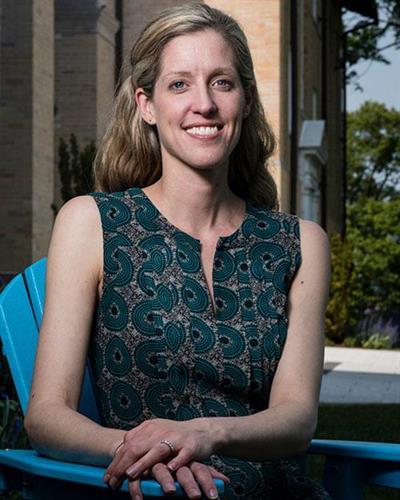
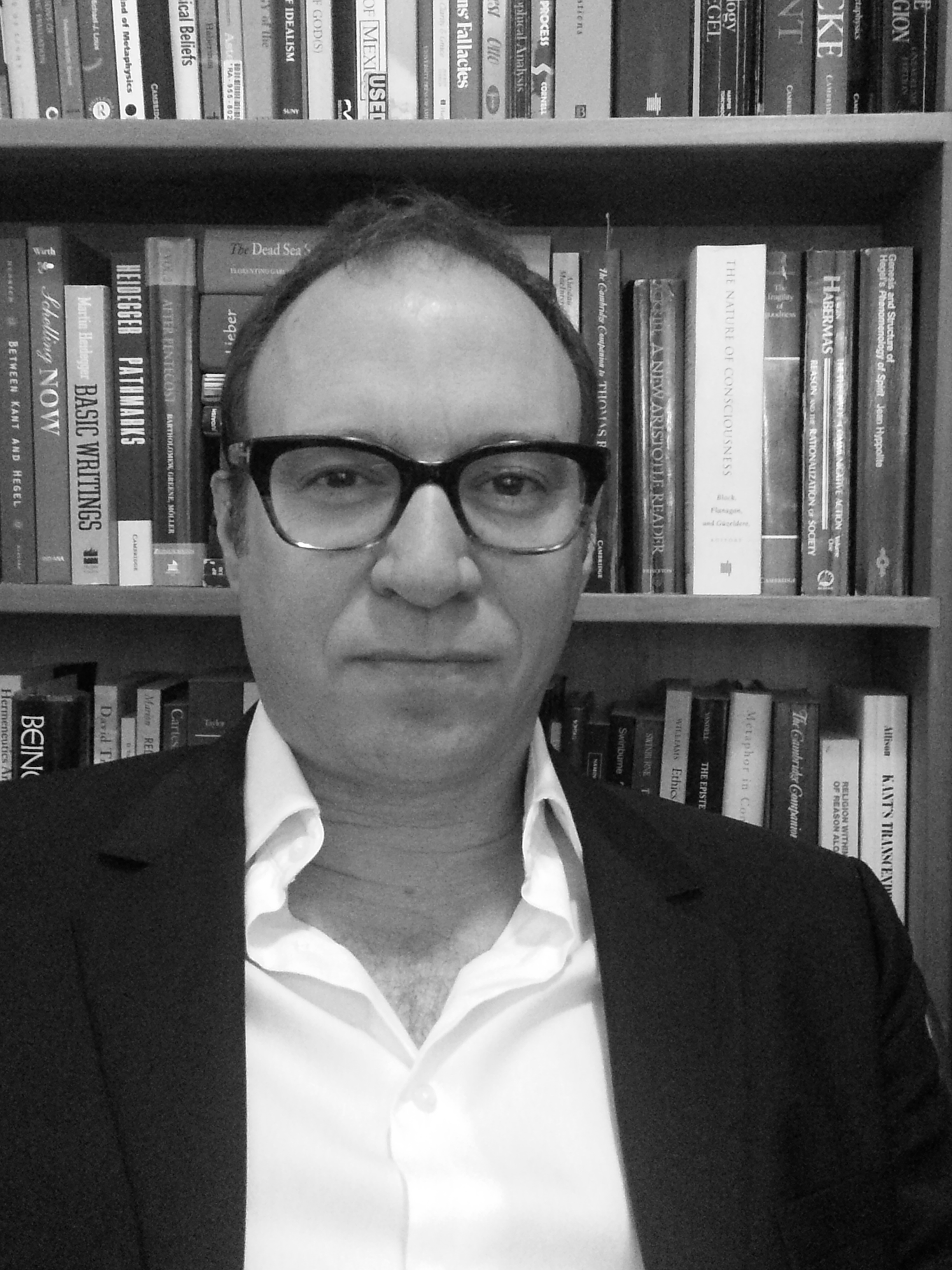
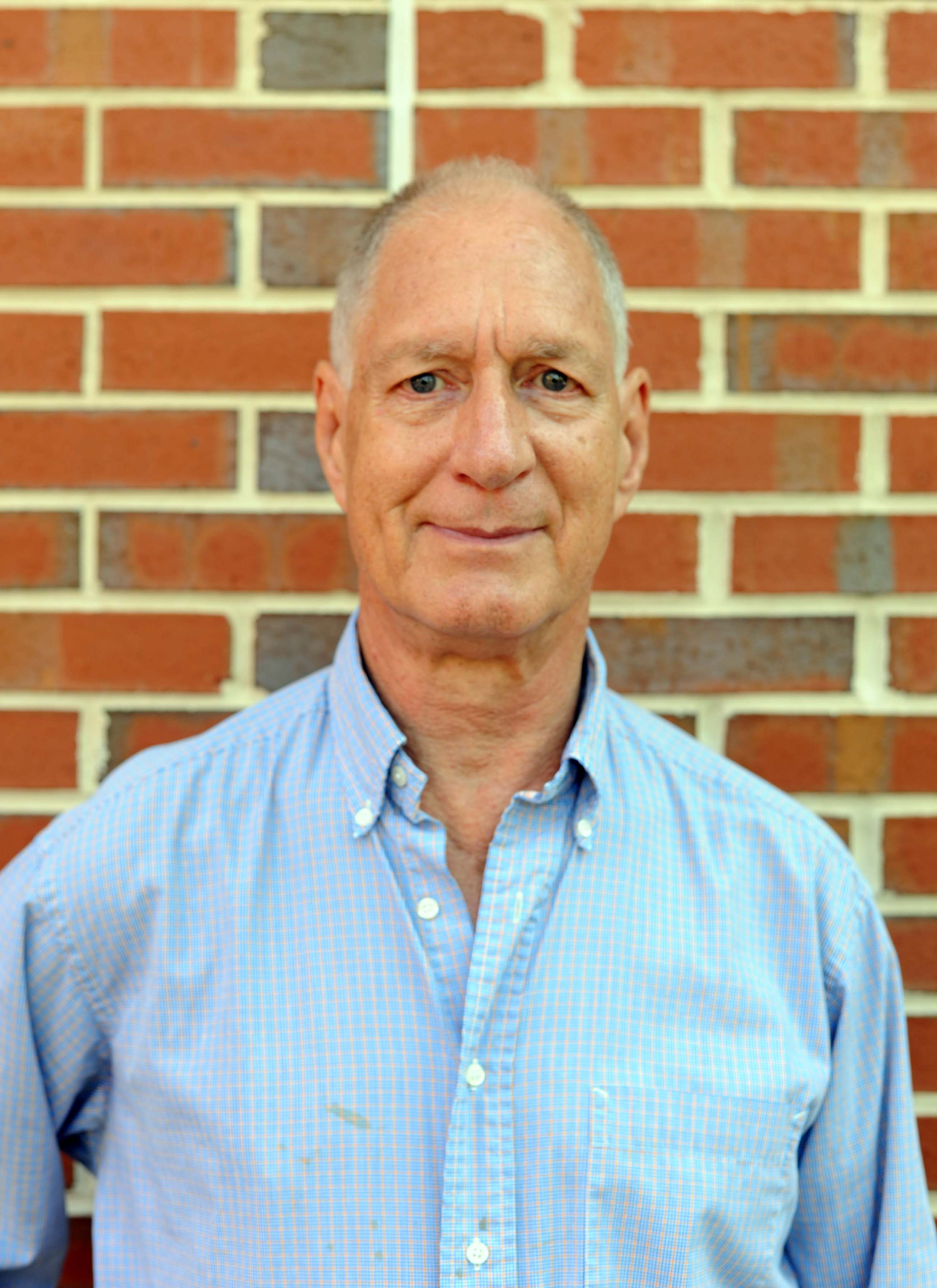
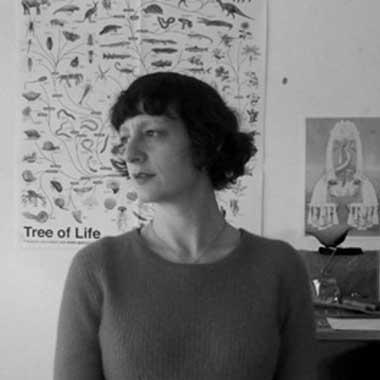
Rachel Fraser is an Associate Professor of Philosophy at the Massachusetts Institute of Technology (MIT), specializing in epistemology, feminist philosophy, and ethics. She holds a prestigious British Academy Wolfson Fellowship (2022–2025) supporting her work on the epistemology and politics of narrative. Her research interrogates intersections between epistemology, social structures, and political theory, with notable contributions to debates on dogmatism, aesthetic injustice, and immanent critique. Fraser’s academic output spans journals like Philosophy and Phenomenological Research and Ethics , addressing topics from testimonial epistemology to the ethics of metaphor. She is particularly known for developing 'volitionism'—a novel approach to belief formation—and analyzing epistemic dimensions of compulsory heterosexuality. Her current book project explores narrative’s role in shaping political and epistemic landscapes. Received the 2021 Marc Sanders Prize in Epistemology for work on dogmatism puzzles Advises three PhD students focusing on feminist epistemology, political realism, and family abolition theory Active in public philosophy through essays for The Boston Review and The Times Literary Supplement Her interdisciplinary approach bridges analytic philosophy with feminist theory, addressing systemic epistemic injustices while advancing formal epistemology through collaborative work (e.g., with Beau Madison Mount on unrestricted quantification). Teaching materials are openly shared to foster pedagogical collaboration across institutions.
Elizabeth Race is an Associate Professor in the Department of Psychology at Tufts University's School of Arts and Sciences. She holds a PhD in Neuroscience from Stanford University (2009) and completed postdoctoral training at Boston University's Memory Disorders Research Center. Her Integrative Cognitive Neuroscience Lab investigates the neural mechanisms of learning, memory, and cognitive control using fMRI and EEG techniques. Research focuses on how memory adaptively guides behavior and enables future simulations, examining both healthy adults and clinical populations with amnesia. Recent publications explore temporal dynamics of memory formation, misinformation susceptibility, and neural mechanisms of memory protection. Her work demonstrates consistent innovation in experimental paradigms linking cognitive psychology with neuroscience. She teaches courses including Brain & Behavior, Cognitive Neuroscience, and Statistics at undergraduate and graduate levels. Current research projects examine rhythmic neural synchronization during encoding and ventromedial prefrontal contributions to memory integration. Lab activities include collaborations with the Center for Applied Brain and Cognitive Sciences and research funded by the Grammy Museum Foundation.
Cass Fisher is a Professor in the Department of Religious Studies at the University of South Florida, specializing in Jewish theology and philosophy. His research bridges rabbinic theology, modern Jewish thought, and philosophical approaches to religious language, with particular focus on figures like Franz Rosenzweig. Fisher's scholarly interests center on: Theological reference and language in Judaism Rabbinic hermeneutics and theological discourse Modern Jewish philosophy (especially Rosenzweig and Soloveitchik) Pedagogical approaches in religious studies Intersections of continental philosophy and Jewish theology His publications demonstrate consistent focus on theological epistemology, divine attributes, and redemptive concepts across rabbinic and modern Jewish sources. Recent work shows growing engagement with comparative theology and religious language theory. Fisher actively contributes to academic pedagogy through workshops at the Wabash Center and University of Chicago Divinity School. He serves as senior editor for the St. Andrews Encyclopedia of Theology's Jewish theology section.
Susan Brennan is a Professor, Graduate Program Director, and Associate Chair in the Department of Psychology at Stony Brook University . Her work bridges psycholinguistics and human-computer interaction, focusing on how eye gaze, gesture, and dialogue shape communication. Education: B.A. in Anthropology, Cornell University (1975) M.S.V.S. from Architecture Machine Group (now MIT Media Lab), MIT (1982) Ph.D. in Psychology (Psycholinguistics and Cognitive Science), Stanford University (1990) Research Interests: Brennan investigates interactive dialogue , eye-tracking in language processing , and spoken dialogue systems . Her studies explore how speakers adapt to listeners through linguistic and visual cues, with applications in AI-driven communication tools. Key Research Themes: Recent work includes modeling conversational hedges using LLMs, analyzing risk perception through immersive visualizations, and computational approaches to post-conviction decision-making. Her publications reflect interdisciplinary collaborations in psychology, AI, and environmental science. Scientific Awards: Dean's Award for Excellence in Service to Graduate Education (2012) Chancellor's Research Recognition Award (2003) NSF Graduate Research Fellowship (Stanford, 1986-1989) American Can Company Full Scholarship (Cornell, 1971-1975) Grants: She has led projects such as EAGER: Modeling Distinctive Partners in Adaptive Spoken Dialog (NSF, 2010-2012) and co-led an NSF SoCS interdisciplinary project (2011-2015) on gaze cues and collaborative behavior in psychology and computer science.
David D. Kim is a Professor at the Department of European Languages and Transcultural Studies and serves as Associate Vice Provost at UCLA's International Institute. His research bridges postcolonial studies, global/migration dynamics, human rights, and digital humanities. He leads the Global Studies Summer Program in The Hague, focusing on international justice frameworks. Kim holds a Ph.D. from Harvard University and has held prestigious fellowships from ACLS and Alexander von Humboldt Foundation. Education: Ph.D., Harvard University; M.A., Harvard University; A.B./B.S., Duke University. Research emphasizes transnational entanglements, cosmopolitan ethics, and solidarity concepts. Notable works include Arendt’s Solidarity (2024) and Cosmopolitan Parables (2017). His articles explore German literature’s intersection with human rights discourses and global literary histories. Awards include UCLA’s Distinguished Teaching Award (2020) and Gold Shield Prize (2023-24). Teaching innovations include community-engaged courses partnering with institutions like the Thomas Mann House. Active in interdisciplinary projects like WorldLiterature@UCLA, integrating computational methods with cultural analysis.
Dr. Daniel G. Schwartz is a Professor in the Computer Science Department at Florida State University (FSU). He holds a B.A. in Mathematics from Portland State University (1969), an M.S. in Mathematics from Simon Fraser University (1974), and a Ph.D. in Systems Science from Portland State University (1981). His career includes roles as Assistant Professor at Binghamton University (1981–1983) and Florida State University (1984–1989), and Associate Professor at FSU (1989–2021) before becoming a full Professor in 2021. Dr. Schwartz's research focuses on artificial intelligence, formal methods, and autonomous systems. Key areas include nonmonotonic reasoning, fuzzy logic, and applications to mission planning for autonomous vehicles (e.g., driverless cars, unmanned naval systems). He has pioneered work on dynamic reasoning systems, qualified syllogisms, and agent-oriented epistemic reasoning. His recent projects involve secure communications for unmanned aerial vehicles (funded by the U.S. Navy) and path planning for autonomous surface/underwater vehicles with doctoral student Mohamad Imran Chowdhury. Teaching includes courses on artificial intelligence, Java programming, databases, and theoretical computer science (e.g., automata theory, formal languages). His work on network security includes a U.S. Army-funded project (2001–2006) developing case-based reasoning systems for intrusion detection. His research outputs span over 20 years, with contributions to robotics, formal logic, and fuzzy systems. Current projects emphasize autonomous vehicle navigation and event possibility theory for decision-making under uncertainty.
Matthew Stone is a Professor in the Department of Computer Science at Rutgers University, New Brunswick. His primary affiliations are within the School of Arts and Sciences, with cross-listed involvement in Cognitive Science and Perceptual Science. He focuses on designing conversational agents that integrate natural language understanding and generation with grounded, meaningful interactions. Key roles include teaching courses such as CS 440 (Introduction to AI) and CS 504 (Computational Modeling). His research emphasizes the computational foundations of meaning, integrating philosophy, linguistics, and AI to create systems that contextualize communication through environmental grounding, intentional reasoning, and collaborative dialogue. Notable projects include the SPUD system for natural language generation and work on multimodal interaction through gesture and facial signals. He has been funded for projects like 'Community-led Language Technology for NJ: A Design Justice Approach.' Education: PhD in Computer Science (assumed based on faculty role). Awards: Influential Paper Recognition (SIGGRAPH '94), RDI^2 Fellowship for Malihe Alikhani. Grants: Community-led Language Technology Project (2021). Stone collaborates with interdisciplinary teams and mentors students like Malihe Alikhani. His labs explore topics such as embodied conversational agents, computational pragmatics, and language grounding in robotics. Recent work emphasizes ethical and societal implications of AI, advocating for inclusive technology design.
Craig Chambers is a Professor and Department Chair in the University of Toronto Department of Psychology. His research focuses on human communication , cognitive science , and psycholinguistics , particularly language processing across the lifespan and communication with social robots . Education: B.A. in Linguistics, York University M.A. in Linguistics, University of Toronto M.A. in Brain & Cognitive Sciences, University of Rochester Ph.D. in Brain & Cognitive Sciences and Linguistics, University of Rochester His lab investigates how speakers balance verbal and non-verbal information (gestures, intonation, environmental context) to convey meaning, and how listeners integrate these cues during comprehension. Recent studies explore pragmatic inferences , lexical competition , age-related differences in language processing, and social robotics applications . Key article trends include child language acquisition , speech perception in aging populations, multimodal communication , and language prediction mechanisms . Lab activities blend rigorous scientific inquiry with playful experimentation, including initiatives like "The PAL LAB PLAYS!"
Jack Sidnell is a Professor of Anthropology at the University of Toronto's Mississauga Campus (UTM), with a cross-appointment in Linguistics. He is on leave from July 1, 2025, to June 30, 2026. His academic journey began with a PhD in Anthropology from the University of Toronto (1998), where he specialized in Linguistic Anthropology. Education: PhD, University of Toronto, 1998. Sidnell's research intersects language structure , social interaction , and reflexive reanalysis , particularly in the context of language reform and revolutionary politics in 20th-century Vietnam. His work extends to the Caribbean , India , and North America , focusing on how linguistic practices mediate social hierarchies, ethical judgment, and cultural models. Recent publications highlight trends in Vietnamese language reform , conversational repair , and register formation as tools for mass mobilization. These studies often bridge Marxist theory , interactional practices , and feminist sociolinguistics , examining asymmetries in communication labor.
Gergely Csibra is a Professor and Principal Investigator at the Central European University. He leads the Cognitive Development Center, focusing on cognitive development in human infants, particularly how infants understand actions, social interactions, and communication. His research employs behavioral and neuroimaging methods to explore topics like social cognition, episodic memory, and symbol use. His academic background spans developmental psychology and cognitive science. Current and former PhD students include Mariem Diané, Denis Tatone, and others. Csibra’s work emphasizes methodological diversity, integrating experimental and theoretical approaches. Research interests include infants' understanding of social relationships, mental state attribution, and symbolic representation. His studies investigate how infants interpret communication, learn from others, and form social evaluations. Key themes involve the cognitive foundations of cooperation and communication in early development. Despite prolific publication output (over 100 articles listed), no explicit scientific awards are cited in the provided text. His lab, the Cognitive Development Center, serves as a hub for collaborative research projects and methodological innovation in developmental science.
Seyed N. Mousavian is an Assistant Professor in the Department of Philosophy at Loyola University Chicago (LUC), joining in September 2021. Previously, he conducted a six-year research project on the Aristotelian tradition at the University of Gothenburg, Sweden, and held an associate professorship at the School of Analytic Philosophy, Institute for Research in Fundamental Sciences (IPM), Tehran. He earned his PhD in Philosophy from the University of Alberta, Canada, and received traditional Islamic education in Philosophy, Theology, and Legal Theory at Marwī Seminary, Tehran. His research focuses on philosophy of language, philosophy of logic, metaphysics, and medieval Islamic/Arabic philosophy, with a particular emphasis on Avicenna's contributions. He has published widely in journals like Mind and Language , Pacific Philosophical Quarterly , and Canadian Journal of Philosophy , as well as edited volumes on topics ranging from the internal senses in the Aristotelian tradition to the philosophical legacy of Umar Khayyam. His work bridges analytic philosophy with historical and comparative approaches, exploring themes such as semantic theory, ontological commitments, and the interplay between medieval and contemporary thought. Mousavian’s academic career includes co-editing The Internal Senses in the Aristotelian Tradition (2020) and contributing entries to the Stanford Encyclopedia of Philosophy . His research has also extended to debates on primary propositions, gappy propositions, and the historical development of empiricism in Islamic philosophy. Despite his extensive publication record, Mousavian has not yet been mentioned as having received specific scientific awards in the provided texts.
Bonnie Camplin is a Senior Lecturer in Fine Art at Goldsmiths, University of London, where she has been teaching since prior to 2018. Her academic career includes serving as a guest professor at Städelschule in Frankfurt (2008-2010), program mentor for LUX Associate Artists (2012-2013), and workshop leader for the Hayward Gallery's Wide Open School (2011). She has lectured at numerous prestigious institutions including the Slade School of Art, Central Saint Martins, the Royal Academy School, and Oxford's Ruskin School of Drawing and Fine Art. Camplin received her formal education at St. Martins School of Art, earning a BA (Hons) in Fine Art - Film and Video (2:1) from 1989-1992, followed by a Post Graduate Diploma in Advanced Photography from 1995-1996. Her research interests span a unique synthesis of contemporary art practice with esoteric knowledge systems, alternative physics theories, consciousness studies, and perception theory. Camplin's work explores the nature of reality through what she describes as 'gnostical modality' or 'dimensional gates,' investigating spirals, time consciousness, and the holographic nature of reality. She has spent 25 years researching Celtic ritual, quantum physics, extrasensory perception, experimental theatre, anomalous psychology, military science, and femtotechnology, synthesizing these into a comprehensive theory of perception and ontology. Her practice blends artistic creation with what she terms 'psionic interaction with the rest of nature,' moving beyond traditional gallery-based work toward more direct engagement with consciousness and the natural world. Her publications from 2014-2025 reveal a clear trajectory from traditional art objects toward more conceptual and interactive practices, with increasing focus on consciousness, perception, and alternative knowledge systems. The 2016-2023 period shows a significant shift from gallery-based exhibitions toward more collaborative, discursive formats including panel discussions, interviews, and theoretical explorations of cosmic consciousness, military-industrial critique, and alternative physics. Her most recent works like 'Plasma is the Sister of Water' (2025) and 'Caribic Matter' (2024) indicate continued exploration of ecological and metaphysical themes through interdisciplinary approaches. Paul Hamlyn award for artists (2014) Turner Prize nomination (2015) As an educator, Camplin has mentored numerous students through her teaching positions, with particular emphasis on encouraging students to explore beyond traditional gallery systems. She has actively reworked public materials for her program of study to de-emphasize the gallery system as the ultimate destination for artists, instead promoting more fluid, less aspirational approaches to artistic practice. Her teaching philosophy centers on the belief that 'all humans will realize that they are born creators,' challenging the professionalized notion of 'artist' as a 'special case.' She has conducted unconventional workshops including remote viewing sessions and field trips to factories, reflecting her commitment to experiential learning that connects art with broader knowledge systems. While not affiliated with a traditional laboratory setting, Camplin's creative practice functions as a research facility, particularly evident in her 2015 Turner Prize exhibition 'The Military Industrial Complex,' which took the form of an experimental research space. She has developed innovative conceptual frameworks around mental mapping of natural environments, especially her work with a 200-acre forest in Cumbria as a model for understanding neural networks and thought processes. Living off-grid in a yurt on the edge of an ancient forest, she integrates her physical environment directly into her research methodology, using the forest as both subject and tool for exploring consciousness and perception.
Herbert H. Clark is the Albert Ray Lang Professor of Psychology at Stanford University. His research focuses on communication processes in everyday language use, particularly the mechanisms of conversational grounding, common ground establishment, and the interplay between speech and non-verbal cues. He has authored seminal works like Psychology and Language and Using Language , critically analyzing statistical methodologies in psycholinguistics and exploring discourse dynamics. Affiliations: Stanford University (Psychology Department), Former FRIAS Fellow (Oct-Dec 2012). Clark's research interests span psycholinguistics, pragmatics, and social cognition. He pioneered studies on 'grounding theory'—how conversational participants establish shared understanding—and investigated phenomena like indirect speech acts, quotation, and speech disfluencies. His FRIAS project explores performative depictions in discourse, analyzing how gestures, demonstrations, and other embodied actions contribute to communication beyond verbal speech. Honors include Guggenheim Fellowship, membership in the American and Royal Dutch Academies of Arts and Sciences, and a lifetime achievement award from the Society for Text and Discourse. His work bridges psychology and linguistics, emphasizing collaborative aspects of communication.
Hiromichi Hosoma is a Professor at Waseda University's Faculty of Letters, Arts and Sciences, where he has been teaching since 2019. Previously, he was affiliated with The University of Shiga Prefecture's School of Human Cultures from 1995 to 2019. He holds a Doctor of Science degree from Kyoto University Graduate School and specializes in the study of human interaction through bodily movements, gestures, and multimodal communication. Professor Hosoma's research focuses on how multiple people coordinate their bodily movements and spatial awareness in various settings including daily conversations, traditional performing arts, and caregiving situations. His work spans cognitive science, social psychology, linguistics, and social welfare, with particular attention to interaction analysis, conversation analysis, gesture studies, onomatopoeia, and elderly care. He investigates how speech and gesture work together to create shared understanding in social contexts, examining phenomena from mundane activities like card games and page-turning to specialized settings like tap dance instruction and dementia care. His scholarly output reveals a consistent focus on multimodal interaction across diverse contexts, with recent work examining latency in telecommunication, weight representation through touch, and deaf-hearing interaction in dance instruction. His publications demonstrate an interdisciplinary approach that bridges cognitive science with practical applications in healthcare and cultural analysis. Professor Hosoma has secured multiple research grants from the Japan Society for the Promotion of Science, including his current project on home care for elderly people with dementia (2025-2028). He is an active member of the Japanese Cognitive Science Society, Qualitative Research in Psychology, and the Japanese Association of the Sociolinguistic Sciences, contributing to both academic discourse and public understanding through book reviews and media commentary on manga, animation, and visual culture.
Christopher Fennell is a Professor in the School of Psychology at the University of Ottawa, where he has been a faculty member since January 2006. His research explores infant speech perception, early word learning, and the interplay between phonetic processing and cognitive development, particularly in bilingual contexts. His research interests focus on how infants perceive phonetic detail in speech and how this perception supports early language acquisition. He investigates how familiarity with words and objects enhances infants' ability to access sound details, bridging developmental psychology and linguistics. His work has implications for understanding the foundations of language in children, especially in bilingual environments. Fennell's research contributes to key areas such as phonology, cognitive development, infant language processing, and bilingualism. Though no specific publications are listed, his work aligns with interdisciplinary studies in psychology, linguistics, and child development. Infant Speech Perception Phonology and Language Development Bilingual and Multilingual Acquisition Cognitive Foundations of Language Developmental Psychology Child Health and Development Christopher Fennell advises students in developmental psychology and cognitive science, though no specific advisees are listed. He has not been mentioned in connection with specific grants, but his long-standing position and research program suggest sustained funding support. He is affiliated with the Department of Psychology at the University of Ottawa and contributes to graduate education through seminars in cognitive and language development. He is involved in research related to infant and child development, potentially within a developmental laboratory or research group at the University of Ottawa, though no specific lab or team name is provided in the text.