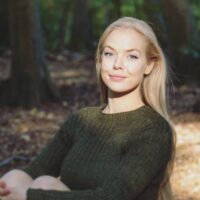
Linda Wegley Kelly is an Associate Researcher at the Marine Biology Department of Scripps Institution of Oceanography, UC San Diego. Her research focuses on microbial influences on coral reef ecosystems, employing molecular approaches to study biogeochemical interactions and microbial dynamics. She holds a B.S. in Biology (2004) and a Ph.D. in Cell & Molecular Biology (2013) from San Diego State University. Her research interests include microbial ecology, reef biogeochemistry, and symbiotic interactions between marine organisms. She investigates how microbial communities mediate nutrient cycling and ecosystem resilience, particularly under environmental stressors like warming and eutrophication. Her work spans coral restoration techniques, microbial metabolism of dissolved organic matter, and the role of viruses in reef ecosystems. Recent studies highlight coral-microbe interactions, microbial responses to climate change, and the development of innovative substrates for larval settlement. Dr. Kelly collaborates on NSF-funded projects, including studies on microbial metabolisms and reef restoration engineering. Her lab explores molecular-level processes linking microbial activity to ecosystem health, with implications for coral reef conservation. Her research has been published in high-impact journals, emphasizing interdisciplinary approaches combining field studies, genomics, and advanced analytical chemistry.
MARTIN TRESGUERRES is a Professor in the Department of Marine Biology at the Scripps Institution of Oceanography, UC San Diego. His research focuses on the physiological mechanisms underlying marine organism survival, with emphasis on acid-base regulation, ion transport, and symbiotic relationships. He holds a Diploma from the University of Buenos Aires and a PhD from the University of Alberta. Research interests include pH regulation in aquatic organisms, cellular signaling pathways, and symbioses in marine environments. Key studies explore coral reef resilience to environmental stressors, symbiotic interactions in jellyfish and cephalopods, and ionocyte function in fish. Recent publications highlight advancements in coral micropropagation, symbiosis mechanisms, and impacts of ocean acidification on marine physiology. Collaborative NSF-funded projects address coral reef photophysiology and bio-optics. His work integrates molecular, cellular, and organismal approaches to understand marine life adaptations. Notable contributions include identifying molecular pH sensors in corals and elucidating V-type proton pump roles in symbiotic processes. Current research emphasizes nanotechnology applications for coral conservation and biomineralization mechanisms.
Radu Guiaşu is an Associate Professor in the Department of Biology, Faculty of Science at York University, affiliated with the Glendon Campus. He is eligible to supervise graduate students in the Biology Graduate Program and is actively engaged in research on freshwater and burrowing crayfish in Ontario. Research Interests: Ecology and Conservation of Freshwater Crayfish Invasion Biology and Native Range Concepts Biogeography and Distribution Patterns Animal Behavior (Ethology) in Crustaceans Biodiversity Metrics and Ecological Theory Systematics and Taxonomy of Decapod Crustaceans His recent publications reflect a consistent focus on challenging established paradigms in invasion biology, particularly the concept of 'native range,' while also advancing quantitative tools for biodiversity assessment. His work spans empirical field studies, theoretical ecology, and critical analysis of conservation frameworks. Scientific Contributions: Revitalized the weighted Gini-Simpson index for biodiversity measurement Critically examined logical fallacies in invasion biology Authored comprehensive reviews on Cambarus and Fallicambarus crayfish Studied aggressive behaviors and distribution patterns of Ontario crayfish species Dr. Guiaşu advises graduate students in the Biology program and contributes to academic discourse through publications in journals such as Hydrobiologia , Conservation Biology , and Journal of Crustacean Biology . While specific grants are not listed, his sustained research output indicates ongoing scholarly activity. His work bridges empirical ecology with philosophical and methodological critiques, contributing to both applied conservation and theoretical advancement in ecological science.
Rebecca E. Holt is a Researcher at the University of Oslo (UiO), affiliated with the Centre for Ecological and Evolutionary Synthesis (CEES) within the Institute of Biosciences (IBV). Her work focuses on population ecology, particularly the effects of environmental variability, climate change, and fishing on North Atlantic fish stocks like Barents Sea cod. She holds a PhD from the University of Bergen (2015) and conducted postdoctoral research at Griffith University and CEES. Holt leads the NFR Young Research Talent Grant project 'Back to the Future for Cod,' investigating cod resilience under climate and food web changes. Her research combines mechanistic modeling, statistical analysis, and historical data to address fisheries sustainability. Major projects include CoDINA (Cod Diet and Food Web Dynamics) and FISHCOM, collaborating with international institutions like IMR and CEFAS. Holt’s expertise spans fisheries management, climate adaptation, and biodiversity conservation. Key contributions include studies on cod dietary shifts, climate-driven population dynamics, and predator-prey interactions. She has published extensively in journals like Scientific Reports , Ecology , and ICES Journal of Marine Science , with a focus on interdisciplinary solutions for marine ecosystems.
Dr. Guillem Mateu Vicens is a Senior Lecturer in the Department of Zoology at the University of the Balearic Islands (UIB). His academic career spans diverse marine ecological and sedimentological research, with a focus on foraminiferal assemblages, seagrass ecosystems, and environmental monitoring. He teaches graduate courses including Marine Biology, Advanced Marine Biology, and Management of Marine Resources. Key Research Interests: Foraminiferal bioindicators for pollution and ecosystem health Carbonate sedimentation in tropical and Mediterranean systems Seagrass meadow dynamics and paleoenvironmental reconstruction Microplastic impacts on marine organisms (e.g., Holothuria tubulosa) Recent publications highlight his work in: Red Sea and Maldivian carbonate systems Eocene-Pleistocene paleoenvironmental analysis Modern and fossil seagrass indicator studies Marine pollution assessment via benthic organisms
Dr. Katie Dubois is a Lecturer at Bangor University's School of Ocean Sciences, where she conducts research from the Marine Centre Wales. She specializes in marine ecology with a focus on understanding the mechanisms linking biodiversity, ecosystem function, and ecosystem services in coastal environments. Dr. Dubois earned her PhD in Marine Ecology from the University of California, Davis in 2021, with research examining phenotypic and genotypic diversity within seagrass (Zostera marina) populations and their resilience to ocean warming. Following this, she completed a three-year postdoctoral fellowship at Bowdoin College and the Schiller Coastal Studies Center, where she led studies integrating population genomics, macrophyte physiology, and invertebrate community dynamics in seagrass and rocky intertidal communities. Her research program centers on macrophyte physiology, benthic community ecology, population genomics, ecological-evolutionary feedbacks, and global change biology. Dr. Dubois has established herself as an expert in seagrass ecology, investigating how these foundation species respond to climate change stressors including ocean warming and acidification. Her work spans multiple scales from molecular genetics to ecosystem-level processes, with consistent emphasis on understanding resilience mechanisms in marine ecosystems. Analysis of Dr. Dubois's publication record reveals a cohesive research trajectory focused on marine foundation species, particularly seagrasses, and their responses to environmental change. Her recent work has expanded into multi-trophic aquaculture systems, investigating bivalve-macrophyte interactions and potential benefits for climate adaptation. The publications demonstrate integration of genomic approaches with ecological and physiological measurements to understand adaptation and resilience. At Bangor, Dr. Dubois actively participates in the ECW+ initiative focused on connecting "Land, Sea, and People," which fosters collaborations between the School of Ocean Sciences and UK Centre for Ecology and Hydrology. She has developed partnerships with aquaculture organizations to investigate sustainable practices that address ocean warming and acidification challenges. Dr. Dubois maintains an active research laboratory focused on marine ecosystem resilience, with ongoing projects examining seagrass-oyster interactions, microbiome dynamics in marine plants, and adaptation mechanisms to climate change stressors. Her professional presence includes a Google Scholar profile and Twitter account (@KatieDu_Ecology) where she shares insights into marine ecology research and conservation efforts.
Professor Matthias Green is a distinguished Physical Oceanographer at Bangor University's School of Ocean Sciences, holding a Personal Chair since 2019. His career spans over two decades of research on tidal dynamics, ocean circulation, and Earth system interactions across geological time scales. He leads significant research projects including 'Climate conditions of Archaean Earth' and previously directed the 'Milankovitch and Tidal Cycle History (MATCH)' project. Structural and civil engineering UD (Chalmers University of Technology) MSc in Physical Oceanography (Gothenburg University) PhD in Physical Oceanography (Gothenburg University) Professor Green's research focuses on how tides interact with other Earth system components across various time scales. His work examines tidally driven mixing effects on large-scale ocean circulation and climate, impacts of sea-level change on tidal energy dissipation, ice-ocean-climate interactions, and tidal dynamics during mass extinction events. He employs both observational data and sophisticated modeling approaches to investigate these complex systems, contributing significantly to our understanding of Earth's past, present, and future climate. His recent publications reveal a strong trend toward interdisciplinary research connecting tidal dynamics with broader Earth system processes. The articles span paleoceanography, climate modeling, ice sheet dynamics, and marine ecosystem studies, demonstrating how tidal processes influence everything from deep-time climate evolution to contemporary coral reef resilience. A notable pattern is the increasing integration of tidal modeling with climate prediction frameworks across multiple geological eras. NERC Advanced Fellowship (GBP480,000, 2008) Santander Mobility Award to visit IDL, Lisbon (£770, 2018) Milankovitch and Tidal Cycle History (MATCH): NERC standard grant (GBP320,000 to Bangor, 2019-2023) Climate controllers of Archaean Earth: Leverhulme Trust research grant (GBP 248,800 to Bangor, 2021-2025) Professor Green has demonstrated exceptional mentorship, having led 5 PhD students to completion while co-supervising 4 others. Currently, he leads 4 PhD projects and co-supervises 4 more, focusing on deep-time tidal modeling, Snowball Earth scenarios, climate dynamics during mass extinctions, and tectonic reconstruction accuracy. His grant portfolio exceeds £1.2 million, including major projects like FASTNEt (Fluxes Across the Sloping Topography of the North East Atlantic) and 'A nutrient and carbon pump over mid-ocean ridges,' reflecting his leadership in securing competitive research funding across multiple disciplines. His research integrates with several collaborative networks including the Challenger Society for Marine Science, where he served on Council (2014-2022) with portfolio for awards and as honorary secretary. He actively contributes to public engagement through media appearances including BBC Springwatch and New York Times features on solar eclipses, demonstrating commitment to translating complex oceanographic concepts for broader audiences while maintaining rigorous scientific standards in his field.
Dr. Jean-Paul A. Hobbs is an Honorary Fellow at the School of the Environment, The University of Queensland. His research focuses on understanding human impacts on the evolution of coral reef fishes, particularly anemonefishes (clownfishes). He examines threats to marine biodiversity and fisheries resources through studies on macroecology, phylogeography, and long-term monitoring of population changes. His work integrates fieldwork, aquarium experiments, and laboratory analyses to address conservation challenges. Education: PhD in Biological Sciences from James Cook University. He has held roles such as Associate Researcher at the Australian Museum and collaborates internationally with institutions like the KAUST and ARC. Research interests include hybridization in marine fishes, coral reef conservation, and the genetic consequences of environmental stressors. His recent projects include genomic studies on endangered anemonefishes and the impact of climatic changes on Pacific chiefdoms. Grants: ARC Discovery Early Career Researcher Award (DECRA) for studying human impacts on coral reef fish evolution. Supervised PhD students exploring hybridization and anemonefish conservation. Labs/Teams: Collaborates with research groups focused on coral reef ecology, marine genetics, and conservation biology. Active in global reef monitoring initiatives.
Maren Huck is a Senior Lecturer in Conservation Biology and Ecoscience at the University of Derby's College of Science and Engineering. Her interdisciplinary research spans primate socioecology, urban carnivore behavior, and conservation biology. Fieldwork encompasses diverse ecosystems from Argentine forests to UK urban environments, with primates and domestic cats as frequent research subjects. Key research domains: Behavioral ecology of Azara's owl monkeys in Argentina Impact assessment of domestic cats on wildlife Urban badger ecology and spatial dynamics Conservation status of trafficked night monkeys Freshwater mussel behavioral responses Methodological innovations include animal-borne cameras for felid tracking, acoustic biodiversity monitoring, and meta-analyses of predation assessment techniques. Research in the Humid Chaco contributes to understanding mammalian activity patterns and moonlight-mediated predation dynamics. No awards or specific student relationships are documented. Collaborative work spans international teams studying coral reef resilience under fishing pressure and primate vocal dimorphism.
Phillip Morrison, PhD, is a faculty member in the Department of Biology at Vancouver Island University (VIU), affiliated with the School of Science and Technology. His research focuses on fish physiology, zoology, and marine biology, with a particular emphasis on hemoglobin-oxygen transport mechanisms, thermal tolerance in aquatic species, and viral impacts on fish health. He maintains active collaborations in conservation biology and evolutionary physiology, contributing to studies of endangered species like the Nechako white sturgeon and extinct marine mammals like Steller’s sea cows. Dr. Morrison’s work integrates experimental physiology with ecological relevance, addressing topics such as temperature-dependent hemoglobin-oxygen binding in sharks, hypoxia tolerance in neonatal sharks, and parasite prevalence in coastal fish populations. His research has implications for aquaculture management, climate change adaptation, and wildlife conservation strategies. He holds a PhD and serves as a key academic contact in VIU’s Biology program, contributing to undergraduate research initiatives and the Museum of Natural History. His laboratory facilities and research groups are integral to the university’s commitment to interdisciplinary marine science.
Katie Cramer is a Research Professor at Arizona State University’s Julie Ann Wrigley Global Institute of Sustainability and a Research Associate Professor in the School of Life Sciences. She leads the Coral Reef Conservation Program at the Center for Biodiversity Outcomes and serves as a Senior Global Futures Scientist. Her roles include Program Lead for Coral Reef Conservation and affiliation with ASU’s Water Institute. She is also an Ocean Science Fellow at Conservation International and a National Geographic Explorer. Education: Ph.D. in Oceanography (Scripps Institution of Oceanography), MS in Marine Biology (Scripps), and BS in Ecology, Behavior, and Evolution (UC San Diego). Her research spans marine conservation ecology, coral reef decline mechanisms, and interdisciplinary strategies for sustainable fisheries. She combines paleobiological methods with modern ecological data to inform conservation policy. Research focuses on reconstructing long-term coral reef ecosystem changes, identifying social-ecological drivers of decline, and promoting community-driven conservation. Her work integrates marine ecology, fisheries science, and policy, addressing topics like micronutrient availability in reef fish, historical overfishing impacts, and coral reef accretion dynamics. Affiliations include the Smithsonian Institution, Global Coral Reef Monitoring Network, and the U.S. Senate Knauss Fellowship. She leads the Katie Cramer Lab, studying coral reef social-ecological systems and collaborating with global partners. Her research emphasizes actionable solutions for coral reef sustainability and food security in reef-dependent communities.
Mats Grahn is a Professor at Södertörn University, affiliated with the Natural Sciences, Technology and Environmental Studies school. His research focuses on evolutionary biology, genetics, and environmental sustainability, particularly studying genetic diversity in marine and terrestrial species. He leads a major project on PFAS pollution in the Baltic Sea, investigating how these 'forever chemicals' affect aquatic organisms and ecosystems. Grahn also teaches courses in evolution, population genetics, and statistics, supervising student research projects. His work spans conservation genetics, population genomics, and ecotoxicology. Key research areas include the maintenance of genetic variation in wild populations, impacts of environmental contaminants like PFAS, and the role of major histocompatibility complex (MHC) genes in immune function. Collaborations include international teams studying coral reefs, Baltic Sea mussels, and fish populations. Current initiatives involve quantifying PFAS concentrations near sewage treatment plants and assessing their ecological effects using novel fluorine mass balance (FMB) techniques. Grahn's projects emphasize interdisciplinary approaches, integrating molecular genetics with environmental monitoring and policy advocacy.
Professor Martin Gullström is a prominent marine ecologist at Södertörn University, Sweden, specializing in seascape ecology, coastal blue carbon dynamics, and tropical marine conservation. He leads major research initiatives such as the CLIM-SCAPE project (2022-2027), investigating Baltic coastal carbon sequestration, and contributes to international collaborations like the Sida-funded Bilateral Marine Science Programs between Sweden and Tanzania/Mozambique. Current roles: Principal Investigator (PI) of multiple EU-funded projects Key expertise: Seagrass ecology, fisheries science, and global change impacts Geographic focus: Western Indian Ocean (Tanzania, Mozambique) and Baltic/Nordic coastal systems Research focuses on linking ecological processes to management solutions, with emphasis on blue carbon storage, climate mitigation, and capacity-building in developing countries. Over 20 years of experience in transdisciplinary projects addressing conservation challenges in data-poor regions. Current major grants include: FORMAS-funded CLIM-COAST (2022-2025) Swedish Environmental Protection Agency-funded studies on cumulative climate impacts (2020-2024) EURO-CARBON database development for European marine habitats Active in mentoring early-career researchers through bilateral programs and supervising collaborative projects across 10+ institutions. His work integrates ecological, social, and policy dimensions to achieve sustainable ocean governance.
Professor Sean Ulm is a Theme Leader for Cultural & Linguistic Transformations at The Cairns Institute and holds a Professorial Chair at James Cook University's College of Arts, Society & Education . He is affiliated with the Language and Culture Research Centre and the Centre for Tropical Environmental and Sustainability Studies , focusing on archaeology in northern Australia and the western Pacific. His research addresses persistent problems in tropical archaeology, including coastal and underwater archaeology , Indigenous cultural heritage , landscape evolution , and human adaptation to environmental change . Recent work explores submerged cultural landscapes , shell midden preservation , and long-term demographic patterns through computational modeling and field excavation. Professor Ulm contributes to major databases like SahulArch and OCTOPUS , advancing methodologies in radiocarbon calibration , palynological analysis , and 3D digital zooarchaeology . His projects emphasize collaboration with Indigenous communities and interdisciplinary approaches to sustainability challenges.
Dr. Inga Frøland Steindal is a Research Fellow at the ARC Centre of Excellence for Coral Reef Studies (operational until 2022), affiliated with James Cook University in Townsville, Australia. As a Human Frontier Science Program postdoc, her work focuses on circadian biology in marine organisms, particularly light sensitivity and reproductive timing mechanisms in hard corals and fish species like zebrafish and Astyanax mexicanus. Research Interests: Circadian rhythms, non-visual photoreception, coral spawning synchronization, climate change impacts on marine ecosystems Email: inga.steindal@jcu.edu.au Her publications reveal expertise in: Zebrafish intrinsic heartbeat rhythms (2021) Spectral light sensitivity in fish circadian clocks (2020) Comparative analysis of circadian mechanisms (2019) Cavefish circadian development and light responses (2018)





.jpg)