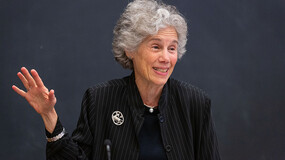
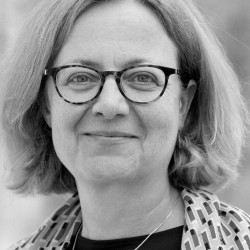
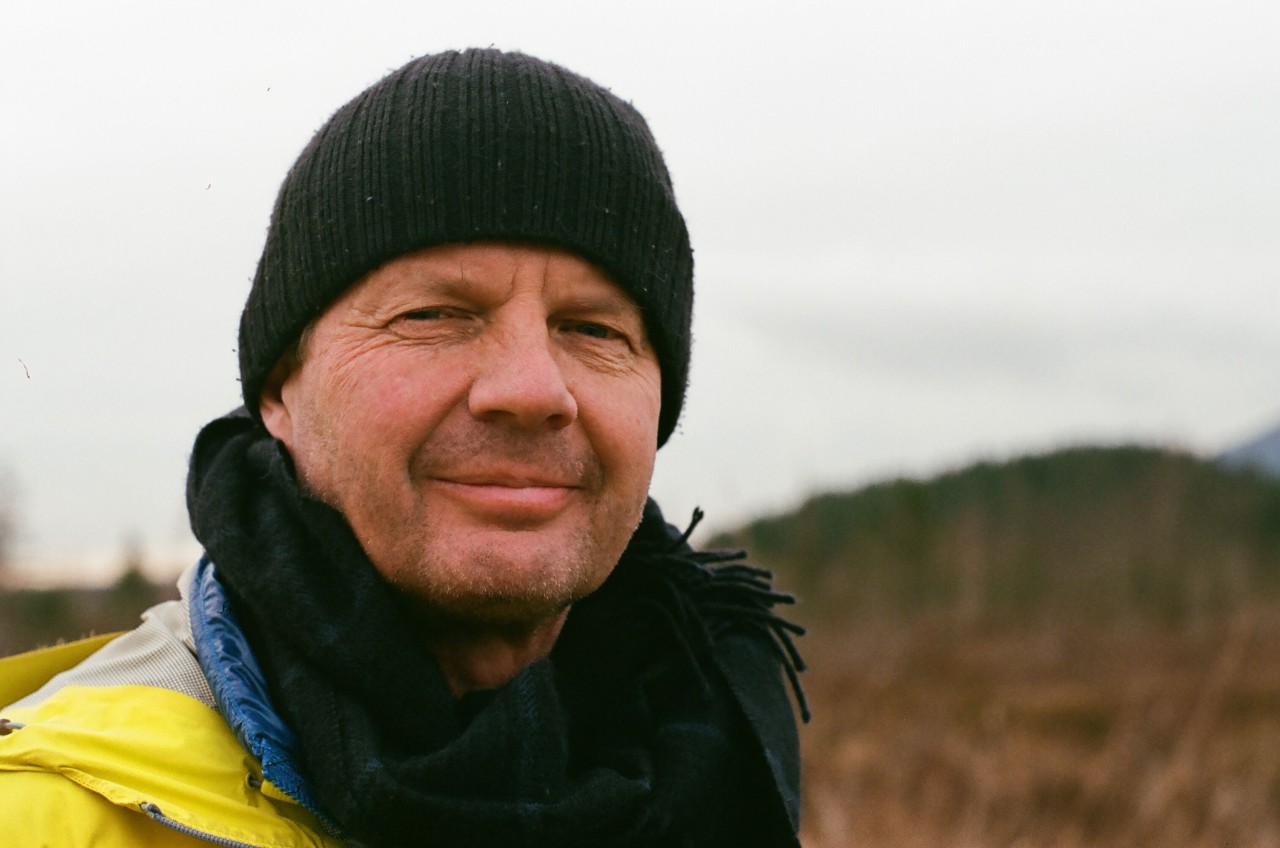
Judith Resnik serves as the Arthur Liman Professor of Law at Yale Law School and founded the Arthur Liman Center for Public Interest Law. Her scholarship investigates the intersection of democratic values with judicial systems, prisons, and collective redress mechanisms. She teaches courses on federalism, legal procedure, and punishment studies. Her research focuses include: Democratic accountability in judicial systems Eighth Amendment and prison reform Gender, race, and class in legal representation Privatization of public services Transnational legal comparisons Recent publications analyze court funding dynamics, arbitration system flaws, and solitary confinement ethics. She has received prestigious awards including the Andrew Carnegie Fellowship, Margaret Brent Women Lawyers Award, and the Meltzer Lifetime Achievement Award. The Liman Center under her leadership has produced influential reports on prison segregation and economic injustice, collaborating with institutions like UC Berkeley's Policy Advocacy Clinic and the Brennan Center at NYU. Notable scientific awards: Andrew Carnegie Fellowship (2018) Daniel J. Meltzer Lifetime Achievement Award (2024) Order of the Coif award for 'Representing Justice' (2014) PROSE awards for legal scholarship (2012)
Dr. Cecile Guillaume is a Senior Lecturer in Organisation Studies & Employment Relations at the University of Surrey, affiliated with the People and Organisations department within the Surrey Business School . She is an internationally recognized expert in comparative employment relations with a focus on gender equality, trade union strategies, and workplace discrimination. Her research employs a multi-methodological approach combining quantitative surveys with qualitative case studies, ethnography, and historical analysis. Current projects include a 3-year ANR-funded study (2025–2028) on union representatives' health and well-being across France, Quebec, Belgium, and the UK. She has received grants from the British Academy/Leverhulme Trust and maintains strong international collaborations. Research Interests : Gender equality in employment relations Trade union responses to workplace discrimination Legal mobilisation and anti-discrimination law Neoliberal feminism and return-to-work programmes Comparative industrial relations (UK-France focus) Scientific Awards : Human Resource Management Journal Best Reviewer Award (2023) Advising : Co-supervises 3 PhD students across France and the UK. Grants : Leads ANR-funded SyndiCARE project and BA/Leverhulme research on UK Employee Volunteering programmes. Editorial Roles : Member of the Work, Employment and Society editorial board since 2008.
Maggie Jones is a Teaching Professor in the Department of English at the University of Pittsburgh’s Kenneth P. Dietrich School of Arts & Sciences. She is a prominent contributing writer for The New York Times Magazine , focusing on social issues including youth culture, immigration, gender dynamics, racial justice, and death rituals. Her reporting spans global locations like Japan, Thailand, South Korea, Myanmar, Guatemala, and across the U.S., emphasizing intersectional narratives. Her research interests revolve around the sociocultural dimensions of mortality, aging, digital identity, and marginalized communities’ struggles. Notable works include explorations of pandemic-era funeral practices, online pornography’s impact on adolescents, and adoptee repatriation movements. Jones holds a 2012 Nieman Fellowship from Harvard University and a 2014 Senior Ochberg Fellowship from Columbia University’s Dart Center, reflecting her expertise in trauma-informed journalism. Her articles critically examine contemporary societal challenges, blending investigative rigor with humanistic storytelling. Awards include National Magazine Award finalist status. While no formal advising roles are listed, her journalism often engages with educational themes through public discourse. Jones maintains active participation in literary and journalistic communities via platforms like The Smithsonian , Smithsonian Magazine , and the Pittsburgh Contemporary Writers Series.
Besa Arifi is a Full Professor at the Faculty of Law, South East European University (SEEU), with over 15 years of academic experience in criminal law, criminology, and victims' rights. Her career spans roles as Coordinator for International Cooperation and Mobility (2015–present), former Head of SEEU's Human Rights Centre, and leadership in academic reform projects. PhD in Criminal Law Sciences (2007–2010), St. Cyril and Methodius University Master of Arts in Criminal Law and Criminology (2003–2006), St. Cyril and Methodius University Bachelor of Arts in Law (2000–2003), St. Cyril and Methodius University Her research bridges criminal law , cybercrime , and gender-based legal analysis , with a focus on restorative justice and counter-violent extremism strategies . Recent publications address blockchain-enabled corruption , hate crime drivers , and children's procedural rights . Arifi's scholarly output spans 15 years, covering hate speech regulation , domestic violence legislation , and digital forensics . She has collaborated with institutions like OSCE and UNDP on projects related to judicial independence and whistleblower protection in higher education.
Dr Carlo Petrucci is a Lecturer at the School of Law , University of Essex, since September 2016. His academic career includes prior roles as a Research Associate at Cardiff School of Law and Politics (2013) and as a lecturer in EU law at Salford Law School (2012-2013). He holds an LLM and MPhil from the University of Manchester and a PhD from the University of Birmingham. Education: PhD, University of Birmingham MPhil, University of Manchester LLM, University of Manchester Carlo’s research spans EU law , competition law , and market regulation , with a focus on digital economy regulation, financial executives’ remuneration, and private enforcement of competition law. His work explores the intersection of political theory , philosophy of economics , and public policy in EU regulatory contexts. Recent publications highlight trends in EU competition law , including digital markets regulation , financial policy analysis , and legitimacy in collective redress . He supervises PhD students and teaches courses such as Competition Law and Fundamentals of Digital Markets Regulation . Supervision: Tugrul Erdogan Faisal Abdulhameed B Aljohani Contact: c.petrucci@essex.ac.uk .
Eva Isabel Sanjurjo Rios serves as a Permanent Labor Professor in the Department of Public Law at the Faculty of Law, University of León, specializing in Procedural Law with a focus on civil and criminal procedure, evidence law, and legal education innovation. Her work bridges theoretical scholarship with practical judicial applications through the DEPROULE PROCEDURAL LAW research group. Her academic foundation includes a PhD from the University of León (2012) with the dissertation The expert opinion in the civil process , supervised by Dr. Pedro Álvarez Sánchez de Movellán and Dr. Piedad González Granda. This research trajectory established her expertise in evidentiary frameworks within civil litigation. Dr. Sanjurjo Rios' research spans critical procedural domains including electronic evidence authentication (particularly social media communications), collective redress mechanisms in consumer law, judicial ethics oversight, and mediation efficacy. She critically examines how digital evidence volatility impacts criminal proceedings and proposes reforms for expert testimony reliability under Spain's Civil Procedure Act. Her scholarship consistently addresses tensions between procedural efficiency and fundamental rights protections. Analysis of her publication trends reveals deep engagement with technology's impact on legal processes, evidenced by extensive work on WhatsApp evidence protocols (2022) and digital evidence preservation (2020). She simultaneously advances legal education through service-learning integration, developing the 'Aula Judicial' simulation model (2024) that combines community engagement with courtroom skill development. As a core member of the DEPROULE PROCEDURAL LAW research group, she contributes to systematic analysis of procedural law implementation and reform proposals. Her collaborative work emphasizes practical solutions for evidence handling, judicial ethics compliance, and pedagogical innovation within Spain's legal framework.
Else Grete Broderstad is a Professor of Indigenous Studies at UiT The Arctic University of Norway, based at the Center for Sami Studies in Tromsø. She serves as Coordinator of the Master's Program in Indigenous Studies and teaches multiple courses including Introduction to Indigenous Studies, Methodology and Methods in Indigenous Studies, and Indigenous Peoples - Politics, Institutions and Tools. Her academic work bridges political science with Indigenous rights and governance, focusing on the Sámi context in Norway and broader circumpolar regions. Professor Broderstad's research interests span Indigenous rights and citizenship, cross-border reindeer herding, political procedures between Indigenous organizations and state authorities, and governance arrangements in the circumpolar North. She examines home rule and self-government arrangements, resource management, and conflicts between Indigenous peoples and industry. Her work is characterized by a strong engagement with truth and reconciliation processes, particularly regarding the Norwegian Truth and Reconciliation Commission (TRC) that investigated historical assimilation policies toward the Sámi and Kven peoples. Her recent publications reveal a clear thematic trajectory focused on truth and reconciliation processes (2023-2025), Indigenous knowledge systems in environmental governance, Indigenous-industry relations, and blue justice in coastal resource management. These works often examine practical applications of Indigenous rights in policy and decision-making processes, with particular attention to knowledge co-production, narrative ownership, and environmental justice frameworks. Much of her research involves collaborative work with scholars like Eva Josefsen and engages with contemporary political challenges facing Indigenous communities in the Arctic. Professor Broderstad leads the research group Indigenous Peoples, Governance, Rights, Institutions and Democracy and is affiliated with several research networks including TriArc, Indigenous Citizenship and Education (ICE), and Global Research in Indigenous Studies and History (GRISH). She actively supervises students in the Master's programs Indigenous Studies and Governance and Entrepreneurship in Northern and Indigenous Areas, contributing significantly to the next generation of Indigenous studies scholars. Her current projects include TRUCOM (Truth and Reconciliation Commission research) and Indigenous Knowledge Systems, Planning and Environmental Decision Making , reflecting her commitment to bridging academic research with practical applications for Indigenous communities and policy makers. Her work consistently addresses contemporary challenges in Indigenous-state relations while maintaining a strong theoretical foundation in political science and governance studies.
Professor Luke Moffett at Queen's University Belfast's School of Law specializes in reparations, international humanitarian law, human rights, and transitional justice. His work bridges the gap between legal theory and practical redress for victims of armed conflict and international crimes. Authored 'Justice for Victims before the International Criminal Court' (Routledge 2014) Co-edited 'Elgar Research Handbook on Transitional Justice' (2023) Principal Investigator on AHRC-funded 'Reparations, Responsibility and Victimhood in Transitional Societies' project His research focuses on: Reparations for war victims and post-conflict societies Human rights during armed conflict Transitional justice mechanisms International criminal law Victim participation in legal processes Professor Moffett's recent articles examine: Reparations frameworks in the Central African Republic and Uganda Business and human rights remedies Truth commissions and reparations implementation Historical negotiated settlements like Wassenaar AI's role in warfare and IHL compliance Scientific achievements: IALT Kevin Boyle Book Prize 2023 QUB Student Union Most Innovative Learning Experience 2018 Association of Law Teachers/Routledge Prize 2017 QUB Rising Star Teaching Award 2015 Teaching roles include: International Criminal and Transitional Justice (UG LLB) International Humanitarian Law (UG LLB) International Human Rights Law (LLM) Administrative positions: Human Rights Centre Director (2015-2020) Transitional Justice thematic lead (2020-2023) Law School Ethics Committee Chair (2015-2018)
Pia Falschebner is a Research Associate at the Center for Conflict Research (ZfK) at Philipps University of Marburg, Germany. She has been working on the DFG-funded project "Reparations Policy of Victims' Organizations in Transitional Justice Processes" since September 2020, collaborating with Prof. Dr. Thorsten Bonacker and Dr. Eva Willems. Her work focuses on victim mobilization, memory politics, and post-colonial justice frameworks. Research Focus: Transitional Justice, Social Movements, Post-colonial Theory, Memory and Identity, Conflict Transformation Geographic Expertise: Morocco, Northern Ireland, Guatemala, Middle East, Latin America Dr. Falschebner has conducted extensive fieldwork in Morocco and Northern Ireland, including guest researcher positions at the Netherlands Institute Morocco (NIMAR) and Queen's University Belfast. She contributes to academic debates through publications in journals like Journal of Human Rights Practice and Global Society , with recurring themes around victim-driven reparations, memory as a tool for justice, and socio-political inequalities in transitional contexts. Her academic contributions include: Keynote presentations at major conferences including ISA Annual Convention and ECPR General Conference Co-organization of workshops on research ethics, particularly in conflict/post-conflict settings Teaching seminars on Research Ethics and Knowledge Production in (Post-)Conflict Settings Notable achievements include receiving the Christiane-Rajewsky-Preis 2020 for her master's thesis on decolonization and colonial memory culture in Germany. She combines methodological innovation with critical analysis in her work across multiple continents.
Professor Moira Paterson is an Adjunct Professor at Monash University's Faculty of Law, specializing in privacy law, freedom of information, data protection, and health records law. Her research explores the intersection of technology, governance, and human rights, with a focus on big data analytics, surveillance, and regulatory adaptation to digital challenges. Key roles include Chief Investigator on 6 ARC-funded projects Former FOI Editor for the Australian Administrative Law Service (1995-2018) Member, Victorian Firearms Appeals Committee (since 2007) Her work contributes to UN Sustainable Development Goals related to digital rights and privacy. Notable publications include two editions of Freedom of Information and Privacy in Australia and co-editorship of Emerging Challenges in Privacy Law . She has advised government bodies on privacy reforms and participated in major policy consultations. Recent research projects address: Real-time rights-based recordkeeping for child welfare Privacy risks in adtech for children Australia's FOI implementation culture Geographical indications in wine trade Scientific contributions span 64 research outputs, including commissioned reports on criminal records, spent convictions, and health data governance. She teaches subjects such as: LAW5000 Australian Legal Reasoning LAW1111 Foundations of Law LAW5317 Privacy and FOI Principles
Justine Bendel is a Lecturer in Law at the University of Leeds, specializing in international environmental and climate change law. She holds a PhD in International Law from the University of Edinburgh (2017), and Master’s and Bachelor’s degrees from the University of Geneva (2012 and 2010). Previously, she was a Marie Curie Fellow at the University of Copenhagen (2021–2023), conducting research on global forest governance. She also taught at the University of Exeter (2020–2023) and the University of Sheffield (2017–2019). Her research focuses on judicial enforcement of environmental norms, international forest governance, and procedural adaptation in international courts. Notable works include her monograph Litigating the Environment: Process and Procedure before International Courts and Tribunals (2023) and an edited collection on public interest litigation in international law (2023). Her Marie Curie-funded project, Interfor , analyzed implementation challenges in global forest governance. Professional Memberships: Fellow of the Higher Education Academy (HEA) Grants: Marie Curie Fellowship (EU-funded), 2021–2023 Practice Experience: Research intern at the UN Codification Division (2017), ClientEarth’s Forests and Climate Team (London) Her litigation experience includes cases before the International Tribunal for the Law of the Sea (Mauritius/Maldives dispute) and the International Court of Justice (Silala Waters case, Chile v. Bolivia). She advocates for procedural reforms to enhance environmental dispute resolution and has published extensively on climate law, biodiversity, and forest governance. Current affiliations include the School of Law at Leeds, with a focus on advancing research, teaching, and policy engagement in international environmental law.
Jan P.M. van Tatenhove is a Professor at Wageningen University & Research's Environmental Policy group, with a focus on Marine and Delta Governance. He also holds an Adjunct Professor position at Aalborg University's Department of Sustainability and Planning, and contributes to the Centre for Blue Governance. His research spans governance of marine ecosystems, Arctic regions, and environmental policy, with a strong emphasis on institutional dynamics and stakeholder engagement. PhD in Sociology (Wageningen University) MSc in Sociology (Wageningen University) Van Tatenhove's research explores reflexive marine governance, transboundary coordination in maritime spatial planning, and the institutionalization of environmental reforms. His work addresses power dynamics, legitimacy in marine restoration, and the interplay of science and policy in coastal management, particularly in the North Sea, Wadden Sea, and Arctic regions. Recent publications focus on multi-layered marine governance models, transformative policy changes for the European Green Deal, and institutional barriers in marine restoration. His studies also examine Arctic shipping governance and the role of reflexivity in addressing environmental uncertainties. Associated Editor of Maritime Studies (MAST) Member of Editorial Board for Politics and Governance Van Tatenhove leads projects like PERMAGOV (Improving the Performance of Marine Governance) and REDRESS (Deep-Sea Habitat Restoration). He is affiliated with the Delta Climate Center in Vlissingen and actively contributes to marine policy frameworks in European seas.
Cath Collins is Professor of Transitional Justice at Ulster University’s Transitional Justice Institute since March 2013. She is also Director of the Transitional Justice Observatory at Universidad Diego Portales, Chile, focusing on justice, truth, and memory developments related to the Pinochet-era dictatorship. PhD in Latin American Studies (University of London, 2004) Chatham House Research Fellow (2005-2007) Former Associate Professor of Politics at Universidad Diego Portales Research Interests center on transitional justice frameworks, enforced disappearances, human rights accountability, and interdisciplinary collaborations with forensic, judicial, and legal professionals. She specializes in Latin America, particularly Chile and El Salvador. Key Contributions include co-authored books like Transitional Justice in Latin America and Post-Transitional Justice , alongside training materials for victims' associations and legal entities. Her work intersects with UN SDGs on justice and human rights. Expert witness, Inter-American Court of Human Rights Founder member of Latin American Transitional Justice Network Current research: Open Society Foundation project on disappearance victims Education : Degrees from Cambridge, London, Lancaster, and Queens’ Belfast. Qualified translator and youth/community worker with fieldwork in Brazil, Bolivia, and Chile since 1996.
Yasuko Takezawa is a University Professor at Kansai Gaidai University and a Visiting Professor at the Institut d'Asie Orientale (IAO) in Lyon (February 2025–March 2025). She specializes in race, ethnicity, and transnational studies, with a focus on East and Southeast Asia. Her interdisciplinary research examines the construction of racial categories and their societal impacts, supported by three major Japanese government-funded programs (2005–2023). Education Bachelor's in Anthropology (1981), University of Tsukuba Master's in Anthropology (1984), University of Washington Second Master's in International Affairs (1987), University of Tsukuba Ph.D. in Anthropology (1989), University of Washington Research Focus : Yasuko Takezawa critiques racial and ethnic categorization across disciplines, emphasizing comparative studies of segregation (e.g., Japan’s burakumin vs. Korea’s paekchŏng). She promotes knowledge circulation via translation and collaboration, mentoring early-career scholars. IAO Collaboration : Her visit includes lectures on East Asian racial ideologies and a workshop comparing Japanese and French approaches to racism studies. Key topics: terminological differences, transnational migration, and anti-racism strategies. Grants & Mentorship : Led a 18-year research program on ethnic categories, producing global scholarly networks. Mentored numerous researchers through academic journeys. Labs/Teams : Active in IAO’s thematic areas (Law, History, Arts) and collaborates with ENS de Lyon, EHESS, and international institutions.
Nicholas Blomley is Professor of Geography at Simon Fraser University in Burnaby, British Columbia, Canada. A Fellow of the Royal Society of Canada, he has established himself as a leading scholar in legal geography with over thirty years of research focusing on the intersection between law and geography, particularly regarding property relations and their spatial implications. His work bridges geography and legal studies, examining how spatial arrangements influence legal relations and vice versa. Professor Blomley's research centers on legal geography, with particular emphasis on property law, spatiality of legal practices, and the worldmaking consequences of legal geographies. His scholarship demonstrates how legal frameworks create and maintain spatial exclusions while also revealing possibilities for resistance and alternative spatial arrangements. His work spans theoretical explorations of legal geography to empirical studies of homelessness, gentrification, indigenous land rights, and the regulation of urban space. Through his concept of 'legal geographies,' he has illuminated how law is not merely applied to space but is constitutive of spatial relations. Blomley's extensive publication record reveals consistent engagement with critical questions about property, territory, and spatial justice. His work demonstrates increasing attention to precarious housing, the regulation of homelessness, and the territorial dimensions of property relations, reflecting both continuity with his longstanding interests and responsiveness to contemporary urban challenges. His scholarship shows how property relations are fundamentally spatial, showing how territory becomes a crucial technology through which property relations are communicated, imagined, legitimized, enforced, naturalized and contested. Fellow of the Royal Society of Canada Professor Blomley actively supervises a diverse group of graduate students working on critical legal geography topics through the Legal Geography Research Group at Simon Fraser University. His mentorship extends beyond traditional academic supervision to fostering collaborative research and providing a space for interdisciplinary dialogue about law, space, and power. His students' research spans topics including vehicle residency, landlord-tenant relations, tent settlements, and alternative housing models, reflecting the breadth of his intellectual influence. His work has attracted research funding supporting projects on housing insecurity, legal geographies of homelessness, and indigenous treaty processes in British Columbia. As leader of the Legal Geography Research Group, Blomley cultivates a vibrant intellectual community examining the complex interrelationships between law, space, and social relations. The research group brings together scholars examining how people who live in vehicles are positioned and regulated in society, the dynamics of property relations in liberal capitalist and settler colonial contexts, and the legal frameworks shaping landlord-tenant relations. This collective work demonstrates how legal geographies operate across multiple scales, from intimate bodily spaces to international legal frameworks, revealing the profound spatial dimensions of legal power and resistance.