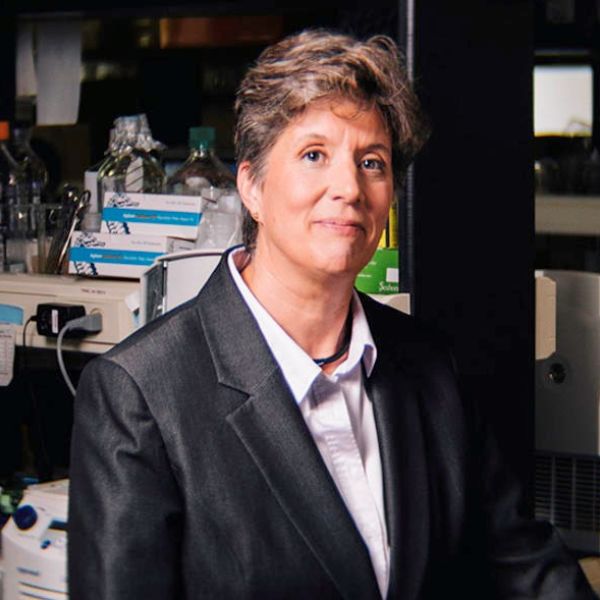
Maureen E. Murphy, Ph.D. serves as Deputy Director of the Ellen and Ronald Caplan Cancer Center and Ira Brind Professor at The Wistar Institute, where she also leads the Molecular and Cellular Oncogenesis Program and holds the position of Associate Vice President for Faculty Affairs. Additionally, she maintains adjunct professor appointments at Drexel University College of Medicine and The Perelman School of Medicine at the University of Pennsylvania. Dr. Murphy's research program centers on the genetics of the p53 tumor suppressor protein, with particular focus on genetic variants prevalent in populations of African-descent (P47S and Y107H) and Ashkenazi Jewish descent (G334R). Her laboratory investigates how these variants impact cancer risk and therapy efficacy, aiming to develop personalized medicine approaches for affected populations. She also conducts significant research on the cancer-survival protein HSP70, developing novel inhibitors for melanoma and colorectal cancer therapy. Her work has direct clinical relevance for improving cancer prognosis and treatment outcomes for African and Ashkenazi Jewish Americans. Dr. Murphy's publications reveal a research trajectory focused on understanding the functional consequences of p53 variants, identifying predictive gene signatures for cancer risk assessment, exploring connections between p53 and cell death mechanisms like ferroptosis, and developing targeted cancer therapies. Her recent work demonstrates increasing sophistication in connecting genetic variants to specific therapeutic approaches, with significant emphasis on addressing health disparities in cancer treatment. 2024 Woman of Influence (The Philadelphia Business Journal) Dr. Murphy mentors several predocotoral fellows including Kaitlyn Casey, Maya Foster, Giulia Pantella, Kelsey Salcido, and Andrea Valdespino. Her laboratory collaborates with the Salvino laboratory at Wistar to develop HSP70 inhibitors for clinical application and works with computational biologists like Andrew Kossenkov to apply machine learning approaches to cancer risk prediction. Her research is supported by NIH grants CA102184 and CA238611, with additional funding for trainees through T32 fellowships and Wistar Accelerator Postdoctoral Awards.