Matias Zurbriggen
استاد پژوهشی · Synthetic Biology
Max Planck Institute for Plant Breeding Researchمعرفی
Matias Zurbriggen is a Research Professor at the Institute of Synthetic Biology, Heinrich Heine University Düsseldorf, where he leads a pioneering research group at the interface of engineering and life sciences. His work focuses on developing theoretical-experimental synthetic biology approaches to understand and control eukaryotic signaling processes with quantitative and spatiotemporal precision.
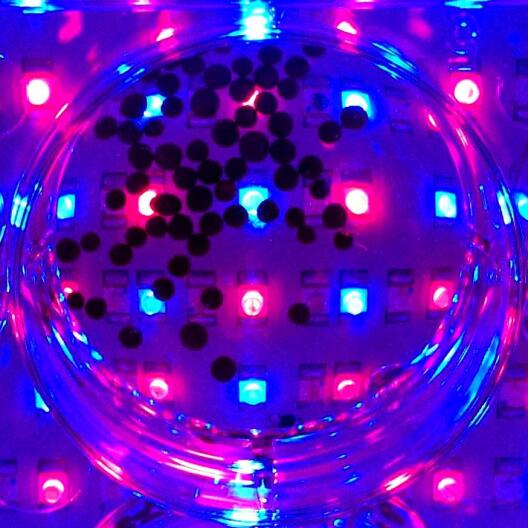
Dr. Zurbriggen's research interests center on synthetic biology principles applied to biological signaling systems, with particular emphasis on optogenetics. He pioneered cellular optogenetics - engineering synthetic photoswitches to control molecular processes with high precision, minimal toxicity, and non-invasive methods. His group has successfully overcome the fundamental challenge of implementing optogenetics in plants, which normally require light for growth, opening new possibilities for plant engineering. His research spans microbial, yeast, mammalian, and plant systems, with applications in tissue engineering, biomedical research, and crop improvement.
His recent publications demonstrate significant advances in optogenetic tools, including genetically-stable optogenetic switches for 3D tissue cultures, image-guided optogenetic patterning, and specialized biosensors for plant hormones. These innovations enable precise spatiotemporal control of cellular processes using light of different colors, with applications spanning from fundamental biological research to practical agricultural improvements.
- Selected by Nature Methods as one of the top methods of 2023
Dr. Zurbriggen's research program integrates synthetic biology with advanced imaging and computational approaches to reconstruct semisynthetic signaling and metabolic networks. His group performs de novo engineering of genetic circuits, biosensors, and synthetic metabolic pathways, including intracellular and cell-cell communication systems. The work has significant implications for understanding developmental processes, metabolic regulation, and creating novel biotechnological applications in medicine and agriculture.