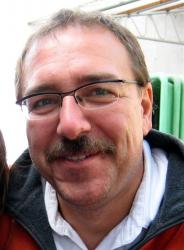
Prof. Wolfgang Petrich is a Professor at the Kirchhoff-Institute for Physics at Heidelberg University. His research focuses on biomedical spectroscopy, particularly mid-infrared and Raman techniques applied to medical diagnostics, glucose sensing, and disease detection. He leads a lab developing optical sensors and analytical methods for clinical applications. His work includes advancements in continuous glucose monitoring systems, serum-based disease diagnostics (e.g., BSE, diabetes, rheumatoid arthritis), and machine learning approaches for spectral data analysis. Petrich collaborates internationally on projects like serum-based infectious disease detection and clinical triage systems for acute conditions. Key contributions include pioneering mid-infrared laser spectroscopy for in vitro diagnostics and establishing methodologies for pattern recognition in medical spectra. His research bridges physics, chemistry, and medicine, with applications in both human and veterinary health. Notable collaborations involve institutions like the University of Heidelberg's Biophotonics group and global medical research networks. His labs focus on translating spectroscopic innovations into practical diagnostic tools.
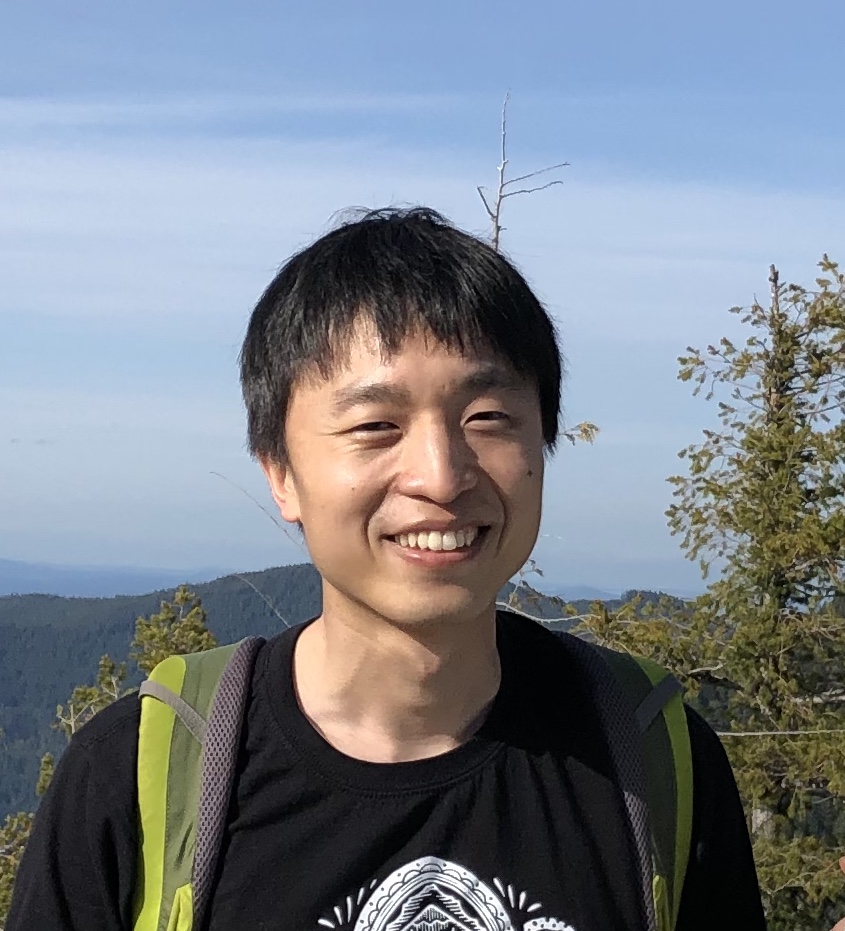
Zihe Gao serves as a tenure-track Assistant Professor in the Department of Electrical and Computer Engineering at Auburn University's College of Engineering since August 2023, following postdoctoral research at the University of Pennsylvania and industry experience at Meta (Facebook Reality Labs). His academic foundation includes: PhD in Electrical and Computer Engineering, University of Illinois Urbana-Champaign (2018) MS in Physics, University of Illinois Urbana-Champaign (2012) BS in Physics, Nanjing University (2011) Dr. Gao's research integrates optics, microelectronics, and physics to develop programmable photonic systems. His work focuses on controlling collective behaviors in multi-element photonic systems for scalable integrated chips, with applications spanning dynamically steerable laser sources and reconfigurable quantum optical platforms . Key methodologies include non-Hermitian physics, topological photonics, and spin-orbit coupling engineering. Analysis of his 2023-2025 publications reveals dominant trends in non-Hermitian photonic switching , high-dimensional quantum state manipulation , and topological semiconductor laser arrays . His team pioneers lithography-free reconfigurable photonics and spin-orbit microlasers for quantum key distribution, demonstrating strong industry-academia translation from prior Meta work on AR/VR structured-light systems. His scholarly trajectory shows continuous progression from VCSEL array fundamentals (PhD under Prof. Kent Choquette) to quantum-topological photonics (postdoc with Prof. Liang Feng), now establishing independent research at Auburn with emphasis on integrated quantum-classical hybrid systems.
Dimitris Maroulis is a Professor at the Department of Informatics and Telecommunications, University of Athens, leading the Real-Time Systems and Image Analysis Lab (RTS-image). With over 20 years of experience in data acquisition and real-time systems, and 15 years in image/signal analysis, he collaborates extensively with Greek and European hospitals in biomedical informatics. He has led 5 R&D projects and authored 150+ papers with 1400+ citations. University of Athens: Professor (2000–present) Meudon Observatory: Research Fellow (3 years) & Long-term Collaborator (10+ years) Research Interests focus on real-time systems , image/signal processing , and biomedical applications . Key areas include automated segmentation of proteomic images, noise removal methods, and stereo image coding. His 15 most recent publications (2003–2012) span 3D imaging , medical image analysis , and biomedical informatics , with sub-fields like autostereoscopic displays, wavelet-based coding, and computer-aided diagnosis. Awards : Best Paper Award (2012: Integral Image Analysis) Projects include European and national R&D initiatives in image analysis and real-time systems. Labs : RTS-image Lab develops methodologies for biomedical and proteomic applications.
Quanxi Jia is a SUNY Distinguished Professor, Empire Innovation Professor, and National Grid Professor of Materials Research at the University at Buffalo. He holds appointments in the Department of Materials Design and Innovation within the School of Engineering and Applied Sciences and serves as Scientific Director of the New York State Center of Excellence in Materials Informatics (CMI). Education: PhD in Electrical and Computer Engineering, University at Buffalo, 1991 MS in Electronic Engineering, Jiaotong University, Xian, China, 1985 BS in Electronic Engineering, Jiaotong University, Xian, China, 1982 Research Focus: Jia's work centers on advanced electronic and energy materials, particularly epitaxial thin films and heterostructures. His research investigates processing-structure-property relationships, monolithic integration of functional materials, and superconductors for quantum/energy applications. Key methodologies include pulsed laser deposition and polymer-assisted techniques, with emphasis on oxide heterostructures , memristive devices , and multiferroic systems for next-generation electronics. Publication Trends: Recent publications (2023-2025) reveal dominant focus on neuromorphic computing via resistive switching devices (58% of sampled works), superconducting thin films for quantum applications (20%), and strain-engineered oxide heterostructures (22%). His group pioneers HfO 2 -based artificial neurons, NbN superconducting films on CMOS platforms, and multiferroic membranes, demonstrating strong industry-academia translation potential. Scientific Recognition: Fellow of Los Alamos National Laboratory Fellow of Materials Research Society (MRS) Fellow of American Physical Society (APS) Fellow of American Ceramic Society (ACerS) Fellow of AAAS Fellow of IEEE Fellow of National Academy of Inventors (NAI) Leadership & Infrastructure: As CMI Scientific Director, Jia oversees New York's flagship materials informatics initiative integrating AI with experimental materials science. His prior directorship of DOE's Center for Integrated Nanotechnologies (Los Alamos/Sandia) established expertise in national lab collaboration. The group maintains 50+ U.S. patents and 500+ publications, with current work targeting quantum device integration and sustainable neuromorphic hardware. Research Ecosystem: The CMI hub connects Jia's team with industry partners (including National Grid) and national labs, facilitating rapid prototyping of energy materials. Current thrusts include machine learning-guided ferroelectric design, CMOS-compatible superconductors, and recyclable perovskite sensors, positioning the group at the semiconductor-energy nexus.
Steven P. DenBaars is a Mitsubishi Distinguished Professor of Materials and a Distinguished Professor of Electrical & Computer Engineering at the University of California, Santa Barbara (UCSB). He serves as the Executive Director of the Solid State Lighting & Energy Electronics Center (SSLEEC) and Co-Director of the Interdisciplinary Center for Wide Bandgap Semiconductors. His research focuses on wide-bandgap semiconductors, particularly GaN-based materials for LEDs, lasers, and high-power electronics. DenBaars has pioneered advancements in solid-state lighting, including the first U.S. university demonstration of a blue GaN laser diode. Education : B.S., Materials and Metallurgical Engineering, University of Arizona (1984) M.S., Materials Science, University of Southern California (1986) Ph.D., Electrical Engineering, University of Southern California (1988) Research Interests : Wide-bandgap semiconductors (GaN), blue LEDs and lasers, high-power electronics, MOCVD growth techniques, and optoelectronic device fabrication. His work emphasizes improving efficiency and applications in lighting, displays, and energy electronics. Notable Contributions : Co-founder of Soraa, a leading company in semiconductor lighting technology. Key figure in the development of GaN-based microLEDs and UV LEDs. Awards : IEEE Fellow (2005) NAE and NAI Fellowships Aron Kressel Award (IEEE Photonics Society, 2010) NSF Young Investigator Award (1994) Labs & Teams : SSLEEC, IEE Group, and collaborations with industry partners like Cree Lighting Co. His lab focuses on MOCVD technology and device fabrication for next-generation optoelectronics.
Ruben Valbuena is a Professor at Bangor University, affiliated with the School of Natural Sciences and the Department of Forest Sciences. He is also recognized as an Honorary Professor, reflecting his significant contributions to forest science and remote sensing. His research leverages big data, particularly LiDAR and remote sensing, to analyze ecosystem structure, carbon stocks, and habitat suitability at landscape and community levels. His research interests lie at the intersection of ecology, remote sensing, and forest dynamics. He has pioneered the adaptation of Lorenz curves to quantify forest structural complexity, a methodological innovation recognized with the IUFRO 2019 Outstanding Doctoral Research Award. His work spans tropical and boreal forests, focusing on aboveground biomass estimation, forest disturbance detection, and ecosystem service modeling. He actively integrates airborne and satellite data, including NASA's GEDI mission, to develop scalable ecological models. The recent publications (2017–2023) reflect a consistent focus on LiDAR applications, forest structure, biomass modeling, and ecological theory. Key themes include the fusion of remote sensing technologies, the development of structural complexity indices, and the application of machine learning in forest inventory. His research increasingly addresses global challenges such as carbon monitoring, urban greening, and sustainable forest management. His scientific honors include: International Union of Forest Researchers (IUFRO) Outstanding Doctoral Research Award (2019) Early-Stage Researcher Prize “José L. Labrandero” (2017) Valbuena leads multiple research projects, including the European Forest Information Network (EFINET), AMAZECO (focused on Amazon ecosystem structure), and a KESS II PhD project with Forest Research. He has supervised at least one research student and maintains active collaborations across Europe and the Americas. His work is supported by grants from national and international funding bodies, enabling high-impact research in forest ecology and remote sensing. He is associated with key research initiatives and labs focused on remote sensing and forest ecosystem dynamics, contributing to large-scale projects that integrate field data with satellite and airborne observations.
Associate Professor Jarryd Pla is an experimental physicist and electrical engineer at the University of New South Wales, specializing in quantum information processing and quantum technologies. He holds a PhD in Electrical Engineering from UNSW (2013) and a first-class honors BEng in Photonic Engineering (2009). Current ARC Future Fellow Former Bragg Gold Medal recipient His research focuses on: Spin-based quantum computation in silicon Superconducting quantum circuits Quantum-noise-limited microwave amplifiers Hybrid quantum systems for quantum memory Quantum sensing and spectroscopy Recent publications highlight: Room-temperature maser amplifiers Kinetic inductance parametric amplifiers Coherent control of donor spins Quantum-limited electron spin resonance Scientific Awards: ARC Future Fellowship (2024-2028) Bragg Gold Medal His grants include: ARC DECRA (2019-2022): Superconducting hybrid quantum technologies ARC Discovery Project (2021-2024): Quantum sensing with semiconductor devices ARC Future Fellowship (2024-2028): Room-temperature diamond-based microwave detection
Dr. Matthias Jäger is a Researcher in the Department of Fiber Photonics at the Leibniz Institute for Photonic Technology (IPHT) . His work focuses on advanced optical fiber development, particularly in doped materials and nonlinear laser dynamics. Core technologies: Thulium/Yb/Ho-doped fibers, periodic shadowing for stray light suppression, nonlinear loss management Instrumentation: High peak power laser systems, fluorescence lifetime analysis, multicore emission profiling Research interests span laser physics, materials science, and optical engineering. Recent publications highlight breakthroughs in: Directional stability control for fiber ring lasers (2021-2024) Hybrid Tm:YAG crystal-derived fiber fabrication (2022) Nanoparticle-doped optical fibers (2024) 2 µm eye-safe laser systems (2024) Pr3+-doped nanocrystal fiber integration (2024) Thulium concentration optimization for laser efficiency (2025) His work demonstrates expertise in fiber fabrication methods including: Modified Chemical Vapor Deposition (MCVD) Powder-sinter technology Molten-core processing REPUSIL fiber drawing
Clinical Associate Professor Paul Healey is a prominent academic at the University of Sydney's Clinical Ophthalmology & Eye Health department. He holds advanced qualifications including MBBS(Hons), MMed (Clin. Epidemiology), PhD, and FRANZCO. His primary affiliation is with Westmead Clinical School where he focuses on glaucoma research and clinical practice. Research Interests: Ophthalmology & Ophthalmic Surgery Epidemiology of Eye Diseases Diagnostic Test Evaluation Screening Methodologies Cell Biology Applications in Glaucoma Publications Highlight: Dr. Healey has authored over 200 peer-reviewed articles focusing on glaucoma genetics, polygenic risk scoring, and clinical outcomes. Key contributions include defining polygenic risk's role in glaucoma diagnosis and treatment escalation, and advancing understanding of myopic glaucoma progression through retinal imaging studies. Professional Contributions: Serves as co-editor for major glaucoma textbooks including Glaucoma Screening (2008) and Fast Facts: Glaucoma (2010). Active in clinical trials like the Glaucoma Initial Treatment Study comparing laser vs medication therapies. Current Focus: Leveraging genomic data to personalize glaucoma management and improving diagnostic accuracy through advanced imaging techniques.
Symeon Papavassiliou is a Professor at the Department of Communications, Electronics and Information Systems, School of Electrical and Computer Engineering, National Technical University of Athens since 2004. Previously held positions include Associate Professor at New Jersey Institute of Technology (1996-2004) and senior researcher at AT&T Labs (1995-1999). He leads the Network Management and Optimal Design Laboratory and has served in various academic leadership roles, including Deputy Director since 2005. His research focuses on computer networks, wireless systems, and AI-driven network management with over 400 publications. Recognized with multiple best paper awards and NSF Career Award (2003). Education: B.A. Electrical Engineering, NTUA (1990) MSc & PhD Electrical Engineering, Polytechnic University, NY (1992/1996) Key Roles: Founder, New Jersey Center for Wireless Networks & Internet Security Member, EETT (National Telecommunications Commission) 2006-2009 Editorial Board Member, multiple journals Research Interests: Specializes in mobile/distributed systems optimization, wireless networks, complex systems, IoT, and AI applications in network management. Active in 6G architecture research, edge computing orchestration, and secure federated learning frameworks. Publications highlight innovations in network resource allocation, game theory models for positioning systems, and symbiotic computing continuum architectures. Recent work emphasizes resilience in critical infrastructure and smart grid optimization. Awards: Over 10 best paper awards from IEEE conferences, AT&T recognition, and Greek Excellence in Research Grant (2012). Grants: Funded by EU Framework Programs, NSF, ESA, and industry partners like Panasonic and Northrop Grumman. Leads interdisciplinary projects like HEROES (UAV-based emergency response) and NEPHELE (multi-cloud ecosystems). Active in digital twin development for cultural heritage preservation and SDG tracking via knowledge graphs.
Joe Charles Campbell is the Lucien Carr III Professor of Electrical and Computer Engineering at the University of Virginia. Previously, he held the Cockrell Family Regents Chair in Engineering at the University of Texas at Austin (1989–2006). His research focuses on optoelectronic devices, particularly high-performance photodetectors for fiber optics communications, including avalanche photodiodes (APDs), Si-based optoelectronics, and mid-infrared detection technologies. He has authored over 400 journal articles and 400 conference presentations, with notable contributions to low-noise avalanche photodiodes and material innovations like AlInAsSb alloys. His work emphasizes high-speed, low-noise, and radiation-tolerant photodetection systems. Education: B.S. Physics (University of Texas at Austin, 1969), M.S. and Ph.D. Physics (University of Illinois at Urbana-Champaign, 1971 and 1973). Postdoctoral research at University of Illinois (1973–1974). Early career included roles at Texas Instruments (integrated optics) and AT&T Bell Labs (optoelectronic devices). Research Highlights : Development of AlInAsSb-based APDs for single-photon counting and mid-infrared detection. Advances in high-power, high-linearity photodiodes and flip-chip bonded designs for thermal dissipation. Pioneering work in staircase avalanche photodiodes with optimized excess noise characteristics. Awards & Recognition : Member of the National Academy of Engineering (2002). Lucien Carr III Professorship (University of Virginia). Labs & Teams : Leads the Photonic Devices Group at UVA, focusing on optoelectronic materials and device fabrication. Collaborates on radiation-tolerant photodetectors and integrated photonic platforms.
Alice Sciortino is a Researcher at the Department of Physics and Chemistry - Emilio Segrè within the School of Science at the University of Palermo. Her position code PHYS-03/A indicates a research-focused academic track in the Italian university system. She maintains regular office hours on Tuesdays from 11:30 to 12:30 through the university's student portal system. Her research centers on advanced photonic nanomaterials with particular expertise in carbon nanodots , quantum dot superstructures , and metal-organic frameworks . Key research themes include: Nanoscale light emission and lasing phenomena Design of optical sensors for environmental and biomedical applications Photocatalytic systems for environmental remediation Hybrid nanomaterial interfaces for energy transfer Ultrafast photophysical characterization of nanomaterials Analysis of her recent publications (2023-2025) reveals a strong trajectory toward multifunctional nanoplatforms combining optical, magnetic, and catalytic properties. Her work increasingly bridges fundamental photophysics with practical applications in environmental monitoring and biomedicine, particularly in heavy metal detection (Hg²⁺, Ni²⁺) and tissue engineering. The publication record shows consistent high-output research with frequent collaborations across Italian institutions. While no formal scientific awards are documented in the provided materials, her extensive publication record in high-impact journals demonstrates significant scholarly contributions to nanophotonics and materials science. Dr. Sciortino's research program appears to focus on experimental nanomaterials development with strong emphasis on optical characterization techniques. Her work on carbon dot-MOF hybrids and quantum dot superparticles suggests leadership in designing next-generation photonic nanomaterials with tunable properties. The consistent funding evident from her publication output likely supports laboratory infrastructure for nanomaterials synthesis and advanced optical spectroscopy.
Qibin Zhang is a Professor of Chemistry and Co-Director of the Center for Translational Biomedical Research at the University of North Carolina at Greensboro (UNCG), where he leads the Zhang Research Group in the Department of Chemistry & Biochemistry within the College of Arts and Sciences. His laboratory develops cutting-edge mass spectrometry technologies for proteomics, lipidomics, and metabolomics with applications in disease biomarker discovery and clinical diagnostics. Dr. Zhang's primary research interests focus on developing more accurate, sensitive, and higher throughput measurement capabilities for biomolecules. His work centers on three main areas: Proteomics : Temporal plasma proteomics for Type 1 diabetes progression, cell-specific and spatial tissue proteomics, immunopeptidome analysis for novel T1D autoantigens, antimicrobial peptides, and glycated proteome in diabetic complications Lipidomics : Tissue-specific global lipidomics, high-resolution ozone-induced dissociation mass spectrometry, advanced analysis of glycosphingolipids, and lipid glycation in diabetes Metabolomics : Tryptophan catabolism, oxylipins and inflammation, fatty acid and energy metabolism, and chemical isotope labeling-based metabolomics Analysis of Dr. Zhang's recent publications (2022-2024) reveals a strong focus on translational biomedical applications, particularly in diabetes research and exercise physiology. His work demonstrates expertise in both method development (improved mass spectrometry techniques, data processing software) and biological applications (disease mechanisms, nutritional interventions). The research consistently bridges analytical chemistry with clinical applications, showing particular strength in spatial proteomics and lipidomics approaches. Dr. Zhang teaches advanced analytical chemistry courses including CHE 632/732 Advanced Analytical Chemistry, CHE 633/733 Bioanalytical Chemistry, and CHE 431/531 Instrumental Analysis. His laboratory is equipped with state-of-the-art instrumentation including Thermo QExactive HF, TSQ Quantiva, LTQ-Orbitrap with ETD, nano-LC and UPLC systems, and a Leco GC-TOF mass spectrometer. The Zhang Research Group currently includes four postdoctoral research fellows working across various aspects of proteomics, lipidomics, and metabolomics research.
Prof. Liam Barry is a Professor in the School of Electronic Engineering at Dublin City University (DCU), where he also serves as Director of the Radio and Optical Communications Laboratory. He holds a PhD from the University of Rennes, France, and has held research and academic roles at institutions including France Telecom’s Orange Labs and Auckland University, New Zealand. His expertise spans optical communications, signal processing, and optoelectronics. Key roles include ECOC 2019 Co-Chair and SFI Principal Investigator. He has published over 600 articles, holds 10 patents, and supervised 37 graduate students. Education: BE (Electronic Engineering) – University College Dublin (1991) MEngSc (Optical Communications) – University College Dublin (1993) PhD – University of Rennes, France (1996) Research Interests: All-optical signal processing Optical pulse generation and characterization Hybrid radio/fibre communication systems Wavelength-tunable lasers for reconfigurable networks Optical performance monitoring Optical frequency combs Funding & Awards: €20M Irish Photonic Integration Centre (IPIC) SFI Programme (2013–2025) Member of Royal Irish Academy (2019) Irish Research Council Board Member (2019) Over €70M in research grants secured across 60+ projects Labs & Teams: Director of the Radio and Optical Communications Laboratory, part of The Rince Institute (2006–2010). Collaborates with industry partners like Tyndall Institute, Eblana Photonics, and ESA. Grants & Contributions: Lead on projects like OPTICOMB, BIGPIPES, and TOPCAT Co-Chair of ECOC 2019
Michael Biercuk is a Professor and Director of the Quantum Control Laboratory at the University of Sydney. He holds a dual role as founder and CEO of Q-CTRL, a quantum technology company. His academic work focuses on quantum control, quantum firmware, and trapped ion systems, with applications in quantum computing, quantum metrology, and quantum simulation. Biercuk earned his undergraduate degree from the University of Pennsylvania and his Master's and PhD from Harvard University. He has held research fellowships at NIST Boulder and advised agencies like DARPA. Education: BA (University of Pennsylvania), MSc/PhD (Harvard University) Research interests include developing quantum control techniques to suppress errors in qubits, engineering quantum firmware for scalable systems, and exploring trapped ion-based quantum sensors. His lab combines theory and experiment, leveraging ultra-high-vacuum systems and precision lasers to study quantum coherence. Awards include the 2021 Australian Financial Review 'Most Innovative Companies' recognition, 2015 Eureka Prize for Outstanding Early Career Researcher, and multiple innovation accolades. His work bridges academia and industry, with collaborations spanning Tsinghua University, MIT, and NIST. Key Projects: Quantum Control & Firmware, Quantum Simulation of Many-Body Systems, Quantum Metrology with Ions