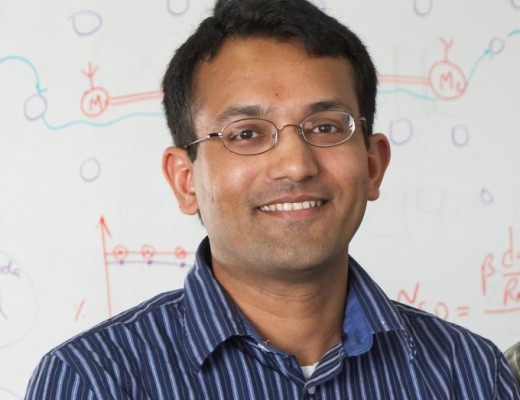
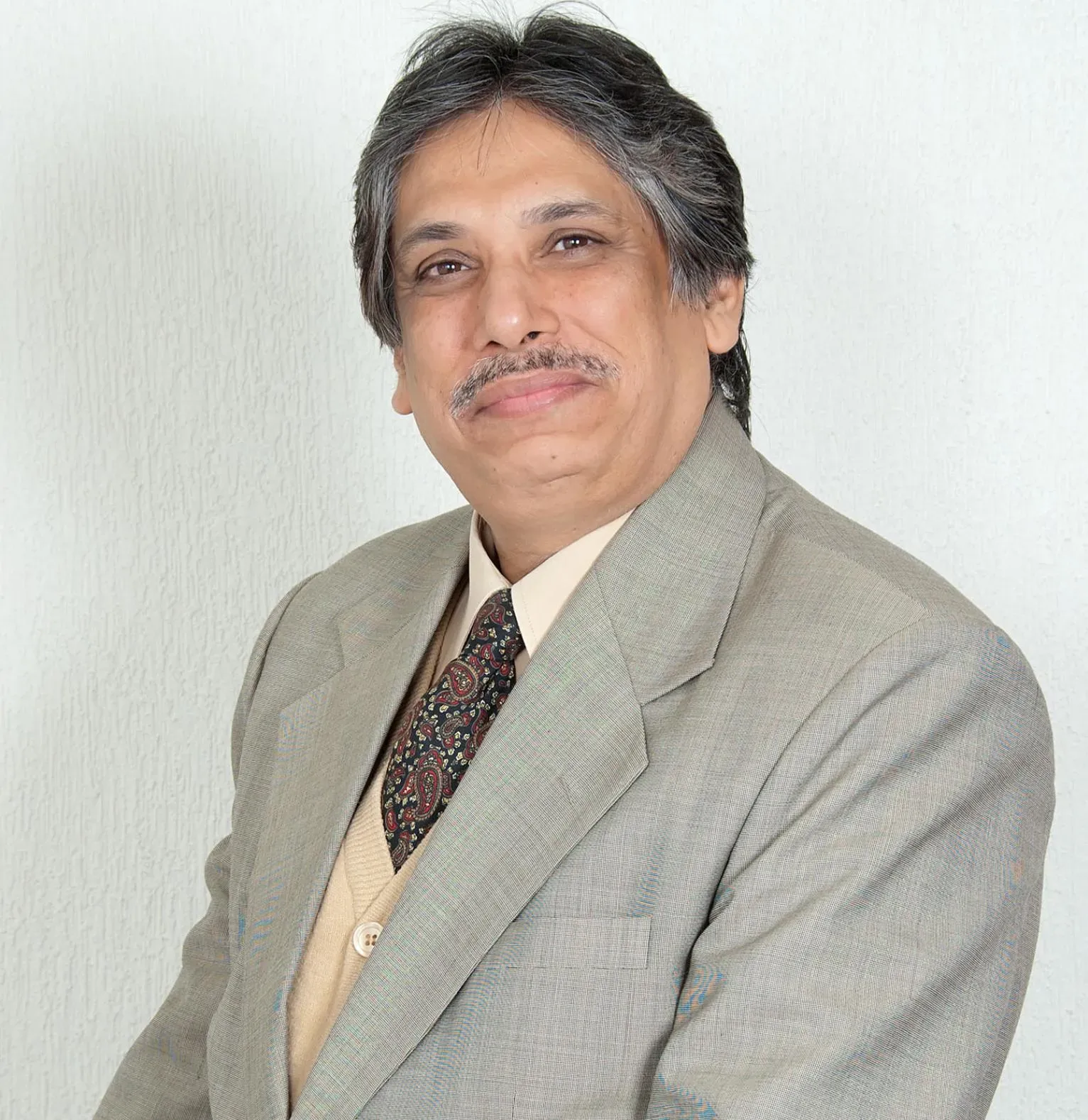
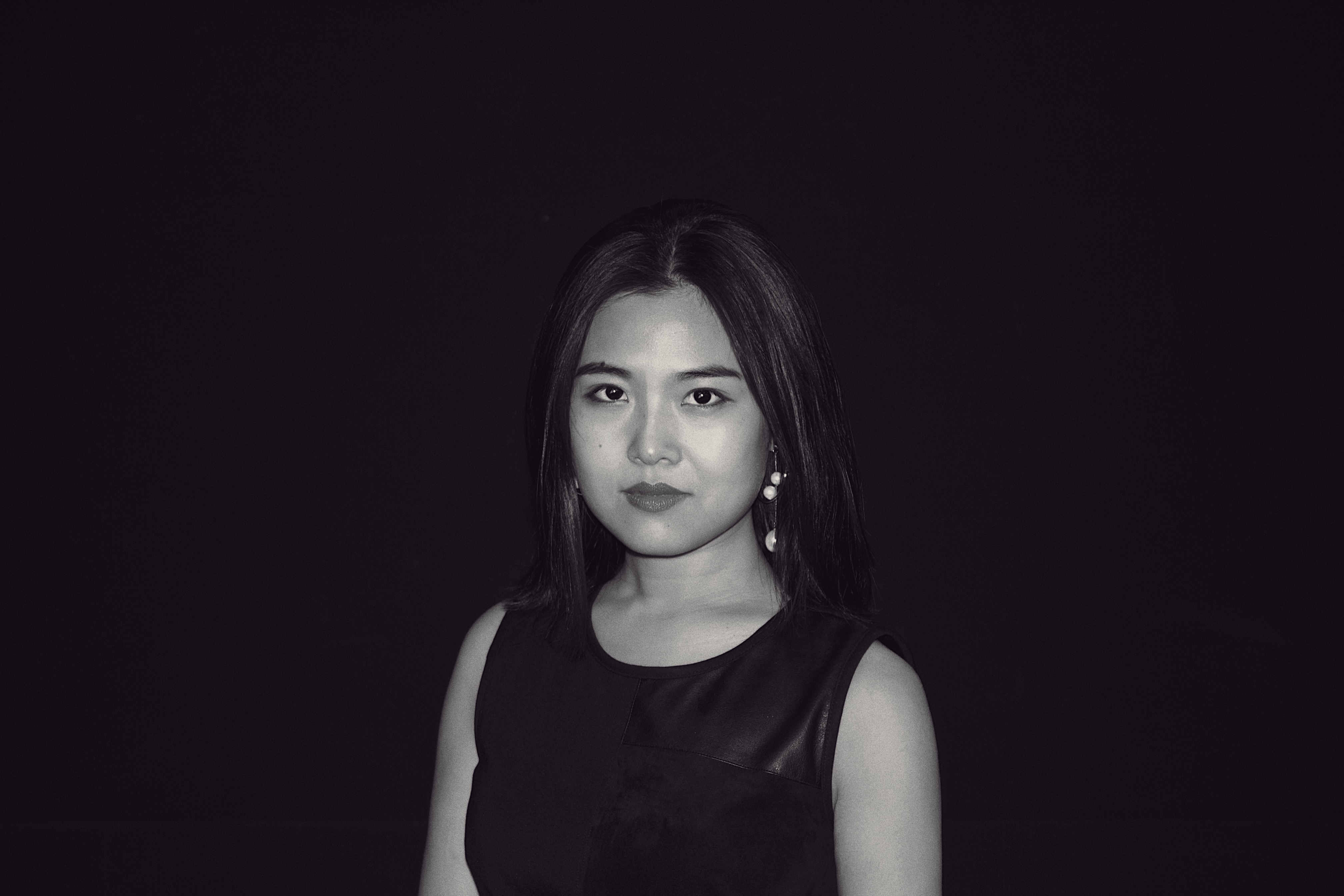
Dr. Laxima Niure Kandel is an Assistant Professor in the Department of Computer, Electrical, and Software Engineering at Embry–Riddle Aeronautical University. Her research spans wireless security, UAV detection, and cybersecurity, with a strong focus on AI-driven solutions for aviation and IoT systems. Her core research interests include: Wireless sensing and localization Machine learning applications in cybersecurity GPS spoofing detection for aviation RF fingerprinting for device authentication Adversarial resilience in deep learning models Recent publications (2025) demonstrate a dominant focus on transformer-based security models, UAV protection systems, and explainable AI. Over 80% of her latest work involves deep learning techniques applied to real-world threats like GPS spoofing, ADS-B attacks, and adversarial patches in autonomous vehicles.
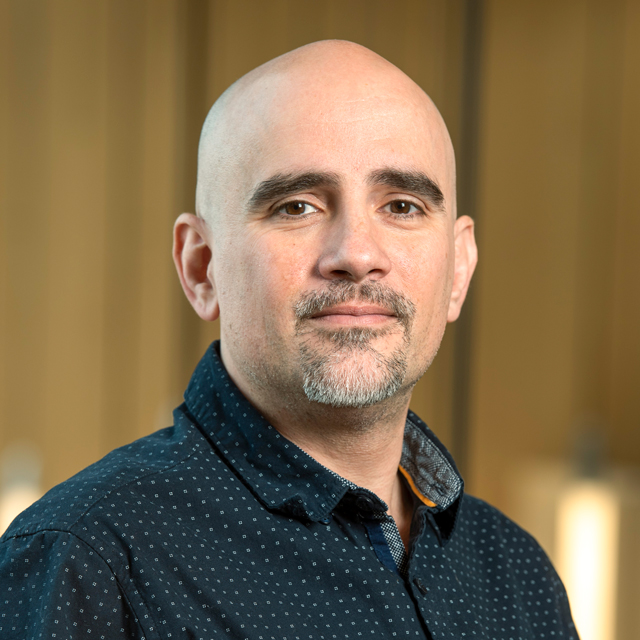
Paolo Gomarasca is a Full Professor of Moral Philosophy (M-Fil/03) at the Faculty of Political and Social Sciences of the Catholic University of the Sacred Heart (UCSC) in Milan, a position he has held since 2021. Previously, he served as Associate Professor (2016-2020) and Researcher (2006-2016) in Moral Philosophy at the same institution. He also maintains significant teaching roles at the Faculty of Theology in Lugano, Switzerland, where he has been a lecturer since 2010 at ISFA (Institute of Applied Philosophy) and since 2015 at the RETE Institute for Science, Philosophy and Theology of Religions. His academic formation includes a Degree in Philosophy from the Catholic University of the Sacred Heart in Milan (1994), a Scholarship at the Faculty of Theology in Lugano (1996), a Diplôme d'études approfondies en philosophie from Université Catholique de Louvain in Belgium (1998), and a PhD in Philosophy from the Catholic University of the Sacred Heart in Milan (2001). His scholarly journey demonstrates deep engagement with both continental philosophy and practical ethical concerns. Gomarasca's research spans multiple interdisciplinary domains at the intersection of philosophy, ethics, and social theory. His work demonstrates a strong engagement with Lacanian psychoanalysis, moral philosophy, and social ethics. He has made significant contributions to understanding the ethical dimensions of food systems, social work, migration, and political philosophy. His research often bridges continental philosophy with practical ethical concerns, particularly examining how theoretical frameworks can inform real-world social challenges. A recurring theme in his work is the exploration of the relationship between individual subjectivity and social structures, with particular attention to how ethical frameworks can address contemporary social issues. His extensive publication record, comprising over 100 research products as of 2025, shows a clear trajectory from theoretical philosophical investigations toward increasingly applied ethical concerns. While early works focused on Lacanian psychoanalysis and classical philosophical questions, his more recent publications demonstrate growing engagement with urgent contemporary issues including sustainable development, food ethics, migration ethics, and the social doctrine of the Church. His work increasingly appears in interdisciplinary contexts, reflecting his commitment to connecting philosophical inquiry with practical social challenges. Member of the Scientific Committee of Theory. Journal of Philosophy (since 2024) Member of the Management Committee of the High School for the Environment (since 2025) Scientific Director of the Master's Degree in 'Fare Radio' at UCSC Milan Member of the Steering Committee of the Relational Social Work Research Center Member of the Board of Directors of the Italian Society of Moral Philosophy As Scientific Director of the Master's program in radio communication and through his involvement with multiple research centers, Gomarasca has established collaborative networks spanning philosophy, social work, theology, and media studies. His leadership in the Transdisciplinary Research On Food Issues Center (TROFIC) demonstrates his commitment to addressing complex social challenges through interdisciplinary approaches that connect philosophical inquiry with practical social interventions. His recent work with SACRU (Strategic Alliance of Catholic Research Universities) highlights his growing influence in shaping the ethical engagement of Catholic universities with global challenges.
Prashant Krishnamurthy is a Professor at the University of Pittsburgh's School of Computing and Information , where he teaches foundational and advanced courses in wireless networks and cryptography. As a cofounder of the national Center of Academic Excellence (CAE) in Information Assurance Education and Research, he has driven curriculum development and secured over $5 million in grants from the National Science Foundation and the Commonwealth of Pennsylvania. Research Focus: Wireless network security, location-based systems, spectrum policy, and privacy-preserving technologies Grants: Served as PI/co-PI for major NSF and state-funded initiatives Labs: Cofounder of the Laboratory for Education and Research in Security Assured Information Systems (LERSAIS) His work bridges technical innovation with policy implications, including spectrum virtualization, secure IoT frameworks, and combating decentralized finance (DeFi) vulnerabilities. Recent publications highlight interests in quantum network routing, digital twins for smart homes, and machine learning applications in network design. The most recent 15 articles reveal expertise in quantum networking , DeFi security , IoT privacy , and resilient wireless architectures . Topics span zero-trust frameworks, spectrum sharing, and dynamic task assignment in smart environments. While no specific scientific awards are listed, his grants and lab leadership underscore significant contributions to cybersecurity education and research.
Linda Burkley is a Lecturer in Communications at Susquehanna University , with additional teaching experience at Slippery Rock University, Butler County Community College, and Messiah College. She has served as an adjunct faculty member at SU since 2008 and as a visiting lecturer since 2012. Prior to academia, Burkley led the Butler County Chamber of Commerce and Tourism, hosted local radio/TV programs, and managed the county’s Bicentennial Celebration. She is also a successful entrepreneur in public relations consulting for non-profits. Education: BA, La Roche University MA, Duquesne University Her research and teaching focus on Communications , emphasizing public relations, campaign strategy, creative branding, and non-profit communications. She integrates real-world experience into her pedagogy, prioritizing excellent writing, innovative messaging, and practical application of communication theories. Honors: Pennsylvania’s Best 50 Women in Business (2008) Burkley has over a decade of professional experience in public relations, including roles at a Washington, D.C.-based non-profit and her own consulting firm. She actively engages students with case studies and challenges from her entrepreneurial work, while balancing her career with family life as a mother of twin sons.
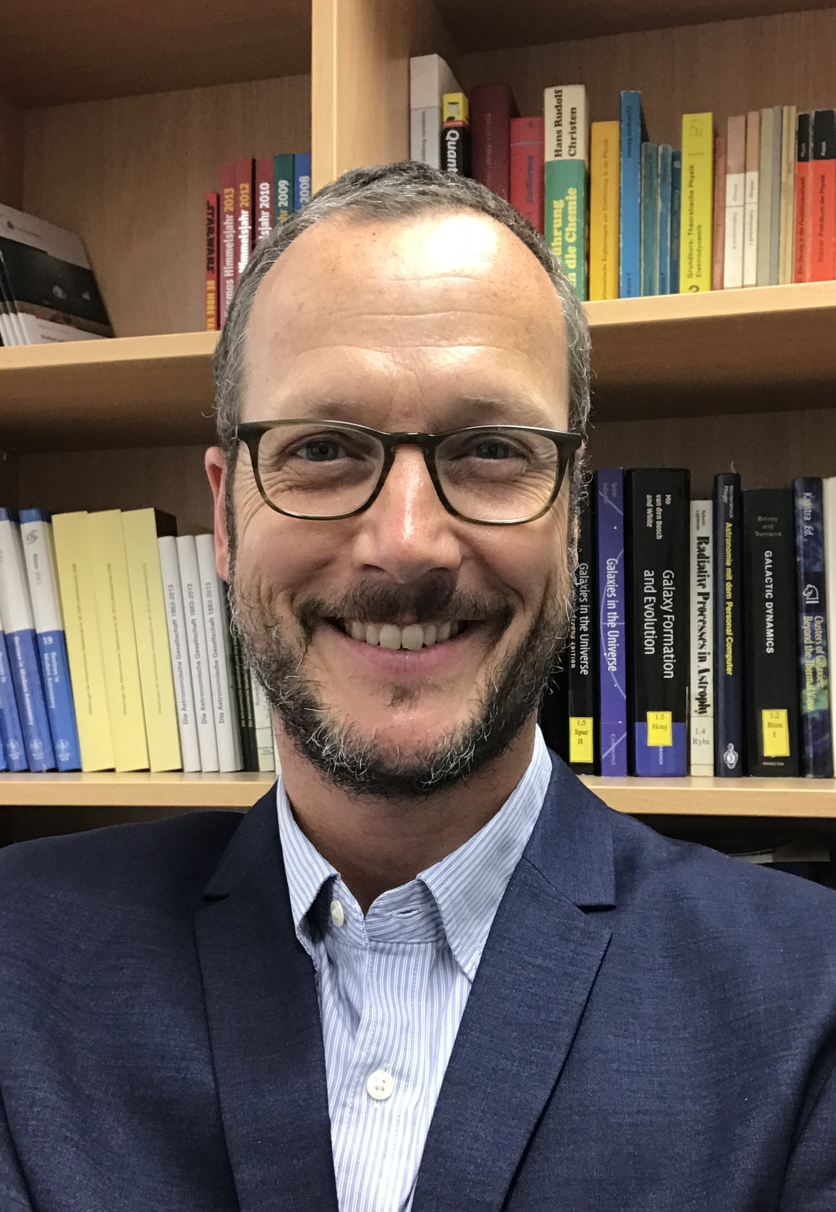
Prof. Dr. Philipp Richter is a Full Professor and Chair for Astrophysics at the Institute of Physics and Astronomy, University of Potsdam, Germany. He leads the Astrophysics research group at the University of Potsdam, focusing on interstellar and intergalactic gas, galaxy evolution, and observational cosmology. His work involves using absorption spectroscopy in UV and optical regimes to study the circumgalactic medium and intergalactic medium at various redshifts. Dr. Richter's educational background includes: PhD in Astronomy, University of Bonn, Germany (1999) Diploma in Physics, University of Bonn, Germany (1997) Studies of Physics and Astronomy at Universities of Marburg and Bonn, Germany (1994-1999) Abitur, Gymnasium Philippinum, Marburg, Germany (1991) Dr. Richter's research focuses on the properties of the circumgalactic medium (CGM) around galaxies and the intergalactic medium (IGM) that fills the Cosmic Web. His work employs absorption spectroscopy in the UV and optical regimes to study hydrogen and metal ions in the CGM and IGM at all redshifts. These absorption-line measurements are complemented with emission observations in radio, X-ray, and optical wavelengths. He also utilizes state-of-the-art numerical hydrodynamical simulations to compare with observational results. His research spans galaxy evolution, interstellar medium physics, and observational cosmology. Analysis of Dr. Richter's recent publications reveals a strong focus on the circumgalactic and intergalactic medium, with particular attention to the Magellanic Stream, galaxy halos, and high-redshift absorption systems. His work combines observational data from instruments like HST/COS with theoretical modeling to understand gas flows in galaxy evolution. Key themes include metallicity patterns, ionization states of gas, and the connection between observed absorption features and large-scale cosmic structure. Dr. Richter has received several prestigious awards: Teaching-Excellence Award, Faculty of Science, University of Potsdam (2022) Erskine Fellowship, University of Canterbury, NZ (2018) Ludwig-Biermann Award for early excellence in astrophysical research, Astronomische Gesellschaft, Germany (2005) Emmy-Noether fellowship/award for early research excellence, DFG (German science foundation) (2003) As an educator and mentor, Dr. Richter supervises PhD students including Sietske Bouma, Mitali Damle, and Kirill Makan. He teaches a variety of courses in Astrophysics such as fundamental astrophysics, cosmology, galaxy evolution, and interstellar medium as part of the physics/astrophysics bachelor/master programs. He also supervises astrophysics lab courses and seminars, and teaches experimental physics for geo-science students. Dr. Richter has played a significant role in university management, having served as director/deputy director of his department for many years, led committees for appointing professors in astrophysics, and developed the international master program in astrophysics at the University of Potsdam. Dr. Richter leads the Astrophysics research group at the University of Potsdam, which includes senior scientists, postdocs, and PhD students. The group is involved in various observational projects using telescopes and space-based instruments. They maintain close collaborations with other research institutions and participate in international research initiatives focused on galaxy evolution and the intergalactic medium.
Rose A. Finn is a Professor of Physics and Astronomy at Siena University, serving since 2005 as the first tenure-track woman in the Physics Department. Her research focuses on extragalactic astronomy, specifically environmental influences on galaxy evolution through multi-wavelength observations of clusters and groups. Her educational background includes: Ph.D. in Astronomy from the University of Arizona (2003) M.S. in Physics from Dartmouth College B.A. in Astronomy-Physics from the University of Virginia Dr. Finn investigates star formation, gas content, and metallicity across cosmic environments. She employs H-alpha surveys, infrared imaging, and spectroscopy to study galaxy evolution in clusters, utilizing facilities like Spitzer and ground-based telescopes. Her methodology emphasizes environmental context in understanding galactic properties. She leads major projects including the Virgo Filament Survey, Local Cluster Survey, and Undergraduate ALFALFA Team, which examine filamentary structures, dust disks, and star formation in nearby systems. Her recent publications (2009-2013) consistently explore intermediate-redshift clusters through H-alpha and infrared techniques, revealing evolutionary trends in star formation and environmental interactions. Dr. Finn's accolades include: NSF Astronomy and Astrophysics Post-doctoral Fellowship NSF CAREER award Space Grant Fellowship NASA Graduate Student Researchers Program fellowship She mentors undergraduate researchers through the ALFALFA project and classroom instruction, emphasizing active learning. Her sustained research program is funded by multiple NSF and NASA grants supporting observational campaigns on galaxy evolution. The Breyo Observatory's 0.7-m Planewave telescope serves as her campus-based research hub, while collaborations like the ESO Distant Cluster Survey extend her work to international facilities.
Wojciech Siwicki is an Assistant Professor at the Department of Radiocommunication Systems and Networks within the Faculty of Electronics, Telecommunications and Informatics at Gdańsk University of Technology. Based in room 406 of Building A, he can be contacted via email (wojciech.siwicki@pg.edu.pl) or phone (+48 58 347 1577). His research focuses on radio navigation and terrestrial positioning systems , particularly: Hyperbolic radio navigation alternatives to GNSS Asynchronous and self-organizing radiolocation methods Indoor localization algorithms using radio distance measurements Security analysis of navigation infrastructure Internet of Things radio interfaces Publications from 2013-2020 reveal consistent work on Polish radiolocation systems (AEGIR/JEMIOLUSZKA), with emphasis on system reliability, asynchronous operation, and comparative performance analysis in both static and dynamic environments. His contributions span theoretical modeling and practical implementation of terrestrial navigation solutions. Dr. Siwicki participates in research projects funded by the Intelligent Development Operational Programme, including DUCH IoT (software-defined radio interfaces for IoT devices) and VCS-MLAT (aircraft location in distributed VCS systems), demonstrating applied research engagement in navigation technology innovation.
Maureen Collins is a Lecturer in Fashion and Textiles Design at Ulster University's Belfast School of Art within the Faculty of Arts, Humanities & Social Sciences. Based at the Belfast campus (Room BA-01-014B, 2-24 York Street), she holds active teaching and research responsibilities. Her research spans fashion/textile design, interior styling, and innovative mental health exploration through art. Notable projects include the 'Wonderful World of Colour' at Belfast Ideal Room, 'Fantasy Room' at Dublin Ideal Home, and 'The Craft House' in Greenisland. Her recent interdisciplinary work investigates cancer treatment experiences using urban street art as qualitative research methodology. Collins' consultancy practice delivers workshops for Belfast City Council, Coleraine Council, and commercial clients. She previously served as creative director at Jacob Street concept store and launched a local interiors magazine, leveraging broadcast experience from national television and radio appearances. Her advising focuses on student enterprise development and display design, with consultancy work bridging academic theory and commercial application. Current research integrates artistic practice with healthcare outcomes through community-based qualitative studies. Collins maintains active industry engagement through design solutions for private/commercial clients and contributes to research integrity training within the university.
Daniel N. Aloi serves as Professor and Chair of the Electrical and Computer Engineering Department within Oakland University's School of Engineering and Computer Science. His leadership spans department administration while maintaining active research and teaching responsibilities in electromagnetics and navigation systems. His academic credentials include: Ph.D. in Electrical Engineering, Ohio University (1999) M.S.E.E., Ohio University (1996) B.S.E.E. (cum laude), Ohio University (1992) Dr. Aloi's research centers on applied electromagnetics for automotive applications, specializing in antenna design and vehicle-level measurements across 600 MHz to 6,000 MHz frequencies. His work bridges theoretical modeling with practical implementation in GPS systems, satellite communications, and navigation technologies, with particular focus on real-world environmental impacts like vehicle structures and parking garage deployments. Analysis of his 2014-2015 publications reveals concentrated expertise in antenna optimization for automotive navigation systems, with significant contributions to GPS antenna grounding techniques, vehicle-induced radiation pattern distortion, and multi-sensor fusion methodologies for positioning accuracy. His scientific recognition includes: Two Institute of Navigation Best Paper Awards (2004, 2012) IEEE Senior Member distinction (2007) Multiple Oakland University research excellence awards (2004-2007) Dr. Aloi has secured over $1.8 million in external funding from DARPA, FAA, NSF, and automotive industry partners including Chrysler and General Motors. His grants support critical projects ranging from peripheral nerve interfaces to UAV antenna systems, while his consulting practice serves major defense and automotive firms like General Dynamics and John Deere. He directs the Antenna and Electromagnetics Web Lab (AEWL), equipped with advanced instrumentation from his NSF grant, facilitating cutting-edge research in antenna characterization and vehicle-level electromagnetic testing.
Adam Hurd is a Senior Lecturer in Journalism at the University of the West of England (UWE), affiliated with the Department of ACE - Film and Journalism. He holds a Post Graduate Certificate in Academic Professional Practice (PGCAPP), a Master of Arts (MA), and a Bachelor of Arts (BA), having achieved distinctions at both undergraduate and postgraduate levels. Adam is also a Fellow of the Higher Education Authority (FHEA). With over ten years of industry experience, he previously worked as a senior broadcast journalist at Global (Europe's largest commercial radio group) and BBC local radio. His research focuses on journalism practices within the UK radio and podcast industries, examining: The impact of deregulation on UK radio The compatibility of journalistic objectivity with news podcast techniques Adam leads modules for the BA (Hons) Media Production and MA Journalism programs, specializing in radio, podcasting, and broadcast journalism. He collaborates with Bristol-based organizations like social enterprise ACH to develop student-led podcast projects with local impact, including the 'Wisdom from the Global Majority' series. Awards & Honors: Fellow of the Higher Education Authority (FHEA)
Dennis K. Wasko serves as a Professor of Biology at Hillyer College within the University of Hartford, where he teaches Environmental Science, General Biology I, and General Biology II. He emphasizes deep student engagement, stating his commitment to passing on 'a love of science, nature, and learning' while sharing 'incredibly fun and rewarding experiences' derived from scientific exploration. His office is located in Hillyer Hall 155 with contact details including wasko@hartford.edu and 860.768.4925. His academic foundation includes advanced degrees from prominent institutions: PhD from the University of Miami MS from Sam Houston State University BS from Rowan University Wasko's research program centers on herpetology with specialized focus on spatial ecology, feeding ecology, and vertebrate natural history. He conducts extensive fieldwork across diverse ecosystems—from the Great Lakes region to Costa Rican rainforests—employing methodologies like radio-tracking to investigate habitat use, foraging behavior, and population dynamics of reptiles. His work bridges fundamental ecological inquiry with conservation applications, particularly regarding species' responses to environmental disturbances. Analysis of his 15 most recent publications reveals a consistent emphasis on Neotropical snakes (especially Bothrops asper) and reptile ecology, with recurring themes including spatial patterns, human-wildlife conflict (particularly snakebites), and predator-prey dynamics. His interdisciplinary approach integrates zoology, epidemiology, and environmental science, often addressing conservation challenges through field-based experimental studies in protected areas like Braulio Carrillo National Park. While specific grant details are not provided, Wasko's prolific collaboration with international researchers—including S.G. Bullard, M. Sasa, and Costa Rican scientists—demonstrates successful leadership of cross-border research teams. His publications reflect sustained funding for long-term ecological monitoring and experimental fieldwork in sensitive ecosystems. Wasko maintains active research partnerships in Costa Rica's national parks, where he studies snake diversity and behavioral ecology. These collaborations involve dynamic teams of herpetologists, ecologists, and local conservationists, combining traditional field methods with modern tracking technologies to advance understanding of reptile conservation in tropical environments.
Adriano Jorge Cardoso Moreira is an Associate Professor with Habilitation at the Department of Information Systems, School of Engineering, University of Minho, Portugal. He holds multiple leadership roles including Scientific Coordinator of Urban Computing at Centro de Computação Gráfica and Director of the MAP-tele PhD Program. His research is conducted primarily through the Urban Computing Lab , focusing on smart place technologies. Education: PhD in Electrical Engineering (1997) and Bachelor's in Electronic and Telecommunications Engineering (1989), both from University of Aveiro, Portugal. Research Focus: His work spans indoor positioning, mobile/context-aware systems, urban computing, and wireless network simulation. Key innovations include fingerprinting algorithms for localization, multi-sensor fusion techniques, and human mobility analysis. Research outputs consistently address real-world industrial challenges such as warehouse management, factory automation, and urban infrastructure. Research Output Trends: Recent publications (2021-2023) emphasize practical applications of Wi-Fi/LoRaWAN fingerprinting, machine learning for sensor calibration, and industrial vehicle tracking. Over 70% of recent works involve experimental validation in real environments, reflecting a strong applied research focus. Key thematic clusters include radio map optimization, multi-sensor datasets, and scalability of positioning systems. Awards & Recognition: First Prize, EvAAL-ETRI Indoor Localization Competition (Off-site track, 2015 & 2017) Second Prize, EvAAL-ETRI Indoor Localization Competition (2016) IEEE Senior Member status Patent in computational geometry Projects & Funding: He leads/participates in numerous EU/national projects including: ORIENTATE (2021-2023): Low-cost indoor positioning for factories Lab4U&Spaces (2021-2023): Urban space solutions AR WARE (2018-2022): AR for warehouse management SAMU (2015-2018): Smart autonomous mobile units Lab & Team: He established/leads the Urban Computing Lab developing technologies for smart environments. Previously headed the Computer Communications and Pervasive Media Group (until 2016). Current team includes PhD/Master students working on wireless positioning and mobility analysis.
Dr. Rajagopal serves as Professor in the Department of Marketing and Business Intelligence at EGADE Business School, Tecnologico de Monterrey, while concurrently holding a professorship at Boston University's Metropolitan College. His distinguished career spans decades across Mexican, American, and Indian academic institutions with significant contributions to marketing theory and practice. His educational foundation includes: Doctorate in Marketing from Ravishankar University, India Master of Arts in Economics from Ravishankar University, India Dr. Rajagopal's research centers on Marketing Strategy , Consumer Behavior , and Technology Innovation , with specialized expertise in service marketing, global business dynamics, and brand management. His work uniquely bridges theoretical rigor with practical applications in emerging markets, particularly examining how digital transformation reshapes consumer engagement and competitive positioning. Recent publications demonstrate sophisticated integration of business analytics with traditional marketing frameworks. His 15 most recent publications (2006-2019) reveal a clear trajectory toward data-driven marketing strategies, with increasing focus on digital ecosystems, cross-cultural consumer behavior, and innovation management. These works span diverse subfields including startup ecosystems, social media influence, spatial trade patterns, and sustainable growth models, reflecting his comprehensive approach to contemporary marketing challenges. Key recognitions include: National Researcher Level 3 by CONACYT (Mexico's highest research distinction, 2013-2022) Premio Pravasi Bharatiya Samman 2023 (India's highest honor for overseas citizens) UK-Mexico Visiting Chair for collaborative research with University of Sheffield Fellowship in the Royal Society of Arts (Life Fellow since 2016) Multiple teaching excellence awards including Innovative Teaching Award 2011 As an active advisor and researcher, Dr. Rajagopal has guided numerous graduate students while securing significant research funding through his National Researcher status and international collaborations. His editorial roles across eight academic journals and membership in fifteen professional associations demonstrate extensive scholarly engagement. Current research initiatives focus on digital marketing analytics and global-local business convergence, supported by ongoing partnerships with institutions across three continents. He maintains active participation in research groups including the Organizational Strategy and Industry Transformation group at Tecnologico de Monterrey, while contributing to global academic networks such as the Academy of Marketing Science and Association of Consumer Research.
Fan Zhang is an Assistant Professor of Sound Design in the Theatre department at the Rueff School of Design, Art, and Performance, Purdue University. She is a critically acclaimed New York-based sound designer and composer specializing in theatre, dance, film, commercial radio, and installation art. Education: M.F.A. from Yale School of Drama Research Interests: Zhang pioneers immersive auditory experiences through sound design and original composition, noted for "cinematic precision" and "otherworldly quality" by The New York Times and Vulture. Her work explores narrative transformation via surrealist soundscapes, pulsating underscoring, and transformative audio environments that serve as "undercover heroes" in productions. She integrates cross-disciplinary techniques from theatre, dance, and film to create emotionally resonant sonic architectures. Scientific Awards: New York Innovative Theatre Award for Cannibal Galaxy Connecticut Critics Circle Award for Seven Guitars Drama Desk Award Nominee for Outstanding Sound Design Professional Representation: Represented by The Gersh Agency (Seth Glewen). Active member of United Scenic Artists Local USA 829 (IATSE), ASDP, and TSDCA (Theatrical Sound Designers and Composers Association). Advising and Grants: No publicly documented advisees or research grants. Current focus remains on professional creative practice integrated with academic instruction.
Chantal White serves as Associate Professor of Language and Literature in the Department of French Studies within the Faculty of Arts and Sciences at Sainte-Anne University, Nova Scotia. She joined the institution in August 2014 after completing her doctoral studies at New York University, returning to her Acadian roots in the region. Education: PhD in Linguistic Anthropology, New York University MA in Linguistics, New York University MA in Linguistics, University of Moncton BA, University of Moncton Her research examines linguistic ideologies in language contact scenarios, with particular focus on media representation of linguistic practices. She investigates how radio and print media circulate language ideologies, analyzes graphic representation of local varieties in Acadian newspapers like Le Courrier de la Nouvelle-Écosse , and explores phonetic variations in accent-based inclusion/exclusion dynamics. Her work bridges theoretical sociolinguistics with community-focused Acadian language studies. Publications demonstrate consistent focus on bilingual advertising spaces and historical media representations, revealing patterns in how linguistic practices are staged and normalized through cultural institutions. Her 2016 article on Quebec's cultural radio advertising exemplifies this media-centered approach to language ideology. Scientific Awards: No awards specified in source material. Advising and Grants: The text provides no details regarding graduate students, research grants, or funded projects beyond her collaborative work with Université de Moncton colleagues on Acadian accent studies. Collaborations: Actively partners with researchers from Université de Moncton on projects examining linguistic representations in Acadian communities, particularly regarding heritage tourism contexts and media portrayals.