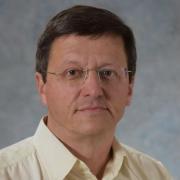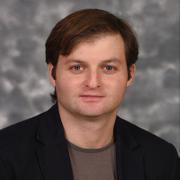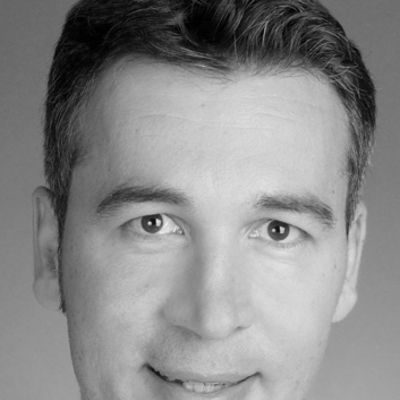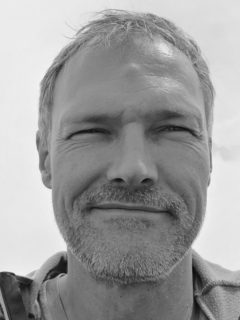
Professor Matthias Braun is a distinguished academic in the field of physical geography, specializing in remote sensing and GIS applications for glaciology and polar research. He holds a professorship at the Institute of Geography at Friedrich-Alexander University Erlangen-Nuremberg (FAU), where he leads the Chair of Geography (Remote Sensing and GIS) and serves as Chairman of the Examination Board for B.Sc./M.Sc. Physical Geography and BA/MA Cultural Geography since 2022. His research focuses on monitoring glacier dynamics, ice sheet changes, and climate impacts in polar and mountainous regions using advanced remote sensing techniques. Professor Braun has held several significant leadership positions including Chairman of the International Doctoral Program 'Measuring and Modelling Mountain Glaciers in a Changing Climate' in the Bavarian Elite Network funded by the Bavarian Ministry of Science & Art since 2022, and Coordinator of the DFG SPP Antarctic Research since 2017. His academic journey includes an Associate Professor position at the University of Alaska Fairbanks (2010-2011) and extensive field experience leading multiple Arctic and Antarctic expeditions since 1994/95, with research stays in Alaska, South America, West & East Africa, Himalaya & Karakorum. His research interests span glaciology, remote sensing, geographic information systems, climate change impacts, land use change, polar regions, and high mountain environments. Professor Braun's work integrates microwave and optical remote sensing data from satellite and airborne platforms to derive geobiophysical parameters and their spatiotemporal variations. He employs advanced digital image processing, pattern recognition, SAR interferometry, and polarimetry techniques in his research. His laboratory maintains active participation in major research initiatives including the TanDEM-X and TanDEM-L Science Teams since 2010. Professor Braun's extensive publication record demonstrates a clear progression from foundational work on glacier monitoring to sophisticated applications of machine learning and deep learning for glacier feature extraction. His recent work focuses on calving front detection using SAR imagery, glacier velocity mapping, and integration of multi-sensor data for comprehensive glaciological analysis. Key research themes include glacier mass balance, ice sheet dynamics, supraglacial hydrology, and climate change impacts on cryospheric systems across diverse regions including Antarctica, Patagonia, the Himalayas, and the European Alps. Among his notable recognitions is the 2009 Science Award for Physical Geography from the Prof. Dr. Frithjof Voss Foundation for Geography and his Habilitation at the Mathematical-Natural Science Faculty of the University of Bonn in 2009. He serves as an Associate Editor for Frontiers in Earth Sciences – Cryospheric Sciences and reviews for numerous peer-reviewed journals. Professor Braun has mentored numerous doctoral students to completion, with recent graduates including Dr. Christian Sommer (2022), Dr. David Farias Barahona (2021), Dr. Stefan Lippl-Seifert (2020), and Dr. Peter Friedl (2019). Several students are currently completing their dissertations under his supervision. His research is supported by various funding mechanisms including the Bavarian Elite Network, DFG research programs, and international collaborations. He maintains strong connections with national and international research institutions including membership in the International Glaciological Society (IGS), German Society for Photogrammetry, Remote Sensing and Geoinformation (DGPF), German Society for Polar Research (DGP), and German Society for Geography (DGfG).