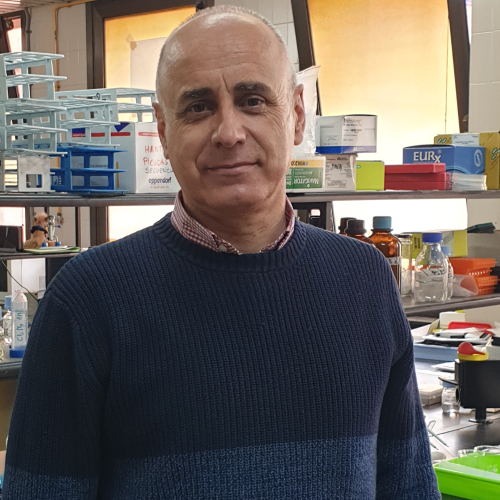
Miguel Prieto Maradona is a Professor at the Department of Hygiene and Food Technology , Faculty of Veterinary , Universidad de León. His research focuses on Food Safety , Biopreservation , and Antimicrobial Resistance in food systems. Research Interests: Microbial ecology in food processing Genomics-based safety assessments Regulatory compliance for novel foods Key Article Trends (2022-2024): Prior work emphasizes Listeria monocytogenes control, plasma-activated water applications, and QPS (Qualified Presumption of Safety) updates for food/feed microorganisms. His publications align with EU novel food regulations (Regulation (EU) 2015/2283). Labs/Teams: Affiliated with the research group NEWTEC (New Food Preservation Technologies and Food Safety).
Yann Ponty is a tenured CNRS Researcher at the Computer Science Department (LIX) of École Polytechnique (Institut Polytechnique de Paris, France). He leads the AMIBio team and serves as Deputy Director of LIX. His work focuses on developing bioinformatics methods at the intersection of computer science, mathematics, and molecular biology, particularly for RNA structure prediction, design, and evolution. He holds leadership roles in the ISCB Board of Directors (2025-2027) and the HDR referent for the IDIA department (CS&Interactions) at IP Paris. Research Interests: RNA folding/design/evolution, RNA-RNA/RNA-protein interactions, random generation, enumerative combinatorics, discrete algorithms, parameterized complexity, RNA visualization Key Contributions: Developed algorithms for RNA inverse folding, pseudoknot modeling, and dynamic programming optimization Collaborations: Partnerships with institutions like Simon Fraser University, Boston College, and Université Paris-Saclay His recent publications (15 most recent) span RNA structure prediction, pseudoknot partition functions, linear-time inverse folding algorithms, and parameterized sampling techniques. The work emphasizes dynamic programming, combinatorial approaches, and integration of experimental data for improving RNA modeling. Scientific awards include election to the ISCB Board of Directors (2025-2027) and leadership roles in academic networks like GdR BIM. He actively contributes to software development (VARNA, RNANR, SPARCS, IncaRNAtion, RNARedPrint) and serves as Associate Editor for Bioinformatics (OUP). Teaching engagements include graduate-level courses in combinatorial optimization, RNA bioinformatics, and algorithms at Université Paris-Saclay and École Polytechnique.
Juan Carlos Linares Calderón is a Full Professor at Pablo de Olavide University in the Department of Physical, Chemical and Natural Systems. His research focuses on Mediterranean relict forests' response to climate change through multidisciplinary approaches combining dendrochronology , ecophysiology , genomics , and epigenetics . PhD in Science (2008) from University of Jaén Principal Investigator in 10+ national/international projects Research Themes Specializing in climate change impacts on forest ecosystems , Linares leads the Forests Ecology and Global Change Lab . His work spans from individual tree responses to large-scale biogeographical patterns, challenging CO 2 -induced growth paradigms and emphasizing forest management as climate modulator. Scientific Contributions Over 162 publications with 82,704 reads and 9,074 citations Highly Cited Author status (Ioannidis et al., 2020) Developed SAPFLUXNET global transpiration database Email: jclincal@upo.es
María Ángeles Ayllón is an Associate Professor at the Polytechnic University of Madrid (UPM), leading the Virus-Fungus-Plant Interaction group. Her research focuses on understanding mycovirus-fungal host interactions and their application in biocontrol. She collaborates with the International Committee on Taxonomy of Viruses (ICTV) on viral family classifications, such as Botourmiaviridae and Hypoviridae . Her work addresses fungal pathogen control via viral agents to reduce pesticide use, aligning with EU’s Green Deal goals. Ayllón oversees a multidisciplinary team including PhD students and postdocs, such as Javier Pardo Medina and Julio L. Rodríguez-Romero. Her research spans three main areas: mycovirus diversity and evolution, molecular mechanisms of viral-fungal interactions, and development of synthetic mycoviruses as biocontrol tools. Key projects include analyzing the mycovirome of Botrytis cinerea isolates and constructing infectious viral clones for reverse genetics. She has secured grants like Molecular Mechanisms in Botrytis-Plant Interaction (PID2020-120106RB-I00) and the H2020-funded ViroPlant initiative, fostering international collaboration. Ayllón’s team explores novel mycoviruses and their impact on fungal virulence, aiming to develop eco-friendly alternatives to chemical fungicides. Her contributions include discovering new viral families and elucidating RNA silencing pathways in fungi. Ongoing efforts focus on synthetic biology approaches to enhance mycovirus efficacy in agricultural settings.
Matthieu Defrance is an Associate Professor in the Computer Science Department at Université Libre de Bruxelles (ULB), Belgium, a position he has held since October 2016. Prior to this, he worked as a PostDoc at ULB's Laboratory of Cancer Epigenetics from May 2010 to September 2016. Dr. Defrance's research bridges computer science with biological sciences, focusing on computational methods for analyzing complex biological data. His work spans epigenetics, genomics, and algorithm development for biological applications. His primary research interests include: Gene Regulation and Chromatin Biology Epigenetics and Epigenomics DNA Methylation analysis Computational Statistics for biological data Algorithm Development for genomic applications Next Generation Sequencing data analysis Dr. Defrance's publication record demonstrates a strong interdisciplinary approach, with recent work focusing on improving DNA methylation analysis techniques, developing novel bioinformatics tools like RedRibbon for gene expression signature comparison, and applying these methods to understand diseases like diabetes and cancer. His research shows consistent innovation in computational biology, with publications spanning from method development to biological applications across diverse fields including diabetes genetics, cancer epigenetics, and evolutionary adaptations in desert ants. With 61 publications and nearly 5,000 citations, Dr. Defrance has established himself as a significant contributor to computational biology and epigenetics research.
Rubén Santiago Montero is an Associate Professor at the Department of Computer Architecture and Systems Engineering, Universidad Complutense de Madrid (UCM). He leads research in distributed systems, focusing on resource provisioning in Grid, Cloud, and edge computing environments. His work emphasizes virtual machine management, cloud federation, and utility computing models. Montero co-leads the OpenNebula project, a widely adopted cloud management platform, and contributed to the GridWay metascheduler. Research interests include distributed resource management, virtualization, and interoperability between cloud infrastructures. He participates in major EU projects such as RESERVOIR, BEACON, and PANACEA, advancing cloud and grid technologies. His contributions span over 200 peer-reviewed publications in top journals and conferences, addressing topics like workflow scheduling, elastic resource allocation, and edge-cloud architectures. Education: PhD in Computer Science (UCM). Grants & Projects: Principal investigator in EU-funded initiatives (e.g., RESERVOIR, BEACON) totaling €20M+. Labs/Teams: Distributed Systems Architecture Group at UCM, collaborating with NASA, IBM, and European research networks.
Javier Espinosa Manzano is an Associate Professor in the Department of Physiology, Genetics and Microbiology at the University of Alicante, where he has been a faculty member since 2010. He currently serves as Secretary of the Department (since December 2022) and teaches multiple courses across undergraduate and graduate programs in Biology. He earned his BSc in Biology (2002) and PhD in Genetics (2007, with European Mention) from the University of Alicante. His postdoctoral research included a fellowship at the University of Tübingen (Germany) and a short-term stay at UCSD (California) supported by EMBO. His research focuses on understanding how unicellular cyanobacteria sense their environment and respond to changes, with particular emphasis on nitrogen metabolism regulation and signal transduction pathways in Synechococcus elongatus . His work has led to the characterization of the multifunctional protein PipX and genetic dissection of cyanobacterial two-component signaling systems. Recent research has expanded into CRISPR-Cas systems and their interactions with anti-CRISPR mechanisms. His publication record shows consistent productivity with significant contributions in high-impact journals like PNAS and Frontiers in Microbiology, demonstrating expertise in both fundamental cyanobacterial physiology and emerging gene editing technologies. The research spans molecular mechanisms of nitrogen regulation, circadian clock interactions, and more recently, bacterial immunity systems. He has supervised 3 PhD theses (all at University of Alicante) with distinction marks including SUMMA CUM LAUDE, and has guided numerous undergraduate and Master's research projects. His teaching portfolio is extensive, covering Genetics, Molecular Techniques, and Gene Expression Regulation across multiple Biology programs. He has taught courses like Genetics (15 times), Signaling and Gene Expression Regulation (15 times), and Biotechnology Laboratory (15 times), with teaching activities scheduled through 2025. He has participated in 12 research projects as a researcher and led 2 as principal investigator, including projects funded by the Ministry of Economy and Enterprise, Valencian Government, and University of Alicante, focusing on cyanobacterial signaling networks and molecular interactions.
Jairo Enrique Rocha Cárdenas is a Full Professor at the University of the Balearic Islands (UIB), affiliated with the College of Mathematics, Physics, and Computer Science in the Department of Computer Science and Artificial Intelligence. His research focuses on understanding shapes through computational geometry and genomic analysis for cancer and heart disease. Teaching areas: Algorithms, Optimization, Linear Algebra, Mathematical Analysis Active research participation in Computational Biology and Bioinformatics (BIOCOM) group Currently teaches at multiple degree programs including Mathematics, Computer Engineering, and Telecommunications Engineering His work spans RNA/protein recognition, color recognition, and human motion analysis. Teaching schedule requires prior appointment for tutorials, with courses offered in Mallorca campus.
Antonio Rodriguez Garcia is a Professor in the Department of Molecular Biology at the Faculty of Biological and Environmental Sciences, University of León. His research focuses on microbial genetics, antibiotic biosynthesis, and transcriptomics in Streptomyces species. PhD in Molecular Biology (University of León, 1998) Research interests include: Regulation of secondary metabolism in Actinobacteria Transcriptional control mechanisms in Streptomyces Genomics and bioinformatics of antibiotic-producing bacteria Gene cluster activation and heterologous expression Stress response and metabolic adaptations in Streptomyces Recent publications (2025–2017) explore RNA-Seq methodologies, antibiotic biosynthesis regulation via PAS-LuxR proteins, genome sequencing innovations, and phosphate/nitrogen metabolism interactions in Streptomyces coelicolor and related species. He leads the BIOACTINOTEC research group, specializing in biotechnological applications of Actinobacteria for pharmaceutical, agro-food, and environmental industries.
Juan José Arranz Santos is a Professor at the University of León, affiliated with the Faculty of Veterinary Science and Department of Animal Production. His research focuses on animal genetics , genomics , and feed efficiency in dairy sheep, with significant contributions through the MEGA MEJORA GENÉTICA ANIMAL research group. He is actively involved in genomic selection programs and uses machine learning and transcriptomic analysis to improve dairy sheep productivity and resilience. Education : Ph.D. in Animal Production from the University of León (1994) His research synthesizes genomic , transcriptomic , and microbiome data to identify biomarkers for feed efficiency, milk quality, and disease resistance. Recent work includes developing the SMARTER-database for integrating sheep/goat genomic data and analyzing epigenetic impacts of early nutrition on lactation performance. Key sub-fields include selective sweeps , long non-coding RNAs , and circular transcriptomes in ruminants. The 15 most recent publications (2025-2023) reveal trends in machine learning applications for feed efficiency prediction, SNP array integration , lncRNA annotation , and milk metabolite biomarkers . His work spans functional genomics, microbiota analysis, and innovative educational tools like gamification for teaching quantitative genetics . Research Groups : MEGA MEJORA GENÉTICA ANIMAL
Sarah J. Berkemer is an Assistant Professor at École Polytechnique and a researcher in the AMIBio Group at LIX (Laboratoire d'Informatique de l'École Polytechnique). She is also an affiliated scientist at ELSI (Earth-Life Science Institute) in Tokyo, Japan. Her work bridges RNA bioinformatics , computational biology , and urban development through algorithmic and data-driven approaches. Education : PhD in Computer Science from Leipzig University, Germany. Research Interests RNA structure prediction and sequencing analysis Dynamic programming and formal language methods in bioinformatics Phylogenetics and evolution of Archaea/Bacteria Urban data science and OSM (OpenStreetMap) integration Projects & Funding SYNORG (2024–2028): Synthetic organelles via RNA engineering BATO-MOUCHE (2022–2025): Urban development modeling RNA-RAPSODY (2021–2024): Robust parameter space analysis in RNA bioinformatics Scientific Awards Marie-Curie Fellow (2021–2024) Sarah actively supervises internships and thesis projects and has contributed to interdisciplinary research spanning biology and computer science.
Dr. Josep Quer Sivila is a Senior Researcher at Vall d'Hebron Research Institute (affiliated with Universitat Autònoma de Barcelona) since May 2021, specializing in virology and molecular biology. He obtained his PhD in 1994 from UAB, focusing on hepatitis C virus dynamics. Currently accepting PhD students, his research examines viral evolution through high-throughput sequencing techniques. Research Interests: Viral pathogenesis (HCV, SARS-CoV-2, RSV), quasispecies dynamics, genomic evolution of RNA viruses, and development of molecular diagnostics. Core methodologies include next-generation sequencing and bioinformatic analysis of viral populations. Publication Trends: Recent works (2023-2025) focus on SARS-CoV-2 variant evolution, HCV quasispecies pathology, and respiratory virus surveillance, demonstrating consistent emphasis on genomic characterization of viral pathogens and clinical applications. Projects: Principal investigator on hepatitis C research grants including: Molecular characterization of HCV quasispecies in clinical contexts (CICYT, 1992-1994) Development of PCR and hybridization techniques for HCV diagnosis (UAB, 1990-1991)
Vicent Moliner is a Full Professor at Universitat Jaume I (UJI) in Castelló, Spain, where he leads the Computational Biochemistry research group (RG9) at the Institute of Advanced Materials (INAM). His work bridges theoretical chemistry and biological applications, developing computational methods to understand enzyme catalysis and applying these insights to biocatalyst design and drug discovery. Principal Investigator at INAM Full Professor at Universitat Jaume I Leader of BioComp research group Recipient of Excellence in Research Award from Spanish Royal Society of Chemistry (2019) Professor Moliner's research focuses on the development and application of Quantum Mechanics/Molecular Mechanics (QM/MM) methods to study enzymatic reactions. His group has pioneered computational approaches for characterizing transition states in large biomolecular systems and has made significant contributions to understanding enzyme catalysis at the atomic level. His work spans fundamental enzymology, computational drug design against targets like SARS-CoV-2 main protease, and engineering enzymes for plastic degradation and biocatalytic applications. The recent publications reveal a strong trend toward applying computational methods to pressing biomedical and environmental challenges. His group has made substantial contributions to understanding SARS-CoV-2 mechanisms, designing inhibitors against viral proteins, and developing computational approaches for enzymatic plastic degradation. The work combines advanced QM/MM simulations with experimental validation, demonstrating the power of computational biochemistry in addressing real-world problems. Excellence in Research Award from Spanish Royal Society of Chemistry (2019) David Parkin Visiting Professor at University of Bath Member of editorial boards for Arch. Biochem. Biophys. and Int. J. Mol. Sci. Co-editor of book 'Simulating Enzyme Reactivity' published by British Royal Society of Chemistry Professor Moliner has co-supervised 12 doctoral theses and is currently co-directing 4 more. His research has been supported by numerous national and international projects, including 8 national and 3 international projects in the last 5 years (serving as PI in 7 of them). He has organized four international congresses and has been invited to speak at numerous conferences worldwide. His group, BioComp, maintains active collaborations with both theoretical and experimental researchers across multiple disciplines. The BioComp group at Universitat Jaume I operates at the intersection of computational chemistry and biochemistry, maintaining strong connections with experimental groups to validate computational predictions. The group has developed specialized computational tools like the GRACE program for transition state characterization in enzymatic systems. Their work environment combines theoretical development with practical applications in drug design and biocatalysis.
José Luis Vázquez-Poletti is an Associate Professor at the Universidad Complutense de Madrid's Faculty of Informatics, specializing in distributed systems and cloud computing. He holds a Ph.D. in Computer Architecture (2008) and an M.E. in Computer Science (2004), both from UCM. As head of the Open Source Software and Open Technologies Office, he promotes open-source adoption in academic and administrative contexts. Education: M.E. in Computer Science, Universidad Pontificia de Comillas (2004) Ph.D. in Computer Architecture (Doctor Europeus), Universidad Complutense de Madrid (2008) Research Interests: Cloud Computing and Serverless Architectures High-Performance Computing for Space Exploration (e.g., Mars missions) Cybersecurity and Distributed Systems Optical Data Storage (QR code encryption) Key Projects: Lead researcher in EU-funded projects like IN-TIME (Martian dating), EDGECLOUD (edge computing), and EYE (economy via spatial data) Developed NGScloud and TOA tools for genomic analysis using cloud computing Authored cloud-based frameworks for Mars aurora detection, Phobos eclipse analysis, and bioinformatics Other Roles: Editorial Board member of journals like International Journal of Grid and Distributed Computing and Parallel and Cloud Computing Research Advisor for over 30 academic theses and projects, including serverless architectures in healthcare, cybersecurity, and gaming
Jan Graffelman is a Professor at the Universitat Politècnica de Catalunya (UPC), affiliated with the Facultat d'Informàtica de Barcelona and the Departament d'Estadística i Investigació Operativa. He leads the COSDA-UPC research group (COmpositional and Spatial Data Analysis) and coordinates the Doctoral Program in Statistics and Operations Research. His expertise spans compositional data analysis, multivariate analysis, applied statistics, and statistical genetics. Research focuses include genetic equilibrium testing (Hardy-Weinberg law), biplot visualization techniques, and applications in genomics and ecology. Notable contributions include methodologies for analyzing genetic markers, compositional data in precision medicine, and multidimensional scaling. Graffelman has collaborated with institutions like Barcelona Supercomputing Center and co-authored numerous high-impact publications in journals such as Heredity , Journal of Computational and Graphical Statistics , and Ecosphere . He has supervised multiple PhD students, including Iván Galván Femenía and Jordi Morales. His work integrates statistical theory with practical applications in genetics, ecology, and agriculture. Key projects include compositional methodology for family relationship inference and RNA-seq data analysis. Graffelman's academic network spans institutions globally, and he actively contributes to research projects funded by the Spanish State Research Agency and European grants. His lab develops tools for statistical analysis, including the HardyWeinberg and ToolsForCoDA R packages.