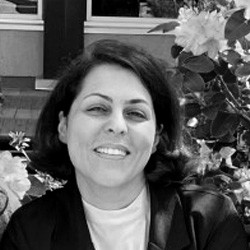
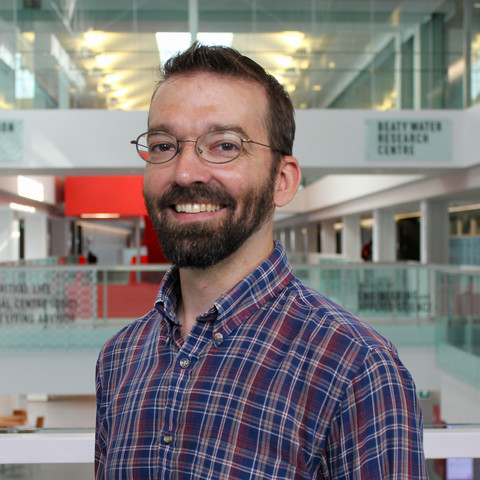
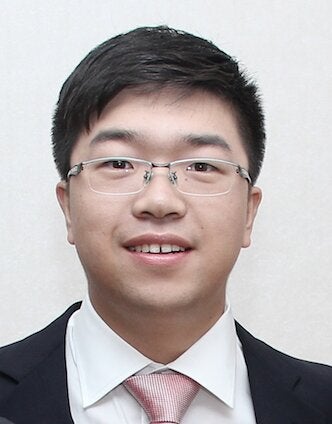
Fatemeh Ahmadi Abkenari is an Adjunct Professor in the Department of Computer Science at New York Tech , Vancouver campus. Her expertise spans Machine Learning , Deep Learning , Natural Language Processing , and Cybersecurity . With over a decade of teaching experience, she has instructed undergraduate, graduate, and doctoral students in computer engineering courses. Joined New York Tech: 2024 Education: Ph.D. Her research focuses on enhancing opinion spam detection in tourism reviews and improving Intrusion Detection Systems via hybrid machine learning models. She also explores domain-specific web search engines, aspect elicitation in customer reviews, and software quality compliance for health systems. Recent publications address topics such as overfitting mitigation , feature reduction in cybersecurity, and clickstream-driven web crawling . She is proficient in Python/R programming , AWS Cloud Security , SQL/NoSQL databases , and tools like Power BI and Tableau . Abkenari serves as a reviewer for journals such as Springer Neural Processing Letters and IEEE Access . She has contributed to projects involving sentiment mining , web page ranking optimization , and network protocol simulation , reflecting her interdisciplinary expertise in AI and cybersecurity.
Thomas R. Morgan is a Senior Scientist at the Future of Computing Institute (FOCI) at Rensselaer Polytechnic Institute. He holds BS and MS degrees in Geology and Geophysics from Rensselaer Polytechnic Institute, and a PhD in Geophysics from the University of Houston. With 50 years of experience, his expertise spans scientific/technical application design, programming, and research in remote sensing disciplines including seismic/acoustics, medical ultrasonics, electromagnetic testing, radio astronomy, LiDAR, and optical imagery. His current research focuses on computer vision and quantum computing. Previously, he contributed to the Jefferson Project at Lake George using LiDAR and acoustic backscatter data for environmental monitoring. He has taught courses in data analytics, machine learning, and geophysics. Dr. Morgan has held roles across commercial, academic, and governmental organizations including IBM, Schlumberger, and the National Radio Astronomy Observatory. His technical proficiency spans programming languages like Python, R, C/C++, FORTRAN, and Assembler, with experience on platforms ranging from IBM mainframes to modern cluster systems. Prior to FOCI, he was part of the Institute for Data Exploration and Applications (IDEA) since its founding in 2014. His career reflects a blend of academic research, industry innovation, and advanced computational techniques.
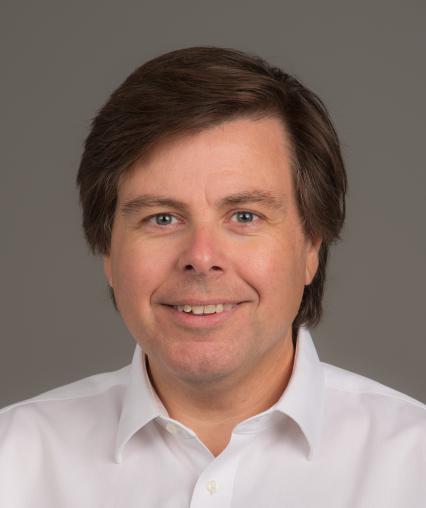
Dr. Thomas Kemp serves as Chair and Professor in the Department of Economics at the University of Wisconsin – Eau Claire. He holds visiting appointments at institutions including Ateneo University (Manila), Kobe University (Japan), Jinan University (China), and Vietnam National University. His teaching focuses on Econometrics, International Trade, Macroeconomics, and the History of Economic Thought. Educations: Ph.D. in Economics, Colorado State University M.A. in Economics, Colorado State University B.A. in Economics with a Modern Languages minor, Carthage College Research Interests: Dr. Kemp’s work bridges theoretical and applied economics, focusing on non-market valuation (e.g., skateparks, water quality), economic philosophy, and institutional frameworks. His skateboarding-related research explores community resilience and urban amenities, while historical studies analyze property rights and legal foundations. He also investigates local/state economic policies and green manufacturing potential. Publication Trends: Recent work emphasizes recreational economics (skateparks), environmental hedonic modeling (water clarity impacts), and energy policy. His 2023 textbook Basic Macroeconomics updates core economic principles for modern curricula. Professional Experience: Former roles include positions with the Abu Dhabi Department of Transport, City of Eau Claire, and Denver University. Active in curriculum development, he advocates integrating applied fieldwork into undergraduate programs. Labs/Teams: Collaborates with interdisciplinary teams on water quality studies and advanced energy analyses, reflecting his commitment to policy-relevant research.
Claudio Pizzi is an Associate Professor of Economic Statistics at the Department of Economics within Ca' Foscari University of Venice . He also participates in the Interdepartmental School of Economics, Languages and Entrepreneurship for International Exchanges at the Treviso campus. With over two decades at the institution (since 2004 as faculty), he has extensive experience in quantitative methods and their applications to economic/financial phenomena. Academic affiliation: Department of Economics & SELISI Interdepartmental Center Research locations: San Giobbe (Venice) and Palazzo San Paolo (Treviso) Office hours: Venice (Wednesdays) and Treviso (Thursdays) via in-person or virtual meetings His research integrates statistical modeling with artificial intelligence , focusing on: Financial time series analysis (parametric/non-parametric) Machine learning applications in economic and financial contexts Technical analysis trading strategies Emotional/social/cognitive competency measurement Nonlinear cointegration and hidden dependency detection Article analysis reveals consistent themes in computational finance , evolutionary algorithms , and organizational behavior . He frequently employs Particle Swarm Optimization for financial modeling, explores emotional intelligence in career development, and contributes to actuarial science through derivative pricing and risk modeling techniques. As part of his academic service, Pizzi: Participates in the SELISI Joint Commission Organizes international conferences (MAF2008, MAF2012) Collaborates across disciplines with institutions like the Department of Management Teaches computational methods to economics students
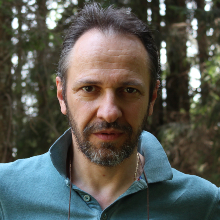
Mathieu Avanzi is a Full Professor at the University of Neuchâtel, where he directs the Center for Gallo-Roman Dialectology and the Study of Regional French within the Faculty of Letters and Human Sciences and the Institute of Language Sciences. Previously, he served as an Associate Professor (Maître de conférences) in French Linguistics at Sorbonne Université in Paris. His academic journey began with a Master's degree in Language Sciences from the University of Grenoble-Alpes in 2004, followed by a doctoral thesis completed jointly between the University of Neuchâtel and Paris Nanterre in 2011. His postdoctoral career included research stays in Louvain-la-Neuve (Belgium), Cambridge (UK), Geneva, Zurich, and Bern. Avanzi's research focuses on the spatial variation of French (regional words, local expressions, pronunciation variants, and accents) and the relationship between regional French and Gallo-Romance dialects. He pioneered the 'Français de nos Régions' program in 2015, which collects linguistic materials from various sources to document regional French variations across the globe. This initiative includes surveys, a blog, a corpus, and a smartphone application. He also leads the AGORA Project 'Dis-voir,' funded by the Swiss National Science Foundation, which develops a mobile application to document and explore Swiss French varieties. His scholarly output demonstrates a consistent focus on French dialectology, with recent publications examining phonological variation in Swiss French, verbal periphrases, final consonant patterns, and the geographical identification of accents. His work bridges traditional dialectology with digital humanities through innovative citizen science approaches. Avanzi has developed significant expertise in data visualization techniques for linguistic variation, particularly through his 'Français de nos Régions' application that allows users to explore regional linguistic features interactively. As an educator, Avanzi teaches courses on the history and evolution of the French language, Francophonie and French varieties, Gallo-Romance dialectology, methods and tools in dialectology, citizen science and data visualization, lexicology and lexicography, R for digital humanities, and sociolinguistics focusing on regional accents. He oversees bachelor's programs in Gallo-Roman dialectology and historical linguistics, digital humanities, and regional heritage and digital humanities at the master's level.
Mario Baldi is an Associate Professor (on leave) of Information Processing Systems at the Department of Control and Computer Engineering , Politecnico di Torino , and concurrently a Fellow in the Office of the CTO, Adaptive and Embedded Computing Group, at AMD, San Jose, CA. His career blends deep academic research with extensive industry R&D leadership. Education M.Sc. (Summa Cum Laude) in Electrical Engineering, Politecnico di Torino, 1993 Ph.D. in Computer and System Engineering, Politecnico di Torino, 1998 Research Focus Baldi’s research spans programmable data planes, software-defined networking, big-data analytics for network management, network security, high-performance switching architectures, optical networking, QoS mechanisms, and multimedia/voice-over-IP systems . He is especially known for pioneering work on P4 -based programmable networks and SmartNIC architectures. Publication & Patent Impact Across 150+ refereed papers and 35+ US patents (plus European filings), his recent output concentrates on machine-learning-driven network data-plane functions , disaggregated stateful network services , and cloud-grade DPUs . The 2021–2024 articles emphasize real-time inference directly in the network data plane and modular SDN programming. Awards & Honors Best Paper Award, IEEE ICC 2007 Best Paper Award, IEEE ISCC 2008 Best Paper Award, IEEE GreenComm 2009 Best Paper Award, ACM/IEEE WI/IAT 2014 Grants & Projects Baldi has served as Principal Investigator or Scientific Coordinator on numerous EU Framework and Italian national projects (PRIN, FAR), leading consortia on energy-efficient packet networks, trusted software execution, wireless mesh architectures, and streaming media delivery. Teaching & Mentoring He has taught graduate courses on Enterprise Network Technologies, Computer Network Technologies and Services, Networks/Cloud/Application Security at Politecnico di Torino since 2003. He has also supervised PhD collegi for the Computer and Systems Engineering doctoral program (cycles 19–23) and held visiting/adjunct positions across four continents. Labs & Teams Previously headed the NetGroup (Computer Networks Group) at Politecnico di Torino (2001–2007) and co-chairs the p4.org Architecture Workgroup , driving open standards for programmable networking.
Barbra A. Meek is a Professor of Anthropology and Linguistics at the University of Michigan and holds the title of University Diversity and Social Transformation Professor. She is affiliated with the Native American Studies Program, Department of Linguistics, and Department of Anthropology. Education: Ph.D. in Anthropology and Linguistics from the University of Arizona (2001) Her research examines how linguistic differences are represented and performed in contexts of social inequality, with a focus on Indigenous communities in the Yukon Territory. Collaborative projects involve partnerships with the University of British Columbia, Yukon Department of Education, and Dene First Nations. Awards & Grants: National Endowment for the Humanities Fellowship Woodrow Wilson Career Enhancement Fellowship for Junior Faculty National Science Foundation Social Sciences and Humanities Research Council Partnership Grant (co-PI: Patrick Moore) Wenner-Gren Foundation Award 2012 Harold R. Johnson Diversity Award
Dr Isaac Lee (University of Queensland) is an Associate Professor at the School of Languages and Cultures, with expertise in critical curriculum studies , language policy , and postcolonial analysis . His research spans Korean/English/Chinese language textbooks across East Asia, Southeast Asia, and the Middle East, examining intersections of nationalism , multiculturalism , and environmental literacy in education. PhD in Critical Curriculum Studies (UQ, 1999) MA in Applied Linguistics Bachelor of Arts, Pusan National University His work addresses: Overseas Korean identity in China/Australia/Central Asia; colonial/neocolonial impacts on language education; North Korean defector integration ; and green ideology in school curricula across Asia. Recent projects explore Australian missionary influences on Korean modernity (1899-1970s) and cultured meat R&D ethics. Supervision includes: Bethy Wang (cultural values in Chinese textbooks for ethnic Koreans), Haegyeong Hong (North Korean ELT textbooks), and Doctor Philosophy candidates analyzing environmental education in Korean-Chinese primary schools and Indonesian English textbooks. 2021-2028 : Academy of Korean Studies grant for Korean studies hub development 2014-2021 : Overseas Korean Studies Incubation Program
Scott Cunningham is the Ben H. Williams Professor of Economics at Baylor University and a Visiting Professor in the Government department at Harvard University for the 2025–2026 academic year. His affiliations include the Texas Hunger Initiative (Research Fellow since 2017) and Harvard’s Government department. PhD in Economics, University of Georgia (2007) BA in Literature, University of Tennessee (1999) Research interests span causal inference, mental health in corrections, sex work economics, abortion policy, drug policy, violence, and AI applications in social sciences. His work bridges empirical methods with policy analysis, focusing on public health, criminal justice, and social policy outcomes. Recent publications include methodological guides (difference-in-differences, synthetic control) and policy analyses (methamphetamine control, ChatGPT forecasting, mental health assessments in jails). His 2021 book Causal Inference: The Mixtape provides accessible training in quantitative methods. He teaches: ECO 4349/5349 – Causal Inference ECO 1305 – Issues in Economics ECO 4343/5343 – History of Economic Thought At Harvard, he leads Gov50, a data-driven course satisfying Harvard’s Quantitative Reasoning with Data requirement. His pedagogical approach emphasizes practical coding (R), project milestones, and the PERMA model of well-being.
Sean Kauffman is an Assistant Professor in the Department of Electrical and Computer Engineering at Queen's University, Faculty of Engineering and Applied Science. He holds his office in Walter Light Hall, Room 611, and can be reached at sean.k@queensu.ca or by phone at 613-533-6000 ext. 77360. Dr. Kauffman earned his Ph.D. in Electrical and Computer Engineering from the University of Waterloo before completing a two-year postdoctoral position at Aalborg University in Denmark. Notably, he returned to academia after accumulating over a decade of industry experience as a software engineer, with his final industry role being Principal Software Engineer at Oracle. His research expertise spans several critical areas in computer science and software engineering, with a particular focus on safety-critical software systems. His work significantly contributes to the fields of Formal Methods, Runtime Verification, Anomaly Detection, and Explainable AI. Dr. Kauffman has established productive research collaborations with prestigious organizations including NASA's Jet Propulsion Laboratory, the Embedded Systems Institute, QNX, and Pratt and Whitney Canada. Dr. Kauffman's research output demonstrates a consistent focus on event stream analysis, formal verification techniques, and the development of practical tools for system monitoring. His most notable contribution is the nfer language and toolset, which has become influential in the runtime verification community for its ability to abstract event streams into meaningful temporal hierarchies. His publications reveal a progression from theoretical foundations to practical implementations, with applications spanning spacecraft telemetry, autonomous vehicles, and embedded systems. Among his scientific contributions, Dr. Kauffman has received recognition for his work on the complexity analysis of nfer evaluation, developing methods for annotating control-flow graphs for formalized test coverage criteria, and creating frameworks for anomaly detection in embedded systems. His research has been published in top-tier venues including Science of Computer Programming, International Journal on Software Tools for Technology Transfer, and proceedings of major conferences like Runtime Verification and NASA Formal Methods. As an educator, Dr. Kauffman employs active learning techniques, productive failure approaches, and peer instruction to foster student engagement. His industry background informs his teaching approach, providing students with practical insights into real-world software engineering challenges, particularly in safety-critical domains. Dr. Kauffman leads the CritLab research group at Queen's University, which focuses on critical systems research. The lab develops tools and techniques for analyzing and verifying systems where failures could have severe consequences, with applications in aerospace, automotive, and other safety-critical domains. His work on the nfer language has spawned related projects including nvis for visualizing temporal interval hierarchies.
Fei Du is an Associate Professor of Accountancy at the University of Illinois Urbana-Champaign’s Gies College of Business and serves as Associate Academic Director of the Center for Professional Responsibility in Business and Society. She holds the Arthur Anderson Fellowship in Accountancy and is a Teaching and Learning Faculty Innovation Scholar. Her research focuses on managerial accounting, incentive systems design, and sustainability analytics, with a particular emphasis on China’s business environment and corporate governance. She has authored influential works such as Creative Data Analytics and co-developed courses like Business Data Storytelling and AI Mash-up. Du has received prestigious awards including the Wolfram Innovator Award (2024) and the Impact on Management Accounting Practice Award (2018). Education: Ph.D. in Accounting (University of Southern California, 2011), B.A. in Accounting (Beijing Technology and Business University, 2003). Prior roles include Assistant Professorships at the University of Hong Kong (2011–2017) and visiting positions at China Europe International Business School (2021–2022). She serves on editorial boards of journals like The Accounting Review and Contemporary Accounting Research , and has organized workshops at Harvard Business School and the University of Southern California. Teaching highlights include designing data analytics courses and publishing Deloitte mini-cases. Her work bridges academic research with practical applications, emphasizing computational tools and AI integration in business education. She advises PhD students and contributes to university initiatives like the MSBA Program Committee and Social Purpose Council.
Dr Christopher Hargreaves is a Departmental Lecturer at the University of Oxford, specializing in digital forensics and cybersecurity. He teaches on the MSc in Software and Systems Security and holds editorial roles in the Journal of Digital Investigation . Previously, he was a lecturer at Cranfield University for seven years as course director for their MSc in Digital Forensics. He operates a digital forensics R&D consultancy part-time. His research focuses on forensic tool validation, AI applications in investigations, and cybersecurity challenges. He has authored numerous papers on topics like encryption key recovery, digital evidence contamination, and forensic data recovery techniques. Education: BSc in Computer Science, University of Bristol MSc in Information Security and Computer Crime, University of South Wales PhD in Digital Forensics, Cranfield University Research Interests: Digital forensics methodologies, tool development, cybersecurity, encryption analysis, AI integration in investigations, and forensic education. His work emphasizes practical applications and validation of forensic processes to ensure reliability and mitigate systematic errors. Professional Contributions: Editorial Board Member, Forensic Science International: Digital Investigation Technical Programme Committee Member, Multiple International Digital Forensics Conferences Consultancy in digital forensics R&D (part-time) Research and Tools: Developed tools like SyncTriage for optimizing evidence acquisition and TraceGen for generating test datasets. His work explores cutting-edge topics like ChatGPT's role in forensic investigations and contamination risks in digital evidence.
Jon Clayden is an Associate Professor at University College London (UCL), affiliated with the UCL Great Ormond Street Institute of Child Health and the Developmental Neurosciences Department. His research focuses on understanding brain connectivity and information processing, particularly in pediatric populations, using advanced neuroimaging techniques like diffusion MRI. He develops computational methods for image analysis and applies them to clinical problems in child health. Education: PhD in Developmental Neurosciences from the University of Edinburgh (2007), MSc in Neurosciences from the University of Edinburgh (2004), and MA in Natural Sciences from the University of Cambridge (2002). Research Interests: White matter microstructural development Pediatric neuroimaging Neurological disorders in children Functional and structural connectivity Machine learning in medical imaging His work explores how brain networks change in disease and development, with applications to conditions like sickle cell anemia, epilepsy, and prematurity. He has contributed to tools like TractoR and the Neuroconductor R platform for reproducible neuroimaging analysis. Collaborations: Involved in projects such as the TRIDENT Preclinical Trials (funded by a $24M NIH grant) and the Neurodesk open-source initiative. Active in open science and methodological improvements for MRI techniques.
Zhiyu (Frank) Quan is an Assistant Professor in the Program for Actuarial and Risk Management Sciences at the University of Illinois Urbana-Champaign, affiliated with the Department of Mathematics. He holds the Brad and Karen Smith Professorial Scholar title within the College of Liberal Arts & Sciences and serves as the Finance and Insurance Sector Lead at the Discovery Partners Institute. His roles include directing the Illinois Risk Lab, which bridges academic research with industry problem-solving. Ph.D. in Actuarial Science, University of Connecticut His research focuses on data science applications in insurance, including tree-based models, natural language processing, and Insurtech innovations. He develops predictive models for claim analysis, rate-making, and social media-driven insights. Prior to academia, he worked in an Insurtech company as an R&D data scientist, creating data-driven solutions for insurers. Notable Awards: Arnold O. Beckman Research Award, Society of Actuaries Research Institute Award, Casualty Actuarial Society Award Frank advises students through the Illinois Risk Lab and collaborates extensively with industry partners. His work emphasizes real-world data and practical applications, reflecting his industry experience and academic rigor.
Priscilla Wald is the R. Florence Brinkley Distinguished Professor of English at Duke University, with affiliations in Gender, Sexuality & Feminist Studies and the Duke Initiative for Science & Society. She has held roles like Director of Gender, Sexuality and Feminist Studies (2015-2019) and Director of the Language, Arts & Media Program (2014-2015). Her academic journey includes a B.A. from Yale University (1980), M.A. (1981), and Ph.D. (1989) from Columbia University. Her research explores intersections of U.S. literature, science, medicine, law, gender studies, and environmental humanities. She examines topics such as the outbreak narrative, biotechnology ethics, Cold War technoscience, and racialized health discourses. Her work bridges cultural critique with scientific discourse, emphasizing how narratives shape societal understanding of biological and environmental challenges. Wald’s recent publications (2020-2023) critically analyze pandemic narratives, microbial politics, and climate control technologies. These works reflect her commitment to interdisciplinary scholarship addressing contemporary global crises like climate change and public health. Dean's Award for Excellence in Mentoring (2008) Visiting Fellowship, International ESRC Genomics Research and Policy Forum (2012) Her teaching and outreach include Bass Connections projects on environmental risk and health policy. She co-leads interdisciplinary initiatives like DECIPHER: Case Studies in Drinking Water Quality (2018-2019) and Decisions on Complex Interdisciplinary Problems of Health and Environmental Risk (2017-2018). Wald also serves as a key member of Duke Science & Society and has contributed to editorial boards and academic conferences globally.