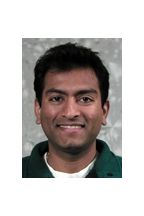
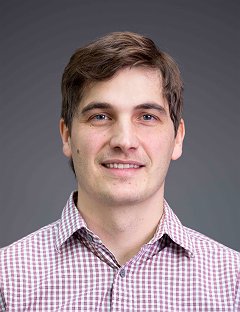
Dr. Mahesh Tripunitara is a Professor in the Department of Electrical and Computer Engineering at the University of Waterloo, serving as Associate Chair for Undergraduate Studies. He holds a PhD (2005) and Master's (1995) in Computer Science from Purdue University, along with a BSc (1993) in Computer Science from Dalhousie University. His research focuses on information security, authorization mechanisms, cryptographic key management, and hardware security, with industry experience at Motorola's R&D labs and Silicon Valley. His work spans theoretical advancements like access control policy analysis and practical applications such as secure payments systems and IoT device reliability. Notable awards include the Best Student Paper at Usenix Security 2013 and Best Paper at ACM SACMAT 2013. He actively serves on program committees for major security conferences including CCS, CODASPY, and SACMAT. Recent publications highlight innovations in cellular security (SUCI-Catchers defense), role-mining optimization, and blockchain smart contract auditing. Teaching includes advanced algorithm design courses (ECE 406/606) and digital computation (BME 121). His research emphasizes balancing security rigor with usability in authorization systems and hardware protection mechanisms.
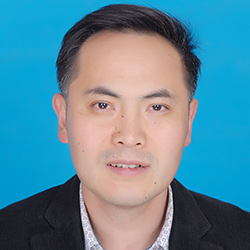
Yan Chen is a Professor of Computer Science at Northwestern University's Robert R. McCormick School of Engineering and Applied Science. He leads the Northwestern Lab for Internet and Security Technology (LIST) and the Center for Ultra-scale Computing and Information Security. His research focuses on cybersecurity, network measurement, and distributed systems security. Chen holds a Ph.D. from UC Berkeley (2003), M.S. from SUNY Stony Brook, and B.E. from Zhejiang University. Research interests include securing networking systems, intrusion detection, cloud-native platforms, and mobile security. Notable awards include the DOE Early CAREER Award (2005), Air Force Young Investigator Award (2007), and ACM ASPLOS'18 Most Influential Paper Award. His work has been cited over 17,000 times with an h-index of 62 (2024). Key contributions include the LIST lab's advancements in APT detection, provenance tracking in microservices, and security frameworks like FlowCog. He advises numerous Ph.D. students and has graduated over 20 researchers now in academia and industry.
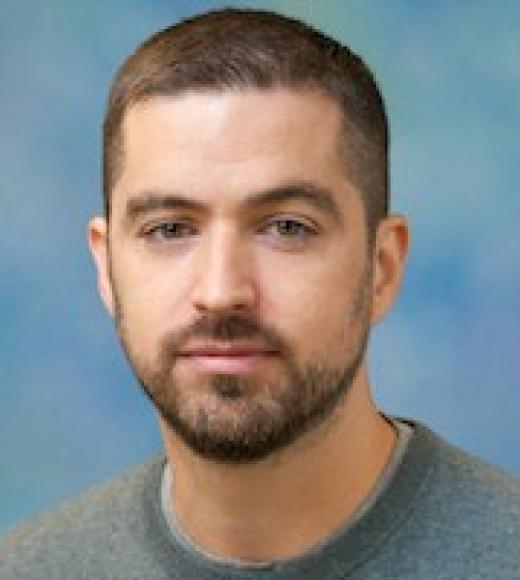
Prof. Dr. Frank T. Piller is a University Professor and Co-Leader of the Institute for Technology and Innovation Management (TIM) at RWTH Aachen University, where he also serves as Academic Director of the Executive MBA program at RWTH Business School. He leads a research team of approximately 30 doctoral students, 5 postdocs, and over 20 student researchers within the TIME Research Area of the School of Business and Economics. His educational background includes a doctoral degree in Operations Management from the University of Würzburg (1999) and a Habilitation degree from TUM Business School (2004) on "Innovation and Value Co-Creation." Prior to joining RWTH Aachen in 2007, he was a Research Fellow at MIT Sloan School of Management and faculty at TUM Business School. Prof. Piller is recognized as one of the world's leading experts in customer-centered value creation, specializing in mass customization, personalization, and customer co-creation. His current research focuses on how established companies can transform in response to disruptive business model innovations, with particular emphasis on digital transformation (Industry 4.0), AI-augmented innovation, and sustainable business models. He is particularly known for his work on innovation ecosystems, platform-based business models, and stakeholder-oriented technology development. His recent publications demonstrate a clear trajectory toward integrating artificial intelligence with traditional innovation management frameworks, exploring how AI transforms manufacturing systems, innovation processes, and business models. His work increasingly addresses the challenges of digital transformation in established industries while maintaining focus on customer co-creation and mass customization principles. His scientific achievements have been recognized with numerous awards: Co-Creation Award of the PDMA Nomination for "Innovating Innovation" Prize by Harvard Business Review and McKinsey "Lecturer of the Year" by Executive MBA students at TU Munich RWTH Aachen Rector's Prize for Excellent Teaching (since 2010) Grant for innovative "Flipping the Classroom" teaching concept ERC Synergy Grant for SAFER Grid project (2025-2031) Prof. Piller maintains an extensive research network spanning academia and industry. He collaborates with numerous corporations including 3M, Adidas, BASF, EON, J&J, P&G, Siemens, and Vodafone, as well as many technology startups across Europe and North America. As a co-founder, supervisory board member, and investor in innovative startups, he actively transfers research into practice. His research has received significant funding, most notably the prestigious ERC Synergy Grant for the SAFER Grid project. He leads the Technology and Innovation Management Group (TIM) within the TIME Research Area at RWTH Aachen, which comprises over 100 senior and junior researchers working at the intersection of innovation, technology management, marketing, and entrepreneurship. The institute is a leading European research institution for strategic, behavioral, and computer-supported technology and innovation management.
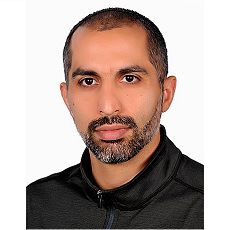
Santiago Barreda is an Associate Professor in the Department of Linguistics at the University of California, Davis, specializing in speech perception and phonetic analysis. His research examines how acoustic properties of speech convey speaker characteristics including age, gender, and physical attributes. Education: Ph.D. in Linguistics (Phonetics), University of Alberta, 2013 M.A. in Hispanic Studies (Language and Linguistics), University of Western Ontario, 2008 B.A. in Linguistics and Spanish Language and Literature, University of Western Ontario, 2006 Research Focus: Dr. Barreda employs behavioral experiments and statistical modeling to investigate perceptual mechanisms in speech recognition. His work bridges theoretical phonetics with practical applications, particularly in vowel normalization techniques and formant tracking algorithms. Key questions address how listeners extract speaker identity from acoustic cues and interpret social characteristics through vocal signals. Publication Trends: Recent publications (2020-2025) reveal three dominant themes: computational phonetic tools (FastTrack, phonTools), perception of social/physical speaker characteristics from children's voices, and interdisciplinary public health research on speech-related aerosol transmission. His work demonstrates strong methodological consistency in combining acoustic analysis with perceptual validation. Scientific Awards: No scientific awards were mentioned in the source material. Advising and Grants: The provided documentation does not specify graduate student advising roles or external grant funding. Technical Contributions: Dr. Barreda develops open-source phonetic analysis software including FastTrack (Praat-based formant tracking) and the phonTools R package, which have become standard resources in acoustic phonetic research.
Freda Shi is an Assistant Professor at the David R. Cheriton School of Computer Science, University of Waterloo, and a Faculty Member at the Vector Institute. She holds a Canada CIFAR AI Chair. Her research focuses on computational linguistics, natural language processing (NLP), and grounded language learning, with emphasis on multilingualism and spatial reasoning in vision-language systems. She earned her Ph.D. in Computer Science from the Toyota Technological Institute at Chicago (2024), advised by Karen Livescu and Kevin Gimpel, supported by a Google Ph.D. Fellowship. Her undergraduate degree is from Peking University (2018), with a minor in Sociology. Her academic career includes affiliations with the CompLING Lab at Waterloo and contributions to major conferences like ACL and NAACL. She has organized tutorials on NLP grounding and is actively involved in research on model robustness and cognitive insights. Awards include the Google Ph.D. Fellowship and Best Paper Nominations at ACL 2024 and EMNLP 2021, alongside her Thesis of Distinction. She teaches courses such as CS 784 (Computational Linguistics) and CS 486/686 (Artificial Intelligence), emphasizing both theoretical and applied aspects of NLP. Research trends in her articles highlight advancements in vision-language spatial reasoning, multilingualism, and model interpretability. Her work bridges cognitive science and computational methods, exploring how human language mechanisms inform the design of more trustworthy AI systems. Scientific Awards: Google Ph.D. Fellowship Best Paper Nominee (ACL 2024) Best Paper Nominee (EMNLP 2021) Thesis of Distinction (2024) Advising and Grants: As an advisor, she encourages prospective students to review her guidelines. Her grants include support from the Canada CIFAR AI Chair program and the Vector Institute. She collaborates in labs such as CompLING at Waterloo and co-organizes events at NAACL and ICLR. Labs/Teams: She leads the CompLING Lab at the University of Waterloo, affiliated with the Vector Institute. Her work integrates interdisciplinary teams focusing on grounded learning and multilingual NLP challenges.
Dr. Sauleh Eetemadi is an Assistant Professor in the School of Computer Science at the University of Birmingham Dubai, contributing to both teaching and research in computer science. His academic and professional journey bridges industry innovation and higher education, with affiliations at Microsoft Research, IUST, and now the University of Birmingham. His educational background includes: PhD in Electrical and Computer Engineering, Michigan State University, 2016 MSc in Electrical and Computer Engineering, Michigan State University, 2005 BS in Computer Engineering, Sharif University of Technology, 2002 Dr. Eetemadi's research focuses on Natural Language Processing (NLP) and Machine Translation , particularly in the area of data selection for statistical and neural models. His work integrates algorithmic design, artificial intelligence, and large-scale language systems. He has taught courses such as Advanced Programming, Data Structures, Algorithm Design, AI, and NLP, reflecting a broad yet deep engagement with core computer science disciplines. Although specific publications are not listed in the provided text, his long-term work at Microsoft Research on developing a world-class machine translation service suggests a strong publication record in NLP, data optimization, and AI-driven language technologies. His research likely spans topics such as bilingual corpora filtering, model efficiency, and scalable translation systems. He has no listed scientific awards in the provided content. Dr. Eetemadi has advised students during his tenure at IUST and continues to mentor in his current role, though specific student names are not mentioned. He has not received any explicitly mentioned grants in the text, but his 13-year tenure at Microsoft Research implies involvement in major industrial research initiatives and collaborative projects. His transition from industry R&D to academia highlights a commitment to both practical innovation and academic education. He is associated with the Natural Language Processing group at Microsoft Research and currently contributes to research activities within the School of Computer Science at the University of Birmingham Dubai, though no formal lab or research team name is specified in the source.
Murat Kantarcioglu is a Professor of Computer Science at Virginia Tech, affiliated with the College of Engineering. He is also a Faculty Fellow at the Commonwealth Cyber Initiative (CCI) and directs the Data Security and Privacy Lab. Previously, he held the Ashbel Smith Professorship at the University of Texas at Dallas. His research focuses on data and AI security, privacy, blockchain, and cybersecurity. He has received notable awards, including the NSF CAREER Award and IEEE Technical Achievement Award, and is a Fellow of AAAS and IEEE. Education: Ph.D. in Computer Science (Purdue University), B.S. in Computer Engineering (Middle East Technical University). Research Interests: Privacy-preserving machine learning and data analytics Adversarial machine learning and cybersecurity Blockchain technology and applications Healthcare data security and genomics privacy Risk and incentive models for assured data sharing Awards and Recognition: NSF CAREER Award AMIA Homer R. Warner Award IEEE ISI Technical Achievement Award Fellow of AAAS and IEEE Distinguished Member of ACM Advising and Labs: Directed over 20 PhD/Master’s students, many in cybersecurity and privacy domains. Founder and director of Virginia Tech’s Data Security and Privacy Lab. Associate at Harvard’s University Data Privacy Lab. Service and Leadership: Extensive program committee roles in top conferences (KDD, AAAI, IEEE ICDE). Former CCI co-chair for IEEE TrustCom. Co-authored influential textbooks on adversarial machine learning.
Natalie B. Dohrmann is an Adjunct Associate Professor of Religious Studies at the University of Pennsylvania’s School of Arts & Sciences, where she also serves as Associate Director of the Katz Center for Advanced Judaic Studies and Coeditor of the Jewish Quarterly Review . She holds a Ph.D. in the History of Judaism from the University of Chicago (1999), an M.A. in Liberal Arts from St. John’s College (1990), and a B.A. in Religious Studies from Princeton University (1987). Her research focuses on rabbinic legal and literary culture within the Greco-Roman context, emphasizing intersections between Jewish law, Roman imperial structures, and cultural exchange in Late Antiquity. Her teaching spans Religious Studies, History, Classics, and Middle Eastern Languages and Cultures. Key research areas include rabbinic jurisprudence, Jewish-Roman legal interactions, and the sociohistorical dynamics of ancient Jewish communities under Roman rule. She has authored and edited numerous volumes exploring topics such as rabbinic law’s relationship to Roman legal frameworks, textual censorship, and comparative exegesis across Abrahamic traditions. Her recent work examines how rabbinic legal thought navigated Roman imperial authority, as seen in publications like Legal Engagement (2021) and upcoming contributions like Unrest in the Roman Empire (2025). She has held the Michael R. Steinhardt Term Fellowship and led initiatives such as the Katz Center’s fellowship programs on themes like premodern legal cultures and Jewish textual traditions. Her blog posts and editorial work further highlight her role in fostering interdisciplinary scholarship on Jewish studies and ancient Mediterranean history.
Virginia Ferreiro Basurto is an Assistant Professor in the Department of Psychology at the University of the Balearic Islands (UIB), where she teaches undergraduate and postgraduate courses in psychology, with a strong focus on gender equality and gender-based violence. She is actively involved in postgraduate coordination, including the Chair of Gender Violence Studies and the Summer University of Gender Studies at UIB. Assistant Professor, Department of Psychology, University of the Balearic Islands Coordinator, Chair of Gender Violence Studies, UIB Coordinator, Summer University of Gender Studies, UIB Member, Gender Studies Research Group (ESTUDEGE), UIB Education: Degree in Pedagogy, University of the Balearic Islands Master’s in Inclusive Education, University of the Balearic Islands Doctoral Candidate in Interdisciplinary Gender Studies, University of the Balearic Islands Dr. Ferreiro Basurto’s research centers on gender perspectives in the Information Society, with emphasis on ICT-related social-digital exclusion of women and sexist cyberviolence. Her work explores implicit and explicit attitudes toward gender-based violence, bystander intervention, street harassment, and the myth of romantic love as a justification for abuse. She has contributed extensively to academic discourse through publications and participation in national and international conferences. The trend in her recent scholarly output reveals a consistent focus on gender-based violence in both physical and digital environments. Her articles analyze youth perceptions of cyberaggression, the role of bystanders in intimate partner violence, and methodological advancements in measuring supportive attitudes toward violence. The interdisciplinary nature of her work spans psychology, sociology, gender studies, and digital humanities, often informed by empirical data from Spanish populations. Scientific Awards: No specific awards listed in the provided text. She has been involved in multiple research projects funded by national and international institutions, including the Ministry of Science, Innovation and Universities, FECYT, Ministerio de Economía y Competitividad, Fundación BBVA, and Instituto de la Mujer. These projects cover themes such as critical thinking development in education, citizen involvement in violence prevention, and intervention programs for abusers. She also advises and supervises master’s theses and final degree projects, particularly in gender-focused postgraduate programs. Dr. Ferreiro Basurto is a member of the Gender Studies Research Group (ESTUDEGE) at UIB, a consolidated R&D&I group dedicated to advancing interdisciplinary research on gender, violence, and digital society. Her collaborative work involves designing and evaluating gender-sensitive educational and intervention programs.
Loris D'Antoni is an Associate Professor in the Department of Computer Science and Engineering at the University of California at San Diego (UCSD) . He is also a Visiting Academic at Amazon Web Services (AWS) . His research focuses on helping people write trustworthy software through techniques in program synthesis, formal verification, and machine learning robustness. Bachelor and Master in Computer Science from University of Torino (2008, 2010) PhD in Computer Science from University of Pennsylvania (2015) His research integrates programming languages , automata theory , and formal methods to ensure software reliability. Recent work explores semantics-guided synthesis and specification-aligned LLMs , with applications in network security, machine learning fairness, and automated code repair. Key trends in his publications include program synthesis , formal verification , and trustworthy AI systems . He has contributed to tools like AutomataTutor and SemGuS , a framework for customizable synthesis problems using constrained Horn clauses. Phillip R. Certain-Gary D. Sandefur Distinguished Faculty Award NSF CAREER Award Microsoft Research Faculty Fellowship Google and Facebook Faculty Awards Best Paper Award at ICDCN 2023 Distinguished Paper Award at SBES 2021 D'Antoni actively contributes to academic community service as a committee member in PLDI , OOPSLA , POPL , and CAV . He leads the Programming Systems Group at UCSD and collaborates with SemGuS research team on synthesis frameworks.
Ming Li is a Professor at the University of Waterloo , holding the Canada Research Chair in Bioinformatics . Affiliated with the David R. Cheriton School of Computer Science , his research spans Bioinformatics , Kolmogorov Complexity , Deep Learning , Natural Language Processing , and Computational Biology . His contact details include office Davis Center 3355 and email mli@uwaterloo.ca . Research Interests include Bioinformatics (protein/antibody sequencing, structure analysis), Deep Learning , Natural Language Processing , Kolmogorov Complexity and Applications , and Algorithms & Complexity (average-case analysis, information distance). Editorial Roles : Co-Managing Editor of the Journal of Bioinformatics and Computational Biology , Associate Editor-in-Chief for Journal of Computer Science and Technology , Editorial board member of multiple journals including SIAM Journal on Computing and Information and Computation . Professional Activities : Served on scientific advisory committees for Genome Prairie and Tsinghua University, and numerous international conference program committees (e.g., KDD 2007, CPM 2007, FOCS'99). Awards & Honors : Killam Prize (2010) IEEE Granular Computing Outstanding Contribution Award (2010) Premier's Discovery Award (2009) Fellow of Royal Society of Canada, ACM, and IEEE (2006) Killam Fellowship (2001) E.W.R. Steacie Memorial Fellowship (1996) Multiple Best Paper Awards Students & Postdocs : Mentored over 30 graduate students and postdocs, including current advisees Guangyu Feng, Anqi Cui, and alumni like Babak Alipanahi, Xin Chen, and Brona Brejova.
John Z. Ayanian serves as the Alice Hamilton Distinguished University Professor of Medicine and Healthcare Policy at the University of Michigan, holding joint appointments as Professor of Internal Medicine in the Medical School, Professor of Health Management and Policy in the School of Public Health, and Professor of Public Policy in the Gerald R Ford School of Public Policy. As inaugural Director of the Institute for Healthcare Policy and Innovation (IHPI), he leads a consortium of 700 faculty members across 15 schools and maintains clinical practice as a general internist at Michigan Medicine. His academic foundation includes a Bachelor of Arts in history and political science from Duke University (1982), medical degree from Harvard Medical School (1987), and master's in public policy from Harvard Kennedy School (1987), followed by residency and fellowship at Brigham and Women’s Hospital and post-doctoral training in health services research at Harvard School of Public Health. Dr. Ayanian's research program investigates health equity, access to care, and quality of care with particular attention to social determinants including race/ethnicity, gender, socioeconomic status, and insurance coverage. His work critically examines Medicaid expansion impacts, Medicare Advantage disparities, and policy responses to health inequities, often utilizing large-scale claims databases and cross-institutional collaborations. Current projects include the federally-authorized evaluation of Michigan's Medicaid expansion program serving over 700,000 adults. Analysis of his 15 most recent publications (2025) reveals three dominant research thrusts: (1) Medicare Advantage vs Traditional Medicare comparisons across diverse clinical conditions, (2) Medicaid policy evaluation including unwinding impacts and expansion effects, and (3) innovative measurement of health equity through new indices and AI applications. His work consistently emphasizes methodological rigor in health services research while maintaining strong policy relevance. His scientific honors include: Election to the National Academy of Medicine Master status in the American College of Physicians John Eisenberg National Award for Career Achievement in Research Distinguished Investigator Award from AcademyHealth Election to Alpha Omega Alpha and Association of American Physicians Dr. Ayanian leads the federally-funded Healthy Michigan Plan evaluation team of 15 faculty members and serves as founding Editor-in-Chief of JAMA Health Forum, previously holding editorial positions at the New England Journal of Medicine. His research receives substantial federal support focused on health policy evaluation, with particular emphasis on vulnerable populations. He actively mentors students and junior faculty across multiple disciplines. As Director of IHPI, he fosters interdisciplinary collaboration across 15 schools at the University of Michigan. His leadership extends to center memberships in AI and Digital Health Innovation, Caswell Diabetes Institute, and Center for Global Health Equity, where he promotes data-driven solutions to health disparities through cross-campus partnerships and innovative research methodologies.
Neelakantan R. Krishnaswami is a Professor of Computer Science at the University of Cambridge's Computer Laboratory , and a Fellow of Trinity College . His research focuses on the intersection of program verification, programming language design, and foundational topics like type theory and semantics. His work spans areas such as refinement types, parser design, separation logic for systems software, and the semantics of reactive programming. Notable contributions include the Datafun language for higher-order Datalog and the λert type theory for explicit refinement types. He has also developed foundational frameworks for verifying imperative programs using advanced type systems and logical relations. Key publications include 'Explicit Refinement Types' (ICFP 2023), 'flap: A Deterministic Parser with Fused Lexing' (PLDI 2023), and 'CN: Verifying Systems C Code' (POPL 2023). His work frequently addresses challenges in efficiency, correctness, and modularity for both functional and imperative systems. His awards include Distinguished Paper Awards at PLDI 2019 and POPL 2020. His research integrates theoretical rigor with practical tooling, exemplified by contributions to languages like Coq, Lean, and Haskell.
Mátyás Mervay is a Research Fellow at New York University's Center for European and Mediterranean Studies. He holds a PhD in East Asian and Modern European History (2024) from NYU, an MA in Modern and Contemporary Chinese History (2017) from Nankai University, and a BA in History and East Asian Cultures (2012) from Eötvös Loránd University. His research bridges Habsburg Central Europe and China, focusing on Transnational and Global History Refugee and Migrant Diasporas History of the Habsburg Empire in East Asia European Imperialism and Colonialism in China Republican-Era Chinese History Recent publications analyze Austro-Hungarian refugee soldiers in China (2018) Shanghai’s Hungarian Jewish rescuer Paul Komor (2023) Interwar Shanghai migrant communities (2024) with upcoming work on the Oxford Handbook of Global Habsburg History (2025). Scientific awards include R. John Rath Prize (2025) University of Vienna GLORE Fellowship (2023) Jewish Culture Fellowship Grant (2023)
R. Michael Alvarez , Flintridge Foundation Professor of Political and Computational Social Science at Caltech, is a leading scholar in election technology, political methodology, and machine learning applications in social science. Affiliated with the Caltech/MIT Voting Technology Project , the Social and Decision Neuroscience Program , and the Resnick Sustainability Institute , his work bridges technology and democracy. Education: B.A. from Carleton College, Ph.D. from Duke University Academic Career: Caltech faculty since 1992 His research spans: Election Integrity : Monitoring election security, fraud detection, and ballot systems Computational Social Science : Applying machine learning to voter behavior and policy analysis Climate Policy : Examining public attitudes and behavioral interventions for sustainability Online Behavior : Analyzing toxicity in gaming and social media dynamics Key article trends show focus on election forensics (2025 Nature Climate Change study), game toxicity analysis (2025 CHI Play paper), and LLM applications in social science. His students include Jacob Morrier, Mitchell Linegar, and teams of postdocs and undergraduates in Caltech's SURF program. Scientific recognition includes: Google Cloud Research Innovators Class of 2022 Co-editor of multiple academic series including Cambridge Elements in Quantitative Methods