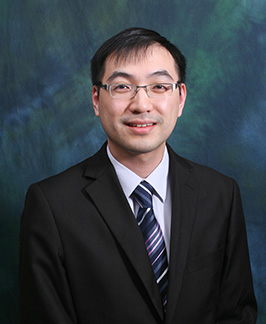
Prof. Hayden Kwok Hay SO is an Associate Professor at the University of Hong Kong (HKU), affiliated with the Department of Electrical and Electronic Engineering. He currently serves as Acting Director of the School of Innovation and previously co-directed the Computer Engineering Program. His research focuses on reconfigurable computing systems, FPGA-based architectures, and their applications in AIoT, medical imaging, and high-performance computing. He holds a B.S., M.S., and Ph.D. in Electrical Engineering and Computer Sciences from UC Berkeley (1998–2007). Prof. So has been recognized with awards such as the IEEE-HKN Teaching Award (2021), Croucher Innovation Award (2013), and multiple teaching excellence awards. He leads the Computer Architecture & System Research Lab (CASR) and co-founded the Joint Lab on Future Cities (JLFC). His work spans FPGA overlay architectures, graph processing systems, and hardware-software co-design for efficient computing. Key research contributions include advancements in FPGA-based reconfigurable systems, sparse dataflow architectures, and medical imaging accelerators. He has secured grants for projects like 'Advanced machine vision guided aquatic surface vehicles' and 'Efficient and Productive Parallel Data Processing in Hybrid FPGA-CPU Clusters.' Prof. So has advised numerous students and researchers, contributing to over 150 peer-reviewed publications. His current projects explore AI hardware acceleration, neuromorphic computing, and FPGA-driven solutions for big data challenges.
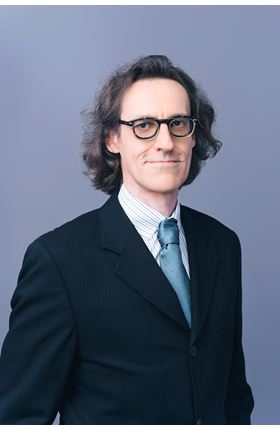
Oscar Carl Olof Dahlsten is an Associate Professor in the Department of Physics at City University of Hong Kong. He works in the field of quantum information science with research spanning information thermodynamics, foundations of quantum theory, and quantum computation and machine learning. His academic journey includes training at Imperial College and previous positions at ETH Zurich, NUS Singapore, Oxford University, and SUSTech before joining CityUHK. Dahlsten's research interests focus on the intersection of quantum mechanics and information theory. His work explores how quantum systems process information, the thermodynamic implications of quantum operations, and the application of quantum principles to computational problems. Key areas include quantum causal inference, quantum energy harvesting, black hole information theory, and quantum machine learning algorithms. His fingerprint analysis shows strong contributions to Quantum Theory (100%), Statistical Mechanics (55%), Quantum Dot physics (55%), and Free Energy concepts (40%). Recent publications demonstrate a strong trend toward experimental validation of quantum information concepts, particularly in quantum causal inference and quantum thermodynamics. His work bridges theoretical foundations with practical applications, especially in energy harvesting and quantum computing. The integration of quantum principles with thermodynamic laws appears as a consistent theme across his recent publications. Dahlsten currently serves as Principal Investigator for the GRF project 'Exploiting Quantum Systems for More Efficient Extraction of Energy From Random Sources' starting September 1, 2025. He actively supervises PhD students in quantum information science and is accepting new PhD candidates. His research group focuses on cutting-edge problems at the intersection of quantum information, thermodynamics, and computation.
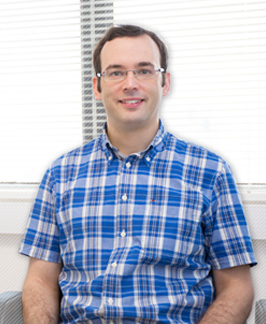
Professor Tobin J. Marks is the Vladimir N. Ipatieff Professor of Catalytic Chemistry, Professor of Materials Science and Engineering, Professor of Applied Physics, and Professor of Chemical and Biological Engineering at Northwestern University. He also serves as a Distinguished Adjunct Professor at Texas A&M Qatar University and is a Senior Fellow of the Hong Kong Institute for Advanced Study at City University of Hong Kong. Dr. Marks is a member of the US National Academy of Engineering, the US National Academy of Sciences, and a Fellow of the Royal Society of Chemistry, UK. Dr. Marks received his BSc in Chemistry from the University of Maryland in 1966 and his PhD in Inorganic Chemistry from MIT in 1970. His academic career at Northwestern began as an Assistant Professor of Chemistry in 1970, progressing to Associate Professor in 1974, Professor of Chemistry in 1978, Charles E. & Emma H. Morrison Professor of Chemistry from 1986-1999, Vladimir N. Ipatieff Professor of Catalytic Chemistry since 1999, Professor of Materials Science and Engineering since 1987, Professor of Applied Physics since 2009, and Professor of Chemical and Biological Engineering since 2017. Professor Marks' research spans numerous areas of chemistry and materials science. His work focuses on transition metal and f element organometallic chemistry, catalysis, vibrational spectroscopy, synthetic facsimiles of metalloprotein active sites, carcinostatic metal complexes, solid state chemistry and low-dimensional molecular metals, nonlinear optical materials, polymer chemistry, tetrahydroborate coordination chemistry, macrocycle coordination chemistry, molecular electro-optics, metal-organic chemical vapor deposition, polymerization catalysis, printed flexible electronics, solar energy, and transparent conductors. His research group consists of nearly 40 researchers working across four laboratories. Analysis of Professor Marks' recent publications reveals a strong focus on advanced materials for electronic and energy applications. His work spans organic electronics, flexible and stretchable devices, catalysis for sustainable chemistry, and novel materials characterization techniques. Key trends include the development of organic electrochemical transistors, high-efficiency organic solar cells, advanced catalysts for polymer recycling, and quantum materials for next-generation electronics. Professor Marks has received numerous prestigious awards throughout his career, including: US National Medal of Science American Chemical Society Joseph Priestley Medal Camille and Henry Dreyfus Prize in the Chemical Sciences Principe de Asturias Prize for Technical and Scientific Research US National Academy of Sciences Award in the Chemical Sciences Materials Research Society Von Hippel Award Harvey Prize in Science and Technology Karl Ziegler Prize from the German Chemical Society Professor Marks has mentored numerous students and postdoctoral researchers throughout his career, with his group currently consisting of nearly 40 researchers. He has received substantial research funding from multiple agencies including NSF, DOE, and DoD. His entrepreneurial spirit has led to the founding or co-founding of 15 startups, with technologies generating an estimated USD 100 billion in sales. Professor Marks leads several research teams focused on catalysis and organic electronic materials. His work has significant implications for sustainable chemistry, renewable energy, and next-generation electronic devices. He continues to be highly active in research, with numerous publications in 2025 demonstrating his ongoing scientific leadership.
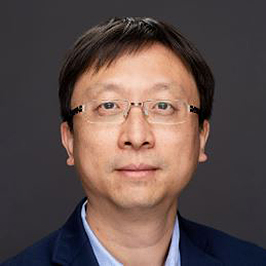
Dr. Man Ho Allen Au is an honorary professor at the Department of Computer Science, University of Hong Kong (HKU), with a career spanning cutting-edge research in applied cryptography, information security, and blockchain technology. His work bridges theoretical innovation and industrial applications. BEng, MPhil from the Chinese University of Hong Kong (2003, 2005) PhD from University of Wollongong (2009) A former associate professor at Hong Kong Polytechnic University, Dr. Au’s research drives advancements in blockchain technology , applied cryptography , and privacy-preserving techniques , with deployments in Hyperledger Fabric and discussions by privacy-focused currencies like Monero. His publications in top venues (CRYPTO, IEEE S&P, CCS) focus on lattice-based cryptography , secure protocols , and privacy-enhancing technologies . These works have attracted over 25 million HKD in grants, including RGC GRF and ITF projects. 2021 : New Frontiers of Lattice-Based Cryptography (RGC GRF), Secure Computation over Encrypted Data (ITF Seed), Blockchain Platform for Data Sharing (ITF Platform) 2020 : Practical Post-Quantum Zero-Knowledge Proofs (RGC GRF), NSFC project on quantum-resistant schemes 2019–2017 : Blockchain for logistics, anti-counterfeit systems, and post-quantum signature constructions Awarded the 2009 PET runner-up for privacy research, Dr. Au contributes to standards via ISO/IEC JTC 1/SC 27 working group and the Hong Kong Blockchain Society.
Johan F. Hoorn is an Interfaculty Full Professor at The Hong Kong Polytechnic University, jointly affiliated with the School of Design and the Department of Computing. He is also the Associate Director of PolyU Academy for Interdisciplinary Research and Research Institute for Quantum Technology. PhD in General Literature and Computer Science Recipient of multiple national and international awards Active in RGC Theme-based Research Scheme (2025-2029) Research interests span social robotics, affective computing, quantum cognition, and the observer effect. His work focuses on integrating AI with human psychology to address mental health challenges and enhance creativity. Recent articles highlight trends in human-robot empathy, quantum probability applications, and AI-assisted artistic innovation. Key subfields include emotional bonding, media inequality, real-time cinematic design, and moral reasoning in robots. Scientific awards include the Huibregtsen Prize (2020), Eureka Award (2015), and Pilot Science Appreciated Award (2021). He was also recognized with a Burgen Scholarship (2001) and Lorentz Fellowship (2010-2011). He leads projects like Negative-mood reduction among HK youth with robot PAL (HK$3M grant) and SELEMCA (M€4.6 grant). His work has been exhibited at leading museums, including the Victoria & Albert Museum (2024).
Dr. Judy Fung Kiu Chow serves as an Assistant Lecturer in the Department of Physics within the Faculty of Science at The University of Hong Kong. She has extensive experience teaching undergraduate courses including Computational Physics, Introductory Physics, Mathematical Methods of Physics, and Quantum Physics for many years, actively encouraging student engagement on academic and personal development matters. Her academic foundation was built entirely at HKU: Bachelor of Science (B.Sc.) in Physics Master of Philosophy (M.Phil.) in Physics Doctor of Philosophy (Ph.D.) in Physics Research expertise centers on Complex Systems and Econophysics , with pioneering work on the Minority Game model to analyze strategic decision-making in competitive environments. Her methodology integrates statistical mechanics and agent-based simulations to decode collective behavior in financial markets, wealth distribution patterns, and adaptive system dynamics. Publication trends from 2002-2008 reveal sustained innovation in minority game theory, exploring peer pressure effects, multi-choice scenarios, memory mechanisms, and profit optimization strategies. These contributions bridge physics principles with socio-economic modeling, particularly through collaborations with H.F. Chau across nine significant papers in journals like Physical Review E and Physica A .
Yang Yuxiang is an Assistant Professor at the University of Hong Kong's School of Computing and Data Science. His research focuses on software security, adversarial machine learning, and AI safety, with a particular emphasis on formal methods and large language models. He holds a PhD from Hong Kong. Research interests include: Automated program repair using LLMs Cybersecurity in open-source ecosystems Adversarial attacks on vision-language models Formal verification of theorem provers Ethical implications of AI systems Recent publications explore cutting-edge topics such as causality-aware safety testing for autonomous systems , smart contract vulnerability detection , and large model safety at scale . His work bridges theoretical foundations with practical applications in secure software development and AI ethics.
Giulio Chiribella is a Professor and Associate Director (Research & Graduate Studies) at the School of Computing and Data Science, University of Hong Kong. He holds a PhD from the University of Pavia, Italy. His research focuses on quantum information theory, quantum networks, and the foundational aspects of quantum mechanics. Chiribella is a CIFAR-Azrieli Global Scholar and a Fellow of the National Virgilian Academy of Sciences. He also serves on the editorial boards of the Journal of Physics A and the Standing Committee of the International Colloquia on Group Theoretical Methods in Physics. His research explores quantum protocols, causal structures, and the interplay between quantum mechanics and information theory. Notable contributions include work on quantum superposition of causal orders and the replication of quantum operations at the Heisenberg limit. His publications span high-impact journals such as Physical Review Letters and Nature Communications . Grants & Awards: Croucher Senior Research Fellowship (2018–2019) Principal Investigator for multiple grants, including the CIFAR-Azrieli Fund (2016–2018) and Hong Kong RGC grants (2016–2019). Research Leadership: Leads the Quantum Information and Foundations Theory (QIFT) research group ( http://qift.weebly.com/ ). Coordinates international projects on quantum foundations and information dynamics.
Dr. Qi Zhao is a Tenure-Track Assistant Professor in the Department of Computer Science at the University of Hong Kong (HKU). He specializes in quantum information science, focusing on quantum simulation, quantum computing, and entanglement detection. His research bridges theoretical foundations and practical applications, contributing to advancements in quantum algorithms and device-independent protocols. Education: B.Sc. and Ph.D. from Tsinghua University (2014, 2018). Postdoctoral positions at University of Science and Technology of China (2019) and Hartree Fellow at University of Maryland (2019–2022). Research Interests: Quantum simulation (especially Hamiltonian simulation), quantum resource theories, self-testing quantum information, and entanglement detection. His work emphasizes practical applications of quantum computers and fundamental quantum mechanics. Recent Achievements: Published in Nature Physics (2025), Communications in Mathematical Physics (2025), and Physical Review Letters . Awarded grants including the 2030 National Science and Technology Major Project (2025) and named MIT Innovators Under 35 Asia Pacific (2024). Awards: MIT Technology Review Innovators Under 35 Asia Pacific 2024, 2030 National Science and Technology Major Project Youth Grant, RGC Early Career Scheme, and NSFC Young Scientists Fund. Advising & Grants: Supervises PhD/MPhil students and leads projects on quantum algorithms, entanglement detection, and quantum advantage. Collaborates with HKUST and HKBU on quantum finance initiatives. Labs & Teams: Co-founder of the HKU-Oxford Joint Lab in Quantum Information, leading a multidisciplinary team in quantum computing and information theory.
Dr. Qi Zhao is a Tenure-Track Assistant Professor in the Department of Computer Science at the University of Hong Kong (HKU). His research focuses on quantum information science, including quantum simulations, quantum computing, quantum resource theories, and self-testing quantum information. He holds a PhD from Tsinghua University (2018) and postdoctoral experience at the University of Science and Technology of China and the University of Maryland's QuICS as a Hartree Fellow. His work bridges theoretical advancements and experimental applications, with contributions to quantum algorithms, entanglement detection, and device-independent protocols. Key research interests include Hamiltonian simulation optimizations, quantum resource theory frameworks, and robust self-testing methodologies. Notable achievements include the 'Innovators Under 35 Asia Pacific 2024' recognition by MIT Technology Review and significant grants such as the 2030 National Science and Technology Major Project of China. His team explores quantum differential equation solvers, entanglement acceleration in simulations, and practical quantum algorithm implementations. Dr. Zhao advises a growing team of PhD and MPhil students, focusing on quantum computing and information theory. His research has led to publications in top journals like Nature Physics , Physical Review Letters , and Communications in Mathematical Physics . Current projects include developing efficient quantum algorithms for scientific computation and exploring the theoretical limits of quantum simulation techniques.
Professor Jian Lu is the Dean of the College of Engineering and Chair Professor of Mechanical Engineering at City University of Hong Kong. He concurrently directs the Hong Kong Branch of National Precious Metals Material Engineering Research Center (NPMM) and the Centre for Advanced Structural Materials (CASM). An Academician of France's National Academy of Technologies and recipient of the French Legion of Honor, he holds affiliations with biomedical and materials science departments. Education: Habilitation in Mechanics, Sorbonne University (1993) PhD in Materials Science, University of Technology of Compiegne (1986) MSc in Materials Science, University of Technology of Compiegne (1984) MEng in Mechanical Engineering, University of Technology of Compiegne (1984) Research Focus: His work spans nanostructured metallic materials, surface engineering, 4D printing, residual stress analysis, and biomaterials. Pioneering contributions include dual-phase nanostructuring for ultra-strong alloys, metallic glass catalysts, and origami-inspired ceramic manufacturing. Research integrates computational modeling with experimental mechanics to enhance material properties. Publication Trends: Recent articles (2023-2024) demonstrate expansion into energy-related applications, including hydrogen evolution catalysts, zinc-air batteries, and water purification systems. Over 45% of recent works involve multi-material design or additive manufacturing, reflecting cross-disciplinary innovation. Awards & Honors: Chevalier de la Légion d'honneur (2017) Guanghua Engineering Science Award (2018) Gold Medal, Brussels World Innovation Expo (2007) Fellowships: SEM (USA), HKAES, HKIS Leadership & Grants: Secured 25+ competitive grants since 2007 totaling >HK$50M, including CRF projects on magnesium implants and ITF initiatives on nanostructured gold. Oversees 100+ researchers at CASM and NPMM, focusing on lightweight structural materials and precious metal engineering.
Professor Hoi Fung Chau is a theoretical quantum information scientist at the Department of Physics, Faculty of Science, The University of Hong Kong. With a research focus spanning quantum cryptography, quantum computation, and quantum speed limits, his work bridges rigorous mathematical proofs with practical innovations like satellite-to-ground communication patents. Education: B.Sc. (1989) and Ph.D. (1992) from HKU Research Interests: His research primarily explores: Quantum speed limits for information processing Secure key rate optimization in quantum cryptography Quantum information theory fundamentals Theoretical astrophysics applications Recent Research Trends: His 15 most recent publications focus on quantum communication protocols, speed limit theory, and atmospheric distortion mitigation in satellite links. These works span mathematical physics foundations, practical quantum network engineering, and statistical frameworks for finite-key analysis. Awards: Outstanding Referee, American Physical Society (2009) Grants & Collaborations: Currently leading General Research Fund projects on quantum speed limits and depolarization security, while maintaining extensive collaborations across Hong Kong-Shenzhen quantum research workshops and ERATO conferences.
Professor Zi Yang Meng is a theoretical and computational physicist at the Department of Physics, University of Hong Kong , with prior affiliation at the Institute of Physics, Chinese Academy of Sciences . He earned a B.Sc. from University of Science and Technology of China , and M.Sc. and Ph.D. from University of Stuttgart , followed by postdoctoral work in the US and Canada. His research focuses on quantum many-body simulations to study quantum materials, topological phases , and entanglement phenomena . His work spans quantum phase transitions , non-Fermi liquid behavior , and dynamical signatures in quantum magnets , with over 140 publications and ~7000 citations. He develops numerical methods for constrained lattice models and Rydberg atom arrays , addressing challenges in high-temperature superconductivity and quantum computer building blocks . Recent grants include Collaborative Research Fund (CRF) 2022/23 and General Research Fund (GRF) projects for quantum moiré materials and entanglement computation . Research Grants: CRF C7037-22G (2022): Many-body paradigm in quantum moiré material research GRF 17302223 (2023): Novel phases of Rydberg arrays GRF 17301924 (2024): Precise computation of quantum entanglement Supervision: PhD students in computational quantum physics, 2D materials, and condensed matter theory Projects on topics like fractional Chern insulators , dimension-tunable quantum systems , and disorder operators Collaborations: Prof. Kai Sun (University of Michigan) Prof. Han-Qing Wu (Sun Yat-sen University) International teams from CUHK, Yale, UCSB, and German institutions He actively contributes to knowledge exchange via public lectures and science communication , and serves on editorial boards for journals like Reports on Progress in Physics . Upcoming conferences include "Fractional Chern Insulators: Theory, Numerics, and Experiment" (2025) at HKU, where he chairs the organizing committee.
Professor Wang Yao is a Chair Professor in Physics at the University of Hong Kong (HKU), affiliated with the Faculty of Science. He earned his BSc from Peking University (2001) and PhD from the University of California, San Diego (2006), joining HKU in 2008. His research bridges condensed matter physics , quantum physics , and optical physics , focusing on spin and pseudospin phenomena in 2D quantum materials and their layered structures. His work explores topological effects, moiré superlattices, and valleytronic applications. Recent research trends highlight studies of twisted heterobilayers , exciton superfluids , topological phase transitions , and spin-orbit coupling in 2D systems. His publications often address quantum control mechanisms and optical interactions in novel materials. Scientific Awards OCPA Achievement in Asia Award Nishina Asia Award XPlorer Prize Huang Kun Prize Croucher Innovation Award Croucher Senior Research Fellowship RGC Senior Research Fellowship Clarivate Analytics Highly Cited Researcher (2018-2023) Fellow of American Physical Society Fellow of Optica Contact: wangyao@hku.hk
Yi Ma is a Professor of Computer Science at the University of Hong Kong (HKU), serving as Chair of Artificial Intelligence and Director of HKU's School of Computing and Data Science (HKU CDS) and the Musketeers Foundation Institute of Data Science (HKU IDS). He holds a joint faculty position in the Department of Electrical Engineering and Computer Sciences at UC Berkeley. His academic journey includes roles at UIUC (2000-2011), Microsoft Research Asia (2009-2014), and ShanghaiTech University (2014-2017). He earned his PhD from UC Berkeley in 2000, with earlier degrees from Tsinghua University. Research focuses on computer vision, high-dimensional data analysis, and intelligent systems, with contributions to robust face recognition, sparse representation, and deep learning principles. Key publications include works on ReduNet, low-dimensional models, and generalized PCA. He has been Program Chair for ICCV 2013 and General Chair for ICCV 2015. Recent activities include keynote speeches at international conferences (e.g., Future Science Prize Symposium 2024, PRCV 2024) and leadership in initiatives like the Conference on Parsimony and Learning (CPAL 2024). Awards include IEEE, ACM, and SIAM Fellowships, along with best paper and Marr prizes. Education : Bachelor’s in Automation and Applied Mathematics, Tsinghua University (1995) Master’s in EECS and Mathematics, Tsinghua University (1997) PhD in EECS, UC Berkeley (2000) Awards : NSF Career Award (2004) ONR Young Investigator Award (2005) David Marr Prize (ICCV 1999) IEEE/ACM/SIAM Fellowships Labs & Initiatives : HKU IDS and CDS Berkeley Artificial Intelligence Research (BAIR)