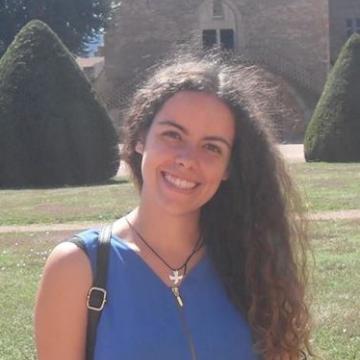
Sabela Grimes is an Associate Professor at the Glorya Kaufman School of Dance within the University of Southern California. As a trans-media storyteller, sonic ARKivist, and movement composer, his creative practice centers on improvisational systems and collaborative methodologies, drawing from socio-historical observation, self-examination, and speculative narratives. His work explores themes like the poetics of assemblage, quantum Blackness, and the interplay of ritual and community in dance. Key Projects : Ritual Embrace, Parable of Portals, Philly XP, World War WhatEver Artistic Approach : Integrates sonic, visual, and kinesthetic elements; emphasizes DIY/DIWO (Do It With Others) principles Research Interests span Black vernacular dance traditions, Hip-Hop/Street dance forms, sacred geometry in movement (e.g., golden spirals), and water as a metaphor for embrace. His pedagogical framework, Funkamental MediKinetics , merges dance training with spiritual practices and community building. Scientific and Artistic Recognition : 2023 USC Associates Award for Artistic Expression 2021 Bessie Award for Outstanding Performer 2017 County of Los Angeles Performing Arts Fellowship 2014 United States Artists Rockefeller Fellowship
Igor Weber is a Professor and Head of the Laboratory of Cell Dynamics at the Ruđer Bošković Institute's Division of Molecular Biology in Zagreb, Croatia. With a PhD in Biophysics from Technische Universität München (1995), an MSc in Biophysics from Zagreb University (1992), and a BSc in Physics from Zagreb University's Faculty of Natural Sciences and Mathematics (1988), Dr. Weber has established himself as a leading researcher in cell biology and biophysics. Dr. Weber's primary research focuses on cell motility, cytoskeleton dynamics, biophotonics and bioimaging, small GTPases, and cell signaling, using Dictyostelium discoideum as a model organism. His work has significantly advanced our understanding of how the actin cytoskeleton is regulated during cell migration and endocytosis. He has pioneered techniques for visualizing and quantifying GTPase activity in living cells, particularly focusing on Rac1 dynamics and its role in establishing cell polarity. Dr. Weber's laboratory has made groundbreaking contributions to understanding IQGAP-related proteins and their dual roles in regulating actin dynamics through both effector and sequestrator mechanisms with small GTPases. Analysis of Dr. Weber's recent publications reveals a strong focus on the molecular mechanisms of cell motility and endocytosis, with particular emphasis on the regulation of small GTPases like Rac1 and Ras. His work bridges biophysics, cell biology, and computational modeling, as evidenced by his studies on oscillatory dynamics of Rac1 activity and mathematical modeling of cell migration. The research spans from fundamental molecular mechanisms to potential biomedical applications, including studies on DNA damage response, cancer cell migration, and development of novel imaging probes. Dr. Weber has successfully secured multiple research grants including the current Croatian Science Foundation project (IP-2024-05) on dissecting Rac1 isoform redundancy in Dictyostelium , and the Croatian-Swiss Research Program (CSRP 2017-2023) on phagocytosis and macropinocytosis. As an educator, he teaches courses on Cytoskeleton and Cell Motility at the University of Zagreb, Cell Biophysics at the University of Split, and Advanced Light Microscopy at the University of Zagreb. Professional Leadership: President of Croatian Microscopy Society (2012-2016) Member of Executive Board, European Microscopy Society (2016-2025) President of Croatian Society for Theoretical and Mathematical Biology (2005-2006) Dr. Weber's laboratory serves as a hub for advanced microscopy techniques and cell dynamics research in Croatia. He has organized multiple international microscopy conferences including the Multinational Congress on Microscopy and European Light Microscopy Initiative meetings. His collaborative network spans internationally, with significant collaborations with Pierre Cosson at the University of Geneva and other European research groups.
Viva Horowitz serves as Associate Professor of Physics at Hamilton College, appointed to the faculty in 2016. Her interdisciplinary research bridges condensed matter physics, quantum systems, and biophysics through experimental approaches involving microfluidics, nanomechanics, and optical techniques. She maintains active collaborations with the University of Oregon and the Air Force Research Lab. Her educational background includes a B.A. in Physics from Swarthmore College, followed by M.S. and Ph.D. degrees in Physics from the University of California, Santa Barbara. Prior to Hamilton, she conducted postdoctoral research at Harvard University (building dynamic artificial cells) and Caltech (designing opto-mechanical gyroscopes). Horowitz's research centers on condensed matter experiment with emphases on colloidal qubits in solution, micro-swimmers, microfluidics, and sensing. She develops table-top optical techniques for quantum computing applications, artificial cell construction, and biomimetic systems. Her work creates model environments for studying cytoplasmic dynamics and quantum information processing through experimental platforms combining fluid dynamics, nanotechnology, and quantum sensing. Analysis of her 2017-2024 publications reveals three dominant research trajectories: graphene nanomechanical resonator networks for scalable NEMS applications, quantum emitter development in 2D materials like hexagonal boron nitride, and educational innovation in physics curricula. She also investigates active colloids in artificial cytoplasm and quantum sensing with nanodiamonds, demonstrating exceptional versatility in experimental methodology. Her scientific recognition includes the Sidney Wertimer Award (2023). Additional distinctions stem from her pioneering work on nitrogen-vacancy centers in nanodiamonds and contributions to chromonic liquid crystal physics. Horowitz mentors undergraduate researchers through Senior Research Projects and Research Seminars, guiding students in experimental design and data analysis. Her research is supported by grants from the Air Force Research Lab and other sources funding her work on quantum sensing platforms, nanomechanical networks, and microfluidic systems. She has developed novel laboratory exercises integrating equity, diversity, and inclusion principles into physics education. Her laboratory in Taylor Science Center employs advanced microfluidic and optical setups for experiments on colloidal particles, graphene resonators, and artificial cells. The research group collaborates with Caltech and University of Oregon teams on quantum systems and nanomechanics, while maintaining strong connections to her Air Force Research Lab partnership for sensor development applications.
Jonas Winklmann is a researcher at the Chair of Computer Architecture and Parallel Systems at Technische Universität München (TUM), focusing on quantum computing architectures and hardware acceleration. He contributes to projects like SEANERGYS and MUNIQC-ATOMS, integrating quantum systems with high-performance computing (HPC) frameworks. Research: Quantum hardware design, FPGA-based acceleration, and parallel algorithms Collaborations: EuroHPC initiatives, interdisciplinary quantum computing efforts Teaching: Mentoring lab courses on HPC systems and quantum integration His work spans neutral atom quantum computing, algorithm optimization for heterogeneous platforms, and control systems for quantum devices. Publications highlight FPGA applications in quantum simulation and atom detection techniques. He collaborates on software projects like QMPI and SWEET, advancing quantum-HPC hybridization.
Prof. dr. Marcel Swart is a Professor at the University of Groningen , affiliated with the Faculty of Science and Engineering and the Molecular Inorganic Chemistry department within the Stratingh Institute of Chemistry. His research focuses on computational chemistry applications in inorganic and bioinorganic systems, particularly in catalysis, transition metal reactions, and polarizability modeling. Research Interests : Catalysis of hydrogen peroxide reactions Computational modeling of transition metal complexes Spin state and redox activity analysis QM/MM methods for solvent effects High-valent metal-oxo species Non-redox innocent ligand behavior Recent Publications show strong emphasis on iron and manganese catalytic systems, density functional theory applications, and hydrogen atom transfer mechanisms across both organic and biological contexts.
Rishi Parashar serves as a Research Professor in Hydrologic Sciences at the Desert Research Institute (DRI), affiliated with the University of Nevada Reno's Graduate Program of Hydrologic Sciences. His work bridges computational hydrology, geothermal systems, and microbial transport processes within fractured rock environments. Education: Ph.D. in Civil Engineering, Purdue University (2008) M.S. in Civil Engineering, Purdue University (2003) B.S. in Civil Engineering, Indian Institute of Technology, Roorkee (2001) Parashar's research centers on computational subsurface hydrology , where he develops discrete fracture network (DFN) models to simulate anomalous transport in porous media and upscaling techniques for complex flow systems. His hydro-bio-chemical systems work examines microbial motility, biofilm growth, and biogeochemical reactions governing contaminant fate. In thermo-hydro-mechanical interactions , he investigates enhanced geothermal systems (EGS) and induced seismicity through coupled process modeling. Recent publications reveal increasing integration of machine learning with traditional hydrological modeling, particularly in particle tracking and reactive transport upscaling. Analysis of his 15 most recent articles (2021-2025) shows dominant focus areas: 40% on microbial transport in porous media (including bacterial motility and biofilm effects), 30% on fracture network modeling and upscaling, 20% on contaminant remediation (particularly arsenic), and 10% on geothermal system dynamics. His collaborative work spans environmental engineering, computational science, and microbiology, with frequent co-authorship patterns indicating strong mentorship of early-career researchers. Parashar actively secures research funding through Department of Energy contracts, particularly for Nevada National Security Site projects involving fractured rock characterization. His advising portfolio includes numerous graduate students leading publications in high-impact journals like Water Resources Research and Advances in Water Resources . Current projects involve quantum algorithms for well capture zone determination and heat-sensitive epoxy foams for geothermal permeability alteration. Research Infrastructure: His work leverages DRI's computational resources for large-scale DFN simulations and collaborates with DOE laboratories on experimental validation through microfluidic devices and field-scale tracer tests. The Hydrologic Sciences division provides access to advanced characterization facilities for fractured rock systems.
Raison Dsouza serves as a Researcher at the Morgridge Institute for Research within the John W. and Jeanne M. Rowe Center for Research in Virology, working under Dr. Timothy Grant. His work focuses on computational analysis of molecular machines using cryo-electron microscopy, developing template matching algorithms for particle identification and machine learning approaches to address conformational heterogeneity in noisy datasets. His academic background includes: Ph.D. in Physics (2019) from the Max Planck Institute for Structure and Dynamics of Matter, Hamburg, Germany M.Sc. in Physics (2015) from the National Institute of Technology Karnataka, India B.Sc. in Physics (2013) from St. Aloysius College, India Dr. Dsouza's research spans computational structural biology with emphasis on cryo-EM methodology development. He pioneers machine learning techniques to resolve molecular conformational states and creates virtual reality software for immersive molecular visualization, enabling deeper analysis of protein functional mechanisms in cellular contexts. His work bridges physics, computer science, and virology to advance structural understanding of biological macromolecules. Analysis of his publication record reveals a dual expertise in cryo-EM computational methods (particle picking, manifold learning, energy landscape mapping) and ultrafast photochemical dynamics. Recent work demonstrates increasing sophistication in machine learning integration for structural biology, while maintaining strong contributions to physical chemistry through studies of photochromic systems and molecular switching mechanisms. He actively contributes to the Rowe Center's mission through collaborative research with Dr. Grant's team, focusing on computational approaches to virology challenges. His software development efforts in virtual reality visualization represent innovative cross-disciplinary work aimed at transforming how researchers interact with complex molecular data.
Martin Kamela is an Associate Professor of Physics and Chair of the Department of Physics and Astronomy at Elon University. He has been actively involved in curriculum development, study abroad programs, and theoretical physics research since joining Elon in Fall 2000. Education: B.Sc. in Mathematical-Physics from the University of Alberta, M.Sc. and Ph.D. from McGill University. His research focuses on quantum field theories and physics education , particularly through service-learning initiatives. He has developed innovative teaching methods linking theory with hands-on experiences and led science engagement projects in rural India. His publications emphasize integrating kinematics , Newtonian mechanics , and ethical cross-cultural partnerships into accessible educational frameworks. Kamela mentors Periclean Scholars and collaborates on public health and science outreach projects. He also served as faculty-in-residence for Elon’s London program and initiated online study abroad application systems.
Metodi Traykov is an Associate Professor at the Department of Informatics, New Bulgarian University (NBU). He holds a PhD in Informatics and Computer Science, having completed his doctoral thesis on Mathematical Models and Algorithms for Predicting the Spatial Structure of Proteins at South-West University 'Neofit Rilski'. He has been a faculty member at NBU since 2019 and previously served as an Assistant at South-West University from 2013 to 2018. Education: Bachelor's and Master's in Informatics, South-West University 'Neofit Rilski' (2012–2013) PhD in Informatics, South-West University 'Neofit Rilski' (2017) Teaching: Leads courses in Programming, Object-Oriented Programming, Data Structures, Java, and Algorithms at NBU Guest lectures at American University in Bulgaria on Website Development, C# Programming, and Python Research: Focuses on Bioinformatics, protein structure prediction, optimization algorithms, and genetic code properties Developed mathematical models for protein folding and virtual reality applications Collaborates with researchers like Ivan Trenchev, Rossen Mavrevski, and Nikolina Pencheva Recent Publications: Explores computational methods in protein structure analysis and optimization algorithms Interdisciplinary work in virtual reality, cultural heritage preservation, and biostatistics
Dr. Saugat Bhattacharyya is a Lecturer in Computer Science at Ulster University, specifically within the School of Computing, Engineering & Intelligent Systems at the Magee Campus in Derry~Londonderry. His research focuses on the intersection of cognitive neuroscience, artificial intelligence, and human-machine interaction, with particular emphasis on brain-computer interface systems for neuro-rehabilitation applications. Dr. Bhattacharyya received his academic training in India, earning a Bachelor's Degree in Biomedical Engineering from West Bengal University of Technology (2009), followed by a Master of Engineering Degree in Biomedical Engineering from Jadavpur University, Kolkata (2011). He completed his Ph.D. in Biomedical Engineering from Jadavpur University in 2015, with research focused on "Human-Computer Interface for Motion Control of Artificial Limb(s)". During his doctoral studies, he was a Visiting Scientist at Paul Valery University of Montpellier, France (2014-2015) through the Erasmus Mundus-Svaagata Project Fellowship. His primary research interests center on developing brain-computer interfacing systems that utilize robust signal processing and machine learning algorithms to interpret users' cognitive states through neural and physiological signals. Dr. Bhattacharyya has made significant contributions to the fields of cognitive neuroscience and neuro-rehabilitation, particularly in applying AI and machine learning to enhance human-machine interaction. His work often addresses practical challenges in stroke rehabilitation and decision-making support systems. Dr. Bhattacharyya's research output demonstrates a strong focus on translating theoretical advances into practical applications, with particular attention to mental fatigue monitoring, collaborative brain-computer interfaces for group decision making, and advanced signal processing techniques for neural data. His recent work shows increasing integration of quantum computing concepts with traditional machine learning approaches for EEG analysis. Unravelling the Forest Fires in Lower Himalayan Forests: A Comprehensive Study of Indian Forest Regions of Uttarakhand using IoT technology (2019) Motion control of artificial limb(s) through a human-computer interface (2012) Study of the probabilistic nature of Motor Imagery Electroencephalography signals and its correlation with Electromyography signals for closed loop control of a robotic manipulator (2014) Dr. Bhattacharyya serves as Principal Investigator for multiple research projects including "AI-EPOCMON" (2022-2026), "A Brain-Computer Interface driven Mental Fatigue Monitoring System to improve Stroke Rehabilitation Therapy" (2024-2025), and "Patient and Public Involvement in Developing Accessible Stroke Rehabilitation Technology" (2024). He also contributes as a Co-Investigator on projects like the "Smart Nano-Manufacturing Corridor" and "Upgrading Magnetoencephalography(MEG) system with Internal Helium Recycler". His research is supported by funding from the Department for the Economy and Medical Research Council. His laboratory work focuses on developing intelligent neuro-technologies for rehabilitation applications, with current projects emphasizing mental fatigue monitoring in stroke rehabilitation and collaborative brain-computer interfaces for group decision making. The team employs advanced signal processing techniques, machine learning algorithms, and novel hardware integration to create more effective neuro-rehabilitation systems.
Prof. Qingyou Lu is a Professor at the University of Science and Technology of China, leading the High Magnetic Field Scanning Probe Microscopy Lab since its establishment in 2005. The lab maintains dual affiliations with the Hefei National Laboratory for Physical Sciences at the Microscale (USTC) and the High Magnetic Field Laboratory of the Chinese Academy of Sciences in Hefei, China. His research bridges advanced instrumentation development and fundamental physics exploration. Research interests span two distinct yet complementary domains: (1) High-field scanning probe microscopy including novel piezoelectric motor design (GeckoDrive, Tuna Drive) and magnetic force microscopy for condensed matter studies, and (2) Ultracold quantum gases and molecules for quantum simulation/computing applications. The group pioneered atomic-resolution STM in 27T magnetic fields and recently transitioned to microwave-shielded molecule research. Publication trends reveal a strategic evolution from instrumentation-focused work (2002-2016) to quantum information science (2018-2024). Key contributions include visualization of magnetic domains in manganites, development of ultra-rigid piezo motors for harsh conditions, and breakthroughs in evaporative cooling of dipolar quantum gases to quantum degeneracy. Prof. Lu has mentored 15+ graduate students and postdocs, including Ze Wang, Jihao Wang, and Yin Guo. The laboratory maintains state-of-the-art facilities comprising a 20T superconducting magnet, low-temperature STM systems, high-field magnetic force microscopes, and custom RHK R9 controllers for precision measurements under extreme conditions.
Professor Philip King is a leading physicist at the School of Physics and Astronomy , University of St Andrews, UK, and Director of Research for the Centre for Designer Quantum Materials . He specializes in the electronic structure of quantum materials using angle-resolved photoemission spectroscopy (ARPES) and molecular-beam epitaxy (MBE) to engineer novel quantum phases. Research Interests : Quantum materials, spin-orbit coupling, ARPES, 2D materials, topological states, electronic structure, thin-film growth Teaching : Lectures on Advanced Condensed Matter Physics and Modern Topics in Condensed Matter Physics , and coordinates final-year physics projects Labs & Projects : Leads research on nickelate superconductors (Leverhulme Trust), 2D magnetism (EPSRC), ultrafast control of correlated states (STFC), and electronic structure of layered chalcogenides (Royal Society) His recent work explores quantum phase transitions , 2D magnetism , and topological materials , with over 147 publications and 70 datasets. He supervises students including Edwards, Crosby, and Buchberger, and collaborates globally on synchrotron facilities. Current electronic structure studies focus on spin-valley coupling , Van Hove singularities , and Lifshitz transitions .
Carlos Eduardo Magalhães de Aguiar is an Associate Professor at the Institute of Physics of the Federal University of Rio de Janeiro . With a PhD in Physics from UFRJ, his work spans both Nuclear Physics and Physics Education . Research interests include: Heavy-ion fusion dynamics and quark-gluon plasma hydrodynamics Innovative teaching methodologies for physics, especially in thermal physics and computational physics Development of inclusive experimental tools for visually impaired students His recent publications focus on nuclear fusion models (2025), dark matter pedagogy (2023), and velocity/acceleration teaching frameworks (2022). Articles show interdisciplinary expertise in Nuclear Physics , Optics , Thermodynamics , and Quantum Mechanics . Students advised include: PhD: Marcos Moura (2023) Master's: Samuel Ximenes (2016), Rodrigo Jordão (2021) Undergraduate researchers: Francisco Laudares (2000), Gustavo Rubini (2003)
Abhay Nayak is a Postdoctoral Researcher in the Department of Physics at the University of California Santa Barbara. His research focuses on condensed matter experimental physics, particularly using on-chip THz time-domain spectroscopy to investigate two-dimensional materials and strongly correlated electron systems. He has developed techniques to study superconductivity, topological materials, and quantum phase transitions at the nanoscale. Recent research trends in his publications include the exploration of nematic superconductivity in transition metal dichalcogenides, topological boundary modes in nodal-point superconductors, and quantum phase transitions at the crossover between metallic and Mott insulating states. His work also involves subdiffraction limit spectroscopy of superconducting films and the analysis of quasiparticle interference patterns in quantum materials.
Beatriz Matos serves as a Non-PhD Researcher at the Department of Environmental Engineering within the Faculty of Science and Technology at Universidade Nova de Lisboa. Holding an MSc in Biochemistry (2019), she contributes to the PAHMIX project focused on molecular approaches to environmental carcinogen risk assessment through her expertise in toxicology and nanomaterial impacts. Her educational background includes: Master in Biochemistry (2019, Universidade Nova de Lisboa) Specializing in Environmental Toxicology , Matos investigates nano-pollutant and chemical mixture effects using Zebrafish , Daphnia magna , and hepatocyte models . Her work bridges nanotoxicology , immunological responses , and biochemical mechanisms , with significant contributions to understanding PAH mixtures and quantum dot toxicity. This research directly informs advanced environmental risk frameworks through molecular-level insights into pollutant impacts. Analysis of her 2019-2025 publications reveals dual research trajectories: rigorous experimental toxicology focusing on aquatic systems and pollutant mechanisms, alongside critical scholarship on indigenous health policy in Brazil. This interdisciplinary approach connects laboratory findings with socio-environmental contexts, particularly regarding isolated indigenous communities facing environmental and health threats. Currently embedded in the PAHMIX project, Matos contributes experimental design and molecular analysis to environmental carcinogen research. While no formal student advisement is documented, her collaborative work engages with interdisciplinary teams across toxicology and policy domains. She operates within FCT/UNL's Environment and Sustainability Center (CENSE), collaborating with the Portuguese Marine Litter Association and Ecozoic Junior Company. Her laboratory work integrates primary cell culture techniques and biomarker analysis within the department's environmental engineering research infrastructure, emphasizing practical applications for ecological risk assessment.