معرفی
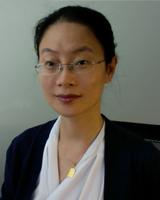
Dr. Saugat Bhattacharyya is a Lecturer in Computer Science at Ulster University, specifically within the School of Computing, Engineering & Intelligent Systems at the Magee Campus in Derry~Londonderry. His research focuses on the intersection of cognitive neuroscience, artificial intelligence, and human-machine interaction, with particular emphasis on brain-computer interface systems for neuro-rehabilitation applications.
Dr. Bhattacharyya received his academic training in India, earning a Bachelor's Degree in Biomedical Engineering from West Bengal University of Technology (2009), followed by a Master of Engineering Degree in Biomedical Engineering from Jadavpur University, Kolkata (2011). He completed his Ph.D. in Biomedical Engineering from Jadavpur University in 2015, with research focused on "Human-Computer Interface for Motion Control of Artificial Limb(s)". During his doctoral studies, he was a Visiting Scientist at Paul Valery University of Montpellier, France (2014-2015) through the Erasmus Mundus-Svaagata Project Fellowship.
His primary research interests center on developing brain-computer interfacing systems that utilize robust signal processing and machine learning algorithms to interpret users' cognitive states through neural and physiological signals. Dr. Bhattacharyya has made significant contributions to the fields of cognitive neuroscience and neuro-rehabilitation, particularly in applying AI and machine learning to enhance human-machine interaction. His work often addresses practical challenges in stroke rehabilitation and decision-making support systems.
Dr. Bhattacharyya's research output demonstrates a strong focus on translating theoretical advances into practical applications, with particular attention to mental fatigue monitoring, collaborative brain-computer interfaces for group decision making, and advanced signal processing techniques for neural data. His recent work shows increasing integration of quantum computing concepts with traditional machine learning approaches for EEG analysis.
- Unravelling the Forest Fires in Lower Himalayan Forests: A Comprehensive Study of Indian Forest Regions of Uttarakhand using IoT technology (2019)
- Motion control of artificial limb(s) through a human-computer interface (2012)
- Study of the probabilistic nature of Motor Imagery Electroencephalography signals and its correlation with Electromyography signals for closed loop control of a robotic manipulator (2014)
Dr. Bhattacharyya serves as Principal Investigator for multiple research projects including "AI-EPOCMON" (2022-2026), "A Brain-Computer Interface driven Mental Fatigue Monitoring System to improve Stroke Rehabilitation Therapy" (2024-2025), and "Patient and Public Involvement in Developing Accessible Stroke Rehabilitation Technology" (2024). He also contributes as a Co-Investigator on projects like the "Smart Nano-Manufacturing Corridor" and "Upgrading Magnetoencephalography(MEG) system with Internal Helium Recycler". His research is supported by funding from the Department for the Economy and Medical Research Council.
His laboratory work focuses on developing intelligent neuro-technologies for rehabilitation applications, with current projects emphasizing mental fatigue monitoring in stroke rehabilitation and collaborative brain-computer interfaces for group decision making. The team employs advanced signal processing techniques, machine learning algorithms, and novel hardware integration to create more effective neuro-rehabilitation systems.