معرفی
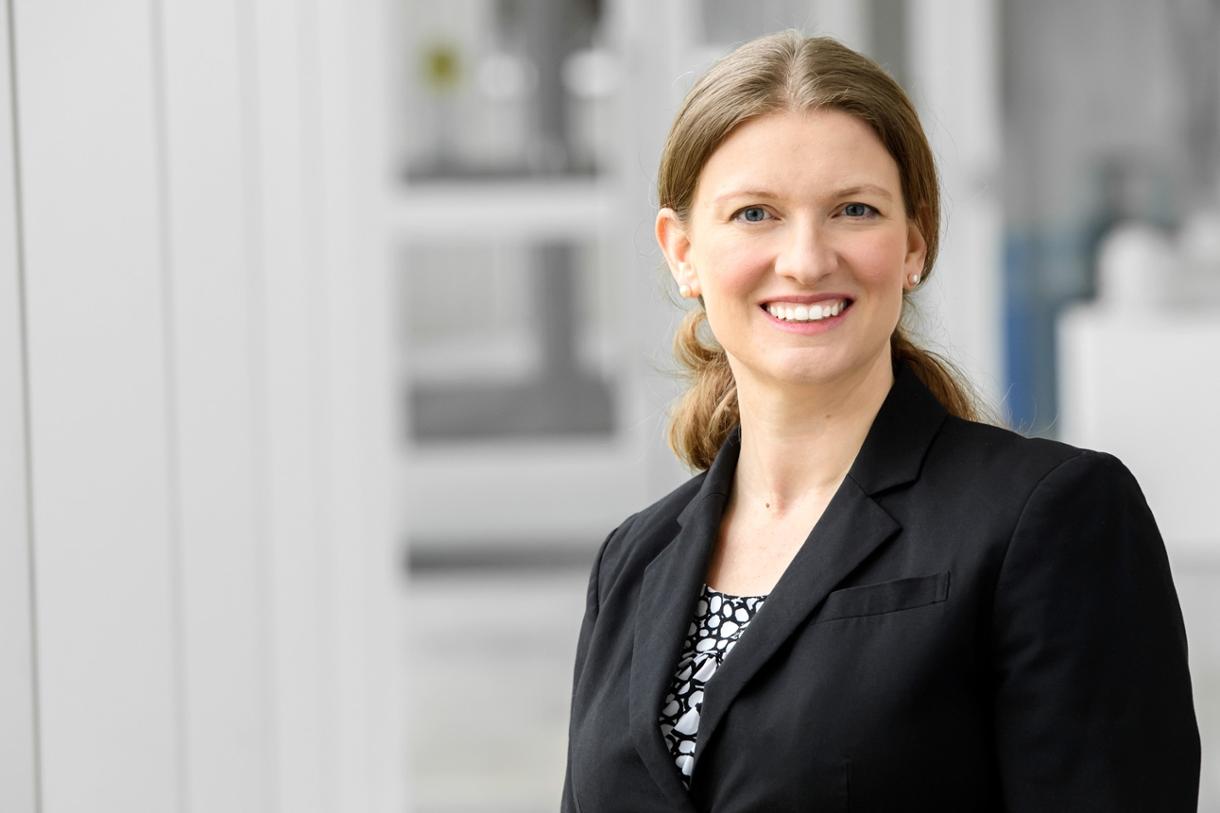
Viva Horowitz serves as Associate Professor of Physics at Hamilton College, appointed to the faculty in 2016. Her interdisciplinary research bridges condensed matter physics, quantum systems, and biophysics through experimental approaches involving microfluidics, nanomechanics, and optical techniques. She maintains active collaborations with the University of Oregon and the Air Force Research Lab.
Her educational background includes a B.A. in Physics from Swarthmore College, followed by M.S. and Ph.D. degrees in Physics from the University of California, Santa Barbara. Prior to Hamilton, she conducted postdoctoral research at Harvard University (building dynamic artificial cells) and Caltech (designing opto-mechanical gyroscopes).
Horowitz's research centers on condensed matter experiment with emphases on colloidal qubits in solution, micro-swimmers, microfluidics, and sensing. She develops table-top optical techniques for quantum computing applications, artificial cell construction, and biomimetic systems. Her work creates model environments for studying cytoplasmic dynamics and quantum information processing through experimental platforms combining fluid dynamics, nanotechnology, and quantum sensing.
Analysis of her 2017-2024 publications reveals three dominant research trajectories: graphene nanomechanical resonator networks for scalable NEMS applications, quantum emitter development in 2D materials like hexagonal boron nitride, and educational innovation in physics curricula. She also investigates active colloids in artificial cytoplasm and quantum sensing with nanodiamonds, demonstrating exceptional versatility in experimental methodology.
Her scientific recognition includes the Sidney Wertimer Award (2023). Additional distinctions stem from her pioneering work on nitrogen-vacancy centers in nanodiamonds and contributions to chromonic liquid crystal physics.
Horowitz mentors undergraduate researchers through Senior Research Projects and Research Seminars, guiding students in experimental design and data analysis. Her research is supported by grants from the Air Force Research Lab and other sources funding her work on quantum sensing platforms, nanomechanical networks, and microfluidic systems. She has developed novel laboratory exercises integrating equity, diversity, and inclusion principles into physics education.
Her laboratory in Taylor Science Center employs advanced microfluidic and optical setups for experiments on colloidal particles, graphene resonators, and artificial cells. The research group collaborates with Caltech and University of Oregon teams on quantum systems and nanomechanics, while maintaining strong connections to her Air Force Research Lab partnership for sensor development applications.