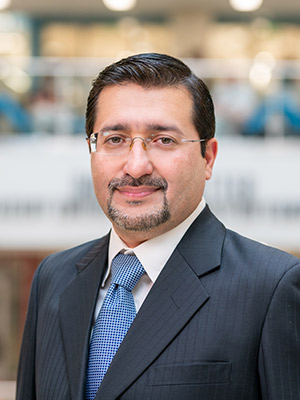
Michael Biercuk is a Professor and Director of the Quantum Control Laboratory at the University of Sydney. He holds a dual role as founder and CEO of Q-CTRL, a quantum technology company. His academic work focuses on quantum control, quantum firmware, and trapped ion systems, with applications in quantum computing, quantum metrology, and quantum simulation. Biercuk earned his undergraduate degree from the University of Pennsylvania and his Master's and PhD from Harvard University. He has held research fellowships at NIST Boulder and advised agencies like DARPA. Education: BA (University of Pennsylvania), MSc/PhD (Harvard University) Research interests include developing quantum control techniques to suppress errors in qubits, engineering quantum firmware for scalable systems, and exploring trapped ion-based quantum sensors. His lab combines theory and experiment, leveraging ultra-high-vacuum systems and precision lasers to study quantum coherence. Awards include the 2021 Australian Financial Review 'Most Innovative Companies' recognition, 2015 Eureka Prize for Outstanding Early Career Researcher, and multiple innovation accolades. His work bridges academia and industry, with collaborations spanning Tsinghua University, MIT, and NIST. Key Projects: Quantum Control & Firmware, Quantum Simulation of Many-Body Systems, Quantum Metrology with Ions
Kenneth Brown is the Michael J. Fitzpatrick Distinguished Professor of Engineering at Duke University, holding joint appointments in the Department of Electrical and Computer Engineering, Physics, and Chemistry. He leads the Brown Lab, which focuses on quantum computing and molecular spectroscopy. His research spans quantum error correction, quantum control, and trapped-ion systems. Brown earned his B.S. from the University of Puget Sound (1998) and Ph.D. from UC Berkeley (2003). Key research interests include developing robust quantum architectures, studying molecular properties at ultracold temperatures, and advancing quantum hardware. His work bridges theoretical and experimental quantum computing, with applications in quantum simulation and chemical dynamics. Notable contributions include contributions to fault-tolerant error correction protocols, trapped-ion quantum control systems, and molecular ion spectroscopy. He has been recognized with awards such as the Stansell Family Distinguished Research Award (2020) and the American Physical Society Fellowship (2018). Brown teaches advanced courses on quantum error correction, graduate quantum engineering, and physics. He actively collaborates on projects like the Duke Quantum Center and the STAQ initiative for scalable quantum computing systems. His lab’s work integrates theoretical, experimental, and computational approaches to address challenges in quantum hardware and error mitigation, with a focus on applications in chemistry and materials science.
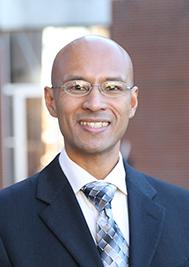
Dr. Dan Ionescu is a Professor at the University of Ottawa's School of Electrical Engineering and Computer Science, Department of Electrical and Computer Engineering. He has been affiliated with the university since 1985, contributing extensively to teaching and research. His career includes visiting professorships at École Nationale Supérieure de Télécommunications (Paris) and Universitat Politècnica de Catalunya (Barcelona). He founded the Machine Intelligence Research Laboratory (1988) and the Network Computing and Control Research Laboratory (NCCT, 1999), which he currently directs. His research spans Artificial Intelligence, Machine Vision, Distributed Computing, Network Control, and Formal Methods. Notable contributions include methodologies in Expert Systems, Image Processing, Temporal Logic, and Network Management. His work has received industrial and governmental grants from CITO, Nortel, NSERC, and others. Recent research focuses on Web-based collaborative platforms (e.g., UC-IC, Watch-Together), Autonomic Computing, and AI applications in gesture control and 3D IR camera systems. Dr. Ionescu’s technical leadership includes pioneering the first distributed network management platform with industry partners and designing the NCIT*net 2 network architecture. His current interests include AI-driven solutions for cybersecurity, medical imaging, and IoT-enabled disaster response systems. He has advised numerous projects in AI ethics, quantum computing, and real-time control systems. His research trends emphasize interdisciplinary innovation, combining AI with healthcare (e.g., MRI analysis, deepfake detection), cybersecurity (GAN-based intrusion detection), and IoT (Salv AIoT platform). Collaborations with IBM CAS and Diatem Networks highlight his industry-academia integration. His legacy includes over 40 years of impactful contributions to computing and engineering education.
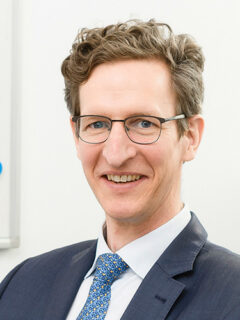
Dr. Muhammad Faeyz Karim is an Instructional Associate Professor in the Department of Engineering Technology and Industrial Distribution at Texas A&M University, with a faculty affiliation at the Texas A&M Energy Institute. His expertise spans microwave engineering, quantum photonics, and wireless systems. He holds a PhD in Electrical Engineering from Nanyang Technological University (2008), an MBA from Lancaster University (2012), and advanced degrees in Communication Engineering and Electrical Engineering. His research focuses on microwave/mmWave radar, wireless power transfer, quantum optics, and metamaterials. Key applications include bio-sensing, non-destructive testing (NDT), and energy harvesting. Notable achievements include a Best Paper Award at the 2004 Asia Pacific Conference and nominations for the Nanyang Education Award (2020/2021). Dr. Karim leads the MiWiRa Lab, advancing radar, wireless, and microwave technologies for healthcare monitoring and industrial applications. His work emphasizes collaboration across disciplines, with recent breakthroughs in quantum photonic chips for secure communication and AI-driven sensor systems. Publications span high-impact journals like Science Advances , Nature Communications , and ACS Photonics . Labs/Teams: MiWiRa Lab (Microwave, Wireless, and Radar Research) Grants: Active funding in quantum photonics, mmWave systems, and energy harvesting (details not specified) Teaching: Courses in engineering technology and industrial distribution
Ayhan Demircan is an Adjunct Professor at the Leibniz School of Optics and Photonics in Leibniz University Hannover. He leads the Micro and Nano Photonics task group and contributes to institutions including the Institute of Quantum Optics , Ultrafast Laser Laboratory , and Hannover Centre for Optical Technologies (HOT) . His work spans photonics, quantum optics, and nonlinear dynamics, with applications in terahertz technology, soliton physics, and optical modeling. Research Interests: Photonics, quantum optics, terahertz radiation, soliton dynamics, nanophotonics, and computational modeling of optical systems. Key Institutions: Leibniz School of Optics and Photonics, Institute of Quantum Optics, HOT, and PhoenixD Cluster of Excellence. Technical Expertise: Develops Python-based tools for nonlinear Schrödinger equations, optical parametric oscillators, and ultrafast laser systems. Contact: demircan@iqo.uni-hannover.de
Raphael D. Levine is a Professor at the Department of Chemistry, University of California, Los Angeles (UCLA). He holds affiliations in the Chemistry and Biochemistry departments, Molecular & Medical Pharmacology, and is a member of the California NanoSystems Institute and the JCCC Signal Transduction and Therapeutics Program Area. Primary Affiliation: Department of Chemistry, UCLA Secondary Affiliations: Chemistry and Biochemistry, Molecular & Medical Pharmacology Research Institutes: California NanoSystems Institute, JCCC Program Area Levine's research spans interdisciplinary domains such as: Information-theoretic approaches to gene networks and carcinogenesis Quantum and molecular computing via quantum dots, DNAzymes, and redox systems Entropy analysis in biochemical signaling and cellular dynamics Ultrafast spectroscopy for molecular logic devices Isotope effects in planetary and nebular chemistry His work emphasizes the convergence of physical chemistry, computational biology, and nanotechnology. Key methodologies include surprisal analysis, maximal entropy inference, and electrochemical spectroscopy. Levine's publications demonstrate expertise in translating quantum phenomena into practical computing frameworks, with applications in cancer biology, molecular electronics, and astrochemical modeling. Notable collaborations include James R. Heath and Françoise Remacle. Contact: rafi@chem.ucla.edu | Office: Geology 3608A | Mailing: Department of Chemistry, UCLA
Dr. Enrique Blair is an Associate Professor in the Department of Electrical and Computer Engineering at Baylor University, where he has served since 2015, advancing to his current rank in 2021. His academic journey includes prior roles as a Military Instructor at the U.S. Naval Academy and service in the U.S. Navy submarine force. He is actively engaged in research, teaching, and mentoring within the College of Engineering. His research focuses on the theoretical and computational aspects of quantum engineering, particularly in quantum-dot cellular automata (QCA), open quantum systems, and quantum information sciences. He explores molecular computing paradigms, quantum decoherence, and the quantum mechanical basis of olfaction, aiming to develop ultra-dense, low-power nanoelectronic devices and novel quantum technologies. His interdisciplinary work bridges electrical engineering, physics, chemistry, and materials science. The recent articles highlight a strong trend in molecular QCA design, quantum simulation for NISQ devices, and the application of ab initio methods to understand counterion effects and molecular stability. His research increasingly integrates machine learning for material discovery and emphasizes robustness in quantum circuits against environmental noise and external fields. The publications reflect a consistent focus on foundational quantum phenomena with practical applications in computing, sensing, and security. Research Grant, Office of Naval Research, Code 312 Nanoscale Computing Devices and Systems (May 2020 - May 2023) Summer Sabbatical, Baylor University (Summer 2019) Senior Member, IEEE (2019) Outstanding Faculty Award (untenured, tenure-track faculty), Baylor University (2018) Proposal Development Award, Office of the Vice Provost for Research, Baylor University (2017) Rising Star Program, Baylor University (2017-2018) Undergraduate Research and Scholarly Achievement Award, Office of the Vice Provost for Research, Baylor University (2017-2018) Rising Star Program, Baylor University (2016-2017) Graduate Research Fellowship Program, National Science Foundation (2010-2015) National Defense Science and Engineering Graduate Fellowship, American Society for Engineering Education (2010-2013) Dr. Blair has advised multiple Ph.D. and Master’s students, including Colin Burdine, Nischal Gautam, and Nishat Liza, and has mentored numerous undergraduate researchers. His research is supported by competitive grants, particularly from the Office of Naval Research, reflecting the strategic importance of his work in nanoscale computing. He integrates teaching and research, offering courses such as Quantum Mechanics for Engineers and Introduction to Quantum Computing, and promotes scholarly productivity through tools like Emacs Org Mode and LyX. He leads an active research team focused on molecular QCA and quantum information, with current members including Ph.D. students and undergraduates. The team conducts simulations, theoretical modeling, and design of quantum devices, contributing to advancements in nanoelectronics and quantum computing. Collaborations with experts in chemistry, physics, and computer science further extend the impact of the research.
Toșa Nicoleta Ioana is a senior researcher at the National Institute for Research and Development of Isotopic and Molecular Technologies (INCDTIM) in Cluj-Napoca, Romania, where she is affiliated with the Department of Isotopic and Molecular Technologies and the Laser Induced Processes research team. She obtained her PhD in Chemistry from Babeș-Bolyai University in 2009 and has been actively contributing to advanced materials and laser-based technologies research since 2006. Education: MSc in Heterocyclic Chemistry, Babeș-Bolyai University, Cluj-Napoca (1995) PhD in Chemistry, Babeș-Bolyai University, Cluj-Napoca (2009) Her research focuses on laser nanofabrication, plasmonics, spectroscopy, and functional materials , with applications spanning biosensing, environmental monitoring, and biomedical technologies. She specializes in photochemical synthesis of noble metal nanoparticles, direct laser writing, surface-enhanced Raman spectroscopy (SERS), and structural characterization in solid and solution phases. Her work bridges chemistry, physics, and engineering to develop innovative sensing platforms and nanomaterials. The recent articles highlight a strong trend in advanced optical sensing and nanofabrication , particularly in dual-mode biosensors (SERS/electrochemical), ultrafast photonics, high-density data storage, and supramolecular systems. Her projects often integrate simulation, nanofabrication, and spectroscopic validation to address challenges in healthcare and environmental science. Scientific Awards: No specific awards listed in the provided text. Dr. Toșa has played a key role in numerous national and international research projects, serving as a key expert in areas such as plasmonic biosensing, EUV photonics, and environmental pollutant detection, and as a partner team leader in projects on optical nanofabrication and petabyte-scale optical storage. She has secured significant research funding and collaborated with institutions across Romania and Europe. Her laboratory and research team focus on laser-induced processes and nanostructured materials , utilizing advanced facilities for optical characterization and nanofabrication within INCDTIM.
Yong-Siang Hsu is affiliated with the Helmholtz Institute Jena , a collaborative institution involving GSI, FAIR, and Friedrich Schiller University (FSU) Jena. His research focuses on advanced photon science, particularly in relativistic laser-plasma interactions, quantum field theory, and atomic physics with highly charged ions. Key research areas include: Relativistic Laser Plasma Theory Quantum Field Theory at highest intensities High Intensity Laser Physics Soft X-ray spectroscopy and microscopy Quantum logic spectroscopy of highly-charged heavy ions Contact: y.hsu@hi-jena.gsi.de
Peter Hommelhoff is a Professor in the Chair of Laser Physics at Friedrich-Alexander University Erlangen-Nürnberg (FAU) . His research focuses on dielectric laser acceleration , nanostructured electron sources , and quantum nanophotonics . Key Research Areas: Quantum-coherent control of free electrons Attosecond electron pulse generation Ultrafast dynamics in 2D materials (graphene, hexagonal systems) On-chip photonic particle acceleration Light-driven electron emission from nanotips Quantum interference in electron-photon interactions Recent Publications highlight advancements in dielectric laser accelerators (Nature, 2023), auto-ponderomotive beam control (Phys. Rev. Lett., 2024), and non-classical electron emission (Nature Physics, 2024). His work also explores graphene valley control and Bloch electron interferometry for material band-structure analysis. Laboratory Context: The Chair of Laser Physics at FAU investigates nanostructured electron sources , photonic control of charged particles , and quantum applications in electron microscopy and sensing. Collaborations span quantum nanophotonics , attosecond science , and integrated photonic circuits .
Xing Fan is an Assistant Professor of Physics at Harvard University, joining the Department of Physics in July 2025. His research focuses on probing physics beyond the Standard Model through precision measurements using Penning traps, quantum logic spectroscopy, and molecular ion techniques. He specializes in testing CPT symmetry, searching for axions and dark photons, and measuring the electron’s magnetic moment with unprecedented precision. Education: Ph.D. in Physics from Harvard University (2022), as evidenced by his doctoral thesis titled An Improved Measurement of the Electron Magnetic Moment . His work has been supported by grants from the NSF, DOE (SQMS program), John Templeton Foundation, and Masason Foundation. Research Interests: Precision measurements of lepton properties, quantum control of trapped particles, Schiff moment searches using thorium isotopes, and developing next-generation detectors for beyond-Standard-Model physics. Notable achievements include advancing quantum logic spectroscopy techniques and proposing entangled lepton systems for CPT symmetry tests. Awards: Finalist for the DAMOP Deborah Jin Thesis Award (2023) and recipient of the FRIB Visiting Scholar Program (2025). His group’s work bridges particle physics and quantum information science, with applications in both fundamental physics and technology development. Future Work: Establishing the Fan Research Group at Harvard to explore electron-positron entanglement, milli-eV axion searches, and Schiff moment studies with trapped molecular ions like ThF+. Collaborations include the ACME experiment for eEDM measurements and nuclear physics facilities.
Gang Xiao is the Ford Foundation Professor of Physics and Professor of Engineering at Brown University, currently serving as Chair of the Physics Department. His research focuses on condensed matter physics, nanotechnology, spintronics, and superconductivity. He holds affiliations with the School of Engineering and the Department of Physics. Xiao has received prestigious awards including the Alfred P. Sloan Fellowship and the NSF Young Investigator Award. He leads research in magnetic materials and devices, with contributions to magnetic tunnel junctions, skyrmion-based computing, and spintronic applications. His work integrates theoretical and experimental approaches, emphasizing device innovation and material characterization. Teaching includes foundational physics courses and advanced topics in condensed matter physics. Major achievements include pioneering studies on magnetic vortex sensors, quantum oscillations in CrO2 films, and noise analysis in magnetic devices. He directs the Center for Nanoscience and Soft Matter and collaborates on interdisciplinary projects combining materials science with electronics. Xiao’s research has practical implications for sensor technology, energy-efficient computing, and advanced materials development.
Russ Algar is a Professor at the Department of Chemistry within the Faculty of Science at the University of British Columbia (UBC) . Holding a Canada Research Chair (Tier 2) in Biochemical Sensing since 2012 and a Michael Smith Foundation for Health Research Scholar since 2014, he leads the Algar Research Group , focusing on luminescent materials for bioanalysis, fluorescence spectroscopy, FRET networks, and point-of-care diagnostic devices. Ph.D. , University of Toronto (2010) M.Sc. , University of Toronto (2006) Hon.B.Sc. , University of Toronto (2005) His research spans luminescent materials , biochemical sensing , FRET-based probes , and smartphone-integrated diagnostic platforms . Recent work emphasizes quantum dot bioconjugates , supra-nanoparticle assemblies , and environmental nanoparticle interactions . Publications highlight innovations in time-gated spectroscopy , photonic logic gates , and sterically controlled enzymatic assays . Key trends in his work include quantum dot-based diagnostics (14% of recent articles), FRET network engineering (12%), point-of-care devices (10%), nanoparticle surface chemistry (9%), and single-molecule detection (8%). Collaborations extend to UBC's LASIR , Hudson Group , and TRIUMF . Canada Research Chair (2012-Present) Michael Smith Foundation Scholar (2014-Present) NSERC Postdoctoral Fellowship (2010-2012) UBC Chemistry Basic Skills Test developer Editorial Board : Analytical Chemistry Research , Chemosensors , Nano Reviews The group develops quantum dot-biomolecule conjugates for intracellular sensing and low-cost diagnostic tools . Current projects involve photonic molecular logic , bioconjugation chemistries , and single-molecule imaging systems . Funding comes from NSERC , Michael Smith Foundation , and Canada Research Chairs program.
Mariagrazia Graziano is an Associate Professor at the Department of Applied Science and Technology (DISAT) at Politecnico di Torino, where she also serves as Director of the Teaching and Language Lab (TLLab). Her academic career spans multiple institutions, including her involvement with doctoral colleges at the University of Palermo for 'Technologies and Methods for University Education' from 2022-2025. Her research interests are at the forefront of nanotechnology and quantum computing, focusing on areas including: Molecular field-coupled nanocomputing Logic-in-memory computing architectures Quantum hardware design and optimization Single-molecule devices for logic and memory applications Nanomagnetism and spintronics Micro-for-Nano (M4N) Systems for Single Molecule Sensors Dr. Graziano's work bridges fundamental physics with practical applications in electronics, with particular emphasis on next-generation computing paradigms that address the memory-wall problem and explore alternatives to traditional von Neumann architectures. Her research has significant implications for fields ranging from molecular electronics to quantum information processing. Her recent publications demonstrate a strong focus on molecular field-coupled nanocomputing, quantum optimization techniques, and single-molecule device modeling. These works reveal a consistent research trajectory toward developing novel computing architectures that leverage quantum effects and molecular-scale phenomena to overcome limitations of conventional semiconductor technology. Dr. Graziano has received notable recognition including the prestigious Marie Curie Intra-European Fellowship for Career Development from the European Commission (2014). She serves as Associate Editor for FRONTIERS IN ELECTRONICS (since 2022) and JOURNAL OF COMPUTATIONAL ELECTRONICS (since 2019), and has participated in program committees for major conferences including the IEEE Design Automation and Test Conference Europe. As an advisor, Dr. Graziano mentors numerous PhD students working on cutting-edge research in quantum computing, molecular electronics, and nanotechnology. Her supervision spans multiple doctoral programs at Politecnico di Torino, with students exploring topics from quantum algorithms for urban traffic optimization to single-molecule junctions for next-generation electronics. Additionally, she leads several research projects including TENS (Toward Excellence in Nanocharacterisation of single-molecule Sensors) and previously served as Scientific Leader for the Quantum Computing e Quantum Networking project. Dr. Graziano is actively involved in the VLSILAB research group, where she contributes to advancing the state-of-the-art in electronic design and nanoscale computing technologies. Her work on patents, particularly the 'Device for Realizing Boolean Logic Functions XOR XNOR Inside Racetrack Memory,' demonstrates her commitment to translating theoretical research into practical technological innovations.
Professor Harri Lipsanen leads cutting-edge research in nanotechnology and nanoscience at Aalto University's Department of Electronics and Nanoengineering, School of Electrical Engineering. His work focuses on advanced nanomaterials for optoelectronic and photonic devices, including graphene, 2D materials, and semiconductor nanostructures. Expertise in nanofabrication techniques: atomic layer deposition (ALD), MOCVD, electron beam lithography Research encompasses quantum effects in nanostructures and functional surfaces Recent publications highlight breakthroughs in miniaturized spectral sensing, broadband photodetectors, and polymorphic engineering of 2D materials. His work has been recognized with the prestigious Aalto Research Impact Award (2019) and the Knight, First Class, of the Order of the White Rose of Finland (2021) . Academy of Finland Flagship PREIN award recipient Active collaborator in nanomaterials characterization Contributor to wearable carbon nanotube photodetectors