
Professor Carsten Welsch is a leading physicist in accelerator science and technology at the University of Liverpool. He founded the QUASAR Group in 2008 and served as Head of the Physics Department from 2016 to 2023. His work bridges cutting-edge research in antimatter physics, beam diagnostics, and innovative accelerator design with strategic leadership in education and international collaboration. PhD in Accelerator Physics, University of Frankfurt Postdoc, Max Planck Institute for Nuclear Physics CERN Fellow (2005) His research focuses on low-energy antimatter physics , plasma wakefield acceleration , and dielectric laser accelerators , with applications in medicine and global challenges. Recent publications highlight advancements in betatron radiation modeling, positronium cooling, and plasma-driven acceleration techniques. He has secured over 25M€ in EU funding for networks like AVA and EuPRAXIA, trained 100+ Marie Curie Fellows, and founded D-Beam Ltd for beam instrumentation. Awards include the Viddy Platinum Award (2022) and Helmholtz-University YIG Award (2006). As Director of the LIV.INNO Center for Doctoral Training, he champions data-intensive science education. His outreach efforts have impacted millions globally, emphasizing discovery science and accelerator technology's societal benefits.
جستوجوی استاد و پژوهشگر
استاد راهنما، استاد دانشگاه یا پژوهشگر مناسب برای مسیر پژوهشیتان را پیدا کنید و با او ارتباط بگیرید.
نمایش ۶۹۱-۷۰۵ از ۱۱٬۴۳۰ استاد راهنما
اطلاعات این پروفایلها از صفحات عمومی دانشگاهها جمعآوری شده و ممکن است بهروز نباشد.
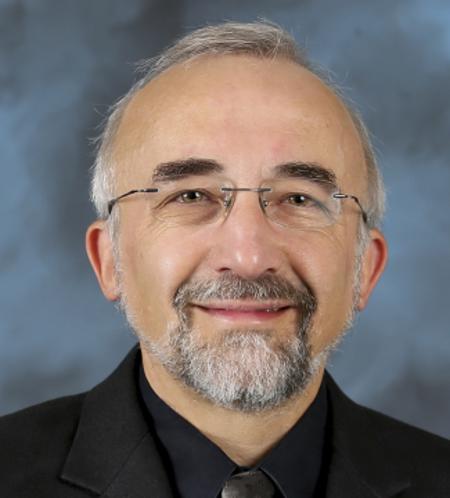
Witold "Witek" Nazarewicz is a John A. Hannah Distinguished Professor in the Department of Physics & Astronomy at Michigan State University and serves as the Chief Scientist at the Facility for Rare Isotope Beams (FRIB). He is also a Corporate Fellow Emeritus at Oak Ridge National Laboratory (ORNL) and maintains a professorship at Warsaw University, Poland. Nazarewicz previously held positions as James McConnell Distinguished Professor at the University of Tennessee and served as Scientific Director of ORNL's Holifield Radioactive Ion Beam Facility from 1999-2012. His academic career spans multiple international institutions including Lund University, University of Cologne, Kyoto University, University of Liverpool, and Peking University. Nazarewicz's research focuses on theoretical nuclear physics with particular emphasis on exotic nuclei at the limits of nuclear existence. His work spans quantum many-body problems, physics of open quantum systems, superheavy elements, and nuclear fission. He has pioneered approaches to unify structure and reaction aspects of nuclei based on open quantum system many-body formalism, including the Gamow Shell Model. His research connects nuclear physics with high-performance computing, developing comprehensive descriptions of all nuclei through theoretical and experimental investigations of rare atomic nuclei. An analysis of Nazarewicz's recent publications reveals a strong focus on cutting-edge nuclear structure research, particularly concerning exotic nuclei near the driplines, charge radii measurements, superheavy elements, and the development of advanced computational methods. His work increasingly incorporates machine learning and Bayesian analysis techniques to address nuclear physics challenges. The publications demonstrate his leadership in connecting fundamental nuclear physics with applications in nuclear astrophysics, while also addressing foundational questions about the limits of nuclear existence and the nature of nuclear forces. Fellow of the American Physical Society Fellow of the U.K. Institute of Physics Fellow of the American Association for the Advancement of Science 2008 Carnegie Centenary Professor Honorary Doctorates from University of the West of Scotland (2009) and University of York (2019) 2012 Tom W. Bonner Prize in Nuclear Physics 2012 ORNL Distinguished Scientist 2013 UT-Battelle Corporate Fellow 2017 G.N. Flerov Prize 2025 Marian Smoluchowski Medal Nazarewicz has authored approximately 500 peer-reviewed publications with over 37,000 citations and an h-index of 103 (Web of Science). He has delivered over 220 invited talks at major international conferences and organized approximately 70 scientific meetings. His research has been supported by numerous grants from the Department of Energy, National Science Foundation, and international funding agencies. Nazarewicz plays a leadership role in major nuclear physics initiatives including the UNEDF, NUCLEI, and BAND collaborations, and has contributed to several National Academies reports on nuclear physics. As FRIB Chief Scientist, Nazarewicz leads theoretical efforts at one of the world's premier facilities for rare isotope research. His research group at MSU collaborates extensively with experimentalists worldwide, bridging theoretical predictions with cutting-edge measurements. He directs the FRIB Theory Alliance, fostering international collaboration in nuclear theory, and has established strong connections between nuclear physics and other disciplines including quantum information science and machine learning.
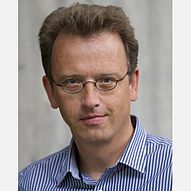
Prof. Dr. Ferdinand Evers is a Chair of Computational Condensed Matter Theory at the Institute of Theoretical Physics , University of Regensburg. His research spans quantum transport , spintronics , molecular electronics , and many-body localization , with a focus on ab initio and DFT-based modeling of nanostructures and low-dimensional systems . Key Research Areas: Quantum transport in molecular junctions Spin-orbit coupling and chiral effects Multifractality at quantum phase transitions Electronic structure of topological materials Ultrafast laser-driven electron dynamics Anderson localization and disorder Recent Article Trends (2021–2024): High-harmonic generation in topological insulators Spin-selective transport in chiral systems Mechanical torque in molecular rotors Self-consistent GW methods for molecular electronics Quantum interference in graphene nanoribbons Teaching: Lecturer for Theoretical Physics I-IV , Advanced Quantum Mechanics , and Scientific Perspectives courses at the University of Regensburg Focus on statistical mechanics , quantum transport , and computational nanoscience
Fabrizio Falchi is a researcher at the Artificial Intelligence for Media and Humanities (AIMH) Lab of the Institute of Information Science and Technologies (ISTI) within Italy's National Research Council (CNR). He also maintains an associate position at the Biorobotics Institute of Scuola Superiore Sant'Anna. His work focuses on developing advanced multimedia retrieval systems, with the VISIONE platform being his most notable contribution, which has won international competitions including the Video Browser Showdown in 2024 and placed second in 2023. Falchi's educational background includes: Ph.D. in Information Engineering from University of Pisa (Italy) Ph.D. in Informatics from Faculty of Informatics of Masaryk University of Brno (Czech Republic) M.B.A. from Scuola Superiore Sant'Anna in Pisa His research spans deep learning, convolutional neural networks, deep features extraction, similarity search algorithms, distributed indexing systems, multimedia information retrieval, computer vision applications, and peer-to-peer systems. Falchi has made significant contributions to fine-grained visual understanding, cross-modal retrieval (particularly image-text matching), and robustness of deep learning systems against adversarial attacks. His work demonstrates a strong focus on practical applications of these technologies, particularly in video retrieval systems and safety monitoring solutions. Analysis of Falchi's recent publications reveals a strong focus on video and image retrieval systems, with the VISIONE platform being central to his work. His research shows increasing emphasis on fine-grained understanding in computer vision, cross-modal retrieval, and addressing practical challenges like cross-resolution face recognition. Recent work demonstrates innovation in making these systems more efficient through techniques like knowledge distillation (ALADIN) and leveraging virtual worlds for training data. His publications consistently bridge theoretical advances with practical applications in surveillance, safety monitoring, and multimedia search. Falchi's work has received significant recognition: Best paper award at CBMI 2024 for 'Is ClLIP the main roadblock for fine-grained open-world perception?' VISIONE 2024 won the Video Browser Showdown competition in Amsterdam VISIONE obtained second place at Video Browser Showdown 2023 in Bergen Best Paper Award for 'Learning Safety Equipment Detection using Virtual Worlds' at CBMI 2019 Falchi collaborates extensively with researchers at ISTI-CNR, particularly within the AIMH Lab. His work on VISIONE involves collaboration with Giuseppe Amato, Paolo Bolettieri, Fabio Carrara, Claudio Gennaro, Nicola Messina, Lucia Vadicamo, and Claudio Vairo. As co-chair of Ital-IA 2023, the 3rd National Conference on Artificial Intelligence, he plays an active role in the academic community. He is a member of ACM (since 2012), the Computer Vision Foundation, the Italian Association for Computer Vision Pattern Recognition and Machine Learning (CVPL), and the CINI Lab on Artificial Intelligence and Intelligent Systems. Falchi is a key member of the Artificial Intelligence for Media and Humanities (AIMH) Lab at ISTI-CNR, where he leads research on video retrieval systems. The lab has developed the award-winning VISIONE platform, which combines multiple scientific results in content-based video retrieval. His team focuses on developing systems that enable users to search for target videos using textual prompts, drawing objects and colors, or images as query examples. The lab's work demonstrates strong interdisciplinary collaboration, bridging computer science with practical applications in media, safety monitoring, and urban environments.
Jiří Novotný is a Professor at the Faculty of Mathematics and Physics of Charles University in Prague, Czech Republic. He is affiliated with the Institute of Particle and Nuclear Physics , where his research focuses on theoretical particle physics, quantum field theory, and low-energy QCD phenomena. He is actively involved in teaching and research, with a strong publication record in high-impact journals. Research Interests Prof. Novotný's research spans a wide range of topics in theoretical physics, with a particular emphasis on: Quantum Field Theory : Anomalies, effective Lagrangians, and chiral perturbation theory. Low-Energy QCD : Chiral symmetry breaking, order parameters, and meson decays. Scattering Amplitudes : Soft theorems, celestial holography, and modern amplitude techniques. Effective Field Theories : Galileon theories, DBI actions, and their generalizations. Publications and Research Impact His recent work has significantly advanced the understanding of soft theorems in gauge and gravity theories, the structure of scattering amplitudes in chiral perturbation theory, and the application of celestial holography to flat-space physics. His publications often appear in top-tier journals such as Journal of High Energy Physics (JHEP) , Physical Review D , and Physical Review Letters . Teaching and Outreach Prof. Novotný teaches advanced courses in Quantum Field Theory I & II and Selected Parts of Quantum Field Theory . He is also involved in the Physics Olympiad to promote physics education among students.
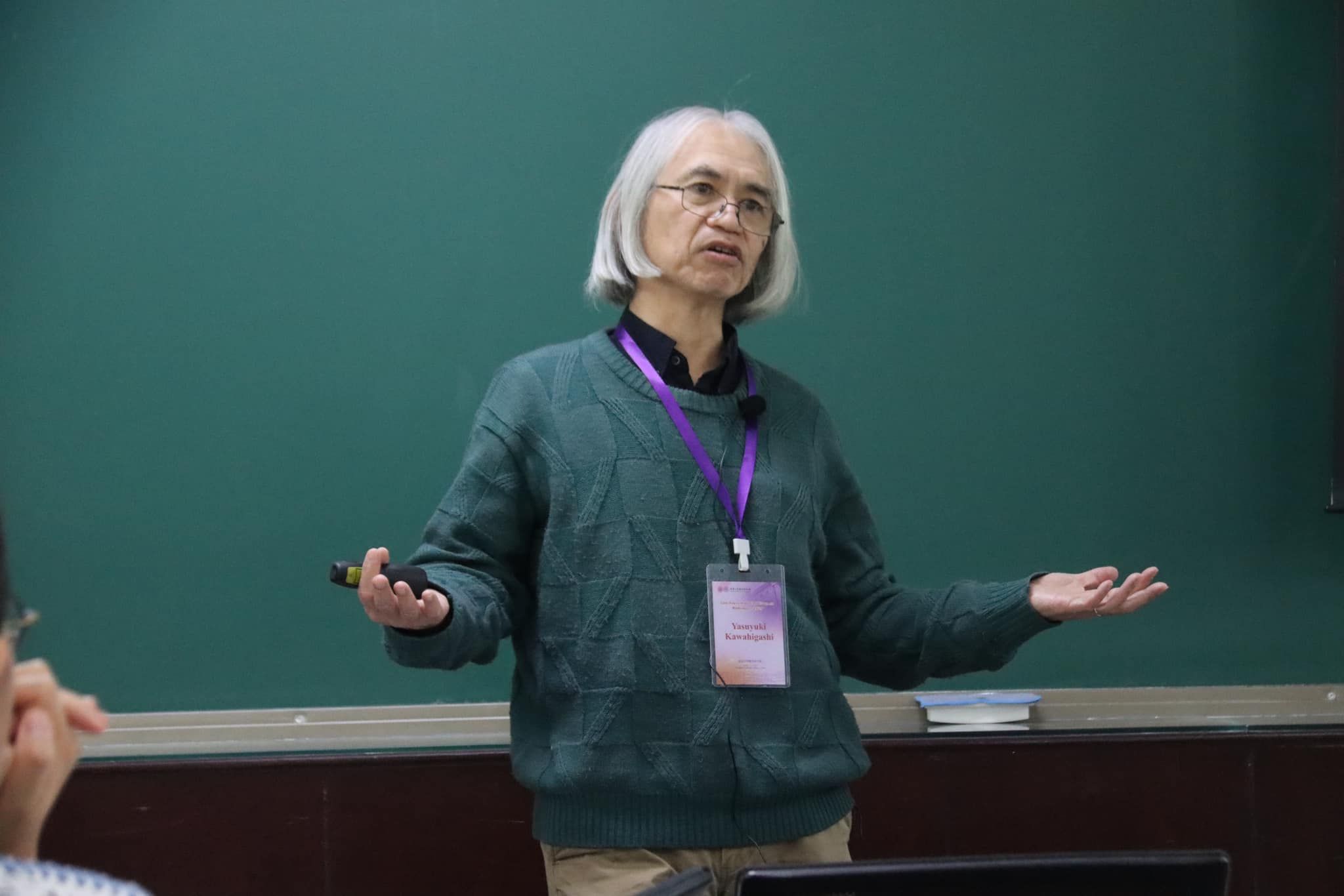
Yasuyuki Kawahigashi is a Professor at the Department of Mathematical Sciences, The University of Tokyo, where he leads research in operator algebras and mathematical physics. His office is located in Room 323 of the Mathematical Sciences Building on the Komaba campus. He serves as an editor for multiple prestigious mathematics journals including Communications in Mathematical Physics, International Journal of Mathematics, and Journal of Mathematical Physics. His research focuses on operator algebras, particularly subfactor theory and its connections to conformal field theory, topological phases of matter, quantum groups, and vertex operator algebras. He investigates 2-dimensional conformal field theory from an operator algebraic viewpoint, examining representation theory through subfactors and connections to quantum invariants in low-dimensional topology. Kawahigashi's publications demonstrate extensive work in operator algebras, conformal field theory, and topological quantum field theory. His recent research emphasizes connections between subfactors, tensor categories, and topological phases of matter, with applications in mathematical physics. Operator Algebra Prize (2000) Spring Prize of the Mathematical Society of Japan (2002) He has advised numerous postdoctoral fellows and organized major international programs such as the 2011-2012 RIMS Program on Operator Algebras. He leads the Operator Algebra Group at Tokyo and has secured research grants from Mitsubishi Foundation, Sumitomo Foundation, and JSPS. Kawahigashi directs research seminars and maintains active collaborations with institutions worldwide. His group regularly hosts international visitors and participates in conferences on operator algebras and mathematical physics.
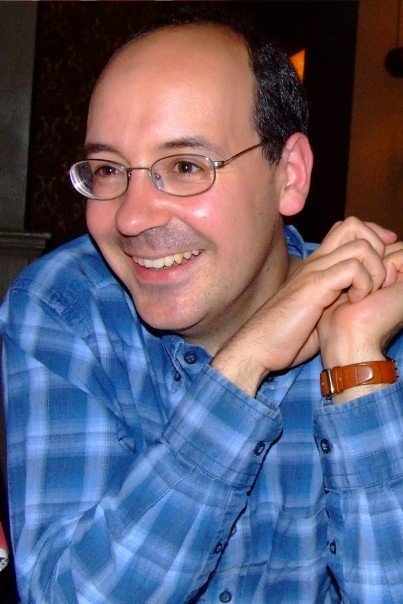
James Martin is a Lecturer at the Department of Statistics, University of Oxford . He is affiliated with St Hugh's College and has been actively involved in organizing probability seminars since 2018. Research Interests Probability theory Random graphs and percolation Interacting particle systems Models of random growth and coagulation-fragmentation Queueing networks Combinatorial games Teaching Courses: Prelims Probability , Part A Probability , Part B Statistical Lifetime Models , Part C Probabilistic Combinatorics His publications focus on probability theory , statistical physics , and combinatorial structures . Recent work includes studies on last-passage percolation, multispecies exclusion processes, and integrable probability models. James Martin collaborates with researchers from institutions such as Uppsala University, University of Cambridge, Imperial College London, and Kyoto University. He has been a key organizer for the Oxford Probability Seminar since 2018.
Christian Hirsch is an Associate Professor for Data Science and Statistics at Aarhus University, where he studies random networks motivated from biology and health sciences through techniques from topological data analysis and stochastic geometry. He is a member of the Stochastics group at the Department of Mathematics and holds additional affiliations as an Associate Fellow of the Aarhus Institute for Advanced Studies, and with the AU DIGIT Centre and the AU Quantum Campus. Current Position: Associate Professor for Data Science and Statistics, Aarhus University Previous Positions: Assistant Professor at University of Groningen and University of Mannheim Postdoctoral Experience: Aalborg University, LMU Munich, WIAS Berlin Education: PhD from Ulm University Christian Hirsch's research focuses on the statistical foundations of topological data analysis, large deviations theory in stochastic geometry, and percolation theory of spatial random networks. His work bridges theoretical mathematics with practical applications in data science, particularly in analyzing complex structures through topological methods. He investigates how topological features form and disappear in growing data structures, developing statistical tests to determine whether observed patterns are significant or merely random occurrences. His recent publications reveal a strong trend toward applying topological data analysis to increasingly complex structures, with significant focus on statistical validation of topological features. Hirsch has made substantial contributions to understanding the probabilistic behavior of persistent homology, developing functional central limit theorems and large deviation principles for topological functionals. His work spans theoretical foundations in stochastic geometry while finding applications in materials science, neural networks, and wireless communication systems. As an educator, Hirsch teaches graduate courses including Topological Data Analysis, Stochastic Geometry, Monte Carlo Simulation, Markov Decision Processes, Probability Theory, and Stochastic Processes. He has supervised numerous PhD, MSc, and BSc students, with several of his former students securing academic positions at institutions like University of Leiden, Tokyo Institute of Technology, and Budapest University of Technology. Hirsch leads a research group within the Stochastics group at Aarhus University, collaborating extensively with researchers across Europe and North America. His work demonstrates how topological methods can provide rigorous statistical insights into complex data structures, making significant contributions to both theoretical mathematics and practical data analysis techniques.

Aiichiro Nakano is Professor of Computer Science with joint appointments in Physics & Astronomy, Quantitative & Computational Biology, and the Collaboratory for Advanced Computing and Simulations at USC. He holds a Ph.D. in physics from University of Tokyo (1989) and has authored over 485 refereed publications in scalable algorithms, scientific machine learning, and computational materials science. Research develops AI-driven simulation methods for materials discovery, quantum computing applications, and exascale molecular dynamics. Recent work focuses on foundation models for molecular simulations, high-energy-density polymers, and nanocatalysis under extreme conditions. Publications show consistent contributions to computational science infrastructure, with accelerating focus on machine learning interatomic potentials and quantum-classical computing integration. Research bridges theoretical development with high-performance computing implementations. National Science Foundation CAREER Award
Dr Maximilien Barbier serves as a Lecturer at the University of Surrey's School of Computing, Engineering and Physical Sciences, maintaining active research output through 2025. His academic profile is anchored in theoretical quantum mechanics with a distinctive focus on quantum backflow phenomena. Research interests center on quantum backflow , non-equilibrium statistical mechanics , and microreversibility principles . His work bridges fundamental quantum theory with practical applications, particularly in time-dependent quantum systems and transport phenomena. Key contributions include extending quantum backflow concepts to multi-particle systems and relativistic frameworks, while developing experiment-friendly formulations for observable quantum effects. Analysis of his 12 publications (2015-2025) reveals consistent focus on quantum measurement theory, with increasing emphasis on multi-dimensional systems and experimental validation pathways. His fingerprint profile shows 100% specialization in quantum backflow and microreversibility, with strong connections to non-equilibrium systems (87%) and fluctuation relations (41%). Scientific awards: None documented Dr Barbier collaborates extensively with researchers including Goussev, Fewster, and Srivastava across international institutions. His research demonstrates sustained funding through consistent publication output, though specific grants aren't detailed. Current work explores two-dimensional quantum backflow and time-of-arrival distributions, suggesting active laboratory or computational research environment despite no explicit lab description.
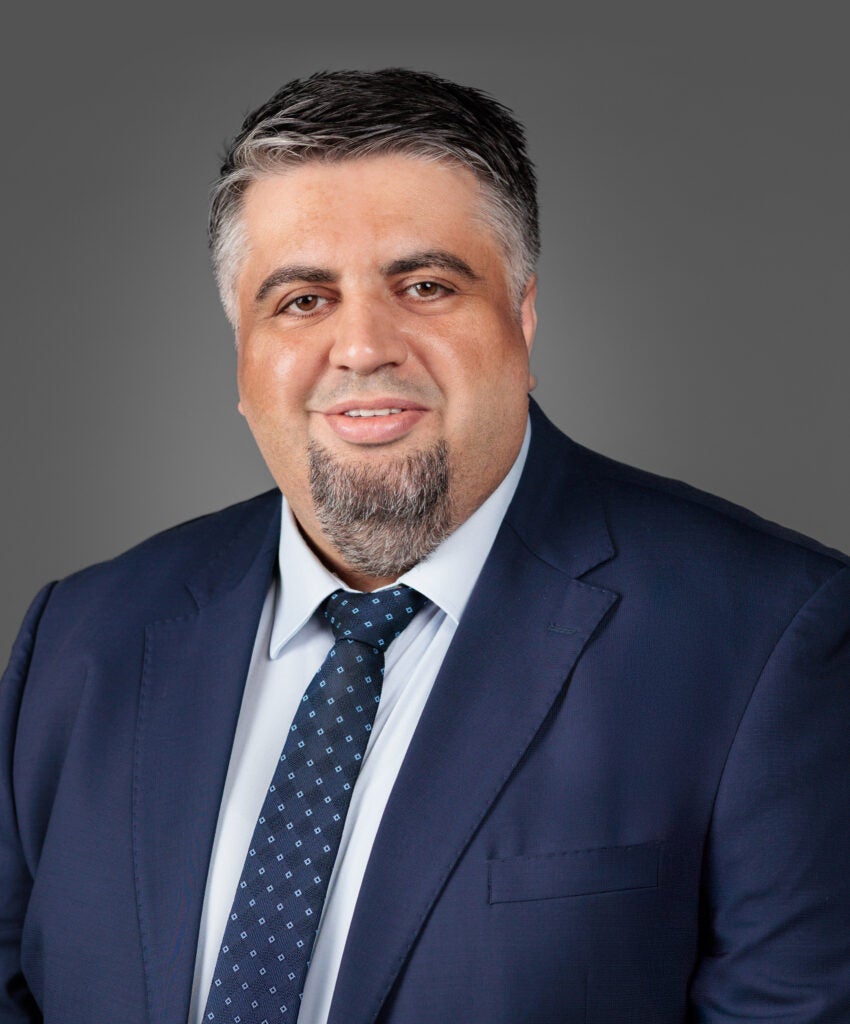
Ahmet Avsarمشاهده پروفایل
استادیار
- Spintronics
- 2D Materials
- Quantum Devices
- +۳ مورد دیگر
Dr. Ahmet Avsar is an Assistant Professor and NRF Fellow in the Department of Material Science and Engineering at the National University of Singapore (NUS), appointed since September 2022. Prior to this, he served as an Assistant Professor of Physics at Newcastle University (UK) and held an EPFL Fellowship (co-funded by the European Marie Curie COFUND) at the Swiss Federal Institute of Technology Lausanne (EPFL, Switzerland) from 2016 to 2020. He completed his PhD in Physics at NUS. His research focuses on exploiting quantum degrees of freedom (spin, pseudospin, valley) in atomically thin materials for energy-efficient information technologies. This includes fabricating mesoscopic devices with 2D heterostructures and studying their electronic, magnetic, and optical properties at low temperatures. His work emphasizes sustainable computing through spin, magnon, and superconducting quasiparticle-based information processing. Key research areas include spintronics in graphene and 2D materials, van der Waals magnetism, excitonic devices, and low-temperature characterization. His recent projects explore anisotropic spin transport in black phosphorus, valleytronics, and logic-in-memory systems using atomically thin semiconductors. Dr. Avsar has been recognized as an NRF Fellow and EPFL Fellow. His research is supported by the National Research Foundation (NRF) of Singapore. He has authored or co-authored numerous high-impact publications in journals like Nature Materials , Nature Nanotechnology , and Review of Modern Physics . His academic trajectory includes postdoctoral research at EPFL and prior roles in the UK, reflecting a trajectory of excellence in quantum materials and nanotechnology research.
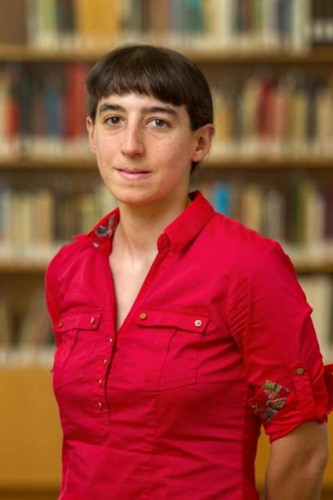
Brenda Rubenstein is an Associate Professor of Chemistry and Physics at Brown University and Director of the Data Science Institute. Her research bridges quantum chemistry and materials science, developing stochastic electronic structure methods for accurate large-scale simulations. She also explores molecular computing and computational biophysics. Her group emphasizes diversity, collaboration, and work-life balance. Recent work includes quantum Monte Carlo techniques for materials discovery, machine learning approaches for protein dynamics, and quantum computing applications. She received a named professorship in 2025 and leads the Levermore Global Scholars program. Her publications focus on computational methods across chemistry, physics, and materials science.
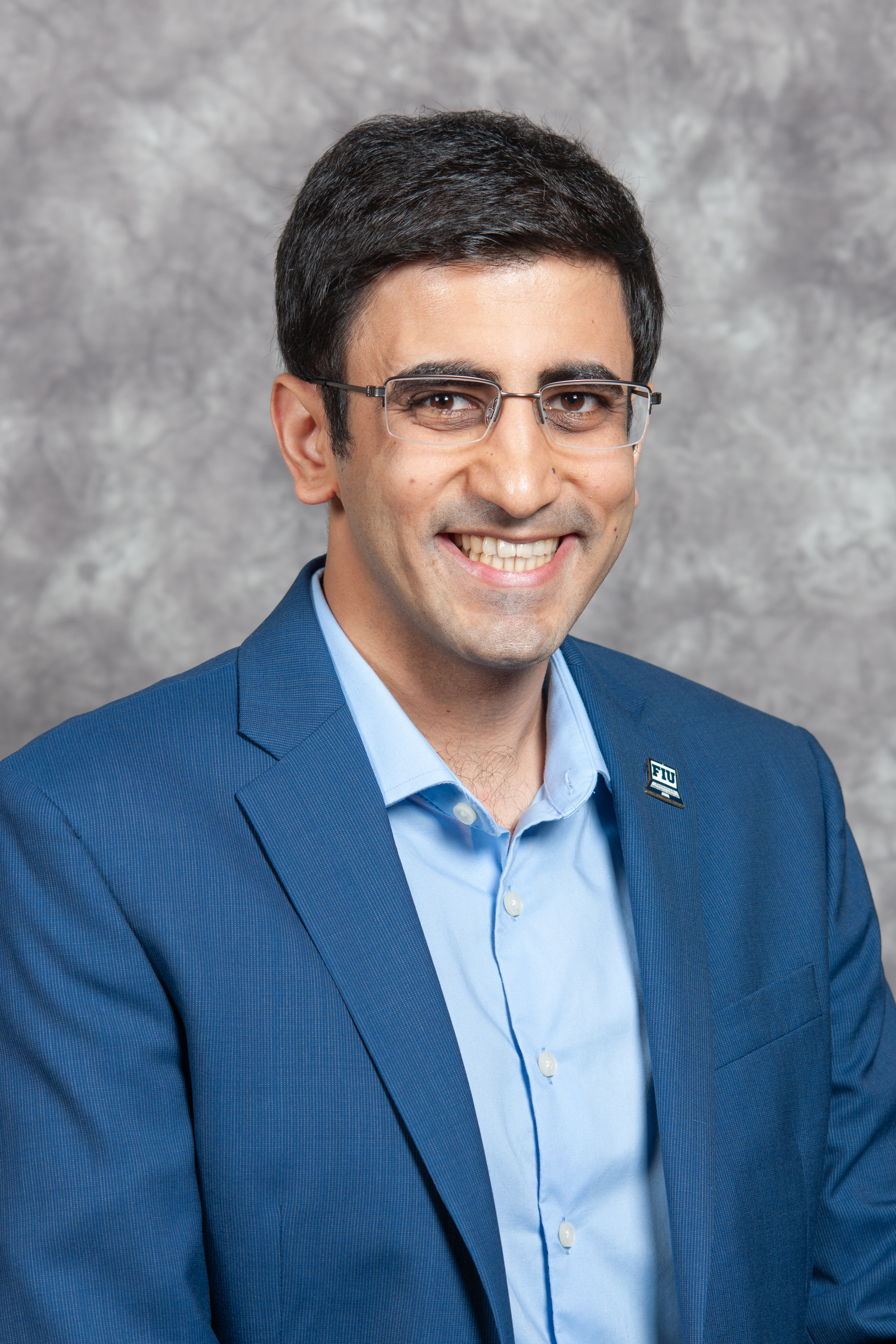
M. Hadi Aminiمشاهده پروفایل
استادیار
M. Hadi Amini is an Assistant Professor at Florida International University's Knight Foundation School of Computing and Information Sciences. He founded and directs the Sustainability, Optimization, and Learning for InterDependent networks (SOLID) laboratory, focusing on cyber-physical-social systems and distributed AI applications. Ph.D., Electrical and Computer Engineering (2019), Carnegie Mellon University M.Sc., Electrical and Computer Engineering (2015), Carnegie Mellon University M.Sc. (2013), Tarbiat Modares University B.Sc. (2011), Sharif University of Technology His research spans federated learning, interdependent network optimization, and AI applications in smart cities , energy systems , and healthcare . Recent work emphasizes privacy-preserving techniques, quantum encryption, and blockchain integration for secure distributed learning. The 15 most recent publications highlight trends in large language models , edge computing , medical imaging security , and infrastructure resilience , with interdisciplinary emphasis across computer science, systems engineering, and urban planning. Best Paper Award, IEEE Conference on Computational Science & Computational Intelligence (2019) Best Journal Paper Award, Springer Nature Operations Research Forum (2021) Excellence in Teaching Award, FIU (2020) Multiple Best Reviewer Awards, IEEE Transactions NSF Travel Awards (2019) As Associate Editor for Frontiers in Communications and Networks and book series editor for Sustainable Interdependent Networks , he actively shapes research discourse. His lab has secured $3.6M in federal/state funding for AI-driven infrastructure projects.

Horacio Castillo is an Associate Professor in the Department of Physics and Astronomy at Ohio University, affiliated with the Nanoscale Quantum Phenomena Institute (NQPI). His research focuses on condensed matter theory, particularly glassy dynamics, dynamical heterogeneities, and non-equilibrium systems. He explores topics such as fluctuating relaxation times, aging dynamics, and the interplay between structure and dynamics in supercooled liquids and amorphous solids. Key research areas include the study of glass transition phenomena using molecular simulations and theoretical models. His work addresses questions about spatial and temporal correlations in glass-forming systems, dynamic susceptibility, and the application of spin-glass concepts to biological reprogramming processes. Castillo’s contributions span experimental collaborations and computational studies, with a focus on advancing understanding of complex materials and their underlying physics. Publications highlight advancements in characterizing rotational/translational dynamics in supercooled liquids, modeling dynamic heterogeneity, and analyzing aging regimes in silica glasses. His research bridges traditional condensed matter physics with interdisciplinary topics such as biophysics, leveraging tools from statistical mechanics and nonlinear dynamics. Castillo has contributed to the Ohio University community through involvement in academic events like the NQPI-CMSS Joint Poster Session (2015) and mentoring student research projects, as evidenced by his presence in student research expos. His grants and collaborations reflect a commitment to advancing fundamental knowledge in nanoscale and quantum phenomena.
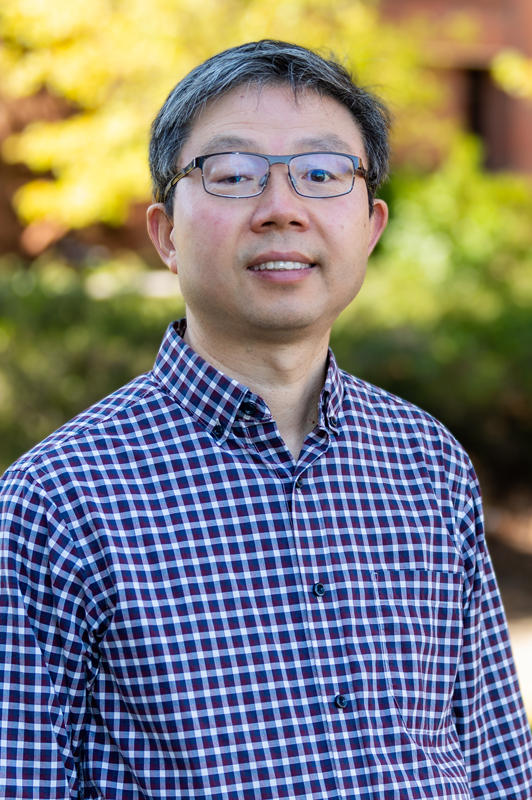
Guofu Niu is a Professor in the Department of Electrical and Computer Engineering at Auburn University, holding the Ed and Peggy Reynolds Family endowed chair. His research specializes in semiconductor device physics, compact modeling of SiGe heterojunction bipolar transistors (HBTs), FinFETs, and cryogenic electronics for RF and power applications. Key research areas include RF linearity characterization, avalanche effects, thermal noise, and low-temperature device performance. He has developed advanced models (e.g., Mextram) for circuit simulation tools, enhancing the accuracy of semiconductor design workflows. Publications focus on nano-scale device reliability, tunneling currents, and optimization of RF amplifiers, with applications in 5G technology and extreme-environment electronics. Collaborative projects span industry and academia to advance semiconductor modeling frameworks.