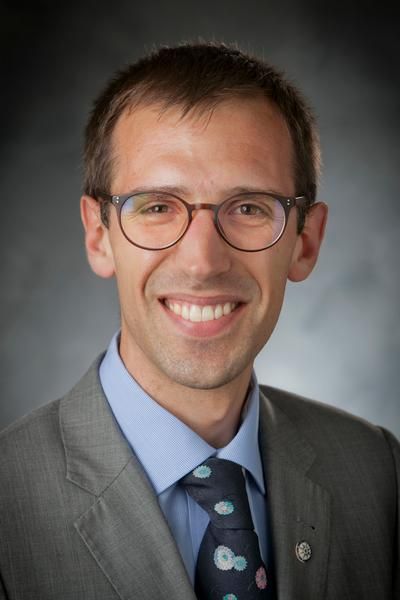
Niccolò Terrando is a Professor of Anesthesiology at Duke University School of Medicine with secondary appointments in Cell Biology and Integrative Immunobiology. He serves as a Faculty Network Member of the Duke Institute for Brain Sciences, where his research bridges neuroimmunology, perioperative medicine, and cognitive neuroscience. Dr. Terrando's research focuses on neuroinflammation mechanisms underlying postoperative cognitive dysfunction and delirium, particularly exploring blood-brain barrier integrity, neurovascular unit function, and specialized pro-resolving mediators. His work investigates how surgical trauma triggers inflammatory cascades that can lead to cognitive decline, especially in vulnerable populations like the elderly and those with pre-existing neurodegenerative conditions. He has pioneered research on vagus nerve stimulation, omega-3 fatty acids, and other interventions to mitigate surgery-induced neuroinflammation. His extensive publication record shows a clear progression from basic mechanisms of neuroinflammation to translational applications. Recent work emphasizes cellular senescence, blood-brain barrier modeling, and the intersection of postoperative cognitive decline with Alzheimer's disease pathology. His research increasingly incorporates advanced techniques like blood-brain barrier-on-chip models and quantum dot biomimetics for neurovirology studies. His scientific recognition includes: New Investigator Award from the International Society to Advance Alzheimer's Research and Treatment (2019) Active Member (by election) of the Association of University Anesthesiologists (2018) Junior Faculty Award from the Association of University Anesthesiologists (2014) New Investigator Award from the International Society for the Study of Fatty Acids and Lipids (2014) Dr. Terrando currently leads multiple NIH-funded projects totaling over $20 million, including studies on hypertension and aging impacts on postoperative delirium (2025-2030), IL-6 trans-signaling in cognitive decline (2024-2029), and cerebrospinal fluid complement activation in delirium (2024-2029). His laboratory employs sophisticated mouse models of surgery-induced cognitive dysfunction and collaborates extensively with Duke's neuroscience and geriatrics programs. His research team utilizes advanced methodologies including blood-brain barrier modeling, neurovascular unit analysis, and biomarker discovery in human subjects undergoing surgery. Current projects investigate pericyte function in delirium superimposed on dementia, bioelectronic regulation of CNS lymphatic drainage, and immunoprofiling of postoperative delirium during aging and neurodegeneration.