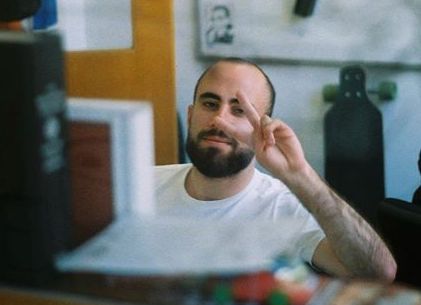
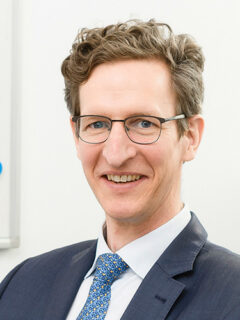
Andreas Winter is an ICREA Research Professor at Universitat Autònoma de Barcelona and holds a Hans Fischer Senior Fellowship at TUM-IAS, Technical University of Munich. He specializes in quantum and classical information theory with affiliations at the University of Cologne's Department of Quantum Information and Computation. His research examines fundamental limits in quantum communication, entropy applications, and quantum computing foundations. Education: Diploma in Mathematics, Freie Universität Berlin Ph.D. in Mathematics, Universität Bielefeld Research: His interdisciplinary work bridges quantum Shannon theory, thermodynamics, and discrete mathematics, exploring quantum channel capacities, information tradeoffs, and cryptographic protocols. Recent publications demonstrate advances in quantum coding efficiency and high-dimensional quantum systems. Awards: 2022: Hans Fischer Senior Fellowship, Alexander von Humboldt Prize, QCMC Quantum Award 2017: IEEE Information Theory Paper Award 2012: Whitehead Prize (LMS) 2007: Philipp Leverhulme Prize Leadership: Leads the Quantum Information Theory Focus Group at TUM-IAS, collaborating with Prof. Holger Boche on quantum communication frameworks.
Stefano Markidis is a leading researcher in High-Performance Computing (HPC) and quantum computing. His work focuses on developing advanced simulation frameworks, such as the Neko framework for computational fluid dynamics, and optimizing algorithms for heterogeneous architectures. He collaborates extensively with institutions and researchers globally, contributing to fields like plasma physics, quantum systems, and machine learning applications. His research emphasizes scalability, performance optimization, and the integration of cutting-edge technologies like GPU acceleration and quantum computing. Key research interests include extreme-scale simulations, quantum algorithms, and in-situ data analysis techniques. He has published over 200 articles, with recent work addressing challenges in NISQ systems, tensor network simulations, and CUDA-based performance enhancements. His contributions span theoretical and applied domains, bridging computational methods with real-world applications in fusion energy, materials science, and space exploration. Notable collaborations include projects with Philipp Schlatter, Niclas Jansson, and the NISQ application development community. Markidis also explores hybrid frameworks combining classical and quantum computing, aiming to leverage emerging hardware for scientific breakthroughs.
PD Dr. Frieder Ladisch serves as an Associate Professor at the Institute for Mathematics within the Faculty of Mathematics and Natural Sciences at the University of Rostock, Germany. His institutional affiliation includes membership in the Geometry working group (AG Geometry), with office location at Ulmenstraße 69, Haus 3, Room 231, and contact via university email and phone. His research program centers on Quantum Physics and Quantum Information , with specialized expertise in: Non-Hermitian quantum systems and PT-symmetry phenomena Topological photonic implementations including Su-Schrieffer-Heeger lattices Non-Abelian geometric phases and quantum holonomy Quantum random number generation using solid-state photon sources Experimental quantum optics with integrated photonic circuits Analysis of his 15 most recent publications (2019-2025) reveals consistent focus on PT-symmetry breaking experiments, quantum walk implementations in topological photonic structures, and quantum random number generation using hexagonal boron nitride emitters. His work bridges theoretical non-Hermitian quantum mechanics with practical photonic implementations. Dr. Ladisch operates within the Geometry working group at Rostock's Institute for Mathematics, where his research integrates mathematical geometry concepts with quantum information processing through photonic chip technologies and single-photon source applications.
Prof. Dante Kennes is a University Professor at RWTH Aachen University, leading the Chair of Theoretical Physics of Condensed Matter. His research focuses on quantum materials, strongly correlated systems, and cavity quantum electrodynamics. Key areas include superconductivity in twisted bilayer systems, moiré heterostructures, and non-equilibrium phenomena in low-dimensional materials. He explores theoretical frameworks such as functional renormalization group methods and topological phase transitions. Recent work emphasizes cavity-coupled systems, light-induced superconductivity, and the interplay between electronic correlations and topological properties. His publications address topics like van Hove singularity heterogeneity in graphene, nematicity in kagome metals, and experimental signatures of moiré-engineered phases. Kennes' research bridges theoretical predictions with experimental observability through advanced modeling techniques. His contributions span advanced computational methods for many-body systems and proposals for novel quantum materials characterization. Despite his prolific output, no formal student advisees or awards are explicitly listed in the provided materials.
Prof. Dr. Kristel Michielsen is a Professor of Quantum Information Processing at RWTH Aachen University and holds leadership roles at Forschungszentrum Jülich. She leads the division HPC for Quantum Systems and heads the Jülich UNified Infrastructure for Quantum computing (JUNIQ). As Group Leader of the Research Group Quantum Information Processing, her work focuses on quantum annealing, quantum simulation, and modular hybrid HPC-quantum computing. She is also Spokesperson of the Helmholtz Information Program 1 and a Principal Investigator in Topics 1 and 2. Affiliations: RWTH Aachen University, Forschungszentrum Jülich (IAS/JSC), JUNIQ Key Roles: Head of HPC for Quantum Systems, JUNIQ Director, Quantum Information Processing Group Leader Her research emphasizes quantum computing applications in optimization, benchmarking, and hybrid supercomputing-quantum systems. She pioneers quantum-annealing solutions for real-world problems like power grid partitioning and transportation logistics. Recent work explores error mitigation, noise modeling in D-Wave systems, and quantum-classical workflows.
Ayhan Demircan is an Adjunct Professor at the Leibniz School of Optics and Photonics in Leibniz University Hannover. He leads the Micro and Nano Photonics task group and contributes to institutions including the Institute of Quantum Optics , Ultrafast Laser Laboratory , and Hannover Centre for Optical Technologies (HOT) . His work spans photonics, quantum optics, and nonlinear dynamics, with applications in terahertz technology, soliton physics, and optical modeling. Research Interests: Photonics, quantum optics, terahertz radiation, soliton dynamics, nanophotonics, and computational modeling of optical systems. Key Institutions: Leibniz School of Optics and Photonics, Institute of Quantum Optics, HOT, and PhoenixD Cluster of Excellence. Technical Expertise: Develops Python-based tools for nonlinear Schrödinger equations, optical parametric oscillators, and ultrafast laser systems. Contact: demircan@iqo.uni-hannover.de
Johannes Geier is a Researcher at the Chair of Design Automation at the Technical University of Munich (TUM). His work focuses on electronic design automation, fault injection simulations, and security countermeasures for RISC-V processors. University: Technical University of Munich Department: Chair of Design Automation Email: johannes.geier@tum.de Research Interests Electronic Design Automation (EDA) for analog and digital circuits Fault tolerance and reliability in RISC-V architectures Security analysis of post-quantum cryptographic systems Timing analysis and microfabrication techniques Optical Networks-on-Chip (NoC) and emerging technologies Compiler-assisted hardware security implementations Recent Research Trends Specializes in fault injection methodologies for hardware security validation Develops open-source tools like vRTLmod for RTL simulation acceleration Explores RISC-V vector extensions for post-quantum cryptography Investigates differential fault effect equivalence checks for efficiency Designs compiler-based security countermeasures against instruction skip attacks Works on concurrent multi-node XCP proxy server architectures
Prof. Dr. Jürgen Schnack is a theoretical physicist at the Faculty of Physics, Bielefeld University , where he has served since 2007. His academic career includes leadership roles as Vice Dean (2015-2017) and Dean (2017-2019) of the Faculty of Physics. He is a member of the German Physical Society (DPG) , American Physical Society (APS) , and other academic societies. Education: PhD in Physics (1996, Technical University of Darmstadt & GSI), Habilitation (2001, University of Osnabrück) Research: Focus on quantum spin systems, magnetic molecules, frustration effects, and carbon nanomembranes. His work explores decoherence, thermodynamics in non-equilibrium systems, and magnetocaloric effects. Grants: Recipient of projects from the German Research Foundation (FOR 2692, others) and the European Union (e.g., molecule-based magneto/electro/mechano-calorics). Awards: 2002 Hans Mühlenhoff Prize for habilitation; 2006 Fellow of the International Center for Transdisciplinary Sciences, International University Bremen. Advising: Chaired a PhD program with 11 students (2001-2006). Publications: Over 100 peer-reviewed articles in journals like Physical Review Letters , Journal of the American Chemical Society , and Inorganic Chemistry , focusing on frustrated quantum magnets, spin dynamics, and molecular magnetism. Labs/Teams: Leads the Condensed Matter Theory Working Group at Bielefeld University and collaborates with international institutions like Ames Laboratory and INT Seattle.
Jonathan L. Habif serves as a Research Assistant Professor in the Ming Hsieh Department of Electrical and Computer Engineering at the University of Southern California and holds a Research Lead position at the Information Sciences Institute (ISI). His work centers on fundamental limits of information extraction from physical signals, with primary focus on quantum and classical optical systems. His academic background includes: B.A. in Physics from Colgate University M.S. and Ph.D. in Electrical and Computer Engineering from the University of Rochester Postdoctoral research in Physics at MIT's Research Laboratory for Electronics Dr. Habif's research integrates quantum information science with photonic engineering, specializing in photon-starved communication scenarios, quantum-secured optical networks across free-space and fiber channels, and nano-photonic device development. He directs USC's Laboratory for Quantum-Limited Information (QLIlab) in Waltham, MA, which pioneers experimental demonstrations of information-theoretic boundaries in signal processing. The lab's work bridges theoretical limits with practical implementations in secure communications and low-light imaging systems. His institutional affiliation spans USC's Ming Hsieh Department and ISI's Waltham facility at 890 Winter Street, Suite 115, where he maintains primary operations for quantum information research initiatives.
Peter Palensky is a leading researcher in smart grids, power system cybersecurity, and cyber-physical systems. His recent work focuses on digital twins for power systems, quantum computing applications in energy analysis, and secure blockchain frameworks for distributed energy resources. He collaborates extensively with institutions across Europe, particularly in Dutch and Mongolian grid stability projects. Research areas include Smart grid resilience against cyber attacks Quantum-enhanced power flow analysis Electric vehicle grid integration (V2G) Machine learning for energy systems optimization High-voltage direct current (HVDC) security His publications emphasize practical implementations, such as hardware-in-the-loop testing for photovoltaic systems and real-time simulation models for energy storage. Recent articles explore large-scale synthetic data generation for grid analysis, dynamic tariff impacts on EV charging, and advanced control strategies for offshore MMC grids.
Thorsten Koch is a Professor for Software and Algorithms for Discrete Optimization at Technische Universität Berlin , with multiple leadership roles including Head of the Applied Algorithmic Intelligence Methods (A²IM) , Digital Data and Information for Society, Science, and Culture (D²IS²C) , Kooperativer Bibliotheksverbund Berlin-Brandenburg (KOBV) , and Forschungs- und Kompetenzzentrum Digitalisierung Berlin (digiS) . Based at Zuse Institute Berlin and affiliated with TU Berlin's Institute for Mathematics, he focuses on integrating mathematical optimization with high-performance computing and artificial intelligence to solve complex real-world problems. Research Pillars : Mathematical optimization algorithms Quantum computing applications AI/ML integration in decision systems Energy systems optimization Scientific software development Leadership Roles : Head of Applied Algorithmic Intelligence Methods (A²IM) Head of Digital Data & Information for Society, Science, and Culture (D²IS²C) Head of Kooperativer Bibliotheksverbund Berlin-Brandenburg (KOBV) Head of Forschungs- und Kompetenzzentrum Digitalisierung Berlin (digiS) Key Collaborations : Working with IBM Quantum on quantum optimization Collaborating across institutions for energy system modeling Developing open-source optimization tools like SCIP Contributing to digital library infrastructure Recent Research Trends : Quantum optimization benchmarking Machine learning-aided optimization Multi-objective decision frameworks Energy infrastructure optimization Adaptive algorithm design CO2 network modeling Impact : Advancing hybrid optimization methods Developing open-source tools for scientific computing Building digital infrastructures for libraries and research Exploring quantum-classical algorithm synergies
Prof. Dr. Arnd Bäcker is a Professor at Technische Universität Dresden (TU Dresden) in Germany, specializing in quantum chaos and nonlinear dynamics. His research focuses on the complex interplay between classical and quantum mechanics in chaotic systems. His primary research interests include: Quantum chaos Nonlinear Dynamics Chaos in higher dimensional systems Dynamical tunneling Resonance states in open systems Classical and quantum billiards Prof. Bäcker's recent publications reveal a strong emphasis on quantum phenomena in higher-dimensional chaotic systems. His work consistently explores entanglement dynamics, quantum transport through barriers, and resonance states in complex systems. A distinctive feature of his research is the detailed analysis of 4D symplectic maps and the behavior of quantum systems with mixed regular-chaotic phase space structures. His approach combines rigorous mathematical analysis with computational methods to unravel quantum manifestations of classical chaos. His research has significant implications across multiple domains including quantum information processing, optical cavity physics, and ultracold atomic systems. The interdisciplinary nature of his work bridges theoretical physics, mathematics, and quantum information science, contributing to fundamental understanding while suggesting potential applications in emerging quantum technologies.
Philip Taranto is a Lecturer (Assistant Professor) at The University of Manchester's Physics & Astronomy department, where he leads the Quantum Information & Spatiotemporal Phenomena (QuISP) research group. He also serves as an editor for the Quantum journal. Originally from Melbourne, Australia, Taranto completed his undergraduate studies and Masters at Monash University under Dr. Kavan Modi and Dr. Felix A. Pollock, focusing on memory effects in open quantum systems. He then earned his PhD at the University of Vienna under Dr. Marcus Huber, studying quantum thermodynamics and complex temporal correlations. Following this, he held a JSPS Postdoctoral Fellowship at the University of Tokyo in Dr. Mio Murao's group before joining the University of Manchester. Taranto's research centers on quantum complexity, exploring how quantum systems' intricate behaviors can be harnessed for computational advantages. His primary focus areas include quantum information theory, open quantum dynamics, quantum thermodynamics, quantum foundations, correlations & entanglement, stochastic & complex processes, and quantum computation & simulation. His methodological approach heavily relies on the framework of higher-order quantum operations—transformations that act upon transformations themselves—which has proven valuable for developing optimal quantum interactive strategies, clarifying memory effects in open quantum processes, and analyzing foundational notions like causality. He also employs tensor networks, graphical calculus, and semidefinite programming in his research. His recent publications reveal a strong focus on quantum thermodynamics, higher-order quantum operations, and quantum memory effects. Taranto has made significant contributions to understanding the relationship between Landauer's principle and Nernst's unattainability principle in quantum cooling, developing protocols for efficient quantum system cooling with finite resources, and characterizing multi-time quantum processes with classical memory. His work on the quantum switch and higher-order quantum operations has advanced our understanding of quantum causality and indefinite causal order. JSPS Postdoctoral Fellowship (2022-2025) Editor of Quantum Journal (since June 2024) Taranto actively collaborates with multiple research groups globally, including the Murao group at the University of Tokyo, the Huber group at TU Wien, and the Modi group at SUTD Singapore and Monash University. He has worked with prominent researchers such as Simon Milz, Jessica Bavaresco, Marco Túlio Quintino, Felix Binder, Martí Perarnau-Llobet, Patryk Lipka-Bartosik, and Andrea Smirne. He is currently accepting PhD students and encourages collaboration with researchers sharing similar interests. Taranto is also committed to social responsibility, advocating for open science, climate justice, and empowering historically excluded and marginalized groups.
Peter Hommelhoff is a Professor in the Chair of Laser Physics at Friedrich-Alexander University Erlangen-Nürnberg (FAU) . His research focuses on dielectric laser acceleration , nanostructured electron sources , and quantum nanophotonics . Key Research Areas: Quantum-coherent control of free electrons Attosecond electron pulse generation Ultrafast dynamics in 2D materials (graphene, hexagonal systems) On-chip photonic particle acceleration Light-driven electron emission from nanotips Quantum interference in electron-photon interactions Recent Publications highlight advancements in dielectric laser accelerators (Nature, 2023), auto-ponderomotive beam control (Phys. Rev. Lett., 2024), and non-classical electron emission (Nature Physics, 2024). His work also explores graphene valley control and Bloch electron interferometry for material band-structure analysis. Laboratory Context: The Chair of Laser Physics at FAU investigates nanostructured electron sources , photonic control of charged particles , and quantum applications in electron microscopy and sensing. Collaborations span quantum nanophotonics , attosecond science , and integrated photonic circuits .
Natacha Kuete Meli is a Research Assistant in the Computer Vision Group at University of Siegen, specializing in quantum computing applications for computer vision and optimization problems. Holds a PhD in Computational Life Science from University of Luebeck (2024) with dissertation on quantum algorithms for binary optimization. Research develops quantum approaches for computer vision tasks including point set registration and shape matching. Quantum algorithms focus on solving optimization problems using adiabatic quantum computing and variational methods. Current work includes the QuCOOP framework for quantum annealing applications.