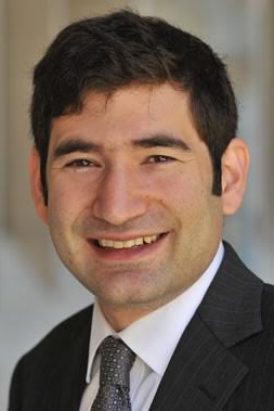
Rafael Gerke is a Research Professor at the Deutsche Bundesbank's Research Centre, affiliated with the Directorate General Economics. His work focuses on monetary macroeconomics, monetary policy design, and financial frictions within dynamic stochastic general equilibrium (DSGE) frameworks. He contributes to central bank policy analysis, including studies on interest rate pegs, forward guidance, and model comparisons across Eurosystem institutions. Gerke's research emphasizes robust monetary policy under uncertainty, particularly in contexts involving imperfect interest rate pass-through and bounded rationality. His publications span topics like price-level targeting, macro-financial linkages, and the effects of unconventional monetary policies at the zero lower bound. Key contributions include analyzing the transmission mechanisms in the euro area and exploring the implications of financial frictions in policy models. His work often collaborates with institutions like the ECB and Bundesbank, addressing challenges in price stability frameworks and policy projections.
Nathalie Janson Calamaro is an Associate Professor of Economics at NEOMA Business School, where she teaches Money and Banking and Fintech Regulation to English Track graduate students. She holds a PhD in Economics from University Paris I-La Sorbonne (with ESSEC PhD program collaboration) and specializes in monetary policy, banking regulation, cryptocurrencies, and free banking. Her research has been published in journals like World Economy, Quarterly Review of Economics and Finance, and Revue Banque. Her academic contributions focus on Bitcoin’s role in geopolitical risk mitigation, crypto regulatory debates, and central banking dynamics. She has presented at conferences including the Southern Economic Association (2019) and International Finance and Banking Society (2019). Her work critiques Basel II Accord inefficiencies and explores unconventional monetary policies’ unintended consequences. Recent trends in her publications (2020–2025) emphasize cryptocurrencies’ macroeconomic impacts, financial stability challenges, and regulatory frameworks. Her 2025 article on Bitcoin as a safe haven against geopolitical risk exemplifies her analytical approach to crypto-assets. She has authored book chapters on economic fundamentals and banking reform proposals, including a 2002 monograph on monetary rules and systems. While no scientific awards or student advisement data are explicitly mentioned, her media commentary since 2015—particularly on cryptocurrencies post-2019—highlights her public intellectual engagement. She has participated in seminars and workshops at institutions like Universidad de Los Andes (2009) and the Public Choice Society (2006), reflecting her international academic presence.
Jiawen Yang is a Professor of International Business and International Affairs at the George Washington University, holding a PhD from New York University and an MA from the University of International Business and Economics in Beijing. He has been a full-time faculty member since 1994, with teaching experience at NYU, Vanderbilt University, and institutions in China. Education: PhD in International Business, New York University MA in International Economics, University of International Business and Economics Research Interests: Dr. Yang focuses on international financial markets, trade policies, emerging market economies, and China’s business environment. His work explores topics such as exchange rate pass-through, capital flows, and the impact of globalization on small firms. Publications: His research spans journals like Review of Economics and Statistics and Review of International Economics , with recent studies investigating bank lending dynamics, transit-oriented urban development in China’s Pearl River Delta, and the effects of quantitative easing. He co-authored books on economic sanctions with Hossein Askari and others. Teaching: Courses include International Financial Environment, Global Financial Markets, and International Business Finance.
Dr. Yupana Wiwattanakantang is a tenured Associate Professor of Finance at the NUS Business School, specializing in entrepreneurial finance, family capitalism, and ESG topics. She serves on the European Corporate Governance Institute (ECGI) board and has taught at Hitotsubashi University in Tokyo. Her research focuses on corporate governance, family enterprise succession, gender diversity, and climate change. She has published in top-tier journals like the Journal of Financial Economics and Review of Financial Studies , with media features in the Financial Times and Wall Street Journal . Her work includes case studies on Samsung, Nintendo, and family firm dynamics in Japan and Thailand. Education: PhD in Finance from Hitotsubashi University, Japan. Research interests include the governance of dynastic firms, central bank policies (e.g., Bank of Japan ETF purchases), and the impact of thematic indices on corporate behavior. She has advised consulting firms and financial institutions in Singapore, including PwC and UOB. Teaching emphasizes critical thinking and real-world applications, using case studies and guest speakers from leading companies.
Viral V. Acharya is a Professor of Finance and the C.V. Starr Professor of Economics at New York University's Leonard N. Stern School of Business. He is affiliated with several leading research institutions, including the Centre for Economic Policy Research (CEPR), the European Corporate Governance Institute (ECGI), and the National Bureau of Economic Research (NBER). His research spans critical areas in financial economics, with a focus on systemic risk, financial regulation, banking stability, corporate governance, liquidity risk, sovereign debt, and the implications of unconventional monetary policy. His work frequently addresses real-world financial crises and regulatory challenges. The trends in his scholarly output reveal a consistent emphasis on understanding the interconnectedness between financial institutions and broader economic stability. His publications explore topics such as credit derivatives, shadow banking, securitization, market freezes, and climate-related financial risks, often combining theoretical models with empirical analysis to inform policy. Notable contributions include seminal papers on measuring systemic risk, the design of prudential regulation, the role of liquidity in asset pricing, and the real effects of sovereign debt crises. His recent work continues to address pressing issues such as banking stress in 2023 and the rise of shadow banking in China.
Chien Hsiu Lin is an Associate Professor at the Department of Finance , National Chengchi University 's College of Business , with a research focus on International Finance , Asset Pricing , and Applied Econometrics . The academic career spans from 2007 to present, including promotions from Assistant to Associate Professor. Education PhD in Economics, University of California, Los Angeles (2002-2007) MS in International Trade, National Chengchi University (1998-2000) Research interests examine financial market dynamics through the lenses of: Quantitative easing impacts on Asian financial markets Carry trade portfolio optimization under regime shifts Exchange rate exposure and macroeconomic determinants Foreign exchange option pricing with jump risks Volatility spillover effects in regional economies The publication trends reveal expertise in: Applied econometric modeling for financial markets Macroeconomic factors in currency returns Risk management in emerging market finance Regime-switching financial models Quantitative easing policy analysis Scientific Awards Senior Outstanding Teacher Award (2017) - National Chengchi University Grant Leadership : Principal investigator for 12 Ministry of Science and Technology projects (2007-2026) covering exchange rate expectations, market spillovers, jump risk modeling, and productivity analysis in financial sectors.
Sima Siami-Namini serves as a Lecturer at Johns Hopkins University, teaching in the MS in Applied Economics program with extensive experience in undergraduate and graduate instruction across economics, statistics, and finance disciplines. Her academic credentials include advanced interdisciplinary training: PhD in Applied Economics (minor: Statistics), Texas Tech University, 2020 Master's in Statistics, Texas Tech University, 2022 Master's in Artificial Intelligence (Machine Learning focus), University of North Texas, 2023 Her research program integrates macroeconomic theory with cutting-edge computational methods, specializing in monetary policy analysis, time series econometrics, and AI-driven forecasting. She bridges traditional economic modeling with machine learning applications, particularly in anomaly detection, data visualization, and large language model implementations for economic forecasting. Analysis of her publication trajectory (2020-2024) reveals three dominant research streams: (1) deep learning architectures (LSTM, TCN) for time series forecasting and anomaly detection, (2) monetary policy impacts on income inequality using FAVAR/SVECM models, and (3) natural language processing applications for Federal Reserve communication analysis. Her recent work increasingly incorporates large language models for domain-specific economic analysis and code generation. No documented scientific awards or major honors appear in the available records. She mentors students in the Applied Economics program with emphasis on quantitative research methods, though specific grant funding details remain undisclosed. Her teaching methodology incorporates experiential learning techniques adapted from digital forensics education frameworks. No dedicated research laboratories or institutional teams are referenced in the source materials.
Abhinava Tripathi is an Assistant Professor in the Department of Management Sciences at Indian Institute of Technology Kanpur (IIT Kanpur), where he joined in August 2022. He previously served as an Assistant Professor at IIT Roorkee from July 2020 to July 2022. His academic journey includes a PhD in Finance and Accounting from IIM Lucknow (2017-2020), an MBA from IIM Kozhikode (2011), and a B-Tech in Chemical Engineering from IIT Roorkee (2008). Before transitioning to academia, he gained substantial industry experience as Manager at ICICI Bank, Credit Analyst at ICRA, and Deputy Manager at SBI Capital Markets. PhD, Finance and Accounting, IIM Lucknow (2017-2020) MBA, Finance and Accounting, IIM Kozhikode (2011) B-Tech, Chemical Engineering, IIT Roorkee (2008) Dr. Tripathi's research focuses on financial markets, market microstructure, liquidity, and market efficiency, with particular emphasis on banking, corporate finance, investment management, and quantitative finance applications. His work bridges theoretical finance with practical market applications, exploring how market structures affect price formation and information dissemination. He has made significant contributions to understanding liquidity patterns in both traditional and cryptocurrency markets, as well as examining market efficiency during extreme events like the COVID-19 pandemic. His recent publications demonstrate a strong focus on market microstructure, with particular attention to liquidity commonality across different market conditions and asset classes. His research employs advanced econometric techniques to analyze market behavior during normal and stressed periods, with applications to both developed and emerging markets. Dr. Tripathi has published in prestigious journals including Energy Economics (A*), Australian Journal of Management (A), Applied Economics (A), and Finance Research Letters (A). Advisory to National Stock Exchange of India (NSE) on course development and training programs (2021-present) Advisory to Uttarakhand Government on project/consultancy matters (2020-present) Reviewer for Finance Research Letters, Journal of Behavioral Experimental Finance, and International Review of Economics & Finance Dr. Tripathi supervises multiple PhD students working on diverse topics including market efficiency in carbon markets, ESG funds, cryptocurrency markets, and banking sector dynamics. He has led several sponsored research projects including financial viability assessment for the Kalpasar Project (Gujarat Government), transaction advisory for Uttarakhand Sugars, and Ease of Doing Business study for Ministry of Corporate Affairs. His teaching portfolio includes Security Analysis, Portfolio Management, Algorithmic Trading, and Modern Financial Markets across various institutions including IIT Kanpur, IIT Roorkee, and IIM Shillong.
Maria N. Ivanova is a Lecturer in Economics in the Department of Politics and International Relations at Goldsmiths, University of London. She joined in September 2013 after teaching positions at New York University (2005-2011) and the University of Kassel, Germany (2011-2013). She holds degrees in Politics and Economics from Sofia University and the University of Bonn. Her teaching portfolio includes undergraduate and postgraduate courses such as Topics in International Economics , Boom and Bust: Economic Crises in Theory and History , Global Capitalism: Theory and History , and The United States in the World Economy . Previously, she taught Introduction to Economics, International Trade, and International Political Economy. Dr. Ivanova's research explores critical dimensions of contemporary capitalism through these interconnected themes: Monetary theory & financial systems: Marxian analysis of money, financial instability, and central banking policies Crisis dynamics: Comparative study of economic collapses including the Great Recession and Great Depression US political economy: Housing markets, consumerism, inequality, and dollar hegemony Global economic structures: International trade imbalances, transnational production, and currency systems Her publications demonstrate consistent focus on crisis theory and monetary policy, with recent work examining unconventional monetary instruments, inequality-financialization linkages, and comparative crisis analysis. The research integrates historical context with contemporary financial transformations. Dr. Ivanova supervises graduate research in: International monetary economics (global imbalances, reserve currencies) US political economy (housing, labor markets, Federal Reserve policy) Theories of money (Marxian, Keynesian, and Post-Keynesian frameworks)
Prodromos Vlamis serves as an Associate Professor of Financial Analysis at the Department of Economics within the School of Economics, Business and International Studies at the University of Piraeus, where he has held academic positions since 2018 after progressing from Assistant Professor (tenured) roles. His academic journey includes significant international experience with appointments at Harvard University, the London School of Economics, and the University of Cambridge, where he also taught as a Lecturer in Finance at age 28. Education: B.Sc. from Athens University of Economics (1991-1995) M.Sc. in Economics from University of York (1995-96) M.Phil. and Ph.D. in Financial Analysis from University of Cambridge (1999-2004) Vlamis specializes in the intersection of real estate markets and financial systems, with particular emphasis on how ESG criteria, sovereign debt crises, and monetary policy affect property markets. His research demonstrates how Greek fiscal challenges have uniquely impacted real estate dynamics, revealing asymmetric price adjustments in energy markets and spatial effects of property investments on regional growth. His methodological approach combines advanced econometric modeling with practical financial analysis, particularly evident in his work on credit risk assessment of real estate companies and interest rate pass-through mechanisms. His scholarly impact is reflected in 44 publications including 18 papers in reputable international journals such as Journal of Real Estate Finance and Economics, International Journal of Finance and Economics, and Economic Modelling. His work has been cited 737 times according to Google Scholar (h-index 13), with notable inclusion in teaching materials at Geneva University, Carleton University, and Ohio State University. Harold A. Pollman Fellowship in Real Estate and Urban Development (Harvard) British Chevening/De La Rue Scholarship Isaac Newton Studentship (Cambridge) Harold Samuel Scholarship (Cambridge) Leventis Foundation Scholarship Vlamis has advised numerous government bodies including Greece's Ministry of Finance and Ministry of Economy, serving as external evaluator for Greek higher education institutions. His teaching portfolio spans undergraduate courses in Financial Analysis and Real Estate Markets to graduate courses in Real Estate Financing and International Financing, reflecting his dual expertise in theoretical finance and practical real estate economics. He maintains active research collaborations with institutions worldwide and serves on editorial boards of Eurasian Journal of Economics and Finance, Panoeconomicus, and Economics and Finance Notes, demonstrating ongoing scholarly engagement in his specialized fields.
Wei Cui is an Associate Professor in the Department of Economics at University College London (UCL). His research focuses on macroeconomics and financial economics, exploring topics such as capital reallocation, liquidity frictions, wealth distribution, and policy design. He serves as an Associate Editor for the Economic Journal . His work examines the interplay between financial markets and macroeconomic outcomes, with a particular emphasis on how liquidity constraints, capital dynamics, and policy interventions shape economic stability and growth. Key themes include the effects of quantitative easing, default cycles, and the fiscal theory of price levels in low-interest-rate environments. Cui’s research has contributed to understanding delayed capital liquidation, heterogeneous agent models, and sovereign-bank interlinkages. His findings inform debates on optimal monetary and fiscal policies, particularly in addressing market frictions and systemic risks. Labs/Teams: Not explicitly mentioned in provided text.
Joshua Hausman is an Associate Professor of Economics (Courtesy) at the Gerald R. Ford School of Public Policy and the Department of Economics at the University of Michigan. He is also a Faculty Research Fellow at the National Bureau of Economic Research (NBER). His research focuses on macroeconomic history, particularly the U.S. Great Depression and Japan's modern economic policies. Key topics include the impact of fiscal and monetary policies, agricultural price dynamics during the 1930s, and Abenomics' effects on Japan's economy. He holds a Ph.D. from UC Berkeley (2013) and a B.A. from Swarthmore College (2005), with prior roles at the Federal Reserve Board and the U.S. Council of Economic Advisers. He won the 2013 Allan Nevins Prize for his dissertation on economic history. Education: Ph.D. in Economics (UC Berkeley, 2013); B.A. in Economics (Swarthmore College, 2005) Affiliations: Gerald R. Ford School of Public Policy, University of Michigan; NBER His research bridges historical and contemporary macroeconomic challenges, analyzing policy impacts on labor markets, consumer behavior, and structural economic shifts. Recent work examines automotive industry dynamics in the 1920s–1930s and Japan's post-2012 reforms. Teaching includes courses on business cycle history, macroeconomic policy, and economic history.
Alessandro Rebucci is a Professor of Finance and Economics at Johns Hopkins University, holding joint appointments in the Carey Business School and the Krieger School of Arts and Sciences' Economics Department. He is an NBER Research Associate (IFM Program), CEPR Research Fellow (IMF Programme), and ABFER Fellow. His research focuses on international finance, macroeconomics, and macrofinance, with publications in top journals like the Journal of International Economics and Review of Financial Studies . He has held policy roles at the International Monetary Fund (1998–2008) and Inter-American Development Bank (2008–2013), and served as a Visiting Scholar at the Federal Reserve and Bank for International Settlements. His work examines monetary policy transmission, capital flows, financial crises, and macrofinancial stability. Notable contributions include analyzing China’s monetary policy impact, the valuation of US Treasuries, and household portfolio dynamics during crises. Rebucci advises journals like the Journal of Money, Credit and Banking and organizes conferences such as the Geoeconomics event covered by the Financial Times . His Young Leader Award from the Council for the United States and Italy recognizes his policy-relevant scholarship. He also contributes to VoxEU.org , FT Alphaville , and chairs the Academic Board of Advisors for the Factor Investing Group. His research themes include: Global financial linkages and policy transmission Cross-border capital flow dynamics Quantitative easing effects on housing markets Crisis modeling and macroprudential policies Recent work explores geoeconomic tensions, the role of official reserves, and pandemic-era policy responses. He collaborates on datasets like capital control measures and GVAR model parameters, emphasizing empirical rigor and policy relevance.
Wouter Den Haan is a Professor of Economics at the London School of Economics and Political Science (LSE), where he has held the position since 2011. He previously served as a professor at the University of Amsterdam (2006–2011), London Business School (2003–2007), and UC San Diego (2001–2004). His research focuses on macroeconomics, dynamic stochastic equilibrium models, heterogeneous agents, and numerical solution techniques. Den Haan has held editorial roles at journals like Quantitative Economics and the Economic Journal and serves as a research consultant for the European Central Bank. He holds a Ph.D. in Economics from Carnegie Mellon University (1991) and an MSc in Economics (cum laude) from Erasmus University Rotterdam (1986). His awards include multiple Excellence in Education Awards (2018–2021) and the Alexander Henderson Dissertation Award (1991). Den Haan’s work has been published in leading journals such as the Journal of Monetary Economics, Journal of Economic Dynamics and Control, and the American Economic Review. His research emphasizes frictions in financial and labor markets, business cycle models with heterogeneous agents, and computational economics. Notable contributions include studies on uncertainty in search and matching models, agnostic structural disturbances in macroeconomic models, and the role of debt and equity finance in business cycles. Den Haan has advised numerous PhD students and holds grants from organizations like the ESRC and the Dutch Science Council (NWO). He has been affiliated with institutions such as the Centre for Economic Policy Research (CEPR) and the Centre for Macroeconomics (CFM), contributing to policy debates on quantitative easing, central bank independence, and financial innovation. His teaching evaluations reflect consistently high ratings across undergraduate and graduate courses in macroeconomics.
Dr. Imran Shah is a Senior Lecturer in the Department of Economics at the University of Bath. His research focuses on applied macroeconomics, monetary policy, energy economics, and pedagogy of economics. He holds a PhD from the University of Leicester and received the Gold Medal for MSc excellence. His research explores monetary policy transmission, inflation dynamics, energy economics, and educational methodologies in econometrics. Recent publications analyze student-centered teaching effectiveness, health disparities measurement, and R&D-driven employment growth. Awards: Gold Medal for MSc Excellence Fellow of the Higher Education Academy Dr. Shah serves as Director of Studies for IMC programs and Senior Tutor for postgraduate programs. He actively contributes to departmental equality initiatives and the econometrics research group.