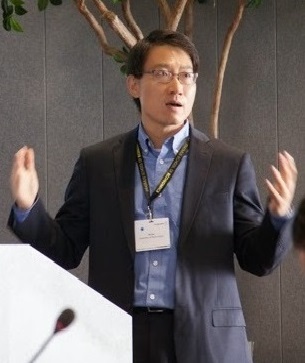
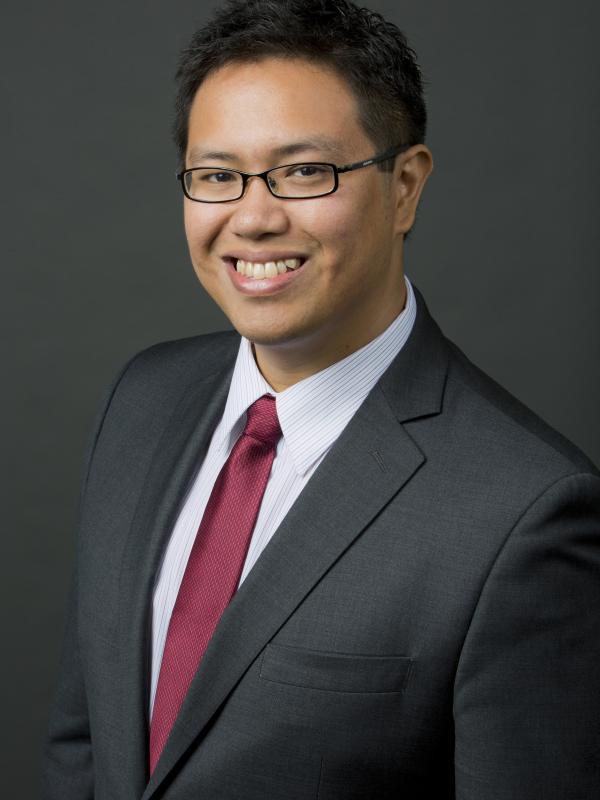
Adam Zylbersztejn is an Assistant Professor (Maître de conférences HDR) at Université Lumière Lyon 2 and affiliated with GATE Lyon Saint-Etienne, a research group in economics. He holds a PhD from the Paris School of Economics (2013) and previously conducted postdoctoral research at WU Wien (Vienna University of Economics and Business). His research focuses on behavioral economics using experimental methods to study individual and interactive decision processes, particularly in contexts involving trust, strategic uncertainty, and cultural variability. Key research areas include behavioral game theory, experimental finance, and the impact of nonverbal communication in economic interactions. His work has been published in top journals such as Journal of Economic Psychology , Games and Economic Behavior , and Experimental Economics . Recent studies examine topics like anonymity effects in charitable giving, trust in market exchanges under oath, and cognitive processes in asset markets using eye-tracking technology. His ongoing projects include research on risk-incentive tradeoffs and ambiguity framing in decision-making. While no formal academic awards are listed, his work has received press coverage in outlets like Le Monde and CORTEX Mag . He collaborates widely with institutions such as GATE-LSE and the Paris School of Economics, contributing to both theoretical and applied economic inquiry.
Dr. Juan Manuel Berbel Pineda is a full Professor at the Department of Business Organization and Marketing at Universidad Pablo de Olavide, Spain. His academic work focuses on tourism economics, sustainable tourism practices, and international business strategies, particularly within the hotel industry and textile sector. Key research areas: Tourism Economics, Sustainable Tourism, International Business Strategy Affiliated with IMEGS (Innovation and Marketing for a Sustainable Global Environment) research group Doctoral Programs: Innovation, Entrepreneurship and Family Business His research explores tourism competitiveness and internationalization patterns through empirical studies on hotel chains in Latin America, fair trade impacts in emerging economies, and post-COVID-19 rural tourism development. Analysis of 15 recent publications reveals strong emphasis on structural equation modeling, cross-cultural comparisons, and market segmentation strategies. Current academic activity includes international collaborations with institutions like Massey University, Varna University of Management, and University of Mauritius. His 2020 work on Ecuadorian chia seed exports demonstrates methodology for EU market selection using 7-dimensional indicators, while his sustainable tourism studies provide frameworks for pandemic-era tourism revival through non-overcrowding strategies.
Christopher J. Palmer is an Associate Professor of Finance at the MIT Sloan School of Management, specializing in financial decision-making, credit markets, and policy interventions. His research focuses on how individuals and institutions respond to economic upheavals in areas like bankruptcy, retirement savings, and real estate. He holds a PhD in Economics from MIT and a BA in Economics and Mathematics from Brigham Young University. Palmer’s work has been published in top journals such as the American Economic Review , Journal of Finance , and Review of Financial Studies . He explores topics including racial disparities in bankruptcy outcomes, consumer payment behavior, and the effects of quantitative easing. His research is supported by affiliations with the National Bureau of Economic Research (NBER) and the Jameel Poverty Action Lab (J-PAL). Key honors include the 2022 Jamieson Prize and the 2019 Society for Financial Studies Best Paper Award. Palmer has contributed to public debates on policy issues like rent control and retirement savings through media outlets such as The New York Times , Bloomberg , and Vox .
Nikolai Roussanov is the Moise Y. Safra Associate Professor of Finance at the Wharton School, University of Pennsylvania, and a Faculty Research Fellow at the National Bureau of Economic Research. His research spans asset pricing, econometrics, household finance, and macroeconomics, with a focus on market dynamics and behavioral economic factors. His research interests include: Asset pricing anomalies and risk factor modeling Household financial decision-making under uncertainty Macroeconomic impacts on commodity and currency markets Behavioral finance and mental accounting mechanisms Recent publications analyze inflation risks across asset classes, corporate bond valuation, behavioral retirement strategies, and the role of leisure economics in declining work hours. His work frequently integrates empirical finance and econometric methodologies. Scientific contributions include: Faculty Research Fellow, National Bureau of Economic Research His scholarship bridges technical financial modeling with real-world economic phenomena, covering topics like oil price shocks, mortgage liquidity, and systemic market failures.
Zhi Da is the Howard J. and Geraldine F. Korth Chair in Finance and Professor of Finance at the University of Notre Dame , Mendoza College of Business, Department of Finance. He completed his Ph.D. in Finance at Northwestern University’s Kellogg School of Management (2006), preceded by an M.Sc. in Financial Engineering from the National University of Singapore (2001) and a B.B.A. with First-Class Honors (1999) from the same institution. Holding editorial roles at Journal of Finance , Management Science , Review of Financial Studies and several other top journals, he is a leading voice in empirical finance research. Education Ph.D. in Finance, 2006 – Kellogg School of Management, Northwestern University M.Sc. in Financial Engineering, 2001 – National University of Singapore B.B.A. (1st Class Honors), 1999 – National University of Singapore Research Interests Zhi Da’s scholarship sits at the intersection of asset pricing , behavioral finance , and market microstructure . He investigates how investor attention, institutional trading, liquidity frictions, and information flows jointly determine the cross-section of expected returns. His work delves into retail margin trading, the role of pension-fund flows in exchange-rate dynamics, the informational content of SEC filings, and the efficiency of short-selling mechanisms. By combining large-scale data analytics, textual analysis, and structural modeling, he uncovers novel predictors of returns ranging from presidential approval ratings to real-time attention measures. Recent projects explore fractional trading ’s impact on price efficiency, hedging demand as a driver of intraday momentum, and the hidden effort problem in delegated portfolio management. These themes collectively advance our understanding of limits to arbitrage and the formation of extrapolative beliefs. Publication Landscape Spanning 2025 back to 2009, his 15 most recent articles in Journal of Finance , Review of Financial Studies , Management Science , Journal of Financial Economics , and Journal of Financial and Quantitative Analysis converge on three broad motifs: (1) micro-level trading frictions—liquidity costs, margin requirements, and short-selling constraints; (2) macro-finance linkages—exchange rates, fiscal policy, and global capital flows; and (3) information economics—attention allocation, media analytics, and regulatory disclosures. The collective evidence demonstrates that seemingly small trading or informational frictions aggregate into large, persistent cross-sectional return predictability. Honors and Awards 2017 William F. Sharpe Award for Best Paper, Journal of Financial and Quantitative Analysis Lead-article distinctions in Journal of Finance , Review of Financial Studies , and Management Science Featured coverage in SmartMoney and CNBC Teaching & Mentorship At Notre Dame’s Mendoza College, Professor Da teaches Investments (undergraduate and MBA) and Fixed Income Securities , integrating cutting-edge research insights into the curriculum. While specific advisees are not listed, his extensive co-author network (22+ recurring collaborators) attests to a vibrant mentoring environment. Laboratory & Data Resources He publicly distributes the NAT (Net Arbitrage Trading) dataset, a stock-quarter panel of arbitrage positions used in Chen, Da & Huang (2019). This resource has become a standard tool for researchers studying arbitrage capital movements.
Liming Feng is an Associate Professor at the Department of Industrial and Enterprise Systems Engineering, University of Illinois at Urbana-Champaign, and has served as Director of the Master of Science in Financial Engineering (MSFE) program since 2022. His academic career at the university spans from Assistant Professor (2006-2012) to his current role. He earned his Ph.D. in Industrial Engineering and Management Sciences from Northwestern University (2006), an M.S. in Mathematics from Northwestern University (2000), and a B.S. in Mathematics from Beijing Normal University (1997). Ph.D., Industrial Engineering and Management Sciences, Northwestern University, 2006 M.S., Mathematics, Northwestern University, 2000 B.S., Mathematics, Beijing Normal University, 1997 Feng’s research focuses on Financial Engineering, Stochastic Modeling, and Computational Methods. He has contributed extensively to quantitative finance, particularly in options pricing, portfolio optimization, and market impact models. His work leverages advanced numerical methods, Fourier transforms, and stochastic calculus to solve complex financial problems. The trends in his publications highlight expertise in Levy processes, jump diffusion models, and numerical algorithms for financial derivatives. He has developed innovative techniques for Bermudan options pricing, discretely monitored barrier options, and portfolio deleveraging strategies. His articles often intersect Operations Research with Financial Engineering, emphasizing computational efficiency and mathematical rigor. ISE Faculty Fellow (2025) INFORMS Financial Services Section Best Student Research Paper (2013) First runner-up of the 2012 Morgan Stanley Prize for Excellence in Financial Markets Feng has served on editorial boards for Operations Research Letters and Mathematical Finance . He has been recognized repeatedly for teaching excellence, including the Sharp Outstanding Teaching Award (2011, 2022) and multiple entries in the List of Teachers Ranked as Excellent by Their Students (2007-2024). He currently leads the MSFE program and contributes to curriculum development through courses like IE 522 (Statistical Methods in Finance) and IE 527 (MSFE Professional Development).
Charles D. Sprenger is a Professor of Economics at the California Institute of Technology (Caltech), where he has served since 2020 and held the position of Executive Officer from 2022 to 2025. He is affiliated with Caltech's Division of the Humanities and Social Sciences (HSS) and holds key roles at the Ronald and Maxine Linde Institute of Economic and Management Sciences and the Center for Theoretical and Experimental Social Sciences (CTESS). His external appointments include Board of Editors for the American Economic Review and Associate Editor roles for the Journal of the European Economic Association and Quantitative Economics . His educational background includes a B.A. from Stanford University (2002), an M.Sc. from University College London (2005), and a Ph.D. from the University of California, San Diego (2011). These credentials established his foundation in economic theory and experimental methodology. Sprenger is a leading behavioral and experimental economist specializing in intertemporal decision making and choices under uncertainty. His research designs innovative experiments across diverse contexts—from food deserts in the United States to polio vaccination drives in Pakistan—to test the validity of standard economic models. His work consistently reveals significant deviations from rational choice theory, particularly regarding time inconsistency, risk preferences, and reference-dependent behaviors. He has pioneered methods for measuring time preferences and testing cumulative prospect theory, with implications for public policy and behavioral interventions. Analysis of his 15 most recent publications (2015-2024) shows a cohesive research program centered on behavioral anomalies in decision making. His work bridges laboratory precision with real-world field applications, demonstrating how psychological factors like procrastination and loss aversion manifest in high-stakes environments. Key trends include the development of tailored incentive structures, validation of rank-dependent utility models, and exploration of dynamic inconsistency across domains including health, finance, and public policy. His notable recognition includes: Sloan Foundation Fellowship (2016-2018) Sprenger actively contributes to the academic community through editorial leadership and collaborative research. His work has been featured in Caltech news for projects like "Reducing Procrastination with Tailored Incentives" (2023) and the graduate summer program "Experimental Economics in Theory and Practice" (2023). Though specific advisees aren't listed, his teaching of advanced courses like Experimental Economics (SS 212 abc) indicates mentorship of graduate researchers. He secures significant research funding through fellowships and institutional support, enabling large-scale field experiments. As a core member of CTESS, Sprenger leads a multidisciplinary team conducting cutting-edge experimental economics research. His lab integrates theoretical modeling with empirical validation, focusing on how behavioral insights can improve policy design in areas like tax compliance, vaccination programs, and financial decision making. Current work emphasizes scalable interventions for procrastination and preference-based incentive customization.
Jose Miguel Abito ("Mike") is an Associate Professor in the Department of Economics at The Ohio State University (OSU), serving as Director of Undergraduate Studies. He holds a PhD from Northwestern University, with prior roles including Assistant Professor at the Wharton School, University of Pennsylvania, where he won a teaching award. His research focuses on applied microeconomics, particularly industrial organization, regulation, and environmental economics. He examines topics such as regulatory incentives, consumer misinformation effects, and antitrust methodologies in sectors like electricity, extended warranties, and infant formula. Education: PhD in Economics from Northwestern University (Evanston, IL), graduate studies in Econometrics and Mathematical Economics at Toulouse, France, and undergraduate studies in Singapore. Research Interests: Mike explores how regulatory frameworks impact market efficiency, consumer welfare, and firm behavior. Recent work analyzes renewable energy market design, electricity procurement dynamics, and demand spillovers in welfare programs like WIC. His methodologies bridge theoretical models and empirical analysis to address complex policy questions. Professional Activities: Currently serves as a University Senator (2023-2026), member of the Salmon P. Chase Center Academic Advisory Committee, and faculty advisor for the Quantitative Finance Club at OSU. Previously involved in inclusive teaching initiatives at Wharton. Awards: Recognized with a teaching award during his tenure at Wharton School. Grants & Advising: Advises on projects related to infant formula markets, wage dynamics, and environmental policy. Engaged in collaborative research on green jobs, regulatory auditing frameworks, and productivity analysis.
Dr. Shan Lu is a Lecturer in Finance at the Department of Accounting and Finance, Kent Business School, University of Kent, since August 2021. He previously held positions at the University of Aberdeen and the University of Bradford and earned his PhD from the University of Aberdeen. Research interests: Financial derivatives, option pricing, and quantitative finance. His work focuses on volatility modeling, risk-neutral density estimation, and computational finance, with publications in journals such as the European Journal of Finance, Journal of Futures Markets, and Economics Letters. Teaching: Covers financial markets, derivatives, econometrics, and quantitative methods at undergraduate and postgraduate levels. Scientific awards: Fellow (FHEA) of Higher Education Academy Advising: Offers PhD supervision in topics aligned with his research interests, including financial derivatives and quantitative finance. He emphasizes collaboration on research ideas directly related to his expertise. Publications: Recent work explores volatility dynamics in VIX/VXX options, risk-neutral density extraction, and implied volatility forecasting, leveraging computational methods and empirical finance techniques.
Stefano NASINI is an Associate Professor at the University of Lille 3, specializing in Quantitative Methods within the Economics and Mathematics Sciences. He holds a HDR (Habilitation à Diriger des Recherches) from the University of Lille 3 (2021), a Ph.D. in Statistics and Operations Research from the Polytechnic University of Catalonia (2015), and a Master in Statistics (2011). His research focuses on optimization, complex networks, statistical inference, and microeconomic applications. He has held academic positions including a post-doctoral role at IESE Business School (2014–2016) and a visiting researcher role at the University of Lisbon (2014). His work spans scheduling optimization, network analysis, financial contagion modeling, and energy system planning. Key contributions include specialized algorithms for large-scale optimization problems and frameworks for decentralized portfolio management. He is a member of the LEM research group and teaches courses in optimization, econometrics, and social network analysis at the Grande École and MSc levels. Publications highlight interdisciplinary applications, including network-based diffusion models, multi-market financial strategies, and dynamic choice analysis. His research bridges theoretical advancements in operations research with practical challenges in economics, energy, and transportation systems. No scientific awards are explicitly listed in the provided materials. His advising roles and grants are not detailed here, but his extensive publication record reflects active collaboration within academic and applied domains.
Suzanne S. Lee is an Associate Professor of Finance at the Scheller College of Business, Georgia Institute of Technology, where she has been a faculty member since 2005. She also serves as the Ph.D. Coordinator, playing a key role in graduate education and research training. Her educational background is highly quantitative and interdisciplinary: Ph.D., University of Chicago MBA, University of Chicago M.S. in Statistics, University of Chicago Dr. Lee's research lies at the intersection of asset pricing and financial econometrics, with a strong focus on jump processes, market microstructure, and derivative markets. She investigates how sudden price movements (jumps) impact asset returns, risk, and information flow in financial markets. Her work extends to cryptocurrency, currency markets, and carry trade strategies, combining theoretical rigor with empirical validation using high-frequency data. The analysis of her recent publications (2008–2024) reveals a consistent and influential research program centered on detecting and modeling jumps in financial time series. Her work spans equity, currency, and cryptocurrency markets, often employing advanced nonparametric and econometric techniques. A recurring theme is the role of jumps in pricing anomalies, risk measurement, and market efficiency, with increasing attention to digital assets in recent years. Dr. Lee is actively engaged in the academic community through editorial service: Associate Editor, Journal of Banking and Finance Associate Editor, Asia-Pacific Journal of Financial Studies She has presented her research at premier conferences such as the American Finance Association, European Finance Association, Econometric Society, and Society for Financial Econometrics. Her publications appear in the most prestigious journals in finance and econometrics, including the Journal of Finance , Review of Financial Studies , Journal of Financial Economics , and Journal of Econometrics . While specific grant details are not listed, her sustained publication record in top journals indicates significant research funding and academic impact. She advises Ph.D. students through her role as Ph.D. Coordinator, though individual advisees are not named in the text. Dr. Lee's work contributes to both theoretical and applied finance, improving our understanding of market dynamics, risk modeling, and asset pricing under extreme events. Her research has practical implications for risk management, trading strategies, and financial regulation.
Demetris Christodoulou is an Associate Professor in Accounting, Governance and Regulation at the University of Sydney. He holds a BEcon from Piraeus University, an MSc(Fin) from the University of York (UK), and a PhD from Athens University of Economics and Business (AUEB). His research focuses on applying data analytics, econometrics, and visualization techniques to financial analysis, equity valuation, life insurance, and financial advice. He co-directs the PEMA research group, specializing in productivity and performance measurement analytics, and previously led the MEAFA research group (2007–2022). He has collaborated extensively with industry partners including Deloitte and Australian insurers, and developed training programs for over 1,000 executives. His work includes open-source contributions to Stata software and the Graph Workflow platform, alongside $662k in workshop-generated funds supporting academic programs. He has advised multiple PhD students and taught at leading universities globally. Education: BEcon in Economics (Econometrics), Piraeus University MSc in Finance, University of York (UK) PhD in Accounting and Financial Analysis, Athens University of Economics and Business His research interests span financial reporting models, life insurance underwriting strategies, and behavioral finance. Recent projects address dishonesty mitigation in insurance disclosures and the adviser effect on customer disclosures. He has published widely in top journals like the Review of Accounting Studies and Stata Journal , and his work was featured in The Australian for insights on insurance fraud reduction. He maintains international collaborations, including visiting roles at Columbia Business School and the University of Cyprus, and serves on advisory boards for organizations like Behaviour.ai. Publications highlight methodological innovations in econometrics and visualization, with 2025's upcoming Stata Journal paper advancing time-series analysis techniques. His grants include partnerships with industry on longitudinal studies of insured lives, aiming to improve risk modeling and public policy insights.
Ricardo Caballero is the Ford International Professor of Economics at the Massachusetts Institute of Technology's School of Humanities, Arts, and Social Sciences, where he previously served as Chairman of the Economics Department from 2008 to 2011. A leading scholar in macroeconomics and financial economics, his research focuses on safe assets, monetary policy, financial crises, and international economics. His research interests center on the macroeconomic implications of financial frictions, with particular emphasis on safe asset shortages, risk premium dynamics, and monetary policy transmission mechanisms. Caballero's work has pioneered the risk-centric approach to macroeconomics, explaining phenomena such as the Wall Street/Main Street disconnect, global imbalances, and the collapse of interest rates through the lens of safe asset scarcity and risk intolerance. His research bridges theoretical modeling with empirical analysis of financial crises and policy interventions. Caballero's recent publications demonstrate a consistent focus on financial conditions indexing, monetary policy frameworks, and the interaction between financial markets and the real economy. His work increasingly examines how central banks can target financial conditions directly and how risk premia evolve during crises, with applications to pandemic-era economic policy and zero lower bound environments. 2002 Frisch Medal of the Econometric Society Smith Breeden Prize by the American Finance Association Journal of Finance 2014 Brattle Group Prize 2022 Banque de France-TSE Senior Prize in Monetary Economics and Finance Elected Fellow of the Econometric Society (1998) Elected Fellow of the American Academy of Arts and Sciences (2010) As an NBER Research Associate and frequent policy advisor, Caballero has influenced central bank thinking globally through his work on financial stability, monetary policy frameworks, and global imbalances. His research has informed policy discussions at the Federal Reserve, IMF, and multiple central banks regarding crisis management, safe asset creation, and the appropriate monetary response to financial shocks. Caballero maintains active collaborations with major financial institutions and central banks worldwide, translating theoretical insights into practical policy frameworks.
Dr. Daniel Dutton is an Associate Professor in the Department of Community Health and Epidemiology at Dalhousie University's Faculty of Medicine, based at the Dalhousie Medicine New Brunswick campus in Saint John. His research focuses on how social environments influence health outcomes and the role of government policies in mitigating these impacts, particularly in areas like poverty, homelessness, and health economics. He holds adjunct roles at the University of New Brunswick (Sociology) and is the Scientific Director of APPTA, a hub bridging aging research and policy. He teaches courses in epidemiology, population health, and statistics. Education: PhD in Community Health Sciences (University of Calgary) MA in Economics (University of Calgary) BA Honours in Economics (Queen’s University) Research Interests: Dr. Dutton examines population-level health determinants, government policy effectiveness, and socioeconomic disparities. His work employs large datasets and econometric models to analyze topics such as homelessness incidence, healthcare cost savings through preventive measures, and the distributional impacts of public spending. Key Contributions: Scientific Director of the APPTA aging and technology hub. Co-founder of the IMPART research collaborative. Author of influential studies on Housing First programs, opioid prescribing patterns, and the fiscal benefits of guaranteed annual income policies. Advising & Grants: Supervises multiple MSc students and has collaborated on grants analyzing healthcare utilization in New Brunswick and Alberta. His work often intersects with policy-making, emphasizing actionable insights from quantitative research. Labs & Teams: Leads the Dutton Research Group, which uses mascot Odin the Saint Bernard to foster team cohesion. Active in interdisciplinary collaborations across public health, sociology, and economics.
Konstantinos Drakos is a Professor at the Department of Accounting and Finance, Athens University of Economics and Business (AUEB). Previously, he served as Assistant Professor at AUEB (2009–2012), Assistant Professor at the University of Patras (2003–2008), and Lecturer at the University of Essex (2001–2002). He holds a PhD in Economics from the University of Essex, preceded by an MSc and undergraduate studies in Economics at the University of Athens. His research focuses on Applied Financial Economics and the Economics of Security, with recent work analyzing hedge fund leverage, geopolitical risk impacts, cryptocurrency markets, and green banking. Teaching responsibilities include Macroeconomic Theory, Finance for Banking, and Risk Management at both undergraduate and postgraduate levels. Drakos' publications span over two decades, addressing topics such as terrorism's economic effects, bank lending behavior, and investment under uncertainty. His recent articles (2022–2025) emphasize cryptocurrency dynamics, geopolitical risk interactions, and financial stability in green banking. Notable themes include market volatility, capital allocation under uncertainty, and policy responses to systemic risks. No scientific awards are listed in the provided materials. His research has explored structural shifts in financial risk, macroeconomic sentiment, and cross-market linkages following major global events like 9/11 and the 2008 crisis. Drakos has advised on policy-related topics related to financial markets and regulatory frameworks, though specific grants or lab affiliations are not detailed here.