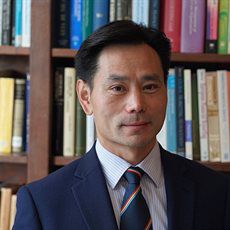
Dr. David Baxter is an Associate Professor at the University of Southampton, specializing in innovation management, Agile methodologies, and knowledge management within innovation processes. He joined the university in 2014 and previously held a Lecturer position at Cranfield School of Management. His research focuses on understanding how firms innovate successfully, particularly through studies on Agile adoption in public and private sectors, customer insight methods in R&D, and conceptual frameworks for innovation failure. Dr. Baxter teaches innovation management, digital business, and entrepreneurship across MSc, BSc, MBA, and executive programs. He supervises multiple PhD students in Business Studies & Management and actively engages in interdisciplinary research through affiliations with the Centre for Inclusive and Sustainable Entrepreneurship and Innovation and the Advanced Project Management Research Centre. His recent work explores the intersection of generative AI in artistic innovation, digital transformation's impact on Agile practices, and the role of cognitive biases in new product development. He consults on innovation processes, including the FlyZero initiative, and serves on the Council of the Research and Development Management Association. His research projects are funded by entities like Research England and the Association for Project Management.
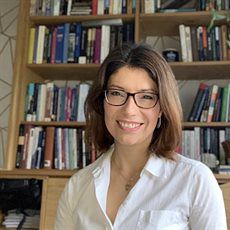
Dr. Jennifer Oates is a Senior Personal Tutor and Lead for Wellbeing in the School of Health Sciences at the University of Surrey, where she also holds the role of Senior Teaching Fellow. Her academic career includes previous roles as Lecturer/Senior Lecturer in Mental Health Nursing at King's College London (2016–2022), Specialist Adviser for the Care Quality Commission (2012–2021), and Mental Health Act Reviewer. She holds a PhD in Mental Health from City University of London (2016), complemented by degrees from the University of Leeds, including a BA in English Language & Literature (1997) and an MA in Social Research (2002). Her research focuses on mental health and wellbeing among healthcare professionals and students, mental health ethics, and peer support strategies in higher education. She supervises PhD projects exploring Recovery College collaborations and peer support systems. Dr. Oates is an Associate Editor for the Journal of Interprofessional Care and contributes to editorial boards of mental health publications. She also serves as a Specialist Lay Member of Mental Health Act Tribunals. Her recent work examines wellbeing interventions for NHS staff during the pandemic, curriculum impacts on student wellbeing, and workforce sustainability in forensic mental health settings. She advocates for holistic approaches to mental health education and policy, emphasizing co-production between practitioners and service users.
Professor Mathew White serves as Deputy Dean (International) in the Faculty of Arts, Business, Law, and Economics (ABLE) at the University of Adelaide, where he holds the title of Professor of Education. He earned his PhD in Education from the University of Adelaide in 2004 while teaching full-time in secondary schools. His academic career began with part-time lecturing at the Melbourne Graduate School of Education (2006–2018), transitioning to academia as an Associate Professor in 2018 and promoted to Professor in 2025. His leadership spans strategic internationalization efforts across ABLE’s seven schools, overseeing over 80 global partnerships. He also serves as an Honorary Principal Fellow at the University of Melbourne and has held visiting roles at the University of Oxford. Research interests include integrating wellbeing science into education leadership, policy, and pedagogy, focusing on theoretical frameworks like PERMA, character strengths, and the 'wellbeing learning poverty cycle.' He has authored eight books and 69 peer-reviewed publications, recognized with awards such as the Hedley Beare Award (2024) and the Stephen Cole the Elder Award (teaching excellence). Education: PhD in Education (University of Adelaide, 2004) Professional Roles: Deputy Dean (International), ABLE; International Ambassador, University of Adelaide Grants: Secured funding from institutions like The Moreton Bay Colleges and Catholic Education West Australia (e.g., $35,000 in 2021–2022). Teaching focuses on wellbeing in education, leadership, and pedagogy, with courses like Introduction to Wellbeing in Education (Masters level). He supervises PhD/Masters students in wellbeing education, leadership, and curriculum development. Fellowships include Senior Fellow of the UK Higher Education Academy and Fellow of the Royal Society for the Encouragement of Arts. Labs/Teams: Leads ABLE’s international strategy team and collaborates with global institutions through the Division of External Engagement. Research projects emphasize interdisciplinary wellbeing models and post-pandemic educational recovery.
Shoshanna Fine, PhD, is an Assistant Research Professor at the Johns Hopkins Bloomberg School of Public Health's Department of Mental Health. Her work focuses on mental health and psychosocial development among marginalized and culturally diverse populations globally, particularly adolescents in adversity. She leads the Global Early Adolescent Study (GEAS), investigating gender socialization impacts in low-resource urban environments across five continents. Education: PhD in Public Health, Johns Hopkins Bloomberg School of Public Health (2020) MPH in Public Health, Harvard T.H. Chan School of Public Health (2016) AB in Liberal Arts, Harvard College (2010) Research Interests: Mental health in conflict/displacement settings Violence and substance use interrelationships Culturally appropriate interventions in low-resource contexts Gender socialization's impact on adolescent health Awards: 2021 Charles E. Irwin New Investigator Award 2020 Alberta B. Szalita Award Multiple fellowships including Harvard's Center for Public Interest Careers (2010) Key Projects: GEAS, UNHCR mental health tracking, Burundian refugee adolescent interventions, and multi-country studies on emotional/behavioral problems. Active in Thailand, Indonesia, Kenya, Zambia, and Papua New Guinea.
Desmond Upton Patton is the Brian and Randi Schwartz University Professor at the University of Pennsylvania, with joint appointments in the School of Social Policy & Practice and Annenberg School for Communication, and a secondary appointment in the Department of Psychiatry at the Perelman School of Medicine. His work bridges social work, data science, and digital sociology to address issues like social media's impact on marginalized communities, AI bias, and violence prevention. Education: B.A., University of North Carolina at Greensboro (2004); M.S.W., University of Michigan (2006); Ph.D., University of Chicago (2012). Research focuses on social media's role in trauma, grief, and violence among Black and Hispanic youth. He developed the Contextual Analysis of Social Media (CASM) methodology to address cultural biases in AI. Key projects include studying grief pathways on Twitter, digital mourning practices, and algorithmic equity in child welfare systems. Notable awards include the Deborah K. Padgett Early Career Achievement Award (2018) and fellowships at Harvard's Berkman Klein Center and the Harvard Kennedy School. He advises platforms like Twitter and Spotify on safety and bias. Grants include an NSF-funded program supporting STEM researchers from underrepresented backgrounds. He directs SAFELab, which explores digital safety and equity. Courses taught include 'Advocacy in Emergent Technology' and 'Journey to Joy: Designing a Happier Life.' Future work emphasizes AI ethics, inclusive tech policy, and leveraging community insights to shape equitable digital tools.
Audrey A. Trainor is a Professor of Special Education and Content Director for Programs in Special Education at New York University's Steinhardt School of Culture, Education, and Human Development. Her research focuses on equity and diversity in special education, particularly postsecondary transitions for students with learning and behavioral disabilities, including multilingual learners. She employs capital theory to examine how economic, cultural, and social capital influence special education processes. Trainor served as Principal Investigator for an IES-funded study (2017–2022) exploring postsecondary success for multilingual learners with disabilities. She has authored multiple books, including Transition by Design: Improving Equity and Outcomes for Adolescents with Disabilities (2017), and edited special journal issues on qualitative research and diversity in special education teaching. Her awards include the 2023 Multiple Voices Publication Award, 2015 DCDT Sitlington Research Award, and 2014 Gershman/Ahler Distinguished Lecturer in Qualitative Research. Trainor previously served as President of the Council for Exceptional Children’s Division on Career Development and Transition. Her work emphasizes inclusive transition education, culturally responsive practices, and leveraging community resources to support vulnerable populations. Key research themes include identity-informed transitions, pandemic impacts on students with disabilities, and the role of self-determination in postsecondary enrollment. Her articles frequently address intersectional methodologies, policy implications, and systemic barriers faced by marginalized students in education systems.
Melissa M. Lee is the Klein Family Presidential Associate Professor of Political Science at the University of Pennsylvania and Director of the World House Student Fellows Program at Perry World House. Her research focuses on the international and domestic politics of statebuilding, sovereignty, and state development, emphasizing how foreign subversion undermines state authority. She holds a Ph.D. from Stanford University and a B.A. from the University of California San Diego. Lee’s work bridges historical and contemporary case studies, including Russian relations with post-Soviet states, Malaysian subversion of the Philippines, and Thai subversion of Vietnam-occupied Cambodia. Her book *Crippling Leviathan* (2020) won major awards, including the APSA Merze Tate Award and Perry World House’s Emerging Scholar Prize. She also contributes policy writing to *Foreign Affairs* and the Irregular Warfare Initiative. Previous roles include Assistant Professor at Princeton University and Lightning Scholar at Perry World House. Her research has been published in top journals like the *American Political Science Review* and *International Organization*. Awards: APSA Merze Tate Award (2016) APSA European Politics and Society Section Best Article Prize (2020) Perry World House Emerging Scholar Global Policy Prize APSA Foreign Policy Section Honorable Mention for Best Book Her work examines dependent territories in international relations, the historical roots of state weakness, and the interplay between conflict and governance. Lee’s scholarship integrates quantitative and qualitative methods to analyze how external actors shape domestic political dynamics.
Theo Kindynis is a Senior Lecturer in Criminology at the Department of Sociology and Criminology, City St George's, University of London, where he joined in March 2024. Previously, he taught at Goldsmiths, University of London, and the University of Roehampton. His academic affiliations reflect a strong commitment to critical, ethnographic, and spatially informed criminological inquiry. PhD in Criminology, University of Greenwich, United Kingdom MPhil in Criminological Research, University of Cambridge, United Kingdom BA Hons in Sociology, University of Kent, United Kingdom Fellowship of the Higher Education Academy, Higher Education Academy, United Kingdom Theo Kindynis’s research centers on the intersections of urban space, lawbreaking, and social control. He is a leading expert on deviant subcultures, particularly graffiti writing and urban exploration, having conducted long-term ethnographic fieldwork in London. His work bridges empirical investigation with theoretical innovation, most notably through co-pioneering the concept of "ghost criminology" —a framework that examines the haunting aftereffects of crime, violence, and punishment. His methodological contributions include publishing legal, ethical, and practical guidance for criminological ethnographers researching criminalized groups, especially in digital and high-surveillance environments. His recent publications reveal a sustained engagement with spatial criminology, subcultural practices, and the ethics of ethnographic research. Themes across his work include the policing of urban aesthetics, the affective engineering of consumer spaces, the spectral presence of past violence, and the information security challenges faced by researchers in sensitive fields. His scholarly output combines theoretical rigor with grounded empirical insight, frequently published in top journals such as The British Journal of Criminology and Crime, Media, Culture . Theo Kindynis has contributed to public discourse as an expert commentator on graffiti and urban exploration, appearing in media outlets including the BBC Evening News and The Guardian. His work on information security for ethnographers addresses a critical gap in methodological literature, drawing from journalism, activism, and digital rights advocacy. Co-authored the foundational book Ghost Criminology: The Afterlife of Crime and Punishment (NYU Press, 2022) Pioneered methodological guidance on protecting ethnographic data from state and non-state threats Developed innovative approaches to anonymization and data protection in high-risk research Advocates for ethical rigor in researching criminalized populations As a supervisor, Theo welcomes doctoral proposals on urban space, deviant subcultures, and ethnographic methods. He is actively involved in shaping the future of criminological theory and methodology, particularly in relation to digital surveillance, researcher safety, and the cultural afterlives of crime. Theo Kindynis is affiliated with research teams exploring the intersections of space, crime, and memory. His ongoing projects continue to develop the framework of ghost criminology, while expanding into issues of algorithmic surveillance, border control, and the digital footprints of academic research. His work is increasingly relevant in an era of automated state profiling and data-driven social control.
Echu Liu is a Professor in the Department of Health Management and Policy at the College for Public Health and Social Justice, Saint Louis University. He also serves as the Director of the Ph.D. in Public Health Studies program, contributing significantly to academic leadership and public health education. Education: Ph.D. in Economics, University of Southern California, 2006 M.B.A. in Finance, California State University, Los Angeles, 2000 M.A. in Economics, National Taiwan University/University of Southern California, 1995/2003 B.A. in Economics, National Taiwan University, 1994 Dr. Liu's research focuses on health policy, health economics, data analytics, and health insurance literacy . His work examines how socioeconomic factors, health literacy, and insurance understanding influence healthcare access, financial burden, and health outcomes across diverse populations, including international students, older adults, and racial minorities. His interdisciplinary approach integrates economics, public health, and biostatistics to inform policy and improve health equity. His recent publications (2009–2025) reflect a consistent trajectory in health economics and policy analysis , with a strong emphasis on health insurance literacy, medical debt, pandemic behavior, and global health disparities . The studies employ rigorous econometric and statistical methods, often using large national surveys from the U.S., China, and India. Key themes include the impact of policy interventions, socioeconomic determinants of health, and behavioral responses to healthcare systems. Professional Service: Associate Editor, Health Economics Section, Frontiers in Public Health Dr. Liu teaches Biostatistics, Health Care Economics, and Healthcare Financial Management , equipping students with analytical and financial tools for public health leadership. While specific advisees are not listed, his role as Ph.D. program director and frequent collaboration with researchers suggests active mentorship. His research has been supported by institutional and likely external funding, though specific grants are not detailed. He maintains an active scholarly presence through high-impact journal publications and editorial contributions. Laboratory and Research Teams: While no formal lab is mentioned, Dr. Liu leads and collaborates with interdisciplinary research teams focused on health policy analysis, data-driven public health, and socioeconomic determinants of health. His work often involves partnerships with public health scholars, economists, and data scientists.
Professor Yufeng Zhang is a Chair in Operations Management and Head of the Department of Management at Birmingham Business School, University of Birmingham. He is also a Senior Fellow of the Higher Education Academy and a Fellow of the Alan Turing Institute. His academic journey began at Shanghai Jiao Tong University, continued at the Technical University of Berlin, and culminated with a PhD from the University of Cambridge, where he also worked as a Research Associate before joining Birmingham in 2009. PhD, Engineering – University of Cambridge MSc/Dipl-Ing, Global Production Engineering – Technical University of Berlin BEng, Mechanical Engineering & Automation – Shanghai Jiao Tong University BEng, International Finance – Shanghai Jiao Tong University PG Cert in Learning & Teaching in Higher Education Yufeng Zhang’s research focuses on sustainability, digitalisation, engineering innovation, and global network operations. His work integrates engineering and management perspectives, employing qualitative, quantitative, and simulation methods. He has led numerous projects funded by UK, EU, and international bodies, and has published over 80 refereed papers in top-tier journals such as Journal of Operations Management , International Journal of Production Economics , and Journal of Cleaner Production . His recent publications highlight trends in green operations, sustainable supply chains, digital transformation, and network capabilities. The research spans subfields including environmental performance, IoT integration, supply chain flexibility, and servitisation, reflecting a strong interdisciplinary focus on modern operational challenges. His scientific awards include the University’s Excellence in Teaching and Learning Award (2013), Literati Nominations for Highly Recommended Papers (2008, 2013), and recognition as a Senior Fellow of the Higher Education Academy and Turing Fellow. Yufeng has supervised over 20 PhD students and has held key roles such as Deputy Lead for REF2021, Director of Business Programmes with Engineering, Sciences, Law and Languages (2010–2017), and Coordinator of Europe China High Value Engineering Networks (EC-HVEN). He is an External Examiner for multiple universities and a Visiting Professor at Zhejiang University, demonstrating extensive academic leadership and collaboration. He leads and contributes to research labs and networks focused on engineering innovation and sustainable operations, including collaborations with industry and international institutions. His future work continues to explore the intersection of digital technologies, sustainability, and global operations, aiming to shape resilient and responsible business practices.
Professor Daniel Chicksand is a faculty member in the Department of Management at Birmingham Business School, University of Birmingham , where he holds the rank of Professor of Operations and Supply Management . He also serves as the Director of the Distance Learning MBA programme. Daniel has held academic positions at Warwick Business School and Aston Business School prior to joining Birmingham in 2016 as a Reader, being promoted to full Professor in 2021. Education: PhD in Commerce, University of Birmingham (2009) MBA in Business Strategy & Procurement, University of Birmingham (2003) MSc in Industrial Logistics, University of Central England (1996) BSc in Industrial Information Technology (2:1 hons), University of Central England (1995) Postgraduate Certificate in Academic and Professional Practice, University of Warwick (2011–2013) Daniel’s research is centered on Operations and Supply Chain Management , with a strong theoretical foundation in Resource Dependency Theory (RDT) . His work explores power dynamics , value appropriation , and relationship management in buyer-supplier interactions across sectors such as food, construction, and sustainable supply chains. He has a growing interest in servitization and its impact on value creation. His methodological approach is primarily qualitative, using case-based research. The recent publications reflect a consistent focus on power and negotiation in procurement , resilience and disruption in supply chains (including simulation modeling), and sustainability reporting . His research spans both private and public sectors and often involves international collaboration with institutions in the UK, Europe, and the US. Scientific Engagement and Awards: Visiting Lecturer at Audencia Nantes School of Management (France) Visiting Lecturer at Ecole des Ponts ParisTech and Solvay Business School (France/Belgium) Educator for Duke Corporate Education Collaborator with leading researchers from Aston, Cardiff, Cranfield, Loughborough, Linkoping, and Fox Business School Daniel supervises multiple doctoral students and is involved in pilot research projects funded by the British Academy and the Chartered Institute of Logistics and Supply. He also leads two consultancy firms— DDC Solutions Ltd and Opsworks Ltd —delivering bespoke training and education programmes to corporate clients like UBS, KPMG, and Adams Foods. His prior experience as a business owner in African arts and crafts importation provides practical insights into supply chain and operations management, enriching his teaching and research. Laboratories and Research Teams: Member of the Aston Centre for Seritization Research and Practice (2015–present) Collaborative research network across UK, European, and US universities Lead on projects involving discrete-event simulation and gamification in SCM
Professor Stephanie Decker is a leading academic at the University of Birmingham, affiliated with the Birmingham Business School and the Department of Strategy and International Business. She is Professor of Strategy and Co-Vice Chair for Research & Publications at the British Academy of Management (2022–2025). Her interdisciplinary work connects history and the social sciences, particularly in organization studies, strategy, and international business. Her research focuses on business history, especially the historical development of organizations and entrepreneurs in Africa, with attention to multinational corporations and postcolonial transitions. She is a pioneer in developing historical and archival methods for management research, including digital and email archives. She has published extensively in top journals such as Academy of Management Review , Journal of Management Studies , and Business History , and co-edited the Handbook of Historical Methods for Management (2023). Her recent work explores decolonizing curricula, generative AI, and organizational wrongdoing. Stephanie has secured research funding from the ESRC, AHRC, Leverhulme Trust, Newton Fund, Mellon Foundation, and British Academy. She has held visiting appointments at universities in Italy, Denmark, and Germany. Her awards include the Emerald Citations of Excellence (2017), the Henrietta Lawson Prize (2018 and 2021), and Best Paper Awards at the British Academy of Management (2020, 2024). She is a Fellow of the Academy of Social Sciences (2024) and the Higher Education Academy (2013). She supervises doctoral students at the University of Birmingham and the University of Bristol. She is a member of Unilever’s Independent Research Panel and serves on several scientific advisory boards, including those of the Chartered Association of Business Schools and Austrian Society of Business History. She also contributes to professional development for archivists and knowledge managers.
Robert Verburg is an Associate Professor in Technology and Innovation Management at Delft University of Technology, Faculty of Technology, Policy and Management. He is affiliated with the Department of Values, Technology and Innovation and the Section of Economics of Technology and Innovation. He currently serves as the director of the international Master of Technology (MOT) program and teaches courses such as Leadership and Technology Management and strategic leadership for responsible innovation. His research focuses on leadership, managing people, knowledge management, and the future of management, with a strong emphasis on responsible innovation and sustainability. His work bridges qualitative and quantitative methodologies and has been published in leading management journals including the Journal of Management , Leadership Quarterly , and International Journal of Project Management . His recent publications explore organizational trust, innovation barriers in financial firms, virtual project management, and knowledge sharing networks. These works reflect consistent themes in responsible innovation, leadership in technological contexts, and strategic human resource practices. Associate Professor, TU Delft Director, MSc Management of Technology Researcher in Leadership & Innovation Robert Verburg has supervised over 100 Master’s thesis projects and has been involved in curriculum development for the MOT program. He leads an online course on strategic leadership for responsible innovation offered through KIVI. He has participated in the NWO project on Sustainable Business Models, a collaboration between Delft, Erasmus, and Leiden universities, focusing on transformational leadership and shared value measurement. He is affiliated with the research group on Economics of Technology and Innovation and contributes to advancing responsible innovation through both research and education. His work supports the integration of ethical, sustainable, and strategic leadership practices in technology-driven organizations.
Dr. Helen Cai is a Senior Lecturer in International Business and Circular Economy at Middlesex University Business School, where she serves as Programme Leader for the BA International Business Administration and BA Business Management (Top-Up). She also leads the Doctor of Business Administration (DBA) programme delivered in China through a partnership with United Business Institutions (UBI). Additionally, she holds a Full Visiting Professorship at Jiaxing University, China. Her academic leadership extends to editorial roles as Senior Editor of Cogent Business and Management and member of the editorial board of the Journal of World Business . She is Vice President of Marketing for the International Case Study Research Association (ICRA). Dr. Cai’s research focuses on international business, sustainability, green innovation, and corporate environmental governance. She employs advanced methodologies such as fuzzy-set qualitative comparative analysis (fsQCA), econometrics, and scientometric analysis. Her work addresses critical issues including green supply chains, carbon emissions, foreign direct investment, and institutional influences on innovation. The 15 most recent publications highlight a strong trend toward environmental sustainability, circular economy, and data-driven policy analysis. Her recent work spans blockchain in green supply chains, AI in rehabilitation, carbon governance, land use, and migration policy, demonstrating interdisciplinary breadth and policy relevance. Bronze award, The First National Collegiate Olympiad Mathematical Mirror Competition (2022) Honourable Mention, Interdisciplinary Contest in Modelling (2022) First Prize, Asia and Pacific Mathematical Contest in Modelling (2021) Third Prize, THE International Case Competition (2021) Dr. Cai has extensive supervisory experience, currently guiding multiple PhD candidates and having chaired over 30 DBA viva panels. She has supervised over 60 BA, 150 MSc, and 75 MBA dissertations. She has participated in 72 PhD/DBA committees in roles including external examiner, internal examiner, and panel chair. Her grants and funding are not explicitly mentioned, but her research output and editorial roles suggest sustained scholarly engagement. She leads research teams focused on circular economy and international business, and her future work is likely to expand into AI-driven sustainability analytics, cross-border green innovation, and climate governance. Her prior industry experience as a Senior Economist at China’s Central Bank enriches her applied research perspective.
Eric Widera is a Professor of Clinical Medicine in the Division of Geriatrics at the University of California San Francisco (UCSF) School of Medicine. He serves as Director of the Hospice & Palliative Care Service at the San Francisco VA Medical Center, where he leads clinical, educational, and programmatic initiatives. He is a nationally recognized clinician-educator with leadership roles in the American Academy of Hospice and Palliative Medicine (AAHPM) and the Association of Directors of Geriatrics Academic Programs (ADGAP), where he served as past president. Dr. Widera completed his education with a B.S. in Biology from the University of California, Irvine, an M.D. from UCSF, followed by residency in Internal Medicine at Mount Sinai Hospital and fellowship in Geriatric Medicine at UCSF. He further enhanced his academic skills through the Teaching Scholars program and Diversity, Equity, and Inclusion Champion Training at UCSF. His research and academic focus centers on improving care for older adults with serious illness through educational innovation, prognostication, communication, and policy. He is deeply engaged in medical education, having directed the Geriatrics Fellowship at UCSF for over a decade and currently mentoring residents, fellows, and pharmacy trainees. A key interest is the role of digital media in medical education, exemplified by his co-founding of GeriPal, a leading podcast and blog, and ePrognosis, an online prognostic calculator tool. His recent publications span palliative care, Alzheimer’s disease, medical ethics, and health policy, often addressing critical issues in aging and end-of-life care. His scholarly output is extensive and impactful, with recent articles in JAMA , JAMA Internal Medicine , and The New England Journal of Medicine . The body of his work demonstrates a consistent focus on practical clinical challenges, ethical dilemmas, and system-level improvements in care for vulnerable older populations. Themes include prognostic communication, advance care planning, dementia care, and the integration of palliative services across specialties. Dr. Widera has received numerous scientific awards recognizing his excellence, including: Hastings Center Cunniff-Dixon Physician Award (2011) AAHPM Hospice and Palliative Medicine Leaders Under 40 (2015) PDIA Palliative Medicine National Leadership Award (2014) "Visionary in Hospice and Palliative Medicine" Award (2018) Excellence in Teaching Award, Academy of Medical Educators, UCSF (2022) Master Clinician, Council of Master Clinicians, UCSF (2024) He has been the recipient of multiple grants, including the Geriatric Academic Career Award (GACA), and his work has influenced national policy and clinical guidelines. He is an active advisor and educator, shaping the next generation of geriatrics and palliative care leaders. Through his clinical leadership, educational programs, digital platforms like GeriPal, and national advocacy, Dr. Widera plays a pivotal role in advancing the fields of geriatrics and palliative medicine. His work is supported by a robust interdisciplinary team at the San Francisco VA, and he collaborates widely with researchers across UCSF and nationally. His leadership in developing educational resources and digital tools has significantly expanded the reach and impact of geriatrics and palliative care knowledge.