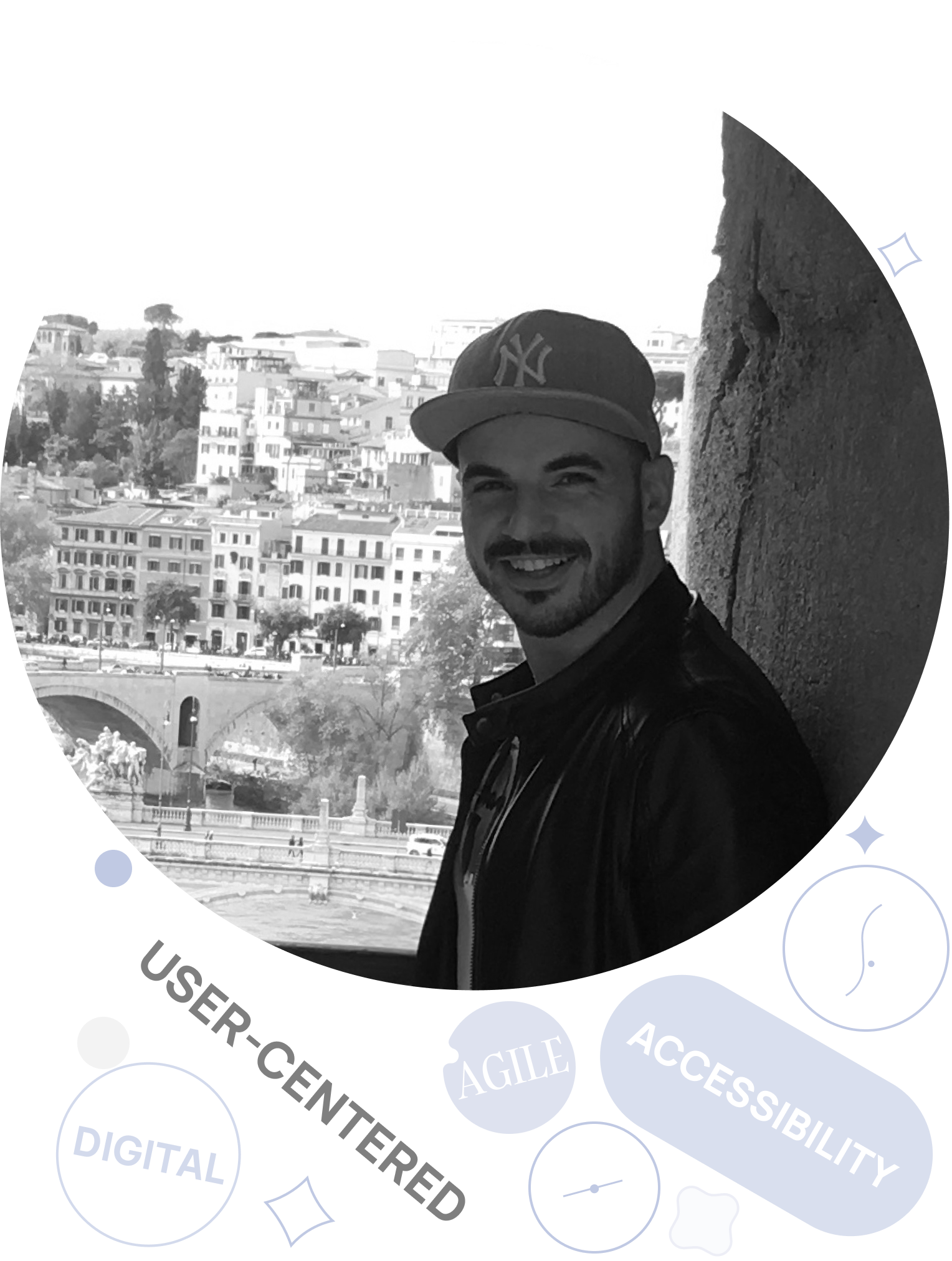
Xavier Alejandro Cerrilla serves as an Adjunct Instructor in the Graphic Design and Interaction Design department. His teaching portfolio includes core courses such as GPRT-305-01: Information Design, IXD-254-01: Information Design, GMGX-602-01: Graduate Information Design, GPRT-153-01: Type 2: Structure, and GPRT-203-03: Type 3: Context. His creative research centers on visual communication systems and typographic structures , with emphasis on how information architecture interfaces with user experience. Key projects include "How Soon is Now(?)" and "Government Onigiri" – experimental works exploring political semiotics through food-based design metaphors, exhibited at Svensson Contemporary through collaborations with Julia Novitch, Ghazaal Vojdani, Kellie Konapelsky, and Stefan Thorsteinsson. His methodology integrates critical theory with hands-on prototyping in both digital and physical media. Professional engagements reveal consistent partnerships with contemporary art institutions, focusing on socially responsive design practices that challenge conventional information hierarchies through typographic innovation and cross-disciplinary collaboration.
Prof. Dr. Marco C. Meier holds the Chair of Business Information Systems and Management Support at the Faculty of Business and Economics, University of Augsburg. His work bridges business, computer science, psychology, and engineering, focusing on digital transformation and human-centered management systems. Research Areas: Business Intelligence & Analytics, Persuasive Technology, Design Thinking, and Theme-Centered Interaction (Ruth Cohn). His team explores technologies like business analytics and information visualization, methods including design science research, and collaborative frameworks for meaningful decision-making. Recent Publications highlight gamification in information security education (HICCS 2023), educational game design (AMCIS 2025), and long-term contributions to ERP systems and SAP integration. Articles emphasize cross-disciplinary approaches to data overload and adaptive management support. Scientific Recognition: Nominated for Gesellschaft für Informatik Dissertation Prize (2000) Best Paper Award at International Conference Wirtschaftsinformatik (2001) Multiple "Best Teacher" and "Lecturer of the Year" awards (2009-2020) Academic Leadership: Former Managing Director of Bavarian Business Informatics Research Network (FORWIN), Deputy Director of Finance & Information Management Competence Center (FIM), and Head of Business Intelligence Department at Fraunhofer Project Group. Supervises PhD students and research assistants like Ramona Reinelt and Raphaela Stöckl. Teaching Philosophy: Advocates active learning through inverted classroom models and blended learning approaches. Requires prior research module completion for thesis supervision. Emphasizes methodological rigor and practical relevance in exams and research projects.
Paolo Chiabert is a Tenured Associate Professor at the Department of Management and Production Engineering (DIGEP) of the Polytechnic of Turin . He is also a member of the CARS@PoliTO Center focusing on Automotive Research and Sustainable Mobility. His academic career spans multiple international engagements, including teaching roles at the Turin Polytechnic University in Tashkent (2013-2014). Research interests include: Enterprise Resource Planning (ERP) Industry 4.0 and 5.0 technologies Internet of Things (IoT) for smart production Lean Manufacturing methodologies Manufacturing Execution Systems (MES) Product Lifecycle Management (PLM) systems His research projects involve: CAPT'N'SEE (2021) - Additive Manufacturing for luxury industry HOME (2018-2021) - Hierarchical Open Manufacturing Europe FlexAGV (2017) - Flexible AGV systems DISLO-MAN (2016-2019) - Industry 4.0 shopfloor operations Scientific contributions focus on IoT integration , digital twin frameworks , and sustainable manufacturing , with recent works on: AI sustainability across product lifecycles One-of-a-kind production optimization IoT taxonomy for Industry 4.0 education Hybrid machine learning for aeroponic systems Knowledge reuse barriers in product development He supervises PhD students including: Temur Turgunboev - Remote multi-agent collaboration Niccolo' Giovenali - Irregular shape packing algorithms Luigi Panza - Technological innovations for sustainable manufacturing Mansur Asranov - IoT for Smart Production Ahmed Mekki Awouda - Industry 5.0 compliant IoT architectures Active in teaching at all levels, with recent courses in: Lean Manufacturing approaches Industry 4.0 production systems Production management fundamentals Graphical communication and mechanical manufacturing Industrial programming laboratory
Francesco Provenzano is a Lecturer in Human Digital Interaction and Design for Digital Retail at Politecnico di Torino , with additional roles as a Contract Professor at the ISTUD Foundation. His work bridges strategic design, user experience (UX), and inclusive digital solutions across finance, healthcare, automotive, and cultural sectors. Department of Architecture and Design (DAD), Politecnico di Torino Host of Design Dialogues Days festival since 2020, focusing on digital, inclusive, and service design International Judge for CSS Design Awards since 2018 Research emphasizes human-centered design , integrating methodologies like Double Diamond and Design Thinking. Key areas include: Digital Service Design Accessibility Standards (ADA, WCAG, Stanca Law) Service Design for Public Sector Ecosystems Inclusive UI/UX Frameworks His publications analyze digital accessibility legislation, stakeholder mapping in service design, and UX portfolio effectiveness. Teaching spans courses on Human Digital Interaction and Design for e-commerce at Politecnico di Torino, plus User Experience for Inclusive Design at ISTUD Business School. He supervises student theses on topics like: Fashion E-commerce Sustainability (Virginia Lugli) Education System Innovation (Mariaserena Di Giovanni) Inclusive Dating Platforms (Elisa Luisi & Enrica Falletti) Professional activities include: Organizing UXplore portfolio reviews Coordinating Design Dialogues Days workshops and hackathons Consulting on digital accessibility and inclusive design strategies
Mats Erling Høvin is an Associate Professor at the University of Oslo's Department of Informatics, affiliated with the Robotics and Intelligent Systems (ROBIN) research group. His academic work focuses on generative design, CAD/CAM systems, rapid prototyping, and evolutionary robotics. Previously, he conducted significant research in Delta-Sigma noise shaping for analog-to-digital converters. Research Interests: Generative design methodologies for manufacturing Computer-Aided Design (CAD) and Computer-Aided Manufacturing (CAM) systems Rapid prototyping and additive manufacturing techniques Evolutionary algorithms applied to robotics and optimization problems Delta-Sigma modulation for analog/digital signal conversion Robotic locomotion and control systems His publications demonstrate a consistent focus on optimization techniques applied to robotics, signal processing, and manufacturing systems. Recent work explores physics-based simulations for medical robotics and generative design for structural optimization. Earlier contributions established foundations in evolutionary robotics, motion capture filtering, and analog circuit design. Høvin teaches courses including IN5590 and IN1080, and leads research in the ROBIN group focusing on intelligent systems development. His work bridges theoretical computer science with practical engineering applications in robotics and manufacturing.
Prof. Guido Englich is a Professor of Industrial Design/Strategic Product and Concept Development at Burg Giebichenstein Art Academy since 2004. He previously taught at the Berlin University of the Arts (1990–1996) after studying German and theater at Free University Berlin (1981–1985) and industrial design at Berlin University of the Arts (1985–1990). As Dean of the Design Department (2006–2010, 2014–2017) and Chairman of the Industrial Design Study Committee since 2005, he has shaped academic leadership in design education. Education German & Theater Studies, Free University Berlin (1981–1985) Industrial Design, Berlin University of the Arts (1985–1990) His research focuses on design strategies for sustainability, social intervention, and environmental crisis mitigation. Key interests include speculative design, human-environment interactions, open-source design, and integrating film/photography into design processes. Projects like Food Culture Empowerment and Studio Cambio: Forest exemplify his work in material innovation and systems thinking. He has supervised master's theses on topics ranging from Street Vendors to Design Without Sketching , mentoring students in prototyping, bionics, and post-industrial production strategies. His scientific award for the Mac Travel Guide (1991) highlights early recognition in design communication. Englich leads the VideoLab at Burg Giebichenstein, emphasizing film as a design tool. Collaborations with professionals like Benjamin Schief, Julius Abromeit, and institutions such as BioLab and ScobeyTec demonstrate his interdisciplinary approach.
Sophia Reißenweber is an Artistic Associate in Industrial Design at Burg Giebichenstein University of Art and Design Halle, specializing in design in digital contexts since 2024. Her work bridges research and industry with a focus on sustainable production and consumption systems. Her research interests center on developing design strategies for biotechnological processes and initiating circular, locally anchored value creation systems. She explores the intersection of digital fabrication, sustainable materials, and social-ecological transformation through hands-on design projects that address pressing environmental challenges. Reißenweber's work demonstrates consistent trends across multiple projects: transforming waste streams into valuable resources (HYNER, RESUS), creating open and participatory design systems (MFG, Break-up Lab), and developing sustainable alternatives for everyday products (APOTHEEKE, FLUSHED). Her approach integrates digital tools with sustainable material innovation to create holistic design solutions. Finalist Newcomer Design Award 2025 Bundespreis Ecodesign Winner: Break-up Lab 2024 Giebichenstein Design Award Winner: Break-up Lab 2024 Pure Talents Contest Winner: MFG 2024 Designblok Prague Diploma Selection Winner: Break-up Lab 2024 As an educator, Reißenweber teaches courses on Complex Design and CAD modeling at Burg Giebichenstein, focusing on sustainable design methodologies and digital fabrication techniques. She has also taught at the Kassel Art Academy in the Department of Sustainable Product Design. Beyond academia, she serves on the board of das Bedürfnis e.V., an art and culture association that repurposes unused urban spaces in Halle (Saale), demonstrating her commitment to community engagement and social transformation through design. Her work spans multiple collaborative spaces including the BioLab at Burg Giebichenstein (2022-2024) and the BurgMaterial research project (2021-2023), where she contributed to developing and communicating sustainable materials and processes. These labs serve as interdisciplinary hubs connecting design, science, and industry to address sustainability challenges through innovative approaches.
Heather Hornbeak is an active Associate Professor of Web Design in the Art Department at Charleston Southern University (CSU), where she teaches Web Design, UX/UI, and Photography. She joined CSU in 2024 after previously serving as Professor of Interactive Media at Asbury University (2016-2024) and teaching photography at Union University during graduate studies. Her career uniquely bridges academia and industry, with designs featured globally in Apple stores and major trade shows like CES and MacWorld. Education: M.F.A. in Graphic Design & Photography, Azusa Pacific University (2016) B.A. in Graphic Design, Union University (2004) Animation Design Training, School of Visual Arts (2022) Production Design Training, Asbury University (2017) Her research focuses on user-centered digital design, particularly Web Design and UX/UI methodologies. She investigates practical applications of Data Visualization in education and corporate settings, alongside sustainable design innovations demonstrated through her tiny home project and van conversion. Her work consistently connects technical design skills with real-world user behavior and ethical digital communication practices. Recent publications (2016-2024) reveal three key trends: (1) UX/UI design for corporate and educational contexts, (2) data visualization as a communication tool, and (3) design's role in lifestyle innovation. She emphasizes the intersection of technology, user behavior, and physical space optimization, with growing attention to social media's impact on community events. Heather Hornbeak has not received any listed scientific awards or fellowships in the provided text. While no formal graduate students are documented, she mentors through teaching and industry leadership. She trained employees in her AV & Home Automation business and taught photography at Union University. Grant history isn't mentioned, but her corporate work included major accounts for Target, Walmart, and Best Buy, reflecting applied research funding through industry partnerships. She co-owns a studio and AV & Home Automation business with her husband, personally training employee teams. At CSU, she collaborates with the Art Department but no dedicated research lab is specified. Her Creo Art Guild membership and AIGA judging role indicate professional team engagement.
Tommaso Calo' is a Research Fellow at the Department of Control and Computer Science (DAUIN) at Polytechnic University of Turin. He serves as an external teacher and teaching assistant, contributing to various courses in Computer Engineering and Engineering and Management programs. His research focuses on the intersection of Human-Computer Interaction, Artificial Intelligence, and UI/UX design. Specifically, he explores: Generative AI applications in UI design Code generation from visual designs Visual prompting modalities for AI-assisted design Intelligent tutoring systems and educational technology Algorithms and tools for creating interactive systems Dr. Calo' has been actively involved in teaching Human Computer Interaction courses across multiple academic years (2022/23-2024/25) for Computer Engineering students, as well as contributing to courses like Image Processing and Computer Vision, and Introduction to Web Applications. His research output shows a strong focus on AI-enhanced design tools and methodologies, with multiple publications in 2025 covering topics from visual prompting to synthetic exercise generation for educational systems. His work with the ELITE - Intelligent and Interactive Systems research group demonstrates practical applications of AI in design workflows, particularly through projects that bridge design tools like Figma with web implementation and explore how visual prompts can effectively guide generative AI systems in UI creation.
M. İ. Can Dede is a Professor in the Department of Mechanical Engineering at Izmir Institute of Technology, Turkey, holding this position since November 2022 after progressing from Assistant Professor (2009-2017) to Associate Professor (2017-2022). He concurrently serves as Visiting Professor at Management Center Innsbruck, Austria under ERASMUS Staff Mobility since 2010 and as Owner & General Manager of CAROB Engineering Corp. since 2013. His educational qualifications include: Ph.D. in Mechanical Engineering from Florida International University (2007), Dissertation: Adaptive Fault-Tolerant Teleoperation M.Sc. in Mechanical Engineering from Middle East Technical University (2003), Thesis: Position/Force Control of Robot Manipulators B.Sc. in Mechanical Engineering from Istanbul Technical University (1999), specialized in System Dynamics and Control Dr. Dede's research centers on Robotics with emphasis on Human-Robot Interaction , Adaptive Control Systems , and Mechatronics . His work spans Fault-Tolerant Teleoperation architectures and Position/Force Control methodologies for robot manipulators, evidenced by leadership of the Robotics Laboratory, Human-Robot Interaction Laboratory, and Modeling and Prototyping Laboratory at Izmir Institute of Technology. His distinguished recognition includes: IFToMM Service Appointment Certificate (2016) Marie-Curie Fellowship (2009) TÜBİTAK Award for EU Framework Programme Participation (2009) FIU Dean’s Award for Research Excellence (2007) FIU Dissertation Year Fellowship (2007) Through his roles as IFToMM Executive Council member (2016-2019, 2020-2023) and Technical Committee member on Linkages and Mechanical Controls (2013-present), Dr. Dede actively shapes international research agendas. His administrative leadership as former Vice Chair of Mechanical Engineering Department (2010-2016) and TÜBİTAK council membership (2014-2015) demonstrates institutional impact beyond direct research supervision. Dr. Dede directs multiple research units including the Robotics Laboratory and Human-Robot Interaction Laboratory at Izmir Institute of Technology, while maintaining industry connections through CAROB Engineering Corp. His work bridges academic research with military and industrial applications, notably through prior projects at ASELSAN Military Electronics Industries involving tank modernization systems.
Vincenzo Maria Gentile is a Fixed-term Assistant Professor at the Department of Energy (DENERG) , Politecnico di Torino . He holds scientific appointments in both Energy Transition and Low-Carbon Architecture and Energy and Nuclear Engineering programs. His research spans heat and mass transfer , energy systems optimization , and indoor air quality monitoring . Key research areas include: Hydrogels for water-air separation Natural ventilation in emergency shelters Low-cost particle sensors in HVAC Solar thermal technology Recent publications focus on atmospheric water generation , bio-polymer coated heat exchangers , and personalized environmental control systems . Scientific awards include three international/national patents for Bio-Stopper , hydrogel-based heat exchangers , and water harvesting technologies . Teaching roles: PhD Course : Aerosol and Particle Measurement Master's Course : Energy Transition and Low-Carbon Architecture (Building Physics Module) Bachelor's Course : Environmental Technical Physics Supervised PhD students: Lakhdar Hamidatou (Energetics, 40th cycle) Alberto Saija (Energetics, 40th cycle) Matteo Calo' (Energetics, 38th cycle) Hamed Rasam (Energetics, 36th cycle) Current research projects include automotive cabin air quality monitoring (2025-2026) and collaborations with SOLAR Research Group within DENERG.
Omar Marello is a Fixed-term Assistant Professor at Politecnico di Torino, affiliated with the Department of Energy (DENERG) within the College of Mechanical, Aerospace, and Automotive Engineering. He specializes in Internal Combustion Engines, Sustainable Transportation, and Emission Control, with a focus on alternative fuels like Hydrotreated Vegetable Oil (HVO) and engine modeling. Teaching roles include course collaborations in Propulsion Systems, Combustion and Gas Dynamics, and Pollutant Emission Control for Automotive and Mechanical Engineering programs since 2019. His research emphasizes vehicle energy consumption modeling, HVO fuel analysis, NOx prediction, and real-time combustion control algorithms. Publications highlight advancements in diesel engine transient simulations, vibro-acoustic performance, and calibration strategies for sustainable fuels.
Timothy Burke is a Lecturer in Architecture at the University of Newcastle, Australia, affiliated with the School of Architecture and Built Environment within the College of Engineering, Science and Environment. Since 2015, he has integrated architectural drawing, fabrication, and creative practice into teaching and research, specializing in research-led design studios for the Master of Architecture program. His educational background includes a PhD in Architecture (2019), Master of Architecture with First Class Honours and University Medal (2015), and Bachelor of Design in Architecture, all from the University of Newcastle. Key research interests span architectural drawing, creative practice, speculative design, and post-industrial architecture, often explored through exhibitions and interdisciplinary collaborations at venues like the Biennale of Sydney and Tin Sheds Gallery. Burke's scholarly output demonstrates consistent focus on drawing machines, unbuilt architecture, and material experimentation, with recent works examining decay in industrial sites and urban heat resilience. His research bridges theoretical frameworks with practical applications through digital fabrication and community-engaged projects. Scientific recognition includes: The University Medal (2015) Dean of Architecture Medal (2015) AIA First Degree Graduate Prize (2012) NSW Chapter History and Theory Prize (2015) FEBE Postgraduate Research Prize (2016) He actively supervises six PhD candidates in architectural design and construction, with completed projects including 'Drawing Thought' and 'Contemporary Precisionism'. Current research funding includes the 2025 'Model Newcastle' grant ($5,000) with Newcastle City Council for urban resilience strategies. Burke co-coordinates the Faculty Makerspace facility and collaborates on industry projects like the John Hunter Children's Hospital redevelopment and Tangentyere Council's accessibility initiatives, translating academic research into real-world applications in healthcare and low-income housing. His work integrates Indigenous perspectives with architectural practice, particularly through projects addressing unceded Country and community engagement in the Anthropocene era.
Tanja Dewitt, PhD, is a Researcher at the Institute of Nursing Science, University of Education Schwäbisch Gmünd. She teaches organizational development, leadership, communication, and teamwork while conducting health psychology research focused on evidence-based interventions and stress management in nursing contexts. Her office is located in room C 2.09 CHAL with consultation hours daily from 08:30-09:30. Her research centers on health promotion through theory-driven interventions, particularly examining self-regulation strategies for health behavior, patient education frameworks, and psychosocial stressors in healthcare settings. Key areas include adolescent nutrition interventions, stress dynamics in operating rooms, and resource identification for nursing trainees, reflecting her commitment to bridging psychological theory with clinical practice. Analysis of her publications reveals a consistent focus on developing and evaluating context-specific health interventions, primarily using frameworks like Intervention Mapping. Her work spans adolescent nutrition behavior, occupational stress in surgical environments, and self-regulation training for nursing students, demonstrating interdisciplinary approaches to improving health outcomes in educational and clinical settings. Current active projects include the conception and evaluation of a self-regulation training program for health behavior in nursing trainees and a comprehensive study identifying stressors, impairments, and resources among health and pediatric nursing students. These initiatives highlight her applied research focus on strengthening resilience and health practices within healthcare education systems.
Dr Emma Shercliff is Associate Professor of Textiles and Participatory Making at Arts University Bournemouth , where she teaches textile practices, coordinates the MRes Arts program, and supervises PhD students. With over 20 years of experience in creative workshops and 14 years in academia, her work bridges textile craft, participatory methodologies, and social research. PhD (Royal College of Art, 2015) BA(Hons) Textiles and Fashion Design (Cheltenham & Gloucester, 1995) Her research focuses on textile craft traditions , participatory approaches to design , and gender dynamics in making . Key projects include the AHRC-funded Stitching Together network and community-led development of buoyancy aids in Zanzibar. She has co-edited special issues of the Journal of Arts and Communities and authored influential publications on participatory textile research. Recent publications highlight trends in using textile making as a research tool for topics like cross-cultural skill transmission , emotional intelligence in craft , and community-driven design . These often intersect art practice with social science methodologies . Awards : 2014 Arts University Bournemouth Research Fellowship Grants : 2021 GCRF for Zanzibar drowning prevention tools, 2018 AHRC for Stitching Together network Emma co-supervises PhD students in areas like textile narratives in collections , feminine affect in film , and Malagasy craft methodologies . She collaborates internationally, having examined PhDs at the University of Huddersfield and Edinburgh University. She founded the Stitching Together research network (2019-2021) and contributes to community arts projects, such as inter-generational workshops in London and Zanzibar. Her work spans institutions including Royal College of Art , Goldsmiths , and ESMOD Paris , with a strong focus on cross-channel creative exchanges.