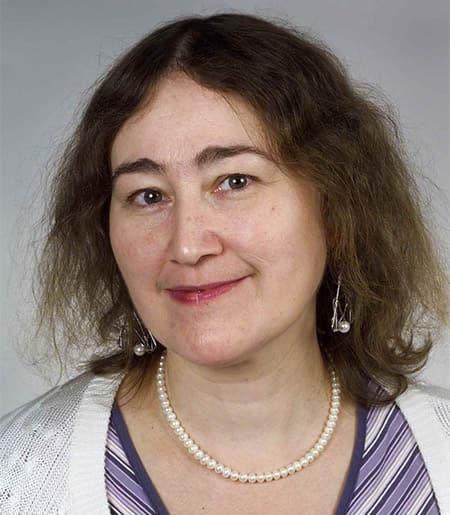
James Owen is a Reader in Astrophysics at the Department of Physics within the Faculty of Natural Sciences at Imperial College London. He holds a Senior Royal Society University Research Fellowship and previously served as a Hubble Fellow at the Institute for Advanced Study in Princeton and a CITA Fellow in Toronto. His research focuses on planet formation, extrasolar planets, and accretion disc physics, with particular emphasis on atmospheric escape mechanisms and protoplanetary disc structures. He is affiliated with the Astrophysics Group and the Physics Permanent Researchers at Imperial College. His key research interests include understanding how close-in super-Earths and mini-Neptunes form and evolve under intense stellar irradiation, driving atmospheric evaporation. He also investigates structures in protoplanetary discs observed via high-resolution imaging, linking these to planet formation processes. His work combines analytic theory and simulations to study hydrodynamic instabilities and disc dynamics. Notable awards include the Hubble Fellowship and CITA Fellowship. His recent work highlights the role of disc photoevaporation on giant planet migration and the observational signatures of embedded planets. He actively contributes to missions like JWST and UV-SCOPE for exoplanet characterization. Key affiliations: Astrophysics Group, Physics Permanent Researchers, Physics of Universe Labs: Blackett Laboratory at South Kensington Campus Future research directions include analyzing the growing dataset of protoplanetary discs and advancing models of exoplanet atmospheric evolution through neural network emulations.
Benjamin Bromley is a Professor of Physics & Astronomy at the University of Utah, where he has been a faculty member since 1998. He leads research in theoretical and computational astrophysics within the Department of Physics and Astronomy in the College of Science. His academic credentials include: BA in Chemistry/Physics from Middlebury College (1982) MS in Physics from University of Vermont (1987) PhD in Physics from Dartmouth (1994) Following his doctorate, he completed postdoctoral research at Los Alamos National Laboratory (1994-1996) and Harvard University (1996-1998) before joining the University of Utah faculty. Professor Bromley's research spans multiple frontiers of astrophysics, with particular emphasis on astrophysical cosmology, relativistic phenomena around supermassive black holes, and planet formation processes. His work investigates the large-scale structure of the universe, the search for Planet Nine in our Solar System's outer reaches, and innovative approaches to climate change mitigation through space-based engineering. Much of his computational research utilizes NASA supercomputers to model complex astrophysical systems. His recent publications (2022-2025) reveal a consistent research trajectory focused on planetary system dynamics, particularly the Pluto-Charon system, protoplanetary and debris disks, and novel applications of astrophysical principles to climate science. He frequently collaborates with researchers like Scott Kenyon and integrates data from missions like Gaia into his theoretical frameworks. Among his professional recognitions are multiple 'Best undergrad seminar' awards (2010, 2014). He actively engages in community outreach through 'Astronomy on Tap' public talks and presentations to local school districts. Professor Bromley has secured continuous research funding from NASA, the Smithsonian Astrophysical Observatory, and other agencies, supporting projects from 1999 through projected work in 2027. His teaching spans from introductory astronomy courses for non-majors to advanced graduate courses, with special emphasis on training students in computational techniques essential for modern astrophysical research.
Kate Follette is an Associate Professor in the Department of Astronomy at Amherst College, where she conducts cutting-edge research in exoplanet detection and STEM education. She serves on the NSF Astronomy and Astrophysics Advisory Committee (2024-2026) and the NASA Exoplanet Exploration Program Analysis Group Executive Committee (2023-2025), demonstrating her leadership in the astronomical community. Ph.D. in Astronomy, University of Arizona (2014) M.S. in Astronomy, University of Arizona (2010) B.A. in Physics and Japanese Studies, Middlebury College (2004) Dr. Follette's research focuses on using adaptive optics technology to detect young exoplanets and circumstellar disks through direct imaging techniques. Her work pushes the boundaries of telescope and image processing technology to isolate light from planets that are millions of times fainter than their host stars. She also leads an education research lab that studies the role of mathematics across science curricula, with particular interest in improving students' quantitative reasoning skills and addressing math anxiety. Her publication record shows a strong focus on direct imaging of protoplanets, with numerous papers on the AB Aurigae system and the Giant Accreting Protoplanet Survey (GAPlanetS). Her work spans observational techniques, data analysis methodologies, and the physical interpretation of circumstellar environments where planets form. Scialog: Signatures of Life in the Universe Fellow (2022-24) Cottrell Scholar (2022-25) Amherst College Center for Teaching and Learning Faculty Fellow (2022-24) NASA Sagan Postdoctoral Fellowship (2016) Dr. Follette actively contributes to the professional development of early-career scientists through her role as Chair of the American Astronomical Society Task Force on Early Career Engagement (2022-2024) and as a member of the National Numeracy Network Board of Directors (2014-present). Her educational research has developed assessment tools like the Quantitative Reasoning for College Science (QuaRCS) to measure and improve students' numeracy skills in science contexts.
Prof. Yann Alibert is an Affiliated Professor of Astrophysics at the University of Bern's Faculty of Science, based at the Center for Space and Habitability (CSH). His research focuses on exoplanet science, planetary formation mechanisms, and space missions like CHEOPS and PLATO. He leads observational campaigns analyzing exoplanet atmospheres, orbital dynamics, and planetary system architectures using high-precision photometry and spectroscopy. Key areas of expertise include: Characterization of exoplanet atmospheres via CHEOPS and ESPRESSO Studying resonant planetary systems and compact multi-planet configurations Development of mass-radius modeling tools (e.g., mr-plotter) Investigating planet formation pathways through streaming instability and pebble accretion Recent work emphasizes ultra-short-period planets, hot Jupiters, and water-world candidates. He collaborates extensively with international teams on TESS, PLATO, and ground-based radial velocity surveys. His research contributes to understanding planetary system evolution and the search for habitable worlds.
Miki Nakajima is an Assistant Professor of Earth and Environmental Sciences and Physics and Astronomy at the University of Rochester. She holds a PhD from the California Institute of Technology. Her dual appointments reflect her interdisciplinary research in planetary science, combining geophysics, astrophysics, and computational modeling. Education: PhD in Planetary Science, California Institute of Technology Research Interests: Planetary Dynamics: Focuses on impact processes, planetary interior evolution, and moon/exomoon formation mechanisms. Specializes in modeling Enceladus plumes and Earth-Moon system origins. Numerical Simulations: Develops advanced computational tools like NcorpiON for collisional system modeling and N-body integration. Early Solar System: Investigates accretion processes, mantle differentiation, and volatile retention during terrestrial planet formation. Research Trends in Publications: Recent work emphasizes giant impact simulations (Moon formation), tungsten isotope systematics, and exomoon formation limitations. Her articles consistently integrate high-fidelity numerical models with geochemical observations. Advising & Grants: No advisees listed; her funding sources likely support computational infrastructure and space mission collaborations. Active in planetary science communities. Labs/Teams: Affiliated with the University of Rochester's Earth and Environmental Sciences department, collaborating with astrophysics groups on interdisciplinary projects.
Christiane Helling is Full Professor in Weltraumwissenschaften (Space Sciences) at Graz University of Technology and Director of the Institute for Space Research Graz (IWF) at the Austrian Academy of Sciences. She previously held leadership roles at the University of St Andrews, including Director of the Centre for Exoplanet Science, and has been a Senior Scientist at the Netherlands Institute for Space Research. Habilitation in Astrophysics (TU Berlin) PhD in Astrophysics (TU Berlin, with distinction) Diploma in Physics (TU Berlin) Her research focuses on exoplanet and brown dwarf atmospheres, cloud microphysics, charge processes, and atmospheric chemistry. She integrates hydrodynamic simulations with space observations from missions like CHEOPS, JWST, and PLATO to map cloud distributions and study planetary climate. Her recent publications emphasize time-dependent cloud formation, thermodynamic disequilibrium in planetary disks, and exoplanet atmospheric characterization using space telescopes. Key collaborations include the CHAMELEON project (virtual laboratories for exoplanet atmospheres) and the MSG model for cloudy sub-stellar atmospheres. ERC Starting Grant (LEAP Project: Lightning, Electrical and Atmospheric Processes on exoplanets) Marie-Curie Innovative Training Network (CHAMELEON)
Corentin Cadiou is a Research Fellow at Lund University's Department of Physics, specializing in Astrophysics. He holds dual positions as a Postdoctoral Fellow in both the Astrophysics division and the eSSENCE: The e-Science Collaboration initiative. His research focuses on computational astrophysics and cosmology, with particular expertise in dark matter, galaxy formation, and cosmic structure evolution. His primary research interests include: Dark matter physics and cosmic web dynamics High-resolution cosmological simulations Galaxy formation and evolution mechanisms Star formation processes in various environments Computational methods in astrophysics Large-scale structure of the universe He employs advanced simulation techniques to study galaxy-scale phenomena and cosmic evolution. Cadiou's recent publications demonstrate a strong focus on developing and optimizing astrophysical simulation codes, analyzing cosmic structures like filaments and dark matter halos, and investigating galaxy formation processes across cosmic time. His work frequently combines theoretical modeling with high-performance computing approaches to address fundamental questions in cosmology. He is currently engaged in the project: eSSENCE@LU 11:4 - Galaxy formation in the exascale era (2025-2026), where he serves as a researcher developing next-generation galaxy formation simulations.
Edwin A. Bergin is Professor of Astrophysics and Chair of the Department of Astronomy at the University of Michigan, within the College of Literature, Science, and the Arts. He is a leading researcher in the fields of star and planet formation, interstellar chemistry, and astrobiology. His educational background includes a BS from Villanova University and a PhD from the University of Massachusetts. He previously worked as an astronomer at the Harvard-Smithsonian Center for Astrophysics before joining the University of Michigan. Bergin’s research focuses on the molecular origins of life, particularly the chemistry of water and organic molecules in space. He uses observational and theoretical methods to study how these molecules form and evolve from interstellar clouds to planetary systems. His work has significantly advanced our understanding of how Earth acquired its water and carbon, with implications for the potential habitability of exoplanets. His recent publications reflect a strong emphasis on protoplanetary disk chemistry, molecular detection using facilities like ALMA and Herschel, and the interplay between stellar radiation and disk chemistry. Themes include water vapor in habitable zones, carbon processing, and the chemical evolution of planet-forming regions. U-M Henry Russel Award for exceptional scholarship and teaching Bergin has advised several graduate students, including Jeffrey Fogel and Nathan Crockett. He has led major research initiatives such as HEXOS and utilizes advanced observational tools like ALMA and SOFIA. He teaches a range of courses from introductory astronomy to graduate-level astrophysics of the interstellar medium. He is affiliated with the Michigan Institute for Research in Astrophysics and conducts research through observational campaigns, theoretical modeling, and interdisciplinary collaboration with geochemists to understand planetary composition and evolution.
Shichun Huang is an Associate Professor in the Department of Earth & Planetary Sciences at the University of Tennessee at Knoxville. His research focuses on high-temperature geochemistry, igneous and metamorphic petrology, metal stable isotope geochemistry, and cosmochemistry. Huang holds a PhD from MIT (2005) and a BSc from the University of Science and Technology of China (1998). His work integrates experimental and computational methods to study Earth's mantle and the early Solar System, with recent projects exploring mantle plumes, isotope fractionation, and planetary formation processes. Notable contributions include studies on calcium isotope dynamics in mantle melting, Hawaiian plume flux variations, and machine learning applications to mantle thermobarometry. Huang leads sponsored projects funded by NSF and DOE, addressing critical mineral recovery and planetary biosignatures. He coordinates the UTK ICP-MS lab and serves on editorial boards for Geochimica et Cosmochimica Acta and Scientific Reports . His teaching includes advanced courses in geochemical data analysis and seminar series on geochemistry. Recent articles highlight interdisciplinary approaches in mantle dynamics, planetary differentiation, and stellar chemistry. His work bridges field observations, laboratory experiments, and computational modeling to advance understanding of Earth's evolution and extraterrestrial processes.
Roman Rafikov is Professor of Astrophysics at the Department of Applied Mathematics and Theoretical Physics (DAMTP) within the Faculty of Mathematics at the University of Cambridge. He has held this position since 2021, after serving as Reader in Astrophysics (2018-2021) and University Lecturer in Astrophysics (2016-2018) at DAMTP. Prior to his Cambridge appointments, he was Assistant Professor at Princeton University (2007-2015) and the Canadian Institute for Theoretical Astrophysics at the University of Toronto (2005-2007). He was also a Visiting Faculty Member at the Institute for Advanced Study in Princeton (2015-2016). Rafikov's research focuses on exoplanets (around single and binary stars; young, main sequence, and evolved stars), planet formation and dynamics, astrophysical fluid dynamics, accretion disks (protoplanetary, disks in binaries, quasars), N-body and galactic dynamics, and high-energy astrophysics. His work spans theoretical modeling of planetary systems, fluid dynamics in astrophysical contexts, and gravitational wave sources. He is a member of the Geophysical and Astrophysical Fluid Dynamics research group at DAMTP. Rafikov's recent publications demonstrate his expertise in planet-disk interactions, protoplanetary and circumbinary disk structures, gravitational wave sources in stellar clusters, and the dynamics of compact object binaries. His research combines theoretical modeling with observational constraints, particularly using data from instruments like ALMA. His work has significant implications for understanding planet formation mechanisms and the evolution of binary systems that produce gravitational waves detectable by LIGO/Virgo. Rafikov maintains active collaborations with researchers across multiple institutions and has contributed to numerous studies in leading astrophysical journals including The Astrophysical Journal and Monthly Notices of the Royal Astronomical Society.
Dr. Evgeni Grishin is a Research Fellow at the School of Physics and Astronomy , Monash University . His research focuses on Planet Formation , Chaos , and dynamics of Binary and Multiple Stars . Accepting PhD students for projects in triple/multiple planetary systems, stellar dynamics, and black hole interactions Active in media outreach with 3 public contributions (2020–2022) Recent Research Trends Dr. Grishin’s work bridges astrophysical dynamics and planetary system evolution , with recent emphasis on: Dust evolution in protoplanetary disks Thermal torques in AGN discs White dwarf debris disc interactions Galactic tidal effects on triple systems Gravitational wave source modeling Scientific Awards Jacobs Fellowships (2017): Recognized for graduate research excellence Rahamimoff Travel Grant (2017): Supported international collaboration His research has been cited over 60 times (Scopus) and featured in 21+ news outlets.
Dr. Marina Romanova is a Senior Research Associate at Cornell University's Center for Radiophysics and Space Research (CCAPS) and a key member of the Carl Sagan Institute (CSI), affiliated with the Department of Astronomy. With over two decades of continuous service since 1996 (Visiting Scientist 1996, Research Associate 1999-2002, Senior Research Associate 2002-present), she is a leading specialist in computational astrophysics renowned for pioneering 3D magnetohydrodynamic (MHD) simulations of astrophysical phenomena. Education: 1973-1981: Undergraduate and graduate studies in Astronomy and Astrophysics at Moscow State University 1986: Ph.D. in Astrophysics and Radioastronomy from the Space Research Institute, Moscow, under joint supervision of Yakov Zeldovich and Gennady S. Bisnovatyi-Kogan Dr. Romanova's research revolutionized understanding of accretion processes through the first 3D MHD simulations of accretion onto rotating stars with tilted magnetic fields, explaining funnel streams, hot spots, and variability in young stars, neutron stars, and white dwarfs. She discovered the unstable accretion regime that accounts for stochastic light curves in classical T Tauri stars. Her current work focuses on planet-disk dynamics in protoplanetary systems, modeling planetary orbits within low-density cavities and at disk-cavity boundaries using advanced 3D MHD techniques. This research bridges theoretical astrophysics with observational data from missions like TESS. Analysis of her 15 most recent publications reveals a dominant focus on high-resolution computational modeling across three interconnected domains: (1) planet-disk interactions in protoplanetary systems, (2) accretion dynamics onto magnetized stars with complex magnetic topologies, and (3) outflow/jet launching mechanisms. Her work consistently integrates numerical simulations with observational astrophysics, demonstrating exceptional methodological rigor in addressing fundamental questions about stellar formation and planetary system evolution. As an active contributor to the Carl Sagan Institute, Dr. Romanova collaborates on interdisciplinary research at the intersection of astrophysics and astrobiology. Her work has received significant scientific attention, featured in NASA High-End Computing Program reports, Eurasia Review, and Science News for insights into young star behavior and implications for understanding our solar system's formation. Her sustained research productivity since the 1980s, including 2023 publications, underscores her enduring impact on computational astrophysics.
Professor Gordon Ogilvie is a Professor of Mathematical Astrophysics at the Department of Applied Mathematics and Theoretical Physics (DAMTP), University of Cambridge, and a Fellow of Clare College. His research focuses on the dynamics of astrophysical discs, including planetary rings, protoplanetary discs, and accretion discs around compact objects. Key interests include hydrodynamic/magnetohydrodynamic instabilities, warped/eccentric disc dynamics, and tidal interactions in planetary systems. He holds a long-standing academic career at Cambridge, including roles as Royal Society University Research Fellow (2000–2005) and Reader in Mathematical Astrophysics (2009–2013). His work bridges fluid dynamics and astrophysics, with applications to exoplanet dynamics and stellar tidal interactions. Research highlights include studies on nonlinear wave behavior in rotating fluids, global disc instabilities, and gravitational interactions in protoplanetary systems. Recent publications address tidal dissipation mechanisms, eccentric disc evolution, and magnetic field dynamics in accretion environments. Professor Ogilvie's affiliations include DAMTP and Clare College, with active contributions to graduate supervision and interdisciplinary collaborations in astrophysical fluid dynamics. His lab focuses on theoretical and computational astrophysics, addressing fundamental questions in disc dynamics and celestial mechanics.
Rebecca G. Martin serves as an Associate Professor in the Physics and Astronomy Department at the University of Nevada, Las Vegas. Previously, she held prestigious postdoctoral fellowships including a Sagan Fellowship at JILA, University of Colorado, Boulder for three years and a Giacconi Fellowship at the Space Telescope Science Institute in Baltimore for three years. Her academic journey began with a PhD completed in 2009 at the University of Cambridge, UK, under the supervision of Professor Jim Pringle. Her educational background includes doctoral studies at the University of Cambridge, where she developed expertise in theoretical astrophysics with a focus on accretion disc theory. Prior to her PhD, though specific details aren't provided in the text, she would have completed undergraduate and possibly master's level studies in physics or astronomy that prepared her for advanced research in astrophysical dynamics. Dr. Martin's research centers on theoretical astrophysics, particularly examining how star and planetary systems form and why supermassive black holes grow in galactic centers. She employs both analytic and numerical methods in gas dynamics to investigate these processes. Her work spans several key areas including accretion theory , where she studies angular momentum transport in discs from planetary to galactic scales; protoplanetary discs , focusing on dead zones and gravo-magneto disc instabilities that explain FU Orionis outbursts; planet formation in binary systems , investigating how misaligned discs undergo Kozai-Lidov oscillations; and Be/X-ray binaries , where she explains Type II X-ray outbursts through disc eccentricity driven by Kozai-Lidov mechanisms. Analysis of her 15 most recent publications reveals a consistent focus on disc dynamics across various astrophysical contexts. Her work increasingly addresses complex multi-body systems including triple star configurations and polar-aligned circumbinary structures. The research demonstrates strong theoretical foundations with practical applications to observed astronomical phenomena, particularly in explaining unusual orbital configurations and outburst mechanisms. Recent publications show growing interest in gravitational wave sources through black hole binary mergers and applications to newly discovered exoplanet systems with unusual orbital geometries. Sagan Fellow at JILA, University of Colorado, Boulder Giacconi Fellow at Space Telescope Science Institute Dr. Martin's research program has been supported by prestigious fellowships that recognize exceptional promise in astronomical research. Her work bridges theoretical modeling with observational astronomy, contributing significantly to our understanding of disc dynamics across multiple scales. While specific grant details aren't provided, her extensive publication record in high-impact journals suggests substantial research funding supporting her theoretical investigations. She contributes to the academic community through her research mentorship, though specific student advising details aren't mentioned in the provided text. Her research appears to be conducted primarily through theoretical modeling and computational analysis rather than laboratory-based work. She collaborates extensively with researchers including Stephen H. Lubow, with whom she has numerous co-authored publications addressing disc dynamics across various astrophysical contexts. Her work connects with broader research communities studying exoplanet formation, binary star systems, and high-energy astrophysical phenomena.
Laura Pérez is an astronomer and assistant professor at the University of Chile, specializing in the formation and evolution of planetary systems and young stars. Her groundbreaking research on dust traps in young star systems earned international recognition, including the 2024 New Horizons in Physics Breakthrough Prize . Education: B.Sc. in Astronomy, University of Chile M.Sc. in Astronomy, University of Chile Ph.D. in Astronomy, California Institute of Technology Her work provides critical insights into planet formation mechanisms, particularly through studying protoplanetary disks and dust dynamics. Pérez has held postdoctoral positions at prestigious institutions including the National Radio Astronomy Observatory and Max Planck Institute for Radio Astronomy. Scientific Awards New Horizons Prize in Physics (2024) - for research on dust traps in planet formation