معرفی
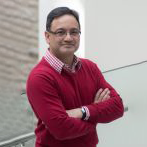
Benjamin Bromley is a Professor of Physics & Astronomy at the University of Utah, where he has been a faculty member since 1998. He leads research in theoretical and computational astrophysics within the Department of Physics and Astronomy in the College of Science.
His academic credentials include:
- BA in Chemistry/Physics from Middlebury College (1982)
- MS in Physics from University of Vermont (1987)
- PhD in Physics from Dartmouth (1994)
Following his doctorate, he completed postdoctoral research at Los Alamos National Laboratory (1994-1996) and Harvard University (1996-1998) before joining the University of Utah faculty.
Professor Bromley's research spans multiple frontiers of astrophysics, with particular emphasis on astrophysical cosmology, relativistic phenomena around supermassive black holes, and planet formation processes. His work investigates the large-scale structure of the universe, the search for Planet Nine in our Solar System's outer reaches, and innovative approaches to climate change mitigation through space-based engineering. Much of his computational research utilizes NASA supercomputers to model complex astrophysical systems.
His recent publications (2022-2025) reveal a consistent research trajectory focused on planetary system dynamics, particularly the Pluto-Charon system, protoplanetary and debris disks, and novel applications of astrophysical principles to climate science. He frequently collaborates with researchers like Scott Kenyon and integrates data from missions like Gaia into his theoretical frameworks.
Among his professional recognitions are multiple 'Best undergrad seminar' awards (2010, 2014). He actively engages in community outreach through 'Astronomy on Tap' public talks and presentations to local school districts.
Professor Bromley has secured continuous research funding from NASA, the Smithsonian Astrophysical Observatory, and other agencies, supporting projects from 1999 through projected work in 2027. His teaching spans from introductory astronomy courses for non-majors to advanced graduate courses, with special emphasis on training students in computational techniques essential for modern astrophysical research.