معرفی
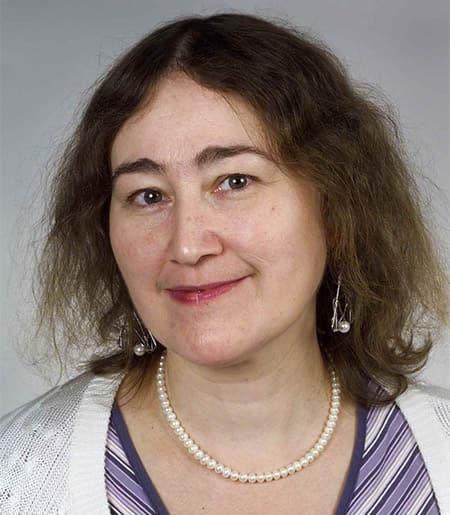
Dr. Marina Romanova is a Senior Research Associate at Cornell University's Center for Radiophysics and Space Research (CCAPS) and a key member of the Carl Sagan Institute (CSI), affiliated with the Department of Astronomy. With over two decades of continuous service since 1996 (Visiting Scientist 1996, Research Associate 1999-2002, Senior Research Associate 2002-present), she is a leading specialist in computational astrophysics renowned for pioneering 3D magnetohydrodynamic (MHD) simulations of astrophysical phenomena.
Education:
- 1973-1981: Undergraduate and graduate studies in Astronomy and Astrophysics at Moscow State University
- 1986: Ph.D. in Astrophysics and Radioastronomy from the Space Research Institute, Moscow, under joint supervision of Yakov Zeldovich and Gennady S. Bisnovatyi-Kogan
Dr. Romanova's research revolutionized understanding of accretion processes through the first 3D MHD simulations of accretion onto rotating stars with tilted magnetic fields, explaining funnel streams, hot spots, and variability in young stars, neutron stars, and white dwarfs. She discovered the unstable accretion regime that accounts for stochastic light curves in classical T Tauri stars. Her current work focuses on planet-disk dynamics in protoplanetary systems, modeling planetary orbits within low-density cavities and at disk-cavity boundaries using advanced 3D MHD techniques. This research bridges theoretical astrophysics with observational data from missions like TESS.
Analysis of her 15 most recent publications reveals a dominant focus on high-resolution computational modeling across three interconnected domains: (1) planet-disk interactions in protoplanetary systems, (2) accretion dynamics onto magnetized stars with complex magnetic topologies, and (3) outflow/jet launching mechanisms. Her work consistently integrates numerical simulations with observational astrophysics, demonstrating exceptional methodological rigor in addressing fundamental questions about stellar formation and planetary system evolution.
As an active contributor to the Carl Sagan Institute, Dr. Romanova collaborates on interdisciplinary research at the intersection of astrophysics and astrobiology. Her work has received significant scientific attention, featured in NASA High-End Computing Program reports, Eurasia Review, and Science News for insights into young star behavior and implications for understanding our solar system's formation. Her sustained research productivity since the 1980s, including 2023 publications, underscores her enduring impact on computational astrophysics.