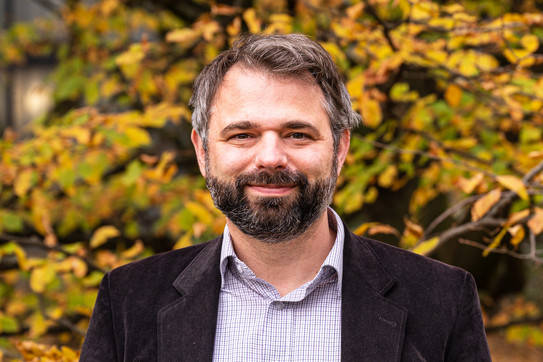
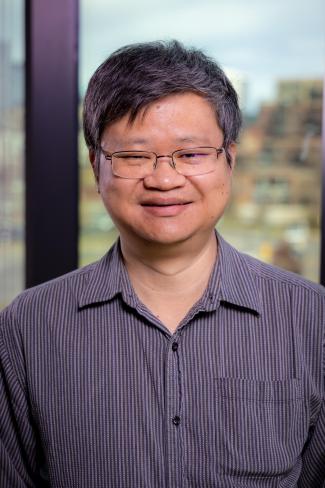
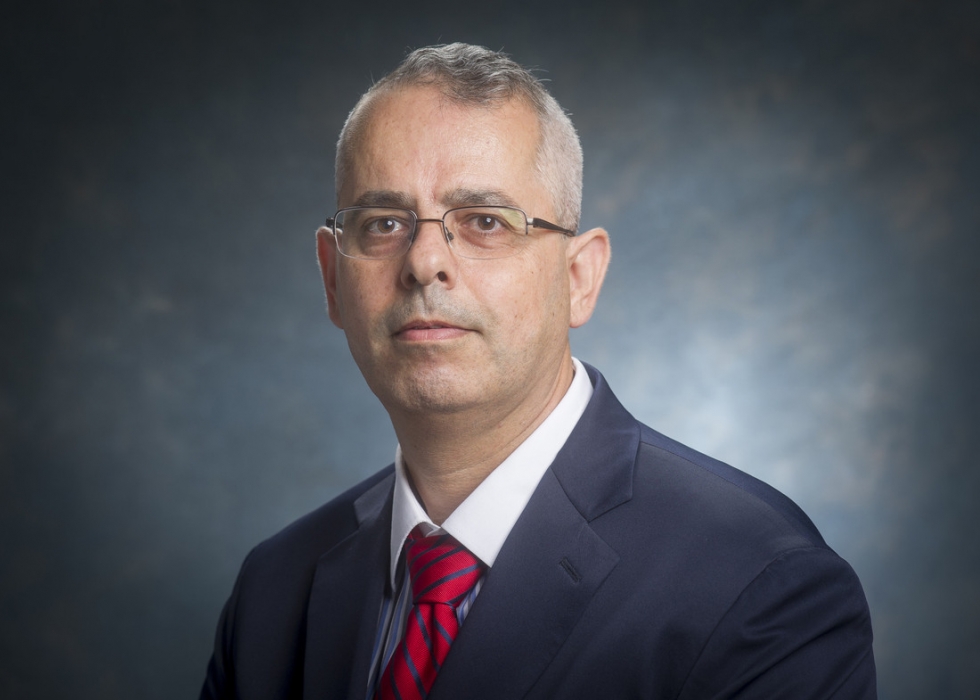
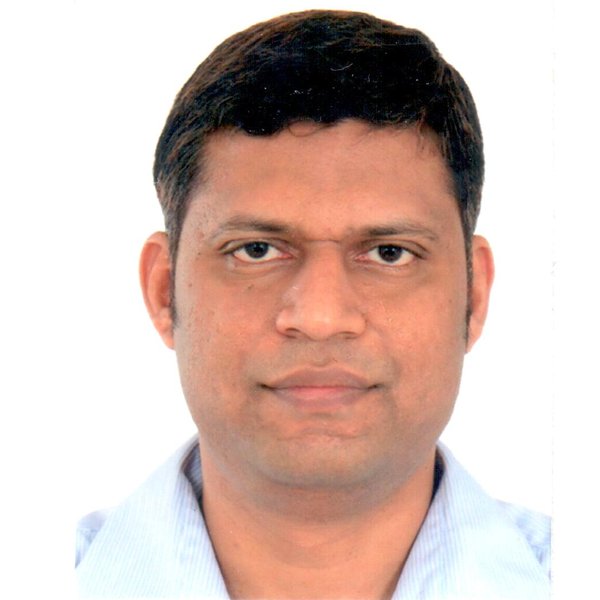
Prof. Hannes Mutschler is a faculty member at the Faculty of Chemistry and Chemical Biology of Technische Universität Dortmund , leading research in Chemical Biology with a focus on synthetic biology and origin-of-life studies. University: Technische Universität Dortmund School: Faculty of Chemistry and Chemical Biology Department: Chemical Biology Academic Rank: Professor Research interests include: De novo engineering of self-replicating and evolving biomimetic systems Origin of Life studies Ribozyme activity under prebiotically plausible conditions Bottom-up approaches using reconstituted protein/nucleic acid components Design of complex protein machineries and ribozymes Publication trends : Recent work explores ribozyme engineering for DNA/RNA catalysis Investigates RNA replication in prebiotic environments Develops synthetic RNA segregation systems Examines temperature-driven RNA proliferation in vesicles Focus on active droplets and coacervates as protocell models Contact: hannes.mutschler@tu-dortmund.de
Professor Martin Oettel holds a faculty position at the University of Tübingen within the Department of Physics, Faculty of Science, where he leads the Computational Nanoscience research group at the Institute of Applied Physics. His academic address is at Auf der Morgenstelle 10, 72076 Tübingen, Germany. Since 2013, he has co-organized the annual Density Functional Days workshops alongside Joseph Brader (University of Fribourg) and Roland Roth (University of Tübingen), establishing an important forum for researchers in classical density functional theory. Professor Oettel's research focuses on computational soft matter physics , with particular expertise in density functional theory applications to colloidal systems, thin film growth, and phase transitions. His work spans both fundamental theoretical developments and applied materials science problems, especially in organic electronics and nanoscale systems. Key areas include the study of hard sphere systems, monolayers of anisotropic particles on substrates, phase diagrams for complex colloidal mixtures, and the development of dynamic density functional theory approaches. His research often involves sophisticated computational modeling combined with close collaboration with experimental groups, such as Prof. Frank Schreiber's experimental group at Tübingen. His publication record demonstrates consistent contributions to the field since 2006, with recent work (2016-2018) focusing on thin film growth with anisotropic particles, monolayer systems of hard rods, phase transitions in colloidal mixtures, and advanced diffusion phenomena in confined systems. The research shows a clear trajectory from fundamental theoretical developments toward applications in materials science and nanotechnology. Professor Oettel actively supervises doctoral students, as evidenced by the 2023 job posting for a PhD position in modeling thin film growth within a DAAD-CAPES project involving collaboration with Prof. Frank Schreiber (Tübingen) and Prof. Fabio Reis (Federal Fluminense University, Brazil). This position required work on both simulations and dynamic density functional theory, with an extended research stay in Brazil. He maintains the Computational Soft Matter and Nano-Science Chair (Lehrstuhl für Computational Soft Matter and Nano-Science) at the University of Tübingen, where his research group investigates the physics of soft condensed matter systems through computational approaches. The group's work bridges theoretical physics with practical applications in materials science, particularly in organic electronics and nanoscale systems.
Hai Lin serves as Professor and Departmental Chair in the Department of Chemistry at the University of Colorado Denver. His academic career spans over two decades with progressive appointments from Assistant Professor (2005-2011) to Associate Professor (2011-2017) and ultimately to full Professor and Department Chair (2017-present). Dr. Lin received his academic training at the University of Science and Technology of China, earning a BSc. in Engineering (1993), M.S. in Physics (1995), and Ph.D. in Chemistry (1998). His postdoctoral experience includes positions as a Max-Planck Postdoctoral Fellow in Germany (2001-2003) and a Minnesota Supercomputing Institute Scholar at the University of Minnesota (2003-2005). Dr. Lin's research program focuses on the development and application of computational methods to study chemical and biological processes in complex environments. His Group of Theoretical/Computational Chemistry has made significant contributions to quantum mechanics/molecular mechanics (QM/MM) methodologies, particularly in adaptive partitioning techniques that improve the accuracy of molecular simulations. His work spans enzymatic reactions, protein-ligand binding, ion transport mechanisms, and membrane protein dynamics. The theoretical frameworks developed in his laboratory bridge computational chemistry with practical applications in biochemistry and biophysics. An analysis of Dr. Lin's recent publication record reveals a consistent focus on advancing QM/MM methodologies with particular emphasis on adaptive partitioning schemes, proton transfer reactions, and ion channel mechanisms. His interdisciplinary research connects computational chemistry with structural biology, physical chemistry, and biophysics, demonstrating both theoretical innovation and practical applications to biological systems. Dr. Lin has received numerous prestigious awards that recognize both his research excellence and teaching capabilities: Cottrell Scholar, Research Corporation for Science Advancement (2015) Henry Dreyfus Teacher-Scholar Award, Camille & Henry Dreyfus Foundation (2014) Research Corporation Cottrell College Science Multi-Investigator Award (2013) NSF CAREER Award (2010) Excellence in Research & Creative Work Award (2007) Research Corporation Cottrell College Science Award (2006) As an educator, Dr. Lin teaches across the chemistry curriculum including General Chemistry, Physical Chemistry, and specialized graduate courses in Computational Chemistry and Molecular Modeling. His leadership as Departmental Chair reflects his administrative capabilities and commitment to the academic mission of the Department of Chemistry at the University of Colorado Denver.
Dr. Rafet Al-Tobasei serves as an Associate Professor in the Department of Computer Science at Middle Tennessee State University (MTSU), where he applies computational methodologies to solve complex biological problems in aquaculture species. His research bridges computer science and genomics to address critical challenges in fisheries science and genetic improvement programs. His academic credentials include: Ph.D. in Computer Science, Middle Tennessee State University (2017) M.A. in Computer Science, Middle Tennessee State University (2011) M.S. in Computer Science, Middle Tennessee State University (2011) B.S. in Computer Science, Tennessee State University (2007) Dr. Al-Tobasei's research program focuses on developing and implementing bioinformatics tools for aquaculture genomics, with particular emphasis on rainbow trout and Nile tilapia. His expertise spans RNA sequencing analysis, Genome-Wide Association Studies (GWAS), Single Nucleotide Polymorphism (SNP) discovery, Long non-coding RNA (lncRNA) characterization, DNA methylation profiling, and Chromatin Immunoprecipitation Sequencing (ChIP-Seq) data interpretation. He investigates molecular mechanisms underlying economically important traits including muscle growth, fillet quality, disease resistance, and stress response. Analysis of his publication record reveals consistent thematic progression in aquaculture genomics: early work established foundational genomic resources for rainbow trout, followed by sophisticated GWAS applications for trait mapping, and recent integration of multi-omics approaches (transcriptomics, epigenomics, and lipidomics). His research increasingly emphasizes practical breeding applications, with significant contributions to genomic selection methodologies using reduced-density SNP panels and advanced statistical models. While specific awards and grants aren't documented in the source material, his extensive publication record in high-impact journals like BMC Genomics and Scientific Reports demonstrates substantial scholarly impact. His collaborative network spans multiple institutions and includes frequent co-authorship with leading aquaculture geneticists, indicating active participation in the research community and likely involvement in mentoring graduate students through research projects.
Nishant K.T is a Professor in the School of Biology at the Indian Institute of Science Education and Research (IISER) Thiruvananthapuram, where he has served as Professor since 2022, Associate Professor from 2017-2022, and Assistant Professor from 2011-2017. He also served as Head of the School of Biology from 2017-2021. Prior to joining IISER-TVM, he was a Research Associate and Postdoctoral Fellow at Cornell University, USA (2005-2010). Ph.D from Dept. of Biochemistry, Indian Institute of Science, Bangalore (2005) M.S in Biological Sciences from Indian Institute of Science, Bangalore (2000) B.Sc(H) in Biochemistry from Sri Venkateswara College, Delhi University (1997) Dr. Nishant's research focuses on mechanisms that maintain genome stability using baker's yeast Saccharomyces cerevisiae as a model system. His laboratory investigates two key areas: mechanisms of meiotic recombination, with emphasis on meiotic crossover pathways and their role in promoting accurate chromosome segregation during meiosis (errors linked to congenital birth defects like Down syndrome); and mechanisms of mitotic genome stability, studying processes contributing to mutagenesis, loss of heterozygosity and aneuploidy using high-throughput genomic technologies, classical genetics and molecular biology approaches. His work has significant implications for understanding disease progression (e.g., cancer), genome evolution and architecture. Analysis of Dr. Nishant's recent publications (2017-2025) reveals a consistent focus on yeast genetics and genome stability, with particular emphasis on meiotic recombination mechanisms, chromosome segregation, and DNA repair pathways. His work often employs high-throughput genomic approaches to study loss of heterozygosity, crossover formation, and chromosome dynamics in both meiotic and mitotic contexts. The research spans fundamental mechanisms with implications for human health conditions including cancer and congenital disorders. Scientific Awards and Editorial Positions Wellcome Trust-DBT Intermediate Fellow (2012-2017) Editorial board member of the journal YEAST (2021-present) Guest Editor for a special issue of the journal YEAST (2020) Editorial board member for Journal of Genetics (2018-present) Visiting Professor, Osaka University (2018) Visiting scientist, Osaka University, DST-JSPS exploratory exchange (2014) Best Poster awards at Society of Biological Chemists (India) meetings (2001, 2003) CSIR Research Fellowships (Junior 2001-2002, Senior 2002-2004) Dr. Nishant has mentored numerous students through IISER-TVM's PhD and Integrated PhD programs, with several alumni now holding independent research positions. His laboratory (GSL Lab) maintains an active research program with current PhD students working on bioinformatics, yeast genetics, and chromosome stability projects. He has co-organized multiple International Chromosome Stability meetings at various locations in India (Trivandrum 2012, 2016, 2022; Bangalore 2014, 2018, 2024), demonstrating leadership in the field. The GSL Lab operates as a dynamic research team using Saccharomyces cerevisiae as a model system, combining high-throughput genomic technologies with classical genetics and molecular biology approaches. Current lab members include PhD students, postdoctoral researchers, and undergraduate students working collaboratively on projects related to genome stability mechanisms.
Jürgen Hauer is a Professor at the Technische Universität München (TUM) within the TUM School of Natural Sciences . He leads the Professorship for Dynamic Spectroscopy , focusing on ultrafast chemical processes using femtosecond laser spectroscopy. His work spans energy transfer pathways, photocatalytic reactions, and molecular dynamics across ten timescale orders. Research Interests Ultrafast energy transfer in photosynthetic systems Femtosecond spectroscopy for reaction bottlenecks Development of advanced time-resolved methods Photochemical kinetic resolution of enantiomers Application to sustainable chemistry and catalysis Recent Publications (2025) highlight innovations in transient absorption anisotropy, Stokes shift dynamics, and FT-IR bacterial analysis. His scientific awards include the FWF's START Prize and Lise Meitner Fellowship. Teaching activities at TUM include courses in Biophysical Chemistry and Experimental Physical Chemistry.
Prof. Dr. Tomohisa Toda serves as a Group Leader at the German Center for Neurodegenerative Diseases (DZNE) in Dresden, Germany, where he leads research on the biological links between aging and neurological disorders. His primary research interests encompass aging mechanisms, neurodegenerative diseases, and nuclear architecture in neural cells. Specifically, Dr. Toda investigates how nucleoporins and nuclear lamins establish cell type-specific nuclear organization to maintain neural identity and plasticity throughout life. His laboratory employs mouse models and stem cell biology to dissect the molecular pathways that deteriorate during pathological aging. Dr. Toda's publication record includes significant contributions such as a 2017 Cell Stem Cell paper demonstrating nucleoporins' role as structural gatekeepers for neural identity. His work spans broad disciplines including neuroscience, cell biology, and aging research, with specific focus on nuclear pore complex dynamics, transcription factor networks, and age-related protein damage in the brain. The Toda laboratory at DZNE Dresden is dedicated to uncovering fundamental principles of neural maintenance and how their disruption leads to disease, utilizing interdisciplinary approaches to address critical questions in brain aging and neurodegeneration.
Alvin Yu, PhD, is an Assistant Professor in the Department of Physiology & Biophysics at the University of California, Irvine (UCI) School of Medicine. He leads the Computational Biophysics Group (CBG), which develops theoretical and computational methods to study complex biological systems at the intersection of physics, biology, and chemistry. The lab collaborates closely with experimentalists to achieve a molecular understanding of life’s essential machinery. Research Interests: Computational biophysics, HIV capsid dynamics, ionotropic glutamate receptors, coarse-grained simulations, protein conformational changes, molecular interactions in viral systems. Key Article Trends: Focus on HIV-1 capsid self-assembly mechanisms, ligand-gated ion channels, and computational modeling of viral and receptor systems. His work spans multiscale and atomistic simulations to uncover molecular pathways in virology and neuroscience. Students: Advises Lorenzo Foglia, a PhD student contributing to the lab's research. Labs/Teams: Heads the CBG lab, which actively posts research updates, job openings, and publications on their website.
Maria Chahrour is a tenured Associate Professor at the University of Texas Southwestern Medical Center, affiliated with the Eugene McDermott Center for Human Growth and Development, the Departments of Neuroscience and Psychiatry, the Center for the Genetics of Host Defense, and the Peter O’Donnell Jr. Brain Institute. She leads the Chahrour Lab, which focuses on the genetics of autism spectrum disorder (ASD) and other neurodevelopmental disorders. Bachelor of Science in Biology, American University of Beirut M.S. in Forensic Genetics, University of North Texas Ph.D. in Molecular and Human Genetics, Baylor College of Medicine Postdoctoral Fellow and Instructor, Harvard Medical School and Boston Children's Hospital Dr. Chahrour's research centers on identifying genetic causes of ASD through whole-exome and genome sequencing, forward genetics, and animal models. Her work explores transcriptional regulation, chromatin remodeling, and the ubiquitin-proteasome pathway in neurodevelopment. She aims to map disrupted molecular pathways to inform diagnostic biomarkers and targeted therapies. Her recent publications (2022–2023) highlight a strong focus on global genetic diversity in ASD, community engagement in genomics, and the use of advanced sequencing to identify both coding and noncoding variants. Earlier works (2016–2020) emphasize gene discovery (e.g., KDM5A, UBE3B), animal modeling, and the role of epigenetic and ubiquitin-related mechanisms in neurodevelopmental conditions. Dr. Chahrour has not been mentioned as receiving specific scientific awards in the provided text, but her extensive publication record in top-tier journals reflects significant scholarly impact. She actively mentors graduate students and researchers, including Lauretta El-Hayek, Shayal Vashisth, and others. Her lab has secured research funding to support studies in ASD genetics, though specific grants are not listed. The Chahrour Lab is involved in international research collaborations and enrolls participants globally for genetic studies of ASD. The lab leverages cutting-edge genomic technologies and maintains a collaborative environment with members specializing in wet-lab biology, computational analysis, and neurogenetics. It is part of UTSW’s broader neuroscience and genetics research ecosystem, including the Peter O’Donnell Jr. Brain Institute.
Sahand Hormoz is an Assistant Professor at Harvard Medical School and a faculty member in the Department of Data Science at Dana-Farber Cancer Institute. His research focuses on controlling biological systems to understand cell state transitions and develop technologies for single-cell analysis, synthetic biology, and organoid modeling. PhD in Applied Physics from Harvard University (advised by Michael Brenner) Postdoctoral work at Kavli Institute for Theoretical Physics (UCSB) and Elowitz Lab at Caltech Research Interests His lab combines high-throughput single-cell measurements with differential geometry and machine learning to analyze complex biological data. They engineer cells for lineage tracing, develop organoid systems, and aim to automate biological modeling to overcome human cognitive limitations in understanding life systems. Publication Trends Key areas in his recent work include: Computational methods for single-cell and lineage analysis Cancer evolution in myeloproliferative neoplasms Synthetic biology tools for DNA-based cellular memory Integration of machine learning with biological dynamics Applications in stem cell biology and microbial systems Development of microfluidic platforms Labs & Teams Hormoz Lab at Harvard Medical School collaborates with Dana-Farber's Data Science Department to advance quantitative biology approaches.
Rofice Dickson serves as an Assistant Professor in the Department of Chemical and Metallurgical Engineering at Aalto University, actively contributing to the Sustainable Systems research group. His professional contact details include email (rofice.dickson@aalto.fi) and phone (+358504121952), reflecting his current academic engagement at the institution. His research spans Sustainable Energy Systems, Renewable Energy, Green Chemistry, Environmental Engineering, Techno-Economic Analysis, and Sustainable Agriculture, with emphasis on solar-driven solutions for carbon neutrality. Key focus areas include data-driven frameworks for solar energy deployment, hydrogen economy development, sustainable protein production via fermentation, and green urea synthesis for agricultural applications, demonstrating interdisciplinary integration of engineering and environmental science. Recent publications (2024-2025) reveal a consistent trajectory in renewable energy systems analysis, particularly solar-to-hydrogen conversion and sustainable chemical production. His work prominently features geospatial assessment, techno-economic modeling, and environmental impact evaluation, with significant case studies centered on Pakistan while maintaining a global perspective on carbon neutrality pathways and sustainable industrial systems. No scientific awards were documented in the provided source material. While specific advising roles or grant details remain unmentioned in the available text, his publication record indicates active mentorship through co-authorship with junior researchers on complex sustainability projects. As a core member of Aalto University's Sustainable Systems research group, he contributes to interdisciplinary initiatives addressing energy transition challenges, circular economy principles, and sustainable industrial processes through integrated technical and environmental assessment methodologies.
Mark C. Fishman, M.D., is a Professor of Stem Cell and Regenerative Biology at Harvard University and affiliated with the Harvard Stem Cell Institute. His laboratory investigates the heart-brain axis using zebrafish to map autonomic control circuits and decode the genetic/neuronal basis of vertebrate social behavior . From 2002-2016, he led Novartis Institutes for Biomedical Research, advancing 90 medicines to clinical trials, with a focus on regenerative therapies for aging disorders. Education : Yale College (A.B.), Harvard Medical School (M.D.) Academic Leadership : Former Chief of Cardiology and Director of Cardiovascular Research Center at Harvard Medical School and MGH Research spans cardiovascular development , neurogenetics , and translational medicine , with seminal work on zebrafish genetic screens in the 1990s establishing pathways for vertebrate organ formation. His lab introduced zebrafish as a model for dissecting social interaction circuits and homeostatic regulation . Current work explores how internal sensory systems shape behavior through genetic and pharmacological interventions. Recent publications highlight zebrafish studies on age-related vascular calcification (αKlotho), dopamine transporter mutations (psychiatric models), and collective behavior genetics . Articles span 1996-2025, reflecting continuous contributions to Developmental Biology , Neuroscience , and Cardiovascular Research . Awards include election to the National Academy of Medicine (20-year member), Fellow of the American Academy of Arts and Sciences , and leadership roles in biotech (Aditum Bio, Beam Therapeutics). He authored the textbook Medicine and Lab: Building a Home for Scientists , bridging architectural design with scientific innovation. Teaching includes SCRB 197/297 Frontiers in Therapeutics , examining disease elimination promises and personalized medicine through historical and modern therapeutic frameworks. His lab in Sherman Fairchild Building (Cambridge, MA) continues mentoring interdisciplinary researchers in cardiovascular-neurobiological interfaces.
Greg J. Bashaw is a Professor of Neuroscience at the Perelman School of Medicine, University of Pennsylvania. He directs a research lab focused on molecular mechanisms of axon growth and guidance, particularly at the nervous system midline. His work spans Drosophila embryonic CNS and mouse spinal cord systems, investigating evolutionary conserved pathways like Slit-Robo and Netrin-DCC. Education: B.A. in Biology from Brown University (1990), Ph.D. in Biological Sciences from Stanford University (1997) under Bruce Baker Key Research Areas: Axon guidance, neural circuit assembly, receptor signaling, transcriptional regulation, and developmental neuroscience His laboratory explores non-canonical receptor roles, transcriptional networks in motor connectivity, and receptor degradation pathways. Awards include the Jane Glick Memorial Graduate Student Teaching and Mentoring Award, NIH NINDS Research Program Award (R35), and NSF grant (IOS-1355181) supporting both research and science outreach. Recent publications highlight discoveries in Robo-WAVE complex interactions, human DCC variants in mirror movement disorders, and receptor trafficking mechanisms. Collaborative work with institutions like Harvard, Johns Hopkins, and Cold Spring Harbor Laboratory demonstrates interdisciplinary impact. Scientific Awards Jane Glick Memorial Graduate Student Teaching and Mentoring Award NIH NINDS Research Program Award (R35) NSF grant renewal (IOS-1355181) Louis Flexner Neuroscience Thesis Prize Tom Kadesch Genetics Thesis Prize Saul Winegrad Award for Outstanding Dissertation Training Legacy 15+ PhD graduates in neuroscience, genetics, and molecular biology Lab alumni now hold academic positions at Yale, Harvard, and international institutions NSF-funded DrosoPHILA outreach program with Philadelphia high schools
Jennifer Landino is an Assistant Professor in the Department of Biochemistry and Cell Biology at the Geisel School of Medicine, Dartmouth College. Her research focuses on understanding the biochemical and biophysical mechanisms underlying cortical patterning during cytokinesis, the final stage of cell division, using a cell-free system derived from Xenopus egg extract and supported lipid bilayers. Key research areas include: Dynamical patterning of the cell cortex Role of Rho GTPase and F-actin in furrow formation Biophysical properties of membrane-cytoskeleton interactions Development of artificial cortex models for studying cell division Recent publications highlight her work on membrane composition effects on cortical patterning (2025), neighbor cell interactions during cytokinesis (2025), and cortical excitability regulation across the cell cycle (2022). Her lab utilizes live imaging and quantitative analysis to investigate these processes. Contact: Jennifer.E.Landino@dartmouth.edu | @jenelandino
Dr. Valerie De Anda serves as an Assistant Professor in the Department of Microbiology and Cell Science at the University of Florida's Fort Lauderdale Research and Education Center (FLREC), operating under the College of Agricultural and Life Sciences. Her research program integrates genomic, proteomic, and metagenomic approaches to investigate archaeal lineages—particularly Asgard archaea—and their pivotal roles in eukaryotic evolution and biogeochemical cycling within marine sediments, wetlands, and deep-sea environments. Her primary research interests encompass microbial genomics, archaeal ecology, and the molecular mechanisms underlying hydrocarbon degradation and methane production. Dr. De Anda specifically examines how Asgard archaea contribute to eukaryotic cellular complexity through defense systems, metabolic innovations, and horizontal gene transfer. Her work also explores novel anaerobic pathways for hydrocarbon utilization in uncultured bacteria and archaea, with implications for understanding carbon cycling in changing ecosystems. This research bridges fundamental evolutionary biology with environmental applications relevant to Florida's coastal resilience challenges. Analysis of her 15 most recent publications (2023-2025) reveals a dominant focus on Asgard archaea genomics, including their defense systems, metabolic capabilities, and evolutionary connections to eukaryotes. Key trends include the characterization of diterpenoid cyclases in archaeal-eukaryotic lineages (2025), methane production mechanisms from hydrocarbons via ANME archaea consortia (2024), and the discovery of novel Asgard species like Asgardarchaeum abyssi (2024). Her work consistently uncovers new microbial pathways for hydrocarbon degradation in marine systems, advancing understanding of anaerobic carbon cycling. Scientific Awards: No awards, fellowships, or medals are documented in the provided source materials. Advising and Grants: The available information does not specify graduate students advised by Dr. De Anda or details of externally funded research grants. Her position at FLREC suggests involvement in institutional research programs, but specific funding sources remain unreported. Dr. De Anda's work is embedded within FLREC's research framework, which addresses South Florida environmental challenges including sea-level resilience, aquatic plant management, and termite ecology. While her publications focus on marine and sedimentary microbiology, FLREC's resources—such as the Trial Garden and Sea Level Resilience program—provide contextual applications for her microbial ecology research, particularly regarding wetland soil processes and coastal ecosystem dynamics.