Michael McAlpine is a Professor in the Mechanical Engineering department at the University of Minnesota . He also holds affiliations with the Biomedical Engineering and Electrical and Computer Engineering departments. His research focuses on 3D printing functional materials & devices , Nanoscale inks , Biomedical devices , Bioelectronics , and Flexible Microsystems . Research Interests : 3D Printing, Biomedical Engineering, Nanotechnology, Flexible Electronics, Microfluidics Labs : ME 361/363 Contact : mcalpine@umn.edu , (612) 626-3303, ME 117 Recent Research Trends include 3D Printed Biomedical Devices , Flexible Electronics , and Bioprinting Applications . His work spans from Spinal Organoid Formation to Programmable Drug Release Capsules . Scientific Award : Circulation Research 2020 Best Manuscript Award
Martin Burke is the May and Ving Lee Professor for Chemical Innovation and Professor of Chemistry at the University of Illinois Urbana-Champaign , with additional appointments in Biochemistry, Biomedical & Translational Sciences, and multiple campus institutes including the Beckman Institute and the Carl R. Woese Institute for Genomic Biology. Education B.S. Johns Hopkins University , 1998 Ph.D. Harvard University , 2003 M.D. Harvard Medical School , 2003 Research Interests Burke’s program centers on molecular prosthetics : the design, synthesis and application of small molecules that replicate or replace missing or dysfunctional proteins. His group pioneered iterative cross-coupling (ICC) using MIDA-protected haloboronic acids to automate the construction of complex natural products and function-oriented small molecules. Current projects target ion-channel replacement in cystic fibrosis, iron-transport restoration in anemia, and non-toxic antifungals that overcome drug resistance. Scientific Awards & Honors National Academy of Medicine (2021) AAAS Fellow (2021) ASCI Member (2021) iCON Award (2019) Mukaiyama Award, Japan (2019) ACS Nobel Laureate Award for Graduate Education (2017) Thieme-IUPAC Prize in Synthetic Organic Chemistry (2014) Elias J. Corey Award (2013) Arthur C. Cope Scholar Award (2011) Research Output & Impact Burke has authored >120 peer-reviewed articles, >30 patents, and his work has been cited >20,000 times. High-impact publications in Nature , Science , and Angewandte Chemie have advanced automated synthesis, molecular prosthetics, and cystic fibrosis therapeutics. Laboratory & Training The Burke Laboratories house a multidisciplinary team of graduate students, post-doctoral researchers, and physician-scientists developing next-generation molecular prosthetics. The group is supported by NIH, NSF, private foundations, and industry partnerships aimed at democratizing molecular innovation.
Professor Hala Zreiqat AM is a leading biomedical engineer at The University of Sydney , serving as the Director of the ARC Training Centre for Innovative BioEngineering . A Fellow of all major Australian academies (AAS, ATSE, FAHMS, FRSN), she develops 3D printed bioceramics for bone regeneration while championing diversity through initiatives like the IDEAL Society and BIOTech Futures mentorship program. Her work bridges academia, clinical practice, and industry in musculoskeletal research . Research Focus: Her lab creates synthetic bone scaffolds that mimic natural bone architecture, strength, and porosity, enabling non-rejected bone regeneration via patient-matched implants. Key applications include orthopaedic, dental, and maxillofacial repair , with over $18M in competitive funding and multiple patents. Current projects explore AI-driven scaffold performance prediction and anti-senescence strategies for aging-related bone loss. Scientific Trends: Recent publications highlight 3D printed nanovoxelated ceramics , antisenescence biomaterials , and multifunctional theranostic platforms . Her team integrates machine learning for scaffold design, atom probe tomography for interface analysis, and two-photon imaging for cellular monitoring in 3D environments. 2021-2022 Fulbright Senior Scholar 2018 NSW Premier's Woman of the Year 2019 Eureka Prize for Innovative Use of Technology Fellow of Australian Academy of Science (2021) Over $18M in research funding Teaching & Leadership: She designed core courses like Tissue Engineering and Nanomaterials in Medicine , mentoring 158 students in 2020 alone. As Chair of CAAR (2020-2023), she strengthens Australia-Arab collaborations. Her lab trains early-career researchers , with alumni now in academia and industry.
Susan Butler-Wu, PhD, D(ABMM), SM (ASCP) serves as the Director of Medical Microbiology at LAC+USC Medical Center and holds the position of Clinical Associate Professor of Clinical Pathology at the Keck School of Medicine of the University of Southern California. She received her PhD in Molecular Microbiology from Tufts University and completed postdoctoral fellowships in Tuberculosis Pathogenesis at New York University and Medical and Public Health Microbiology at the University of Washington. Prior to her current role, she was the Associate Director of Clinical Microbiology at the University of Washington Medical Center. Research Focus: Rapid diagnostics for infectious diseases, antimicrobial resistance detection, and diagnostic stewardship. Professional Roles: Member of the editorial board of the Journal of Clinical Microbiology; serves on working groups for the Clinical Laboratory Standards Institute (CLSI) and the American Society for Microbiology (ASM). Key Contributions: Extensive publications on MALDI-TOF mass spectrometry, SARS-CoV-2 diagnostics, and antimicrobial resistance trends.
Prof. Dr. Yavuz Yakut serves as full-time Professor and Head of the Department of Physiotherapy and Rehabilitation at Hasan Kalyoncu University's Faculty of Health Sciences since 2016. Previously, he held academic positions at Hacettepe University from 1985 to 2016, progressing from Research Assistant to Professor, while concurrently serving on national committees including the Ministry of Health and Ministry of Finance Budget Implementation Commissions (1997-2003) and YÖK Physiotherapy Sub-Commission (2013-2016). His educational foundation includes a Bachelor's (1984), Master's (1987), and PhD (1990) in Physiotherapy and Rehabilitation, all completed at Hacettepe University. Yakut's research demonstrates exceptional breadth across rehabilitation science, with concentrated expertise in biomechanics and scoliosis rehabilitation . His work significantly advances neurological rehabilitation for conditions like multiple sclerosis and cerebral palsy, while pioneering applications in burn rehabilitation and orthotics/prosthetics . Recent publications reveal strategic integration of biopsychosocial models and telerehabilitation , particularly addressing pandemic-related challenges and chronic disease management across diverse populations. Analysis of his 2023-2025 publications shows consistent interdisciplinary innovation: validating cross-cultural assessment tools (e.g., Turkish translations of scoliosis and ADL questionnaires), developing novel exercise protocols (dance therapy, cognitive exercise therapy), and investigating rehabilitation responses in complex cases including HIV, rheumatic diseases, and post-earthquake trauma. His methodology frequently combines biomechanical analysis with patient-centered outcomes, demonstrating particular rigor in controlled trials for spinal deformities and burn recovery. His leadership extends beyond direct research through committee roles shaping national rehabilitation policy and educational standards, including his current departmental leadership and recent systematic review on physiotherapy distance education during pandemic disruptions.
Professor Mia Woodruff is a leading academic at Queensland University of Technology (QUT), holding the position of Professor in the School of Mechanical, Medical and Process Engineering within the Faculty of Engineering. She is the Group Leader of the Biofabrication and Tissue Morphology Group and Acting Director of the Herston Biofabrication Institute. Her research focuses on biofabrication, tissue engineering, and 3D printing applications in medicine, particularly in bone regeneration, vascular surgery, and personalized prosthetics. Woodruff holds a PhD in Materials Engineering from the University of Nottingham, UK. She has led over $40 million in external grants, including ARC and Advance Queensland funding. Her work emphasizes translating biofabrication technologies into clinical practice, such as developing patient-specific implants and surgical tools. She has published over 120 peer-reviewed articles and co-founded initiatives like the Herston Biofabrication Institute to bridge clinical, research, and industry collaboration. Key research areas include composite biomaterials, 3D scanning/modelling, electrospinning, and large-animal models for bone regeneration. She has been awarded the QUT Vice Chancellor’s Research Fellowship and ARC Fellowship. Her outreach efforts include promoting STEM through media appearances and school programs, such as the 3D Printing in All High Schools initiative. Grants & Awards $40M Innovation Manufacturing CRC (Co-Investigator) $3.72M ARC Industrial Transformation Training Center (Additive Biomanufacturing) Advance Queensland Fellowships ($1.2M Cluster Grant for Biofabrication) Media & Engagement Featured in SCOPE TV, SBS The Feed , and ABC News Keynote speaker at global conferences (e.g., TERMIS, ORS) Research Infrastructure Herston Biofabrication Institute: Integrates 3D printing, clinical trials, and patient collaboration World-first Biofabrication Master’s program launched in 2014
Horst A. von Recum, PhD, is the Executive Vice Chair of the Case School of Engineering and a Professor in the Department of Biomedical Engineering at Case Western Reserve University. He is also a member of the Cancer Imaging Program at the Case Comprehensive Cancer Center. His research focuses on developing novel platforms for molecular and cellular delivery, including affinity-based systems for controlled drug release and directed stem cell differentiation. Key applications include HIV therapies, wound healing, ocular disease treatments, and tissue engineering. His work emphasizes improving drug delivery precision through molecular interactions and enhancing stem cell viability for therapeutic use. Dr. von Recum’s research interests span drug delivery systems, biomaterials science, and regenerative medicine. His lab explores cyclodextrin polymers for sustained antibiotic release, affinity-driven drug refilling mechanisms, and engineering biocompatible materials to combat implant-related infections. Recently, his team has investigated microbiome interactions with neural implants and developed polymer-based solutions for localized chemotherapy. Notable contributions include advancements in PMMA bone cement composites for drug refillable depots, cyclodextrin hydrogels for controlled release, and affinity-based systems for anti-fibrotic treatments. His work bridges materials science with clinical applications, addressing challenges in orthopedic infections, neural interfaces, and cardiovascular regeneration. Scientific achievements include over 100 peer-reviewed publications. Research funding has supported projects on antimicrobial coatings, drug delivery mechanics, and stem cell differentiation. Dr. von Recum collaborates across disciplines to translate biomaterial innovations into clinical solutions.
Maria Pau Ginebra Molins is a Professor in the Department of Materials Science and Engineering at the Barcelona East School of Engineering (EEBE), Polytechnic University of Catalonia (UPC). She leads the BBT Research Group focused on Biomaterials, Biomechanics and Tissue Engineering and is affiliated with the Institute of Research and Innovation in Health. Her educational background, while not explicitly detailed in the provided text, reflects extensive expertise in materials science with a specialization in biomaterials, evidenced by her substantial research portfolio spanning over three decades. Professor Ginebra Molins' research spans biomaterials development, bone tissue engineering, and advanced manufacturing techniques. Her work focuses on calcium phosphate-based materials, 3D printing technologies for bone scaffolds, hydrogel systems, and surface modifications of biomaterials to enhance biological responses. She has pioneered approaches in vat photopolymerization, direct ink writing, and the development of stimuli-responsive biomaterials. Analysis of her recent publications (2024-2025) reveals a strong emphasis on translational research with clinical applications. Her work bridges fundamental materials science with practical medical solutions, particularly in bone regeneration, dental implants, and antimicrobial biomaterials. The publications demonstrate expertise in advanced characterization techniques, including spectroscopy and nanoindentation for biomaterial evaluation. Multiple competitive R&D projects including CEX2023-001300-M Maria Maetzu Centre Ciència i Enginyeria Multiescala 17 documented awards and recognitions Leadership in the Inspiring the next generation of innovators project Patents related to 3D-printed bone grafts Professor Ginebra Molins actively supervises doctoral students, with Johansson, L. completing a thesis on 3D-printed biomimetic bone grafts. Her research group (BBT) collaborates extensively with industry and clinical partners to translate laboratory findings into medical applications. She participates in numerous competitive research projects funded by national and European programs, demonstrating the high impact and relevance of her work in the biomaterials field.
Karl Koenig, M.D., M.S., serves as Professor in the Department of Surgery and Perioperative Care at Dell Medical School, The University of Texas at Austin, while also holding leadership roles as Executive Director of the Musculoskeletal Institute and Program Director for the Joseph Miles Abell Jr., M.D., Clinical Fellowship in Orthopaedic Surgery. His academic credentials include an M.D. from Baylor College of Medicine, Orthopaedic Surgery residency at Dartmouth-Hitchcock Medical Center (2009), Adult Reconstruction fellowship at Stanford University Medical Center (2010), and an M.S. in evaluative clinical sciences from the Dartmouth Institute for Health Policy and Clinical Practice. Dr. Koenig specializes in complex hip and knee arthritis management, primary and revision joint replacement, periprosthetic fracture treatment, and prosthetic joint infections. His research integrates clinical practice with cost-effectiveness analysis and patient outcomes measurement, focusing on musculoskeletal care accessibility and integrated practice unit development for lower extremity conditions. Fellow of the American Orthopaedic Association Fellow of the American Academy of Orthopaedic Surgeons Fellow of the American Association of Hip and Knee Surgeons As Fellowship Program Director, he mentors orthopaedic surgery trainees while co-leading the lower extremity integrated practice unit with Dr. Kevin Bozic. His community initiatives specifically target improved musculoskeletal care access for underserved Austin populations facing healthcare barriers. Through the Musculoskeletal Institute, he drives cross-disciplinary collaboration in clinical innovation, research translation, and value-based care models for musculoskeletal conditions across Central Texas.
Hasan Samra is an Assistant Professor at Augusta University’s Medical College of Georgia, specializing in the Department of Pathology with a focus on Clinical Pathology. His academic and clinical work bridges diagnostic pathology with infectious diseases, emphasizing rare and complex infections in immunocompromised populations. Education: MD from Syrian Private University (2014) Certifications: Georgia Professional Licensing (BRD, 2021) Dr. Samra’s research explores emerging infectious diseases, fungal and bacterial pathogenesis, and molecular diagnostics. He investigates rare infections like mucormycosis, listerial peritonitis, and Naegleria fowleri, often in high-risk patients such as those with diabetes, hematologic malignancies, or post-transplant conditions. His work also addresses public health challenges, including undiagnosed AIDS in pediatric monkeypox cases and post-disaster infections. Publications highlight trends in invasive fungal sinusitis, prosthetic joint infections, and rapid diagnostic methods like the Idylla system. His scholarship emphasizes precision medicine, antimicrobial stewardship, and improving diagnostic protocols for challenging cases. He teaches Clinical Pathology (PATH 5009) and contributes to institutional policies on surgical pathology examination standards.
Associate Professor Abdul Ihdayhid is a Research Leader in Cardiovascular Biology at the Curtin Medical School , Curtin University, within the Faculty of Health Sciences. His work focuses on advanced cardiac imaging techniques, particularly coronary CT angiography, fractional flow reserve modeling, and AI integration in cardiovascular diagnostics. Key Research Areas: Cardiovascular imaging, artificial intelligence applications, aortic stenosis interventions, and ethical implications of AI in medicine. Recent Publications: Analysis of high-risk coronary plaque, telehealth adaptations during pandemics, and AI-driven CAC scoring innovations. Collaborations: Extensive partnerships with institutions across Australia and New Zealand on multicenter studies like the Australian-New Zealand SCAD cohort. His 2024-2025 work emphasizes machine learning for plaque quantification and ethical frameworks in AI implementation. Email: Abdul.Ihdayhid@curtin.edu.au
Mark Smeltzer is a Professor in the Department of Microbiology and Immunology and Department of Orthopaedics at the University of Arkansas for Medical Sciences (UAMS). He specializes in the molecular pathogenesis of Staphylococcus aureus infections, particularly focusing on its role in orthopaedic infections, biofilm formation, and antibiotic resistance mechanisms. His work integrates molecular biology, proteomics, and nanotechnology to develop novel therapeutic strategies. Dr. Smeltzer earned his Ph.D. from Kansas State University and completed postdoctoral training under Dr. John J. Iandolo. His research is supported by grants from the National Institute of Allergy and Infectious Diseases (NIAID), the Congressionally-Directed Medical Research Program, and the Texas Hip and Knee Foundation. Key collaborations include projects with Dr. Jingyi Chen (nanotherapeutics) and Dr. Alexandru Biris (bone regeneration scaffolds). Research Interests: Mechanisms of S. aureus biofilm formation and antibiotic resistance Role of the sarA regulatory gene in virulence and infection Development of nanoparticle-based therapies for biofilm-associated infections Orthopaedic device-related infections and bone regeneration Key Findings: Identified sarA mutations limiting biofilm formation and enhancing antibiotic susceptibility Developed gold nanocage-based systems for targeted antibiotic delivery and photothermal therapy Discovered protease-dependent virulence factors critical for infection progression Funding Highlights: NIAID grants for sarA regulatory pathway studies Congressionally-Directed Medical Research Program grants for small molecule inhibitors Collaborative grants for nanotherapeutic and bone regeneration projects Dr. Smeltzer’s lab actively explores translational approaches to combat antibiotic-resistant infections, with a focus on clinical applications in orthopaedics and infectious diseases.
Amr Fawzy Moussa is an Associate Professor at the Dental School of the University of Western Australia (UWA), leading the Biomaterials and Nano-dentistry research group. He holds roles as Head of the Division of Oral Restorative and Rehabilitative Sciences and Unit Coordinator for courses such as DENT 4232, DENT 4236, and DENT 3007. Previously, he worked at Ain Shams University and the National University of Singapore, focusing on Dental Biomaterials and Restorative Dentistry. His research interests span Dental Biomaterials, High-Intensity Focused Ultrasound (HIFU) applications in dentistry, nano-dentistry, and regenerative therapies. Current projects include HIFU-enhanced dental adhesion, 3D-printed self-healing materials, and anti-biofilm strategies. His work is funded by NHMRC, Australian Dental Research Foundation, Colgate, and industry partnerships. Prof. Moussa supervises PhD and HDR students and collaborates internationally with institutions in Asia-Pacific, Europe, and the USA. He serves on editorial boards for journals like Frontiers in Dental Medicine and is a NHMRC grant assessment panel member. His recent publications (2025) emphasize HIFU's role in dentin bonding, enamel remineralization, and biofilm eradication, reflecting his lab's focus on innovative materials and technologies for clinical dentistry.
Prof. Amir A. Zadpoor holds dual roles as Antoni van Leeuwenhoek Professor at TU Delft (Department of Biomechanical Engineering) and Professor of Orthopedics at Leiden University Medical Center. He leads the Additive Manufacturing Lab and specializes in biomaterials, tissue biomechanics, and orthopedic implants. His research focuses on 3D/4D printing, meta-biomaterials, and biodegradable metals for clinical applications. Key research interests include: designing function-tailored implants, antimicrobial biofunctionalized materials, and mechanically adaptive meta-implants. He has pioneered projects like 'Metallic clay' and 'Mechanobiology in-silico,' with applications in orthopedics and regenerative medicine. Notable awards include ERC grants, Vidi/Veni awards, and the Jean Leray Award. His lab develops deployable implants, self-folding origami lattices, and smart meta-implants. Ancillary roles include editorial positions at Springer Nature and directorships at Sylvanity/Zagres. Teaching includes courses on biomaterials, regenerative medicine, and computational biomechanics. Research outputs span over 150 peer-reviewed articles. Current priorities include sustainable biomaterials, AI-driven design optimization, and translating additive manufacturing innovations into clinical practice.
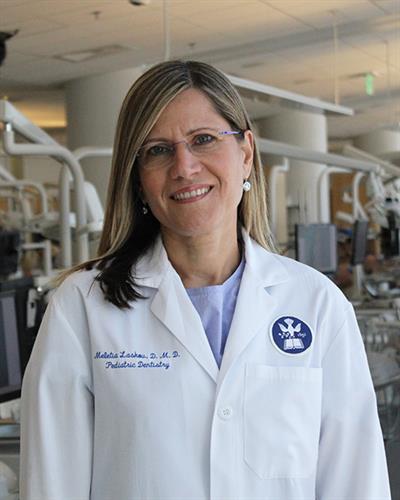
Dr. Meletia Laskou is an Associate Professor in Pediatric Dentistry at Tufts University School of Dental Medicine, where she also serves as Director of the Advanced Education Program and Postdoctoral Program Director. She holds clinical privileges at Franciscan Children’s Hospital and Tufts-New England Medical Center. D.M.D., Tufts University of Dental Medicine (2001) D.D.S., Aristotle University of Thessaloniki Dental School (1992) Her research focuses on restorative materials for primary teeth, oral care habits in children requiring general anesthesia, and interprofessional collaboration with pediatricians. She has extensive teaching experience and leads community outreach initiatives like "Give Kids A Smile." Key research trends include applications of biomaterials in pediatric dentistry, oral health management for children with special needs, and systemic-dental health linkages (e.g., gastroesophageal reflux in cerebral palsy patients). Board Certified in Pediatric Dentistry Diplomate, American Board of Pediatric Dentistry Fellow, American Academy of Pediatric Dentistry She has held leadership roles in admissions, clinical governance, and curriculum development since 1997, with a focus on equal education opportunities and infection control protocols.