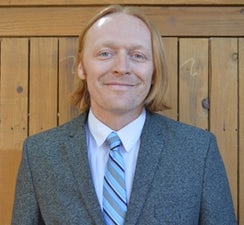
Jacob Eyferth is an Associate Professor at the University of Chicago, jointly appointed in the Department of East Asian Languages and Civilizations, the Department of History, and the College. His research focuses on the social and cultural history of twentieth-century China, particularly rural communities, gender dynamics, and the intersection of technology and everyday life. Key research themes include the impact of industrialization, collectivization, and revolution on non-elite populations, with an emphasis on rural women's labor and cultural resistance. His current project explores cotton production, clothing, and gender during China's socialist era. Eating Rice from Bamboo Roots (2009) How China Works (2006) Rural Development in Transitional China (2004) He received the 2011 Joseph Levenson Prize for his first book. Eyferth has taught courses on topics such as class inequality, everyday life under socialism, and revolutionary China, and has held postdoctoral fellowships at Oxford, Harvard, and Rutgers.
Sigrid Schmalzer is a Professor of History at the University of Massachusetts Amherst, specializing in the history of science and modern China. She holds a Ph.D. in History and Science Studies from the University of California, San Diego (2004). Her research bridges the social, cultural, and political dimensions of science in China, with a focus on the intersections of agriculture, activism, and revolutionary movements. Schmalzer is the author of *Red Revolution, Green Revolution: Scientific Farming in Socialist China* (2016), winner of the Joseph Levenson Book Prize, and *The People's Peking Man: Popular Science and Human Identity in Twentieth-Century China* (2008), recipient of the Allan Sharlin Award. Her current projects include a book on agricultural heritage in the People’s Republic of China and leadership roles in organizations like the Critical China Scholars and Science for the People. She co-edits the *Activist Studies of Science and Technology* series for UMass Press, emphasizing socially engaged scholarship. Schmalzer also serves as Co-President of the MSP faculty union at UMass Amherst. Research interests span the history of science activism, transnational movements, and the legacy of Maoist science. Notable awards include the Freeman Book Award (2018) for her children’s book *Moth and Wasp, Soil and Ocean*, which integrates science education with historical narratives. Her work often critiques capitalist and authoritarian structures while advocating for science as a tool for justice and sustainability. Recent publications explore themes like agroecology, science policy, and the global dimensions of China’s scientific history. She teaches courses on modern China, science in society, and radical science movements, blending interdisciplinary approaches to engage students in critical analysis of historical and contemporary issues.
Christopher Rea is a Professor of Modern Chinese Literature in the Department of Asian Studies at the University of British Columbia's Faculty of Arts. He serves as a faculty member and former Associate Head of the Department of Asian Studies, former Director of the Centre for Chinese Research, an associate of the Hong Kong Studies Initiative, and a Faculty Fellow of St. John's College. His academic journey includes a Ph.D. from Columbia University (2008) and a B.A. from Dartmouth College (1999). Rea's research focuses on the modern Chinese-speaking world, with particular expertise in Chinese literature, cinema, print culture, translation, and the cultural history of humor and deception. His scholarly approach bridges literary analysis, cultural history, and film studies, creating a distinctive interdisciplinary perspective on modern Chinese cultural production. He is particularly known for his work on Republican-era China (1912-1949), exploring how cultural forms evolved during this transformative period. His major publications reveal a trajectory from studies of humor and laughter in modern China ( The Age of Irreverence , 2015) to literary hoaxes and deception ( The Book of Swindles , 2017), Chinese cinema ( Chinese Film Classics , 2021), and research methodology ( Where Research Begins , 2022). His current projects include China on the Make: Stories of Chinese Deception and The Unfinished Comedy , a sequel to The Age of Irreverence . National Endowment for the Arts Translation Fellowship (2024) UBC Dean of Arts Mentorship Award (2024) UBC Killam Research Prize (2022) Joseph Levenson Book Prize (2017) Rea actively supervises graduate students and has developed significant digital resources, including the Chinese Film Classics project (chinesefilmclassics.org) featuring 40+ subtitled Chinese films and 22 video lectures, and a YouTube channel with over 250 videos on Chinese cinema and culture. His teaching extends to free online courses on The Modern Chinese Novel and early Chinese cinema, demonstrating his commitment to making scholarly resources accessible beyond traditional academic boundaries.
Professor David A Palmer is a distinguished academic jointly appointed by the Hong Kong Institute for the Humanities and Social Sciences and the Department of Sociology at the University of Hong Kong, where he has been teaching since 2008. His interdisciplinary work bridges anthropology, sociology, religious studies, and Sinology, establishing him as a leading scholar in Chinese religious studies and transnational religious movements. Palmer's educational background includes a PhD in Anthropology of Religion from Ecole Pratique des Hautes Etudes (Sorbonne, Paris), an MPhil in Clinical Psychology/Medical Anthropology from University of Paris-VIII, and a BA in Anthropology and East Asian Studies from McGill University. His scholarly contributions span multiple disciplines with particular emphasis on Chinese religious traditions and their global manifestations. His research interests focus on the anthropology and sociology of spirituality and religion, especially Daoism and Chinese religion; religion in modern and contemporary China; inter-Asian and transnational religious circulations; Baháʼí Faith; civil society, volunteering, philanthropy, community engagement; and cultural and religious interactions on the Belt and Road. His work examines how religious traditions navigate modernity, state power, and globalization, with particular attention to the Belt and Road Initiative's cultural dimensions. Palmer's publications reveal a consistent focus on understanding Chinese religious traditions within broader theoretical frameworks of social theory, civil society, and transnational religious networks. His articles demonstrate how Chinese religious practices and institutions both adapt to and shape contemporary social and political contexts, with particular attention to the intersections of spirituality, modernity, and state-society relations. Joseph Levenson Award of the Association for Asian Studies PROSE award of the American Publishers' Association Francis L.K. Hsu Award of the Society for East Asian Anthropology Edward Bruner Prize for the best book in Anthropology of Tourism HK Research Grants Council RGC Research Fellowship (2021-2025) HK Research Grants Council Humanities and Social Sciences Prestigious Fellowship (2019) Palmer currently leads multiple significant research projects including 'Global China, Local Cultures: Chinese Modernity and Soft Power on the Belt and Road' (RGC Research Fellowship, 2021-2025), 'Infrastructures of Faith: Religious Mobilities on the Belt and Road' (CRF, 2019-2023), 'Rituals and Manuscripts of the Lanten Yao (Laos)' (GRF, 2021-2024), and 'Religious Cosmopolitanism in China, 1895-1927' (GRF, 2021-2024). He leads the 'Asian Religious Connections' research cluster at HKIHSS, co-convenes the 'Culture, Community and Social Equity' research cluster in the HKU Faculty of Social Sciences, and serves as co-convenor of the HKU Anthropology Research Network. As President of the East Asian Society for the Scientific Study of Religion, he plays a key role in advancing scholarly understanding of religion in the region.
Mari Ostendorf serves as an Adjunct Professor in the Department of Computer Science and Engineering within the College of Engineering at the University of Washington, where she conducts research at the intersection of speech technology and computational linguistics with emphasis on spontaneous speech phenomena. Her educational foundation includes: PhD in an unspecified field, Stanford University (1985) Her research program systematically investigates: Speech Processing: Specializing in spontaneous speech characteristics and prosodic modeling Natural Language Processing: Focusing on conversational speech parsing and stance analysis Computational Linguistics: Integrating linguistic theory with machine learning approaches Prosody: Analyzing idiosyncratic speech patterns for language processing applications Stance Recognition: Developing computational methods for identifying speaker attitude and commitment Her work manifests in significant projects including the LiCORICE Project (2009-2011) as Principal Investigator and the ATAROS Project as Co-Principal Investigator, both advancing automatic spoken language processing through detailed modeling of speech prosody and stance phenomena. Analysis of her publication record reveals a consistent trajectory toward interdisciplinary integration of linguistic theory and machine learning for spoken language understanding, with particular emphasis on non-lexical cues and discourse markers in conversational contexts that bridge computational and cognitive approaches to language processing. No scientific awards were mentioned in the provided documentation. Her advising record includes PhD candidates Jeremy Kahn (2010 dissertation on conversational speech parsing) and Esther Le Grézause (2017 dissertation on stance expression). Her grant portfolio features the LiCORICE Project (2009-2011, PI with Emily M. Bender and Mark Zachry) and the ATAROS Project (Co-PI with Richard Wright and Gina Levow), demonstrating sustained research funding in speech technology. Her research operates within an interdisciplinary framework connecting computer science and linguistics, evidenced by collaborations spanning departments and contributions to dissertation defenses in the Linguistics program at the University of Washington.
Ching Kwan Lee is a Professor of Sociology at the University of California, Los Angeles (UCLA). Her work focuses on global and comparative issues, including labor politics, political sociology, decolonization, and the dynamics of Chinese capitalism. She is renowned for her trilogy on Chinese labor and global expansion, including Gender and the South China Miracle , Against the Law , and The Specter of Global China . Lee has also authored groundbreaking studies on Hong Kong’s decolonization struggles and African-China relations. Education: PhD in Sociology from the University of California, Berkeley. Research Interests : Globalization and its social impacts Comparative labor movements and protest dynamics Decolonization and postcolonial state formations Sino-African economic and labor relations Hong Kong’s political trajectory and transnational activism Her recent work explores resistance to 'global China,' including mass mobilizations in Hong Kong documented in Forever Hong Kong: A Global City’s Decolonization Struggle (2025). She co-edits the Cambridge Elements in Global China and leads the Global Hong Kong Studies @UC initiative. Awards & Recognition : 2024 Distinguished Career in Political Sociology Award Multiple book prizes for The Specter of Global China Fellowships at Stanford’s Center for Advanced Study and Princeton’s Institute for Advanced Study Grants & Initiatives : Lead researcher on NSF grants studying platform capitalism and labor in China Initiated comparative projects on Brazil, India, China, and South Africa ( Southern Interregnum ) Co-editor of volumes on Hong Kong’s Umbrella Movement and global labor studies
Matthew Louis Mauriello is an Assistant Professor in the Department of Computer and Information Sciences at the University of Delaware , where he directs the Sensify Lab . He holds a PhD in Computer Science from the University of Maryland (2018) and completed postdoctoral work at Stanford University (School of Medicine, 2020; School of Public Policy & Environmental Engineering Department, 2019). Research interests span Human-Computer Interaction (HCI), Ubiquitous Computing, and User-Centered Design with applications in: Sustainability Human-Building Interaction Wearable Technology Personal Informatics Educational Game Design Mental Health Interventions Recent publications highlight trends in stress monitoring (skin-like biosensors, workplace wellbeing), energy auditing (thermography systems), and educational technology (block-based programming tools for teachers). His work appears in ACM CHI, ACM Human-Computer Interaction, and Building and Environment. Scientific awards include: Best Paper Honorable Mention, CHI 2016 Best Paper Honorable Mention, CHI 2015 Best of WebSci'18 Teaching at University of Delaware encompasses courses like Educational Game Design Operating Systems Advanced Web Technologies Computing for Social Good with a focus on project-based learning and systems thinking.
Professor Jo Barraket is a leading academic and researcher in social equity, social innovation, and public policy. As Director of the Melbourne Social Equity Institute and member of the Dilun Duwa Centre for Indigenous Business Leadership, she focuses on improving social equity through organizational innovation, cross-sector collaboration, and policy design. Her research addresses social procurement, health equity, digital inclusion, and employment pathways for marginalized groups. Her work includes landmark projects such as the Australian Digital Inclusion Index and evaluations of Commonwealth Social Enterprise Development Funds. She has secured over $11M in research grants, including multiple ARC grants, and produced over 75 scholarly publications. Her current projects compare social procurement policies in Australia and Scotland, and study youth unemployment in construction via employment-focused procurement. Key research themes include: social enterprise scaling strategies, cross-sector partnerships for policy implementation, and the role of philanthropy in equitable housing. She advises governments and OECD on inclusive employment policies and chairs major research initiatives like the Social Enterprise Impact Lab. Prof Barraket’s transdisciplinary approach combines rigorous academic research with practical outputs like policy guides and digital tools to maximize societal impact. She previously founded the Centre for Social Impact Swinburne, now a global leader in social economy research.
Gierad Laput is a Senior Engineering Manager at Apple, leading the Perception and Interaction Engineering organization under Machine Intelligence Neural Design (MIND) at Apple AI/ML (AIML). He is also an Adjunct Professor at Carnegie Mellon University's School of Computer Science and Human-Computer Interaction Institute. His research sits at the intersection of sensing systems, interactive technologies, and machine learning, with applications in ambient intelligence, wearables, and AI-driven interactive experiences. Ph.D. in Computer Science from Carnegie Mellon University Founding member of CMU's Future Interfaces Group Former Google Ph.D. Fellow, Disney Imagineer, and recipient of 10 Best Paper Awards/Nominations His research agenda at Apple leverages cutting-edge hardware to develop multimodal ML systems for vision, audio, and motion sensors, enabling features like head gesture detection for AirPods, Apple Intelligence integrations, and health monitoring tools. Recent collaborative projects include Vision Pro hand interaction systems and WatchOS updates for cycling/fall detection. Key research areas include human-computer interaction , machine learning for sensor fusion , and smart environment sensing . Over 35 publications cover transformative technologies like ViBand (bio-acoustic sensing), EM-Sense (touch recognition), SkinTrack (arm as touchpad), and ElectroDermis (stretchable electronics). Scientific honors include: Fast Company Innovation by Design Award (2017) Google PhD Fellowship (2018) Swartz Entrepreneurial Fellowship (2018) Best Paper Awards at ACM UIST (2016) and ACM CHI (2015) As an educator, he has taught courses at CMU and the University of Michigan on on-device machine learning , signal processing , and human-centered design . His lab has mentored numerous researchers now pursuing PhDs at MIT, UW, CMU, and Northwestern.
Prof. Sergio Ginebri is an Associate Professor at the Department of Jurisprudence, University of Rome Tre. He holds a PhD in Economics from Sapienza University of Rome and has extensive experience in fiscal policy, pension systems, and public finance research. His work focuses on topics like pension sustainability, social inequality, and the political economy of public debt. Education: PhD in Economics, Sapienza University of Rome (1988–1992) MA in Economics, University of Warwick (1987–1988) Laurea in Statistics and Demography, Sapienza University of Rome (1977–1984) Research Interests: Prof. Ginebri specializes in public policy, fiscal sustainability, and the social impacts of pension reforms. His research explores how demographic trends, wealth distribution, and political dynamics shape economic policies. Recent work includes analyses of longevity risks, pension equity, and fiscal policy integration in the EU. Key Projects: Coordinated studies on pension system sustainability (2002–2018) Developed models for forecasting public pension expenditure Contributed to EU tax policy observatories Awards: Recipient of the national PhD award (1994) and recognition for academic excellence in tax policy research (2001). Teaching: Teaches courses in political economy, public finance, and macroeconomics at undergraduate and graduate levels.
Dr. Corey T. Callaghan is an Assistant Professor in the Department of Wildlife Ecology and Conservation at the University of Florida . Based at the Fort Lauderdale Research and Education Center , his research focuses on global change ecology using big data from citizen science platforms like eBird and iNaturalist, combined with geospatial analyses and macroecological theory . Ph.D. (2019) from UNSW Sydney M.S. (2015) from Florida Atlantic University B.S. + B.S. (2013) from Canisius College His work examines urban ecology , including how species traits influence urban tolerance across birds, amphibians, and butterflies. He develops adaptive sampling frameworks to optimize citizen science data collection while addressing biases. Current projects analyze human-nature interactions through citizen science participation, secondary data in photographs, and machine learning for biodiversity monitoring. He actively contributes to conservation strategies for urban biodiversity and data-driven restoration efforts . Recent publications highlight his expertise in cross-taxa comparisons , continental-scale analyses , and ecosystem service quantification . He leads the Global Ecology Research Group at the University of Florida, emphasizing collaborative science and open-source methodologies .
Dawn Song is a Professor in the Department of Electrical Engineering and Computer Science at the University of California, Berkeley, affiliated with multiple research centers including the Berkeley Artificial Intelligence Research Lab (BAIR) and the Berkeley Center for Responsible, Decentralized Intelligence (RDI). She holds leadership roles in AI safety, cybersecurity, and blockchain research. Her work bridges machine learning, security, and distributed systems, with notable contributions to formal verification, privacy-preserving technologies, and AI governance. Education: Ph.D. (2002) and M.S. (1999) in Computer Science from UC Berkeley and Carnegie Mellon University, respectively. She previously served as an Assistant Professor at Carnegie Mellon University before joining UC Berkeley in 2007. Research Interests: Dawn's work focuses on AI safety, cybersecurity, and the ethical implications of frontier AI. She explores topics such as large language model vulnerabilities, zero-knowledge proofs, blockchain security, and policy frameworks for AI governance. Her research combines theoretical rigor with practical applications, addressing challenges in secure systems, adversarial machine learning, and privacy-preserving computation. Publications: Her recent work includes groundbreaking studies on LLM memorization, smart contract decompilation, and AI agent cybersecurity evaluation. She also leads initiatives like the Singapore Consensus and California Report on AI safety priorities, emphasizing global collaboration in risk mitigation. Notable Awards: MacArthur Fellowship (2010), ACM Fellow (2019), IEEE Fellow (2019) Advising & Grants: She advises projects on AI policy and cybersecurity, securing grants from NSF, DARPA, and industry collaborations. Her lab develops tools like CyberGym for evaluating AI agents and zkPyTorch for secure machine learning. Labs & Teams: Her research groups at UC Berkeley focus on cutting-edge projects in AI safety, blockchain, and cybersecurity, collaborating with industry leaders and policymakers to advance both technical and ethical standards.
Andrea Vedaldi is a Professor of Computer Vision and Machine Learning at the University of Oxford's Department of Engineering Science, affiliated with the Visual Geometry Group (VGG). He specializes in unsupervised methods for understanding images and videos, focusing on 3D geometry and semantics. His research bridges foundational AI and practical applications, with contributions to generative models, neural fields, and self-supervised learning. Education: PhD in Computer Science (2008), University of California, Los Angeles MSc in Computer Science (2005), UCLA BSc in Information Engineering (2003), University of Padua Research Interests: Unsupervised learning, 3D perception, generative AI, neural rendering, and scalable vision systems. His work emphasizes ethical, responsible AI aligned with ERC-funded projects like UNION (ERC Consolidator Grant). Key Contributions: Co-developer of VLFeat and MatConvNet libraries Leader in 3D reconstruction and diffusion models (e.g., CatFree3D) Recipient of the PAMI Thomas S. Huang Prize and multiple best paper awards Grants & Service: Principal Investigator on £2.3M ERC Consolidator Grant (UNION) Co-organizer of major conferences (ECCV 2020 Program Chair, CVPR 2023 Area Chair) Reviewer for top journals/conferences (PAMI, CVPR, NeurIPS) Labs & Teams: VGG Group at Oxford, collaborating on projects like Meta 3D Gen and Common Objects in 3D (CO3D).
John F. Beacom is a Distinguished Professor of Physics and Astronomy at The Ohio State University and Director of the Center for Cosmology and AstroParticle Physics (CCAPP). His academic roles include leadership in astroparticle physics research and education. He holds joint appointments in both the Department of Physics and the Department of Astronomy within the College of Arts and Sciences. Beacom earned his Ph.D. in Physics from the University of Wisconsin (1997) and dual B.S. degrees in Physics and Mathematics from the University of Kansas (1991). He has held postdoctoral positions at Fermilab and Caltech before joining Ohio State in 2004. His research focuses on neutrinos, dark matter, and multi-messenger astrophysics, with emphasis on neutrino detection techniques, supernova physics, and cosmological implications. He leads major projects like the All-Sky Automated Survey for Supernovae (ASAS-SN) and contributes to the Deep Underground Neutrino Experiment (DUNE). Awards: APS Fellow (2014), NSF CAREER Award (2005–2010), multiple teaching awards for distinguished instruction. Grants: Extensive funding from NSF, DOE, and collaborative international initiatives. Labs/Teams: CCAPP, DUNE Collaboration, ASAS-SN project. His articles span neutrino physics, detector development, and observational astrophysics, reflecting interdisciplinary expertise in theoretical and experimental particle astrophysics.
Ben Nobbs-Thiessen is an Assistant Professor of History and Chair of Mennonite Studies at the University of Winnipeg. He holds a PhD from Emory University (2016), with prior roles as a research associate at Arizona State University (2016–18) and a teaching fellow at Washington State University (2018–2020). His research focuses on Mennonite migrations across the Americas, environmental change, and indigenous-settler relations. He teaches courses on Latin American Mennonites and Mennonite Studies II. His research combines archival work, field studies, and oral histories from Bolivia, Paraguay, Mexico, Canada, and the U.S. His 2020 book Landscape of Migration examines Bolivia’s lowland colonization and its intersection with Mennonite and indigenous communities. Current projects include a century-long study of Mexico-Canada Mennonite migrations linked to water scarcity and neoliberal reforms. His publications span journals like Journal of Latin American Studies and Agricultural History , addressing topics like frontier development, foodways, and border conflicts. His transnational approach bridges environmental, migration, and colonial histories. He contributes to interdisciplinary initiatives such as the Newberry Consortium in American Indian Studies and the Centre for Rupert's Land Studies.