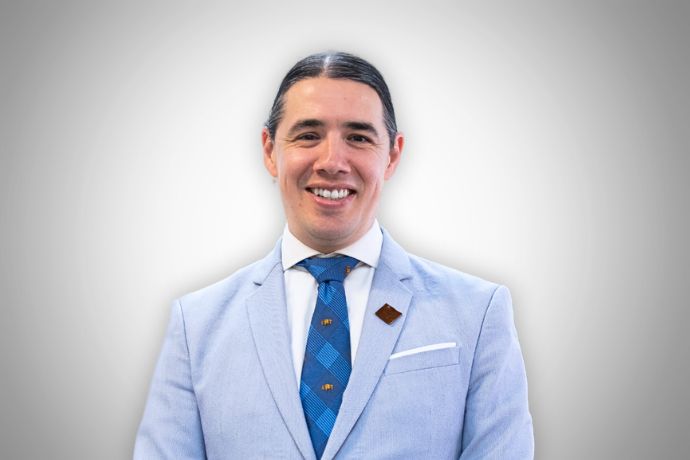
Priscila Uppal is a Professor at York University's Faculty of Liberal Arts & Professional Studies. Her work bridges creative writing, literary criticism, and cultural studies with a focus on poetry, Canadian literature, and medical humanities. She holds a PhD in English from York University, an MA in English from the University of Toronto, and a Double Honours BA in English and Creative Writing from York University. Her research explores English and European poetry, world literature, sports narratives, and revisionist mythmaking. Notable works include poetry collections like Summer Sport (2013) and Winter Sport (2010), novels such as To Whom It May Concern (2009), and the critical study We Are What We Mourn (2009). Her writings have been translated into multiple languages. Uppal actively engages in academic and public discourse through guest lectures on writing pedagogy, ethnicity, and genre innovation. She has contributed to radio and television programs discussing literature and culture. Her editorial work includes anthologies like The Exile Book of Canadian Sports Stories and Red Silk: An Anthology of South Asian Canadian Women Poets .
Sandra Chang-Kredl is a Professor at the Department of Education, Concordia University, with a research focus on Teacher Education, Curriculum Studies, and Early Childhood Education. Her work integrates cultural studies perspectives to examine teacher identity, children’s media experiences, and the impact of technology on childhood. Ph.D. in Curriculum & Instruction, Integrated Studies in Education, McGill University M.A. in Education (Child Study), Concordia University B.Ed. in Elementary Education, McGill University Her research explores teachers’ conceptualizations of childhood through autoethnographic memories, the societal devaluation of childcare educators, and children’s construction of self via media engagement. She has received funding from SSHRC and FRQSC for these projects. Chang-Kredl’s recent publications emphasize childhood memory, teacher identity, and media literacy. She has co-authored works on transitional objects and cultural tropes in education. Her public engagement includes opinion pieces in La Presse and media interviews on AI toys, Barbie diversification, and cyberviolence education. Grants: SSHRC funding FRQSC funding Horizon Fellows program funding Project Someone funding
Dr. Cara Singh is an Assistant Professor in the Early Childhood and Elementary Education (ECEE) program within the Department of Education at Concordia University. With prior experience as an elementary school teacher across Quebec, Ontario, and Nova Scotia, she specializes in mathematics, language arts, and French second language instruction. She also serves as an independent curriculum consultant for both elementary and higher education institutions. Education: Dr. Singh holds a Ph.D. and M.A. in Educational Psychology from McGill University, an M.Ed. in Curriculum Studies and Teacher Development from the University of Toronto (OISE), and a B.A. in Early Childhood and Elementary Education from Concordia University. Research Focus: Her research examines how individual and group-level metacognitive experiences influence socially shared regulation of learning in collaborative environments. She investigates pedagogical strategies that foster positive emotions during learning, mitigate negative affect, and enhance self-regulation—particularly in mathematics education. Key themes include emotion-co-regulation dynamics, epistemic cognition, and equity-driven curriculum design. Publication Trends: Her scholarly work consistently explores metacognition, emotion regulation, and collaborative problem-solving in educational contexts. Recent publications (2018–2024) emphasize mathematics education, epistemic emotions, and socially shared learning frameworks, often incorporating practical applications for teacher development and classroom interventions. Teaching & Service: At Concordia, she teaches courses including EDUC 222, 297, 400, 395, 493, 495, and 496. She has presented at major conferences (e.g., AERA, APA) and contributed to podcasts discussing educational psychology research.
Anne Wade is a part-time lecturer at Concordia University's Centre for the Study of Learning and Performance. She specializes in educational technology, information literacy, and early literacy instruction with extensive experience in global education initiatives, particularly in Sub-Saharan Africa. Part-time Faculty, Education Global Manager, Centre for the Study of Learning and Performance Research Focus: Wade's work centers on developing and implementing technology-enhanced literacy programs in diverse contexts. Her research explores: Information Literacy skill development Early Literacy interventions Self-regulated learning through digital tools Teacher professional development in low-resource settings EdTech implementation challenges Global literacy program sustainability Publication Trends: Recent scholarship shows her focus on cross-cultural educational technology adaptation, with significant work on the ABRACADABRA (ABRA) literacy program across China, Hong Kong, Rwanda, and Kenya. She examines both direct literacy outcomes and implementation factors like teacher motivation and technology accessibility. Scientific Awards: 2017 Research Professionals Excellence Awards - First place 2016 Québec Library Association - Volunteer of Distinction 2013 English Montreal School Board - APA Excellence in Librarianship Award 2008 American Psychological Association - Member of the Year 2000 Eastern Canada Chapter, Special Libraries Association - Member of the Year Professional Activities: Wade has served on numerous editorial boards including Science Insights Education Frontiers and Research Synthesis Methods . She held leadership roles in the Quebec Library Association (Past President, Treasurer) and Special Libraries Association (President, Eastern Canada Chapter).
Hélène Knoerr is a Professor at the University of Ottawa's Official Languages and Bilingualism Institute (OLBI), where she has worked for over two decades. She specializes in postsecondary French immersion education, focusing on pronunciation teaching, multimedia language learning, and pedagogical strategies for academic listening skills. Her teaching includes courses like FLS2500 Apprendre à apprendre and FLS2581 Cours d'encadrement linguistique (immersion). Research Interests: Experiential Education, Environmental Education, Place-based Learning, Civics Education, Youth Engagement and Activism, Environmental and Social Change Education Education: Doctorate in Experimental Phonetics and Language Didactics from Université d'Aix-en-Provence Knoerr's publications primarily address French immersion programs in higher education, language policy implementation, and technology-enhanced language pedagogy. Her work explores strategic transfers between language and content courses, podcast-based learning tools, and institutional bilingualism frameworks. She has co-edited multiple volumes analyzing immersion program genesis and resource allocation. Though no specific awards are mentioned, Knoerr actively contributes to OLBI through teaching, research, and program development. She maintains office hours on Mondays and Wednesdays for student consultations.
Roxane Prevost is an Associate Professor at the School of Music , University of Ottawa. Her work bridges music theory, Canadian cultural studies, and community engagement through interdisciplinary projects like the Piano Online Lessons for Adults Living Independently initiative, which addresses social isolation and well-being through online music education. Research focuses on Canadian contemporary music, rhythmic analysis, and pedagogy Collaborates with the Music and Health Research Institute and LIFE Institute Teaches graduate courses in music theory and analysis Education : Ph.D. in Historical Musicology and Music Theory from State University of New York at Buffalo (2003) M.Mus. in Music Theory from Western University B.Mus. in Music Theory from Université d'Ottawa B.A. in Music from University of Guelph Research Trends : Her recent publications emphasize Canadian music analysis, interdisciplinary collaborations, and pedagogical innovations. Key themes include rhythmic structures, cultural identity in composition, and the role of music in social well-being. Scientific Awards : Faculty of Arts New Directions Grant Program (2022-23) Community Impact : The Piano Online Lessons project demonstrates her commitment to applying music theory in real-world contexts, particularly for rural seniors and veterans, fostering inclusion through accessible musical tools.
Jean Pierre David is a Full Professor in the Department of Electrical Engineering at Polytechnique Montréal. He has been with the institution since January 2006, was promoted to Associate Professor in June 2013, and became a Full Professor in June 2021. His research focuses on digital systems design, reconfigurable systems, and hardware implementations of artificial intelligence applications. David received his Electrical Engineering degree (specializing in electronics) from the University of Liège (Belgium) in 1995. He completed his Ph.D. in June 2002 at the Catholic University of Louvain, with research focused on reconfigurable systems (FPGAs). Before joining Polytechnique Montréal, he was a professor at the University of Montreal from August 2002 to January 2006. Jean Pierre David's research spans several key areas in electrical engineering and computer science. His primary focus is on digital systems design, configuration, and programming, with particular expertise in reconfigurable systems such as FPGAs and microcontrollers. He has made significant contributions to Hardware Description Languages (HDL), developing methodologies for fast, safe, and simple design of digital architectures. His work extends to Hardware-in-the-Loop (HIL) simulation, Deep Packet Inspection (DPI) for high-speed communications (10GBE, 40GBE, 100GBE), and applications of digital systems in artificial intelligence, particularly neural network implementations. David's recent research has increasingly focused on energy-efficient AI hardware, RISC-V processor design for neural network acceleration, and specialized architectures for low-precision computation. His publication record shows a clear evolution from foundational work in digital system design and FPGA implementation toward increasingly sophisticated applications in artificial intelligence and neural network acceleration. The most recent publications demonstrate expertise in creating specialized hardware for efficient AI computation, with a strong emphasis on low-precision and binary neural networks that can run efficiently on resource-constrained devices. His work bridges computer architecture, electrical engineering, and artificial intelligence, creating practical hardware solutions for emerging computational challenges. David is affiliated with several important research groups and institutions including the Strategic Microsystems Group of Quebec (ReSMiQ), the Institute of Electrical and Electronics Engineers (IEEE), and the Institute for Data Valorization (IVADO). His work has been recognized through numerous publications in high-impact journals and conferences, with a total of 108 publications to his name. Professor David has supervised an impressive number of graduate students throughout his career, mentoring 9 Ph.D. students and 24 Master's students to completion. His students have worked on diverse topics including FPGA-based neural network acceleration, hardware implementations of deep learning algorithms, energy harvesting systems for IoT devices, and specialized architectures for low-precision computation. His lab appears to maintain strong connections with industry through various research projects and collaborations with researchers like Yves Savaria. His research laboratory focuses on the intersection of hardware design and artificial intelligence, with particular emphasis on creating efficient implementations of neural networks on specialized hardware platforms. The lab maintains strong connections with industry partners and collaborates extensively on projects related to network processing, AI acceleration, and energy-efficient computing systems.
Paul Sheridan is an Assistant Professor at the School of Mathematical and Computational Sciences, University of Prince Edward Island, specializing in text analysis and ontologies for computational literary studies. He develops novel term weighting schemes through statistical significance testing to improve document retrieval, classification, and summarization methods. His Literary Theme Ontology (LTO) provides the first controlled vocabulary of literary themes for media annotation and information retrieval. Research Grants: AI/machine learning for engine maintenance (2024), keyword extraction efficacy analysis (2023–2024), GPT-2 unnatural language generation (2022–2025) Academic Leadership: Statistics and Analytics Program Lead (2024–present), ACENET Research Directorate member His recent publications focus on lexical diversity analysis, term dispersion quantification, and statistical foundations of TF-IDF. He supervises students in projects spanning energy-efficient NLP, causal inference in finance, and low-resource language embeddings. Paul actively contributes to open-source projects like stoRy and PAFit packages.
Naomie Fournier Dubé is an Assistant Professor at the Department of Administration and Foundations of Education, Faculty of Education, Université de Montréal. Her research focuses on educational assessment , preschool education , and gross motor development in children aged 4-6 years. She has secured significant grants from the FRQSC (CAD 70,000 over 4 years) and the Relève professorale program (CAD 20,000 in 2022). Current research projects include "Quand le jeu guide l’évaluation des personnes enseignantes" (2025-2028, SSHRC-funded) and "L'évaluation dans et par le jeu en éducation préscolaire" (2024-2026, SSHRC). She collaborates with multidisciplinary teams on topics like educational inclusion , distance learning , and mathematical awakening in early education. Key publications examine assessment practices in preschool settings, spatial reasoning development, and motor skills evaluation tools. Her work appears in journals like Revue canadienne des jeunes chercheures et chercheurs en éducation and InspirAction . Awards include: 2022 FRQSC Relève professorale scholarship 2021-2025 FRQSC doctoral scholarship
Isabelle Montésinos-Gelet is a Professor in the Department of Didactics at the Faculty of Education, University of Montreal. She has been with the university since 1999 and specializes in French language education, with particular expertise in reading, writing, and children's literature applications in educational settings from preschool through primary education. Her academic journey began with work as a school librarian in Lyon during the late 1980s, which sparked her lifelong interest in children's literature. Her research focuses on the use of children's literature for teaching purposes, acquisition of written French, writing production strategies, reading strategies, and preschool education. She has developed numerous teaching tools and approaches that integrate literature into literacy instruction, with an emphasis on practical classroom applications. Professor Montésinos-Gelet's scholarly output demonstrates a consistent progression from foundational research on reading and writing processes to the development of specific teaching methodologies and assessment tools. Her work shows a strong commitment to bridging theory and practice in literacy education, with particular attention to supporting teachers in implementing effective instructional approaches. Raymond-Plante Prize 2016 She has supervised over 20 doctoral students and numerous master's students, contributing significantly to the development of new researchers in educational sciences. Her research projects have been funded by major Canadian funding agencies including the Social Sciences and Humanities Research Council of Canada (SSHRC) and the Fonds de recherche du Québec - Société et culture (FRQSC), with current work focusing on developing an online guide for implementing the DIRE-MENTOR program in school settings (2024-2026). She collaborates closely with teachers in Montreal schools to develop and implement literary networks that support linguistic awareness in reading and writing.
Dr. Janine Mendola is a Scientist at the Research Institute of the McGill University Health Centre (RI-MUHC) at the Montreal General Hospital site and an Associate Professor in the Department of Ophthalmology and Visual Sciences within McGill University's Faculty of Medicine and Health Sciences. She is a key member of the Brain Repair and Integrative Neuroscience (BRaIN) Program and the Centre for Translational Biology at RI-MUHC, contributing to McGill Vision Research, an interdisciplinary unit with six faculty members working collaboratively on visual neuroscience. Her research focuses on the functional organization of the human visual system and the neural basis of perception in health and disease. She investigates binocular vision, form perception, and visual processing using advanced neuroimaging techniques including functional magnetic resonance imaging (fMRI) and magnetoencephalography (MEG). Her work spans both basic science and clinical applications, with particular emphasis on amblyopia (lazy eye), inherited retinal diseases, and traumatic optic nerve injury. She employs diffusion tensor imaging and machine learning approaches to characterize visual system abnormalities. Dr. Mendola's recent publications reveal a strong trend toward integrating advanced imaging techniques with computational approaches to understand visual processing. Her work increasingly focuses on binocular rivalry mechanisms, visual cortex connectivity in pathological conditions, and the application of novel image analysis methods like nested attention mechanisms to medical imaging. The research spans multiple disciplines including neuroscience, ophthalmology, neuroimaging, and computer science, with applications ranging from fundamental understanding of visual perception to clinical diagnostics for visual disorders. As part of McGill Vision Research, Dr. Mendola collaborates with researchers across multiple disciplines including neurology, neurosurgery, psychology, biomedical engineering, and physiology. Her laboratory contributes to the institute's mission of understanding how the brain processes visual information and enables us to see, with particular focus on motion, form, depth, and color processing in the visual scene.
Daniel Wright is an Associate Professor in the Department of English at the University of Toronto (Mississauga campus). He serves as Interim Associate Vice-Principal, Research and Innovation - Strategic Initiatives, and holds roles as Graduate Faculty and Undergraduate Instructor. His primary affiliations include the Centre for New Theatre and the English & Drama Student Society. BA, McGill University MA, University of Toronto PhD, Columbia University Wright specializes in the theory and history of the novel, with a focus on 19th-century realism and queer/trans narratives. His research bridges literature with philosophy (ordinary language philosophy, ethics, metaphysics) and psychoanalysis. Current projects include editing Great Expectations for Norton Library and writing The Novel of Sexual Ideas . His publications span Victorian literature, feminist/queer/trans theory, and novelistic structure. Thematic clusters include ethical ambiguity in realist fiction, psychoanalytic readings of desire, and ordinary language philosophy's impact on literary criticism. Articles appear in PMLA , Victorian Studies , and ELH . UTM Annual Research Prize in Humanities (2022) SSHRC Insight Grant (2020) John Charles Polanyi Prize (2016) Connaught New Research Award (2014) As Placement Officer, he guides career development. His work intersects with the English Theatre, Drama and Performance Studies program, reflecting interdisciplinary engagement with queer and trans studies.
Douglas Archibald is an Associate Professor in the Department of Family Medicine at the University of Ottawa . He also holds cross-appointments in the Department of Innovation in Medical Education and the Faculty of Education . As the Director of Research and Innovation at the C.T. Lamont Primary Health Care Research Centre, he focuses on enhancing medical education through educational technologies, program evaluation, and research methodology. His work spans both undergraduate and postgraduate training, with a strong emphasis on blended learning, e-learning, and virtual care platforms like eConsult services. Ph.D. in Education (University of Ottawa) His research integrates Artificial Intelligence , Natural Language Processing , and Explainable AI to improve diagnostic tools, residency training, and patient care workflows. Recent publications explore AI-driven identification of osteoporosis, frailty prediction, and enhancing dementia care via eConsult systems. He also investigates caregiver roles in long-term care and curriculum development for refugee and migrant health. Supervision : Michael Dougan, Rachel Grant, Jenny Stodola, and Rachelle Lee-Krueger (expected graduation 2028).
Robert-Falcon Ouellette is an Associate Professor at the Faculty of Education, University of Ottawa, and a 27-year Canadian Armed Forces veteran. His research spans Indigenous education, military ethics, political science, and reconciliation policy. A Red Pheasant Cree Nation member, he established Yellowquill University College in Manitoba and advocates for Indigenous language rights in parliamentary processes. PhD and two Master's degrees from Laval University Only the second Indigenous person to earn a PhD from Laval in 350 years Research interests include: Indigenous education systems, military ethics frameworks, post-colonial governance, language preservation, and reconciliation mechanisms. His work bridges historical analysis (e.g., 1885 Métis resistance) with contemporary policy advocacy (e.g., child welfare reform under Bill C-92). Scientific awards: Canadian Decoration for loyal military service (2009) Two National Aboriginal Achievement Foundation Scholarships (2007-2010) Award for Credit Programming Over 48 Hours (2012) He chairs the Indigenous Caucus in political processes and focuses on constitutional negotiations, linguistic rights, and healthcare workforce development. His social media activism (#SundanceStrong, #ReconciliationOrRegression) demonstrates public engagement with Indigenous issues.
Yves Frenette is a Permanent Professor at the University of Saint-Boniface holding the prestigious Tier 1 Canada Research Chair in Migration, Transfers and Francophone Communities. Based in the Department of Humanities and Social Sciences, he teaches history courses including HIST 2761 - United States History Since 1877 and maintains an active research program focused on North American Francophone communities. Education: Ph.D. in History from Laval University Professor Frenette's research centers on North American Francophonies , Migrations , Social history , and Ethnic Studies . His work employs interdisciplinary methodologies to examine transnational migration patterns, identity formation in minority communities, and the historical evolution of French-speaking populations across continental North America. Through meticulous archival analysis and comparative frameworks, he explores how Francophone communities navigate cultural preservation within dominant English-speaking societies. His recent scholarship reveals consistent thematic engagement with Franco-Canadian identity politics, government memory policies, and microhistorical migration studies. Publications demonstrate methodological diversity spanning historiographical analysis, epistolary studies, and demographic research, all contributing to broader understandings of cultural resilience in diaspora contexts. Scientific Awards: Fellow of the Royal Society of Canada Member of the Order of Francophones of America Elected member of the Charlevoix Society Tier 1 Canada Research Chair in Migration, Transfers and Francophone Communities Professor Frenette has secured substantial research funding including a $1.4 million Canada Research Chair (2013-2020) and multiple SSHRC grants. Key projects include the Partnership Development Grant New Perspectives on the Occupation of the North American Continent by the French-Canadian Population, 1760-1914 ($197,500) and Knowledge Grant Un Canadien errant: moorings, mobilities and transformative restructurings of national identity ($340,372), reflecting his leadership in migration studies. As director of the CRC-MTCF (Migration, Transfers and Francophone Communities) research group, he coordinates interdisciplinary collaboration through his institutional platform ustboniface.ca/crc-mtcf, fostering scholarly exchange on Francophone migration dynamics across North America.