معرفی
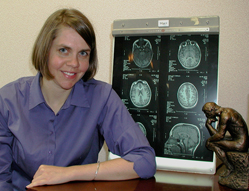
Dr. Janine Mendola is a Scientist at the Research Institute of the McGill University Health Centre (RI-MUHC) at the Montreal General Hospital site and an Associate Professor in the Department of Ophthalmology and Visual Sciences within McGill University's Faculty of Medicine and Health Sciences. She is a key member of the Brain Repair and Integrative Neuroscience (BRaIN) Program and the Centre for Translational Biology at RI-MUHC, contributing to McGill Vision Research, an interdisciplinary unit with six faculty members working collaboratively on visual neuroscience.
Her research focuses on the functional organization of the human visual system and the neural basis of perception in health and disease. She investigates binocular vision, form perception, and visual processing using advanced neuroimaging techniques including functional magnetic resonance imaging (fMRI) and magnetoencephalography (MEG). Her work spans both basic science and clinical applications, with particular emphasis on amblyopia (lazy eye), inherited retinal diseases, and traumatic optic nerve injury. She employs diffusion tensor imaging and machine learning approaches to characterize visual system abnormalities.
Dr. Mendola's recent publications reveal a strong trend toward integrating advanced imaging techniques with computational approaches to understand visual processing. Her work increasingly focuses on binocular rivalry mechanisms, visual cortex connectivity in pathological conditions, and the application of novel image analysis methods like nested attention mechanisms to medical imaging. The research spans multiple disciplines including neuroscience, ophthalmology, neuroimaging, and computer science, with applications ranging from fundamental understanding of visual perception to clinical diagnostics for visual disorders.
As part of McGill Vision Research, Dr. Mendola collaborates with researchers across multiple disciplines including neurology, neurosurgery, psychology, biomedical engineering, and physiology. Her laboratory contributes to the institute's mission of understanding how the brain processes visual information and enables us to see, with particular focus on motion, form, depth, and color processing in the visual scene.