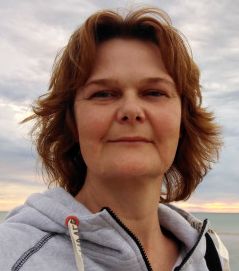
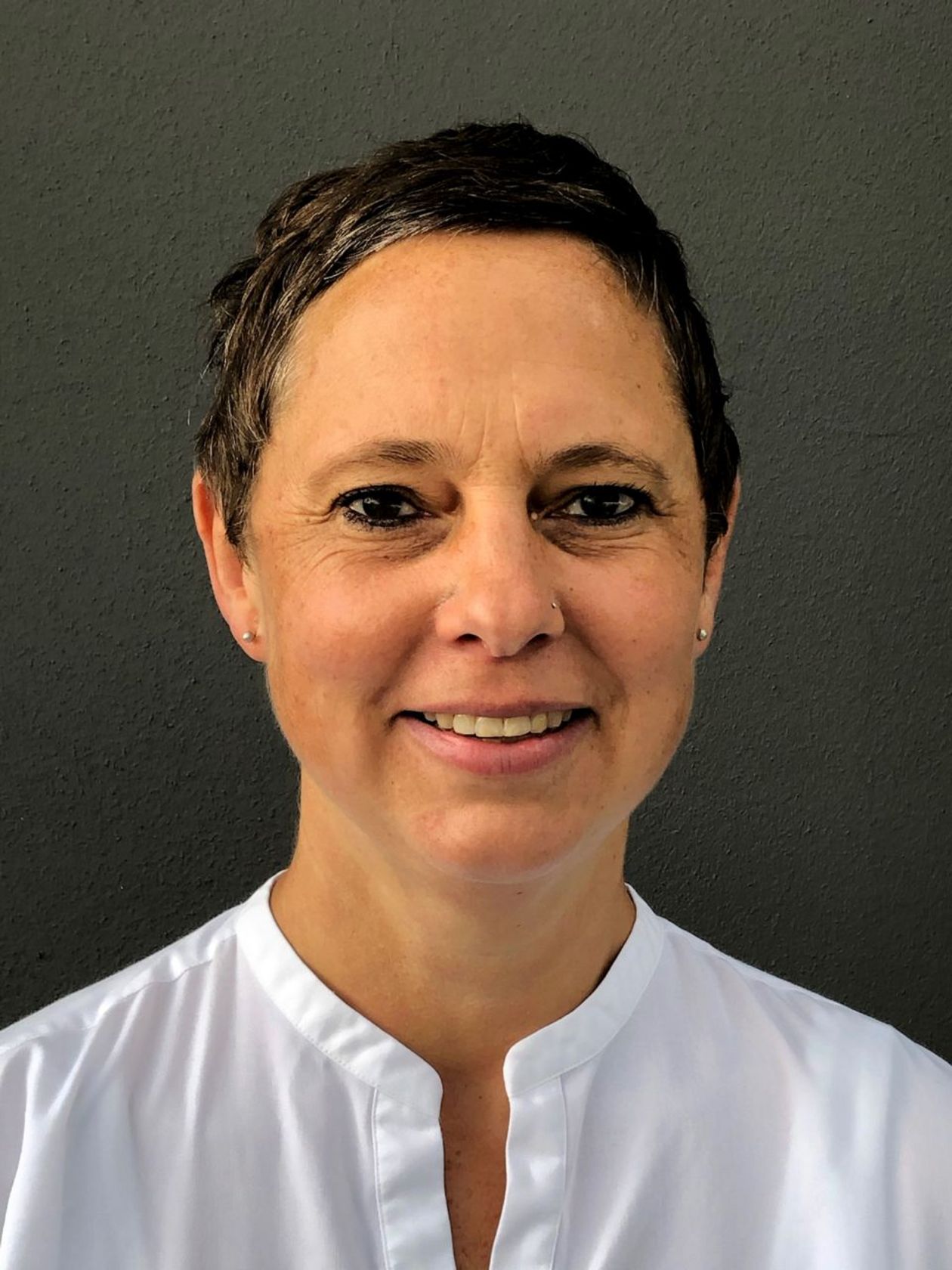
Muhammad Bilal is an Associate Professor at Zhejiang University's School of Computer Science, Department of Computer Science and Technology. His research spans multiple cutting-edge domains in computer science and engineering, with a particular focus on edge computing, Internet of Things, and vehicular networks. His research interests include Edge Computing , Internet of Things , Vehicular Networks , Federated Learning , Digital Twins , and Cloud Computing . His work addresses critical challenges in resource allocation, latency optimization, privacy preservation, and intelligent decision-making in distributed computing environments. He has made significant contributions to developing novel frameworks for service caching, computation offloading, and secure data processing in next-generation networks. His recent publications reveal a strong trend toward integrating artificial intelligence with edge and cloud infrastructure, particularly focusing on privacy-preserving techniques and resource-efficient algorithms. His work spans applications from intelligent transportation systems to healthcare monitoring and meteorological services, demonstrating the versatility and real-world impact of his research. Dr. Bilal has established a prolific publication record with numerous high-impact papers in top-tier journals and conferences, reflecting his active engagement in the academic community. His collaborative approach is evident through extensive co-authorship networks, particularly with researchers in China, Pakistan, and internationally.
Prof. Dr. Karin Frank is a W2 Professor of Ecological Modelling at the University of Osnabrück and the Helmholtz Centre for Environmental Research (UFZ). She holds a Diplom in Mathematics (1988) and a Dr. rer. nat. in Mathematical Physics (1992) from the University of Leipzig, followed by a Habilitation (Dr. habil.) in Applied System Sciences (2006). Her research focuses on modeling ecological, eco-hydrological, and social-ecological systems under global change, with emphases on biodiversity conservation, ecosystem services, and sustainable resource use. She has led major projects such as the Helmholtz Program 'EnergyLandUse' and chairs the UFZ Graduate School HIGRADE. Her expertise includes spatial, stochastic, and agent-based modeling, integrating organismic and matter flux aspects. Key roles include Head of the Department of Ecological Modelling (since 2010) and Spokesperson for the 'Policy Instruments and Socio-Environmental Systems' (POLISES) group. Awards include the UFZ Doctoral Award (2014) and Best Presentation at HIGRADE (2013). Research interests span species survival under habitat loss, sustainability in drylands, and land-use impacts of renewable energy systems. She co-develops tools like the FORMIND forest model and contributes to initiatives like the German Centre for Integrative Biodiversity Research (iDiv). Recent publications highlight modeling advances in ecological resilience, socio-technical systems, and interdisciplinary decision-support frameworks. Her work bridges theory, experimentation, and policy, fostering collaboration across scientific disciplines and institutions.
Prof. Christine Schmalenbach is an Assistant Professor of Special Education at the University of Hamburg's Faculty of Education. Her work focuses on learning processes in challenging contexts, cooperative learning, and inclusive education. She leads the Faculty Research Center 'Literacy in Diversity Settings (LiDS)' and holds a tenure-track position (W2) in Special Education with a focus on learning and emotional/social development. Education: PhD in Rehabilitation Sciences (2017), TU Dortmund (summa cum laude) Art Therapy Training (2010–2015), Werkstatt für Kunst und Therapie, Münster Special Education Teaching Degree (2003–2007), PH Ludwigsburg Research Interests: Christine explores cooperative learning dynamics in diverse classrooms, social-emotional development programs (e.g., SeELe), and educational interventions in high-risk contexts like El Salvador. She emphasizes participatory approaches and cultural sensitivity in curriculum design. Selected Projects: SeGEL-Sek1 : Design-Based Research on self-regulated social-emotional learning materials for urban schools RAICES : Teacher training in El Salvador during crises LIFE Program : University-student mentoring for marginalized youth Awards & Honors: Elizabeth Cohen Award (2019) for doctoral work on cooperative learning in El Salvador DAAD Fellowships (2013–2017) for international research collaborations Advising & Grants: Christine advises on international educational initiatives (e.g., Nehemiah International NGO) and coordinates projects funded by the Kurt & Käthe Klinger Foundation. She mentors students in mixed-methods research design and implementation. Labs/Teams: Her research group collaborates with institutions in Germany and El Salvador to develop scalable educational tools like the SeELe program materials.
Alina Alwast is a Researcher at the University of Hamburg's Faculty of Education, specifically within the Department of Mathematics Didactics led by Prof. Dr. Buchholtz. Her roles include project coordination (e.g., ProfaLe project) and research in mathematics education focusing on teacher development and mathematical modeling. Education & Career: Holds a doctoral degree (since 2018) and has held research positions since 2017 in projects addressing teacher professionalization and mathematical modeling education. Current position (2024–2028) as a scientific employee under §28(2) Habil regulations. Research Interests: Focuses on pre-service teachers' competencies in mathematical modeling instruction, including noticing skills, metacognitive strategy use, and transition challenges between school and university education. Active in developing assessment tools and video-based training methods for teacher education. Publications: Published 10 peer-reviewed articles (2019–2024) emphasizing mathematical modeling pedagogy, teacher noticing, and educational discontinuity studies. Highlights include work on staged video vignettes for professional development and analysis of pre-service teachers' competencies. Grants & Projects: Key contributor to projects like ProfaLe (teacher professionalization under societal changes), TEDS-M validation, and modeling day initiatives. Coordinates interdisciplinary collaborations in mathematics education. Labs/Teams: Associated with the LehrLabor Lehrerprofessionalisierung (Teacher Professionalization Lab) and collaborates with international research networks in mathematics education.
David A. Plecher is a researcher at the Technical University of Munich, specializing in Virtual Reality (VR), Augmented Reality (AR), and Serious Games. His work focuses on applying these technologies to education, cultural heritage preservation, and healthcare. He earned his Ph.D. in 2021 with a thesis on the impact of serious games in cultural heritage preservation. Plecher frequently collaborates with colleagues such as Christian Eichhorn and Gudrun Klinker, producing over 50 publications across conferences like HCI International, VR, and ISMAR. Key research areas include: Development of educational serious games for language learning (e.g., Egyptian hieroglyphs, Latin) AR applications for historical and archaeological education Health-focused VR/AR solutions targeting elderly populations Cross-platform AR frameworks and collaborative systems Recent work emphasizes: Game-based training for healthcare workers using AI-driven pose tracking VR environments for understanding historical computing systems Social VR platforms for aging populations Hybrid AR systems combining tangible and digital elements
Axel Großmann is a former PhD Researcher affiliated with the International Center for Computational Logic (ICCL) at the Technische Universität Dresden . He was part of the Faculty of Computer Science and the Knowledge Representation and Reasoning Research Group . His work focuses on robotics , particularly in areas such as mobile robot localization, control systems, and probabilistic sensor models. He contributed to integrating reactive control, reasoning, and execution monitoring in dynamic environments. Key research interests include knowledge representation , symbolic dynamic programming , and robot-environment interaction . His publications span topics like semi-supervised learning methods, visual sensor models, and robust localization techniques using Hough transforms and probability grids. He collaborated on technical reports and conference papers addressing autonomous navigation and adaptive control systems. While no awards or current students are explicitly mentioned, his involvement in the ICCL and the Knowledge Representation group highlights his contributions to advancing computational logic and robotics applications. His work integrates theoretical foundations (e.g., Fluent Calculus) with practical robotics challenges.
Dr. Marc Egloffstein is a Research Associate (Post-Doc) at the University of Mannheim’s Department of Business Education – Learning, Design & Technology. His research focuses on educational technologies, AI in education, open online courses, and digital transformation in educational organizations. He holds a PhD from the University of Mannheim and degrees in Business Informatics and Business Education from the Universities of Bamberg and Swansea. Education: PhD in Economic and Business Education, University of Mannheim Master’s (Dipl.-Hdl.) in Business Education, University of Bamberg Master’s (Dipl.-Wirtsch.Inf.) in Business Informatics, University of Bamberg Research Interests: Dr. Egloffstein’s work explores AI applications in education, OER utilization, MOOC design, and digital transformation frameworks. He emphasizes stakeholder engagement in educational technology implementation and evaluates behavioral patterns in online learning environments. Teaching and Experience: He has taught across multiple German and international universities, including Mannheim, Bamberg, Hohenheim, Stuttgart, and Turku. His roles include instructional design, project coordination at Mannheim Business School, and advising student theses. He also contributes to academic staff development programs. Labs/Teams: His work is embedded within the Learning, Design & Technology group at Mannheim, collaborating on projects like the #KO. vernetzt initiative for digital organizational development. He co-leads research on AI integration in vocational training and e-government competence modules.
Marion Wiese is a Researcher at the University of Hamburg's Department of Informatics, part of the Faculty of Computer Science. She is a PhD student focusing on establishing sustainable Technical Debt Management (TDM) processes. Her work bridges academic research and industry practice, emphasizing awareness and process design for TDM in agile environments. Prior to academia, she spent over two decades at Gruner+Jahr GmbH as a Software Architect and Senior Developer, leading projects in system integration, BI applications, and ITIL implementation. Research Interests: Technical Debt Management, Software Architecture, Agile Development, Quality Assurance. Grants: Her doctoral project is funded by the German Federal Ministry of Education and Research (BMBF) under the Software Campus initiative. Awards: Recognized as 'Best Reviewer' in 2024. Teaching: Involved in courses like Software Development II and Agile Project Management. Publications: Over 9 peer-reviewed articles on TDM, architecture smells, and software decision-making. Roles: Program Chair for conferences like TechDebt, EASE, and ECSA.
Dr. Cathrine Bublatzky is a Senior Lecturer and Researcher in the Department of Social and Cultural Anthropology at the Faculty of Humanities, University of Tübingen. She previously held a long-term academic position at the Heidelberg Center for Transcultural Studies, where she worked from 2009 to 2022 as a Scientific Staff Member and Assistant Professor. Her academic journey includes a Magister Artium in Anthropology from Heidelberg University (2008), a PhD completed in 2014 on the traveling art exhibition Indian Highway , and ongoing habilitation research on Iranian photography and migration. Education: Magister Artium in Anthropology, Heidelberg University (2008) PhD (Promotion) in Anthropology, Ruprecht-Karls-Universität Heidelberg (2014) Habilitandin in Ethnology, Ruprecht-Karls-Universität Heidelberg (since 2020) Baden-Württemberg Certificate in Higher Education Teaching (2021) Dr. Bublatzky’s research lies at the intersection of visual and media anthropology, transcultural studies, and contemporary art. Her work critically examines how art, photography, and digital media shape and reflect experiences of migration, identity, and belonging. She focuses on transcultural visual practices, especially in South Asia (India), the Middle East (Iran), and Europe. Her ethnographic approach explores the politics of representation in global art exhibitions, the role of archives in migration, and the aesthetics of diasporic communities. She is particularly interested in how visual media serve as sites of resistance, memory, and negotiation in exile contexts. Her recent publications reveal a strong thematic continuity in examining transcultural dissonances, visual archives of migration, and the role of art in postmigration societies. Her monograph Along the Indian Highway (2019) is a foundational ethnographic study of an international art exhibition, and her co-edited volume (Un)Sighted Archives of Migration (2022) has been recognized with an award. Her articles analyze censorship, curatorial strategies, and the materiality of visual knowledge, especially in the context of Iranian and Indian diasporas. Scientific Awards and Recognition: Awarded for book publication (Un)Sighted Archives of Migration—Spaces of Encounter and Resistance (2022) Stipendiatin, Elite PostDoc Program, Baden-Württemberg Stiftung (since 2017) Baden-Württemberg Certificate in Higher Education Teaching (2021) Dr. Bublatzky is actively involved in academic leadership, currently serving as Co-Speaker of the Visual Anthropology Working Group of the German Society for Social and Cultural Anthropology (DGSKA) since 2021. She previously led the DFG-funded scientific network Entangled Histories of Art and Migration (2018–2022). She has no listed advisees, but her collaborative editorial projects suggest mentorship and academic coordination roles. Her research is supported by institutional and foundation funding, indicating active grant engagement. Labs and Research Teams: She has been affiliated with key research centers including the Heidelberg Center for Transcultural Studies and the Exzellenzcluster „Asien und Europe im Globalen Kontext“. She co-founded and led the DFG network on art and migration and contributed to digital research platforms in visual anthropology. Her work often involves interdisciplinary collaboration with artists, curators, and anthropologists.
Ruediger Ehlers is a Professor for Embedded Systems at Clausthal University of Technology, focusing on formal methods , automated reasoning , and cyber-physical systems . His research aims to bridge formal methods and artificial intelligence to enhance the efficiency and reliability of computational systems. University: Clausthal University of Technology Institute: Institute for Software and Systems Engineering Research Interests: His work centers on making correct-by-construction design processes more efficient, particularly through reactive synthesis , verification of finite- and infinite-state systems , and runtime monitoring . He has developed tools like slugs and planet for synthesis and neural network verification. Publications Trends: Recent articles emphasize temporal logic , reinforcement learning under constraints , and algorithm engineering for practical applications in manufacturing and quantum computing. Scientific Awards: Volkswagenstiftung Momentum endeavor (2023) Grants and Projects: He leads the EU/H2020 Project SAFE-10-T (2021) and secured funding from the German Science Foundation (2016) for synthesizing GUI code. His Open-MPW-6 program (2023) involves hardware implementation of runtime monitoring.
Michael Scherer-Lorenzen is a Professor in the Department of Biogeography at the University of Freiburg. He is affiliated with the BEF-China project and leads major research initiatives such as the New Integrated Litter Experiment (NILEx) and the TreeDì International Research Training Group. His work focuses on biodiversity-ecosystem functioning (BEF) in subtropical forests, particularly examining how species diversity influences nutrient cycling, litter decomposition, and ecosystem services. Roles: Principal Investigator (SP05e, SP12e), Co-PI (NILEx), and Program Director (TreeDì). Key Projects: BEF-China, NILEx, and DECOMPOSCAPE, investigating biodiversity impacts on decomposition, nutrient dynamics, and microclimate effects. His research integrates field experiments, trait-based ecology, and collaborative international efforts. Over 15 years, he has published extensively on biodiversity's role in ecosystem processes, with a focus on nitrogen cycling, herbivory dynamics, and functional traits. Recent work emphasizes spatial and temporal scales of biodiversity effects, including how tree diversity mitigates drought impacts and drives multifunctionality in highly diverse forests.
Dr. Sebastian Hinderer is a Researcher in the Department of Entrepreneurship at the University of Hohenheim, where he has been actively contributing since 2020. He is also a startup facilitator responsible for the Start-up BW Accelerator FoodBrycke, a Baden-Württemberg-funded initiative supporting innovative food startups. His work integrates research and practical entrepreneurship support within the bioeconomy sector. Research Interests: Dr. Hinderer's research centers on sustainability-oriented startups and their role in enabling broader sustainability transformations. His expertise lies in sustainable entrepreneurship, particularly within the bioeconomy, food value chains, and green innovation ecosystems. He investigates how entrepreneurial ventures can drive systemic change toward environmental sustainability and circular economic models. Publication Trends: His recent publications (2019–2024) in high-impact journals such as Business Strategy and the Environment and Sustainability reveal a consistent focus on sustainable business models, bioeconomy transitions, degrowth attitudes, and crisis resilience in startups. These works emphasize interdisciplinary approaches combining entrepreneurship, environmental science, and innovation policy. Scientific Contributions: While no formal awards are listed, his research has been published in peer-reviewed journals and contributes significantly to academic discourse on sustainable innovation. His collaborative work with Prof. Kuckertz and others underscores strong research networking. Advising and Grants: Dr. Hinderer has contributed to EU-funded projects like Erasmus+ FOEBE and state-funded programs such as the Academic Seed Accelerator Program (ASAP) and Start-up BW. These initiatives support early-stage entrepreneurs in idea validation and scaling. He also supervises thesis projects, though specific advisees are not named. Labs and Teams: He is embedded in the Entrepreneurship Research Group at the University of Hohenheim, actively participating in research, teaching, and technology transfer activities. The group fosters academic entrepreneurship and supports startup creation through programs like InnoGreenhouse and FoodBrycke.
Prof. Dr. Madelaine Böhme is a faculty member in the Department of Geosciences at Eberhard Karls University Tuebingen , where she leads the Terrestrial Palaeoclimatology work group. She is also affiliated with the Senckenberg Centre for Human Evolution and Palaeoenvironment (HEP) . Her research integrates fossil amphibians and reptiles to reconstruct Miocene climate patterns and paleoprecipitation gradients in Europe. Her primary research interests include: Palaeoclimatology and Neogene environmental dynamics Fossil-based climate reconstruction using herpetofauna Miocene precipitation modeling European biogeography and ecosystem evolution Taxonomy and evolution of vertebrates, especially mammals and reptiles Analysis of her recent publications reveals a strong focus on quantitative paleoclimatic methods, fossil vertebrate assemblages, and large-scale environmental reconstructions across Eurasia during the Neogene. She frequently employs interdisciplinary approaches combining geochronology, sedimentology, and paleontology. Her scientific contributions include key papers on: Miocene 'washhouse' climate in Europe Paleoprecipitation estimation methods Chronology of hominid localities in Bulgaria Evolution and taxonomy of Miocene mammals (rhinos, chalicotheres) New hominid discoveries in Germany She actively supervises PhD and Master’s students, including Panagiotis Kampouridis and Josephina Hartung , and collaborates on international field projects in Bulgaria, Greece, and Germany. She has been involved in major research programs such as the ESF's EEDEN initiative. Her work is supported by institutional affiliations and collaborative grants, though specific grant details are not listed. She leads a research team that includes postdocs, students, and technical staff, and she participates in fossil excavations and collection-based research.
Christoph Glotzbach is a Research Scientist (Akad. Rat) in the Department of Geosciences at Eberhard Karls University of Tübingen, Faculty of Science. He has been in this position since January 2016, following a Junior Professorship in Neotectonics/Tectonic Geomorphology at Leibniz University Hannover (2010–2015). He holds a PhD in Geology from the University of Tübingen (2008) and a Diploma in Geology from the University of Münster (2005). His research focuses on the interactions between tectonic, climatic, and Earth surface processes across millennial to million-year timescales. He employs analytical methods such as thermochronology and cosmogenic nuclides, combined with numerical modeling, to reconstruct landscape evolution and exhumation histories. Key research areas include the European Alps, the Menderes Massif in Turkey, and the Kruger National Park in South Africa. His work aims to improve understanding of climate-tectonic feedbacks and refine methods for interpreting low-temperature thermochronological data. His recent publications reveal a strong focus on quantifying erosion, exhumation, and uplift using detrital thermochronology and cosmogenic nuclides. The studies span diverse geological settings and integrate field data with sophisticated numerical models to disentangle the roles of climate and tectonics in shaping landscapes. Keywords across these works include thermochronology, geomorphology, landscape evolution, and numerical simulation. Dr. Glotzbach leads the thermochronology laboratory at Tübingen, which includes fission track and (U-Th)/He dating facilities. He is the principal investigator on multiple DFG-funded projects investigating fluvial and glacial erosion, landscape evolution in extensional settings, and long-term erosion in pristine environments. While no formal students or awards are listed, his research program demonstrates significant independent funding and leadership in methodological development and interdisciplinary Earth system science.
Celine Maerz is a Researcher at the Chair of Economic Education within the Faculty of Economics, Work and Technology at the University of Potsdam. She began her role as a research associate in April 2025, contributing to research and development in economic and technical education with a focus on inclusivity and teacher training. Her research interests include entrepreneurship education, intersectionality, teacher professionalization, and teacher training. She is particularly engaged in exploring how gender is performed and constructed in entrepreneurial learning contexts. Her work is situated at the intersection of educational theory, social justice, and pedagogical innovation. Celine Maerz is involved in several research and development projects such as EDU-VActoRy (using VR and AR in education), InnoWATerSpace (Maker Space for WAT), LLiT (Inclusive Technical Education Lab), Tekajj (Inclusive Technical Education), and the WÖRLD project. These initiatives reflect her commitment to innovative, inclusive, and technology-enhanced teaching practices. She completed her Master of Education in German and Social Sciences at the University of Duisburg-Essen, with teaching qualifications for secondary and comprehensive schools. Her practical experience includes internships at Landfermann-Gymnasium Duisburg and the German International School Chicago, as well as volunteer work in gifted education. Prior to her doctoral studies, she worked as a student and research assistant in literature didactics, political science, and economics education, and supported funding programs for teacher training and higher education development through the Stifterverband. Celine Maerz is currently pursuing her doctoral thesis on 'doing gender' in entrepreneurship education. She also contributes to teacher further education and participates in university committees and scientific activities. Her research promises to advance understanding of gender dynamics in educational settings, particularly within entrepreneurial learning environments.