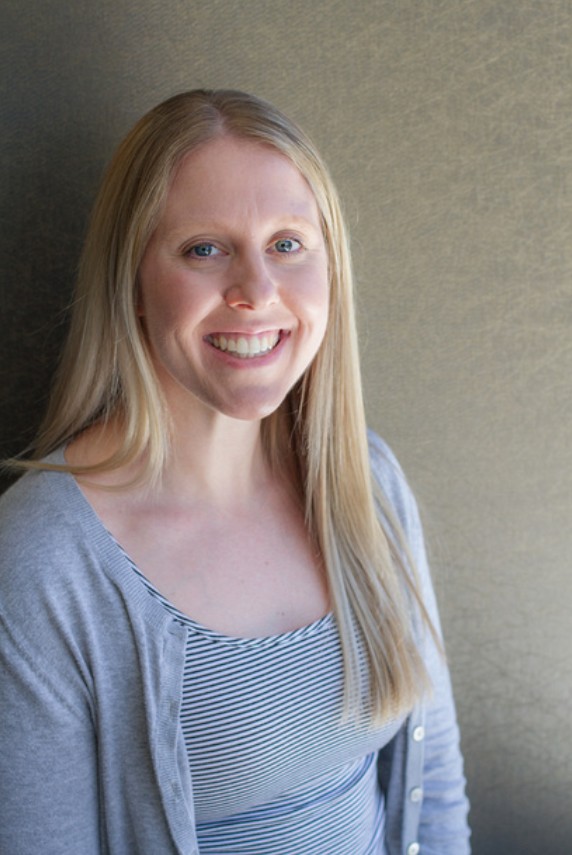
Kaitlyn Gamber serves as Assistant Professor and Director of Didactic Education at Arcadia University, with primary affiliation in the Physician Assistant Program where she leads academic curriculum development and classroom instruction. Her educational foundation includes: Master of Health Science from Lock Haven University of Pennsylvania (2013) Bachelor of Arts in Biology from Arcadia University (2011) Her professional focus centers on Health Science, Physician Assistant Studies, and Biological Sciences, with documented commitment to service-oriented education within the Physician Assistant Program as highlighted in university media coverage. As Director of Didactic Education, she oversees all non-clinical instructional components of the program, emphasizing evidence-based teaching methodologies and curriculum alignment with professional standards. No information is available regarding research publications, scientific awards, student advising relationships, or grant funding in the provided materials.
Academic Position: Associate Professor at the Department of Developmental and Socialization Psychology, Sapienza University of Rome. Affiliated with the Faculty of Medicine and Psychology. Holds the SSD PAED-01/A (General and Social Pedagogy) and GDS 11/PAED-01 (History of Pedagogy and Education). Teaches courses including General Pedagogy, Italian Education System, Children's Literature, and Socio-Psychopedagogical Sciences across multiple degree programs. Active in interdisciplinary collaboration through the MuSEd (Mauro Laeng Museum of School and Education), focusing on educational heritage and historical research. Maintains an extensive publication record in historical pedagogy and comparative education, with a focus on Italian educational history and museum studies. Research Interests: History of education in Italy, role of museums in pedagogical heritage preservation, comparative educational systems, post-unification educational policies, and the intersection of pedagogy with social and cultural contexts. Teaching Activities (2024/2025): General Pedagogy (Triennale in Educational Sciences) Italian Education System (Triennale) Children's Literature (Magistrale in Primary Education) Socio-Psychopedagogical Sciences for Neuro-Psychomotor Therapy, Physiotherapy, and Occupational Therapy programs Professional Engagement: Organizes academic events like the 2025 conference on Giovanni Gozzer's educational reforms. Serves as co-lead on collaborative teaching modules and research seminars on university-professional links.
Sabine Franz is a full-time lecturer in Flute and Recorder at the Hochschule für Musik und Theater Rostock, where she has been teaching since 1990. She also held positions at the Hanns Eisler Academy Berlin, Carl Philipp Emanuel Bach High School of Music Berlin, and the Institute for Music and Theatre Rostock. Her expertise lies in instrumental pedagogy, didactics, and fostering young talent. Notable roles include preparing students for entrance exams at German music academies and mentoring at the young academy rostock since 2016. Educationally, Franz earned diplomas in Flute and Recorder (1990) and a concert examination in Flute (1992) from the Hanns Eisler Academy Berlin. Early in her career, she performed as a soloist with the Großes Rundfunkorchester Berlin and served as its substitute member during her studies. Her research focuses on nurturing excellence in young musicians, evidenced by her students' success in competitions like 'Jugend musiziert' and the International Online Competition of the German Society for the Flute. She remains committed to advancing music education through innovative pedagogical approaches. Awards include multiple medals from the GDR's 'Festival of Young Talents' competition during her student years. Her teaching extends beyond academia to mentorship programs, emphasizing practical skill development and competitive readiness.
Sara Grex is an Associate Professor in the Department of Engineering Technology and Didactics at the Technical University of Denmark (DTU). Her work focuses on innovation processes, entrepreneurship education, and sustainable development goals. She has co-authored over 27 publications and led research projects such as InnoTech - TaskForce and Green Skills for Fire Fighters . Her research emphasizes university-industry collaboration, live case-based learning, and accelerating project value delivery. Key research interests include entrepreneurship ecosystems, project management methodologies, and educational strategies for enhancing innovation competencies among engineering students. Notable contributions include frameworks for knowledge sharing in healthcare, accelerating time-to-impact in projects, and transitioning hands-on courses to online formats while maintaining experiential learning outcomes. She supervises PhD students in areas like co-creation in entrepreneurial universities and green skills development. Recent work addresses SDG alignment through innovation pedagogies and multi-stakeholder initiatives. Her projects often bridge academic research with practical industry applications, fostering cross-sector partnerships and systemic value creation.
Perrine BOUTIN is a Researcher at Sorbonne Nouvelle University - Paris 3 , affiliated with the Cinema and Audiovisual Department (CAV) and the IRCAV - Institute for Research on Cinema and Audiovisual . She contributes to the New Pedagogies collection and serves as a reference teacher for bachelor's students. Co-head of the MEEF Cinema option and the 'Image Teaching: Creation of Educational Tools and the Art of Transmission' course Deputy Head of the Cinema and Audiovisual Masters program Responsible for Validation of Acquired Experience for CAV department Research Interests encompass mediations of cinema, visual pedagogy, reception of cultural industries, digital practices, and childhood/adolescence representation in film. She explores: Didactics of cinematographic image Media education policies in France Transliteracy and information culture transformation Digital humanities in educational contexts Transmedia mediation devices Curriculum design for cinema studies Publications include books and articles on visual education, digital integration in teaching, and cultural transmission through cinema. She participates in projects like ANR Translit and RHEIC , focusing on cultural industries and information education. Supervisory Activities include directing master's theses on image-related pedagogy and cinematic representations of youth.
Ana-Isabel Ribera Ruiz de Vergara is a Lecturer at the University of Rouen Normandy, affiliated with the UFR Letters and Human Sciences and the ERIAC Research Unit (UR 4705) . She holds a Doctorate in Foreign Languages and Literature. Her work focuses on applied linguistics , Spanish language teaching in French contexts , and educational theatre . She has coordinated multiple publications, including Discursive genres in the teaching of specialized Spanish (2018) and Practices and issues in language teaching today (2013). Her research emphasizes phonetics , neuroscience in language learning , and multimedia resources for teaching Spanish as a foreign language. She has organized several international conferences, such as the Rencontres sur la Didactique des Langues (since 2011), and serves on editorial boards for journals like Education and Multilingual Societies and Didáctica de E/LE . Her publications span topics like advertising analysis in language classes, kinesthetic learning for pronunciation, and avant-garde literature in pedagogy. She actively contributes to ERIAC’s research axes, particularly in Linguistic and didactic approaches (Axis 4).
Anne-Birgitte Rohwedder is an Assistant Professor at the Department of Culture and Learning, Faculty of Humanities and Social Sciences, Aalborg University, Denmark. She is affiliated with the Centre for Education Policy Research (CfU) and the Collaborative Organizational Learning (CO-LEARN) research group, where she conducts interdisciplinary research on vocational education, teacher onboarding, and inclusive learning practices, particularly in the Social and Health Education (SOSU) sector. Her work integrates educational theory, policy analysis, and technological innovation, especially through the use of generative AI to support bilingual learners. Her research interests include: Vocational Education and Training (VET) Social and Health Education (SOSU) Experiential and workplace learning Teacher onboarding and professional development Inclusive education for bilingual women Generative AI in educational contexts Didactics and organizational learning Her recent publications and projects highlight a strong focus on enhancing participation and equity in vocational education, particularly through innovative digital tools and collaborative learning models. She emphasizes the integration of theoretical frameworks with practical educational reforms. She has been recognized for her teaching excellence with the Årets underviser EVU SSH award in 2023. Her scientific contributions are disseminated through peer-reviewed articles, reports, conferences, and public engagement. She supervises PhD students, including Amina Sabah Karim , and leads or co-leads multiple funded research projects, such as the VELUX Foundation-supported 2SOSU-AI project, which explores how generative AI can support bilingual women in SOSU programs. She also contributes to interdisciplinary initiatives on educational policy, problem-based learning, and welfare state education. Her collaborative work extends to partnerships with institutions like CIU (Center for IT in VET), VFV (Welfare Technology Knowledge Center), and 12 Danish SOSU schools, ensuring real-world impact on teacher competencies and student outcomes.
Stefan Rohse is a Professor of Agricultural Chemistry at the University of Weihenstephan-Triesdorf , affiliated with the Faculty of Agriculture, Food and Nutrition . His teaching spans general, inorganic, and organic chemistry, plant protection law, hazardous substances regulation, and toxicology. His research aligns with HSWT's focus on Sustainable Resource Management , Climate Change Mitigation , and Biogas/Biomass . Projects include optimizing hazardous waste management, studying humic substances in biogas production, and analyzing rare earth elements' role in energy transitions. Rohse leads initiatives like the Chemistry Didactics Working Group for Bavarian Universities of Applied Sciences and coordinates MINTerAKTIV and BayerenMINT programs to enhance STEM education. He is a member of the GDCH (German Chemical Society), VDI (German Engineers), and DECHEMA (Chemical Engineering Biotechnology). His career combines academia and industry, including prior roles in environmental consulting and quality management. His work emphasizes practical applications in agricultural chemistry and environmental safety , reflecting HSWT's mission of interdisciplinary, applied research.
Suzanne Mathis is an Assistant Professor in the Department of Undergraduate Health Professions within the College of Allied Health Sciences at Augusta University. She is actively involved in teaching and clinical instruction in dental hygiene, contributing significantly to both didactic and practical training of students. Education: MS in Biology/Biological Sciences, Clemson University, 2014 (Summa Cum Laude) BS in Education, Brenau University, 2010 (Magna Cum Laude) BSDH in Dental Hygiene, Medical College of Georgia, 2003 (Cum Laude) Certificate in Transfer Leadership, University of North Georgia, 2024 Her research and teaching focus on core areas in dental hygiene, including dental microbiology, dental anatomy, pain management, and patient safety. She emphasizes clinical excellence, infection control, and public health awareness in dental practice. Her interdisciplinary background in biology and education enhances her pedagogical approach and curriculum development. The two most recent publications highlight her interest in practical public health issues: water quality in dental units and use of safety eyewear among dental professionals. These works reflect a strong commitment to improving clinical standards and occupational safety in dental settings. Scientific Awards and Honors: Alpha Eta Honor Society (2024) Program/Department Teaching Excellence Award (2019) Summa Cum Laude, Clemson University (2014) Magna Cum Laude, Brenau University (2010) Cum Laude, Medical College of Georgia (2003) Suzanne Mathis has extensive service contributions across multiple levels. She serves on the Dental Hygiene Scholarship Committee as Chair and is a member of the Student Admissions Committee. At the university level, she is involved in the Transfer Student Taskforce and Testing and Disability Services Committee. Professionally, she served as Treasurer of Sigma Phi Alpha (2021–2024) and was on the Board of Advisors for Colgate Dental Educators' Network. She actively participates in community outreach, including Give Kids a Smile and CSRA Heart Walk. She has also led international dental mission trips, such as to Honduras in 2004. She teaches a wide range of courses including Dental Microbiology, Dental Anatomy, Dental Materials, Radiology, Pain Management, and Practicum, and contributes to both junior and senior clinical education. Her certifications in local anesthesia, online teaching, and CPR instruction further support her role in modern, multidisciplinary dental education.
Luís Fernandes Monteiro is an Assistant Professor at the Faculty of Physical Education and Sport of Lusófona University in Portugal. He serves as chair of Didactic of Combat Sports and Motor Skills and Technical Tactical Training for the Master's program in Advanced Studies in Teaching of Physical Education and Sport (3rd Cycle: PhD in PE and Sports), and is a Permanent Researcher at ICPOL-ISCPSI. His educational background includes: Licenciatura in Physical Education Mestrado in Sport Science PhD in Physical Education and Sports Monteiro's research centers on physical fitness testing for sports performance with specialized focus on team sports, combat sports (particularly judo), and neuromuscular adaptation to intermittent exercise. His work extends to Tactical Strength and Conditioning (TSAC) for law enforcement, analyzing biomotor abilities and performance prediction in tactical athletes. He investigates training methodology, periodization, and the physiological-psychosocial interplay in high-stress occupational contexts like policing and firefighting. His 2023-2024 publications reveal three dominant research thrusts: (1) Development of fitness assessment protocols for law enforcement using systematic reviews and cohort studies, (2) Investigation of hormonal/psychosocial responses to occupational stress in police cadets, and (3) Neuromuscular performance analysis in combat sports athletes. These works consistently bridge sports science with practical tactical applications. Monteiro has supervised over 20 Master's theses focusing on police fitness (e.g., age-related performance, occupational task correlations), combat sports pedagogy (e.g., martial arts in schools), and youth sports (e.g., judo temporal structure, futsal agility). His advising integrates academic research with practical training through collaborations with Real Sport Clube, Os Belenenses, and the Portuguese National Judo Team.
Denis VIGNERON is a Lecturer in Contemporary Spanish Civilization at the École Supérieure du Professorat et de l'Éducation (ESPÉ) Lille North of France, affiliated with the University of Lille system. He teaches in master's programs at multiple institutions including Universities of Artois, Lille 3, and the University of the Littoral, focusing on Spanish language and didactics. His academic responsibilities include directing research seminars, supervising theses, and preparing students for teaching certification exams. Doctorate in Spanish civilization (2006): 'New discourses, new perspectives on artistic creation in Spain from the end of the nineteenth century to 1931' at University of Lille 3 under Professor Danièle Miglos VIGNERON specializes in Contemporary Spanish literature and civilization, with particular focus on Spanish modernity and avant-garde movements of the first half of the 20th century. His research spans aesthetics, painting, art history, and the correspondences between different art forms. He has also made significant contributions to the didactics of Spanish language teaching and the school teaching of Spanish. His scholarly work demonstrates a consistent engagement with literary figures such as Azorín, Ramón Gómez de la Serna, Francisco Umbral, and José Ortega y Gasset. His publication record shows a clear trajectory from early studies of Spanish modernity (2009) toward more contemporary analyses of Spanish democratic transition and post-truth literature (2016-2017). The research demonstrates deep interdisciplinary connections between literature, visual arts, and political history, with increasing attention to contemporary Spanish society and its literary representations in recent years. VIGNERON actively contributes to academic community through conference organization and participation. He has organized multiple study days and international conferences, notably on language teaching and the Spanish democratic transition. As an expert for France at the European Centre for Modern Languages (CELV) in Graz, Austria, he has contributed to European language education initiatives from 2016-2018. His academic service includes membership on selection committees, scientific conference committees, and the CNU (section 14) as a substitute. Beyond strictly academic work, VIGNERON serves as a local elected representative, demonstrating engagement with civic life beyond the university. His teaching extends to continuing education for various audiences under the AEFE (Ministry of Foreign Affairs) in North Europe, showing commitment to language education beyond traditional academic settings.
Dr. Michelle Lofwall serves as Professor and Bell Alcohol and Addictions Endowed Chair at the University of Kentucky College of Medicine with joint appointments in Behavioral Science and Psychiatry. She directs the Robert Straus and First Bridge Clinics providing comprehensive opioid use disorder treatment and oversees the Bell Addiction Medicine Scholar Program. Her leadership extends to the American Academy of Addiction Psychiatry and SAMHSA's Treatment Improvement Protocol panels. Her research focuses on novel treatments for opioid use disorder , particularly buprenorphine formulations (implants, depot injections), patient retention strategies, and integrated care models for complex cases involving injection-related infections. Current work examines peripartum treatment, emergency department interventions, and policy impacts on medication access through the HEALing Communities Study. Analysis of her 150+ publications reveals strong emphasis on Real-world implementation of medications for OUD Pharmacokinetic studies of extended-release formulations Health services research examining policy barriers Integrated care for co-occurring infections Perinatal addiction treatment optimization Award highlights include: Distinguished Fellow of American Psychiatric Association and ASAM Dole/Nyswander Award (2022) Multiple teaching awards including Resident's Outstanding Didactics Award Leadership recognition as Future Leader in Psychiatry (2006) Dr. Lofwall actively mentors through the Bell Addiction Medicine Scholar Program and leads 110+ research projects including NIH-funded trials like MOMs2 (medication treatment for opioid-dependent expecting mothers) and the Ohio Valley Node of the Clinical Trials Network. Her work bridges clinical care, policy advocacy, and implementation science to address the opioid crisis. She directs the B-OPAT (Buprenorphine Plus Outpatient Parenteral Antimicrobial Therapy) study integrating addiction treatment with infectious disease management, and contributes to the Kentucky Viral Hepatitis Treatment Project eliminating HCV in rural Appalachia through the KEY TREAT trial.
Ewa Skowronek is a Professor at the Department of Regional Geography and Tourism , part of the Maria Curie-Skłodowska University in Lublin, Poland. She is affiliated with the Faculty of Earth Sciences and Spatial Management and serves as a board member of PECSRL (Permanent European Conference for the Study of the Rural Landscape) since 2023. Her academic roles include editorial leadership of Annales UMCS sec. B (2019–2023) and representation in UMCS Senate committees. Current Roles: Professor, Department of Regional Geography and Tourism, UMCS PECSRL Board Member Editorial Board, Annales UMCS Research Interests focus on cultural landscape transformations in Polish-Ukrainian borderlands, tourist landscape dynamics , sustainable tourism , and cultural heritage utilization . She explores socio-economic-environmental interdependencies in regions like Lubelskie and Roztocze, emphasizing landscape perception , tourism product innovation , and borderland development . Recent Publications (2024–2025) address European rural landscapes , geocultural site development , and protected area management in Roztocze. Key trends include post-pandemic tourism , heritage-based strategies , and landscape-tourism interrelations across Poland and Greece. Projects include transboundary tourism development (Eastern European Pearls, Bike Like Roztocze), biosphere reserve documentation (Transboundary Roztocze Biosphere Reserve), and regional branding initiatives (Lublin Region Natural Brands). She has collaborated on EU-funded programs (EFRR, EFS) and national grants, focusing on tourism space evaluation , health tourism , and social tourism demand . Leadership Roles encompass quality assurance committees (UMCS Doctoral School), peer review activities, and representation in academic senates. Her h-index metrics (Google Scholar: 12, Scopus: 8, Web of Science: 8) reflect substantial contributions to tourism and landscape geography.
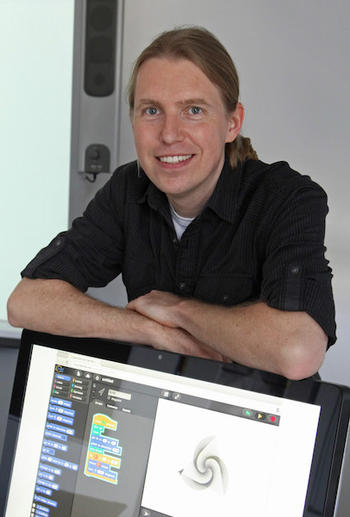
Prof. Dr. Ralf Romeike is a Professor of Computer Science Education specializing in Didactics of Computer Science at the Free University of Berlin, within the Department of Mathematics and Computer Science. His office is located at Königin-Luise-Str. 24-26, Room 019, 14195 Berlin, where he holds consultation hours every Wednesday from 12-1 p.m. by appointment. Romeike's research focuses on innovative approaches to computer science education, with particular emphasis on artificial intelligence education, data literacy development, and constructionist learning methodologies. His work bridges theoretical educational frameworks with practical classroom applications, especially in teacher training contexts. He has developed numerous educational frameworks including AI-PACK, which adapts the DPACK model for AI-related digital competencies for teachers. His publication record shows a clear trend toward AI education in K-12 settings, teacher professional development in AI and data literacy, and the integration of constructionist principles in computing education. The research spans multiple educational contexts from primary through higher education, with particular attention to how non-computer science students and teachers can develop meaningful AI competencies. His scientific contributions include significant work on: AI literacy frameworks for school education Data literacy as a component of AI education Constructionist approaches to AI/ML learning Debugging education methodologies Agile methods in computer science education Romeike leads or participates in multiple significant research projects including ENKIS (Establishment of sustainable AI-related study programs), Digi4All (Interdisciplinary Digital Education), AMI (Agile Methods for Computer Science Education), and TrainDL (Teacher training for Data Literacy & Computer Science competences), demonstrating his leadership in shaping computer science education policy and practice in Germany and internationally.
Helena Sjunnesson is a Senior Lecturer in the Department of Special Education at Kristianstad University's Faculty of Education. Her research focuses on relational pedagogy, special needs education, and literacy assessment. Active in longitudinal studies of special education programs Develops didactic tools for mathematics education Collaborates on external assessments for students with intellectual disabilities Her work emphasizes inclusive education frameworks, teacher collaboration, and specialized didactic approaches for students with special educational needs (SEN). Recent projects explore diagnostic literacy testing, lesson study methodologies, and SEN knowledge integration in teacher training programs. Research outputs highlight trends in • SEN policy implementation • Mathematics pedagogy adaptations • Diagnostic assessment frameworks • Interdisciplinary educational health collaborations She contributes to academic discourse through peer-reviewed publications and conference presentations on special education challenges and innovations.