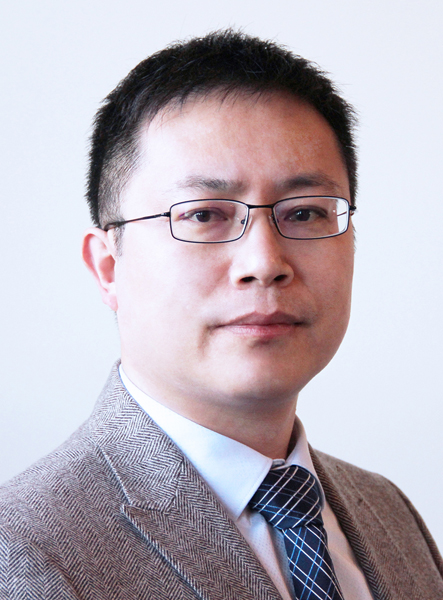
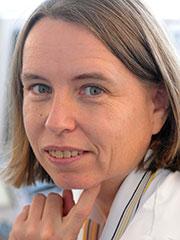
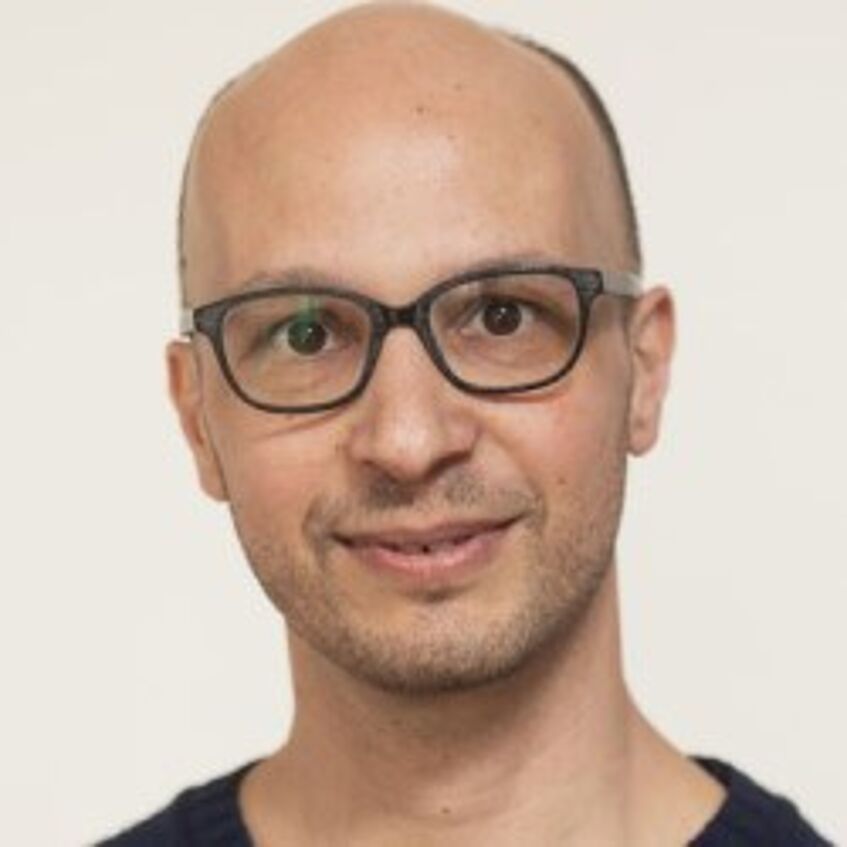
Prof. Wang Cheng-Xiang is a Professor of Wireless Communications at the Institute for Signal and System Processing (ISSS), School of Engineering and Physical Sciences (EPS), Heriot-Watt University, Edinburgh, UK since 2011. His academic journey includes roles as Deputy Head of ISSS (2014-2018), Programme Director for BEng Telecom Engineering (2015-2018), and Director for China Development Group (2006-2018). He holds a PhD from Aalborg University (2004) and prior research experience at Siemens AG and Universities in Germany, Norway, and the UK. His research focuses on applying artificial intelligence to wireless networks, 6G systems, and wireless channel modeling. He has published over 390 papers with an h-index of 57 and 13,460+ citations. Notable recognitions include IEEE/Clarivate Analytics' Highly Cited Researcher (2017-2019) and 11 Best Paper Awards. Prof. Wang serves as Executive Editorial Committee (EEC) Member for IEEE Transactions on Wireless Communications, and has held editorial roles in 10 journals. He actively organizes conferences, serving as chair for events like the IEEE World Congress on Computational Intelligence (2008) and 25th International Conference on Neural Information Processing (2018).
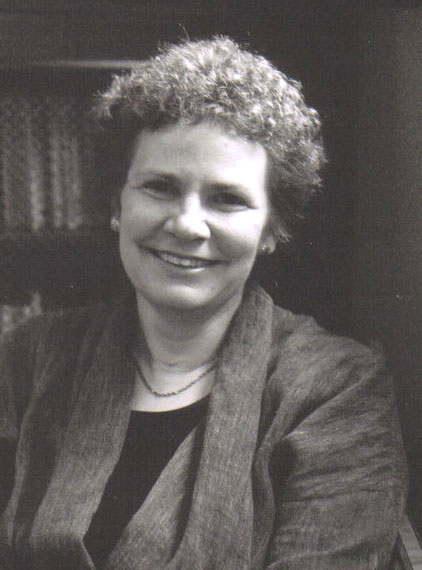
Miriam Wilhelm is a Full Professor of Sustainable Supply Chain Management at the Vienna University of Economics and Business (WU), where she contributes to Sustainability and Purchasing modules. She previously held a Full Professor position at the University of Groningen (2010-2022) and served as Academic Director for MSc programmes. Her research focuses on multi-tier supply chains, governance of sustainability, and human rights in global supply networks. She has published in top journals like Journal of Operations Management and Organization Science , and currently serves as Associate Editor at the Journal of Supply Chain Management . Her recent work explores forced labor mitigation via social intermediaries, plural sourcing for CSR, and mandatory due diligence legislation. She has received multiple Best Paper awards at Academy of Management Conferences (2016, 2018, 2020). Key Research Themes : Governance of supply chain sustainability Decent work and human rights Multi-tier supply chain complexity Education : Doctoral degree from Freie Universität Berlin; visiting researcher at University of Tokyo, Meiji University, and University of Melbourne. Activities : Regular speaker at Academy of Management Annual Meetings and other global conferences.
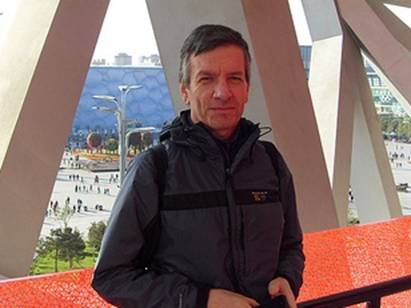
Luca Cardelli is a Principal Researcher and Assistant Director at Microsoft Research Cambridge, UK, since 1997. He holds visiting professorships at Imperial College London (Department of Computing, 2004–2009) and the University of Trento (2005–2007). He earned his PhD in Computer Science from the University of Edinburgh in 1982. His research spans type theory , molecular programming , and principles of programming languages , with applications to systems biology and concurrency theory. Notable contributions include formal frameworks for modeling biochemical systems (e.g., the stochastic π-calculus) and designing DNA-based circuits. Key achievements include the AITO Dahl-Nygaard Senior Prize (2007) and multiple Most Influential Paper Awards at POPL and ETAPS. His work bridges computer science and biology, advancing both theoretical foundations and practical molecular computing.
François Peeters is a Full Professor of Physics at the University of Antwerp, Belgium, holding the position since 2000 (with Dutch title 'gewoon hoogleraar' since 2003). He previously served as Research Director (FWO-VI) at the University of Antwerp (1996-1999), Research Leader (NFWO) (1992-1996), and Senior Research Assistant (NFWO) (1988-1992), establishing a distinguished academic career spanning over three decades. His educational background includes a Ph.D. in Physics from the University of Antwerp (1982), followed by a Habilitation (Hoger aggregaat) from the same institution (1987), and a postdoctoral fellowship at Bell Laboratories in Murray Hill, New Jersey (1982-1983). His academic journey also featured research periods at prestigious institutions including the High Magnetic Field Laboratory in Grenoble, University of California Berkeley, Oxford University, and several Brazilian and Australian universities. Peeters' research focuses on theoretical condensed matter physics , specializing in the electronic, optical, and magnetic properties of nanostructured systems. His work encompasses semiconductors , superconductors , graphene , and hybrid quantum systems , with particular emphasis on strong correlations in both classical (colloids, dusty plasma) and quantum (quantum dots) environments. His theoretical frameworks bridge fundamental quantum mechanics with practical nanotechnology applications, driving innovations in spintronics and quantum device design. Analysis of his publication record reveals a clear evolution from foundational work on polaron physics and quantum Hall systems in the 1980s-1990s toward contemporary research on graphene, topological materials, and programmable quantum nanodevices. His most cited works demonstrate consistent leadership in mesoscopic physics, with recent publications showing increased focus on spin-dependent transport phenomena and two-dimensional material systems. His scientific recognition includes: Fellowship in the American Physical Society (2005) APS Outstanding Referee award (2008) Doctor Honoris Causa from University of Szeged, Hungary (2009) Peeters has supervised 26 completed PhD theses and currently leads the Condensed Matter Theory research group comprising 3 ZAP researchers, 16 PhD students, and 8 postdocs. His grant portfolio includes coordination of an EU Marie Curie Training site on 'Electrons on helium', participation in multiple EU projects, COST actions, and ESF networks, demonstrating sustained success in securing competitive international funding. The Condensed Matter Theory group maintains extensive international collaborations, evidenced by Peeters' research visits to over 10 institutions worldwide and regular hosting of 3-4 international visitors at postdoc or professorial levels. The group's output of over 770 refereed publications with 12,000+ citations reflects its position at the forefront of theoretical condensed matter physics research.
Cornelia Schneider is a Professor and Head of the Institute of Computer Science at the University of Applied Sciences Wiener Neustadt. She leads research in digital health and care technologies, focusing on applications like Augmented Reality, sensor data analysis, and social robotics for vulnerable populations. Her work emphasizes user-centered design and has been supported by projects funded by FFG and the Active Assisted Living Programme. Her research spans telemedicine infrastructure, elderly care robotics, and health monitoring systems. Notable projects include 24/7-Digital (2023-2026), Care about Care (2021-2023), and AgeWell (2019-2022). She has pioneered solutions like CARU cares and DigiCare training programs. Dr. Schneider has been recognized with the AAL Award (2014) and the tecnet | accent Innovation Award (2021). She coordinates interdisciplinary teams and actively participates in conferences like Health Informatics Meets Digital Health. Her lab collaborations include FOTEC and Salzburg Research, where she previously led the e-Health Competence Center until 2019.
Professor Maxine Berg is a distinguished historian at the University of Warwick, where she has served as Professor of History since 1998. She is the Founding Director of both the Global History and Culture Centre (2006-2010) and the Warwick Eighteenth Century Centre (1998-2007), and directed the Luxury Project from 1998-2002. Her academic journey began in the Department of Economics at Warwick (1978-1993) before moving to the Department of History. Her educational background includes: BA Hons, Simon Fraser University, Canada (1967-71) MA, University of Sussex (1971-72) DPhil, Oxford (1972-76) Professor Berg specializes in global and world history, economic and social history, and historiography. Her research has significantly shaped our understanding of global trade networks, the development of consumer culture in the eighteenth century, and the connections between luxury goods, economic development, and cultural exchange. She has pioneered interdisciplinary approaches that connect economic history with cultural studies, examining how material culture and consumption patterns have shaped historical developments across national boundaries. Her work on the 'Cultures of Consumption' has been particularly influential in reframing historical narratives around economic development. Her scholarly output demonstrates a clear trajectory from examining British economic history toward increasingly global perspectives, culminating in her leadership of the Global History and Culture Centre. The publications reveal a consistent focus on how material culture, particularly luxury goods, served as conduits for cultural exchange and economic development across national boundaries during the eighteenth century. Her contributions to the field have been recognized through prestigious awards including: ERC Advanced Researcher Fellowship Honorary Fellow of Balliol College, Oxford (2007-present) Fellow of the British Academy (2004-present) Guggenheim Fellowship (2003-2004) Professor Berg has supervised 12 postdoctoral fellows, including one Marie Curie Fellow, and 10 PhD students (3 completed in 2010), and currently supervises 3 postdoctoral fellows, a Museum fellow, and 4 PhD students. She has been instrumental in organizing international scholarly exchange through 15 international conferences and workshops funded by the Leverhulme Research Interchange and the AHRC Global Arts Research Network (2002-2009), and 5 international conferences on Luxury and Consumption (1998-2003). She served on the Standing Committee and Grants Board of the British Academy, where she played a key role in shaping research funding priorities in historical studies. Her leadership extends to directing major research centers, serving on editorial boards, and participating in professorial appointments committees for universities across the UK, US, and France. She was instrumental in framing and setting up the ESRC Cultures of Consumption Programme and has served on funding panels of major research councils including the ESRC and AHRC.
Georg Langs is a Full Professor of Machine Learning in Medical Imaging at the Medical University of Vienna and Founding Director of the Computational Imaging Research Lab (CIR). He leads a 25-member interdisciplinary team focusing on machine learning methodologies for medical image analysis. Key roles include Director of the Joint Initiative on AI in Medical Imaging (European Institute of Biomedical Imaging Research) and Scientific Lead of the Respiratory Disease Phenotype Observatory (ZODIAC, UNO/IAEA). He is affiliated with MIT’s CSAIL and serves on advisory boards for global AI initiatives. Education: PhD in Computer Science, Graz University of Technology (2007) M.Sc. in Mathematics, Vienna University of Technology (2003) Research Interests: Machine learning-driven precision imaging, neuroimaging, clinical data phenotyping, and cross-species brain connectivity analysis. His work bridges imaging biomarkers with biological mechanisms and large-scale clinical data integration. Grants & Funding: Over €6M in competitive grants as Principal Investigator in the last two years. Projects include ARTEMIS (fatty liver disease digital twins) and AI-POD (personalized risk scores via imaging). Awards: 2022 IS3R Emerging Leaders Club 2022 National Academy of Medicine Emerging Leader Programme 2018 Advisor, AI Mission Austria 2030 Lab & Teams: CIR Lab focuses on AI-driven medical imaging solutions. Co-founded contextflow GmbH , a MedUni spin-off developing AI software for imaging analysis.
Andreas Hepp is a German media and communication scholar currently serving as a Full Professor (W3) at the University of Bremen , affiliated with the Center for Media, Communication and Information Research (ZeMKI). He has held visiting positions at prestigious institutions including the London School of Economics, Goldsmiths (University of London), Stanford University, and Université Paris II. Research Focus: Deep Mediatization and Datafication Communicative Artificial Intelligence Transcultural Communication Qualitative Methodologies Digital Futures and Algorithmic Society Major Grants: Co-Spokesperson for DFG/FWF Collaborative Research Group 'Communicative AI' (2025–) Principal Investigator for DFG Priority Programme 'Mediatized Worlds' (2012–2016) DFG-funded Creative Research Unit 'Communicative Figurations' (2013–2016) Scientific Awards: Fellow of the International Communication Association (2024) Theoriepreis and Zeitschriftenpreis from German Communication Association (DGPuK) 2010 Best Journal Publication Award Labs & Networks: Leads the 'Datafication and Mediatization' lab at ZeMKI and co-founded the 'Communicative Figurations' research network.
Jos J.L. Gommans serves as Professor of Colonial and Global History at Leiden University, a position he has held since 2011. Previously, he was Associate Professor of South Asian History at the same institution since 1993. His academic career includes a visiting professorship at The College of William and Mary in Virginia (2008) and doctoral research funded by the Netherlands Organisation for Scientific Research (NWO) from 1989-1993. Professor Gommans' research spans multiple historical domains with particular expertise in South Asian history, Central Asian history, military history, and colonial history. His scholarly approach emphasizes global connections and comparative frameworks, especially through his examination of Eurasian empires and their interactions. His work has significantly contributed to understanding Mughal military organization, frontier dynamics in South Asia, and the broader patterns of Eurasian cosmopolitanism during the early modern period. Gommans' extensive publication record reveals consistent thematic development across decades, with early work focusing on Indo-Afghan relations and Mughal military systems evolving toward broader comparative studies of Eurasian empires. His research demonstrates remarkable continuity in examining cross-cultural interactions, military organization, and imperial structures across different geographical contexts. The scholarly impact of his work is evident in its reproduction in Indian academic publications and citations by prominent historians like Sanjay Subrahmanyam and Jeremy Black. Notable honors: Horizon Project (NWO) on Eurasian Empires: Integration Processes and Identity Formations (€2 million grant) Gommans has maintained significant editorial leadership, serving as editor/editor-in-chief of the Journal of the Economic and Social History of the Orient from 2000-2010 and currently sitting on the editorial boards of Itinerario and the Rijksmuseum Bulletin. His current research direction, as co-director of both the NWO-Horizon project on Eurasian Empires and the Cosmopolis-programme, reflects his continued commitment to global and connective historical approaches that bridge regional specializations.
Poul Holm is a Professor of History at Trinity College Dublin , affiliated with the Trinity Long Room Hub . He directs the Irish Digital Arts and Humanities Structured PhD Programme and serves as President of the European Consortium of Humanities Institutes and Centres. His academic career includes leadership roles such as Rector of the University of Roskilde (2006–2008) and Professor of Maritime History at the University of Southern Denmark (2000–2006). He earned a doctorate analyzing the impact of war on everyday life in Scandinavia from 1550 to 1914. Current research: History of Marine Animal Populations (HMAP), focusing on human-ocean interactions. Key research areas: Digital Humanities, Maritime history, Viking settlements in Ireland, and Environmental history. Scientific Awards and Honors : Ridder af Dannebrog (Knight of the Order of the Dannebrog, 2008) Fellow of Trinity College Dublin (2010) Shared COSMOS award (2011) PROSE Awards for Physical Sciences & Mathematics and Earth Sciences (2011) Honorary professorships in China (2007) He has held pivotal roles in European research initiatives (e.g., ESF RESCUE, HERA), served on grant committees (Swedish Academy of Sciences), and led interdisciplinary networks (European Network of Networks, METRIS). His work bridges natural, human, and social sciences in climate change studies. Holm contributes to cultural institutions like the Viking Ship Museum and the Royal Danish Geographical Society.
Anja Feldmann is Director at the Max Planck Institute for Informatics in Saarbrücken and Professor of Internet Network Architectures at Technische Universität Berlin (since 2006). Previously she held a full professorship at Technische Universität München (2002–2006) and conducted research at AT&T Labs Research , Saarland University , and Carnegie Mellon University , where she earned her Ph.D. in 1995. Education Ph.D. in Computer Science, Carnegie Mellon University, 1995 M.Sc. in Computer Science, Carnegie Mellon University, 1991 Diplom in Computer Science, Universität Paderborn, 1990 Research Interests Anja Feldmann’s research centers on measurement-driven understanding of the Internet. She tackles challenges such as software-defined networking , cloud-network interactions , performance debugging , and traffic characterization . A growing focus is the privacy and security of networked systems, evidenced by recent studies on online tracking, DNS security, and disinformation ecosystems. Her group designs scalable measurement platforms that combine passive and active monitoring , programmable data planes , and machine-learning analytics to dissect phenomena ranging from terabit-scale traffic to covert tracking on illegal streaming sites. Recent Publication Themes The 2021-2025 publications reveal a methodological evolution toward large-scale, longitudinal measurement . Topics include: Impact of global events (COVID-19, CrowdStrike outage) on Internet traffic Cross-country tracking ecosystems and privacy leaks DNS root and routing plane stability and security ML-driven real-time monitoring at terabit speeds Disinformation campaigns on encrypted messaging platforms Scientific Awards Gottfried Wilhelm Leibniz Prize (2011) – Germany’s highest research honor Berliner Wissenschaftspreis (2011) Elected Member of the German National Academy of Sciences Leopoldina (2009) Advising & Grants While individual student names are not listed, Prof. Feldmann leads a vibrant team at MPI-INF’s Internet Architecture department. She has supervised numerous doctoral candidates and post-doctoral researchers whose work is reflected in the co-authored papers. Funding sources include the German Research Foundation (DFG) via the Leibniz Prize and EU Horizon projects, although explicit grant numbers are not provided in the source material. Labs & Teams She heads the Internet Architecture department at MPI-INF, located at the Saarland Informatics Campus . The department operates state-of-the-art measurement infrastructure—including programmable switches, honeynets, and global vantage points—to support empirical network science.
Christian Giuseppe De Vito is a Professor of Global Economic and Social History at the University of Vienna (Austria) and serves as Head of the Department of Economic and Social History (WISO) from 2024-2026. His research focuses on social history, global labor systems, punishment regimes, and the history of the Spanish Empire. He holds a PhD from the Scuola Normale Superiore, Pisa, and has held academic positions at the University of Bonn and the University of Leicester. Educations: PhD in History, Scuola Normale Superiore, Pisa (2003-2008) BA and MA in History, University of Florence (1995-2001) Key Roles: Co-coordinator of the FSP Global History program Co-coordinator of the Erasmus Mundus Global Studies (EMGS) Programme Editorial roles in journals like Crime, Histoire & Sociétés and Revista Mundos do Trabalho Research Interests: His work bridges microhistory and global frameworks, examining topics such as convict labor, penal systems, social movements, and the intersections of punishment with empire-building. He emphasizes spatial analysis and transnational networks in historical studies. Recent projects explore the Spanish Empire’s punitive strategies and labor coercion in colonial contexts. Professional Contributions: He co-edited volumes on global labor and micro-spatial histories, and his articles analyze topics like enslavement, convict labor, and penal regimes across Europe, Latin America, and the Mediterranean. He actively participates in international scholarly networks, including the Social History Association (ISHA) and the International Conference of Labour and Social History (ITH). Labs/Teams: Leads research initiatives on global punishment and labor history through collaborative projects with institutions like the Bonn Centre for Dependency Studies and the University of Leuven.
Emilia Kilpua serves as Professor in Space Physics at the University of Helsinki since 2020, following her progression from University Lecturer (2015) to Associate Professor (2015-2020). She currently leads the Doctoral Programme in particle physics and universe sciences, co-leads the Academy of Finland Center of Excellence in Sustainable Space (2018-2026), and coordinates the Marie Skłodowska-Curie SWATNET network (2021-2025). Her academic foundation includes a PhD in theoretical physics (space plasma physics) from the University of Helsinki (2005), with formative research at Max-Planck-Institute of Aeronomie and NASA Goddard Space Flight Center during doctoral studies. Professor Kilpua's research program centers on solar-terrestrial interactions , with particular emphasis on: Coronal mass ejections and solar eruptions in interplanetary space Solar wind-magnetosphere coupling mechanisms Van Allen radiation belt dynamics and geomagnetic storm evolution Space weather forecasting and auroral phenomena Her extensive publication record (approximately 200 peer-reviewed articles, 6400+ citations, h-index 43) demonstrates consistent contributions to space physics, recently expanding to planetary science through her 2023 appointment as Principal Investigator for the BepiColombo solar X-ray instrument targeting Mercury observations in 2025. Major recognitions include: Väisälä Prize from the Finnish Academy of Science and Letters (2021) Membership in the Finnish Academy of Science and Letters (2020) and Finnish Society of Sciences and Letters (2023) ERC Consolidator Grant funding excellence (2016) As Doctoral Programme Head, she oversees PhD training in particle physics while leading major collaborative initiatives including the Academy of Finland Center of Excellence and EU SWATNET network. Her grant portfolio demonstrates exceptional success in securing competitive funding for space weather research and instrumentation development. Her research group operates within the Academy of Finland Center of Excellence framework, focusing on space weather impacts and sustainable space operations, with current instrumentation development highlighted by the BepiColombo mission leadership.
Ansgar Jüngel is a Full Professor for Analysis of Nonlinear Partial Differential Equations (PDEs) at the Technische Universität Wien (TU Vienna), affiliated with the E101-Institute for Analysis and Scientific Computing. His academic journey includes roles at universities in Berlin, Konstanz, Mainz, and Vienna since 1991. He specializes in mathematical analysis of cross-diffusion systems, entropy methods, semiconductor models, and quantum fluid dynamics. Notable achievements include an ERC Advanced Grant (2021) and the Tsungming-Tu Award (2011). Research focuses on nonlinear PDEs with applications in physics, engineering, and biology, emphasizing rigorous existence theory, numerical methods, and entropy-based approaches. Recent projects include 'Emerging network structures and neuromorphic applications' and 'Taming complexity in partial differential systems.' His teaching includes courses on partial differential equations, calculus of variations, and computational finance. Publications span over 200 works, with key contributions on cross-diffusion models, quantum hydrodynamics, and energy-transport systems. He has supervised numerous PhD students and collaborates internationally on topics like semiconductor simulations and stochastic interacting particle systems. Grants include an FWF Special Research Programme and ERC funding.
Univ.-Prof. Dr. Norbert Schuch is a Professor of Physics and Mathematics at the University of Vienna, leading the Quantum Information and Quantum Many-Body Physics group. His research bridges Quantum Information Theory, Quantum Computing, and the study of complex quantum many-body systems, with a focus on Tensor Networks, Topological Order, and Symmetry Breaking. He has offices at both the Faculty of Physics (Boltzmanngasse 9) and Faculty of Mathematics (Oskar-Morgenstern-Platz 1). Research Interests : Quantum Information at the interface of Many-Body Physics, including Entanglement Theory, Topological Quantum Computation, Tensor Network algorithms, and Symmetry-Protected Topological (SPT) phases. His work develops numerical and analytical frameworks to study entanglement order parameters and prepare/experiment with topological states in quantum simulators. Teaching : Courses on Quantum Information, Quantum Computing, Theoretical Physics, and seminars on quantum many-body topics. Prior to Vienna, he was a tenured group leader at Max-Planck-Institute of Quantum Optics and a lecturer at Technical University Munich. Scientific Awards : ERC Consolidator Grant SEQUAM (2020–2025) FWF ESPRIT Programme ESP 306 FWF SFB BeyondC FWF Entanglement Order Parameters Research Trends : His recent publications explore Quantum Algorithms, Tensor Networks for Topological Phase Transitions, Entanglement Spectra, and Symmetry-Protected Phases. Key subfields include Non-Abelian Anyons, Chiral Spin Liquids, and Computational Complexity in Many-Body Systems. Group Members : Current team includes postdocs like Dr. Ilya Kull and Dr. András Molnár, with historical alumni spanning PhDs, Masters, and BSc students now at institutions like Xanadu, MIT, and Quantinuum.