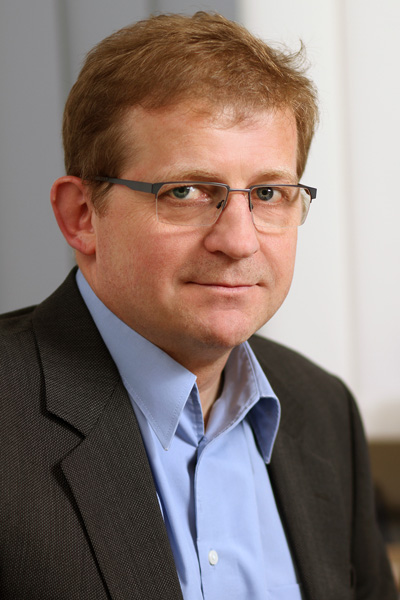
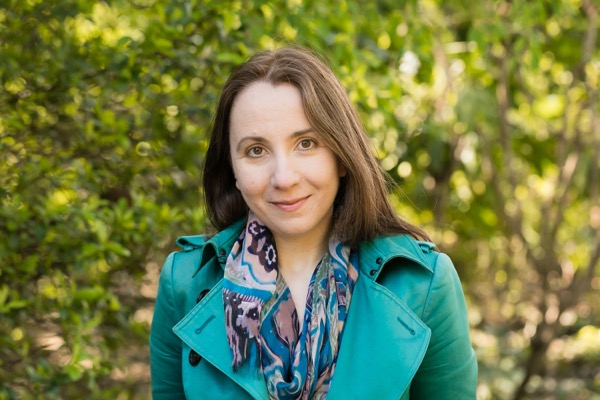
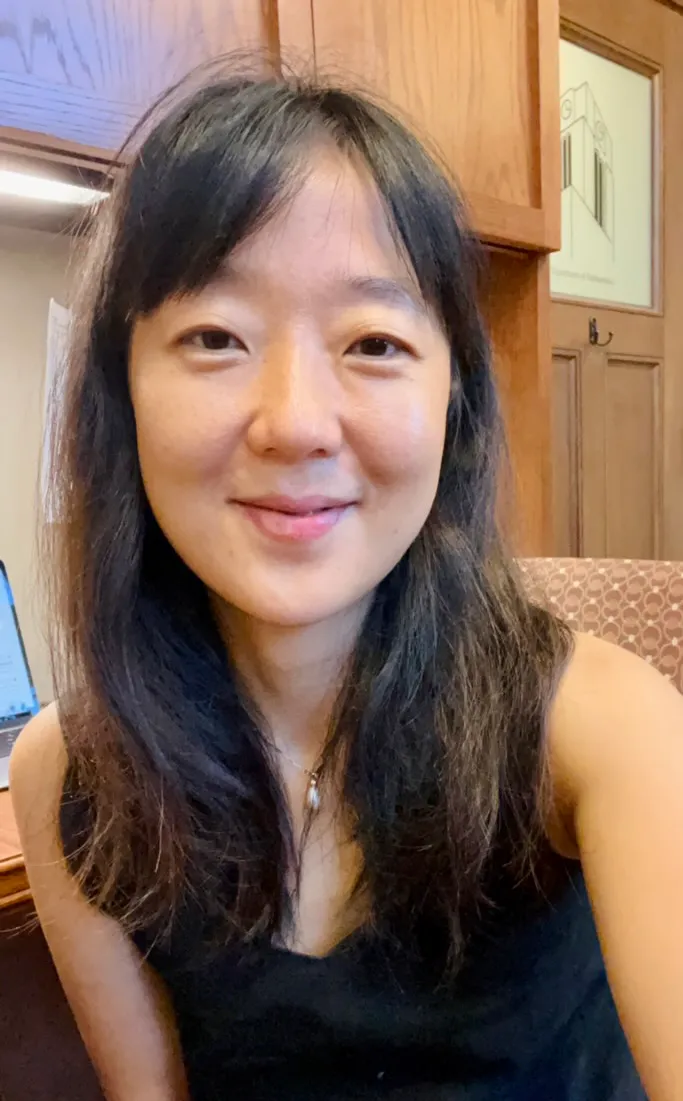
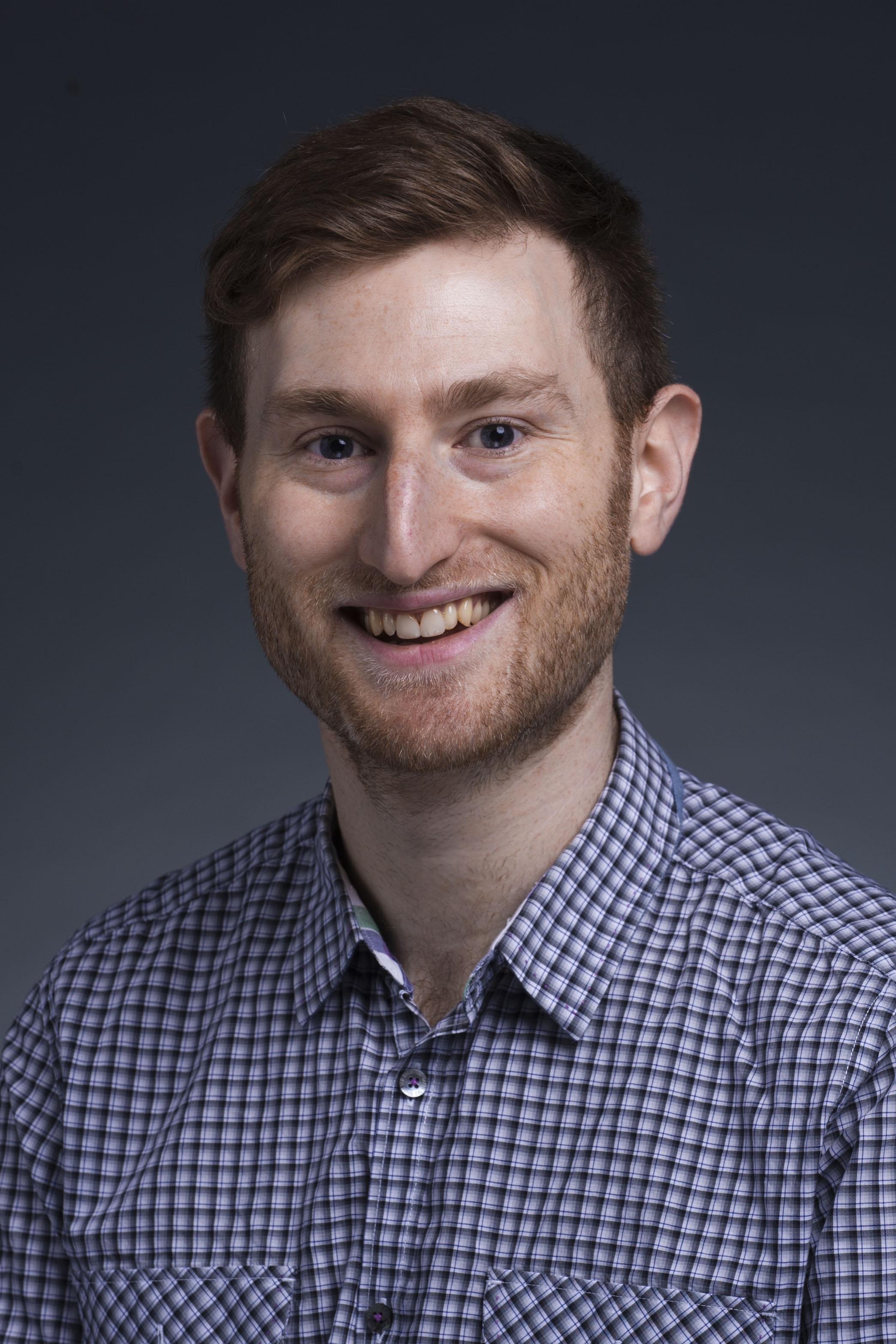
Wolfgang Kunz is a Full Professor (C4, W3) and Chair of Electronic Design Automation at the Technische Universität Kaiserslautern since 2001. His academic career spans multiple prestigious institutions, including Goethe-University Frankfurt/Main and the University of Massachusetts, Amherst. He has held leadership roles such as Dean (2005-2007) and Vice-Dean (2007-2009) at TU Kaiserslautern. Habilitation (Dr. rer. nat. habil.), Computer Science, University of Potsdam (1996) Doctoral degree (Dr.-Ing.), Electrical Engineering, University of Hannover (1992) Dipl.-Ing. degree, Karlsruhe Institute of Technology (1989) His research focuses on hardware verification, security, and optimization, particularly in embedded systems and processors. His work on formal verification methods has been commercialized by companies like Synopsys, Mentor Graphics, and Siemens EDA. His 2016-2021 publications address critical security issues such as Spectre/Meltdown and introduce innovative verification frameworks adopted by industry leaders like Infineon and OneSpin Solutions. Scientific awards include the IEEE Fellow (2006), German IT Society Award (2005), and TU Kaiserslautern Distinguished Teaching Award (2016). He has served on editorial boards of major journals and coordinated the Erasmus Mundus European Master Program in Embedded Computing Systems since 2010. Key students: Jörg Bormann, Raik Brinkmann, Tobias Ludwig Collaborations: Siemens EDA, Infineon, AbsInt, Intel SCAP Spin-offs: LUBIS EDA, OneSpin Solutions
Dr. Chunyan Mu serves as a Senior Lecturer in the School of Natural and Computing Sciences at the University of Aberdeen, actively contributing to both academic instruction and cutting-edge research in computing science while currently accepting new PhD students. Her research program centers on Trustworthy AI and Safe Autonomy, with specialized expertise in formal verification of responsibility, accountability, and privacy mechanisms within multi-agent systems. She investigates resilience frameworks for autonomous intelligent systems and develops advanced methodologies for information flow security analysis, bridging theoretical computer science with practical security implementations. Analysis of her publication trajectory (2014-2025) reveals consistent innovation in applying formal methods to security-critical systems. Key thematic developments include probabilistic strategy logic for observability analysis, quantitative verification of opacity properties, and game-theoretic approaches to security verification, demonstrating increasing sophistication in handling multi-agent accountability and system resilience challenges. Dr. Mu currently supervises PhD candidates and offers a fully funded doctoral position focused on formal verification of safety properties in autonomous systems, providing comprehensive financial support including tuition coverage, £20,780 annual stipend, and dedicated research funding for candidates with strong backgrounds in formal methods and artificial intelligence.
Ana Caraiani is a Royal Society University Research Fellow and Professor in the Department of Mathematics at Imperial College London, specializing in Number Theory and Arithmetic Geometry. She is a member of the Number Theory group, focusing on the Langlands program, Shimura varieties, and p-adic Galois representations. Her work bridges arithmetic geometry and representation theory, with contributions to modularity lifting theorems, cohomology of Shimura varieties, and local-global compatibility in the Langlands program. Education: She earned a Ph.D. in Mathematics from Harvard University in 2012. She held positions as a Veblen Research Instructor (2013–2015) and Veblen Fellow (2015–2016) at the Institute for Advanced Study's School of Mathematics. Research Interests: Her research emphasizes the classical and p-adic Langlands programs, Shimura varieties, arithmetic geometry, and moduli stacks of Galois representations. Specific topics include vanishing theorems for cohomology, modularity of elliptic curves over CM fields, and applications of perfectoid spaces. Key Contributions: Caraiani has advanced the proof of modularity of elliptic curves over imaginary quadratic fields, established vanishing theorems for Shimura varieties with torsion coefficients, and contributed to the potential automorphy of Galois representations over CM fields. Her work links geometric approaches to arithmetic conjectures, such as the Sato-Tate and Ramanujan conjectures. Awards and Recognition: Royal Society University Research Fellowship (202?), Veblen Research Instructor/Fellowships (2013–2016), and contributions to major collaborative projects like the Potential Automorphy over CM Fields paper in the Annals of Mathematics.
Dr. Zara Ersozlu is a Senior Lecturer in Mathematics Education within the School of Education at the University of Newcastle, Australia. With a distinguished international career spanning multiple continents, she has held academic positions at prestigious institutions including North Carolina State University (USA), Gazi and Gaziosmanpasa Universities (Turkey), National Taiwan Normal University (Taiwan), The University of Western Australia, Murdoch University, and Deakin University. Her academic journey includes tenured positions as an Associate Professor and leadership roles as Department Head and Chair in teacher education disciplines. Currently, she teaches undergraduate and postgraduate courses in mathematics education, including Effective Pedagogies in Primary Mathematics, K-6 Mathematics, K-6 Numeracy, and Digitally Supported Learning. Dr. Ersozlu earned her Doctor of Philosophy from Firat University in Turkey and her Master of Art from Sakarya University. Her extensive academic preparation is complemented by five years of practical teaching experience in public schools prior to entering academia. This blend of theoretical knowledge and practical classroom experience informs her approach to teacher education and educational research. At the broadest level, Dr. Ersozlu's research investigates solutions to real-life problems impacting people's well-being, success, and capacity to achieve. Her scholarly work spans primary and secondary mathematics education, the psychology of mathematics (including metacognition, self-regulation, and anxiety), cross-cultural educational studies, teacher education, virtual simulated learning environments, and educational assessment. She has increasingly focused on the transformative potential of AI and machine learning in education, exploring how these technologies alter teaching, learning, and research processes. Her methodological expertise encompasses both quantitative and qualitative approaches, allowing her to effectively analyze both small and large educational datasets. Analysis of Dr. Ersozlu's recent publications reveals a strong emphasis on mathematics anxiety, teacher education, and the integration of technology in learning environments. Her work demonstrates a consistent focus on practical applications of educational research to address real-world challenges in mathematics education. The interdisciplinary nature of her research connects educational psychology, technology integration, and cross-cultural perspectives, with particular attention to how these elements intersect in teacher preparation and student learning outcomes. 2023 ATEA Research Recognition Award from the Australian Teacher Education Association 2021 Fellow of the Higher Education Academy (Advance HE, UK) 2010 Fellowship Program for Postdoctoral Researchers from the Council of Higher Education of Turkey Dr. Ersozlu is deeply committed to mentoring the next generation of scholars, currently supervising four PhD students and having successfully guided ten students to completion. Her grant portfolio includes significant funding for projects such as Best Practice Guidelines for RPL in Initial Teacher Education Programs ($60,000), Exploring the Reciprocal Relationship Between Mathematics Anxiety and Mathematical Resilience ($2,599), and multiple conference travel awards. She serves as an Associate Editor for several prominent journals including the International Electronic Journal of Mathematics Education and as Editor for Interdisciplinary STEM Education. Her editorial work reflects her standing as a respected voice in mathematics education research. Dr. Ersozlu's academic leadership extends to her role in developing innovative teaching approaches that integrate virtual simulation technology and learning analytics. Her work with TeachLivE™, a mixed-reality classroom simulation platform, demonstrates her commitment to creating authentic learning experiences for teacher education students. Through these initiatives, she bridges the gap between educational theory and classroom practice, preparing future educators to effectively implement evidence-based teaching strategies in diverse learning environments.
Dr. Daniel J. Bauer is a Professor and Director of the Quantitative Psychology Program and L.L. Thurstone Psychometric Laboratory at the University of North Carolina at Chapel Hill. His research focuses on advancing quantitative modeling techniques for studying negative social behaviors, health outcomes, and psychopathology, with expertise in generalized and nonlinear latent variable models, including multilevel models, structural equation models, and mixture models. His work emphasizes methodological innovations such as Bayesian regularization, measurement invariance evaluation, and the integration of deep learning with psychometrics. Bauer advises doctoral students in quantitative psychology and collaborates with developmental psychology programs. He leads the Thurstone Laboratory, one of the oldest quantitative psychology training programs in the U.S., emphasizing rigorous methodological training and applications in behavioral sciences. Bauer’s research trends span computational advancements in latent variable analysis, regularization for bias detection, and dynamic modeling of developmental processes. His advising includes over a dozen doctoral students now in academia and industry roles. He contributes to labs and initiatives like the Center for Developmental Science, advancing interdisciplinary research in psychological measurement and intervention evaluation.
Naoki Yoshinaga is a tenured Associate Professor at the Institute of Industrial Science, The University of Tokyo, with extensive experience in natural language processing and computational linguistics. He has held academic positions since 2008 and currently leads research on pragmatic NLP models and multilingual systems. PhD in Computer Science, The University of Tokyo (2005-2008) MSc in Information Science (2000-2002) BSc in Information Science (1996-2000) His research focuses on mechanistic interpretability in NLP models, multilingual/multimodal NLP , and efficient model design using trie structures and conjunctive features. He also investigates knowledge acquisition from social data and evaluation metrics for language generation . Recent publications include work on neuron empirical gradient analysis (ACL-25), multilingual knowledge representation (EACL-24), and compact embedding methods (CoNLL-24). His research has been funded by multiple grants, including the University of Tokyo Excellent Young Researcher program and JSPS fellowships. Committee Special Award, Association for NLP (2023) JSAI SIG Research Award (2022) Best Interactive Award, DEIM Forum (2019, 2016) He developed widely-adopted NLP tools like pecco (fast classification library), RenTAL (LTAG-to-HPSG grammar converter), and J.DepP (Japanese dependency parser). His lab emphasizes strong equivalence in formalism comparisons and pragmatic model design .
Yulan Qing is an Assistant Professor in the Department of Mathematics at the University of Tennessee, Knoxville (UTK), part of the College of Arts and Sciences. She holds a Ph.D. in Mathematics from Tufts University. Her research focuses on low-dimensional topology, geometric group theory, asymptotic properties of groups, and big mapping class groups. Notable projects include studies on Gromov boundaries, genericity in groups, and curve graphs. She has published extensively in journals like Geometry & Topology and the Journal of the London Mathematical Society. Dr. Qing has organized conferences such as the 53rd Barrett Memorial Lectures and the GGTea Webinar, fostering collaboration in geometric group theory. She has taught courses like Honors Topology at UTK and supervised graduate students including Sagnik Jana and Alex Squires. Her work bridges theoretical foundations with applications in topology and geometry. Recent invited talks include presentations at the University of Virginia, Caltech, and the 2nd China-Russia Conference on Topology. She actively mentors undergraduate and graduate students, contributing to initiatives like the Math Circle programs at Tufts and MIT's RSI Summer Program.
Elisa B Schweiger is a Senior Lecturer (equivalent to Associate Professor) in Marketing at King’s Business School, King’s College London. She specializes in retailing, AI applications in marketing, multi-sensory marketing, and pricing strategies. Her research employs behavioral experiments, field studies, and text mining. Education: PhD in Consumer Psychology from the University of Bath. She also holds a background in psychology and marketing. Research Interests: Elisa’s work focuses on retail innovation, AI-driven consumer interactions, luxury branding, and the psychological underpinnings of consumer decisions. She explores how technology (e.g., voice assistants, mixed reality) impacts customer journeys and brand relationships. Her research bridges theory and practice, addressing topics like AI ethics, retail atmospherics, and consumer risk perceptions in energy technologies. Publications: Her work appears in top journals such as the Journal of the Academy of Marketing Science , Journal of Retailing , and Journal of Business Research . Recent topics include voice assistant evaluations, AI in lateral markets, and digital retailing trends. Awards: Recipient of the Dean’s Award for Early Career Researcher of the Year (2022), Journal of Retailing Davidson Best Paper Award Runner-up, and MMA Teaching Excellence Award. Teaching & Engagement: Teaches Marketing Analytics, Retailing, and research methods in graduate and executive programs. She serves on the editorial boards of Journal of Retailing and Journal of Business Research , and reviews for top marketing journals. Labs/Teams: Active in King’s Business School’s marketing research teams, focusing on innovation in retail and AI applications.
Dr. Karim El-Basyouny is a Killam Laureate Professor and City of Edmonton Urban Traffic Safety Research Chair at the University of Alberta's Faculty of Engineering, where he serves as Associate Dean (Research Infrastructure and Innovation) in the Civil and Environmental Engineering Department. A licensed Professional Engineer in Alberta, he holds advanced degrees in Transportation Engineering from the University of British Columbia and has dedicated his career to advancing road safety through data-driven management frameworks. His academic credentials include: Doctor of Philosophy, Civil Engineering, University of British Columbia, 2011 Engineering Management Sub-specialization, Civil Engineering, University of British Columbia, 2010 Master of Applied Science, Civil Engineering, University of British Columbia, 2006 Bachelor's degree (ABET Equivalent), Civil & Environmental Engineering, United Arab Emirates University, 2003 El-Basyouny's research pioneers the integration of remote sensing, machine learning, and statistical modeling to enhance transportation safety. His work develops automated tools for infrastructure digitization, collision prediction, and speed management, treating safety as a systemic product requiring management frameworks. Key contributions include LiDAR-based road feature extraction, network-level safety evaluations, and frameworks for vision-zero outcomes that address both human-driven and autonomous vehicle contexts. His recent publications demonstrate a cohesive research trajectory centered on leveraging point cloud data and computational intelligence for safety management. Over 15 major publications since 2021 focus on automated infrastructure assessment (light pole detection, clear zone mapping, vertical clearance evaluation), weather-impact modeling, and enforcement resource optimization. This body of work bridges transportation engineering with computer vision and operations research to create scalable safety solutions. His scientific contributions have been recognized with prestigious honors including: 2024 Killam Annual Professorship Award 2024 Road Safety Achievement Award from TAC 2023 Donald Stanley Award for environmental engineering 2022 Faculty of Engineering Graduate Teaching Award 2021 Daniel B. Fambro Student Paper Award As an academic leader, El-Basyouny actively mentors graduate students and secures significant research funding through his endowed chair position. He currently recruits fully-funded PhD and postdoctoral candidates specializing in remote sensing applications, machine learning, and geomatics for road digitization projects. His research group collaborates with national safety committees and municipal agencies to translate findings into policy, while he serves on editorial boards for Transportation Research Record and Analytic Methods in Accident Research. The research group operates at the intersection of transportation engineering and computational science, developing automated frameworks that merge sensor technologies with data processing tools. Current projects focus on semantic segmentation of 3D point clouds, safety implications of infrastructure digitization, and machine learning applications for road feature extraction in both urban and rural environments.
Sami H. Assaf is a Gabilan Distinguished Professor of Science and Engineering and Professor of Mathematics at the University of Southern California. He currently serves as Director of Graduate Studies for the Department of Mathematics and was named a Dean's Leadership Fellow for Physical Sciences and Mathematics in 2024. His academic career spans from CLE Moore Instructor at MIT (2008-2011) through Assistant Professor (2012-2019), Associate Professor (2019-2022), to his current position as Professor (2022-present). Dr. Assaf earned his Ph.D. in Mathematics from the University of California, Berkeley in 2007 under Mark Haiman, with his dissertation titled "Dual equivalence graphs, ribbon tableaux and Macdonald polynomials." He completed his undergraduate studies at the University of Notre Dame in 2001, graduating summa cum laude with Honors in Mathematics and Philosophy. His research primarily focuses on symmetric function theory and its rich interplay with algebraic combinatorics, representation theory, and algebraic geometry. Dr. Assaf's recent publications center on polynomial generalizations of symmetric functions, including Schubert polynomials, Demazure characters, and nonsymmetric Macdonald polynomials. His work has established important connections between combinatorial structures and representation-theoretic objects, particularly through the development of dual equivalence and weak dual equivalence frameworks. Dr. Assaf's research has been consistently supported by multiple National Science Foundation grants (most recently DMS-2246785) and Simons Foundation Collaboration Grants (most recently Award 953878). His publication record shows remarkable productivity with over 40 papers in top mathematics journals since 2005, including numerous collaborations with graduate students and postdoctoral scholars. Among his honors are the Gabilan Distinguished Professorship (2023), multiple USC Mentoring Awards (2017, 2024), the Herb Alexander Prize for outstanding dissertation (2007), and both the National Science Foundation and National Defense Science and Engineering Graduate Research Fellowships. As an educator and mentor, Dr. Assaf has successfully guided numerous Ph.D. students to completion, including Henry Ehrhard, Grant Bowles, and Peter Kagey. He also founded and directs the Venice Math Circle, an innovative early math education program that uses creative approaches like dinosaur sorting and building blocks to teach deep mathematical concepts to children from Pre-K through 8th grade, emphasizing discovery and analytical thinking over rote memorization.
Chang Lou is an Assistant Professor in the Department of Computer Science at the University of Virginia. His research focuses on distributed systems, operating systems, and cloud computing, emphasizing runtime assurance and failure detection. He leads LiftLab, a reading group exploring cutting-edge system research. Education : Ph.D., Computer Science, Johns Hopkins University (2023); B.S., Computer Science, Shanghai Jiao Tong University (2016). Research : Develops techniques to improve system reliability, including silent failure detection, memory leak mitigation, and formal verification. His work has been deployed at Microsoft Azure and recognized with awards like NSDI Best Paper (2020). Teaching : Offers courses like CS4740 (Cloud Computing) and CS6501 (Cloud System Reliability). Awards : NSF CAREER Award (2024), ACM SIGOPS Dissertation Honorable Mention (2023), Google Cloud Grant (2023). Service : Serves on program committees for NSDI, EuroSys, and SOSP. Co-organizes workshops like SIGCOMM Formal Methods x Networks.
Jared Weinstein is a Professor in the Department of Mathematics and Statistics at Boston University, serving as the Departmental Ombud. He specializes in Number Theory and Algebraic Geometry, with a focus on p-adic geometry, shtukas, and moduli spaces. His research explores connections between arithmetic geometry and homotopy theory, including contributions to the Langlands program and local Shimura varieties. Education: AB from Harvard University (undergraduate), PhD from University of California, Berkeley. Postdoctoral work at UCLA and the Institute for Advanced Study before joining BU in 2011. Research interests include arithmetic geometry, p-adic Hodge theory, and the geometry of moduli spaces. His work often intersects with topics like perfectoid spaces, diamonds, and chromatic homotopy theory. Recent articles highlight advancements in modularity of elliptic curves over function fields and the Kottwitz conjecture for local shtuka spaces. No scientific awards are explicitly listed, but his extensive publications reflect significant contributions to his field. Advising and grants details are not provided here. His work is closely tied to the v-topology and related geometric frameworks in algebraic geometry.
Sharon C. Glotzer is the Anthony C. Lembke Department Chair of Chemical Engineering and the John Werner Cahn Distinguished University Professor of Engineering at the University of Michigan. She holds dual professorships in Materials Science & Engineering and Macromolecular Science & Engineering, alongside Physics and Applied Physics. Her research focuses on computational assembly science, predictive materials design of colloids, and soft matter, leveraging entropy-driven self-assembly principles. Glotzer leads a large interdisciplinary group of ~30 researchers, producing over 300 peer-reviewed papers and contributing to federal agency roadmaps in materials research. Education: B.S. and Ph.D. in Physics from UCLA and Boston University. Leadership: Directed the NIST Center for Theoretical and Computational Materials Science (1993–2001). Her work introduced 'patchy particles' and the 'shape space diagram,' revolutionizing nanoparticle design and colloidal self-assembly. Notable contributions include entropy-mediated assembly, quasicrystal engineering, and computational tools like HOOMD-blue and freud. Awards include National Academy memberships, APS Fellowships, and the Aneesur Rahman Prize. Her lab integrates simulation, theory, and AI to design programmable materials, with applications in nanotechnology, photonics, and biomaterials.
Dr. David Goretzko is an Assistant Professor in the Department of Methodology and Statistics at Utrecht University's Faculty of Social and Behavioural Sciences. He leads the Measurement and Machine Learning Lab and specializes in the integration of data science techniques with psychometric theory. His academic journey includes: Ph.D. in Psychological Methods from LMU Munich (2020) M.Sc. in Statistics from LMU Munich (2018) M.Sc. in Psychology from LMU Munich (2016) B.Sc. in Physics from LMU Munich (2015) B.Sc. in Psychology from LMU Munich (2014) Dr. Goretzko's research primarily focuses on the intersection of machine learning and psychometrics. His work addresses critical challenges in factor analysis, measurement invariance, and model fit assessment. He develops innovative methods that combine traditional psychometric approaches with modern data science techniques, particularly in the areas of exploratory factor analysis trees, regularized factor analysis, and cost-sensitive machine learning applications in psychological assessment. His research has significant implications for improving the validity and reliability of psychological measurements across diverse populations. His recent publications reveal a strong trend toward integrating machine learning methodologies with traditional psychometric approaches. A significant portion of his work focuses on factor analysis techniques, particularly addressing the challenge of determining the appropriate number of factors. His research also extensively covers measurement invariance testing across multiple covariates using tree-based approaches, and he has made notable contributions to evaluating model fit in confirmatory factor analysis. The interdisciplinary nature of his work spans psychology, statistics, and computer science. Dr. Goretzko serves as an Associate Editor for the European Journal of Psychological Assessment and is an active reviewer for numerous prestigious journals including Psychological Methods, Behavior Research Methods, and Structural Equation Modeling. He also reviews grant proposals for major funding agencies such as the German Research Foundation (DFG), National Science Foundation (NSF), and Dutch Research Council (NWO). He currently holds a Project Grant from the German Research Foundation (DFG GO 3499/1-1) since 2021. His research program focuses on developing and validating new methodologies for psychological assessment that incorporate machine learning techniques while maintaining psychometric rigor. His work has practical applications in educational measurement, clinical psychology, and organizational assessment. Dr. Goretzko leads the Measurement and Machine Learning Lab at Utrecht University, which focuses on developing innovative methodologies that bridge the gap between traditional psychometrics and modern data science. The lab's research has particular relevance for improving measurement practices in cross-cultural research, educational assessment, and clinical psychology settings where measurement invariance and factor structure validation are critical concerns.
Immanuel Trummer is a Professor of Computer Science at Cornell University, specializing in database systems, query optimization, and applications of large language models (LLMs) and quantum computing. He leads research projects such as DB-BERT, UDO, and SkinnerDB, focusing on automated database tuning, adaptive query processing, and leveraging LLMs for code synthesis and system optimization. His research interests span quantum computing for database optimization, cost-efficient LLM utilization, and voice-based data exploration. Key contributions include developing systems like CEDAR for claim verification, CodexDB for LLM-driven code generation, and ThalamusDB for multimodal data querying. Trummer has received prestigious awards, including the NSF CAREER Award (2023-2028) and the Best Demonstration Award at BDA 2020. His work has been funded by NSF, Google, Huawei, and others, supporting projects like quantum-index selection and misinformation detection. He advises graduate students in database systems and teaches advanced courses such as CS 6320 (Advanced Database Systems) and CS 7390 (Seminar in Database Systems). His research lab hosts open-source tools like JoinGym and maintains extensive collaborations in industry and academia.