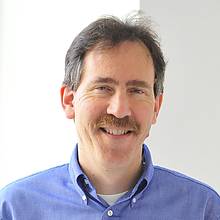
Sunder Kekre is the Vasantrao Dempo Professor of Operations Management at Carnegie Mellon University’s Tepper School of Business , where he has held academic appointments since 1984. His research focuses on manufacturing systems, global supply chains, and healthcare operations management. Research Expertise : New product development structures, strategic costing, lean innovation, knowledge sharing in enterprise networks, and business analytics for coordinated supply chains. Key Publications : Contributions to journals like Management Science , Operations Research , and Production and Operations Management , with work on LNG storage valuation, RFID logistics, and healthcare disparities. Scientific Recognition : Dempo Chair Professorship Bosch Chair Professorship Best Paper Award (1995) Teaching : Courses in Operations Management, Strategic Management of the Enterprise, and Information Systems Project. Non-Academic Experience : Prior engineering roles at Tata Steel (1974-1980) and consulting engagements with Fortune 500 firms like Bosch, Caterpillar, and IBM.
Dr. Natalie Simpson is Professor and Associate Dean for Graduate Programs at the University at Buffalo's School of Management, Department of Operations Management and Strategy. She holds a PhD and MBA from the University of Florida, and a BFA from North Carolina School of the Arts. Her research explores emergency response systems , supply chain logistics , and educational technology , with particular focus on operational challenges in crisis management. She investigates hyper-project coordination in emergency contexts and resource allocation frameworks for incident commanders. Simpson's scholarly contributions show strong emphasis on: Modeling emergency response operations and supply chain vulnerabilities Developing pedagogical innovations for operations management education Analyzing healthcare workflow efficiency and disaster management systems Her extensive recognition includes: Decision Sciences Institute's Best Case Studies Award (2005) National Instructional Innovation Award (2004) SUNY Chancellor's Award for Excellence in Teaching (2002) Grinter Fellowship and Matherly Scholarship As Academic Director of Digital Access Education, she leads technology-enhanced learning initiatives and advises graduate programs. Administrative responsibilities include heading the Digital Access Working Group and serving on editorial boards for Decision Sciences.
Dr. Ameer Abdelhadi is an Assistant Professor in the Department of Electrical and Computer Engineering at McMaster University. His research focuses on application-specific custom-tailored computer architectures, hardware-efficient deep learning, neurotechnology, and reconfigurable computing. He holds a PhD from the University of British Columbia and has held academic positions at the University of Toronto, Imperial College London, and Simon Fraser University, alongside industry experience in semiconductor design. Education: PhD in Computer Engineering (University of British Columbia, 2016). Research Interests: Hardware acceleration for machine learning and neurotechnology Reconfigurable computing and FPGAs/ASICs Asynchronous circuits and synchronization protocols VLSI physical design and CAD algorithms Publications span high-impact venues such as IEEE Journal of Solid-State Circuits, IEEE Hot Chips, and IEEE Micro. Notable achievements include the 2017 Best Paper Award at ASYNC for work on synchronization FIFOs. Teaching includes COMPENG 4DV4 (VLSI System Design) and ELECENG 4OI6B (Engineering Design). His lab focuses on advancing hardware systems for next-generation applications in AI and biomedical engineering.
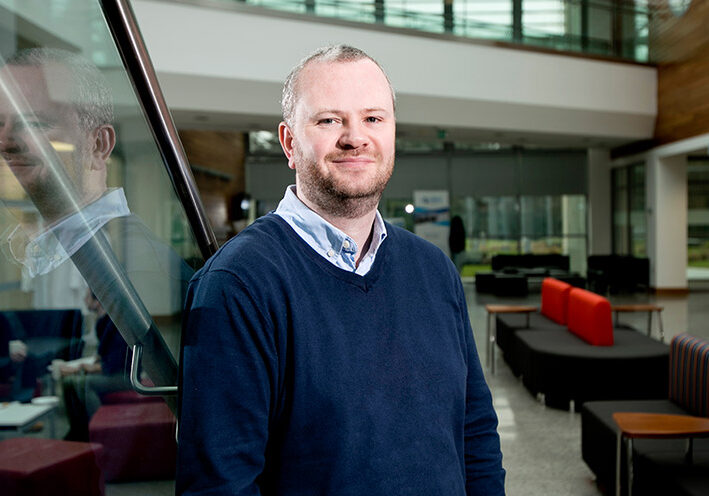
Michael Wiklund is a current Professor of the Practice in the Department of Mechanical Engineering at Tufts University School of Engineering . He has been in this role since 2014, previously serving as a Lecturer from 1987 to 2013. His work focuses on Human Factors Engineering , Medical Device Design , and Usability Testing in healthcare contexts. His research spans decades, emphasizing ergonomics , software user interfaces , and safety in medical systems . He has authored key publications including books and articles on usability engineering , root cause analysis , and design principles for medical technology. Wiklund teaches courses such as Medical Technology Development and Human Factors in Medical Technology , with a focus on Biomedical Engineering and Mechanical Engineering . His recent publications highlight trends in medical device innovation , user-centered design , and health IT integration. He also serves as General Manager - Human Factors Research & Design at UL since 2012.
Alan Sussman is a Professor and Associate Chair of Undergraduate Education in the Computer Science department at the University of Maryland. His research focuses on databases, high-performance computing, parallel systems, and educational curriculum development for computing disciplines. He holds a Ph.D. from Carnegie Mellon University (1991) and a B.S.E. from Princeton University (1982). His educational contributions include integrating parallel and distributed computing concepts into early undergraduate courses, supported by NSF-funded initiatives like the CyberTraining program. He has advised students such as Harshit Soora (Master's) and Xiaolong Tian (PhD). His research spans compiler optimizations for parallel programs, distributed data management systems, and scientific workflow frameworks like DYFLOW. He collaborates with UMIACS and contributes to interdisciplinary projects like the TASCS center. Key innovations include VeloxDFS for distributed dataset streaming, compiler techniques for irregular memory access in PGAS programs, and NetCDFaster for geospatial data optimization. His work emphasizes productivity improvements for high-performance applications and curriculum modernization to address emerging computational challenges. Awards: No individual awards explicitly listed; however, collaborator Jik-Soo Kim received a best paper award in 2006. Grants: NSF CyberTraining, TCPP Curriculum Initiative, and Center for Technology for Advanced Scientific Component Software (TASCS). Labs/Teams: Active in UMIACS and interdisciplinary collaborations, including the TASCS center and InterComm framework development.
Iris D. Tommelein serves as the Roy W. Carlson Distinguished Professor in the Civil and Environmental Engineering Department at the University of California, Berkeley's College of Engineering, where she directs the Project Production Systems Laboratory (P2SL). A globally recognized pioneer in Lean Construction, she has revolutionized architecture-engineering-construction (AEC) practices through research, industry workshops, and leadership since co-founding the Lean Construction Institute in 1997. Her educational foundation spans multiple disciplines: Ph.D. in Civil Engineering (Construction Engineering and Management), Stanford University, 1989 M.S. in Computer Science (Artificial Intelligence), Stanford University, 1989 M.S. in Civil Engineering (Construction Engineering and Management), Stanford University, 1985 B.S. (5-year degree) in Civil Engineer-Architect, Vrije Universiteit Brussel, Belgium, 1984 Professor Tommelein's research centers on transforming construction processes through Lean principles and digital innovation . Her work pioneers takt planning for workflow reliability, industrialized construction for labor and sustainability challenges, and mistakeproofing to eliminate errors. She integrates digital twins , AI , and optimization to develop practical decision-support systems for supply chains, logistics, and production management. Recent focus includes modular offsite construction and Industry 4.0 applications. Analysis of her 2023-2025 publications reveals intensifying research on takt planning maturity models and industrialized construction feasibility , with growing emphasis on mass timber automation and visual management systems. Her work consistently bridges lean theory with practical implementation across megaprojects, subcontracting networks, and heavy civil engineering. Her exceptional contributions have earned: Lean Pioneer Award (Lean Construction Institute, 2015) National Academy of Construction induction (2019) PPI Technical Achievement Award (2022) Robert B. Harris Award (University of Michigan, 2024) ASCE Construction Management Award (2024) - first woman recipient in 51 years Through the P2SL, she leads industry-collaborative research on production system design, mistakeproofing frameworks, and digital transformation. Her grant-funded projects develop assessment tools for industrialized construction adoption and takt planning methods adaptable to diverse project types. She actively mentors graduate students and drives knowledge transfer via workshops and the annual Construction Innovation Day. The Project Production Systems Laboratory (P2SL) operates as a global hub for construction innovation, partnering with owners, contractors, and suppliers to implement lean production systems. Current initiatives include developing serious games for mistakeproofing training, optimizing work density methods for heavy civil projects, and creating digital twins for real-time construction management.
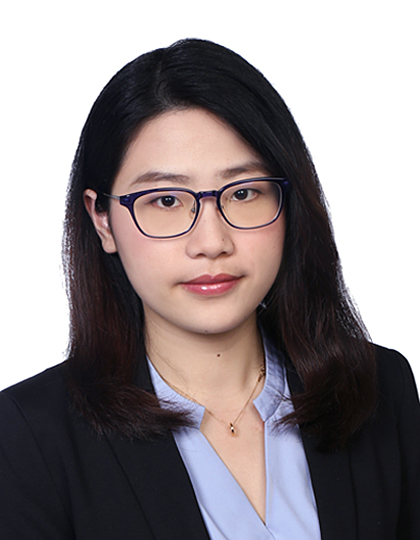
Yuan Tian is an Assistant Professor in the School of Computing at Queen's University, Faculty of Arts and Science. She holds a PhD in Information Systems from Singapore Management University (2017) and a B.Sc. in Computer Science from Zhejiang University (2012). Her research focuses on integrating heterogeneous data sources to enhance software engineering practices, including data mining, recommender systems, and social network analysis. Prior to Queen's, she was a data scientist at Living Analytics Research Centre (LARC), SMU. She has held visiting positions at Carnegie Mellon University, INRIA Paris, and SAIL Canada. Research Interests: Data Mining Software Engineering Social Network Analysis Information Retrieval Recommender Systems Computer Security Recent Research Trends: Her work emphasizes AI-driven solutions for software bug management, code translation, vulnerability detection, and developer behavior analysis. Notable contributions include leveraging LLMs for technical debt repayment and enhancing code vulnerability detection via Graph Neural Networks. Awards: SMU Presidential Doctoral Fellowship (2015-2016) Best Paper Award at SANER 2017 Grants & Advising: No formal advisees listed, but active in collaborative projects with industry and academic partners. Labs/Teams: Previously associated with SOAR Group at SMU and currently leads research in Queen's School of Computing.
Erwin Schoof is an Associate Professor at the Department of Biotechnology and Biomedicine , Technical University of Denmark. He leads the Cell Diversity Lab and focuses on advancing proteomics and mass spectrometry technologies. Expertise in single-cell proteomics , stem cell niches , and bioinformatics . Active in myelofibrosis and leukemia research , with applications in UN Sustainable Development Goals . Research Trends from 2025–2024 include: Machine learning-driven peptide sequencing (InstaNovo, InstaNexus). Single-cell resolution tools for mapping hematopoietic stem cells and tumor microenvironments . Biomarker discovery in chronic diseases and respiratory conditions . Supervision : Mentors multiple PhD students on single-cell proteomics , omics data analysis , and biotherapeutic production . Labs & Collaborations : Collaborates with international teams on plasma proteomics , 3D bioengineering , and advanced mass spectrometry workflows .
Jian Zhao is an Associate Professor at the University of Waterloo's School of Computer Science, specializing in Information Visualization (InfoVis), Human-Computer Interaction (HCI), and Data Science. With a Ph.D. from the University of Toronto (2016), his research emphasizes interactive visualization techniques, AI integration in design processes, and socio-technical systems. He explores how human-AI collaboration can enhance data analysis, presentation, and user experience in complex systems. Key research areas include: 1) AI-Driven Design (e.g., code generation via sketching, infographic creation), 2) Health Informatics (therapeutic AI tools for autism support), 3) Immersive Technologies (VR/AR interfaces for presentations and education), and 4) Social Computing (remote family communication, multi-modal emoticons). His work bridges technical innovation with human-centered design principles. His publications (2021–2025) reflect a focus on interactive visualization frameworks (e.g., iTrace for cross-view data analysis), AI-human collaboration (CoLadder for hierarchical code editing), and specialized applications like TherAIssist for art therapy and EMooly for autism support. Zhao frequently explores novel interaction modalities , including gesture-based VR interfaces and sketch-based programming tools. He leads projects in computational notebooks (EDAssistant, Slide4N), visual analytics (MissBin for bipartite networks), and neurofeedback training games (Eggly). His work often emphasizes systematic design considerations for missing data, cross-view analysis, and contextual visualization in spatial AR environments.
Aniket 'Niki' Kittur is a Professor in the Human-Computer Interaction Institute at Carnegie Mellon University's School of Computer Science. His research focuses on AI-augmented cognition, exploring how human and machine intelligence can collaborate to enhance creativity, decision-making, and innovation. He leads projects like the Semantic Reader and Skeema browser extension, aiming to reduce cognitive overload through intelligent systems. Education: BA in Psychology & Computer Science from Princeton University; PhD in Cognitive Psychology from UCLA. His work bridges HCI, crowdsourcing, and cognitive science, with 100+ publications and 17 best paper awards. He advises industry partners including Google, Microsoft, and Toyota while maintaining a lab focused on real-world impact. Research interests center on accelerating knowledge acquisition via systems that scaffold sensemaking (e.g., Selenite for web exploration) and fostering analogical innovation through crowdsourced/AI hybrid approaches. Notable contributions include CrowdForge (human-machine workflows) and Kinetica (touch-based data visualization). Awards include NSF CAREER Award, Allen Newell Award, and CHI Academy membership. His lab's Skeema tool has achieved 79% 30-day retention in beta, reflecting impactful user-centered design principles. Current projects emphasize LLM integration for composite cognition, aiming to create systems where 'LLMs + Humans > Either Alone.' Funding来自NSF, NIH, ONR, and industry partners like Bosch and Wikimedia. Teaching includes PhD bootcamps and user-centered research courses. Over 100 students have contributed to his projects, many advancing to tech leadership roles.
Prof. Dr.-Ing. Ralf Beck serves as Professor for Control and Regulation Technology and Automation Technology at Hochschule Düsseldorf University of Applied Sciences within the Faculty of Electrical Engineering & Information Technology. His academic responsibilities span multiple degree programs including BEng Electrical Engineering, BEng Industrial Engineering, and MSc Electrical Engineering and Information Technology. His educational background includes Mechanical Engineering studies at TU Braunschweig (1998-2004), followed by doctoral research at RWTH Aachen's Institute of Control Engineering where he earned his Dr.-Ing. in 2010 with a dissertation on predictive energy management for hybrid vehicles. Prior to his current professorship, he held progressive roles at FEV Europe GmbH from 2009-2018, culminating as Senior Project Manager for Vehicle and Powertrain Electronics. Beck's research focuses on control engineering systems with particular emphasis on automation technology, regulation systems, and model-based development approaches. His work bridges theoretical control methodologies with practical automotive applications, especially in hybrid vehicle energy management, multi-robot systems, and intelligent air path control. The Modellfabrik Fab21 serves as his primary experimental platform for model-based development applications. His publication record since 2005 demonstrates consistent contributions to control engineering, particularly in hybrid vehicle systems, emission control optimization, and calibration methodologies. Recent work shows increasing focus on distributed robotics and intelligent transportation systems, reflecting evolving research directions while maintaining core expertise in control theory applications. As an educator, Beck teaches foundational and advanced courses including Electrical Engineering III, Control and Regulation Technology, Model-Based Development, Technical Mechanics, and Advanced Control Engineering at the Master's level. His teaching integrates theoretical concepts with practical laboratory applications through the university's Moodle platform, emphasizing hands-on implementation of control algorithms and system modeling techniques.
Henrique O'Neill is an Associate Professor (with Habilitation) in the Department of Marketing, Operations and General Management at ISCTE - University Institute of Lisbon, Portugal. He is an Integrated Researcher at ISTAR-Iscte - Research Center in Information Sciences, Technologies and Architecture. His research focuses on information systems adoption, organizational strategy, and process optimization in healthcare, finance, and public administration. Education: PhD in Business Organization and Management - University of Cranfield (1995) Master's in Electrical and Computer Engineering - Higher Technical Institute (1987) Bachelor's in Electrical Engineering - Higher Technical Institute (1983) Research Interests: His work spans business/IT strategy, systems modeling, process analysis, and technology implementation. Key domains include healthcare informatics, banking systems, and Industry 4.0 applications. He emphasizes practical solutions for organizational performance through technology integration. Publication Trends: Recent articles explore intelligent business systems, telemedicine, design science methodologies, and supply chain innovation. His work consistently bridges theoretical frameworks with sector-specific applications in healthcare, education, and logistics. Professional Engagement: Member: Portuguese Telemedicine Association, Order of Engineers Commissioner: INEM (National Institute of Medical Emergency) reform study Director: Center for IT Development (2010-2014) Advising & Projects: Supervises 7 graduate students (1 PhD, 6 Master's). Leads EU-funded projects including: Atlantic Crossing (2024-2025): US-Portugal academic collaboration in AI/cybersecurity AAL4ALL (2011-2015): Ambient Assisted Living ecosystem UNITE (2000-2002): Ubiquitous teamwork platforms
Dr. Mohsen Yoosefzadeh Najafabadi is an Assistant Professor in the Department of Plant Agriculture at the University of Guelph, Ontario Agricultural College. He holds a PhD in Plant Breeding from the University of Guelph (2022), following M.Sc. and B.Sc. degrees from the University of Tehran. His research focuses on dry bean breeding, computational biology, and integrating omics technologies to enhance crop resilience and productivity. Key areas include developing stress-tolerant dry bean varieties, leveraging remote sensing for trait prediction, and optimizing genomic selection methods. He leads the Dry Bean Breeding & Computational Biology Program and has contributed to over 30 peer-reviewed publications since 2017. Education : PhD, Plant Breeding, University of Guelph (2022) M.Sc., University of Tehran B.Sc., University of Tehran Research interests emphasize computational tools development (e.g., AllInOne preprocessing framework), omics-based selection strategies, and non-Mendelian heredity mechanisms. His lab combines machine learning with field phenotyping to address agricultural challenges such as disease resistance and climate adaptation. Collaborative projects include soybean cold stress analysis and cannabinoid profile prediction in cannabis. Publications span genomic approaches to crop improvement, remote sensing applications, and transcriptomic studies. He teaches courses in plant breeding methodologies and actively engages in technology transfer initiatives. Lab activities include developing high-yielding dry bean cultivars resistant to biotic/abiotic stresses and advancing data-driven pipelines for crop breeding. Future work aims to synergize AI with multi-omics data to enhance crop resilience in diverse environments.
Dr. Jonathan Bones is an Associate Professor in the School of Chemical and Bioprocess Engineering at University College Dublin (UCD) and Principal Investigator of the Characterisation and Comparability Group at NIBRT. His research focuses on analytical methods for biopharmaceuticals, including liquid chromatography-mass spectrometry (LC-MS) for protein characterization, glycomics, and process optimization. He holds a BSc and PhD in Analytical Chemistry from Dublin City University. His work has been recognized through inclusion in the Medicine Maker Power List. He leads a team of 18 researchers, supported by SFI, EI, and industry partnerships. Education: BSc in Analytical Science (Chemistry), Dublin City University PhD in Analytical Chemistry, Dublin City University Research Interests: Development of advanced LC-MS platforms for glycomics, proteomics, and bioprocess analysis. Key areas include: Quantitative proteomics/metabolomics for bioprocess monitoring Liquid phase separations for complex bioanalysis Process analytical technology (PAT) His group collaborates with ThermoFisher Scientific on analytical workflows for biopharmaceutical characterization. Articles Trends: Recent work emphasizes analytical methods for AAV vector characterization, biosimilar comparability via MAM/iMAM, and process clearance of excipients. Over 126 publications highlight his contributions to biopharmaceutical quality control and process understanding. Awards: Medicine Maker Power List (2023): Top 100 influential scientists in biopharmaceutical manufacturing and analysis Advising & Grants: Supervises PhD students in bioprocessing and analytical chemistry Funding from Science Foundation Ireland (SFI), Enterprise Ireland (EI), and EU FP7 Industry collaborations with ThermoFisher Scientific and Bristol Myers Squibb Labs & Teams: Leads the Characterisation and Comparability Lab at NIBRT, focused on cutting-edge analytical tools for bioprocess development and product quality assurance.
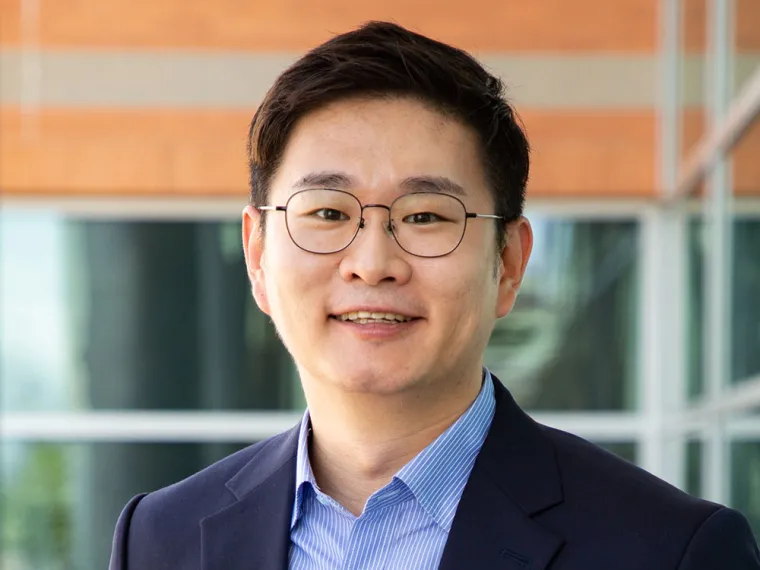
Seokjun Youn is an Assistant Professor in the Department of Management Information Systems at the Eller College of Management, University of Arizona . His research focuses on improving healthcare delivery systems through technological innovations and operational strategies, with additional expertise in supply chain logistics and platform business models. Education: PhD in Operations and Supply Chain Management from Texas A&M University; MS and BS in Industrial Engineering from Texas A&M University and Seoul National University, respectively. Research Areas: Healthcare operational efficiency, patient flow, health IT, human-AI collaboration, and supply chain management. Scientific Awards: DSI Best Theory-Driven Empirical Research Paper Award (2024) CMIH Grant (2020, 2021, 2023, 2024, 2025) POMS Emerging Scholars Program (2021, 2023) Professional Service: Editorial board member for Production and Operations Management and Decision Sciences journals; track chair for conferences like CHITA and DSI. His work combines econometric methods and optimization techniques to address challenges in healthcare systems, with findings published in top journals including Manufacturing & Service Operations Management and Journal of Operations Management .