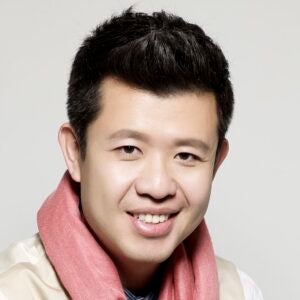
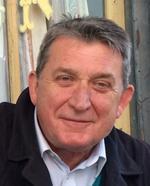
Graham Ormondroyd is a Professor at the School of Environmental and Natural Sciences , Bangor University , specializing in the Biocompounds department. His research focuses on innovative wood modification techniques, sustainable biomaterials, and environmental impact assessments. Current projects include scaling waste-based composites for infrastructure and developing Welsh wool applications. Collaborations span academia-industry partnerships like Bangor University and Zentia Ltd KTP. Research Trends: His 2025 publications emphasize multi-scale resin diffusion analysis and UK wood recycling frameworks, while 2024 work explores laser incising and phenolic resin-NMR interactions. Recent studies also address VOC emissions from formaldehyde-free composites. Professional Activities: He chairs academic panels (e.g., International Panel Products Symposium) and reviews publications. Projects focus on net-zero construction and climate resilience.
Bojan Tamburic is a Senior Lecturer in Environmental Engineering at the University of New South Wales (UNSW) Sydney, where he is affiliated with the School of Engineering and the Department of Civil and Environmental Engineering. He holds the prestigious position of Australian Research Council Mid-Career Industry Fellow (IM230100222) and serves as the lead Chief Investigator of the Nuisance and Harmful Algae Science-Practice Partnership (NHASP). Dr. Tamburic earned his academic credentials from Imperial College London, including a PhD in Chemical Engineering (2009-2012), an MSc in Sustainable Energy Futures (2008), and an MSci in Physics (2003-2007). Prior to joining UNSW, he was a Chancellor's Postdoctoral Research Fellow at the University of Technology Sydney. His research focuses primarily on dual aspects of algal science: the management of harmful algal blooms ('bad algae') in waterbodies to preserve water quality and aquatic habitats, and the cultivation of beneficial algae ('good algae') for producing valuable bioproducts such as biofuels, animal feed, and sustainable chemicals. His work spans environmental engineering, water treatment processes, and algal biotechnology applications. Analysis of Tamburic's recent publications reveals a strong trend toward practical applications of algal science in water management. His research spans environmental monitoring using remote sensing, microplastic analysis in urban water systems, odour and taste management in drinking water, and innovative approaches to algal biomass harvesting and utilization. His work consistently bridges fundamental algal physiology with practical engineering solutions for water quality challenges. Australian Research Council Mid-Career Industry Fellow (IM230100222) for the project 'Large scale urban stormwater reuse: safe, clear and odourless water supply' (2023-2026) Dr. Tamburic leads significant research initiatives including the Nuisance and Harmful Algae Science-Practice Partnership (NHASP), focusing on translating scientific understanding of algal phenomena into practical management solutions. His grant portfolio demonstrates strong industry and government engagement, particularly in the area of sustainable water management. He teaches courses including DESN1000 Engineering Design and Innovation and CVEN9886 Environmental Microbial Processes at UNSW.
Guillermo A. Ameer serves as the Daniel Hale Williams Professor of Biomedical Engineering at Northwestern University's McCormick School of Engineering and Professor of Surgery in the Feinberg School of Medicine. He directs the Center for Advanced Regenerative Engineering (CARE) and maintains affiliations with the Simpson-Querrey Institute, Chemistry of Life Processes Institute, and the IBiS Graduate Program. His leadership extends to founding the Regenerative Engineering Laboratory, which pioneered citrate-based antioxidant biomaterials known as polydiolcitrates. Americas' leading innovator in regenerative engineering, Ameer's research spans vascular, orthopaedic, and bladder tissue engineering. His lab developed Nanonets™ thermoresponsive oligomers and photoresponsive liquid polymers for applications including wound healing, islet transplantation, and 3D-printed vascular scaffolds. Notable breakthroughs include bioresorbable stents, bladder regeneration scaffolds, and diabetic wound healing technologies that have received FDA clearance and commercial implementation through companies like Acuitive Technologies and VesselTek BioMedical. His publication record demonstrates consistent innovation in biomaterials science, with research trends showing progression from fundamental polymer chemistry to sophisticated clinical applications. Recent work focuses on electroactive bladder scaffolds, 3D-printed vascular devices, and wearable health monitoring systems, reflecting his commitment to translating laboratory discoveries into tangible medical solutions. The 2025 launch of the Regenerative Engineering Institute underscores his growing institutional impact. Percy L. Julian Award (2024) BMES Athanasiou Medal of Excellence in Translational Bioengineering (2023) Election to National Academy of Medicine (2021) National Academy of Inventors Fellow (2019) AAAS Fellow (2018) AIChE Fellow (2017) Ameer has mentored over 30 PhD and Master's students who now lead research at institutions including Penn State, USC, and the FDA. His lab secures substantial NIH funding, including an American Recovery and Reinvestment Act Challenge Grant for liquid cast arterial stents. Current projects include the development of citrate-based biomaterials for bladder regeneration, diabetic wound healing, and bioresorbable vascular scaffolds, with multiple technologies transitioning to clinical applications through partnerships with medical device companies. The Regenerative Engineering Laboratory maintains a collaborative interdisciplinary environment with approximately 20 researchers spanning engineering and natural sciences disciplines. Recent initiatives include the development of wearable skin gas sensors (2025) and CITREPORE™ bone void filler (2024), demonstrating the lab's capacity to address diverse clinical challenges through biomaterials innovation.
Professor Alex Richter is a Professor of Information Systems at the School of Information Management, Victoria University of Wellington, where he also serves as Director of the Executive MBA program and PhD Director. He leads the Digital Work Lab and edits the Digital Work Diaries. With over 150 refereed publications cited more than 11,500 times, Professor Richter is a leading researcher in the field of Information Systems, recently ranked 285th globally among 18,561 researchers in the Information Systems sub-field on the Top 2% Scientists List. Professor Richter's research focuses on how digital technologies transform work to enhance innovation, productivity, and employee satisfaction. His primary areas of interest include Human-AI Collaboration , Digital Work and Innovation , Value-driven design , and The Future of Work . He explores practical applications of human-AI collaboration with global industry partners, identifying use cases, benefits, risks, and enablers of adoption. His conceptual work emphasizes value-driven, context-aware, and adaptive approaches to create meaningful sociotechnical systems. His recent publications demonstrate a strong trend toward understanding the evolving relationship between humans and AI in workplace settings. Professor Richter's work examines trust in generative AI across organizational departments, the transformation of innovation practices through human-AI collaboration, and the implementation challenges of emerging technologies like augmented reality. His research consistently bridges theoretical frameworks with practical applications, focusing on how organizations can effectively integrate AI while maintaining human-centered values. Top 2% Scientists List (2024), ranking 285th globally among 18,561 researchers in Information Systems 'Innovation in Teaching Award' from the Association for Information Systems (2024) Research Fellow (2022) Multiple best paper awards throughout his career Professor Richter actively supervises numerous PhD students working on human-AI collaboration topics, including Carlos Forero, Chloe Latto, Ghazaleh Moqadam, Hedi Bigham Sohanaki, Jingyu Zheng, Mina Sanabadi, Shafiqul Alam, and Yao Zhang. He has successfully led research projects funded by the European Union, national governments, and organizations across Germany, Switzerland, Denmark, Australia, and the USA. His engaged scholarship approach connects academic research with practical industry applications. As Director of the Digital Work Lab, Professor Richter leads a team exploring the future of work in the digital age. The lab investigates how digital technologies transform work practices, with particular focus on hybrid work environments, visibility in digital workplaces, and human-AI collaboration. Through the Digital Work Diaries initiative, the lab documents and analyzes real-world digital work transformations, providing practical insights for organizations navigating digital change.
Gary T. Rochelle is a Professor holding the Carol & Henry Groppe Professorship in the McKetta Department of Chemical Engineering at The University of Texas at Austin, where he leads fundamental research in air pollution control and carbon management technologies. Education: Ph.D. in Chemical Engineering, University of California, Berkeley (1977) M.S. and B.S. in Chemical Engineering, Massachusetts Institute of Technology (1971) His research focuses on thermodynamic and kinetic phenomena in aqueous systems for CO2 capture, acid gas treating, and flue gas desulfurization. He pioneers mass transfer modeling with chemical reaction, electrolyte thermodynamics, and innovative solvent development like piperazine-based systems. Recent work emphasizes pilot-scale validation of carbon capture processes and mitigation of solvent degradation. Publication trends reveal evolving expertise from fundamental acid gas thermodynamics (1990s) toward integrated carbon management solutions, with current emphasis on process optimization, nitrosamine mitigation, and aerosol control in amine scrubbing systems. Scientific Awards: Carol & Henry Groppe Professorship in Chemical Engineering Professor Rochelle directs the Texas Carbon Management Program, advising four graduate students and two visiting researchers with funding from Department of Energy contracts (e.g., DE-AF26-99FT01029) and industry partnerships. His DOE-sponsored research established concentrated piperazine with advanced flash stripping as the benchmark amine scrubbing system. The group operates a pilot-scale CO2 capture facility at Pickle Research Campus and collaborates internationally through events like GHGT-16 and the Carbon Management Research Review, focusing on scaling carbon capture technologies for power plant retrofits.
Mary Ann Lila holds the David H. Murdock Distinguished Professorship at North Carolina State University’s Department of Food, Bioprocessing & Nutrition Sciences. She leads the Plants for Human Health Institute and is affiliated with the Global Institute for Bioexploration (GIBEX). Her research focuses on phytochemicals in functional foods, immune modulation, and plant-based solutions for health challenges like allergies and cognitive decline. Lila has pioneered protein-polyphenol particle technology to enhance bioactive delivery and mitigate food allergies. Education: Ph.D. Plant Biology (University of Wisconsin, 1984); M.S. Plant Pathology (University of Illinois, 1980); B.S. Horticultural Sciences (University of Illinois, 1978) Key Roles: Director of Plants for Human Health Institute; Affiliate Faculty at University of Alaska Fairbanks Her research interests include bioactive phytochemicals’ roles in inflammation, immunosuppression, and cognitive health. She investigates how plant-derived compounds interact with the gut microbiome to enhance health outcomes. Notable studies address blueberry bioavailability, anti-cancer properties of berry juices, and ozone-induced skin damage mitigation. Recent Achievements: - Copernico Bronze Medal (2021) - 2023 Senior Outstanding Global Engagement Award - David H. Murdock Distinguished Professorship (2010–present) Lila’s work spans collaborations across disciplines, including food engineering, genomics, and cosmeceutical development. Her lab develops sustainable food technologies to address global health and environmental challenges, emphasizing functional ingredients from underutilized crops and byproducts.
Pooya Davari is a Professor and Head of the Section for Applied Power Electronic Systems at Aalborg University , Denmark. He leads the EMI/EMC in Power Electronics Research Group and serves as Vice Chair of the Energy Efficiency Mission. His research focuses on electromagnetic interference (EMI) and harmonic mitigation in power electronic systems, with over 200 publications and significant contributions to renewable energy integration. Education: B.Sc. and M.Sc. in Electronic Engineering (2004, 2008), Ph.D. in Power Electronics from Queensland University of Technology (2013) Prior Roles: Lecturer at QUT (2013–2014), Postdoc at AAU (2014) Research Interests: Harmonic and EMI analysis in grid-tied converters High power density converter design Signal processing for converter modeling Reliability of power electronic systems Article Trends: Recent work emphasizes EMI/EMC in renewable energy systems, wide bandgap semiconductors (SiC/GaN), and reliability modeling for EVs and hydrogen production via electrolysis. Sub-fields include converter topologies, grid integration challenges, and AI-driven diagnostics. Scientific Awards: Equinor 2022 Prize (Denmark’s oldest engineering award) IEEE EMC Society Young Professional Award (2020) World’s Top 2% Highly Cited Scientist (Stanford, 2021–2025) Multiple best paper awards (IEEE, Applied Sciences, etc.) Grants & Editorial Roles: Recipient of grants from Innovation Fund Denmark (Supra-EMC project), Horizon Europe (SOLARIS), and industry partnerships. Serves as Area Editor for IEEE Transactions on Transportation Electrification , Associate Editor for IEEE Transactions on Power Electronics , and Editor-in-Chief of Circuit World Journal (2020–2025). Labs & Standards: Coordinator of the EMC Laboratory at Aalborg University. Member of IEC standardization Working Groups 6 and 8 (TC77A), focusing on EMC strategies for power grids.
Iris Yu is an Assistant Professor in the Civil and Environmental Engineering department at the National University of Singapore (NUS) . Her research focuses on green chemistry and biomass conversion , particularly utilizing microwave-assisted processing and green solvents to transform food and biomass waste into sustainable chemicals and materials. She actively contributes to teaching courses like Green Catalysis and Circular Economy , while leading a team of researchers in biorefinery and waste valorization projects. Her scientific awards include the L'Oréal-UNESCO for Women in Science Singapore Award 2024 MIT Technology Review Innovator Under 35 (TR35) Asia Pacific 2023 Fellow of the Royal Society of Chemistry (2023–Present) Clarivate Highly Cited Researcher (Cross-Field) 2022–2023 World's Top 2% Scientist by Stanford University 2023 Yu’s research interests span biomass upcycling microwave technology bioresource utilization catalysis fundamentals green and sustainable chemistry platform chemical production . Her publications frequently address microwave-assisted biorefineries , catalytic hydrogenation mechanisms , and sustainable solvent impacts on biomass conversion. She serves on editorial boards for journals like Science of the Total Environment and ACS Sustainable Chemistry & Engineering , and mentors students in the IRIS@NUS internship program. Her lab’s work has been recognized in awards such as the Best Student Poster at SIWW2024, highlighting innovative approaches like microalgae-based food waste valorization .
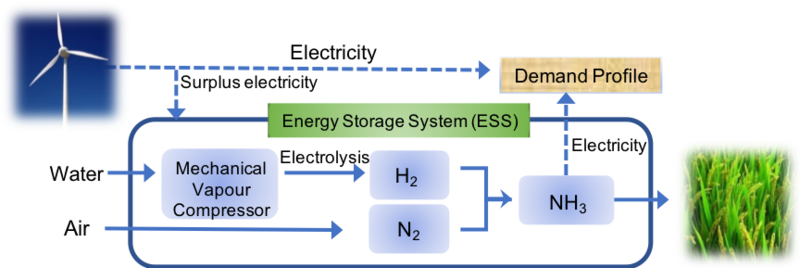
Professor Edman Tsang leads the Wolfson Catalysis Centre at the University of Oxford, focusing on catalysis and sustainable energy systems. His work includes developing novel catalysts for green ammonia production, renewable energy storage, and CO₂ conversion. He collaborates with Siemens on a £1.5M Innovate UK project for a wind-powered green ammonia plant at Rutherford Appleton Laboratory. Research spans photocatalytic solar cells, biofuel production from biomass, and hydrogen storage solutions. His team pioneered the e-Haber-Bosch process, reducing energy demands through renewable integration. Key innovations include patented catalysts for ammonia synthesis and advanced electrochemical systems. The group also explores plastic upcycling via mild heterogeneous catalysis and carbon capture technologies.
Ning An is an Associate Professor of Piano at the Yong Siew Toh Conservatory of Music, National University of Singapore. He holds a distinguished career as a concert pianist and pedagogue, celebrated for his technical mastery and expressive depth. An international prize winner of prestigious competitions including the Queen Elizabeth, Cleveland, and William Kapell competitions, he has performed globally with renowned orchestras such as the London Symphony Orchestra and the Moscow Radio Symphony Orchestra. His teaching roles include previous faculty positions at Lee University and California State University Fullerton. Educated at the Cleveland Institute of Music and New England Conservatory of Music, An actively engages in chamber music collaborations with leading ensembles. His research interests focus on advanced performance techniques and pedagogical innovation in piano studies. Recent activities include masterclasses across Asia and the U.S., and a growing presence in Southeast Asia’s classical music scene. Affiliations: YST Conservatory, NUS Key Positions: Former faculty at CSU Fullerton, Lee University As a scholar, An has contributed to pedagogical literature and is a sought-after guest lecturer. His awards span over 20 international competitions, reflecting his artistic excellence. Grants include support for collaborative projects with orchestras and festival appearances. Research interests align with performance practice and interdisciplinary music education. Notable contributions include solo debuts at Beijing’s National Grand Theatre and collaborations with the Takacs and Ysaye Quartets. His work bridges traditional performance traditions with contemporary pedagogical approaches, emphasizing expressive interpretation and technical rigor.
Yuhan Jiang is a Research Fellow in the Department of Mathematics at the University of California, Berkeley, where they work under the mentorship of Professor Sylvie Corteel. Previously, Jiang completed their PhD at Harvard University under the supervision of Professor Lauren K. Williams. Their academic address is 931 Evans Hall, Berkeley. Education: PhD in Mathematics from Harvard University, advised by Professor Lauren K. Williams Dr. Jiang specializes in algebraic combinatorics, with research spanning polytope theory, matroid theory, and algebraic statistics. Their work connects combinatorial structures with algebraic geometry and representation theory, particularly focusing on coinvariant rings, poset dynamics, and Ehrhart theory. Jiang's research demonstrates a strong interplay between discrete mathematics and geometric structures, often revealing deep connections between seemingly disparate areas of mathematics. Analysis of Jiang's recent publications shows a consistent focus on combinatorial structures with geometric interpretations. Their work on alternating diagonal coinvariants, echelonmotion, and positroid polytopes demonstrates expertise in connecting algebraic combinatorics with geometric reasoning. The publications reveal a progression from foundational combinatorial structures to applications in probability (through Markov chain analysis) and statistics (through algebraic statistical models). A notable trend is Jiang's ability to bridge theoretical combinatorics with concrete computational results, as seen in their work on Ehrhart series and k-ellipses. Dr. Jiang teaches Math 185: Complex Analysis for Fall 2025 at UC Berkeley, indicating active participation in the department's educational mission. While specific grant information isn't provided in the available text, their productive research output across multiple mathematical domains suggests successful funding support for their scholarly activities.
Angelo Cervone is a Professor at Delft University of Technology's Department of Astrodynamics & Space Missions within the Faculty of Aerospace Engineering. His research focuses on advanced propulsion systems, CubeSat technology, additive manufacturing for space applications, and space systems design. He leads projects like LUMIO, a CubeSat mission to monitor lunar meteoroid impacts, and has contributed to the development of green propellants and smart composite structures with embedded sensors. His work integrates cutting-edge manufacturing techniques like laser powder directed energy deposition with propulsion system optimization, emphasizing sustainable and robust space technologies. Cervone has authored over 130 publications and edited the book Adaptive On- and Off-Earth Environments , reflecting his expertise in off-world infrastructure and robotic production systems. He received the Rhizome Award (2021) for advancing autarkic systems in off-Earth habitat development. Key Projects: LUMIO CubeSat mission, Rhizome habitat system development, smart propellant tank design Research Themes: CubeSat propulsion, lunar exploration, additive manufacturing for space, in-situ resource utilization His articles highlight advancements in micro-thrusters, structural health monitoring via fiber optics, and autonomous navigation systems for deep-space CubeSats. Cervone collaborates globally on missions requiring innovative propulsion architectures and materials science breakthroughs.
Stephan Hankammer is a Professor of Sustainable Corporate Management at Alanus University of Arts and Society, where he holds the Chair for Sustainable Management, Innovation, and Entrepreneurship. He is also the co-founder and scientific director of the Institute for Regenerative Economics (REGWI), an affiliated research institute. His academic career includes roles as Junior Professor (2018-2022) and Postdoctoral Researcher at RWTH Aachen University. His research focuses on sustainable innovation, regenerative business models, circular economy, and the dual transformation of digital and sustainable business practices. Key areas include collaboration in value chains, regeneration of ecosystems, and post-growth economic models. He earned his Ph.D. in Business Administration from RWTH Aachen in 2018, with postgraduate studies at institutions like MINES Saint-Étienne and the University of St. Gallen. His work emphasizes frameworks for sustainable degrowth, co-creation in innovation, and leveraging digital tools (e.g., blockchain) for transparency and circular practices. He has presented globally at venues like the Academy of Management and Impact Festival, advocating for regenerative business practices. Hankammer serves on editorial boards (e.g., International Journal of Sustainable Design) and is a member of professional networks like the Academy of Management and SCORAI. His recent projects explore Industry 4.0 sustainability, post-growth business models, and co-opetition strategies for circular economies.
Bryan Webler is a Professor in the Department of Materials Science and Engineering at Carnegie Mellon University (CMU) since 2013, with a courtesy appointment in the Department of Mechanical Engineering. He serves as Co-Director of the Center for Iron and Steelmaking Research (CISR), an industry-supported consortium, and is affiliated with the NextManufacturing Center and Mill 19 digital backbone initiative. His expertise spans process metallurgy, additive manufacturing, and steelmaking technologies. Education: B.S. in Engineering Physics (2005) from the University of Pittsburgh; M.S. (2007) and Ph.D. (2008) in Materials Science and Engineering from CMU. Prior to academia, he worked as a Senior Engineer at the Bettis Atomic Laboratory's Materials Technology department. Research focuses on four core areas: chemical reactions during liquid steel refining, non-metallic inclusion control, continuous casting of steel, and additive manufacturing (laser powder bed fusion, directed energy deposition). His group integrates high-temperature experiments, computational thermodynamics, and kinetic modeling. Notable contributions include developing oxide dispersion strengthening methods and advancing digital twin applications in manufacturing. Key awards include the Kent D. Peaslee Junior Faculty Award (AIST Foundation) and the AIST Foundation Steel Professor title. He serves on editorial boards for Metallurgical and Materials Transactions B and Metallurgical Research and Technology , and actively contributes to industry partnerships. Beyond technical work, Webler explores the history of metallurgy, particularly Pittsburgh's steel industry legacy. His lab's innovations address carbon management, energy production, and advanced materials processing for extreme environments.
Claudio Minero is a Full Professor in the Department of Chemistry at the University of Turin, Italy. His research focuses on Analytical, Environmental, and Cultural Heritage Chemistry, with a strong emphasis on photocatalytic materials and environmental pollutant degradation. He leads the GSD 03/CHEM-01 research group, specializing in advanced oxidation processes and sustainable water decontamination technologies. His work integrates experimental and theoretical approaches to address challenges in environmental chemistry, including the phototransformation of pharmaceuticals, pesticides, and emerging contaminants. He has authored over 150 peer-reviewed articles and holds an ORCID identifier (orcid.org/0000-0001-9484-130X). His teaching spans undergraduate and graduate programs in Chemistry, Environmental Chemistry, and Materials Science. Key research themes include the development of novel photocatalytic systems (e.g., g-C₃N₄, TiO₂-based composites), the environmental fate of pollutants in sunlit waters, and the optimization of Fenton-like processes for wastewater treatment. His lab collaborates extensively with industry and academic partners on projects funded by national and international grants.