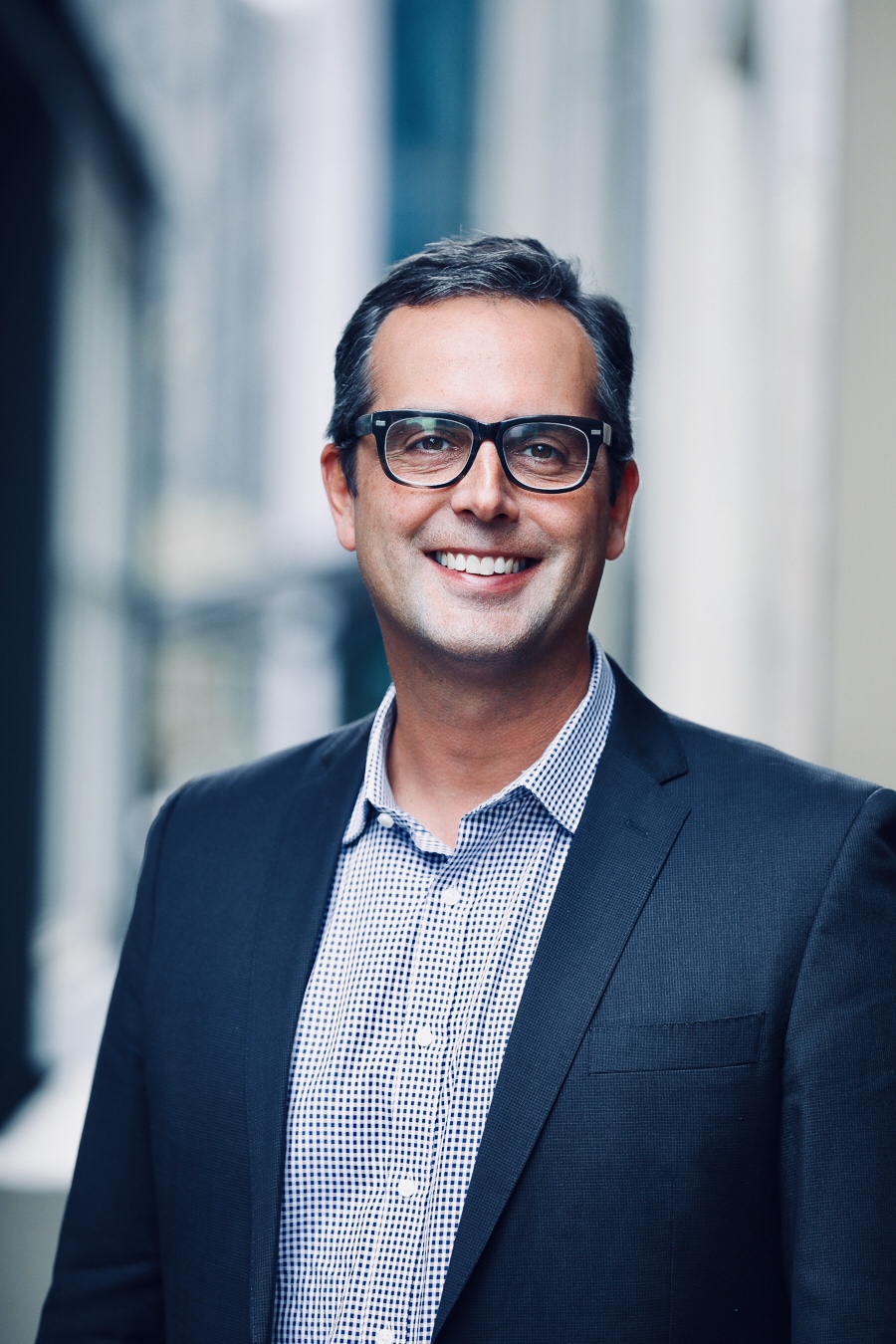
John Grant is a Lecturer at the Faculty of Science and Engineering , Southern Cross University , with over 30 years of expertise in soil science and environmental research. His career spans roles in soil interpretation, land mapping, and agroforestry systems. BSc (University of Tasmania), PhD (Southern Cross University) Certified Professional Soil Scientist (Stage 3) - Soil Science Australia Active in community organizations: Landcare, SoilCare Research Interests : John focuses on nutrient cycling , soil science , and land rehabilitation , particularly in agroforestry systems across the Pacific. His work explores carbon sequestration in soils , soil-plant interactions in Bell Miner Associated Dieback, and ecosystem services of dung beetles and biochar. Publication Trends : Recent work bridges environmental science and physics (electrochemical applications), with ongoing emphasis on tropical forest restoration, plantation productivity, and climate resilience. His research spans local ( Australian sub-tropical forests ) and global ( Vanuatu, Vietnam ) applications. Scientific Recognition : Certified Professional Soil Scientist (Stage 3) - Soil Science Australia Teaching & Leadership : Since 2004, he has lectured on soil processes and ecosystem dynamics, supervising PhD and Masters students. His affiliations include the Forest Research Centre and The Conversation as a contributor.
Dr. Xuan Li is a Lecturer and Chancellor's Research Fellow at the University of Technology Sydney's School of Civil and Environmental Engineering, where she conducts research at the Centre for Technology in Water and Wastewater (CTWW). She holds an ARC DECRA fellowship and has established herself as a leading researcher in environmental engineering with a focus on sustainable water and wastewater solutions. Dr. Li earned her PhD from the University of Queensland (2016-2020) and her Bachelor in Engineering from Tianjin University in China (2011-2015). Her research program focuses on critical environmental challenges including sewer concrete corrosion mitigation, energy recovery from wastewater, microalgae-based carbon-neutral wastewater treatment, and wastewater-based epidemiology for early disease detection. Dr. Li's work bridges fundamental science with practical applications to address sustainability challenges in water infrastructure and public health monitoring, with particular emphasis on developing circular economy approaches for resource recovery from waste streams. Dr. Li's publication record demonstrates expertise across environmental engineering, with emphasis on wastewater treatment technologies, resource recovery, and environmental monitoring. Her work shows a strong trend toward developing sustainable solutions that integrate engineering principles with biological processes to create circular economy approaches for water management, as evidenced by her numerous high-impact publications in top journals including Nature Communications and Science. Ida Browne Early Career Medal from Royal Society of NSW WH Gladstones Population and Environment Award from Australian Academy of Science Australian Museum Eureka Prize for Environmental Research Finalist (2024) Australian Water Association NSW Water Awards for R&D Excellence Award Finalist (2024) Dr. Li actively mentors PhD candidates and has secured over $2.4 million AUD in research funding from diverse sources including the Australian Research Council, Australian Academy of Science, and industry partners. Her grants portfolio includes an ARC DECRA fellowship, ARC Discovery Project, UTS Chancellor's Research Fellowship, and multiple industry collaborations focused on innovative water technologies, demonstrating her ability to translate research into practical applications. As a key member of the Centre for Technology in Water and Wastewater (CTWW) at UTS, Dr. Li leads research teams investigating novel approaches to wastewater treatment and resource recovery. Her work connects with the Faculty Climate Change & Health Research Collaborative (CCHRC), addressing the intersection of water infrastructure, public health, and climate resilience, with research aligning with multiple UN Sustainable Development Goals including Clean Water and Sanitation, Climate Action, and Good Health and Well-being.
Professor William Glamore is a leading academic in environmental engineering at the University of New South Wales (UNSW Sydney) , affiliated with the School of Civil and Environmental Engineering and the Water Research Laboratory . With a career spanning three decades since the early 1990s, he has pioneered nature-based solutions for tidal environments , conducting Australia’s first long-term tidal restoration PhD study and leading large-scale mangrove, saltmarsh, and estuarine restoration projects covering thousands of hectares. Research Focus : Blue carbon ecosystems, climate change adaptation in estuaries, surface/groundwater connectivity, PFAS contamination, and hydrodynamic modeling for coastal restoration. Leadership : Co-lead of Project Halo, Chair of PIANC Australia, member of NSW PFAS Expert Panel, and former Chair of the NSW Coastal Council. Scientific Awards include the Churchill Fellowship (2005) Engineers Australia’s Kevin Stark Medal (2007) National Trust of Australia’s Heritage Award (2013) Green Globe Award (2015) Supervision : Joint supervisor for 7 current PhD students, with previous mentorship of 12 PhD graduates and 3 research associates. His funded projects exceed $25 million in Category 1-3 grants.
Professor Sandra Hale is a distinguished academic at the University of New South Wales (UNSW), serving in the School of Humanities & Languages within the Faculty of Arts, Design & Architecture. As a pioneer in legal interpreting research, she has established herself as a world leader in forensic linguistics and court interpreting studies. Her educational background is impressive, including a Bachelor of Arts (Interpreting & Translation), NAATI Spanish interpreter/translator & Conference interpreter certification, Diploma of Education (Italian & Spanish), Master of Applied Linguistics, PhD in Court interpreting/forensic linguistics (the first of its kind in Australia, awarded in 2001), and a Doctorate Honoris Causa in Interpreting and Translation Studies from the University of Antwerp. Hale's research has fundamentally shaped our understanding of legal interpreting, with particular focus on quality, accuracy, codes of ethics, role expectations, and the impact of interpreters on legal proceedings. She was among the first researchers globally to conduct large data-based studies of court interpreted proceedings, developing innovative research methods that have been widely adopted. Her work bridges interpreting studies, forensic linguistics, cognitive psychology, and legal studies, examining how interpreters affect judicial outcomes through micro-analysis of courtroom discourse and experimental studies. Recent publications demonstrate continued innovation in studying interpreter performance across various settings including police interviews, courtrooms, and legal consultations, with particular attention to interpreter mode, location, and working conditions. Her scholarly contributions have been recognized through numerous prestigious awards including the Andrea Durbach Award for Human Rights Scholarship, election as Fellow of the Australian Academy of the Humanities, multiple Dean's Awards for teaching and research impact, and a Doctor Honoris Causa from the University of Antwerp. Professor Hale actively supervises PhD candidates and has secured substantial research funding through ARC Linkage grants, ARC Discovery grants, FBI grants, and NHMRC grants. Her projects address critical issues in interpreted proceedings, interpreter training methodologies, and communication with culturally and linguistically diverse populations in legal and healthcare settings. She has been instrumental in developing national standards for working with interpreters in courts and tribunals. Her leadership extends to professional organizations where she serves as Immediate Past President of AUSIT (The Australian Institute of Interpreters and Translators), Fellow of the Australian Academy of the Humanities, Advisory Board Member of Multicultural NSW, and member of the Judicial Council on Cultural Diversity subcommittee on the Recommended National Standards for Working with Interpreters in Courts and Tribunals.
Graeme Best is a Lecturer in robotics at the University of Technology Sydney's School of Mechanical and Mechatronic Engineering within the Faculty of Engineering and Information Technology. He joined UTS in April 2022 after working as a Postdoctoral Scholar at Oregon State University from 2018 to 2022, where he collaborated with Carnegie Mellon University and University of Washington on projects funded by DARPA, ONR, NSF, and NAVFAC. Dr. Best completed his PhD titled "Planning Algorithms for Multi-Robot Active Perception" at the University of Sydney's Australian Centre for Field Robotics. His educational background includes a BE (Electrical and Computer Systems) and BSc (Computer Science) from Monash University, both completed in 2014. His research focuses on developing fundamental algorithms for multi-robot systems, with particular emphasis on active perception, where robots plan their motion to obtain high-value observations. His work spans from theoretical algorithm development to full-scale system demonstrations across diverse environments including subterranean spaces, marine settings, precision agriculture, and planetary exploration. He has pioneered approaches such as decentralized Monte Carlo tree search, self-organizing maps for active perception, and spatiotemporal optimal stopping to address challenges like online planning, decentralized coordination, long planning horizons, and unreliable communication. Dr. Best's publication record shows a consistent trajectory of high-impact research in top robotics venues, with recent work focusing on behavior trees for intent communication, multi-room exploration, and resilient multi-sensor systems. His publications demonstrate strong interdisciplinary connections between theoretical computer science, control theory, and practical field robotics applications. Google Research Scholar Program Award (2023) DARPA Subterranean Challenge: Winner for the Tunnel Circuit (2019) DARPA Subterranean Challenge: Second Place for the Urban Circuit (2022) IEEE ICRA Best Paper Award on Multi-Robot Systems (2021) RSS Best Systems Paper Award, Finalist (2022) Dr. Best actively contributes to the robotics community through editorial roles at major conferences including IEEE ICRA, IROS, and MRS. He currently serves as Program Director for UTS's undergraduate Mechatronics major and teaches courses related to robotics software and algorithms. His funded research includes projects like the Multi-Robot Mission Control System for Maritime Autonomous Systems and the Online Behaviour Tree Synthesis for Adaptive Multi-Agent Coordination project funded by Google. He leads the UTS Motorsports Autonomous Vehicle team and supervises capstone projects, demonstrating his commitment to translating research into practical student experiences. His work on the DARPA Subterranean Challenge, where his team won the "Most Sectors Explored" award, exemplifies his ability to bridge theoretical research with real-world field applications.
Nima Baghbani is an Associate Lecturer in Engineering at La Trobe University, Melbourne, Australia, with concurrent appointments as a senior geotechnical engineer/manager in GHERG at Federation University Australia. His academic career spans multiple institutions including La Trobe University (2020-present), Federation University (2021-present), and Deakin University (2020-present), where he serves in teaching, research, and supervisory roles. His educational background includes: PhD in Geotechnical Engineering from Deakin University (2020-2023) Master's degree in Geotechnical Engineering from Amirkabir University of Technology, Tehran (2014-2016) Bachelor's degree in Civil Engineering from Ferdowsi University of Mashhad (2009-2013) Baghbani's research operates at the intersection of geotechnical engineering and artificial intelligence, with principal interests in site investigation, experimental geomechanics, machine learning applications in soil dynamics, and development of intelligent geotechnical sensors. His interdisciplinary approach combines traditional geotechnical methods with cutting-edge computational techniques to solve complex engineering problems involving soil behavior prediction, desiccation crack analysis, and sustainable material applications. His publication record demonstrates a clear trend toward integrating AI methodologies with conventional geotechnical engineering challenges. The most recent articles reveal growing emphasis on recycled materials in construction, hybrid prediction models for soil properties, and vibration mitigation in infrastructure projects. His work frequently employs machine learning techniques like XGBoost, genetic programming, and grey-box models to address geotechnical challenges with improved accuracy and efficiency. Baghbani teaches across multiple institutions with courses including: Geotechnical Design at La Trobe University Soil Mechanics at La Trobe University Geotechnical laboratory at both La Trobe and Federation Universities Field investigation at Deakin University With over 13 years of professional engineering experience complementing his academic work, Baghbani has contributed to more than 50 international and national papers. His dual role as Senior Geotechnical Engineer at FMG Engineering since 2023 provides practical context that enriches both his research and teaching, creating a valuable bridge between theoretical knowledge and real-world engineering applications.
Peter Moar is an Adjunct Professor in Engineering at La Trobe University with over 25 years of international experience in technology design, research, and consulting across telecommunications, automotive, aerospace, and nanotechnology sectors. His career spans from establishing global startups to optimizing operations for Fortune 500 companies, with a focus on bringing complex products from design to mass manufacture. His educational background includes: Bachelor of Engineering (Honors) PhD from La Trobe University Moar possesses extensive expertise in Aerospace Engineering , Astronomical and Space Instrumentation , Automation and Control Engineering , and Photonics and Electro-Optical Engineering . His research focuses on Industrie 4.0 applications in automotive, aerospace, and telecommunications sectors, with a notable 17-year collaboration with the German Aerospace Centre (DLR) on the FIREBIRD micro satellite missions for global bushfire monitoring. His recent publications demonstrate a shift from foundational optical fiber research to cutting-edge space applications, particularly in machine learning for orbital deployment systems and Earth observation technologies. Professional leadership includes: Chair of Engineers Australia National Committee for Space Engineering (since January 2023) Co-chair of same committee (October 2017 - January 2023) Moar has developed industry-focused educational programs including 'Work Integrated Learning (Engineering)' (March 2016) and secured mission-critical capabilities for the DLR's Earth Sensing Imaging Spectrometer (DESIS) global space instrumentation mission. His funded research includes the 'Heavy Vehicle Turntable Use on Building Construction Sites' project with The Australian Turntable Co. Pty Ltd (2019-2020), demonstrating his strong industry connections and practical application focus.
Dr. Edmund Pickering is a Senior Lecturer at Queensland University of Technology, School of Mechanical, Medical & Process Engineering. He serves as a postdoctoral researcher in both the Biomechanics and Spine Research Group (BSRG) and the Biofabrication and Tissue Morphology (BTM) group, where he applies his expertise in mechanical engineering to biomedical challenges. Edmund completed his PhD at Queensland University of Technology, preceded by a Bachelor of Mechanical Engineering (Honours) and a Master of Engineering Management. His educational background has equipped him with a strong foundation in both theoretical and practical aspects of engineering. His research interests span spinal modeling, bone adaptation simulations, mechanical behavior of 3D printed stents, and mechanical characteristics of nanowires. Edmund combines experimental and numerical approaches in his work, utilizing extensive image processing, 3D modeling, and finite element simulation techniques. His research in engineering education examines academic integrity issues, as evidenced by his recent publications on cheating tools like Chegg. Analysis of Edmund's publication trends reveals a strong focus on biomechanics, biomaterials, and engineering education. His work frequently bridges mechanical engineering principles with biomedical applications, particularly in bone mechanics, tissue engineering, and prosthetics development. The increasing publication output in recent years (with significant contributions in 2024 and 2025) demonstrates growing research productivity and expanding collaborations across multiple disciplines. As an educator, Edmund has teaching experience across various mechanical engineering subjects including Stress Analysis, Dynamics, Fluid Mechanics, and Automatic Control. His research in engineering education complements his teaching practice, creating a synergistic approach to academic development. Edmund is actively involved with the Biomechanics and Spine Research Group and the Biofabrication and Tissue Morphology group, where he contributes to cutting-edge research in spinal biomechanics, bone adaptation, and advanced manufacturing techniques for medical applications.
Dr. Sally Lavender is Senior Research Fellow in Atmospheric Science at the University of Southern Queensland's Centre for Applied Climate Sciences. Her research evaluates convection schemes in climate models, focusing on rainfall processes in tropical and Australian regions. Key contributions include assessing the CoMorph-A convection parameterization's performance in Unified Model simulations and co-leading the Northern Australia Climate Program, which develops climate services for agriculture and disaster management. Publications analyze tropical cyclone rainfall characteristics, ensemble prediction benefits for extreme events, and intra-seasonal variability in storm tracks. Methodological strengths include idealised model experiments and regional climate diagnostics. Collaborations involve the UK Met Office and Australian research agencies to improve model representations of convection and extreme precipitation.
Dr. Edward Gan is an Associate Research Fellow at the University of Wollongong's School of Civil, Mining, Environmental, and Architectural Engineering. He also holds an Honorary Research Fellow position within the same faculty. His work focuses on blast wave dynamics, explosion risk management, and protective infrastructure design, particularly in mining, defense, and civilian sectors. He leads advanced blast simulation projects using facilities like the National Facility for Physical Blast Simulation (NFPBS), emphasizing hydrogen explosion safety and bio-inspired protective barriers. Dr. Gan earned his PhD in Civil Engineering from the University of Wollongong (2021). His research integrates Computational Fluid Dynamics (CFD), Finite Element Analysis, and experimental trials to study structural responses to explosive threats. He has advised on government and private sector projects, including protective design engineering and explosive testing in lab and field settings. Key research interests include: Blast wave propagation modeling Explosion hazard exclusion zones for mines Hydrogen explosion mitigation strategies Vegetation-based blast protection systems Structural resistance to hypervelocity projectiles His recent work emphasizes hydrogen energy safety guidelines and expanding mining explosion risk models to include projectile effects. Dr. Gan has conducted high-profile field trials and media-covered projects, including protective barrier testing and mine safety protocols. Professional roles include: Associate Research Fellow (University of Wollongong, 2021–present) Research Assistant (UNSW Canberra, 2024–present) Former Pipeline Engineer at INTECSEA (2014–2017) He collaborates with industry partners on protective design solutions and has contributed to international conferences on blast engineering and structural resilience. His work bridges academic research with practical applications in infrastructure safety and emergency management.
Dr. Changyan He is a Lecturer (equivalent to Assistant Professor) in Medical Engineering at the University of Newcastle, Australia. With a PhD from Beihang University and postdoctoral experience at the University of Toronto and The Hospital for Sick Children, he leads research in advanced surgical robotics. His work focuses on transforming traditional surgeries into safer, precise alternatives through magnetic microrobots, continuum manipulators, and intelligent control frameworks. Education includes: PhD in Mechanical Design and Theory, Beihang University (2021) B.E. in Mechanical and Automation Engineering, Beijing Jiaotong University (2015) Visiting PhD Fellow at Johns Hopkins University (2017-2019) His research explores magnetically actuated robotic tools, deep learning-based control systems, and ultrasound-guided navigation for microsurgeries. Recent projects investigate origami-inspired mechanisms and hybrid magnetic-actuated devices designed in collaboration with clinicians to improve surgical outcomes. Key areas include medical robotics, flexible sensing, and intelligent surgical systems. Publications demonstrate strong trends in robotic solutions for ophthalmic and neurosurgery, with emphasis on safety, precision, and machine learning integration. Recent articles highlight innovations in capsule robots, magnetic navigation, and autonomous surgical tools. Significant grants include: Ultrasound-Guided Autonomous Navigation for Magnetic Capsule Robots ($15,000, 2025) Development of surgical robotic platforms ($21,000, 2023-2025) Magnetically driven continuum robot ($8,000, 2024) He coordinates courses including Biomaterials and BioFluids, Implants and Assistive Technology, and Signal Processing. Current PhD supervision focuses on deep learning for microrobot navigation and reinforcement learning methods.
Professor Torben Daeneke, a research-active academic at RMIT University's School of Engineering, focuses on material solutions for energy, pollution, and CO 2 emissions. With a PhD from Monash University (2013), he leads the multidisciplinary Liquid Metal Research Group, exploring photochemical energy conversion, low-dimensional materials, and liquid metal chemistry. PhD, Inorganic Chemistry, Monash University (2013) Current roles: HDR Manager for Chemical and Environmental Engineering Industry experience: CSIRO (2012-2014), ongoing industry collaborations His research spans Liquid Metal Chemistry , 2D Materials , and Catalysis , with applications in Nano-electronics , Flexible Devices , and CO 2 Reduction . His group has pioneered vacuum-free liquid metal exfoliation techniques for semiconductors and developed high-entropy liquid metal alloys for atomic dispersion catalysis. Recent publications highlight breakthroughs in Crystallization Dynamics , X-ray Structural Analysis , and Surface Chemistry Effects on Conductivity . His team demonstrated Molten Sn Catalysts for hydrogen synthesis and Liquid Metal Electrocatalysts with ultralow platinum loading. No scientific awards are explicitly mentioned.
Dr. Arun Kumar is a Senior Lecturer in the School of Engineering at RMIT University. His research focuses on Logistics and Supply Chain Management, Healthcare Systems Management, Operations Research, and Reliability Engineering . He actively supervises research students in areas such as autonomous vehicles, supply chain security, and urban logistics. His work integrates system dynamics, simulation, and advanced analytics to address complex operational challenges. Teaching interests include Systems Engineering , Logistics Management , and Operations Research , reflecting his commitment to bridging academic and practical applications. Dr. Kumar has contributed over 100 research outputs, emphasizing supply chain collaboration, sustainability, and healthcare process optimization. Key Research Areas: Supply Chain Maturity Models, RFID in Healthcare, Greenhouse Gas Emissions Forecasting, and Autonomous Vehicle Transition. Collaborations: IEEE, Australian Road Research Board (ARRB), and industry partners in logistics and healthcare. His articles explore topics ranging from ERP system impacts to sustainability indices in road infrastructure, showcasing interdisciplinary expertise.
Dr. Amin Abken is an Associate Teaching Fellow at the School of Information Technology, Deakin University, where he contributes to academic instruction and research in artificial intelligence, data management, and distributed computing. He holds a Ph.D. from Deakin University and is affiliated with the Faculty of Science, Engineering, and Built Environment. His research spans Context-Aware Computing , Reinforcement Learning , and Internet of Things (IoT) , with a focus on adaptive caching strategies, group activity recognition, and intelligent transportation systems. His recent publications highlight advancements in context caching techniques and reinforcement learning for IoT environments. Dr. Abken's collaborative work includes co-authored articles in journals like ACM Transactions on Internet of Things , IEEE Internet of Things Magazine , and IEEE Transactions on Intelligent Transportation Systems . He employs methodologies in probabilistic analysis , dynamic system optimization , and edge-cloud platforms for urban IoT ecosystems. His articles demonstrate a consistent focus on IoT-based systems , context-aware algorithms , and distributed computing since 2014, with recent trends emphasizing reinforcement learning and smart city applications like carparking simulations. Dr. Abken collaborates frequently with researchers such as Weerasinghe , Zaslavsky , and Loke SW , addressing challenges in context caching , group activity recognition , and edge computing across publications in ACM, IEEE, and SpringerOpen.
Qinfu Hou is a Lecturer and Research Fellow in Monash University's Department of Chemical and Biological Engineering. His research develops multiscale modeling techniques to understand granular and multiphase flows for energy-efficient processes across chemical, metallurgical, and environmental applications. Research areas include heat/mass transfer in fluidized beds, multiphase flow dynamics, granular segregation, numerical method development, and cloud-based process optimization. With over 70 publications and A$2.5M+ in research funding, Hou has developed virtual reactor models and process scaling approaches adopted in metallurgy and materials processing. His work on solar evaporators and waste valorization demonstrates commitment to sustainable engineering solutions. Notable mentorship outcomes include students receiving the Fell Consulting Prize (Jannatul Azmir), JITRI Fellowship (Yongli Wu), and Best Engineering Thesis in Brazil (Lucas Massaro Sousa). His publications show consistent themes: 1) Computational modeling of industrial reactors, 2) Particle-fluid interaction mechanics, 3) Process intensification strategies, and 4) Sustainable resource recovery. Recent work advances solar desalination and biomass processing technologies.