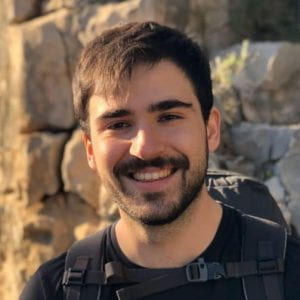
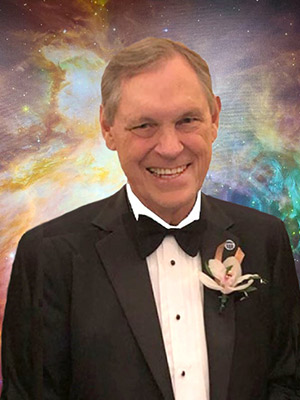
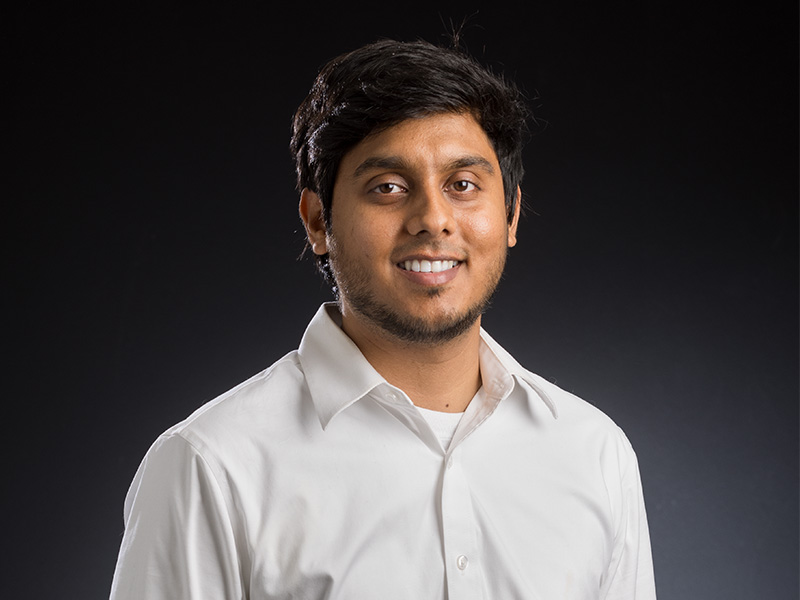
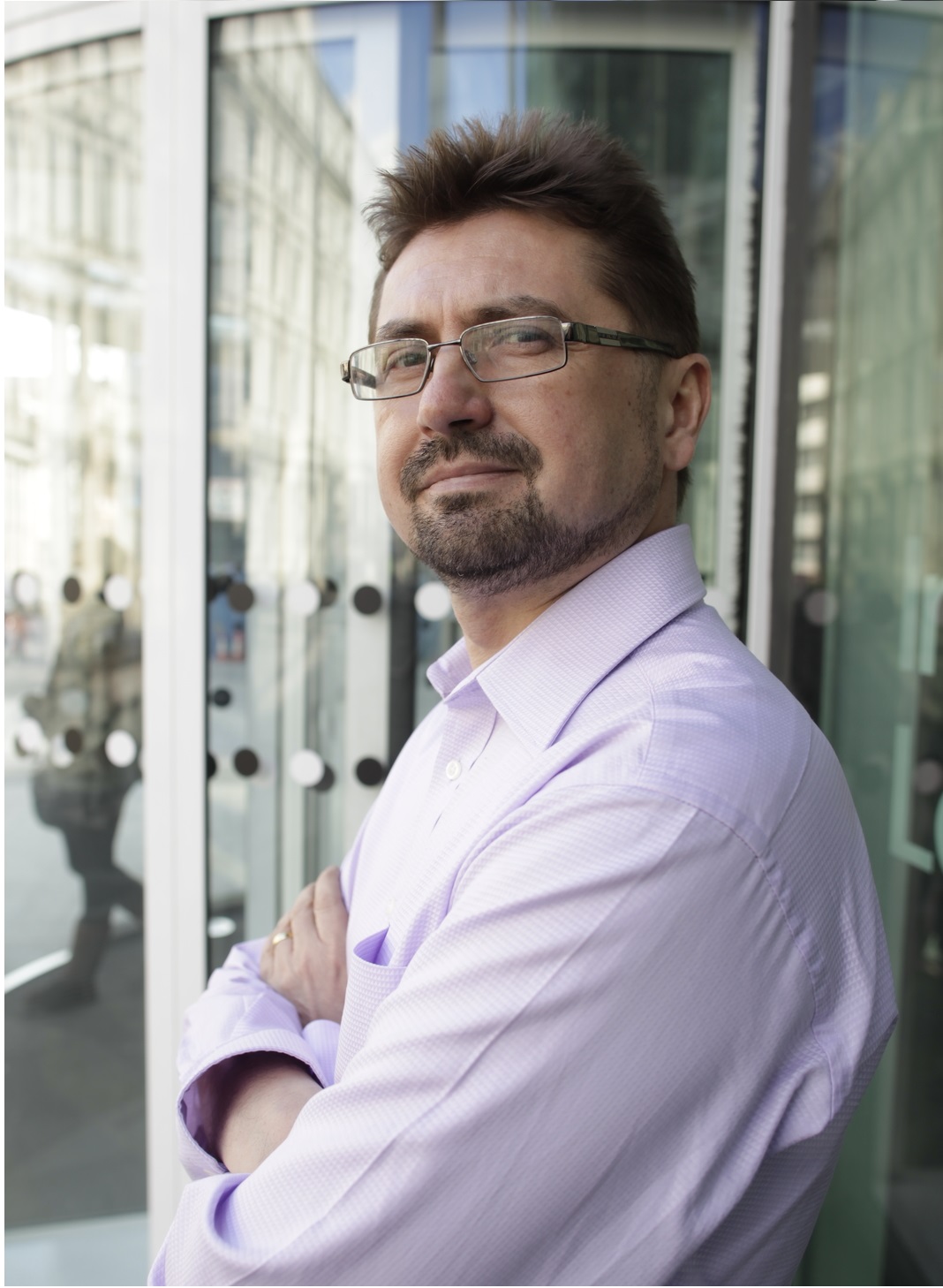
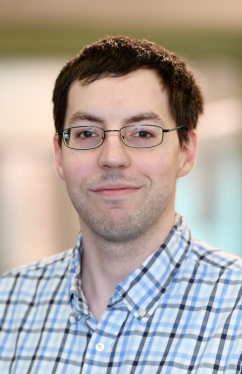
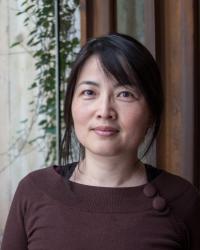
George Dasoulas is a Postdoctoral Researcher at Harvard University's Department of Biomedical Informatics, affiliated with the Zitnik Lab. He holds a PhD in Computer Science from École polytechnique in Paris, France, and previously worked at Huawei Technologies France. His research focuses on graph machine learning, particularly in biomedical applications and telecommunications, with contributions to graph neural networks (GNNs), attention mechanisms, and topological deep learning. Education: Ph.D., Computer Science (DaSciM group, LIX, École polytechnique); Diploma in Electrical & Computer Engineering (National Technical University of Athens). His work includes developing Lipschitz-normalized attention layers, parametrized graph shift operators, and modularity-aware graph autoencoders. He has been recognized with the 2022 Wojcicki and Troper Fellowship from Harvard's Data Science Initiative. Key Research Themes: Graph Representation Learning, Topological Neural Networks, Equivariant Learning, Multimodal Learning Applications: Biomedical Informatics, Telecommunications, Sustainable AI His articles emphasize scalable GNN architectures, graph-based unlearning strategies, and multimodal protein phenotyping. He has contributed to open-source projects like LipschitzNorm and PGSO, and actively publishes in top conferences (ICML, ICLR, NeurIPS).
John Junkins is a distinguished academic and researcher in aerospace engineering, holding the Royce E. Wisenbaker Chair and serving as Director of the Hagler Institute for Advanced Study at Texas A&M University's College of Engineering. He has been affiliated with the Department of Aerospace Engineering since at least 1993. Junkins' roles include being a Distinguished Professor (mapped to Professor rank), a Regents Professor, and an Honorary Fellow of the American Institute of Aeronautics and Astronautics (AIAA). His educational background includes a B.A.E. from Auburn University (1965), and M.S. and Ph.D. in Aerospace Engineering from UCLA (1967, 1969). His research focuses on spacecraft dynamics and control, guidance systems, analytical methods, and smart sensor technologies. Notable contributions include work on trajectory optimization, orbital mechanics, and nonlinear control systems. Key awards include the Kay Bailey Hutchinson Distinguished Service Award (2022), Robert H. Goddard Astronautics Award (2019), and TYCHO BRAHE Medal (2004). His publications span textbooks like 'Analytical Mechanics of Aerospace Systems' and pioneering research in astrodynamics. Junkins' work emphasizes interdisciplinary collaboration through the Hagler Institute, advancing computational methods for space mission design and autonomous systems.
Alper Taşdemirci is a Professor in the Department of Mechanical Engineering at Izmir Institute of Technology (IYTE). His primary research focuses on high strain rate mechanics, material deformation, energy absorption in structural materials, and computational modeling. He has conducted extensive studies on composite materials, metallic foams, and bio-inspired designs, with a strong emphasis on dynamic loading conditions and finite element analysis. Education: B.S. in Mechanical Engineering, Erciyes Üniversitesi M.S. in Mechanical Engineering, Erciyes Üniversitesi PhD in Mechanical Engineering, University of Delaware Research Interests: High strain rate behavior of materials Energy absorption mechanisms in structural components Dynamic material testing (e.g., Split Hopkinson Pressure Bar) Composite and metallic material design for impact applications Numerical modeling with LS-DYNA Publications: His recent works explore bio-inspired metallic structures, additive manufacturing of composites, and the dynamic compression of syntactic foams. Key themes include strain rate effects, material characterization under impact, and the development of constitutive models for advanced materials. Awards and Honors: No specific awards mentioned in the text. Grants and Advising: No explicit details on grants or advisees provided in the text.
Evelyne Knapp is a Researcher at the ZHAW School of Engineering, Zurich University of Applied Sciences, within the Organic Electronics & Photovoltaics research focus area. Her work centers on advanced materials science, semiconductor physics, and machine learning applications in energy systems. She has led major projects such as 'Uncertainty quantification in ML Prediction for PV Quality Assurance' and contributed to innovations in perovskite solar cell optimization, organic semiconductor characterization, and device simulation models. Her research interests span photovoltaic technologies, charge transport phenomena, and optoelectronic device development. Key areas include: Perovskite solar cell performance analysis and degradation mechanisms Machine learning-driven parameter extraction for semiconductor materials Electro-thermal modeling of organic light-emitting devices Frequency-domain analysis of large-area solar cells Knapp's publications (over 30 peer-reviewed articles) demonstrate expertise in device simulation, material characterization, and interdisciplinary approaches merging computational methods with experimental data. Recent work highlights include: Advancing ML techniques to identify limiting parameters in perovskite solar cells Developing inverse models for solar cell parameter estimation Quantifying charge transport dynamics in organic semiconductors Her contributions have been presented at leading conferences including the IEEE Photovoltaic Specialists Conference and the Society for Information Display Symposium.
Dr. Srikanthan Ramesh serves as an Assistant Professor in the School of Industrial Engineering and Management within Oklahoma State University's College of Engineering, Architecture and Technology. Since establishing the Advanced Materials and Additive Manufacturing Laboratory in August 2022, he has led interdisciplinary research at the intersection of materials science, physical phenomena, and advanced manufacturing technologies, with applications spanning healthcare, aerospace, and electronics sectors. His educational foundation includes a Ph.D. in Mechanical and Industrial Engineering from Rochester Institute of Technology (2022) and an M.S. in Industrial and Manufacturing Systems Engineering from Iowa State University (2017). This academic background enables his innovative approach to manufacturing science. Dr. Ramesh's research program focuses on biological and micro-scale additive manufacturing (bio-AM), specializing in biomaterial development for tissue engineering and regenerative medicine. His work integrates computational fluid dynamics, machine learning, and real-time process monitoring to achieve precise control over mechanical, biological, and electrical properties of manufactured structures. He develops experimental tools and process frameworks for droplet-based and extrusion-based AM systems, with particular emphasis on wound healing applications and space-compatible microelectronics. Analysis of his 14 publications from 2020-2025 reveals a strong trajectory toward AI-driven manufacturing solutions, with increasing emphasis on multi-objective Bayesian optimization for bioink design, aerosol jet printing process refinement, and bioprinted tissue construct development. His recent work demonstrates sophisticated integration of machine learning with physical manufacturing processes to solve complex biomedical challenges. His scientific recognition includes: Doctoral Dissertation Pitch Competition (Runner-up), IISE, 2021 Best Oral Presentation, Graduate Showcase, Rochester Institute of Technology, 2019 Gilbreth Memorial Fellowship, IISE, 2018-2019 Wakonse College Teaching Fellowship, Iowa State University, 2018-2019 Graduate Research Excellence Award, Iowa State University, 2017 Best Overall Oral Presentation, Nano@IAstate, Iowa State University, 2017 Dr. Ramesh currently leads significant research initiatives including as Principal Investigator for an NSF REU Site on Additive Manufacturing and Cybersecurity ($464,606, 2025-2028) and a NASA EPSCoR Travel Grant for aerosol jet printing in space missions (2024-2025). As Co-PI on an NSF grant for Privacy-aware Collaborative Design in additive biofabrication ($599,981, 2025-2028), he develops frameworks for mass personalization in medical applications while addressing data security challenges. These projects support his lab's mission to advance manufacturing science through rigorous experimentation and computational innovation. The Advanced Materials and Additive Manufacturing Laboratory operates as a collaborative hub where Dr. Ramesh directs research teams in developing novel biomaterials, optimizing printing processes, and creating functional prototypes for wound dressings, liver tissue models, and space-rated microelectronics. The lab's interdisciplinary approach combines expertise in materials characterization, computational modeling, and machine learning to push the boundaries of what's possible in additive manufacturing for critical applications.
Professor Dan Crisan is a Professor of Mathematics at Imperial College London and Director of the EPSRC Centre for Doctoral Training in the Mathematics of Planet Earth. He holds a PhD in Mathematics from the University of Edinburgh and an MSci in Mathematics from the University of Bucharest. His research focuses on Stochastic Analysis, Stochastic PDEs, Fluid Dynamics, Nonlinear Filtering, and Data Assimilation. He leads the Stochastic Transport in Upper Ocean Dynamics (STUOD) project, supported by an ERC Synergy Grant, exploring stochastic models in geophysical fluid dynamics. His academic roles include directing the MPE CDT and teaching advanced courses like Stochastic Calculus with Applications to Non-Linear Filtering. He collaborates extensively with researchers globally on topics including stochastic fluid dynamics, particle methods, and Bayesian inference. His work bridges theoretical advancements with applications in climate modeling and environmental systems. Education: PhD (University of Edinburgh, 1996), MSci (University of Bucharest, 1992). Professional roles include Director of MPE CDT (2013–present), Professor at Imperial College (2011–present), and prior academic appointments at the University of Cambridge and Imperial College. His research emphasizes stochastic processes in fluid dynamics, with projects funded by EPSRC and EU grants. Current PhD supervision opportunities are available in areas like stochastic fluid dynamics and data assimilation. Key achievements include foundational contributions to particle filtering, numerical methods for stochastic PDEs, and stochastic transport models. His work on the Camassa-Holm equation and rotating shallow water models demonstrates expertise in nonlinear wave dynamics and stochastic parametrization. He actively engages in international collaborations and serves on editorial boards for leading journals in stochastic analysis.
Professor Gianluca Ranzi is a Professor in the School of Civil Engineering at the University of Sydney, serving as Chairman of the Centre for Advanced Structural Engineering. His expertise spans structural engineering, architectural science, and heritage conservation, with a focus on sustainable building technologies. He leads research on composite materials, energy-efficient structures, and the mitigation of urban heat islands. Research Interests: His work addresses the behavior of concrete and composite steel-concrete structures, building energy management systems, and heritage conservation strategies for twentieth-century concrete structures. He develops adaptive systems to enhance indoor comfort and building functionality while reducing energy consumption. Publications: Ranzi has authored/edited key texts including Design of Prestressed Concrete to Eurocode 2 (2017) and Structural Analysis: Principles, Methods and Modelling (2015). His recent articles explore topics like lithium slag composites, P2P energy trading, and dynamic characterization of historic structures. Teaching: He teaches courses such as CIVL3511/CIVL9511 (Basics of Integrated Building Engineering) and CIVL5531 (Advanced Integrated Building Engineering). Supervises PhD/Master's students on projects like composite brick-concrete construction and crack control in shotcrete linings. Affiliations: Member of Standards Australia committees (BD-002, BD-032), American Concrete Institute (ACI), and the International Association for Bridge and Structural Engineering (IABSE).
Abdullah Karaman is a Professor at the Department of Geophysical Engineering, Istanbul Technical University (ITU). His research focuses on geophysical modeling, subsidence due to longwall mining, hydrothermal systems, and seismic data analysis. He leads projects on geothermal applications using particle swarm optimization and collaborates internationally. Dr. Karaman has supervised 8 ongoing theses and has authored/co-authored over 17 publications since 1997. His work spans geophysical exploration, environmental geohazards, and subsurface imaging techniques. Education: Master of Science in Geophysics (1989) Research Interests: Hydrothermal system characterization using magnetotelluric methods Seismic inversion and diffraction imaging Geophysical monitoring of coal mine subsidence Optimization algorithms in geophysical data analysis Awards: None explicitly mentioned. Grants & Projects: Geothermal Applications of Particle Swarm Optimization Modeling Technique (2016–2021) Kordil Engineering Company: Geophysical consulting for international projects (2021) His lab focuses on integrating geophysical techniques with machine learning for high-resolution subsurface imaging.
Chris Whidden is an Assistant Professor in the Faculty of Computer Science at Dalhousie University, where he leads research in algorithms and bioinformatics. His work bridges theoretical computer science with practical applications in computational biology and ocean data analytics. Whidden's research interests include approximation and fixed-parameter algorithms, computational biology, evolutionary trees and networks, graph theory, hybridization and lateral gene transfer, NP-hardness, and ocean data analytics. He develops efficient algorithms and software to solve NP-hard problems, particularly in the context of phylogenetics and large-scale biological data. His work applies both theoretical algorithm design and practical software engineering to create novel solutions for understanding biodiversity, bacterial and viral evolution, and oceanographic systems. His recent publications reflect a strong trend toward interdisciplinary research, combining deep learning and machine learning with oceanographic data analysis, fish detection and classification, echosounder data processing, and environmental monitoring. Many of his algorithmic contributions focus on phylogenetic tree comparison, including SPR distances, maximum agreement forests, and supertree construction. He has developed several widely used software tools such as rspr, SPR Supertrees, uspr, and phylogenetic topographer. NSERC Killam Trusts Tula Foundation NSF Simons Foundation (via Life Sciences Research Foundation) DeepSense (industry-academic collaboration) He is actively involved in mentoring and has funding available for PhD and MCS students in computer science, particularly in algorithms, bioinformatics, and data analytics. He teaches courses such as Algorithm Engineering (CSCI 4118/6105), Software Development (CSCI 2134), and Design and Analysis of Algorithms (CSCI 3110). Whidden has collaborated extensively with industry through DeepSense, working on projects that apply data analytics and machine learning to the ocean sector, including predictive modeling for ocean buoys, automated fish detection, and tidal energy monitoring.
Vijay Gupta is the Elmore Professor of Electrical and Computer Engineering and Associate Head of Graduate and Professional Programs at Purdue University's College of Engineering. His research focuses on distributed decision-making systems, combining data-driven and model-driven approaches for infrastructure networks like power grids, transportation systems, and water distribution networks. Key areas include compositional control, cyber-physical security, and incentive design in distributed estimation and control. Education: B.Tech from Indian Institute of Technology Delhi, M.S. and Ph.D. from California Institute of Technology, all in Electrical Engineering. Prior roles include faculty positions at Notre Dame and research roles at United Technologies Research Center. Research emphasizes resilient control strategies for large-scale systems, with recent work addressing secure estimation under adversarial attacks, model reduction techniques, and reinforcement learning frameworks for decentralized control. His publications span control theory, cyber-physical systems, and optimization algorithms. Grants and collaborations are not explicitly detailed here, but his work reflects significant engagement with foundational and applied research challenges in networked systems. No specific awards are listed in the provided texts.
Yung C. Shin is the Donald A. and Nancy G. Roach Distinguished Professor of Advanced Manufacturing at Purdue University's School of Mechanical Engineering. He leads research in laser-based manufacturing, ultrafast laser interactions, and multi-scale modeling. His affiliations include the Manufacturing Laboratories, Center for Laser-Based Manufacturing, and Laser-Assisted Materials Processing Lab. Education: B.S. in Mechanical Engineering, Seoul National University, 1976 M.S. in Mechanical Engineering, KAIST, 1978 Ph.D. in Mechanical Engineering, University of Wisconsin, 1984 Research interests span advanced manufacturing technologies, including laser additive manufacturing, ultrafast laser ablation, multi-physics modeling, and micro/nano engineering. His work addresses challenges in materials processing, thermal dynamics, and process optimization. Awards: ASME Blackall Machine Tool and Gage Award (2007) SME Frederick W. Taylor Research Medal (2015) Fellow, ASME (2010) and SME (2012) Donald A. and Nancy G. Roach Distinguished Professorship (2020–present) Advising and Grants: While specific grant details are not listed, Prof. Shin’s research is supported by institutional and industry partnerships. His students and collaborators include authors like S. Liu, K.M. Hong, and C. Katinas, reflecting active mentorship in advanced manufacturing. Labs and Teams: He directs the Center for Laser-Based Manufacturing and the Laser-Assisted Materials Processing Lab, focusing on interdisciplinary innovations in additive manufacturing and laser-material interactions.
Luz Sotelo is an Assistant Professor of Mechanical Engineering at Purdue University, located in West Lafayette, Indiana. She is affiliated with the College of Engineering's Department of Mechanical Engineering, conducting research in advanced manufacturing and materials science. Her work focuses on multi-process additive manufacturing, nondestructive evaluation, ultrasonics, and acoustic metamaterials. She holds a Ph.D. from the University of Nebraska-Lincoln and a B.S. from the University of Texas Rio Grande Valley. Research interests include developing novel techniques for evaluating additively manufactured components using ultrasonic methods, studying material properties of advanced composites, and exploring bio-inspired solutions for fluid dynamics challenges. Her research bridges fundamental science with engineering applications in convergent manufacturing and acoustics. Notable articles explore ultrasonic evaluation of AM materials, fatigue performance of laser-fused components, and bio-inspired flow control strategies. Her work emphasizes practical applications of ultrasonics in real-time manufacturing monitoring and material characterization. Awards: NASEM Research Assistantship Program (2021-22) Society of Hispanic Professional Engineers STAR Award (2020) Great Minds in STEM Leadership Award (2019) NSF Graduate Research Fellowship (2018-21) Professor Sotelo's advising and grant activities focus on advancing additive manufacturing and nondestructive evaluation technologies. She collaborates with industry partners to translate research into practical solutions for aerospace and biomedical applications. Her lab, located in MMRL 1900D, investigates cutting-edge materials and manufacturing processes.
Gintaras Reklaitis is the Burton and Kathryn Gedge Distinguished Professor of Chemical Engineering at Purdue University's Davidson School of Chemical Engineering. He joined Purdue in 1970 and holds a B.S. from Illinois Institute of Technology (1965) and M.S./Ph.D. from Stanford University (1969). His research focuses on applying computing and systems technology to optimize processing systems, particularly in pharmaceutical manufacturing and integrated energy systems. Key areas include batch process design, enterprise-wide planning, and robust scheduling under uncertainty. Professor Reklaitis has been recognized with prestigious awards, including National Academy of Engineering membership (2007) and the Professional Achievement Award from Illinois Institute of Technology (2006). He has co-advised multiple graduate students, including Megha Das, Zachary Hillman, Shrivatsa Korde, and Dalton Yu. His work appears in journals like Computers & Chemical Engineering and Journal of Pharmaceutical Sciences . Research highlights include developing frameworks for real-time quality assurance in pharmaceutical manufacturing, integrating data management systems, and advancing continuous manufacturing technologies. His contributions also span editorial roles, including Editor-in-chief of Computers & Chemical Engineering (1986–2008). Current projects emphasize digital design tools, techno-economic analysis, and sensor-driven process monitoring.
Ping Wang is a Professor in the Department of Asian Languages & Literature at the University of Washington, serving as Graduate Program Coordinator and Graduate Admissions & Education Committee Chair. They hold a Ph.D. in Chinese Language and Literature from the University of Washington (2006). Their research focuses on Chinese Intellectual History, Medieval Philology, Poetry and Poetics, and Translation Studies. Recent research trends include interdisciplinary approaches to classical texts and modern translation methodologies. The listed articles highlight contributions to computational linguistics and AI, though primary disciplinary focus remains humanities. No specific awards are listed, though the department's 'Awards & Honors' page may contain institutional recognitions. Advising emphasizes graduate education coordination rather than individual student mentorship. Active in departmental administration and curriculum development. Research affiliations include the Bilingual and Biliteracy Research Lab and the Early Buddhist Manuscript Project. Office located in GWN M246 with regular Thursday office hours.
Andrew J. Patton is the Zelter Family Distinguished Professor and Professor of Economics at Duke University's Trinity College of Arts & Sciences, holding these roles since 2016 and 2013 respectively. Previously, he served as Associate Professor of Economics at Duke from 2009 to 2013. Patton holds a Ph.D. and M.A. from the University of California, San Diego (2002 and 2000), and a B.Bus. from the University of Technology Sydney (1998). His research focuses on financial econometrics, particularly volatility forecasting, dependence modeling, high-frequency financial data analysis, and hedge fund dynamics. He has published extensively in top journals such as the Journal of Finance , Journal of Financial Economics , and Econometrica . His recent work includes advancements in realized semicovariances, k-means clustering for unobserved heterogeneity, and risk price variations. Patton’s 2016 Distinguished Professorship reflects his scholarly impact. His research emphasizes practical applications, such as improving volatility forecasts and addressing market anomalies’ trading costs.