معرفی
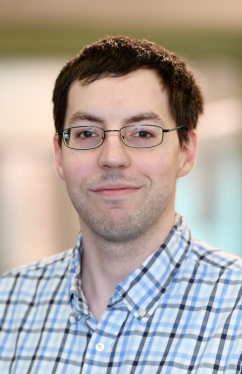
Chris Whidden is an Assistant Professor in the Faculty of Computer Science at Dalhousie University, where he leads research in algorithms and bioinformatics. His work bridges theoretical computer science with practical applications in computational biology and ocean data analytics.
Whidden's research interests include approximation and fixed-parameter algorithms, computational biology, evolutionary trees and networks, graph theory, hybridization and lateral gene transfer, NP-hardness, and ocean data analytics. He develops efficient algorithms and software to solve NP-hard problems, particularly in the context of phylogenetics and large-scale biological data. His work applies both theoretical algorithm design and practical software engineering to create novel solutions for understanding biodiversity, bacterial and viral evolution, and oceanographic systems.
His recent publications reflect a strong trend toward interdisciplinary research, combining deep learning and machine learning with oceanographic data analysis, fish detection and classification, echosounder data processing, and environmental monitoring. Many of his algorithmic contributions focus on phylogenetic tree comparison, including SPR distances, maximum agreement forests, and supertree construction. He has developed several widely used software tools such as rspr, SPR Supertrees, uspr, and phylogenetic topographer.
- NSERC
- Killam Trusts
- Tula Foundation
- NSF
- Simons Foundation (via Life Sciences Research Foundation)
- DeepSense (industry-academic collaboration)
He is actively involved in mentoring and has funding available for PhD and MCS students in computer science, particularly in algorithms, bioinformatics, and data analytics. He teaches courses such as Algorithm Engineering (CSCI 4118/6105), Software Development (CSCI 2134), and Design and Analysis of Algorithms (CSCI 3110).
Whidden has collaborated extensively with industry through DeepSense, working on projects that apply data analytics and machine learning to the ocean sector, including predictive modeling for ocean buoys, automated fish detection, and tidal energy monitoring.