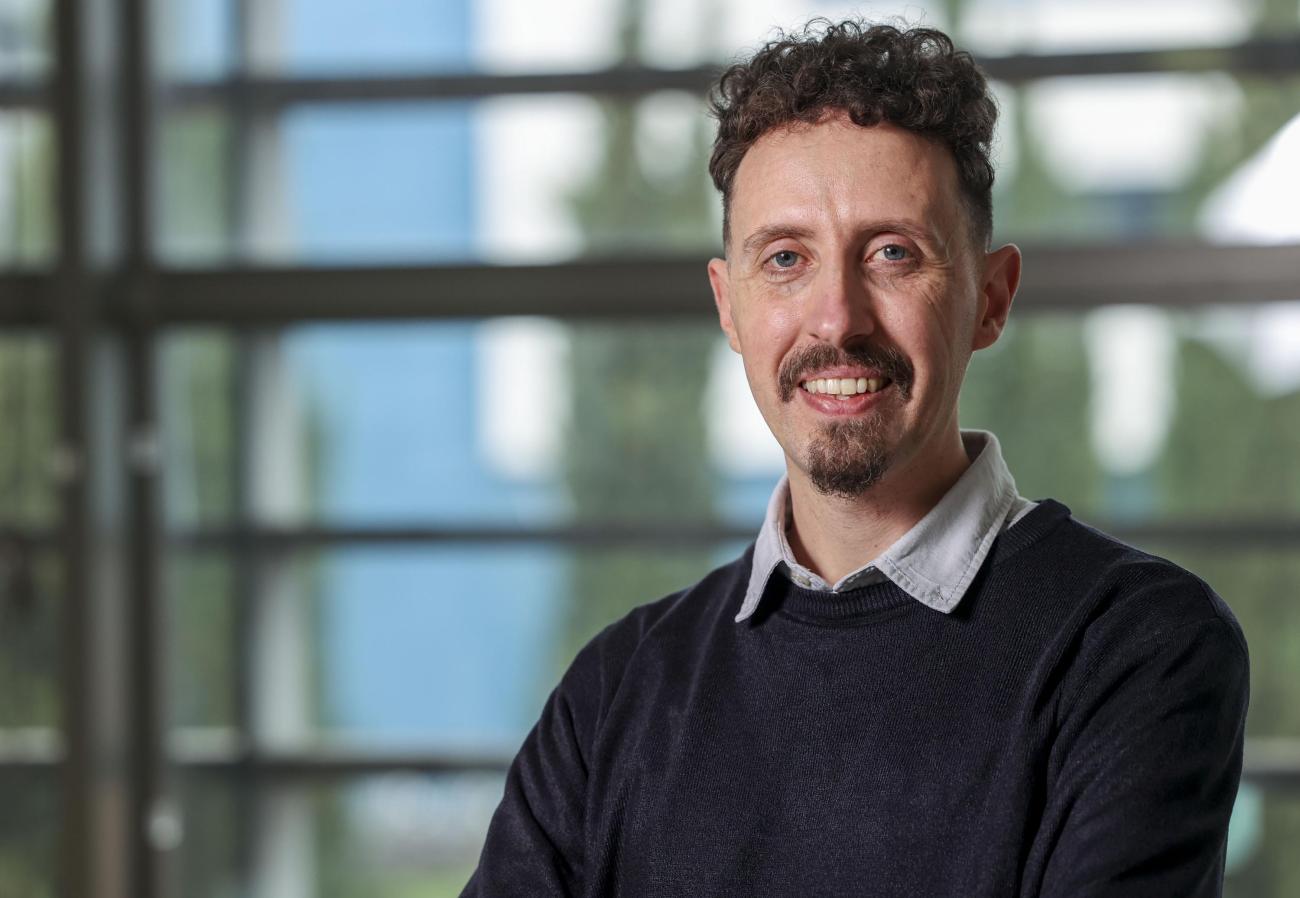
Dr. Francis Ward is Assistant Professor in Music Education at Dublin City University's Institute of Education. His interdisciplinary work connects academic scholarship, creative practice, and technology-enhanced learning with emphasis on socially engaged education and inclusive community arts. Research spans music education across formal/informal contexts, technology in music pedagogy, multicultural music education, Irish traditional music/dance, and responsible integration of generative AI in higher education. Current projects include GenAI in capstone assessment and Creative Linguistic Strategies for Irish Dance. Awarded Fulbright Scholar Fellowship (2019-20) and Irish Research Council PhD scholarship. Publications appear in Q1 journals covering virtual transmission of traditional arts, social justice in music education, and playful pedagogies. Creative outputs include compositions and choreography presented internationally. Teaches undergraduate/postgraduate courses in music/arts education and research methods. Co-developed Socially Inclusive Music Education specialism and MEd in Arts Education Practice. Supervises doctoral candidates in music/arts education and creative practice research.
Dr. John J. Fitzpatrick is a Senior Lecturer in Process & Chemical Engineering at University College Cork (UCC) since 2008. He holds a PhD in Agricultural Engineering (Bioprocess Engineering) from Texas A&M University and has extensive industry experience, including roles at the National Dairy Products Research Centre and University College Dublin. His research focuses on Particle and Powder Technology, Sustainability, and Bioprocess Engineering, with notable contributions to dairy powder breakage mechanisms, sustainable process design, and engineering education reform. Education: PhD, Agricultural Engineering (Texas A&M, 1992) MSc, Food Engineering (University of Massachusetts, 1988) MSc, Teaching & Learning in Higher Education (UCC, 2008) Additional qualifications in Environmental Management and Sustainability. Research Interests: His work spans particle technology (food/dairy powders), sustainable energy systems, bioreactor optimization, and integrating ecological economics into engineering curricula. Recent projects include modeling oxygen transfer in bioreactors and analyzing carbon footprints of energy systems. Dr. Fitzpatrick has secured over €300k in research grants, including EU-funded projects on powder technology and Teagasc-supported studies on infant milk formula. He received the President’s Award for Excellence in Teaching (2006/7) and pioneered sustainability-focused educational initiatives at UCC. His 150+ peer-reviewed publications highlight interdisciplinary approaches to engineering challenges, emphasizing real-world applications and environmental stewardship. Grants & Awards: Walsh Fellowship (2018–2022) EU Research Training Network BIOPOWDERS (2004–2008) Teagasc-funded project on dairy powder breakage (2018–2022) Labs/Teams: Leads the Particle and Powder Science group at UCC, collaborating with industry partners like Teagasc and international universities. Active in curriculum development for sustainable engineering education programs.
Professor Donna Marshall is a Full Professor and Vice-Principal for Research & Innovation at the College of Business, University College Dublin (UCD). She serves as the Executive Director of the UCD Earth Institute: People, Work, Society initiative and is a multi-award-winning Sustainable Supply Chain scholar. Professor Marshall is ranked among the top supply chain researchers globally, with over one hundred research outputs in prestigious journals including MIT Sloan Management Review, Journal of Business Ethics, and Production and Operations Management. Her educational background includes a BSc and PhD from the University of Bath, UK. Professor Marshall has extensive experience in academic leadership, having served as Head (Vice Principal) of Research, Innovation and Impact for the UCD College of Business from September 2018 to June 2021. Professor Marshall's research focuses on sustainable supply chains, with particular emphasis on climate crisis response, ethical sourcing, supply chain transparency, and the bio-circular economy. She is passionate about bringing systemic change to broken supply chains and addressing the world's biggest crises of climate chaos and exploitation of people and planet. Her current research projects include sustainable supply chains in fashion with Fashion's Responsible Supply Chain Hub (FReSCH), sustainable bio-circular economy initiatives, and transparency in complex supply chains including controversial industries. She has secured research funding with multiple national and international teams amounting to over €30 million. Her recent publications reveal a strong trend toward examining power dynamics, justice issues, and transparency in supply chains, particularly in the fashion industry. She has also made significant contributions to understanding issue-washing (including greenwashing and biowashing) and developing frameworks for sustainable biocircularity. Her work increasingly focuses on just transitions and ensuring that sustainability efforts authentically address social and environmental challenges rather than merely creating the appearance of progress. Harold E. Fearon Award for Best Paper in Journal of Supply Chain Management (2014) Nevi Healthcare Best Paper Award Runner up at IPSERA Conference (2015) Multiple teaching awards for her innovative approaches to supply chain education Former President of the International Purchasing and Supply Education and Research Association (IPSERA) Professor Marshall has extensive teaching experience across undergraduate, Masters, and PhD levels. She created and directed the QS-world ranked UCD MSc in Supply Chain Management, which evolved into the MSc in Sustainable Supply Chain Management in 2023. She serves on the editorial boards of multiple high-ranking journals and provides pro bono advisory services to international organizations, companies, NGOs, and government bodies. Her teaching philosophy emphasizes individualized learning, inclusivity, and life-long learning, with a focus on creating safe, encouraging environments for her diverse international student body. She leads several research teams and initiatives including Fashion's Responsible Supply Chain Hub (FReSCH) and works closely with industry partners to translate research into practical applications for more sustainable and just supply chains.
Debbie Ging is a Professor of Digital Media and Gender in the School of Communications at Dublin City University (DCU), located on the Glasnevin Campus. She holds editorial roles with journals Men and Masculinities and New Media and Society , and is affiliated with the National Anti-Bullying Research and Resource Centre and the Institute for Future Media, Democracy and Society (FuJo). Her research focuses on gender, sexuality, and digital media, with particular attention to online misogyny, incel radicalization, and youth digital rights. Her work explores digital hate speech, anti-feminist movements, and educational strategies to combat gender-based violence. Recent projects include cross-national studies on sexual violence prevention workshops and longitudinal analyses of extremist language in online spaces. She collaborates internationally, addressing policy implications for digital citizenship and AI ethics. Debbie currently supervises four PhD students investigating far-right online movements, journalist harassment in India, LGBTQ+ digital literacy, and incel ideology dynamics. Her contributions span over 50 peer-reviewed articles, emphasizing methodological innovation in studying online subcultures.
Dr. Daniel Alencar Rodrigues is a Lecturer at the Royal College of Surgeons in Ireland (RCSI) in the School of Pharmacy and Biomolecular Sciences. He holds a PhD in Chemistry from the Federal University of Rio de Janeiro and has held academic positions including Assistant Professor (2017–2018) and Postdoctoral Researcher (2020–2023). His research focuses on medicinal chemistry, organic synthesis, and cancer therapeutics, particularly targeting histone deacetylases (HDACs), phosphatidylinositol-3-kinase (PI3K), and the development of Proteolysis Targeting Chimeras (PROTACs). Education: PhD in Chemistry, Federal University of Rio de Janeiro (2015–2019) MSc in Chemistry, Federal University of Rio de Janeiro (2013–2015) Bachelor in Pharmacy, Federal University of Goiás (2008–2012) Postgraduate Diploma in Health Professions Education, RCSI (2023–2024) His research interests include: Design and synthesis of multi-target drugs and PROTACs for cancer therapy HDAC6 inhibition in breast and brain cancers Computational chemistry for drug design (molecular docking, virtual screening) Development of novel anticancer agents targeting metabolic vulnerabilities Dr. Rodrigues has received the Government of Ireland Postdoctoral Fellowship and has a robust publication record with over 20 peer-reviewed articles. His lab employs a multidisciplinary approach combining organic synthesis, computational modeling, and biological evaluation. Teaching responsibilities include lecturing in the Master of Pharmacy (MPharm) and BSc in Advanced Therapeutic Technologies programs, with a focus on musculoskeletal and haematological health modules. He emphasizes constructive alignment in teaching practices.
Dr. Tanya Ní Mhuirthile is a Senior Lecturer and Head of School at the School of Law and Government, Dublin City University (DCU). She previously held roles at Griffith College and University College Cork (UCC). Her research focuses on the intersection of law and corporeality, particularly how legal frameworks conceptualize gender recognition, intersex rights, and consent in medical ethics through human rights, feminist jurisprudence, and interdisciplinary approaches. Education: BCL, LLB, and PhD from UCC; Masters of Drama from Royal Scottish Academy of Music and Drama. Research Themes: Depathologisation of gender recognition; consent in medical interventions for intersex individuals; transformative potential of legal education. Advisory Roles: Legal consultant to Transgender Equality Network Ireland and IntersexUK; advised Irish government ministers and NGOs on Gender Recognition Act 2015, FGM legislation. Her publications address gender identity, intersex rights, and medical law, with a focus on policy development and legislative frameworks. She has contributed to books and presented internationally on these topics. Dr. Ní Mhuirthile also explores legal education's role in social justice, co-authoring a textbook on the Irish legal system.
Dr. Anna Kimberley serves as a Senior Lecturer at Haaga-Helia University of Applied Sciences in Helsinki, Finland, teaching Business Communication, Human Resource Management, Diversity Management, Organizational Behaviour, Academic Writing, and Research Methods at both Bachelor's and Master's levels. She actively mentors students through thesis development, assesses academic work, and designs curriculum components using innovative pedagogical approaches that foster critical thinking and deep conceptual understanding in business education. Her research specializes in Interpretative Phenomenological Analysis (IPA) and Narrative Analysis applied to organizational contexts, with core interests spanning multicultural teamwork dynamics, reflexivity in learning processes, mentoring relationships, AI integration in education, and cultural identity formation. She investigates how individuals construct meaning in cross-cultural workplaces through identity work and sensemaking, particularly examining expatriate experiences and narrative-based identity transformation in globalized business environments. Analysis of her 2017-2020 publications reveals consistent exploration of narrative identity in multicultural organizational life, connecting expatriate adjustment, team communication across cultural boundaries, and reflective educational practices. Her methodological approach combines IPA with narrative techniques to uncover subjective experiences, positioning her work at the intersection of organizational behavior, cross-cultural psychology, and educational innovation with strong emphasis on qualitative depth over quantitative measurement. Scientific Awards and Honors: No awards, fellowships, or medals were documented in the provided materials Dr. Kimberley provides comprehensive thesis supervision for business students from topic selection through final assessment, integrating research methods with practical business applications while emphasizing critical reflection and self-efficacy development. Her curriculum design work focuses on creating student-centered learning experiences that bridge theoretical knowledge and real-world business challenges, though specific grant funding details remain unmentioned in available sources.
Professor Mick Lennon is a distinguished academic at University College Dublin, where he serves as Professor in the School of Architecture, Planning and Environmental Policy. With a career spanning both academic and professional planning practice, Professor Lennon brings extensive experience to his role. His academic journey at UCD has progressed from Research Fellow (2013-2014) to Lecturer (2015-2021), Associate Professor (2021-2025), and currently Professor (since July 2025). Prior to UCD, he was a Lecturer in Spatial Planning at Cardiff University. His professional background includes significant experience as a town planner in both public and private sectors across Ireland, the UK, and New Zealand. Professor Lennon's academic foundation is robust and interdisciplinary: BA in Geography from University College Cork MA in Geography from University College Cork MSc in City & Regional Planning from University of Wales Cardiff PhD in Planning & Environmental Policy from University of Wales Cardiff Prof Cert in University Teaching & Learning from University College Dublin Professor Lennon's research sits at the dynamic intersection of planning theory, environmental policy, and socio-ecological systems. His work spans a spectrum from practical applications to philosophical inquiry, with current focus on four interrelated areas: Socio-Ecological Relationships, The Politics and Policy of Change, Planning Sustainable Environments, and Planning Theory & Practice. His scholarship demonstrates particular expertise in green infrastructure planning, environmental justice, and climate change adaptation strategies. A distinctive feature of his approach is the integration of theoretical frameworks from thinkers like Paul Ricoeur, Alasdair MacIntyre, and Charles Taylor into planning practice, offering novel perspectives on the concept of the "common good" in planning contexts. Analysis of Professor Lennon's recent publications reveals a strong thematic focus on the challenges of planning in the face of climate change and environmental degradation. His work consistently examines the tensions between theoretical planning frameworks and their practical implementation, with particular attention to issues of justice, equity, and community participation. A notable trend is his exploration of "managed retreat" as a climate adaptation strategy, examining its environmental justice implications across multiple contexts. His scholarship also demonstrates growing engagement with multispecies perspectives and the role of green infrastructure in addressing urban inequalities, particularly in marginalized communities and informal settlements. While specific awards are not prominently featured in the available information, Professor Lennon's professional standing is evidenced by: Corporate (Full) Membership in the Irish Planning Institute Chartered (Full) Membership in the Royal Town Planning Institute Though specific details of Professor Lennon's advising activities and grant funding are not extensively documented in the available materials, his research output suggests significant involvement in collaborative research projects focused on climate adaptation, environmental justice, and planning theory. His publications frequently appear with co-authors from multiple institutions, indicating active participation in research networks. His work on green infrastructure planning, managed retreat, and environmental assessment appears to be supported by research funding that enables international comparative studies, as evidenced by projects examining cases in Ireland, Germany, and Iran. His role as editor for special issues in prominent planning journals further suggests leadership in directing research agendas within his field. Professor Lennon appears to be actively engaged with multiple research networks and collaborative initiatives, though specific laboratory structures are not detailed in the available information. His work on the Citizens' Assembly on Biodiversity Loss suggests involvement with policy-focused research groups at UCD. The international scope of his collaborations, particularly with researchers in Germany examining coastal management, indicates participation in transnational research consortia. His focus on participatory approaches to planning and environmental assessment suggests alignment with community-engaged research frameworks that prioritize co-production of knowledge with stakeholders.
Dr. Declan Fahie is a Lecturer in the School of Education at University College Dublin (UCD), where he also serves as Director of School Placement on the Professional Masters in Education. A former primary school teacher, his research focuses on workplace bullying dynamics, queer theory in education, teacher diversity and equality, and organizational cultures in educational settings. He holds a prestigious Irish Research Council Post-Doctoral Fellowship (2012) and a Royal Irish Academy Mobility Award (2014), which supported his work as a Visiting Scholar at CUNY’s Center for Lesbian and Gay Studies. Fahie has coordinated modules such as Schools and Society , Students Schools & Society , and CSPE Methodologies , reflecting his commitment to bridging theory and practice in teacher education. His research spans international collaborations, including studies on early childhood care in Ethiopia and bullying in Irish HEIs. Fahie’s work emphasizes systemic critiques of educational institutions, particularly regarding equity, LGBTQ+ inclusion, and the psychological impacts of toxic leadership and workplace bullying. He has advised trade unions and NGOs on conflict resolution and contributed to policy discussions through his role on the Teaching Council. Key Awards: IRC Post-Doctoral Fellowship, RIA Mobility Award, CUNY Visiting Scholar Research Themes: Workplace Bullying (HEI/Primary School Contexts), Queer Pedagogy, Teacher Wellbeing, Organizational Toxicity Professional Engagement: Teaching Council Membership, Anti-Bullying Advocacy, Curriculum Development Leadership Recent publications highlight his interdisciplinary approach, integrating philosophy (e.g., virtue ethics frameworks) with empirical research on bystander behaviors and institutional accountability. His edited volumes, such as Queer Teaching: Teaching Queer , underscore his commitment to advancing LGBTQ+ visibility in education.
Dulmini Perera is an Associate Professor at the Ralahine Centre for Utopian Studies and the School of Architecture & Product Design at the University of Limerick. Their research explores the intersection of ecological questions, technology, and systems theory within architectural and design contexts, emphasizing non-reductive, designerly approaches to systemic complexity. Research Focus: Histories and theories of design, cybernetics, process philosophies, and their socio-political implications. Projects: Co-Principal Investigator of the DFG-AHRC funded project Enacting Gregory Bateson’s Ecological Aesthetics in Architecture and Design (2023-2025). Scientific Awards: Recipient of the Heinz von Foerster Award (2021) for pioneering reflexive research frameworks. Collaborative Activity: Engaged in international interdisciplinary networks, including a 2025 project with Bauhaus University Weimar and activities at institutions like the Brooklyn Children’s Museum.
Professor Francesco Pilla is a Full Professor of Smart and Sustainable Cities at University College Dublin's School of Architecture, Planning and Environmental Policy, where he also serves as Co-Director of the Spatial Dynamics Lab. Previously, he held positions as MSc Director (2018-2019) and Undergraduate Director for the School of Architecture. With over 15 years of experience in GIS modeling and spatial data analysis, Professor Pilla's work bridges technology, urban planning, and community engagement to create more sustainable cities. Professor Pilla's research focuses on developing geospatial analysis tools and environmental pollution models (air, noise, water) using GIS platforms to facilitate interoperability between research teams and end users. His approach integrates environmental pollution models with pervasive and community sensing applications for calibration and validation. A key innovation in his work is the integration of co-design principles through Living Labs in urban planning and citizen science initiatives to improve city life from an environmental perspective. His recent publications reveal a strong focus on urban sustainability challenges, with significant contributions to air quality monitoring, sustainable transportation, climate adaptation, and citizen science methodologies. His work increasingly incorporates advanced AI techniques, including large language models and machine learning algorithms, to analyze urban systems and develop data-driven solutions for complex environmental problems. The research demonstrates a clear trend toward integrating diverse data sources and developing practical tools for urban governance and planning. Haagen-Smit Prize (2024) - Recognizing outstanding papers published in Atmospheric Environment Best eMobility Project - Electric Vehicle Awards 2024 All Ireland community & council awards - Best Community Transport Initiative 2024 Academic research award: tipping point for action from Financial Times (2023) Professor Pilla leads numerous significant research projects including iSCAPE (H2020-SC5) as Coordinator, OPERANDUM (Principal Investigator for UCD) focusing on flood risk reduction with nature-based solutions, WeCount (Principal Investigator for UCD), and Connecting Nature (Principal Investigator for UCD). He has also secured funding through SFI Investigator grants for 'Scalable, Privacy-Enhanced Analytics for sharing mobility systems' and several Environmental Protection Agency projects. His collaborative work extends to partnerships with MIT through Fulbright/EPA TechImpact awards and IBM through Faculty Awards. At the Spatial Dynamics Lab, Professor Pilla oversees research that combines geospatial analysis, environmental monitoring, and community engagement. His innovative 'Bike Library' initiative, which has expanded to multiple schools in Dublin, exemplifies his commitment to translating research into practical community solutions. The lab's work integrates advanced sensing technologies, GIS platforms, and citizen science to address urban environmental challenges through collaborative approaches.
Dr. Muhammad Azeem is an active researcher contributing to sustainable materials science and environmental chemistry. He focuses on advancing polymer degradation techniques, biodegradable materials, and green chemical processes. His work aligns with UN Sustainable Development Goals, particularly addressing environmental sustainability through innovations in plastics recycling and biotechnology. He actively supervises PhD students and collaborates internationally on projects involving microbial degradation and composite materials. Research Interests: Depolymerization of polyethylene terephthalate (PET) Development of sustainable bioplastics Enzymatic hydrolysis and green chemistry applications Biodegradable materials and environmental remediation Publications (2023-2024) highlight advancements in microbial enzyme-based PET recycling, microwave-assisted depolymerization, and color stability of curcumin-based bioplastics. His interdisciplinary approach bridges materials science and environmental engineering, with contributions to both technical and educational research methodologies.
Assistant Professor Federico Cerrone is affiliated with the School of Biotechnology at Dublin City University (DCU). He is a Principal Investigator at the Life Science Institute (LSI) and the SFI-Bioeconomy Research Centre (BiOrbic), leading interdisciplinary research in bioprocess engineering and sustainable biotechnology. Education: MSc in Marine Biology (Environmental Microbiology) from Polytechnic University of Marche, Ancona, Italy (2005) PhD from the University of Granada, Spain (2011), focused on anaerobic digestion of organic residues for microbial production of polyhydroxyalkanoates at the Institute of Water Research Research Interests: Federico’s research integrates bioprocess engineering, synthetic biology, and environmental biotechnology. His work emphasizes three areas: (1) microbial manufacturing of novel bio-based materials, including composites for renewable batteries/supercapacitors; (2) production of metabolites with therapeutic potential for bacterial cancer therapy; and (3) bioremediation leveraging microbial adaptations. He prioritizes sustainable circularity in production processes, collaborating with experts in cancer metabolism, enzymology, organic photochemistry, electrochemistry, and bioprocessing modeling. Grants and Projects: Secured and led two SFI-funded TIDA (Technology Innovation Development Awards) projects on bio-scaffolds for neural cells and specialty biosurfactants Co-PI in the EPA project "RefineTEXT" for textile waste valorization Professional Collaborations: Collaborated with the Technology Centre for Biorefining and Bioenergy (TCBB) and Dairy Processing Technology Centre (DPTC). His interdisciplinary approach spans life sciences, engineering, and social sciences, with a focus on life-cycle assessment and sustainable innovation.
Dr. Monica Ward is a Teaching Professor at Dublin City University, currently serving as the Dean of Teaching and Learning within the Office of the Vice-President for Academic Affairs. Her work bridges technology and pedagogy, focusing on innovative educational tools. Office of the Vice-President for Academic Affairs Glasnevin Campus, Room D114 Monica's research interests revolve around Computer-Assisted Language Learning (CALL) , educational technology , and game-based learning . She has contributed significantly to inclusive education, language revitalization (e.g., Irish and Nawat), and formative assessment in both language learning and introductory programming. Her projects often leverage Artificial Intelligence , Virtual Reality , and gamification to create engaging, accessible learning environments. Her recent publications highlight trends in adaptive learning technologies , socio-cultural immersion , and student-centered CALL design . Notable works include studies on educational robotics for dyslexic learners, AI-driven text analysis in game-based language learning, and the impact of interactive oral assessments. Monica has developed educational games like Cipher: Faoi Gheasa and Cipher VR , which integrate mythology and technology to enhance language reconnection. She also explores peer observation, collaborative modules, and green approaches in educational app development, reflecting her commitment to sustainable and culturally relevant teaching strategies.
Dr. Nicolas Pillai is an Assistant Professor (Lecturer) in the School of English, Drama and Film at University College Dublin (UCD), where he plays a key leadership role as academic lead for the €10 million Creative Futures Academy (CFA). He is actively involved in research, teaching, and creative practice, with strong collaborations across institutions including NCAD, IADT, RTÉ, and the British Film Institute. His educational background includes a BA (Hons), MRes, and PhD from the University of Warwick, and a Certificate in Creative Use of Archives from IADT. His research is highly interdisciplinary, focusing on the mediation of jazz in film and television, archival loss, creative labor, and comics as cultural criticism. Dr. Pillai’s research has been recognized as 'world-leading' in the UK’s 2018 Research Excellence Framework. He led the AHRC-funded project Jazz on BBC-TV 1960–1969 , which combined archival, ethnographic, and practice-based methods, culminating in the award-winning BBC Four documentary Jazz 625 Live: For One Night Only , winner of Best Music Programme at the 2020 Broadcast Awards. His monograph Jazz as Visual Language is a seminal contribution to the field. He is currently developing a book on Billy Wilder’s The Private Life of Sherlock Holmes and a play on Orson Welles and the Gate Theatre, and editing a volume on Miles Davis for Oxford University Press. His recent publications span journals like Jazz Research Journal , Journal of Popular Television , and Routledge Companion to Jazz Studies , with key themes including jazz television, re-enactment, music documentaries, and comics as criticism. The body of work reflects a consistent engagement with media representation, historical recovery, and creative research methodologies. Best Music Programme, 2020 Broadcast Awards Dr. Pillai has supervised no named students in the provided text, but he mentors through creative modules and research projects. His grants include a £170,000 AHRC Early Career Research Leadership Fellowship. He served as Managing Editor of Jazz Research Journal , where he advanced ethical standards and editorial diversity. He leads and coordinates major teaching modules such as Writing for Screen , Producing Music, Film & Drama , and Creative Approaches to Academic Research , often in partnership with UCD Special Collections, the National Folklore Archive, and industry bodies like RTÉ and the Dublin International Film Festival. His pedagogy emphasizes creative outputs as scholarly practice.