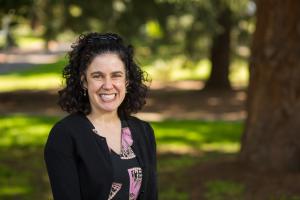
Anna Jonsson is an Associate Professor and Senior Lecturer at Lund University's School of Economics and Business. Her research spans knowledge sharing, internationalization, qualitative methodologies, and societal collaboration. She actively contributes to academic discourse through interdisciplinary projects and pedagogical innovation. Her research interests focus on: The dynamics of knowledge transfer in global organizations Science communication through creative and artistic lenses Digital transformation in retail and international business Bridging academia-society gaps through reflexive collaboration models Analysis of her recent publications reveals consistent themes: organizational learning in cross-cultural contexts, innovative pedagogical approaches, and epistemological examinations of academic-practice interfaces. Her work frequently employs narrative and metaphorical frameworks. Awards and Honors: Björkliden Idéforum (2023) Kurslitteraturpriset (2016) Jan Wallander Scholarship (2008) Booz Allen Hamilton/SMS PhD Fellowship (2007) She supervises doctoral students and leads projects including: 'Organizing ecosystems for learning' (2021-present) 'Let's have a chat about ChatGPT' (2024) Vinnova-funded courses on societal collaboration (2019-2021)
Gil Bettman is a Professor at Chapman University's Lawrence and Kristina Dodge College of Film and Media Arts , where he specializes in camera directing, action sequences, and visual storytelling. With a Harvard University Bachelor of Arts (English Literature, with honors) and a UCLA Master of Fine Arts, Bettman bridges decades of Hollywood experience with academic rigor. Education : Harvard University, Bachelor of Arts (with honors in English Literature) University of California, Los Angeles, Master of Fine Arts Research and Creative Work focuses on: Democratizing cinematic techniques for low-budget filmmakers Camera movement theory (externally/ internally generated motion) Action sequence design (foot chases, lens psychology) Director-actor collaboration dynamics Contemporary film language evolution Notable Publications : Directing the Camera (2014) - Technical guide on camera movement First Time Director (2003) - Practical filmmaking survival guide Hollywood Filmmaking Masterclass (2017) - Online instructional course Industry Contributions include mentorship under Academy Award-winner Robert Zemeckis and practical experience directing for major studios like Universal and Warner Brothers. His work emphasizes collaborative creativity and technical mastery for narrative effectiveness.
Jennifer Powell McNutt is the Franklin S. Dyrness Associate Professor in Biblical and Theological Studies at Wheaton College's Litfin Divinity School, a Fellow in the Royal Historical Society, and an ordained Teaching Elder in the Presbyterian Church (U.S.A.). She received her Ph.D. in History from the University of St. Andrews (2008), M.Div. from Princeton Theological Seminary (2003), and B.A. in Religious Studies from Westmont College (2000). Her educational background includes: Ph.D. in History, University of St. Andrews (2008) M.Div., Princeton Theological Seminary (2003) B.A. in Religious Studies, Westmont College (2000) Dr. McNutt's research focuses on the history of Christianity from the Reformation through the Enlightenment, with particular expertise in John Calvin and his clerical legacy, the Reformed tradition, the relationship between Christianity and science, and the history of the Bible and its interpretation. She approaches these topics through rigorous historical methodology while maintaining a commitment to integrating faith and scholarship. Her work bridges academic theological discourse with practical ecclesiastical application, making significant contributions to both scholarly and church communities. Her publications demonstrate a consistent pattern of scholarly excellence, with particular emphasis on Reformation and Enlightenment-era church history. She has published extensively on Calvin's legacy, the development of Reformed theology, and the intersection of religious thought with scientific advancement during the Enlightenment period. Her work often challenges simplistic narratives of secularization, highlighting the complex engagement between religious traditions and modern intellectual developments. Her scholarly achievements include: Frank S. and Elizabeth D. Brewer Prize (2014) Sidney E. Mead Prize (2005) Leland Ryken Award for Teaching Excellence in the Humanities (2013) Westmont College 80th Anniversary Alumni Award (2017) Christianity Today's Science Writing Contest (2017) Regional Emmy Award for 'A Call to Freedom' documentary (2018) Dr. McNutt has successfully secured prestigious research grants including the Andrew Mellon Research Fellowship at the Huntington Library and the Huntington Trinity Hall Exchange Fellowship at the University of Cambridge. She co-founded McNuttshell Ministries, Inc. with her husband to bridge the gap between academic scholarship and church practice. She is an active speaker at universities, seminaries, and churches across the country, demonstrating her commitment to making scholarly insights accessible to broader audiences. Her current research projects include a social history of John Calvin's thought and a study of the French Bible from the early-modern period through the Enlightenment, continuing her exploration of the complex relationship between religious tradition and cultural transformation.
Tom Young is an Associate Professor in Screen Production and the Discipline Lead in Screen, Film and TV at Flinders University's College of Humanities, Arts and Social Sciences. He serves as Chair of the Board at Channel 44, Adelaide's community television station, and is a Full Member of the Assemblage Centre for Creative Practice Research. Dr. Young holds a PhD, MCA, BCA (Hons), and BA, with additional professional qualifications including a Remote Pilot License (RePL), Aeronautical Radio Operator Certificate (AROC), and Drone Operators Certificate (ReOC). As an innovative educator, Young has revolutionized screen production education through his pioneering long-format honours program where students create feature films or television pilots - a rare offering internationally at this academic level. His research spans Film Studies , Screen Production , and Interdisciplinary Applications , with recent work bridging creative practice and healthcare communication. The Community Voices Program, which he developed, has engaged over 250 students in producing 125+ videos for South Australian not-for-profits, demonstrating his commitment to authentic industry learning experiences. Young's publications reveal a trend toward interdisciplinary collaboration, particularly merging creative film practice with healthcare education. His recent works demonstrate expertise in both traditional film production and innovative applications of visual storytelling in medical contexts, showing increasing focus on practical implementation of educational tools. His significant contributions have been recognized with prestigious awards: CHASS Excellence in Teaching Award for industry engagement (2023) Vice Chancellor's Award for Excellence in Teaching (2023) Flinders University Vice-Chancellor's Innovation in Teaching Award College of Humanities, Arts and Social Sciences Award for Excellence in Teaching ($3,000) (2023) Multiple film festival recognitions including Alternative, Couch, Emerging Artists, and Glenelg Film Festivals Through his leadership in ASPERA (Australian Screen Production Education & Research Association) as Executive Member and Treasurer, Young shapes national screen education policy while maintaining strong industry connections through Frankie Films Pty Ltd. His grant-funded initiatives like the Community Voices Program demonstrate successful integration of student learning with community needs, creating sustainable pathways for graduate employability. Young actively mentors students to develop entrepreneurial skills and professional networks beyond technical filmmaking competencies. His work with the Assemblage Centre for Creative Practice Research fosters collaborative projects connecting screen production with healthcare communication, while his board role at Channel 44 strengthens community television infrastructure. The innovative honours program he developed operates as a professional production studio within the university, providing students with rare opportunities to complete feature-length works in academic settings.
Dr. Merel Semeijn is a researcher in Theoretical Philosophy at the Faculty of Philosophy, University of Groningen. Her academic profile centers on semantics, philosophy of language, and philosophy of fiction, with a focus on fictional truth and common ground mechanisms. Her research explores fictional truth extraction from unreliable sources, metafictional anaphora , and the cognitive foundations of pretend play in theory of mind acquisition . Key frameworks include workspace accounts of common ground and Stalnakerian analyses of metafictive statements, addressing puzzles in abstract object predication and parafictional tense. Her recent publications reveal strong trends in dynamic semantic frameworks applied to fictional contexts, with increasing interdisciplinary connections to cognitive science. Major contributions include resolving the 'Wrong Kind of Object' problem with Zalta and analyzing how unreliable narrators impact truth attribution in fiction. Descartes Excellence fellowship (2018) DIA-Stipendium (2015) GUF-100 award (2015) Dr. Semeijn actively collaborates with prominent scholars like Emar Maier and Edward Zalta, presenting at major venues including the Amsterdam Colloquium and ESSLLI conferences. Her work bridges formal semantics with cognitive psychology, particularly in how children acquire theory of mind through fictional engagement. Current research examines make-believe dynamics and common belief structures in fictional worlds.
Yakup Burak is a researcher specializing in early childhood education, inclusive education, and special education with a focus on Autism Spectrum Disorder (ASD) and learning disabilities. His work explores teacher competencies, prosocial behaviors, and media representation of special needs individuals. Doctoral research (2019) on ASD integration Advises Master’s theses on inclusive education, social communication, and literacy Research Interests: Burak’s research bridges educational psychology and special needs pedagogy, emphasizing early literacy, executive function in preschoolers, and teacher training for inclusive classrooms. He investigates how preschool educators’ knowledge impacts literacy outcomes and prosocial behaviors. Recent Publications: His 2024–2025 articles examine ASD children’s play skills, refugee student inclusion, and media narratives on special needs success. Earlier works include studies on classroom management and teacher readiness for learning disabilities. Labs & Teams: Collaborates with scholars in Turkey and Delaware, USA, contributing to international research on inclusive education and neurodiversity.
Corinne Crane serves as Associate Professor of German and German Language Program Director in the Department of Modern Languages & Classics at the University of Alabama, bringing over fifteen years of experience teaching German from beginner to advanced levels alongside graduate seminars in world language teaching and applied linguistics. Her leadership in program administration shapes curriculum development and teacher mentoring across the German language sequence. Her academic credentials include a PhD in Applied Linguistics from Georgetown University, an MA in German from the University of Pennsylvania, and a BA in German from Cornell University: PhD, Applied Linguistics, Georgetown University MA, German, University of Pennsylvania BA, German, Cornell University Dr. Crane's research program centers on language pedagogy, curriculum development, and program administration through the lens of systemic functional linguistics. She investigates second language writing development, language teacher education, and reflective teaching practices, with particular emphasis on transformative learning experiences and practitioner research methodologies. Her work bridges theoretical frameworks with classroom applications to enhance language acquisition and teacher development. Analysis of her 15 most recent publications (2025-2015) reveals consistent focus on language program leadership, teacher development, and second language writing. She explores threshold concepts in German grammar acquisition, transformative learning in language curricula, and systemic functional linguistics applications to L2 texts. A significant thread connects reflective teaching practices with practitioner research, demonstrating her commitment to grounding theoretical insights in classroom realities across German language education. As German Language Program Director, Dr. Crane mentors graduate teaching assistants and oversees curriculum development for all German language courses. Her editorial board service for Second Language Research & Practice, Die Unterrichtspraxis/Teaching German, and Korean Language in America extends her influence in language education scholarship. While specific grant details aren't provided in the source text, her program leadership and editorial roles indicate active engagement with research funding mechanisms and academic resource management.
Dr Beth George serves as an Honorary Senior Lecturer in Architecture within the School of Architecture and Built Environment at the University of Newcastle, Australia, where she has been affiliated since 2019 after 15 years teaching at the University of Western Australia and Curtin University. A registered architect and award-winning researcher, her work bridges academic scholarship, architectural practice, and creative exhibition, with a focus on urban transformation, historical contexts, and honoring the built environment through innovative design processes. Her academic credentials include: Doctor of Philosophy, RMIT University Bachelor of Environmental Design, University of Western Australia Bachelor of Architecture (Honours), University of Western Australia George's research interrogates architecture's role in the Anthropocene, emphasizing cartographic processes for generating place-specific urban propositions and the power of architectural communication through drawing, writing, and dialogue. She investigates how architects can address climate challenges and housing crises through lateral thinking rather than problem-solving, with particular focus on collaborative drawing practices, urban distinctiveness, and the ethical obligations of architecture toward ecological systems. Her work consistently explores the beauty in architectural process—from conceptual sketches to spatial realizations—and the potential for drawing to cultivate empathy and shared understanding in design. Analysis of her recent publications reveals dominant trends in ecological empathy through drawing practices, historical analysis of architectural representation (particularly axonometry and paraline projection), and critical examinations of architectural movements like Brutalism. Her scholarship consistently connects theoretical frameworks with practical applications, examining how spatial interventions—from residential renovations to urban voids—can foster community resilience and address contemporary challenges like pandemic-era habitat reconfiguration. Her scientific recognition includes: Peter Overman Award for Residential Architecture – Houses (Alterations and Additions) in the 2020 WA Architecture Awards for the Reed House project, which balanced historical dignity with modern materiality George actively supervises doctoral research as co-supervisor for two current PhD candidates exploring ritual cartographies and perceptual worlds, building on her supervision of two completed PhD projects on Aboriginal living environments and locative technology. Her research is supported by grants including the $45,000 Wonnarua Place Project (2021-2022) with Maitland City Council, focusing on place-making in post-industrial contexts. As a sole practitioner, she transforms disused urban infrastructure and historic buildings, exemplified by her business matching empty spaces with creative tenants to revitalize ailing urban realms. She collaborates extensively with researchers like Michael Chapman on drawing-based projects, community groups on urban revitalization initiatives, and councils on resilience planning. Her current work investigates voided territories in Newcastle and global post-industrial city resilience, often materializing through exhibitions like Commonplace and Projective Cast that demonstrate how collaborative drawing practices can generate shared spatial understanding and attunement.
Melinda Reinhardt is a Lecturer at the School of Psychology, Eötvös Loránd University, with a dual appointment in the Department of Clinical Psychology and Addiction. She actively participates in Faculty Council as a member and contributes to the Personality, Health and Emotion Regulation Research Group. Research Focus: Dr. Reinhardt's work spans the mental health spectrum, examining both positive psychological functioning and pathological conditions. Her current research emphasizes perfectionism, stress, non-suicidal self-injury (NSSI), and cyberchondria, with cross-cultural applications across Europe. Publication Trends: Recent works employ network analysis and person-centered approaches to understand NSSI patterns, while cross-national studies explore structural stigma effects on gender minorities. She develops Hungarian adaptations of clinical assessment tools like the Inventory of Statements About Self-Injury (ISAS-HU) and Self-Injury Questionnaire (SIQ-TR). Community Engagement: Dr. Reinhardt investigates community participation's protective effects against depression in gender minorities and examines bullying dynamics in adolescent mental health contexts.
Anne-Berit Fillingsnes serves as a College Lecturer within the Department of Health and Social Sciences at Molde University College, where she instructs first-year Bachelor of Nursing students with specialized focus on nursing home and care center patient care, including comprehensive clinical supervision of students during practical training. Her academic qualifications include: 1986: Officially licensed nurse certification from the National Association of Nursing Schools, Molde 1999: Practical Pedagogical Education for Vocational Teachers from Volda College of Education 2005: Major in Pedagogy - Guidance and Counseling from the University of Trondheim Fillingsnes' research centers on innovative pedagogical approaches for clinical supervision, with particular emphasis on storytelling as a knowledge-acquisition methodology. Her work investigates how narrative techniques bridge theoretical learning and practical application in nursing education, focusing on creating effective learning environments within clinical settings through reflective dialogue and community-building among healthcare professionals. Her publication analysis (2005-2012) reveals progressive development from foundational studies on contact nurses' learning processes toward applied research on practical nurses' supervisory challenges and municipal healthcare collaborations. Key interdisciplinary connections span nursing science, educational psychology, and healthcare communication, with consistent focus on improving student supervision frameworks and developing innovative practice models for elderly care facilities. Professionally, Fillingsnes integrates her clinical nursing background from Molde Hospital with academic expertise to mentor nursing students through clinical rotations. Her collaborative projects with Molde and Kristiansund municipalities demonstrate applied research translation into practice, particularly through the development of new nursing home practice models that address real-world healthcare challenges while advancing educational methodologies.
Professor Anke Schwittay is Professor of Anthropology & Global Development at the University of Sussex's School of Global Studies, where she serves as Associate Dean for Global and Civic Engagement in the Faculty of Social Sciences. She holds a PhD in Anthropology from the University of California, Berkeley and previously taught at the Centre for Development Studies at the University of Auckland. Her research centers on emerging actors in global development, with current focus on student housing cooperatives as responses to housing crises, creative education for global challenges, and representations in development. She founded the MA Media Practice for Social Change and Development program and teaches modules on Urban Futures and Activism for Social Change. Her publications reveal strong thematic evolution toward prefigurative politics and alternative futures, particularly through housing cooperatives and creative pedagogies. The 2021 book Creative Universities: Reimagining Education for Global Challenges and Alternative Futures synthesizes her work on critical hope and future-building in education, while recent articles (2023-2024) deepen analysis of cooperative models and pedagogical innovation. She supervises PhD research on housing cooperatives, humanitarian design, financial inclusion, and creative development practices, currently guiding two doctoral candidates while having completed supervision for seven students on topics ranging from micro-philanthropy to women in transport sectors. Her significant grant activity includes the 2023-2026 Leverhulme Trust project "Decolonising the geopolitical 'map of learning': locating the university in a global past and present for reparative higher education futures." She co-founded the Silicon Valley-based RiOS Institute and has consulted for the World Bank Institute and UN Global Alliance for ICT and Development.
Dr Anna Rose is a Lecturer at the School of Health Sciences , University of Newcastle. With a background as an Occupational Therapist, her work bridges clinical practice, teaching, and research, focusing on comfort measurement , telehealth , and pressure injury prevention in allied health contexts. Location: Room 372, ICT Building, Callaghan campus Contact: anna.rose@newcastle.edu.au | (02) 4921 7881 Her research explores the psychosocial and physical dimensions of comfort , particularly in: Pressure injury prevention/management End-of-life care Telehealth implementation post-COVID Assistive technology integration NDIS service delivery Recent publications analyze eHealth interventions , culinary nutrition programs , and clinical assessment frameworks for comfort outcomes. Current projects include systematic reviews of OT interventions for client comfort and NDIS multidisciplinary perspectives. Grants from HMRI and University of Newcastle support her work on Equity in pressure injury care Technology for chronic disease management Telehealth integration models As a supervisor, she mentors students in pressure injury prevention , sleep-wound healing associations , and assistive technology sustainability . Her teaching emphasizes systems thinking and problem-based learning in occupational therapy curricula.
Alisa Freedman is a Professor of Japanese Literature, Cultural Studies, and Gender at the University of Oregon's School of Global Studies and Languages. Her academic work spans multiple disciplines including Asian Studies, Comics and Cartoon Studies, Translation Studies, and East Asian Languages. As a prominent scholar in Japanese popular culture studies, she has established herself as a leading voice in examining the intersections of gender, media, and transnational cultural flows. Dr. Freedman earned her B.A. from Wesleyan University and completed both her M.A. and Ph.D. at the University of Chicago. Her educational background provided the foundation for her interdisciplinary approach that bridges literary analysis, cultural studies, and gender theory in examining Japanese society and its global connections. Her research interests focus on cross-cultural and transnational Asian Studies, with particular emphasis on intersectional gender studies, popular culture, media studies, biographies and memoirs, youth culture, modern Japanese literature, digital culture, urban studies, and translation. She has pioneered approaches that examine how Japanese culture interacts with global media landscapes while maintaining distinctive local characteristics. Her work often challenges conventional narratives about Japanese culture and its reception abroad, particularly regarding gender representations and cultural appropriation. Dr. Freedman's scholarly output demonstrates consistent engagement with evolving media forms and cultural phenomena, from traditional literature to digital communication. Her research trajectory shows increasing attention to gender dynamics within Japanese cultural production and consumption, with a growing focus on women's contributions to Japanese Studies as an academic field. Her publications reveal sophisticated analysis of how Japanese cultural products are adapted, transformed, and reinterpreted across national boundaries. As an educator, Dr. Freedman teaches diverse courses including Women in Modern Japan, Japanese Popular Culture in the World, Introduction to Japanese Culture, Diversity and Japan, and Children's Culture in Japan. Her teaching reflects her commitment to interdisciplinary approaches that connect historical contexts with contemporary cultural phenomena.
Rozina Vavetsi serves as Associate Professor and Chair of the Department of Digital Art and Design within the College of Arts and Sciences at New York Institute of Technology (NYIT). An internationally exhibited graphic designer, her work has appeared in London, Milan, New York, Las Vegas, and Athens, earning recognition from Graphic Design USA, Good 50x70, and Adobe competitions while being featured in Creative Quarterly and other prominent design publications. Her educational background includes: Bachelor in Education, University of Athens, Greece Master of Science in Communications Design, Pratt Institute, New York Vavetsi's research fundamentally challenges conventional boundaries of graphic design practice. She pioneers experimental applications extending design beyond traditional 2D formats into kinetic, physical, and interactive dimensions. Her work demonstrates how design principles can transform complex information into accessible visual narratives while maintaining aesthetic integrity. Key research domains include: Information Design : Creating intuitive visual systems for data comprehension Experimental Typography : Pushing type boundaries through motion and physical media Digital Fabrication : Integrating laser cutting and 3D printing with design practice Interactive Design : Developing game interfaces and user experiences Exhibition Design : Crafting visual identities for art installations Social Impact Design : Pro bono work for organizations like the American Cancer Society Her scholarly output reveals a consistent trajectory toward making design more functional, understandable, and socially relevant. Presentations and workshops consistently address practical applications of design theory in educational and community contexts, with increasing emphasis on technology integration and social impact. Her design excellence has been recognized through: Multiple Graphic Design USA InHouse Design Awards (2014-2018) for event materials and posters Good 50x70 Whale Hunting Contest Winner (2008) for 'Brutal Appetite' Adobe HOW Commemorative Contest Winner (2006) for 'Possibilities' Publications in Creative Quarterly and AIGA Vavetsi actively mentors students through undergraduate and graduate thesis supervision while leading curriculum development initiatives. Her collaborative projects span international workshops in France and Morocco, partnerships with local high schools, and multi-year pro bono design work for the American Cancer Society. She maintains professional engagement through the Type Directors Club and AIGA. As Department Chair, she directs the Digital Art and Design program while maintaining her personal design studio for client and experimental projects, bridging academic theory with professional practice.
Mukasa Mubirumusoke is an Associate Professor in the Intercollegiate Department of Africana Studies, specializing in philosophy with a focus on continental philosophy, ethics, and race. His work bridges Africana thought, phenomenology, and critical theory. Areas of Expertise: Continental Philosophy Black Existentialism and Phenomenology Ethics and Moral Philosophy Antiblackness and Race Theory Minor Literature and Cultural Theory Cosmology and Speculative Philosophy His research explores the intersections of race, ethics, and metaphysics, particularly through the lens of Black lived experience and philosophical resistance. He critically engages with Nietzsche, Deleuze and Guattari, and Afro-diasporic thinkers to develop frameworks like 'Black Hospitality' and analyze cultural expressions from hip-hop to skateboarding. His recent publications span journals such as Philosophy Today , Journal of Political Theology , and Revista di Estetica , as well as edited volumes with publishers like Brill and Palgrave. Themes across his work include racial epistemology, the limits of whiteness, minor literature, and the ethical dimensions of Black existence. His scholarship appears in both academic and public intellectual venues like Public Seminar. Scientific Contributions: Author of Black Hospitality: A Theoretical Framework for Black Ethical Life (Palgrave MacMillan, 2022) Co-editor of Politics and Minor Literature (Brill, 2025) Contributor to Encyclopedia of Phenomenology (Springer) Essays in Dave Chappelle and Philosophy and Skateboarding and Philosophy Mubirumusoke advises on philosophical interpretations of race and culture. While no formal grants or students are listed, his editorial and collaborative projects suggest mentorship and academic leadership. He is likely involved in interdisciplinary research teams focusing on Africana philosophy and critical theory, though specific labs or centers are not mentioned.


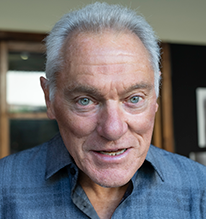
/prod02/channel_1/media/graduate-school/degrees/ma-biblical20studies/jennifer-mcnutt-2017.jpg)