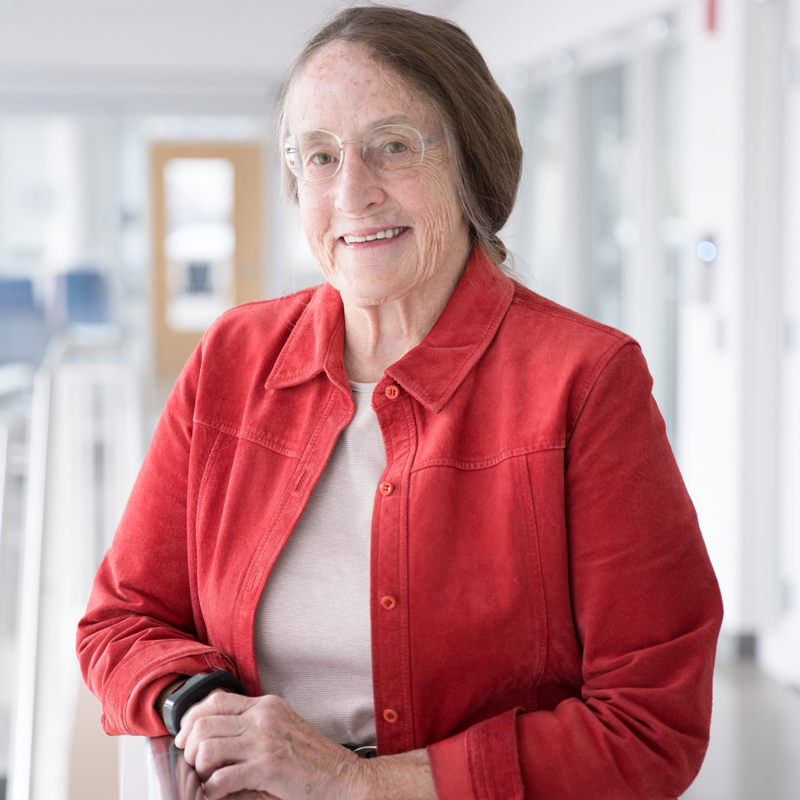
Mary Shaw is the A.J. Perlis Professor of Computer Science at Carnegie Mellon University's School of Computer Science (SCS), with a joint appointment at the Software Engineering Institute (SEI). She co-founded the SEI and served as Chief Scientist (1984-1987). Research Focus: Software architecture, value-based software engineering, end-user software engineering, and software reliability modeling. Education: Pioneered software engineering education frameworks and graduate curriculum guidelines. Grants: Involved in NSF-CCF-0438929, NSF-CCR-0325273, and Sloan Software Industry Center projects. Scientific Awards: National Medal of Technology and Innovation Stibitz Computer Pioneer Award Warnier Prize (1993) Fellow of IEEE Computer Society and AAAS Publications Trends: Recent work spans AI ethics in software, design space theory, adaptive systems, programming language philosophy, and empirical software research. She emphasizes bridging theoretical research with practical applications through projects like Vitruvius for software architecture and EUSES for end-user programming tools.
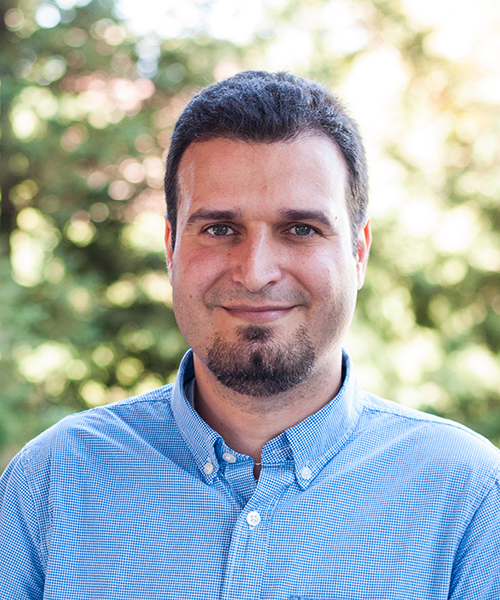
Ioannis Koutis serves as Associate Professor in the Computer Science Department at New Jersey Institute of Technology and holds an Adjunct Faculty position in the Computer Science Department at Carnegie Mellon University. His research expertise spans algorithm design with specialization in numerical linear algebra , combinatorial optimization , and spectral methods . He leads development of significant computational tools including CMG (Combinatorial Multigrid), SpA (Spectral Algorithms), and SpClu (Spectral Constrained Clustering), which address complex problems in large-scale system solving. Analysis of his publication record reveals focus on efficient solvers for symmetric diagonally dominant systems, with applications spanning computer vision and image processing. His work demonstrates strong integration of theoretical foundations with practical implementations. NSF grant #1018463 as co-PI NSF grant CCF-#1149048 supporting CMG development Dr. Koutis maintains active research collaborations and has established software projects that have gained recognition in the computational research community, with his GitHub repositories showing significant engagement from other researchers.
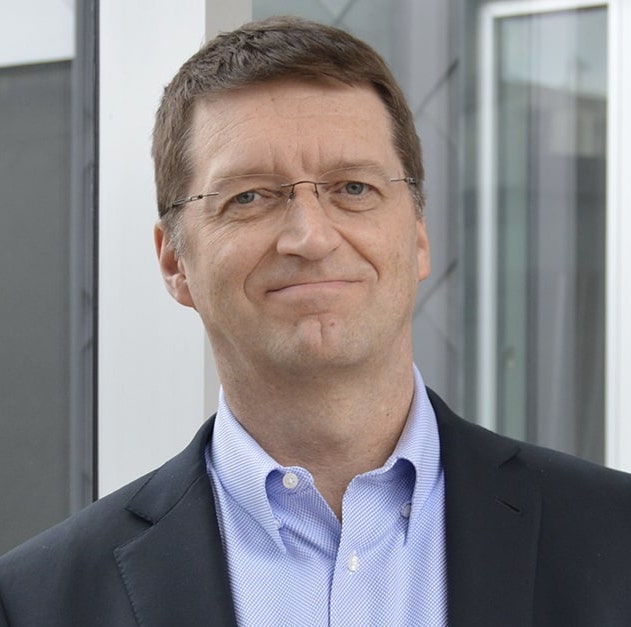
Karimulla Shaikh is an Adjunct Faculty at the Integrated Innovation Institute of Carnegie Mellon University, based in Mountain View, CA. He has over 20 years of experience as a product development executive in startups and publicly-traded companies. His expertise spans cloud software, enterprise product development, machine learning, and solving large-scale problems. Education: PhD ABD in Computer-Aided Engineering & Management (Carnegie Mellon University), MS in Computer-Aided Engineering (IIT Madras), BTech (IIT Madras). Currently leads product development at Virtual Power Systems (intelligent software-defined power for data centers). Previously held the role of Senior Vice President of Product Development at SDL Language Technologies, delivering machine translation systems to Fortune 100 companies. Teaches courses including Integrated Innovation for Large-Scale Problems , Introduction to Machine Learning , and Software Management . No scientific awards or grants explicitly mentioned in the text. Active in team-building practices focused on simplifying people/process interactions in high-performance teams.
Dr. Amir Barati Farimani is an Associate Professor at Carnegie Mellon University's College of Engineering, jointly appointed in Mechanical Engineering and Biomedical Engineering. His work bridges machine learning , data science , and molecular dynamics simulations to solve complex problems in bioengineering and materials science. Education : B.S. and M.S. in Mechanical Engineering from Ferdowsi University and Tehran TMU University, followed by a Ph.D. in Mechanical Science and Engineering from the University of Illinois at Urbana-Champaign (2015). Postdoctoral Training : Stanford University, where he combined machine learning with molecular dynamics to study GPCR activation mechanisms. The Barati Lab at CMU focuses on two core research areas: (1) using molecular dynamics (MD) simulations and statistical learning to analyze bio-molecule interactions with synthetic materials, and (2) applying dimensionality reduction techniques to decode high-dimensional MD data for protein conformation studies. His lab emphasizes AI-driven physical modeling and computational discovery . Recent publications highlight his lab's expertise in transformer-based models for material property prediction, protein language models (e.g., GPCR-BERT), and physics-informed neural architectures for solving differential equations. Collaborative projects span desalination membranes , peptide engineering , and additive manufacturing . Scientific Awards : Stanley I Wise Best Thesis Award (2015). Dr. Barati Farimani's work is supported by interdisciplinary collaborations and open-source tools like AugLiChem and FaultNet , reflecting his commitment to advancing AI-powered engineering and democratizing scientific workflows.
David Kosbie is a Teaching Professor in the School of Computer Science at Carnegie Mellon University (CMU), specializing in computer science education and software engineering. He serves as Director and Co-Founder of the CMU CS Academy, dedicated to expanding access to rigorous computer science education. His academic roles include teaching foundational courses like 15-112 (Fundamentals of Programming and Computer Science) and 15-113 (Special Topics in Applied Python Programming). He holds the Herbert A. Simon Award for Teaching Excellence (2012), recognizing his impactful pedagogical contributions. His research interests span software development methodologies, graphical toolkits (e.g., Garnet/Amulet), and user-centered design. He actively develops curricula and oversees large-scale course implementations, emphasizing programming best practices and computational problem-solving. Education details are not explicitly provided in the source texts. His professional activities include leading course design, mentoring students, and contributing to academic initiatives like the CMU CS Academy. He has published work on constraint-based programming systems, reusable software components, and interactive user interface frameworks. Collaborations include partnerships with researchers like Brad A. Myers and colleagues at CMU. His teaching philosophy emphasizes hands-on learning, rigorous code analysis, and fostering student engagement through structured problem-solving exercises.
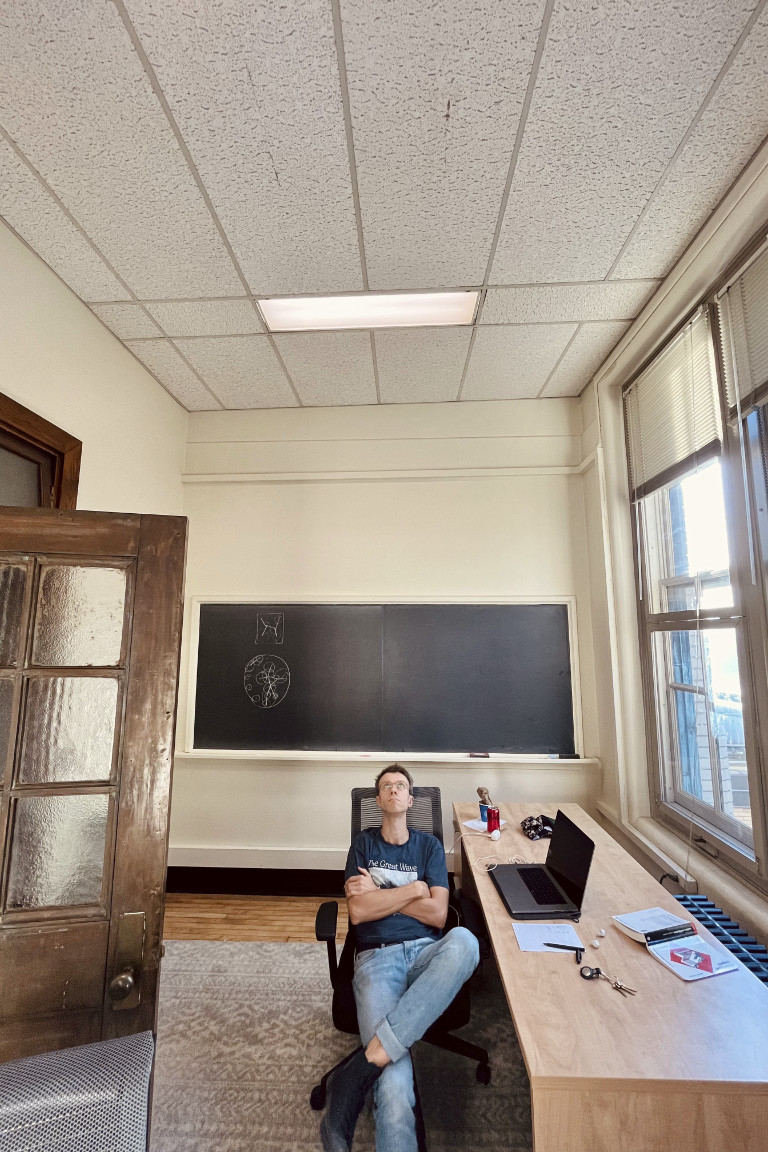
John Mackey is a Teaching Professor in the Department of Computer Science at Carnegie Mellon University, affiliated with the School of Computer Science. His research focuses on combinatorial problems, particularly in Ramsey Theory, graph theory, and discrete mathematics. He investigates mathematical structures like Ramsey numbers, geometric configurations, and tiling conjectures, such as Keller’s conjecture. His work often involves automated reasoning and computational methods to explore extremal cases and bounds in discrete systems. Notable research interests include minimizing geometric configurations (e.g., pentagons), analyzing directed Ramsey numbers, and variations of combinatorial games like cops and robbers. His publications span over three decades, addressing topics from cube tilings to cycle enumeration in tournaments. Despite extensive contributions, awards or fellowships are not explicitly mentioned in the provided materials. Mackey’s teaching and research emphasize theoretical foundations, with a particular flair for unresolved problems like the party problem involving 43 guests and no five mutual acquaintances/strangers. His work bridges pure mathematics and computational techniques, aiming to uncover hidden structures through rigorous analysis.
Tuomas Sandholm is the Angel Jordan University Professor of Computer Science at Carnegie Mellon University, where he also holds appointments in the Machine Learning Department, the Ph.D. Program in Algorithms, Combinatorics, and Optimization, and the CMU/University of Pittsburgh Joint Ph.D. Program in Computational Biology. He serves as Co-Director of CMU AI and Director of the Electronic Marketplaces Laboratory. Dr. Sandholm's research spans artificial intelligence, economics, and operations research, with particular focus on algorithms and complexity, game theory, machine learning, and electronic commerce. His work involves developing incentive-compatible market mechanisms and efficient algorithms for executing those mechanisms, as well as designing software agents that act optimally in electronic marketplaces. His research has led to significant commercial applications, including systems fielded by CombineNet, Inc. that handled over $60 billion in spend. Sandholm's recent publications reveal a strong emphasis on solving large-scale games, equilibrium computation, and applying these techniques to real-world problems. His work shows a progression from theoretical foundations to practical implementations, with applications ranging from poker AI (Libratus and Pluribus) to kidney exchange systems. His research group has pioneered techniques in game abstraction, regret minimization, and equilibrium computation that have pushed the boundaries of what's possible in imperfect-information games. Vannevar Bush Faculty Fellowship (2023) AAAI Award for AI for the Benefit of Humanity (2023) IJCAI John McCarthy Award (2021) Robert S. Engelmore Award (2021) Minsky Medal (2019) Science Breakthrough of the Year Runner-Up (2019) As an advisor, Sandholm has mentored numerous PhD students who have gone on to prestigious positions at institutions like MIT, Stanford, and CMU. His lab has secured substantial research funding for projects including solving large-scale games and heart transplantation policy optimization. The Electronic Marketplaces Laboratory he directs has been instrumental in developing algorithms that run the national kidney exchange for UNOS, resulting in approximately 10,000 life-saving transplants. Sandholm is also the founder and CEO of multiple companies including Strategy Robot, Inc., Strategic Machine, Inc., and Optimized Markets, Inc., which apply his research to defense, intelligence, business strategy, and advertising markets.
Samuli Reijula is a permanent university lecturer (equivalent to US Associate Professor) in Theoretical Philosophy at the University of Helsinki, with additional affiliation as a docent (habilitation) in Practical Philosophy. He is also associated with the TINT Centre for Philosophy of Social Science and leads his personal research section 'Reijulab.' His research focuses on scientific problem-solving as a distributed cognitive system, examining science at multiple levels from individual scientists to entire communities. Key interests include social epistemology, AI ethics, epistemic humility, diversity in science, and institutional epistemology. Reijula's work critically examines the relationship between scientific communities and society, emphasizing the importance of academic autonomy and trust. His recent publications analyze AI's philosophical implications, diversity policies in research, academic recruitment policies, and the enduring value of the Bildung university model. Reijula has contributed to debates on scientific uncertainty, open science, and the philosophical foundations of collective problem-solving in scientific communities. Reijula currently holds an Academy of Finland research project (2020-2025) titled 'Modeling the republic of science: Collaborative problem solving and collective rationality in scientific inquiry.' He has collaborated with prominent scholars including Jaakko Kuorikoski, Kristina Rolin, and Petri Ylikoski on topics ranging from institutional epistemology to agent-based modeling in social epistemology. As an active public intellectual, Reijula contributes to Finnish media outlets including Helsingin Sanomat, Suomen Kuvalehti, and Tietessä Tapahtuu, where he analyzes science policy issues and philosophical dimensions of contemporary scientific challenges.
David Krakauer is the President and William H. Miller Professor of Complex Systems at the Santa Fe Institute (SFI). His research focuses on the fundamental character of problem-solving matter, exploring the evolution of intelligence, life, and stupidity, alongside processes like 'exbodiment' that enhance intelligence through languages and artifacts. He investigates cellular, linguistic, social, and cultural mechanisms of communication and memory, as well as the interplay between organic and inorganic computational systems. Key research questions include the origins of life and intelligence, the relationship between problem-solving and physical/biological laws, collective intelligence in adaptive agents, the evolution of ideas, and computational mechanisms across organic and cultural systems. Krakauer contributes to interdisciplinary fields through essays and books like The Complex World: An Introduction to the Foundations of Complexity Science and publications on AI, entropy, and knowledge paradigms. He serves on SFI's Science Steering Committee and Science Board, leading initiatives in complexity science and its applications to AI, law, and pandemic research.
Christopher Eur is an Assistant Professor in the Department of Mathematical Sciences at Carnegie Mellon University's Mellon College of Science. His research explores advanced topics in combinatorial algebraic geometry with particular focus on matroid theory. He received: Ph.D. from University of California Berkeley Postdoctoral appointments at Harvard University and Stanford University Dr. Eur's research integrates combinatorial structures with geometric frameworks, specializing in matroid theory, tropical geometry, and Hodge-theoretic approaches to combinatorial objects. His work frequently examines cohomological properties, polyhedral structures, and combinatorial invariants across diverse mathematical contexts. His recent publications demonstrate consistent focus on combinatorial algebraic geometry, with recurring examination of matroid cohomologies, polyhedral structures like permutohedra and stellahedra, and tropical geometric approaches. The work incorporates techniques from algebraic topology, representation theory, and statistical geometry to solve fundamental problems in discrete mathematics.
Wesley Pegden is a Professor in the Department of Mathematical Sciences at Carnegie Mellon University, affiliated with the Mellon College of Science. He holds a Ph.D. from Rutgers University. His research focuses on Discrete Mathematics, including probabilistic combinatorics, combinatorial game theory, graph theory, and discrete geometry. A central theme of his work is the Abelian sandpile model, where he has explored fractal patterns and connections to Apollonian circle packings. Collaborations with Lionel Levine and Charles Smart have advanced understanding of the sandpile's geometric properties through novel constructions of integer superharmonic functions. His work extends to applications in network science, epidemiological modeling, and statistical sampling biases (e.g., analyzing the Bangladesh mask trial). Notably, he contributed to studies on gerrymandering and congressional districting, including an expert analysis of Pennsylvania's district map. Awards include the Sloan Research Fellowship. Research Highlights: Abelian sandpile fractal geometry, algorithmic local lemma extensions, and random graph dynamics. Key Collaborations: Lionel Levine, Charles Smart, Alan Frieze.
Sarah Christian is an Associate Teaching Professor in the Civil and Environmental Engineering Department at Carnegie Mellon University (CMU). She holds a B.S. (2003) from CMU, an M.C.E. from Johns Hopkins University (2004), and a Ph.D. in Civil and Environmental Engineering from Stanford University (2009), with a focus on Structural Engineering and Materials. Prior to her academic role, she practiced as a structural engineer and building envelope engineer in Washington, D.C., and Pittsburgh, and served as a lecturer at the University of Edinburgh in Scotland. Her research interests span composites construction, sustainable materials, intelligent engineered systems, and the societal impact of infrastructure. She emphasizes equitable design, community-driven solutions, and DEI integration into curricula. Notable contributions include a graduate-level course on resilient re-design for uncertain future conditions and an undergraduate capstone project on aquaponics for the Center of Life, which aims to foster educational outreach and sustainable food production. Christian has received the ASCE Pittsburgh Section Professor of the Year award and was named a 2021-2022 Provost’s Inclusive Teaching Fellow at CMU. She actively develops innovative teaching methodologies, including a new lab course sequence to enhance students’ problem-solving skills and a course focused on stakeholder perspectives in equitable infrastructure design. Her professional experience includes roles in structural engineering practice and academic leadership, complementing her commitment to preparing socially-conscious engineers capable of addressing global challenges such as climate impacts and inequitable resource access.
Chris Labash is an Associate Professor of Communication and Innovation at Carnegie Mellon University’s Heinz College. He serves as Managing Director of ConsultingLab, a course-lab partnership delivering free consulting services to organizations globally, and is affiliated with the Center for Informed Democracy and Social-cybersecurity (IDeaS). His research focuses on mitigating misinformation through behavioral design, AI-driven communication, and evidence-based strategies. He teaches graduate courses in communications, consulting, and data visualization across CMU’s Pittsburgh and Doha campuses, emphasizing alignment with UN Sustainable Development Goals. Labash’s prior career included roles as Executive Vice President at Ketchum Advertising and Vice President of Global Marketing at Development Dimensions International, alongside extensive consulting and entrepreneurial experience. He advises the Software Engineering Institute and collaborates with venture capital firms on startup initiatives. His current projects explore AI’s role in countering disinformation and designing ethical communication frameworks. ConsultingLab, under his leadership, has completed 56 client engagements since 2014, delivering $15,000+ in free consulting annually. Notable projects include digital twin city frameworks, disaster response analyses, and educational app development. Labash’s teaching philosophy integrates critical thinking, evidence evaluation, and presentation design to prepare students for real-world problem-solving.
Laurence Ales is an Associate Professor of Economics at the Tepper School of Business, Carnegie Mellon University, where he has been teaching since 2008. He holds a PhD in Economics from the University of Minnesota and an undergraduate degree in Physics from the University of Rome, Tor Vergata. He teaches courses in macroeconomics, including 'Emerging Markets' for undergraduates and 'Global Economics' for MBAs, and is recognized for his innovative teaching methods, such as using Twitter to engage students with real-time economic news. University: Carnegie Mellon University School: Tepper School of Business Department: Economics Academic Rank: Associate Professor Since: 2008 His research focuses on macroeconomic policy, technological change, labor markets, innovation, and taxation. He has published in top journals including The American Economic Review , with recent work on generative AI, automation, innovation tournaments, and optimal taxation. His interdisciplinary approach integrates modeling with data analytics, reflecting his physics background. His recent publications (2021–2024) highlight a strong focus on how technological change—particularly automation and AI—affects labor demand, task structure, and income distribution. He also investigates innovation mechanisms such as crowdsourcing and tournaments, as well as optimal tax policies in the presence of discrete choices and income-generating behavior. University-wide Teaching Award, Carnegie Mellon University Ales advises on policy responses to regional economic shocks and the evolution of manufacturing. He values student engagement and has been praised for transforming macroeconomics education. He emphasizes excitement in learning as a key to academic success and is known for his dynamic classroom presence. He collaborates across campus to study manufacturing trends and their policy implications, advocating for tighter integration between business and other academic disciplines. He leads no named lab or team in the text but partners with other campus units on research. His future goals include maintaining his passion for research and teaching over the next decade.
Christopher McComb is an Associate Professor in the Department of Mechanical Engineering at Carnegie Mellon University's College of Engineering. He leads research in sociotechnical systems, machine learning for engineering design, and human-AI collaboration. He is affiliated with the Block Center for Technology and Society, Manufacturing Futures Institute, NextManufacturing Center, and Wilton E. Scott Institute for Energy Innovation. Previously, he was an assistant professor at Penn State, where he directed the Center for Research in Design and Innovation and led the Technology and Human Research in Engineering Design Group. Ph.D., Mechanical Engineering, Carnegie Mellon University M.S., Mechanical Engineering, Carnegie Mellon University B.S., Civil Engineering and Mechanical Engineering, California State University-Fresno His research centers on human-AI teaming , sociotechnical systems , and computational design , with applications in additive manufacturing, STEM education, and energy systems. He explores how machine learning can enhance engineering design processes, particularly through human-centered AI, generative design, and agent-based modeling. His work emphasizes the integration of human cognition and behavior into AI systems to improve collaboration and innovation. The 15 most recent publications (2025) demonstrate a strong trend in AI-driven design automation , neural surrogate modeling , human-AI interaction , and data generation for engineering simulations . Topics span from using large language models for material selection and design concept generation to developing datasets and benchmarks for advanced manufacturing and CAD systems. There is a clear emphasis on real-world applications in aerospace, finance, and global manufacturing, particularly in Africa. National Science Foundation Graduate Research Fellow McComb has received research funding from NSF, DARPA, and private corporations, and has collaborated with Boeing through their Visiting Professorship Program. He advises students in mechanical engineering and design, and leads the Human+AI Design Initiative and the Design Research Collective. His research has been applied in partnerships with NASA and in addressing manufacturing challenges in Africa. He leads or contributes to interdisciplinary research teams focused on AI in design, additive manufacturing, and energy systems. His labs and initiatives include the Human+AI Design Initiative and the Design Research Collective, which foster collaboration between human-centered design and artificial intelligence.