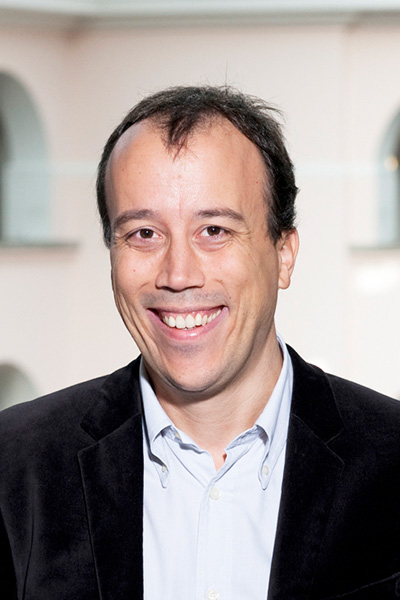
Matthias Lang is an Associate Professor of Economics at Ludwig Maximilian University (LMU) Munich, specializing in applied microeconomic theory. He holds a PhD from the Bonn Graduate School of Economics and is Principal Investigator of the Collaborative Research Centre/Transregio 190 (CRC TRR 190) on 'Rationality and Competition.' He is also a CESifo Fellow. His research focuses on uncertainty, contract design, and behavioral economics, with applications to insurance fraud, tax evasion, and political competition. Lang has served as an Assistant Professor at Freie Universität Berlin and Humboldt University Berlin, and was a Senior Research Fellow at the Max Planck Institute for Research on Collective Goods. His work bridges game theory, mechanism design, and decision theory, addressing strategic uncertainty and contractual solutions to mitigate its effects. He has been awarded the Walther-Rathenau Award for Best Paper (2015) for his work on communicating subjective evaluations. His recent research explores ambiguous product information dynamics, narrative-based mechanisms, and the value of transparency in campaign promises. Lang actively contributes to academic communities through numerous presentations at international conferences and serves on editorial review boards for top journals.
Stefan Zeisberger is an Associate Professor of FinTech and Experimental Finance at the University of Zurich's Department of Finance, with a secondary affiliation as Professor at Radboud University. His research focuses on behavioral finance, experimental finance, FinTech, risk perception, and decision making. His publications frequently explore investor behavior, market anomalies, and experimental methodologies. Recent works (2023-2024) investigate cryptocurrency arbitrage, impact investing, and nonstandard errors in financial research.
Christian Fermüller is an Associate Professor in the Department of Theory and Logic at the Faculty of Informatics, Technische Universität Wien (TU Wien). His research focuses on theoretical computer science, artificial intelligence, automated deduction, and formal logic systems. He specializes in fuzzy logic, proof theory, and non-classical logics, with contributions to semantic games, dialogue systems, and computational models of reasoning under vagueness. **Research Interests:** Foundations of fuzzy logic and many-valued logics Proof theory and analytic calculi Game-based semantics for non-classical logics Formal models of judgment aggregation and argumentation theory Applications in automated reasoning and computational intelligence **Grants & Projects:** Austrian Science Fund (FWF) projects on graded deontic reasoning (2025–2027), semantic games and analytic calculi (2019–2023), and fuzzy logic foundations (2008–2013) Co-PI of the LogICCC initiative exploring contextualism and fuzzy logic **Teaching:** Courses include logical methods in computer science, quantum computing, and theoretical computer science. Supervised over 15 PhD and master’s theses on topics ranging from semantic games to argumentation frameworks. **Affiliations:** Active in the LogiCS research group and regularly organizes seminars on logic and computation.
Jennifer Butler is an Instructor and Department Representative for Psychology majors & minors at Case Western Reserve University's Department of Psychology. She is located at Mather Memorial Building 1 and reachable via jennifer.butler@case.edu . Her research focuses on educational psychology, social psychology, and cognitive processes, with notable work on growth mindsets in academic achievement, performance under pressure, and motivational theories. Her studies often explore the intersection of social environments and human behavior, including audience effects on performance and gender differences in emotional responses. Her publications span from 1995 to 2018, covering topics such as the choking phenomenon under supportive audiences, sexual masochism analysis, and goal framing's impact on outcomes. While no specific awards are listed, her work reflects contributions to understanding psychological mechanisms in education and social contexts. As a department representative, she advises Psychology students and oversees program curricula. No specific grants or lab affiliations are mentioned in the provided materials.
Paul Rosen is an Associate Professor at the University of Utah, affiliated with the Scientific Computing and Imaging Institute and the Kahlert School of Computing. He holds a Ph.D. in Computer Science from Purdue University (2010). Prior to his current role, he was an Assistant/Associate Professor at the University of South Florida (2015–2022) and a Research Assistant Professor at the University of Utah's SCI Institute (2010–2015). Research Focus: Rosen specializes in topology-based visualization techniques, with emphasis on network visualization, uncertainty quantification, and perceptual studies. His work bridges computational methods with human perception, aiming to enhance data understanding through effective visual design. Awards & Recognition: National Science Foundation CAREER Award (2019) Best Paper Awards at PacificVis 2016, IVAPP 2016, and multiple other conferences Honorable Mentions for IEEE VIS and VAST Challenge submissions Leadership: As General Chair of IEEE VIS 2024, Rosen led the planning for this flagship visualization conference, emphasizing community-driven design and in-person collaboration. Education Contributions: His research includes pedagogical innovations, such as predictive modeling for student feedback and peer review analysis in visual literacy courses.
Douglas Casson is Professor of Political Science and Department Chair at St. Olaf College, where he also serves as Director of External Fellowships and Director of International Relations. He is based in Holland Hall and teaches courses in political philosophy, religion and politics, and constitutional law, including in the interdisciplinary Great Conversation Program. His research centers on political theory, particularly the interplay between self-restraint and self-government in pluralistic societies. Key interests include ancient and modern political philosophy, the role of judgment under conditions of uncertainty, and the historical development of civility in political discourse. He has explored these themes through the works of thinkers such as Locke, Hobbes, Rousseau, Luther, and Erasmus. His scholarship includes the acclaimed book Liberating Judgment (2011), which examines how probable judgment functions in Locke’s political thought and was named a Choice Outstanding Academic Title. His current project, Civility and Its Discontents , investigates the tension between civility and liberty from the Reformation through the Enlightenment. Scientific Awards: Choice Outstanding Academic Title for 2011: Top 25 Books He has held visiting fellowships at Harris Manchester College, Oxford, and Friedrich-Alexander-University, Erlangen-Nuremberg, through the Fulbright program. He advises students on external fellowships and contributes significantly to international academic engagement at St. Olaf. His teaching and scholarship reflect a deep commitment to liberal education and the enduring questions of political life.
Laurence S. Magder, PhD, serves as Professor in the Department of Epidemiology and Public Health at the University of Maryland School of Medicine, where he has held continuous faculty positions since 1994 after progressing from Assistant to Associate to full Professor. With over 30 years of biostatistical expertise, he has contributed to nearly 200 biomedical publications through collaborative research across diverse health domains. Educational background includes: PhD in Biostatistics, Johns Hopkins University (1994) Master of Public Health, University of Michigan (1983) His research program centers on developing accessible statistical methodologies for real-world biomedical challenges. Key specialties include longitudinal data analysis, handling misclassified/missing data, transmission probability modeling, and systemic lupus erythematosus applications. Magder actively promotes a paradigm shift in statistical practice—advocating for evidence quantification over rigid hypothesis testing frameworks, which he argues renders traditional concerns like one-sided tests and multiple comparisons adjustments largely obsolete in scientific decision-making. Publication analysis reveals consistent methodological innovation across infectious disease modeling, diagnostic test evaluation, and missing data solutions. His work prioritizes practical applicability, translating complex statistical theory into tools usable by non-statisticians while maintaining rigorous evidence standards. Recurring themes include simplification of analytical approaches and contextual interpretation of statistical evidence within broader scientific judgment. As a collaborative biostatistician, Magder has supported numerous biomedical research projects throughout his career, though specific advising relationships and grant details remain undocumented in available sources. His role exemplifies the critical contribution of statistical expertise to advancing medical and public health research through both methodological development and direct project consultation.
Katie Steele is a Professor in the School of Philosophy at the Australian National University (ANU), where she holds an ANU Futures Scheme grant. She previously served at the London School of Economics (2008–2016) and conducted postdoctoral research at the University of Sydney's Australian Centre of Excellence for Risk Analysis. Her roles include co-editing Economics & Philosophy and co-investigator on major grants like the 'Ethics and Risk' ARC Discovery Project and the 'Climate Change and Future Generations' grant. Education: BSc in Mathematics, University of Queensland (1999) MA in Philosophy, University of Queensland (2003) PhD in Philosophy, University of Sydney (2007) Research Interests: Her work focuses on rational choice theory, ethics of climate policy, intergenerational fairness, and moral uncertainty. She explores decision-making under risk, the implications of climate change for future generations, and the philosophical foundations of belief revision and Bayesian reasoning. Grants & Advising: She leads the ANU Futures Scheme grant (2018–2025) and advises on projects addressing ethics in risk analysis. Her advisory work includes mentoring students in decision theory and climate ethics. Labs/Teams: Active in interdisciplinary collaborations at ANU and international institutions like the Institute for Futures Studies in Stockholm.
Louis Narens is a Professor at the University of California, Irvine (UCI), holding dual affiliations in the Department of Cognitive Sciences and the Department of Logic and the Philosophy of Science. His work bridges mathematical rigor with psychological and philosophical inquiry, focusing on foundational issues in measurement theory, probability, and metacognition. Narens is renowned for his contributions to abstract measurement theory, as seen in his influential books like Abstract Measurement Theory (1985) and Theories of Meaningfulness (2002). His research explores how quantitative frameworks can be applied to subjective phenomena such as perception, belief systems, and cognitive processes. Key areas of investigation include: Foundations of probability and support theory Psychophysical laws and perceptual scaling Metamemory mechanisms and judgment accuracy Philosophical implications of measurement invariance His articles analyze topics like evolutionary color categorization, scientific belief systems, and the theoretical underpinnings of psychological measurement. Narens collaborates across disciplines, engaging with cognitive scientists, philosophers, and mathematicians to advance interdisciplinary understanding. Despite his prolific output, he has not been explicitly noted for receiving major scientific awards in the provided materials.
Borut Trpin is a postdoctoral fellow at the Munich Center for Mathematical Philosophy (MCMP) at Ludwig-Maximilians-Universität München and a principal investigator at the University of Maribor's Department of Philosophy. Starting October 2025, he will assume the role of Assistant Professor at the University of Ljubljana. His research focuses on formal epistemology and philosophy of science, with emphases on models of human reasoning, epistemic justification, and scientific disagreements. He employs computer simulations to explore these topics and serves as an associate editor for Acta Analytica . Trpin holds a PhD in Philosophy from the University of Ljubljana (2018) and previously served as a postdoctoral fellow at the University of Salzburg (2018-2019). His work bridges philosophical inquiry with computational methods, examining issues like coherence theory, Bayesian epistemology, and the dynamics of trust in social contexts. Recent research includes studies on scientific disagreements, conjunction fallacies, and the role of coherence in epistemic justification. His publications span journals such as Philosophical Studies , Erkenntnis , and Synthese , reflecting his interdisciplinary approach. Key themes include methodological critiques (e.g., 'Against Methodological Gambling'), coherence metrics, and simulation-based analyses of deception and trust. Trpin’s future work includes assuming a permanent academic role at the University of Ljubljana while continuing collaborative research projects in mathematical philosophy.
Leslie K. John is the James E. Burke Professor of Business Administration at Harvard Business School , where she conducts behavioral science research on decision-making, privacy, and health behaviors. Her work bridges psychology, marketing, and public policy. Harvard Business School Behavioral Scientist Consumer Psychology Health Policy Consultant Research Interests include: Privacy Decision-Making: Understanding motivations for personal data sharing with firms and employers. Health Behavior: Designing psychological interventions for weight loss and reduced sugary drink consumption. Marketplace Irrationality: Exploring cognitive biases in organizational and consumer contexts. Publication Trends show interdisciplinary work spanning behavioral economics, psychology, and health policy with repeated collaborations across institutions. Key themes include incentive design, disclosure mechanics, and cognitive bias exploitation. Scientific Awards : Wired Innovation Fellow Association for Psychological Science awards Marketing Science Institute recognition Professional Activities include corporate consulting (Goldman Sachs, J.P. Morgan, Commonwealth Bank), keynote speaking on behavioral economics, and teaching material development for Harvard Business School cases.
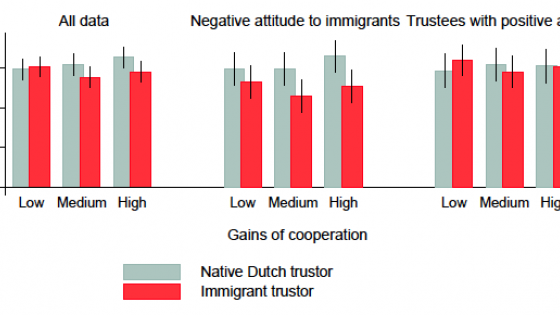
Sigrid Suetens is Professor at the Department of Economics of Tilburg University, where she conducts research at the intersection of experimental and behavioral economics. Her work examines fundamental questions about human cooperation, strategic decision-making, and social preferences through carefully designed laboratory and field experiments. Her primary research interests focus on understanding motives for cooperation in dilemma games (including strategic versus non-strategic motives, role of strategic environment, and guilt aversion) and ethnic discrimination. Suetens employs experimental methodologies to investigate how individuals make decisions in strategic environments and how social identity influences economic behavior. Her work demonstrates how experimental economics can provide insights into real-world social phenomena by testing theoretical predictions under controlled conditions. Suetens' publication record shows a clear trajectory from foundational work in game theory and decision-making toward increasingly applied research on social issues, particularly ethnic discrimination. Her recent papers (2022-2025) demonstrate growing interest in the intersection of experimental methods with labor economics and political economy, examining topics like meritocratic standards, coordination failure, and ethnic salience. The consistent appearance of her work in both economics-specific journals and multidisciplinary outlets reflects the broad relevance of her research. Suetens teaches courses in micro-economics and experimental economics at Tilburg University, contributing to the next generation of economic researchers. Her educational background includes a PhD in applied economics from the University of Antwerp (2005), which provided the foundation for her subsequent research career focused on experimental approaches to economic questions.
Chia-Jung Tsay is an Associate Professor in the Management and Human Resources Department at the Wisconsin School of Business, University of Wisconsin-Madison, and a Faculty Affiliate at the Institute for Diversity Science. Her research bridges psychological science and business, examining nonconscious biases in professional decision-making processes across music, entrepreneurship, and organizational contexts. Her distinguished educational background includes: Ph.D. in Organizational Behavior and Psychology (secondary field in Music) from Harvard University A.B. in Psychology and A.M. in History of Science from Harvard University (Phi Beta Kappa) Advanced music training at The Juilliard School and Peabody Conservatory of Johns Hopkins University Professor Tsay's research centers on decision-making biases , particularly the naturalness bias where 'naturals' are favored over 'strivers', and the dominance of visual information in evaluations. Her work demonstrates how sight overrides sound in music competitions, how visuals dominate investor decisions in pitches, and how semantic ambiguities around 'talent' affect workplace judgments. This research critically informs diversity, equity, and inclusion initiatives by exposing hidden cognitive mechanisms that undermine meritocratic systems. Her publication trajectory reveals consistent focus on bias mechanisms, evolving from foundational music perception studies (2013) to entrepreneurial funding decisions (2021) and contemporary investigations of gratitude, goal orientation, and talent semantics. The work consistently identifies systematic deviations from rational evaluation across domains, with practical implications for reducing bias in hiring, promotion, and investment decisions. Her major recognitions include: Association for Psychological Science (APS) Rising Star World’s Best 40 Under 40 Business School Professors by Poets&Quants (2021) Best Paper Award from Diversity in Management and Organizations (2023) Professor Tsay mentors graduate students in organizational behavior while leading cutting-edge research. She recently secured competitive seed funding from UW-Madison's Institute for Diversity Science (2024) for projects at the business-diversity science intersection. Her work generates significant real-world impact through frequent media engagement and advisory roles. She actively collaborates within the Management and Human Resources department and Institute for Diversity Science, contributing to interdisciplinary initiatives that translate bias research into organizational practices. Her unique background in both music performance and psychology enables distinctive approaches to understanding human judgment in professional settings.
Sherrilyn Roush is a Professor in the Department of Philosophy at University of California, Los Angeles (UCLA) , with a PhD in Philosophy from Harvard University (1999). She holds dual B.S. and B.A. degrees with highest distinction from Pennsylvania State University (1988). Her work spans Epistemology , Formal Epistemology , Scientific Method , and Bayesian Reasoning . Harvard University, PhD in Philosophy (1999) University of California, Los Angeles, Department of Philosophy Research interests include the epistemic value of knowledge, probabilistic reasoning in legal contexts, and the distinction between knowledge and understanding. She has extensively analyzed the role of statistical evidence in judicial verdicts, simulation methods in science, and epistemic self-doubt through a Bayesian framework. Her publications cover topics like the epistemic superiority of experiments over simulations, epistemic injustice in testimonial contexts, and evolutionary stable strategies for knowledge. While she has not been explicitly linked to scientific awards or formal student mentoring in the provided texts, her work intersects with medical epistemology through collaborations on self-knowledge in illness .
Philippe Tobler is a Professor of Neuroeconomics and Social Neuroscience at the University of Zurich's Department of Economics. He leads the Zurich Center for Neuroeconomics and focuses on neural mechanisms underlying decision-making, reward learning, and social behavior. His research employs fMRI, pharmacological interventions, and behavioral methods to investigate how the brain processes economic and social parameters like risk, delay, and probability. Teaching roles include courses such as 'Decision Neuroscience,' 'Introduction to Neuroeconomics,' and 'Neuroeconomics Seminar.' He collaborates extensively with researchers like Ernst Fehr and Christian Ruff, contributing to interdisciplinary studies on social neuroscience and neuroeconomics. Tobler's work examines dopamine's role in value processing, individual vs. social learning systems, and the neural basis of fairness and efficiency trade-offs. His research has implications for understanding psychiatric disorders, aging, and economic decision-making processes.