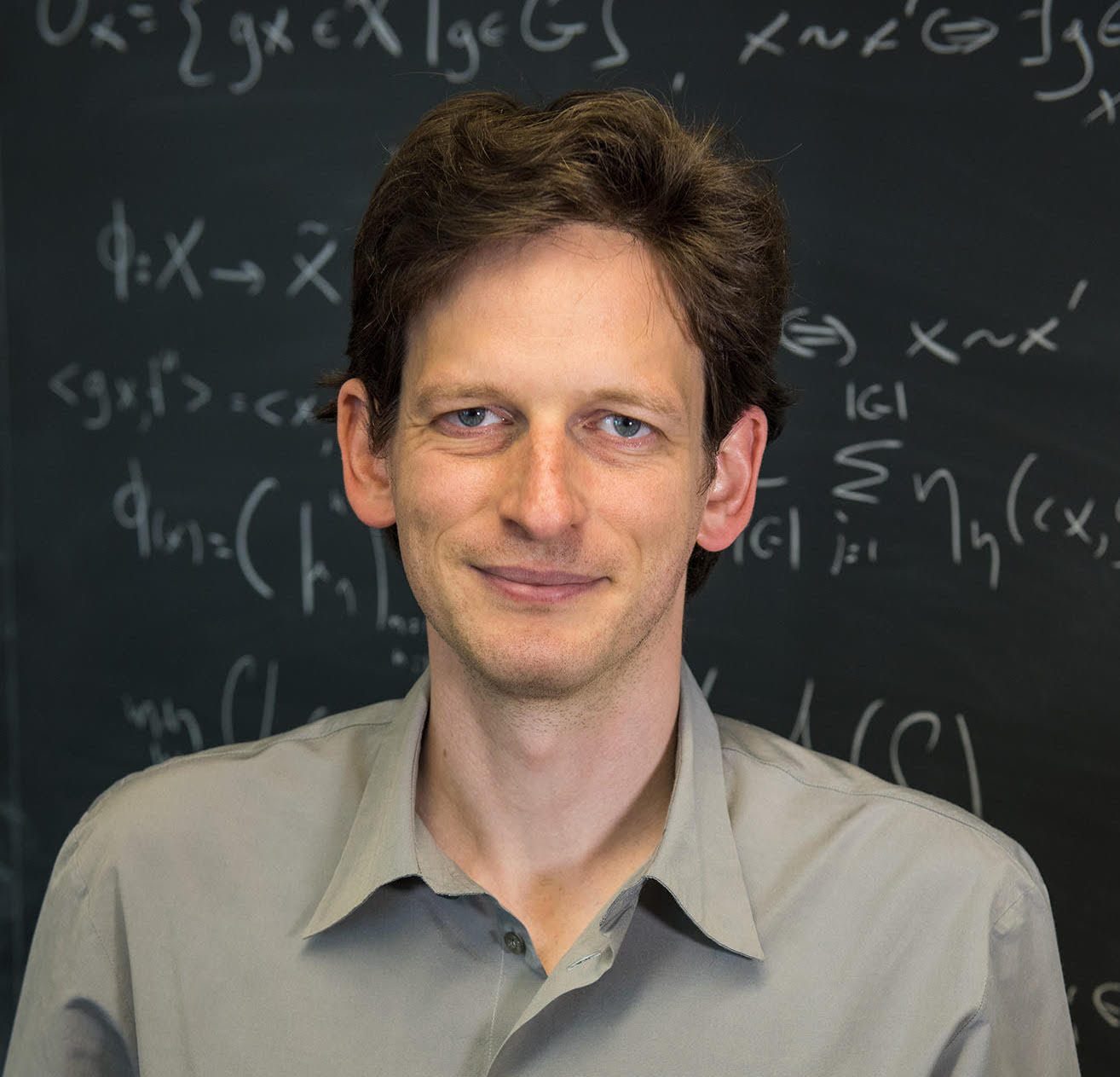
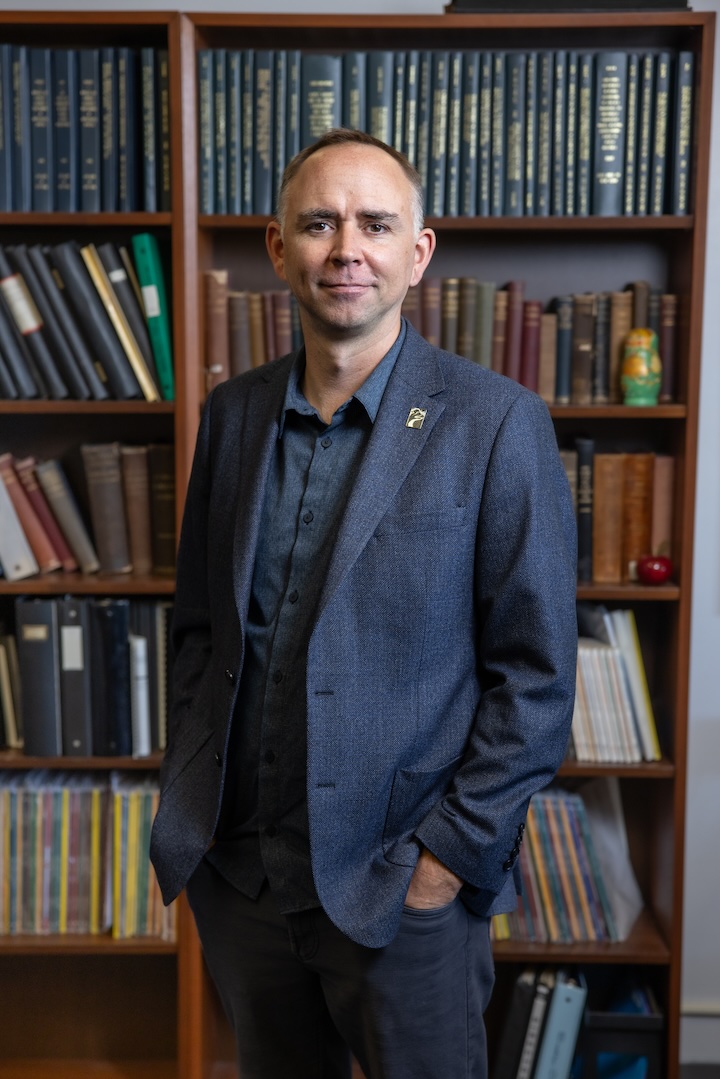
Tomer D. Ullman is an Associate Professor at Harvard University's Department of Psychology , where he leads the Computation, Cognition, and Development Lab . His research focuses on intuitive theories , common-sense reasoning about physics and psychology, and the intersection of Bayesian modeling with cognitive development . He is affiliated with the Center for Brains, Minds and Machines and the Kempner Institute for the Study of Natural and Artificial Intelligence . Research Themes: Mental simulation limits, theory of mind, value alignment in language models, developmental reasoning, computational cognition Teaching: Ullman regularly teaches Decisions, Big and Small: The Cognitive Science of Making up Your Mind (PSY1322) and Imagination, Pretense, and Make-Believe Worlds (PSY1340), both emphasizing interdisciplinary approaches to cognitive science. Scientific Awards: Best Paper Award at ICDL 2012 (with Bonawitz et al.) Recent Publications: His 15 most recent works (2021-2025) span intuitive physics , theory of mind evaluation , mental simulation constraints , LLM behavior , and developmental cognitive studies . Notable subfields include value alignment , probabilistic inference , counterfactual reasoning , and neural-symbolic integration .
Ayala Arad is a Full Professor at the Coller School of Management, Tel Aviv University. She serves as the Head of the Solomon Lew Center for Consumer Behavior and Director of the Interactive Decision Making Lab. She earned her PhD in Economics from Tel Aviv University in 2011 and completed postdoctoral research at the University of California, Berkeley (2011-2013). Her research investigates bounded rationality in individual and strategic decision-making through experimental methods. Key domains include: Psychology and economics Behavioral game theory Experimental microeconomics Cognitive aspects of choice under uncertainty Design of incentive systems Her publications demonstrate a consistent focus on developing behavioral models of decision-making, with recent work examining team-based reasoning, communication effects, and multidimensional strategic interactions. Research frequently employs controlled experiments to test theoretical predictions. She leads the Interactive Decision Making Lab, specializing in experimental studies of strategic behavior and consumer choice.
Timofey Aleksandrovich Berezner is a Lecturer and Junior Research Fellow at the National Research University Higher School of Economics (HSE), affiliated with the Faculty of Social Sciences and Department of Psychology. He serves as Deputy Head of the Department for student-related affairs and conducts research at the Laboratory for Cognitive Psychology of Digital Interface Users (HSE UX Lab). Since joining HSE in 2019, he has developed expertise in cognitive psychology, metacognition, and human-computer interaction. Education includes: Master's in Psychology (HSE, 2023) Bachelor's in Psychology (HSE, 2021) Professional retraining in Psychotherapy (2023-2024) Multiple professional development courses including Cognitive Science (Sofia, 2021), AI fundamentals (2024), and Schema Therapy (2023) Research focuses on: Cognitive processes in digital interfaces and learning environments Metacognitive regulation in decision-making and executive control Perceptual factors (disfluency effects, font psychology) AI-human cognition interactions His work bridges cognitive neuroscience with practical applications in UX design and education. Publication analysis reveals strong emphasis on: Metacognitive regulation mechanisms Perceptual influences on cognition Cognitive load measurement (NASA-TLX adaptation) Empirical studies of disfluency effects Human-AI interaction challenges Awards and Recognition: Best Teacher (2025) HSE High Professional Potential Group - New Researchers (2022-2023) Departmental commendation (2022) Winner of HSE Science Battles (2022) Professional activities include: Doctoral research on perceptual factors in metacognition Teaching cognitive psychology courses Membership in HSE UX Lab researching digital interface cognition External roles as AI-trainer at YandexGPT and lecturer at RANEPA
Matthew Crump is a Professor in the Department of Psychology at Brooklyn College of the City University of New York (CUNY), where he was promoted from Assistant Professor (2011) to Associate Professor (2016) and finally to Full Professor (2022). He also has an affiliation with the Cognitive and Comparative Psychology Training area of the Psychology Doctoral program at the Graduate Center of CUNY. Dr. Crump runs the Computational Cognition Lab, which investigates learning, memory, attention, performance, and semantic cognition. Dr. Crump's educational background includes a Postdoc from Vanderbilt University (2011) in Psychology, a Ph.D. from McMaster University (2007) in Psychology, and a B.Sc. from the University of Lethbridge (2002) in Psychology. His academic journey reflects a strong foundation in cognitive psychology that has shaped his research career. Dr. Crump's research focuses on cognitive psychology, particularly learning, memory, attention, skill learning, semantics, and computational modeling. His work often employs instance theory frameworks to understand cognitive processes. He has made significant contributions to understanding skilled action sequencing, particularly in typewriting, and has developed computational models of semantic memory. His research bridges theoretical cognitive science with practical applications in education and research methodology. Analysis of Dr. Crump's recent publications reveals a consistent focus on cognitive modeling, particularly instance-based approaches to understanding memory and language processing. His work spans multiple subfields including attentional control, semantic networks, and skill acquisition. Notably, he has made significant contributions to open science practices through developing R packages for research and creating open educational resources for statistics education. Dr. Crump is actively involved in mentoring students at multiple levels, from undergraduates to doctoral students in his Computational Cognition Lab. While specific grant information isn't provided in the text, his extensive publication record and development of educational resources suggest successful research funding. The Computational Cognition Lab at Brooklyn College, run by Dr. Crump, includes undergraduate, master's, doctoral, and postdoctoral researcher associates. The lab focuses on empirical research in cognitive psychology with an emphasis on computational approaches. Dr. Crump has developed several open educational resources, including textbooks and course materials that are freely available online.
Eleni Akrida is an Associate Professor in the Department of Computer Science at Durham University and serves as Deputy Executive Dean (Academic Student Experience) in the Faculty of Science. She joined Durham in 2019 after studying Mathematics at Patra, Greece, and Computer Science at Liverpool, UK. Between 2020-2025, she held the role of Director of Undergraduate Studies for Computer Science. Research Focus Her research bridges theoretical computer science and education, with primary interests in: Computer Science Education : Pedagogical frameworks, neurodiversity inclusion, and abstraction skill development Algorithms & Complexity : Temporal networks, graph optimization, and stochastic processes Applied AI : Paraphrase generation/identification using deep learning She leads the Pedagogical Innovations in Computer Science and Algorithms & Complexity research groups. Publication Trends Recent works (2022-2025) demonstrate a dual focus: education research (developing pedagogical frameworks and addressing multi-track programming challenges) and technical innovations (temporal graph algorithms and NLP applications for plagiarism detection). Earlier work (2016-2021) established expertise in temporal network optimization and stochastic graph theory. Grants & Supervision Awarded grants include: CPHC Special Project (2025/26): Exploring Neurodivergent Student Experiences in UK CS Education CPHC Special Project (2022/23): Building a Theoretical CS Commons for hybrid learning She currently supervises postgraduate students Arwa Al saqaabi and Saira Richardson.
Ľubomír Salanci is an Associate Professor at Comenius University in Bratislava's Faculty of Mathematics, Physics and Informatics, where he serves in the Department of Didactics of Mathematics, Physics and Informatics. His office is located in room I 44, and he can be contacted by phone at 02/602 95 284. Additional information is available on his personal webpage . His research specializes in computer science education methodologies with particular focus on: Programming pedagogy and curriculum design Integration of mathematical concepts in coding instruction Plagiarism detection techniques for programming courses Educational technology applications in STEM fields Game development and multimedia teaching methodologies Recent publications demonstrate consistent focus on improving computer science education through investigations of plagiarism detection systems, mathematical foundations of programming, hands-on learning approaches, and motivational strategies for programming students. His work frequently addresses both higher education and secondary education contexts.
Jiao Zhang is an Associate Professor of Marketing at the Lundquist College of Business , University of Oregon. She earned her PhD from the University of Chicago in 2006 and contributes to the Oregon MBA and Undergraduate Programs through teaching and research. Research Focus : Affective forecasting, consumer choice, intertemporal preferences, risk perception, and charitable giving. Teaching Areas : Behavioral decision theory, international marketing, marketing research, and principles of marketing. Current Project : "Affective Return of Effort is Overestimated" (with Eva Buechel and Carey Morewedge) for the Journal of Consumer Research. Her publications span top journals like Journal of Consumer Research , Psychological Science , and Journal of Personality and Social Psychology . Zhang's work has been highlighted in UO Business: The Magazine for innovative research on topics such as motion perception in consumption and healthy food choice interventions.
Michael Irwin Jordan is a Professor at the University of California, Berkeley, ranked #1 worldwide in Machine Learning and Distributed Computing, #36 in Computer Science, and #9 in Statistics according to Academic Influence rankings. His interdisciplinary research bridges theoretical foundations with practical applications across machine learning, statistics, and artificial intelligence. His educational background includes a PhD in Computer Science from the University of California, San Diego, a Master's in Mathematics from Arizona State University, and a Bachelor's in Psychology from Louisiana State University. This diverse foundation has shaped his approach to integrating perspectives from computer science, statistics, neuroscience, and psychology. Professor Jordan's research spans several decades, beginning with foundational work in neural networks and connectionist models. He made seminal contributions to probabilistic graphical models, variational inference, and Bayesian nonparametrics. His 2001 paper 'Latent Dirichlet Allocation' has received over 34,000 citations, becoming one of the most influential papers in machine learning. More recently, his work has focused on applications to biological data analysis, particularly single-cell transcriptomics, where he has developed probabilistic models and software tools like scvi-tools. Member of the National Academy of Engineering (2010) Ranked #1 worldwide in Machine Learning Ranked #1 worldwide in Distributed Computing Ranked #36 worldwide in Computer Science Ranked #9 worldwide in Statistics As an advisor, Professor Jordan has mentored numerous PhD students who have become leaders in academia and industry. His recent work through 2022 shows continued innovation across multiple domains, including uncertainty quantification, theoretical analysis of transfer learning, and scalable frameworks for reinforcement learning. He also contributes significantly to data science education, having helped develop Berkeley's undergraduate data science curriculum.
Mary Elizabeth De Freitas is a Professor at Adelphi University in the Ruth S. Ammon College of Education and Health Sciences. Her work bridges mathematics education, philosophy, and cultural studies, exploring innovative data methodologies in social sciences with a focus on the cultural-material practices associated with mathematical activity. Ph.D., Ontario Institute for Studies in Education, University of Toronto (2004) B.Ed., Ontario Institute for Studies in Education, University of Toronto (1999) M.A., Institute for the History and Philosophy of Science and Technology, University of Toronto (1990) B.A., Department of Mathematics, McGill University (1987) De Freitas' research explores innovative data methodologies in the social sciences, drawing on anthropology, philosophy and cultural studies. Her work focuses on cultural-material practices associated with mathematical activity across various contexts. She is particularly committed to interdisciplinary work across the post-humanities, with research projects that are creative, critical, and collaborative. Her research interests include mathematics education, STEAM education, educational technology, philosophy and history of mathematics, investigative aesthetics, arts-based inquiry, narrative inquiry, critical theory, cultural studies, spatial justice, new materialisms, data science, and eco-cognition. Her recent publications reveal a strong interdisciplinary trajectory examining the intersection of mathematics, materiality, and embodiment. De Freitas employs new materialist approaches to explore mathematical practices in complex learning environments, with particular attention to digital technologies, sensor technologies, and spatial justice. Her work increasingly incorporates speculative fiction and posthuman perspectives to rethink educational research methodologies for the Anthropocene. De Freitas has been Principal Investigator on numerous research projects funded by prestigious organizations including the Canada Council for the Arts, Ontario and Toronto Arts Councils, US National Science Foundation, UK Economic and Social Research Council, and NYS Department of Education. She has published six books and over 60 peer-reviewed articles across diverse disciplinary contexts. Her international experience includes working as an Assistant Professor and Honorary Professor in Canada, a Research Chair at Manchester Metropolitan University in the UK, and through European Erasmus grants in Italy, as well as teaching and speaking engagements in Denmark and the Netherlands.