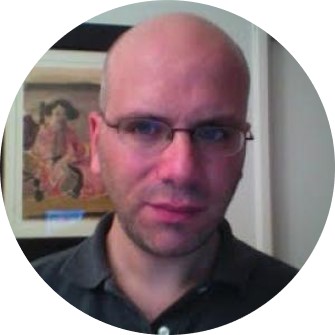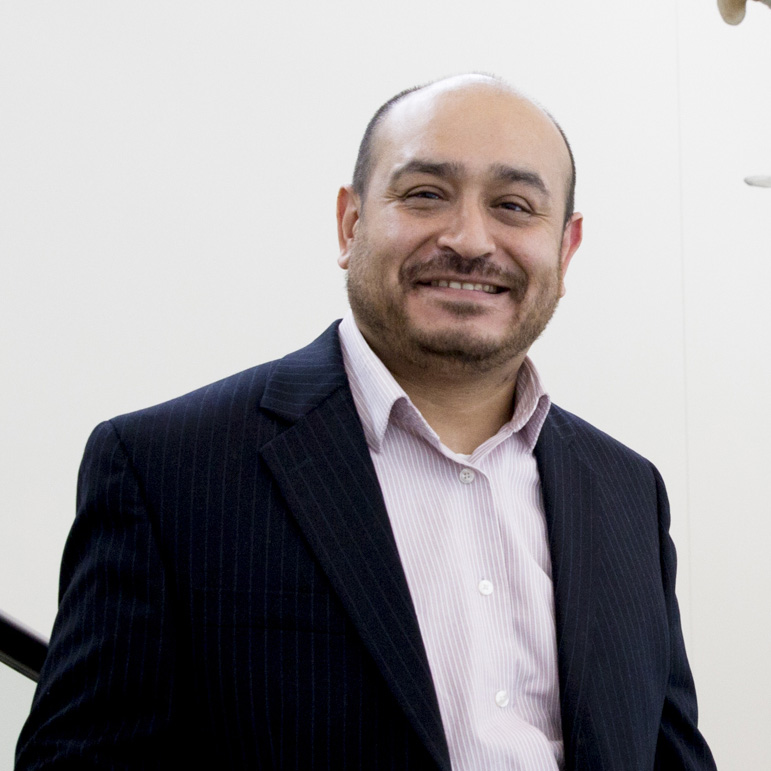
Erik Otárola-Castillo is an Associate Professor in the Department of Anthropology at Purdue University, where he joined the faculty in 2015 and was promoted to Associate Professor. His interdisciplinary work bridges archaeology, human evolutionary biology, and biostatistics, focusing on prehistoric and modern hunter-gatherer populations and their responses to environmental change. His educational background includes: Ph.D. in Anthropological Science, Stony Brook University M.A. in Anthropology, Iowa State University B.A. in Anthropology, Stony Brook University Dr. Otárola-Castillo specializes in the evolution, ecology, and diversity of behavior in hunter-gatherer societies, with particular emphasis on climate change impacts and food availability effects on early North American native diets. As a computational anthropologist, he develops quantitative tools including 3D morphometrics software, statistical models for zooarchaeologists, and spatio-temporal analysis frameworks. His research integrates Geographic Information Systems (GIS) and Bayesian statistics to address core archaeological questions of space, time, and form, with applications ranging from bone surface modification analysis to human-megafauna interactions. Recent publications reveal a strong methodological trend toward Bayesian inference for archaeological hypothesis testing and computational morphometric analysis of artifacts and skeletal remains. Key thematic areas include lithic technology standardization, subsistence intensification mechanisms among Great Plains hunters, and health impacts of urbanization on indigenous Peruvian populations, demonstrating consistent application of quantitative rigor across diverse anthropological contexts. He is recognized as an international authority, evidenced by an invitation to contribute a review on Bayesian approaches to the Annual Review of Anthropology (2018). His work appears in high-impact journals including The Proceedings of the National Academy of Sciences (PNAS) and PLoS One. Dr. Otárola-Castillo directs the Laboratory for Computational Anthropology and Anthroinformatics (LCA), which develops open-source tools like geomorph and zooaRch for anthropological research. The lab's work enables advanced morphometric analysis and zooarchaeological quantification, supporting collaborative projects worldwide through computational innovation in data collection, analysis, and visualization.