Patrick Flynn is the Matthew and Soogi Hong Fellow and Assistant Professor of Management at North Carolina State University's Poole College of Management, Department of Management, Innovation & Entrepreneurship. He holds a Ph.D. in Organizational Behavior and Human Resources from the University of South Carolina and a B.S. in Supply Chain Management from the University of Maryland. His research focuses on dynamic individual and group processes, including event-based adaptation, team citizenship behaviors, and resilience. He teaches courses in people analytics, management consulting practicum, and leadership consulting. Dr. Flynn’s work has been published in top journals such as Journal of Management , Journal of Applied Psychology , and Annual Review of Organizational Psychology . He serves on the editorial board of Group & Organization Management . His research explores transitions, sustainability, and organizational change, with media features in CNBC, MSN, and the Raleigh News & Observer . His academic contributions emphasize practical applications of organizational behavior theories, particularly in post-pandemic workplace dynamics, remote work adaptations, and employee well-being strategies. His recent work addresses collective turnover, trust dynamics, and proactive sustainability approaches in volatile environments.
Grace Lim is an Assistant Professor in the Department of Management at the Nanyang Business School, Nanyang Technological University, Singapore. Her research focuses on inclusion, diversity, and the empowerment of disadvantaged employees in organizations, particularly those from lower social class backgrounds and women. Education: Ph.D. in Business (Organizational Behavior and Human Resources), Singapore Management University B.Sc. in Psychology, National University of Singapore Her research employs a range of methodologies, including field surveys, experiments, archival data, and qualitative methods, to ensure robust and generalizable findings. She investigates how individuals can exercise agency to overcome structural disadvantages in the workplace, contributing to the fields of organizational behavior, human resources, and social psychology. Her recent publications reflect a strong trend in studying diversity, inclusion, and equity, with a focus on social class, gender, leadership, and employee well-being. The research spans interdisciplinary themes, integrating insights from psychology, management, and sociology to understand workplace dynamics. Scientific Contributions: Published in top-tier journals such as Organizational Behavior and Human Decision Processes and Academy of Management Annals Research on social class, gender, inclusion, and leadership has been influential in shaping organizational practices Dr. Lim is actively involved in advancing knowledge in organizational behavior and human resources. She has not supervised any listed students yet but continues to contribute through impactful research and academic engagement. She is a member of the Centre for Leadership and Cultural Intelligence at NTU, collaborating on initiatives related to cultural intelligence and inclusive leadership.
Karen Panetta is a Professor at Tufts University School of Engineering with appointments in Electrical and Computer Engineering, Computer Science, Mechanical Engineering, and Academic Services. She currently serves as Dean of Graduate Education for the School of Engineering and holds the title of Distinguished Professor. Ph.D. in Electrical Engineering, Northeastern University M.S. in Electrical Engineering, Northeastern University B.S. in Computer Engineering, Boston University Dr. Panetta's research focuses on developing efficient algorithms for simulation, modeling, and signal and image processing for security and biomedical applications. Her work brings together artificial intelligence, machine learning, and visual sensing systems to create solutions for robot vision and biomedical imaging. She develops algorithms inspired by the human visual system to enable machines to 'see' like humans, with applications in homeland security, biomedicine, facial recognition, and search and rescue operations. Her research has significant humanitarian applications, addressing global challenges facing women and children. Dr. Panetta has received numerous prestigious awards including induction into the National Academy of Engineering (2023), the Presidential Award for Science and Engineering Education and Mentoring (2011), and the IEEE Award for Distinguished Ethical Practices (2013). She is a fellow of multiple prestigious academies including the National Academy of Inventors, European Academy of Sciences and the Arts, and IEEE. Member, National Academy of Engineering (2023) Presidential Award for Science and Engineering Education and Mentoring (2011) IEEE Award for Distinguished Ethical Practices (2013) Fellow, National Academy of Inventors Fellow, European Academy of Sciences and the Arts Fellow, Asia-Pacific Artificial Intelligence Association As an educator and mentor, Dr. Panetta founded the nationally acclaimed Nerd Girls program to promote engineering to young students, particularly women. She previously served as worldwide director for IEEE Women in Engineering and editor-in-chief of the IEEE Women in Engineering magazine. Her approach to graduate education emphasizes the importance of building strong collaborative relationships between faculty and students, with a focus on proactive communication and documentation of research progress. Dr. Panetta's humanitarian research applies engineering solutions to global challenges, including developing technology to help doctors find cancerous tumors, security screeners find concealed weapons, and law enforcement agencies find criminals and missing children. Her work demonstrates a commitment to 'Doing The Right Thing' by addressing issues affecting populations with limited resources or 'voice' in society.
Professor Ute Stephan is a Professor of Entrepreneurship at King's Business School, King’s College London, where she is affiliated with the Strategy, International Management & Entrepreneurship department. She is a globally recognized scholar in the psychology of entrepreneurship, with a focus on entrepreneurial well-being, mental health, social entrepreneurship, and the role of culture and institutions. Research Interests: Entrepreneurial well-being, stress, and mental health Social and inclusive entrepreneurship Cross-cultural innovation and national culture Family business and women entrepreneurs Entrepreneurial resilience during crises (e.g., Covid-19) Feedback-seeking and social networks Her recent publications reveal a strong trend toward understanding the psychological and social dimensions of entrepreneurship, particularly how entrepreneurs navigate uncertainty, maintain well-being, and create inclusive impact. Her work integrates insights from organizational behavior, psychology, and management, often using cross-national data and meta-analytic methods. Scientific Awards and Recognition: 2025 JIBS Decade Award Fellow, International Association of Applied Psychology (IAAP) 21st Century Entrepreneurship Fellow Winner, 2016 GLOBE Robert J. House Best Research Paper Award Highly Commended, 2015 GLOBE Robert J. House Best Research Paper Award Nominee, 2021 Journal of Management Scholarly Impact Award She has secured over £3 million in research funding from the European Commission, UK Government, UK research councils, and German institutions. She serves as Associate Editor at Journal of Management and Entrepreneurship Theory & Practice , and previously held editorial leadership roles at Applied Psychology and Journal of International Business Studies . She is an elected board member of the IAAP and chairs its publication committee. She also advises the Founder Mental Health Pledge and is an IfM Research Fellow at IfM Bonn. Labs and Research Teams: Lead investigator of the 25-country study on Entrepreneurship & COVID-19 Principal investigator of the WEWell project on women entrepreneurs’ well-being Lead investigator of the SEFORIS and SELUSI projects on social enterprises Team member in large-scale international collaborations across Europe, Asia, and the Americas
Yashar Ganjali is a Professor in the Department of Computer Science at the University of Toronto , leading the Systems and Networking Group . His research spans computer networks , with a focus on data center networking , software-defined networking (SDN) , and congestion control . Education : Not explicitly detailed, but inferred from academic rank as a Professor. His work on flow consolidation , load migration in SDN controllers , and machine learning for network management has been influential. Recent projects include FORESIGHT (2025) for ML-driven scheduling and Meta-Migration (2023) to reduce switch migration latency. Scientific Awards include the IFIP Networking 2025 Best Paper Award . Collaborations with institutions like Google (2024) and Facebook (2019) highlight his industry impact. Advisees include Sepehr Abbasi Zadeh (PhD, 2024). Current projects integrate optical packet switching and eBPF-based network augmentation , aiming to address scalability, micro-bursts, and resource allocation efficiency in cloud environments.
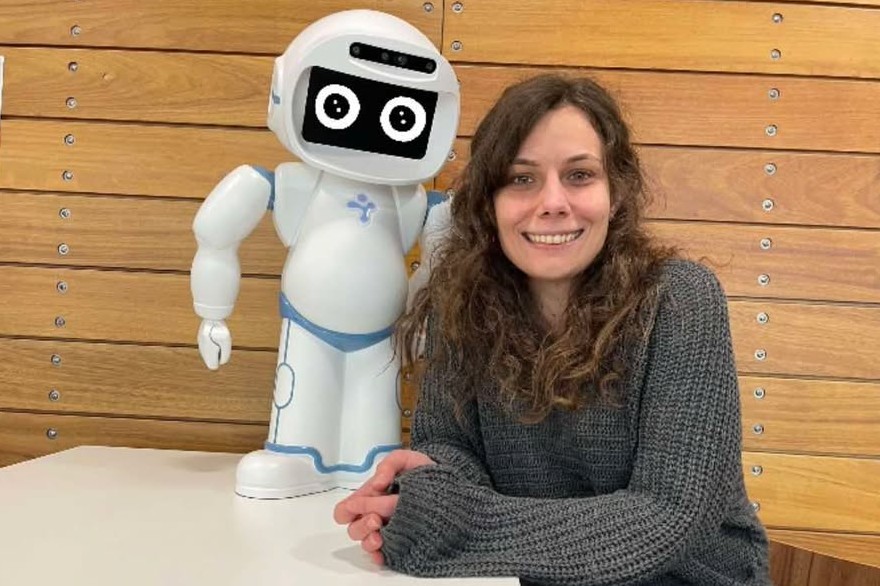
Fethiye Irmak Dogan is a Postdoctoral Research Associate at the University of Cambridge's Department of Computer Science and Technology, working in the Affective Intelligence and Robotics Laboratory. She holds a Ph.D. in Computer Science from KTH Royal Institute of Technology (2023), an M.Sc. and B.Sc. in Computer Engineering from Middle East Technical University (METU). Her research focuses on human-robot interaction, continual learning, and socially appropriate robot behaviors leveraging explainability. She has conducted robotics research at KTH's Division of Robotics, Perception and Learning and collaborated internationally, including a visiting scholar stint at Georgia Institute of Technology. Education highlights include: B.Sc., Computer Engineering, METU (2015) M.Sc., Computer Engineering, METU (2018), with research at Kovan Robotics Lab Ph.D., Computer Science, KTH (2023), with visiting research at Georgia Tech Research interests emphasize deploying autonomous robots in human environments, resolving ambiguous user instructions through explainability, and enabling socially intelligent robot behaviors. Recent work explores continual learning for context adaptation, multimodal frameworks for human-robot collaboration, and vision-language models for wellbeing assessment in children. Key projects include BT-ACTION (modular instruction understanding), GRACE (LLM-driven socially appropriate actions), and STREAK (continual learning for household tasks). Her contributions span robotics, AI ethics, and human-centered design, with a focus on real-world applications in healthcare and education.
Wang Jianmin serves as Professor and Doctoral Supervisor at Tongji University's School of Art and Media, concurrently holding the position of Vice Dean since 2014. With a computer science PhD from Sun Yat-sen University, he bridges engineering and media arts through pioneering research in intelligent communication systems and digital media interfaces. His work focuses on human-centered design for emerging technologies, particularly in automotive and virtual environments. His academic foundation includes: PhD in Engineering (Computer Software and Theory), Sun Yat-sen University (2003) Master's in Computational Mathematics, Sun Yat-sen University (1999) Bachelor's in Computational Mathematics, Nankai University (1996) Professor Wang's research centers on intelligent communication systems and digital media art, with significant contributions to automotive human-machine interfaces (HMI), virtual reality applications, and user experience methodologies. His investigations into driver-robot transparency, augmented reality navigation, and mixed-reality educational platforms demonstrate interdisciplinary innovation connecting computer science, cognitive psychology, and design theory. Current projects explore AI-driven media systems for urban environments and safety-critical interaction frameworks. Analysis of his recent publications reveals a cohesive research trajectory focusing on automotive HMI (40% of output), human-robot interaction (30%), and mixed reality applications (30%). His work consistently emphasizes experimental validation through driving simulators and user studies, yielding practical design guidelines for industry implementation. The interdisciplinary nature spans computer science, cognitive ergonomics, and media studies, with increasing emphasis on AI integration in communication systems. His scientific recognition includes national and provincial awards for innovation in human-computer interaction and educational technology: 2019 China Industry-University-Research Innovation Award for automotive HMI systems 2020 China User Experience Alliance Excellence Award 2012 Guangdong Dingying Science and Technology Award Multiple national/provincial science progress awards (2001-2009) 2020 Tongji University Teaching Achievement Award for curriculum development As an educator, Professor Wang mentors graduate students in national design competitions including the 'Core Cup' Future Automotive HMI Challenge and International User Experience Innovation Competition. His research program is supported by substantial funding from diverse sources: National Grants: National Natural Science Foundation projects on driver behavior modeling and cognitive testing Ministry of Education: 15+产学合作 projects for virtual simulation labs and curriculum development Shanghai Municipal: Publicity Department funding for smart city media research Industry Partnerships: Huawei (intelligent vehicle HMI), SAIC Motor (AR-HUD design), and automotive electronics firms He directs Tongji's Media Experiment and Practice Teaching Center and the All-Media Research Institute, leading teams developing virtual simulation platforms for emergency news reporting, intelligent vehicle interaction testing systems, and mixed reality educational tools. Current initiatives focus on AI-enhanced media art for urban applications and next-generation HMI frameworks for autonomous mobility solutions.
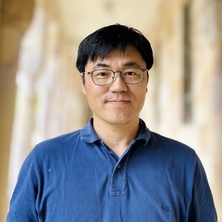
Associate Professor Dan Dongseong Kim is Deputy Director of UQ Cybersecurity and an Associate Professor at The University of Queensland (UQ), Australia. Previously, he held permanent academic positions at The University of Canterbury (UC), New Zealand (2011-2018) as a Senior Lecturer and Lecturer. His research focuses on Cybersecurity and Dependability for AI, IoT, Autonomous Vehicles, Cloud Computing, and Moving Target Defenses (MTD). Doctor of Philosophy in Computer Engineering from Korea Aerospace University Postdoctoral Research at Duke University (2008-2011) Visiting Scholar at University of Maryland (2007) Dan's work explores Graphical Security Models , Moving Target Defense for proactive resilience, and AI-Driven Cybersecurity with emphasis on adversarial robustness and interpretable models. His recent publications (2024-2025) span journals like IEEE Transactions on Dependable and Secure Computing and conferences such as DSN , addressing automated defense, evolving attacks, and hardware-aware security frameworks. He has advised 15 Ph.D. graduates, including researchers now at institutions like RMIT University, La Trobe University, and CSIRO's Data61. Current supervision includes projects on Automated Penetration Testing , AI-Based Intrusion Response , and Moving Target Defense . Dan's research is funded by agencies including the Republic of Korea's Agency for Defence Development and US Army Research Lab . His professional roles include Associate Editor for IEEE Communications Surveys and Tutorials and Steering Committee Chair for IEEE PRDC .
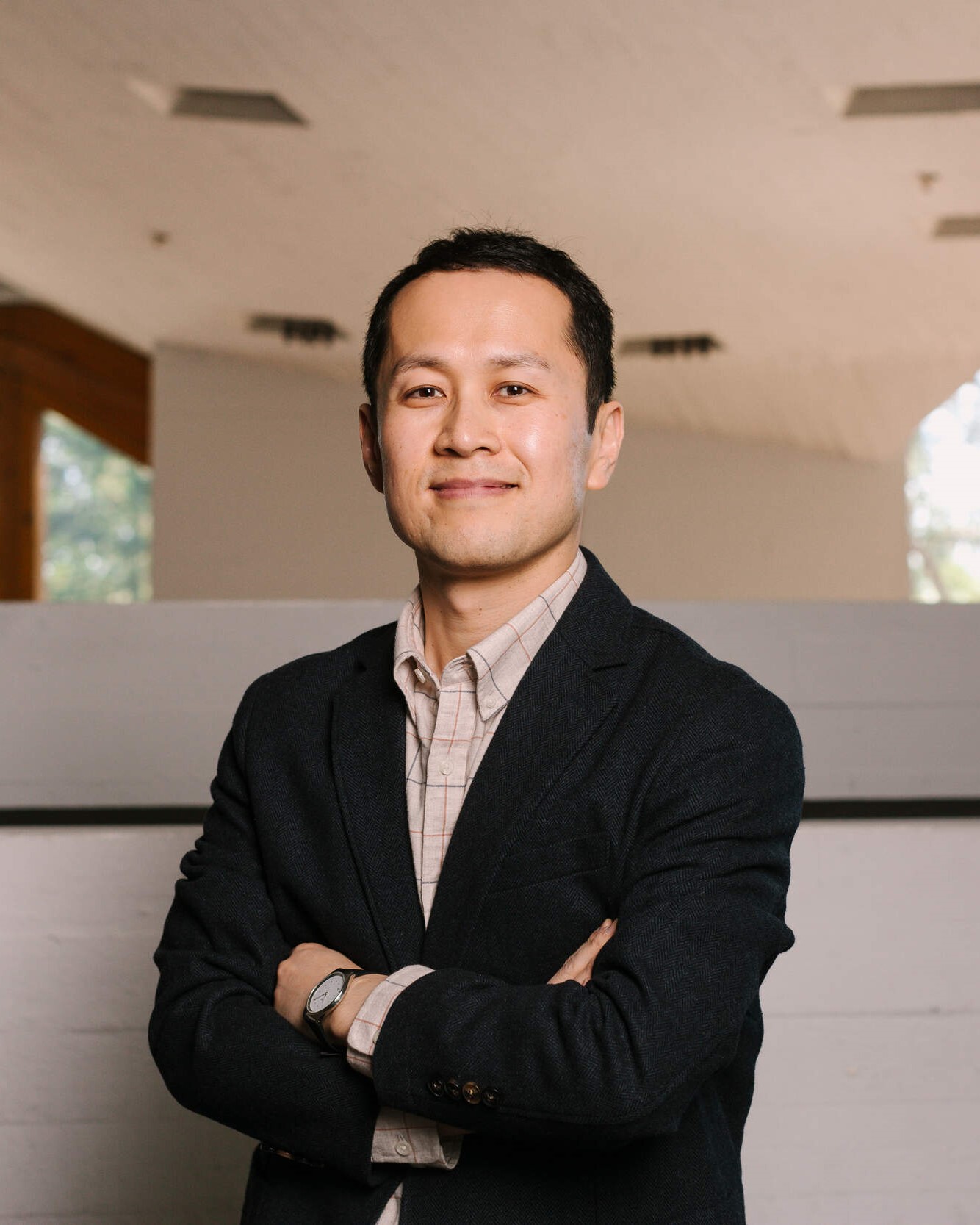
Dr. Joyoung Lee is an Associate Professor in the Department of Civil and Environmental Engineering at New Jersey Institute of Technology (NJIT). He previously served as Laboratory Manager at the Federal Highway Administration's Saxton Transportation Operations Laboratory. His research focuses on Connected Vehicle (CV) systems, including applications in traffic management, signal control optimization, and autonomous vehicle infrastructure integration. Dr. Lee holds a Ph.D. (2010) and M.S. (2007) in Transportation Engineering from the University of Virginia, and a B.S. (2000) in Transportation Engineering from Hanyang University. His work emphasizes CV-based solutions for real-time traffic systems, cooperative vehicle-infrastructure systems (CVIS), and autonomous vehicle integration. Notable achievements include the 2019 IEEE CAVS Best Paper Award and multiple best paper recognitions from PTV User Group Meetings. His research also addresses traffic safety through innovations like the Virtual Guide Dog system for visually impaired pedestrians and advanced traffic monitoring frameworks using LiDAR and computer vision. Education: Ph.D., Transportation Engineering, University of Virginia (2010) M.S., Transportation Engineering, University of Virginia (2007) B.S., Transportation Engineering, Hanyang University (2000) Dr. Lee's research interests span smart city infrastructure, edge computing for traffic systems, and sustainable transportation solutions. He has pioneered algorithms for cooperative intersection management, automated platooning systems, and federated learning-based traffic optimization. His work bridges theoretical models with real-world implementation through partnerships with FHWA and industry stakeholders. Key contributions include development of the Cumulative Travel-Time Responsive (CTR) traffic signal control system, smart arrival notification systems for paratransit services, and advanced microsimulation calibration techniques. His lab focuses on translating CV data into actionable strategies for safer, more efficient transportation networks. Awards: IEEE CAVS Best Paper Award (2019) ASCE Grand Challenge Innovation Contest Honorable Mention (2017) PTV VISSIM Best Paper Awards (2012, 2008) Excellence in Research Award (University of Virginia, 2011) Ongoing projects include semi-decentralized graph neural networks for traffic forecasting and low-cost LiDAR-based traffic monitoring systems. His work addresses critical challenges in autonomous vehicle integration, incident management, and infrastructure resilience through interdisciplinary collaborations.
Prof. Dr. Mona Mensmann is an Associate Professor of Innovation Management and Entrepreneurship at the University of Cologne , School of Business and Social Sciences. Her research bridges entrepreneurship with psychology, focusing on entrepreneurial mindset, proactive behavior, and training curricula. Current: Associate Professor (W2), University of Cologne (2021–) Previous: Associate/Assistant Professor at Warwick Business School (2018–2021) Education: PhD in Psychology, Leuphana University (2013–2017); MSc in Psychology, University of Heidelberg (2011–2013) Mensmann’s research explores the psychological foundations of entrepreneurship, including the impact of cognitive traits (e.g., ADHD, need for cognition) on entrepreneurial intentions and outcomes. She emphasizes personal initiative training as a tool for poverty reduction and sustainable business development, particularly in West Africa and developing economies. Her publications span peer-reviewed journals like Entrepreneurship Theory and Practice and Science , focusing on topics such as sleep quality’s influence on founders, training program effectiveness, and lifespan entrepreneurship. She has also contributed to academic book chapters and conference proceedings.
Seongtae Kim is an Assistant Professor of Supply Chain Management at Aalto University School of Business. He joined Aalto in 2019 after postdoctoral research at the Swiss Federal Institute of Technology Zurich. His PhD in Supply Chain Management was obtained from the University of Hull’s Logistics Institute (2013–2016). His research focuses on supply chain sustainability, risks, complex networks, and digital transformation. Key projects include a four-year Academy of Finland-funded initiative on supply chain restructuring amid disruptions. He serves as an associate editor for the International Journal of Operations and Production Management and editorial board member for Decision Sciences and Journal of Supply Chain Management , earning review service awards. His work emphasizes interdisciplinary connections between environmental, social, and governance issues in global supply chains. Research awards include the JSCM Best Paper Award (2020) and Chris Voss Best Paper Award (2022). Current grants involve analyzing supply chain resilience during megadisruptions. His articles span topics like ethical sourcing, shareholder value effects of disruptions, and green practices in multi-tier networks. He advocates for integrating diversity, equity, and inclusion into sustainable operations, addressing paradoxes in lean manufacturing and sustainability performance.
Aaron J. Chalfin serves as Associate Professor and Graduate Chair of Criminology within the Department of Criminology at the University of Pennsylvania's College of Liberal and Professional Studies. He maintains significant external affiliations as a Senior Fellow at the Niskanen Center, faculty research fellow at the National Bureau of Economic Research, and research affiliate at the University of Chicago Crime Lab. His academic foundation includes: PhD in Public Policy, University of California, Berkeley (2013) MA in International and Development Economics, Yale University (2004) BS in Industrial & Labor Relations, Cornell University (2003) Chalfin's research program centers on policing economics, officer behavioral preferences, place-based crime prevention strategies, and victimization determinants. He concurrently advances methodological rigor in social science through innovations in measurement error correction, spatial crime concentration metrics, and administrative data linkage techniques. His empirical approach consistently bridges theoretical criminology with practical policy evaluation. Recent publications reveal evolving research trajectories across bias-motivated violence measurement during pandemics, low-cost gun violence interventions, racial disparities in traffic fatalities, and methodological improvements for policy analysis. This body of work demonstrates sustained commitment to evidence-based criminal justice solutions through experimental and quasi-experimental designs. His ongoing collaboration with the University of Chicago Crime Lab exemplifies integration between academic research and real-world crime laboratory operations, focusing on scalable public safety innovations.
Olga Ryazanova is a Lecturer in Management at Maynooth University School of Business and currently serves as Social Sciences Associate Dean of Strategy and Governance. She holds a PhD from University College Dublin and an MA from the State University Higher School of Economics. Her research focuses on strategic management of higher education institutions, particularly the interplay between individual academic careers and organizational outcomes. Key areas include scientific performance measurement, societal impact governance, and doctoral education. Dr. Ryazanova has secured significant funding through projects like the SFI-funded '(In)visible work: understanding and measuring research translation into policy' (2024-2026) and the EU H2020 CHAMELEONS project. She has published in prestigious journals such as Academy of Management Learning & Education , Research Policy , and Journal of World Business , earning awards including the Global Forum Award (2014, 2018) and Carolyn Dexter Award finalist status (2016). Teaching : Courses include Business Models, Innovation Management, and Quantitative Research Methods for PhD students. Editorial Roles : Associate Editor of Academy of Management Learning & Education (2020-2026) and editorial board member for British Journal of Management and Research Policy . Leadership : Served as Secretary and Research Coordinator for the Academy of Management's Management Education & Development Division. Her research consistently addresses systemic challenges in academia, including career capital development, international mobility impacts, and equitable recognition of Global South scholars. She actively collaborates with institutions globally through projects analyzing research networks and doctoral employability.
Mark S. Hoddle is a Professor of Entomology and Biological Control Specialist at the University of California, Riverside (UCR), where he has headed research in his laboratory since 1997. He serves as the Director of the Center for Invasive Species Research and is a Principal Investigator focusing on biological control of invasive pests. His work bridges academic research with practical applications for California agriculture. Education: D.Sc. Zoology (2018), University of Auckland, New Zealand Ph.D. Entomology (1996), University of Massachusetts, Amherst M.S. Zoology (1991), University of Auckland, New Zealand B.S. Zoology (1988), University of Auckland, New Zealand Dr. Hoddle specializes in biological control, the intentional use of host-specific natural enemies to suppress pest populations. His research focuses on identifying pest problems amenable to biological control, locating and releasing natural enemies, and evaluating their impact on pest population growth. He works extensively with invasive species affecting California agriculture, particularly pests of citrus, avocado, palm trees, and other crops. His approach combines field evaluations with laboratory studies of pest and natural enemy biology and behavior. Analysis of Dr. Hoddle's recent publications reveals a strong focus on invasive species threatening California agriculture, particularly the Asian citrus psyllid, red palm weevil, and brown marmorated stink bug. His research integrates field and laboratory approaches, with emphasis on phenology modeling, natural enemy evaluation, and innovative control methods. Much of his work addresses the economic and ecological impacts of invasive pests on specialty crops. Scientific Awards: Entomological Society of America, Pacific Branch Entomology Team Leader Award (2023) UC-ANR Distinguished Service Award for Outstanding Research (2022) Fellow, Entomological Society of America (2018) California Department of Pesticide Regulations IPM Achievement Award for Asian Citrus Psyllid Biocontrol (2018) IOBC Distinguished Scientist of the Year (2015) Multiple awards from the Entomological Society of America (2007, 2012, 2013, 2014) Dr. Hoddle has mentored numerous students and researchers throughout his career, including postdoctoral scholars and specialists who contribute to his laboratory's work on invasive species. His research has been supported by various granting agencies, private institutions, and commodity boards, enabling extensive international projects focused on identifying and implementing biological control solutions for invasive pests. He has facilitated the Harry Scott Smith Scholarship Fund to support graduate students in biological control. Dr. Hoddle directs the Center for Invasive Species Research at UCR and leads a productive laboratory team that includes postdoctoral scholars, specialists, and students. The lab conducts research on multiple invasive species threatening California agriculture and natural ecosystems, with particular emphasis on citrus, avocado, and palm tree pests. Current projects include proactive biological control of the spotted lanternfly and research on invasive palm weevils, avocado pests, and other emerging threats.
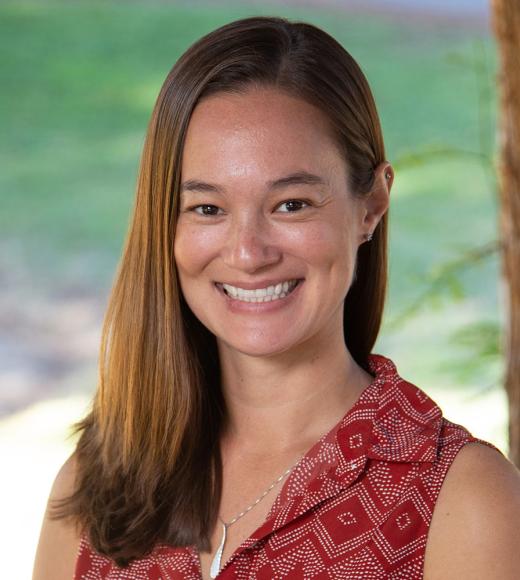
Rachael Bay is an Associate Professor in the Department of Evolution and Ecology at the University of California, Davis. She investigates how human-induced environmental changes intersect with evolutionary processes, focusing on climate change impacts across diverse species. Education: B.S. in Marine Science/Biology, University of Miami (2008) M.Sc. in Biology, Dalhousie University (2010) Ph.D. in Biology, Stanford University (2015) Her research combines ecological experiments, physiological studies, and large-scale genomic analysis to explore evolutionary responses to anthropogenic stressors. Key areas include climate adaptation in migratory birds, coral resilience, and conservation genomics. Recent publications highlight genomic shifts linked to climate change, thermal tolerance mechanisms in corals, and migratory behavior dynamics. Her work emphasizes using evolutionary insights for proactive conservation strategies. Scientific Awards: Packard Fellowship (2021) Sloan Fellowship (2019) UC Davis Top Safety Award (2022) Bay is affiliated with the Center for Population Biology and graduate groups in Integrative Genetics & Genomics and Population Biology. She leads the Bay Lab, which focuses on eco-evolutionary dynamics in marine and avian systems.