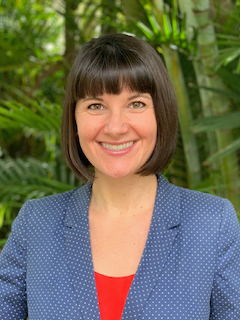
Dr. Jasper Fessmann is an Assistant Professor in the Department of Journalism and Strategic Media at the University of Memphis, joining in 2023 after serving at West Virginia University’s Reed College of Media. He holds a Ph.D. in Mass Communication from the University of Florida, a Qualifying Certificate in University-Level Teaching from Technical University Berlin, and degrees in International Public Relations (MA, Boston University), Communication Arts (BA), and Philosophy (BA) from Georgia Southern University. His research focuses on public interest communications (PIC), international public relations, disinformation, and crisis communications. He pioneered the PIC field to advance social change, particularly countering climate denial campaigns. His work emphasizes strategic communication for NGOs, governments, and Fortune 500 companies, informed by 15 years in international PR agencies and pro bono projects on Holocaust remembrance. His publications analyze climate change communication strategies, crisis management, and non-profit communication frameworks. Recent articles address gamification in education to combat misinformation and cross-cultural crisis responses. His research bridges theoretical foundations and practical applications of strategic communication for societal benefit. Dr. Fessmann has no listed awards but has contributed to public interest initiatives globally. His advising and grants are not detailed in available texts, though his academic work suggests ongoing engagement with PIC and climate communication projects. He teaches university-level courses and maintains an office at Meeman Journalism 330.
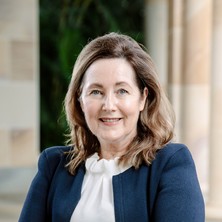
Professor Janet McColl-Kennedy is a leading figure in marketing and service science at The University of Queensland's Business School. She serves as Program Lead for Innovation Pathways (FaBA) and co-founded the Service Innovation Alliance (SIA) research hub, focusing on customer experience, AI, digital transformation, and sustainability. With Fellow status in the Academy of the Social Sciences in Australia and the Australian and New Zealand Marketing Academy, she holds international recognition including Research.com's World's Best Business Scientists ranking and the Christopher Lovelock Career Contributions to the Services Discipline Award (2025). University of Queensland Business School Honorary Visiting Professor, Cambridge Service Alliance Research Collaborator, University of Cambridge Her research spans customer experience management, service ecosystems, digital transformation, and healthcare services. She has pioneered frameworks for customer value co-creation and service recovery strategies, integrating AI and behavioral science. Her 2019 paper on customer experience insights was implemented by a major B2B organization, while her work on value co-creation improved outcomes at Lutheran Community Care. Recent publications focus on AI impacts in food and beverage services, sustainable service ecosystems, and digital health interventions. She has secured over $89 million in competitive grants, including multiple ARC Linkage and Discovery Projects, and leads cross-disciplinary teams with institutions like Cambridge University and Arizona State University. 2024 - ARC College of Experts appointment 2023 - Bo Edvardsson Industry Impact in Services Award 2022 - Elected Fellow of Academy of the Social Sciences in Australia 2021 - Clarivate Highly Cited Researcher 2018 - Ranked most influential marketing academic in Australia With over 220 publications and a Google Scholar H-index of 62, she has mentored 15 PhD students and examined theses at multiple universities. Her teaching spans 30+ years across undergraduate, postgraduate, and executive programs in Australia, USA, Italy, China, and Korea, with awards for blended learning and corporate education.
Maureen Meadows is a Professor of Strategic Management at Coventry University's Research Centre for Business in Society. Her work focuses on strategic decision-making, big data applications, privacy in business models, and M&A dynamics. She previously held leadership roles at the Open University and Warwick Business School, where she contributed to strategic management education and research. Education: PhD in Open University (2016) MSc in Management Science from University of Warwick (1987) Bachelor of Arts in Mathematics (Oxford University, 1986) Research Interests: Strategic management tools (e.g., scenario planning), customer data analytics, privacy implications of data sharing, and post-merger integration. She has co-led projects on surveillance society blurring and privacy in the digital economy, funded by Leverhulme and EPSRC. Key Projects: Leverhulme-funded 'Taking Liberties?' (surveillance society) EPSRC-funded 'Monetize Me?' (privacy and quantified self) Co-designing digital strategies for museums and education sectors Grants & Collaborations: Multiple internally-funded projects on board assurance frameworks, creative accounting, and hybrid business models in museums. Active in international conferences and professional bodies like BAM Council. Awards: While no specific prizes are listed, her h-index of 24 and 1,891 citations reflect significant scholarly impact.
Ravi Dhar is the George Rogers Clark Professor at the Yale School of Management and holds an affiliated appointment as a Professor of Psychology at Yale University. He serves as Director of the Center for Customer Insights , focusing on consumer behavior, branding, and marketing strategy through psychological and economic frameworks. Ph.D. in Marketing, University of California at Berkeley (1992) MS, University of California at Berkeley (1990) MBA, Indian Institute of Management (1987) BTech, Indian Institute of Technology (1986) His research examines preference formation, self-regulation, and the interplay of conflicting goals in consumer decisions. Recent work explores sustainability, mobile commerce, and how guilt paradoxically enhances consumer pleasure. He has published over 50 articles and advised Fortune 100 companies across industries. Key trends in his publications include behavioral economics , eco-conscious consumption , and technology-mediated decisions . His studies address choice overload, goal systems, and the psychological drivers of indulgence versus self-control. Distinguished Scientific Contribution Award (Society for Consumer Psychology, 2012) Yale SOM Alumni Teaching Award (2012) William O'Dell Award Finalist (2004, 2008, 2012) AMA Doctoral Consortium Fellow (1991) Dhar consults firms on customer insights and has held visiting roles at HEC Paris , Erasmus University , and Stanford/NYU . He edits top journals like Journal of Consumer Research and Marketing Science , shaping academic and industry discourse.
Professor Ingrid Undeland leads the Marine research group at the Division of Food and Nutrition Science, Department of Life Sciences at Chalmers University of Technology. She is a distinguished researcher with expertise spanning marine food science, lipid chemistry, and blue biorefining, having established herself as a leading figure in sustainable seafood research and marine biotechnology. Her educational background includes food science studies from Linnaeus University and a PhD in bioscience from Chalmers University of Technology and SIK (now RISE). Between 1999-2002, she was a post-doctoral fellow at University of Massachusetts Marine Station, which significantly shaped her research trajectory in marine food science. Professor Undeland's research focuses on pioneering next-generation seafood through innovative value chains from seaweed, small pelagic fish, fish side streams, mussels, and microalgae. Her specialized expertise lies in marine lipids and proteins, particularly their stabilization, isolation from complex sources, and nutritional properties including digestibility. She has extensive experience with antioxidant strategies using plant-derived side streams or extracts and fundamental studies of fish hemoglobins as pro-oxidants. Her work also encompasses innovative technologies for biomass fractionation and nutrient recycling to build blue biorefineries, along with in vitro digestion models and general seafood analytics. Beyond marine research, she explores filamentous fungi as sustainable alternative food protein sources. The trends in her recent publications reveal a strong emphasis on valorizing marine resources through advanced processing techniques. Her work increasingly focuses on sustainable extraction methods for seaweed proteins, particularly Ulva fenestrata, and developing antioxidant strategies using berry side streams to stabilize fish proteins. There's a growing interest in understanding the nutritional properties and digestibility of alternative marine proteins, along with environmental assessments of processing technologies. Her research consistently bridges fundamental science with practical applications for creating sustainable seafood value chains. Swedish representative in Nordic Lipidforum, WEFTA, and EuCheMS Editorial board member of Journal of the Aquatic Food Product Technology Member of the National Committee for Nutrition and Food Science at the Royal Swedish Academy of Sciences Co-founder of the startup company AquaFood H-index of 47 according to Google Scholar Professor Undeland has an extensive record of academic mentorship, having supervised or currently supervising 23 PhD students, 14 postdoctoral researchers, and examining over 25 MSc students. Her research is supported by numerous grants, including the WaSeaBi Project which focuses on valorizing seafood side-streams through holistic value chain design. She collaborates with various industry partners and academic institutions across Europe. Her laboratory includes technicians Dr. Karin Larsson and Dr. Rikard Fristedt, and she leads a dynamic research team working on multiple projects related to marine biorefining and sustainable seafood development. Her research group operates within well-equipped facilities at Chalmers University, with specialized laboratories for marine food analysis, protein extraction, lipid oxidation studies, and in vitro digestion modeling. The team also maintains cultivation systems for seaweed and filamentous fungi, enabling integrated research from raw material production to final product development.
Assoc Prof Siok Kuan Tambyah is an Associate Professor at the National University of Singapore (NUS) Business School and a Fellow at The College of Alice & Peter Tan, NUS. She holds a PhD in Business from the University of Wisconsin-Madison. Her research focuses on consumer behavior, consumer culture theory, services marketing, and happiness/quality-of-life studies. She has authored/co-authored five books and numerous articles in leading journals such as the Journal of Consumer Research and Journal of Service Research . Her teaching spans undergraduate and graduate levels, including courses on Principles of Marketing, Consumer Behavior, and The Pursuit of Happiness. She has supervised over 60 undergraduate research projects and advised two PhD students. Her pedagogical research emphasizes interdisciplinary learning and residential college environments, highlighted in works like Student Growth and Development in New Higher Education Learning Spaces . A/P Tambyah’s work on Singapore’s quality of life and well-being has positioned her as a leading expert. Key publications include Happiness and Wellbeing in Singapore: Beyond Economic Prosperity (2023) and Drivers of Sustainability and Consumer Well-Being (2022). Her research often bridges consumer behavior with societal issues, such as immigrant inclusion and economic hardship impacts. She is an award-winning educator, recognized for innovative teaching methods in residential colleges and executive education programs. Her contributions to interdisciplinary learning and community engagement are further detailed in her writings on reflective practices and community-based research models.
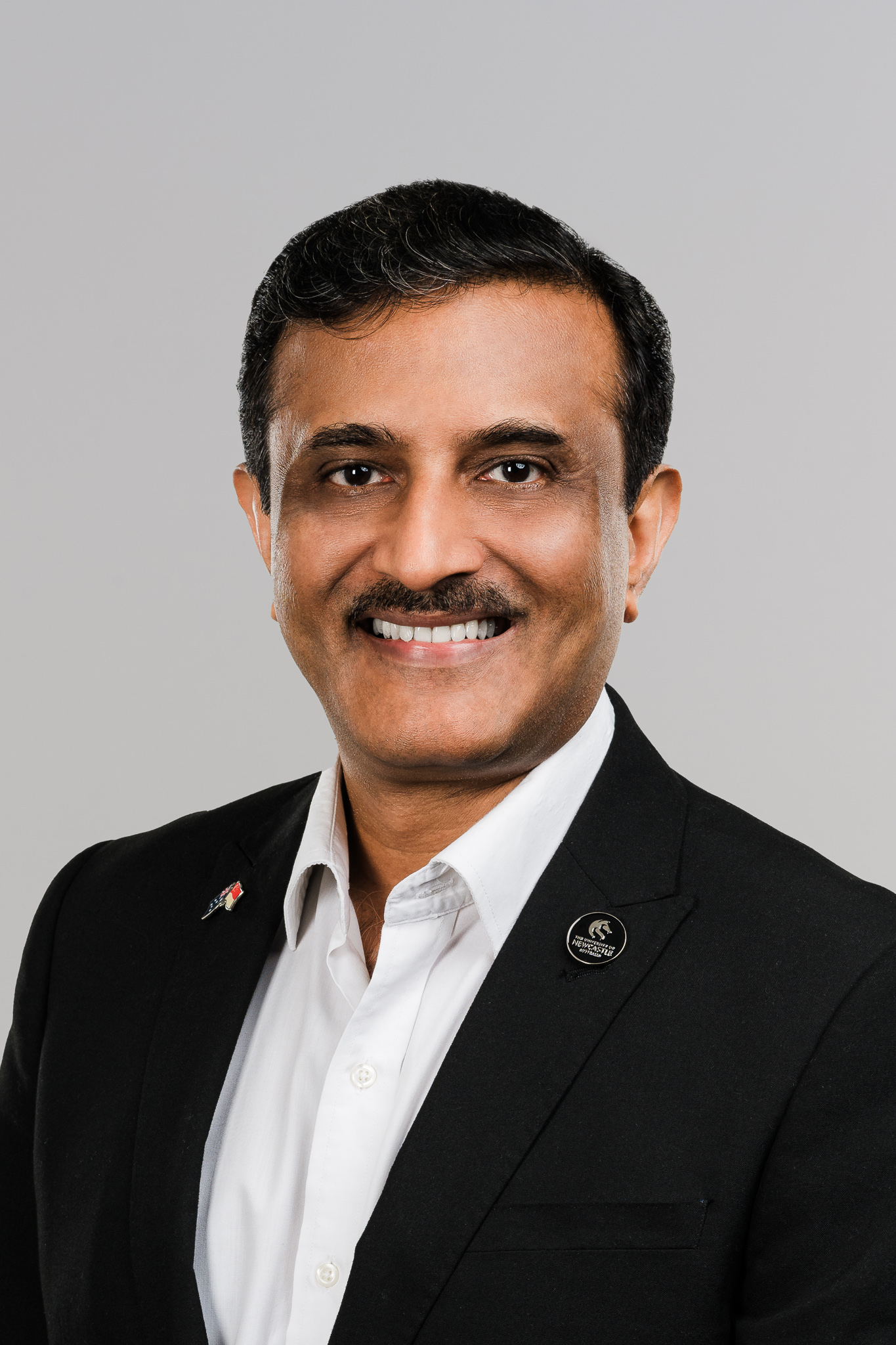
Professor Abhishek Singh Bhati is the Pro Vice-Chancellor and CEO at the Newcastle Australia Institute of Higher Education. He is a distinguished academic and administrator with a focus on tourism management and scholarship of learning and teaching. His research explores technology-driven tourism transformations, low-carbon tourism, and the alignment of tourism with United Nations Sustainable Development Goals (SDGs). Bhati’s work also emphasizes tourist behavior, resilience planning, and vandalism management in tourism settings. PhD (Tourism Management), James Cook University, Australia MBA (Marketing Management), Maastricht School of Management, Netherlands Bachelor of Arts (Economics), Bombay University, India Diploma in Adult and Continuous Education, Institute of Adult Learning, Singapore Graduate Certificate in Education (Tertiary Teaching), James Cook University, Singapore His research spans technology’s role in tourism, sustainable development, and educational innovation. Recent publications address energy-economic synergies, AI in tourism, and post-pandemic travel behavior. Bhati has secured grants from organizations like the World Wide Fund for Nature (WWF) and the Australian Government’s Office of Learning and Teaching (OLT). Scientific Honors: Fellow of the Higher Education Academy (FHEA)
Elizabeth Miller serves as Department Chair and Professor of Marketing at the Isenberg School of Management, University of Massachusetts Amherst. Her academic leadership includes roles as PhD Coordinator since 2013 and prior appointments as Assistant and Associate Professor at UMass and Boston College. Her research centers on affect-driven consumer behavior , with specialization in health decisions, consumer well-being, and social impact. Key themes include emotional influences on information processing, CSR authenticity, and crisis-driven behavioral shifts during events like the COVID-19 pandemic. Her work bridges marketing theory with practical applications in food security, medical decision-making, and sustainable consumption. Miller's recent publications reveal strong trends in emotional drivers of pro-social behavior (e.g., awe in environmental actions, community philanthropy during crises) and methodological innovation in health communication (e.g., data visualization for medical choices). Her scholarship increasingly focuses on collective well-being frameworks and youth-led social entrepreneurship ecosystems. Best Research Paper, Direct/Interactive Marketing Research Summit (2013) Research Excellence Award, Isenberg School (2013) Mellon Mutual Team Mentorship Grant (2012) As PhD Coordinator, she mentors doctoral candidates in consumer behavior and experimental design. Her teaching spans doctoral seminars on experimental methodology to undergraduate courses in advertising and services marketing. Miller directs research partnerships with social impact organizations, focusing on food access equity and community resilience building. Her lab initiatives emphasize translational research through collaborations with public health agencies and social enterprises, particularly in post-pandemic food systems and medical decision support tools. Current projects explore linguistic humanization of service robots and youth entrepreneurship ecosystems.
Western Switzerland University of Applied SciencesSwitzerland
Dr. Laura Zizka is a Professor at the EHL Hospitality Business School, part of the HES-SO university network. She specializes in higher education strategies, crisis communication, and sustainability in hospitality and STEM sectors. Her research bridges academic theory with industry practice, focusing on organizational resilience during crises, digital education transformation post-pandemic, and embedding sustainability literacy in curricula. Education**: BSc HES-SO in Hospitality and Tourism Management Research Themes**: Crisis communication strategies in tourism and hospitality Digital transformation in higher education Pro-environmental behavior in hospitality operations Sustainability integration in STEM and business programs Her work emphasizes bridging educational practices with real-world challenges, such as pandemic communication, stakeholder engagement in sustainability, and employability skills for STEM graduates. Recent studies include analyzing Swiss hoteliers' pandemic communication evolution and exploring AI's role in academic writing through Microsoft Copilot case studies. Grants & Projects**: HES-SO Rectorate-funded project (2019–2020) on destination image and pictorial content impact (CHF 99,000) Longitudinal studies on student/faculty perceptions of digital education (2020–2023) Dr. Zizka collaborates with industry partners like KITRO (food waste tech) and actively contributes to conferences on topics ranging from trauma-informed pedagogy to blended learning models. She advocates for holistic sustainability education and has advised on CSR communication strategies for airlines and hospitality firms.
Professor Lola Dada is the Head of Department and Professor of Entrepreneurship at Lancaster University Management School's Department of Entrepreneurship and Strategy. She holds a BSc in Economics, MSc in Corporate Finance, and PhD in Management. Her research focuses on entrepreneurship, innovation, franchising, and strategy, with notable projects like the GCRF-funded RECIRCULATE initiative addressing eco-innovation in Africa. She has received numerous awards, including Best Paper Awards at international conferences and the Emerald Literati Network commendation. Lola teaches at both undergraduate and postgraduate levels and has supervised PhD students exploring topics like AI-driven innovation and gender equality. She has held leadership roles such as Director of Undergraduate Programmes and has been a Visiting Professor internationally. Her work emphasizes sustainable practices, gender equity, and cross-cultural entrepreneurship. Education: BSc (First Class), MSc (Distinction), PhD (No Corrections) Affiliations: Senior Fellow of the Higher Education Academy, Co-Investigator on RECIRCULATE Grants: ESRC, British Academy, GCRF funding Her research bridges theoretical frameworks with practical applications in franchising systems, corporate venturing, and gender dynamics. Recent articles explore pro-environmental behaviors in franchises, symbolic violence in academia, and strategic human capital in entrepreneurship. Lola actively reviews for top journals and conferences globally, contributing to academic discourse on innovation and organizational behavior.
Kiara R. Timpano is a Professor in the Department of Psychology at the University of Miami and Director of the Program for Anxiety, Stress, and OCD (PASO). She holds a PhD from Florida State University and completed postdoctoral training at Massachusetts General Hospital/Harvard Medical School. Her research focuses on cognitive and psychosocial risk factors for anxiety, OCD, and hoarding disorders, with a particular interest in transdiagnostic mechanisms. Key areas include intolerance of uncertainty, emotion dysregulation, and behavioral interventions. Timpano leads the PASO lab, collaborating with institutions like McLean Hospital, UC Berkeley, and Karolinska Institutet. She supervises graduate students (e.g., Hannah Broos, Amelia Dev) and undergraduates, mentoring over 20 trainees. Her work integrates clinical research with community health initiatives, such as pandemic behavioral studies and climate change engagement projects. She serves on the Scientific and Clinical Advisory Board of the International OCD Foundation. Timpano's research spans neuroimaging (e.g., fMRI studies of repetitive negative thinking), translational therapy development (e.g., mindfulness-integrated CBT), and public health interventions. Her 2025 study in Children journal examines transdiagnostic treatments for youth OCD/anxiety comorbidity, while 2024 Cerebral Cortex work links PTSD symptoms to neural connectivity. Collaborations emphasize global mental health challenges and evidence-based practices.
Paulo Borges de Brito is a Lecturer in the Department of Management at Colorado State University's College of Business. He specializes in teaching courses on Entrepreneurship, Social and Sustainable Venturing, and International Business. Brito holds a B.S. in Economics from Presbyterian Mackenzie University (Brazil), an M.S. in Environmental Science from Universidade de São Paulo, and an M.S. in Agricultural and Resource Economics from Colorado State University. Prior to joining CSU, he founded the Brazilian chapter of a global conservation non-profit and contributed to award-winning books on sustainable development synergies. His research explores the intersection of business and sustainability, with emphasis on: Bioeconomy-driven business opportunities Agroecology and climate adaptation in smallholder farming Sustainable international trade frameworks Inclusive pedagogical approaches in business education Brito's recent publications (2018–2024) cluster around three themes: sustainable bioeconomy transitions, climate-resilient agriculture in developing regions, and innovative business education methods. Earlier work (2006–2014) focused on Brazilian organic farming certification, community-based environmental action, and water-efficient agriculture. He has received significant recognition including the 2023 CSU Best Teacher Award and designation as an Inclusive Excellence Fellow . Brito actively serves on university committees including the CSU Todos Santos Strategic Advisory Committee, Faculty Institute for Inclusive Excellence Advisory Committee, and as College of Business representative for UCC and Scholastic Standards.
Dr. Elizabeth Dunn is a Professor in the Department of Psychology at the University of British Columbia, Faculty of Arts. Her research examines how time, money, and technology shape human happiness, with a secondary focus on health. She co-authored the book "Happy Money: The Science of Happier Spending" with Dr. Michael Norton and has given talks at TED, PopTech!, and TEDx. Dr. Dunn earned her PhD from the University of Virginia in 2004. Her academic journey has been marked by numerous accolades, including being named a "rising star" by the Chronicle of Higher Education in 2004. Her research primarily focuses on the science of happiness, examining how prosocial spending, time management, and technology use affect well-being. She investigates how to promote rewarding social interactions using technology and how spending decisions shape happiness in everyday life. Her work has appeared in top journals, with three papers published in Science. Recent research has expanded into climate action framing, AI companionship effects, and recycling behavior. Dr. Dunn's research portfolio shows a consistent focus on practical applications of happiness science. Her work has evolved from examining basic happiness mechanisms to applying these principles to contemporary issues like climate change, digital technology impacts, and environmental behavior. She frequently employs experimental methods and large-scale data analysis to understand how small behavioral changes can significantly impact well-being. Royal Society of Canada's College of New Scholars, Artists and Scientists (2015) Society for Personality and Social Psychology Fellow (2014) Social Science and Humanities Research Council Impact Connection Award Finalist (2014, 2015) Killam Faculty Research Fellowship (2011) Killam Faculty Research Prize (2010) Robert E. Knox Master Teaching Award (2010) Canadian Institutes of Health Research New Investigator Award (2010) Mind Gym Academic Prize Honouree (2007) Peter Wall Institute for Advanced Studies – Early Career Scholar (2007) Chronicle of Higher Education Rising Star (2004) Dr. Dunn has supervised numerous graduate students through the UBC Psychology Department's MA and PhD programs. While she is not currently accepting new graduate students for fall 2025, her lab has been instrumental in training the next generation of happiness researchers. Her research has been supported by significant grants including the Killam Faculty Research Fellowship and the Canadian Institutes of Health Research New Investigator Award. She is also a co-author of influential books that translate academic research into practical advice for the public. Dr. Dunn leads an active research laboratory focused on happiness and well-being. Her team conducts experimental research examining how time, money, and technology shape human happiness. The lab has expanded its focus to include contemporary issues such as the impact of AI on social connection, climate action framing, and sustainable behavior. The lab's work combines rigorous experimental methodology with real-world applications to help people optimize their pursuit of happiness.
Dr. Anke Wonneberger is an Associate Professor at the University of Amsterdam's Faculty of Social and Behavioural Sciences, within the Communication, Organizations and Society department. She specializes in environmental communication, media studies, and climate change discourse. Her research explores how media frames environmental issues, public perceptions of sustainability, and the role of social movements and litigation in shaping policy. She is reachable at A.Wonneberger@uva.nl and active on LinkedIn , Google Scholar , and ResearchGate . Her work bridges communication theory and practice, analyzing media coverage of climate change, agricultural biotechnology, and energy policies. Recent studies include examining polarization around biomass debates in the Netherlands and the sociotechnical imaginaries of gene editing. She also investigates innovative methods like virtual reality to enhance public engagement with environmental challenges. Key themes in her research include the interplay between economic and environmental priorities, the role of litigation in climate responsibility, and cross-platform discourse dynamics. Her publications span over two decades, demonstrating sustained focus on environmental communication and its societal impacts. No scientific awards or grants are explicitly listed in the provided materials. Her teaching and academic contributions reflect her commitment to advancing communication science in environmental and social contexts.
Professor Sabine Pahl is an Honorary Professor of Applied Social Psychology at the Faculty of Psychology, University of Vienna , with ongoing affiliation to the University of Plymouth for collaborative projects. Her research bridges environmental psychology and human behavior, focusing on marine conservation and sustainable practices. Current address: Waechtergasse 1, 1010 Vienna, Austria Former roles include Honorary Associate Professor at University of Exeter (since 2015) Key research themes: Ocean connectedness and behavioral responses Environmental communication strategies Plastic pollution reduction Virtual reality applications for sustainability Intergenerational knowledge transfer mechanisms Energy-saving behavior psychology Recent collaborative projects span 18 countries, with notable scientific awards including: Fellow of the Pacific Institute for Climate Change (2011) Advising roles include: Director of Studies for 8+ PhD candidates External examiner for 6 PhD theses Current supervision across UK, EU, and international institutions